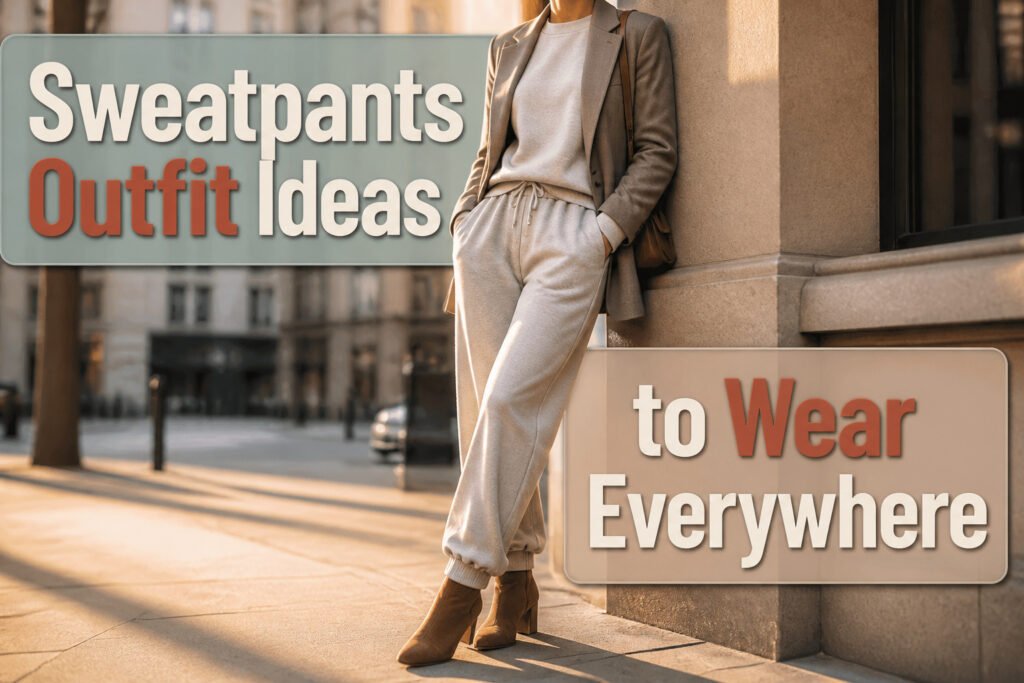
The only sweatpants outfit that works everywhere is the one built on deliberate contrast between soft and structured. That contrast collapses the moment you pair two relaxed pieces together, which is why the oversized hoodie default reads like laundry-day desperation. A $28 AthMile matching set carries the same principle through color unity, while a $215 wide-leg cut from The Great does it through fabric and cut alone.
1. Matching Sets

A matching set is the fastest way to make sweatpants look intentional instead of like you grabbed what was on the floor. Same color top and bottom, same fabric weight, and suddenly you’re put-together enough for the grocery store, the coffee shop, or a low-key brunch where nobody’s dressing up but nobody’s in pajamas either.
The range here is wide enough that entry point means $28 or $215, and both work. The AthMile set at $28 comes with an adjustable waistband, pockets, and a tapered ankle that reads as styled rather than sloppy. The Great The Relay at $215 offers olive-toned lightweight fabric with a wide leg that pairs cleanly with a loose tee and high-tops for something closer to street style. Two ways to play it: spend little and let the matching do the polish, or spend more and get the cut and fabric that carry you into evening. The $28 option wins if you’re testing whether this look is even yours.
2. Oversized Blazers
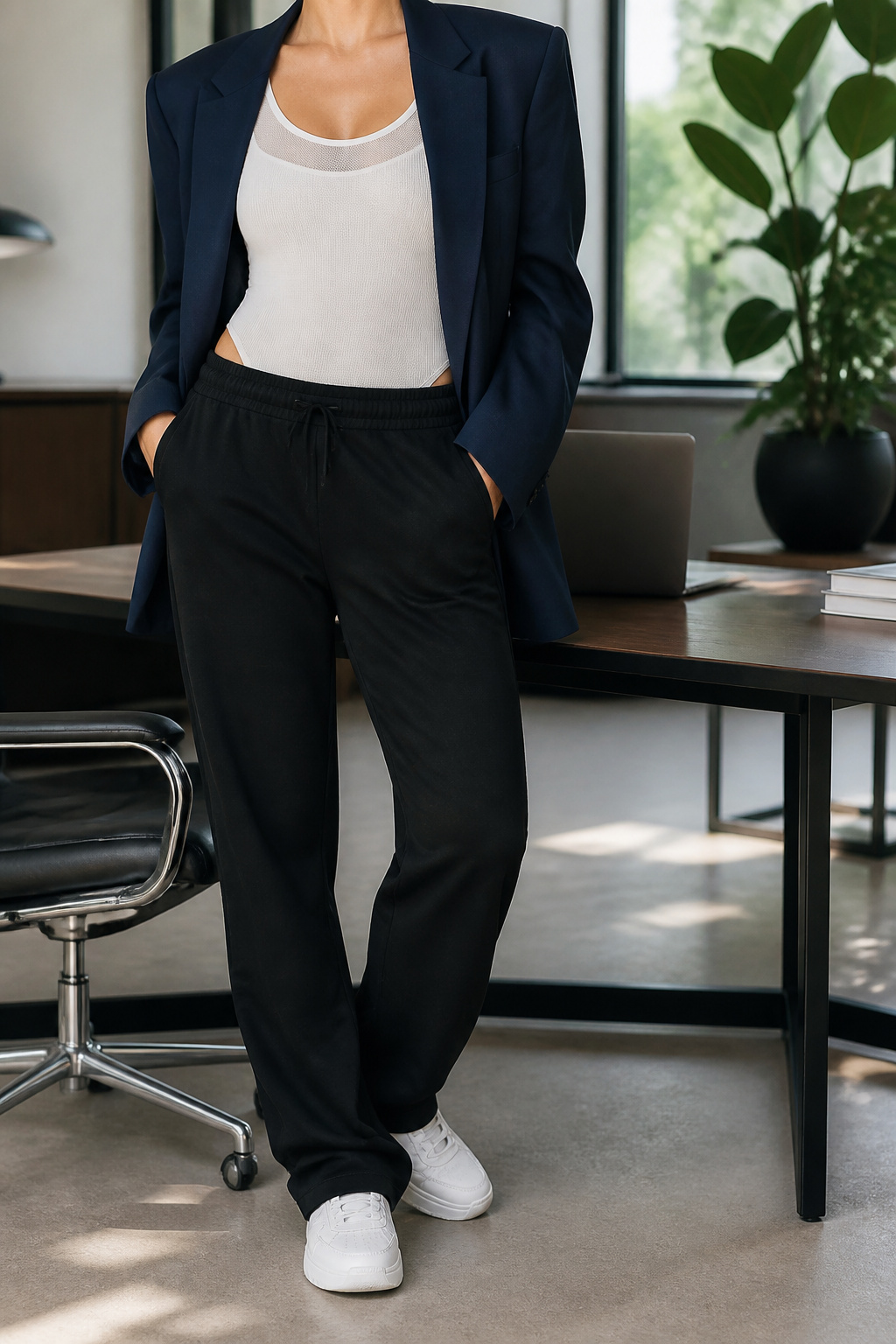
An oversized blazer is the single piece that moves sweatpants from couch to conference room. The structure does the heavy lifting: sharp shoulders and a length that hits mid-hip or lower create a hard line against soft fabric, and that contrast is what reads as intentional rather than lazy. Fit matters more than label here. Shoulders should sit square even when the cut is relaxed, and the hem needs to fully cover the waistband or the whole thing collapses into slouch.
I reach for this combination on days when I need to look pulled-together but still want the give of joggers. A mesh bodysuit underneath keeps the line smooth, and pointed-toe flats or a low kitten heel finish it without trying too hard. Readers ask constantly about wearing sweatpants to work, and this is the only formula I’ve seen actually pass in office settings: the blazer signals workwear, the sweatpants stay tapered and clean, and the boots or loafers ground it. Last fall I watched a colleague pull this off with a long tan coat layered over the blazer for her commute, then strip to just the jacket indoors. The coat did the outdoor heaviness; the blazer did the polish.
Skip anything cropped or shrunken. A short blazer with relaxed pants reads accidental, like you grabbed the wrong jacket. The oversized silhouette only works when it has real estate to work with.
3. Crop Tops

A cropped top does what an oversized hoodie cannot: it turns the waistband into a deliberate feature. The first time I tried this, I reached for a pair of extra high-waisted joggers in black and a crop that hit right at the narrowest point of my torso. The proportion felt intentional immediately. Baggy sweatpants need that contrast of a shorter line up top, or the whole shape collapses into one volume.
The crop should land where your torso is narrowest, which varies by body type, and that placement matters more than the exact rise of the pant. A higher waistband gives you more room to play with length, but even lower-rise sweats can work if the top stops at the right spot. I have seen this read as sporty with a zip-up jacket layered over, or as street-style with nothing but the crop and the pants. The key difference from the sweats-and-hoodie combos I used to default to is that someone looking at you can see you made a choice.
4. Teddy Coats
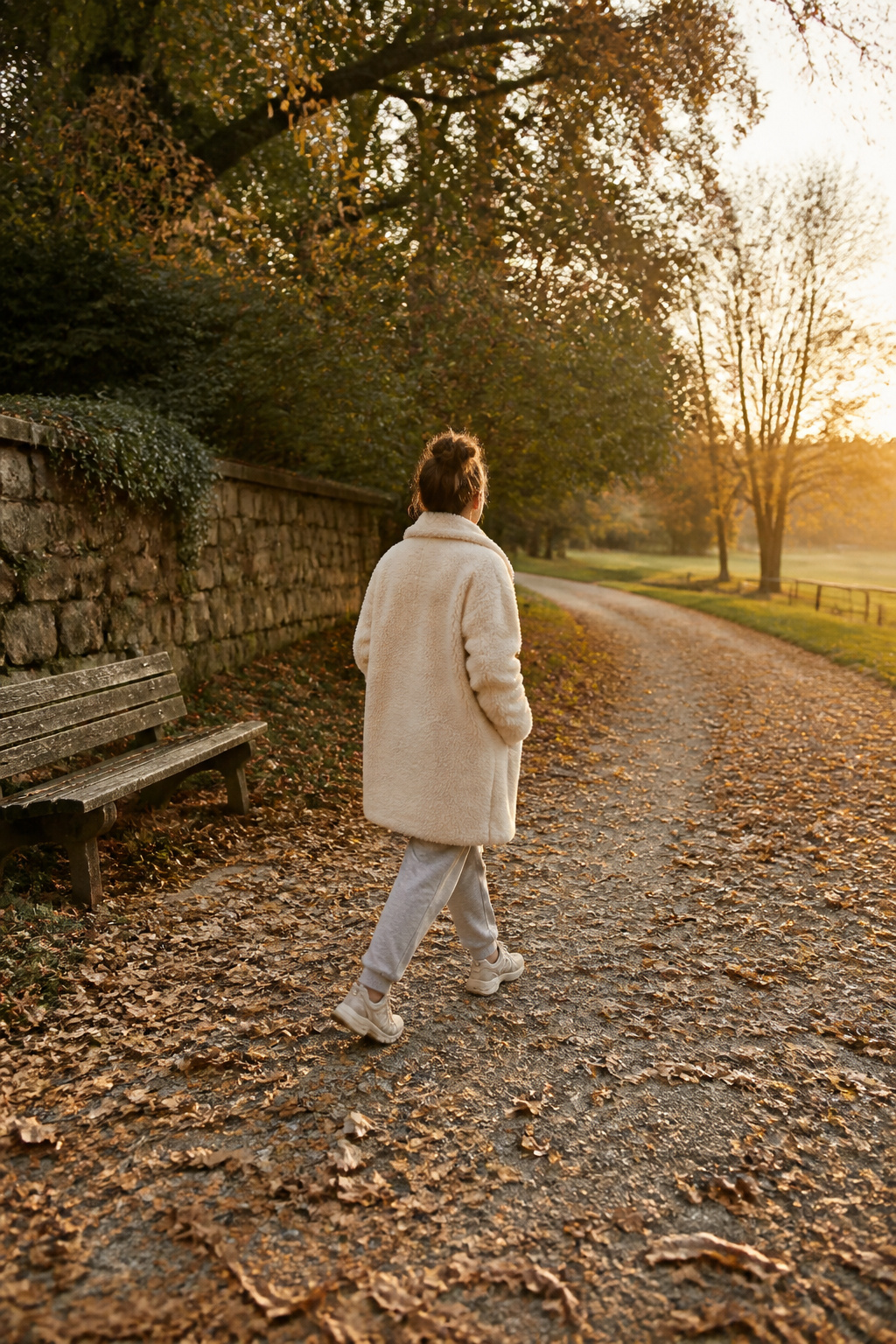
The first time I tried a teddy coat with skinny jeans, I understood immediately why the combination felt off. The coat’s volume needs something relaxed underneath to balance it, and sweatpants answer that perfectly. The texture pairing works because you’re mixing two kinds of soft: the fuzzy outer pile against the smooth inner fleece of good sweatpants. Neither piece is trying to be structured, so the silhouette reads intentional rather than sloppy.
Weight matters here. A cropped teddy can look proportionally odd with baggy pants, but a mid-thigh or knee-length version creates a column of volume that the eye reads as coherence. The warmth is real, too. I reach for this pairing on mornings below forty degrees when I need to look pulled together for coffee pickup but cannot face real pants.
5. Heels
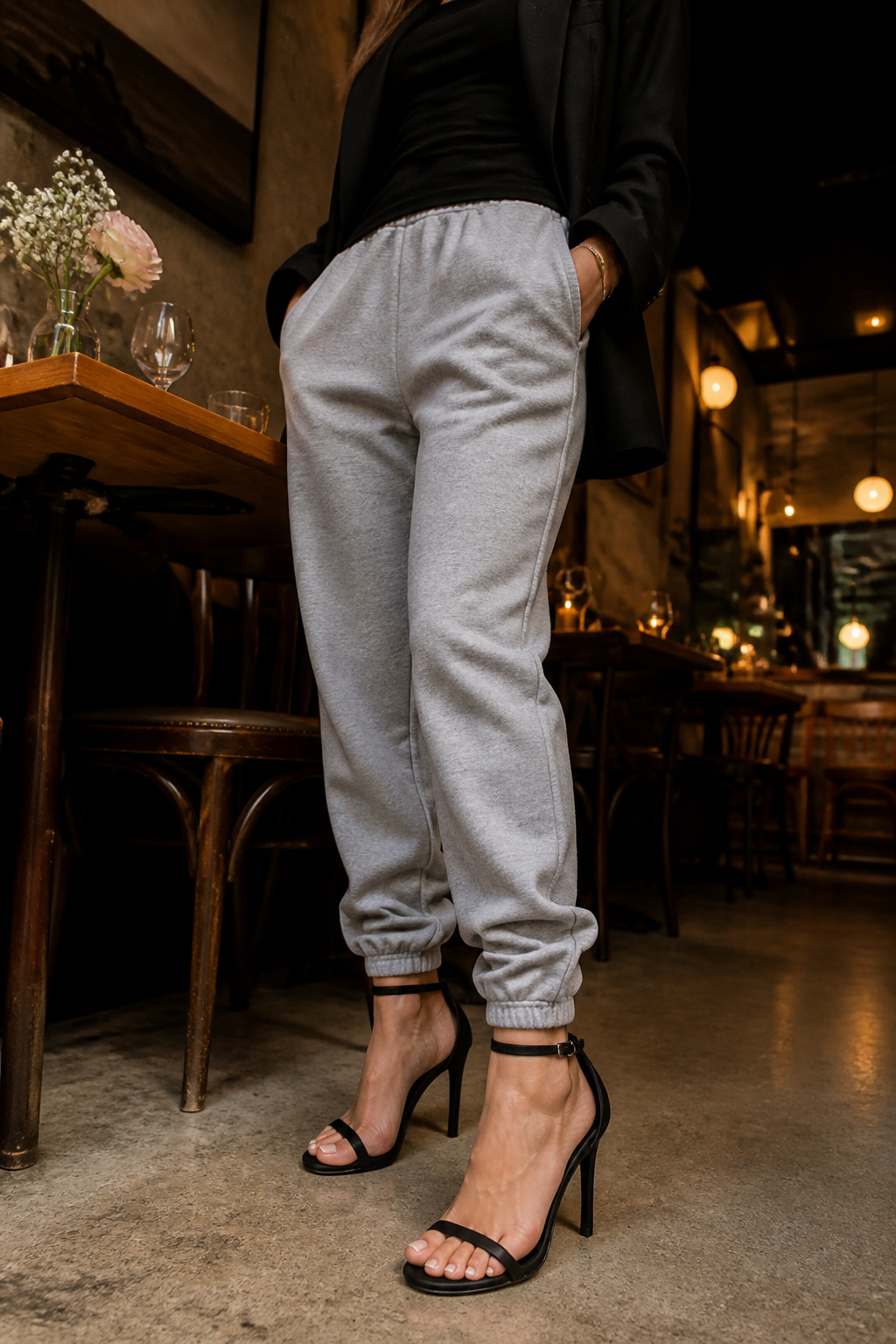
The real move for a night out is letting the heel height clear the pant cuff without dragging. A tapered ankle helps here, since excess fabric pools fast and ruins the line. The Nine West Reina Ankle Strap Sandal at $99 sits right in that mid-range spot where the strap keeps the foot secure and the heel gives enough lift to skim above the hem.
A black heel against gray or white sweatpants reads intentional rather than lazy. The sources back two ways to play this: keep the top sleek with a fitted sweatshirt, or go full contrast with a logo piece and let the shoes do the polish. Either works, but the shoe has to read as a choice, not a commute afterthought.
The ankle strap matters more with soft pants than with denim. Without structure at the foot, the whole silhouette collapses downward. The heel must sit high enough that the cuff floats, not folds — anything less and you are wearing house pants to dinner, which is the look everyone fears.
6. Sneakers
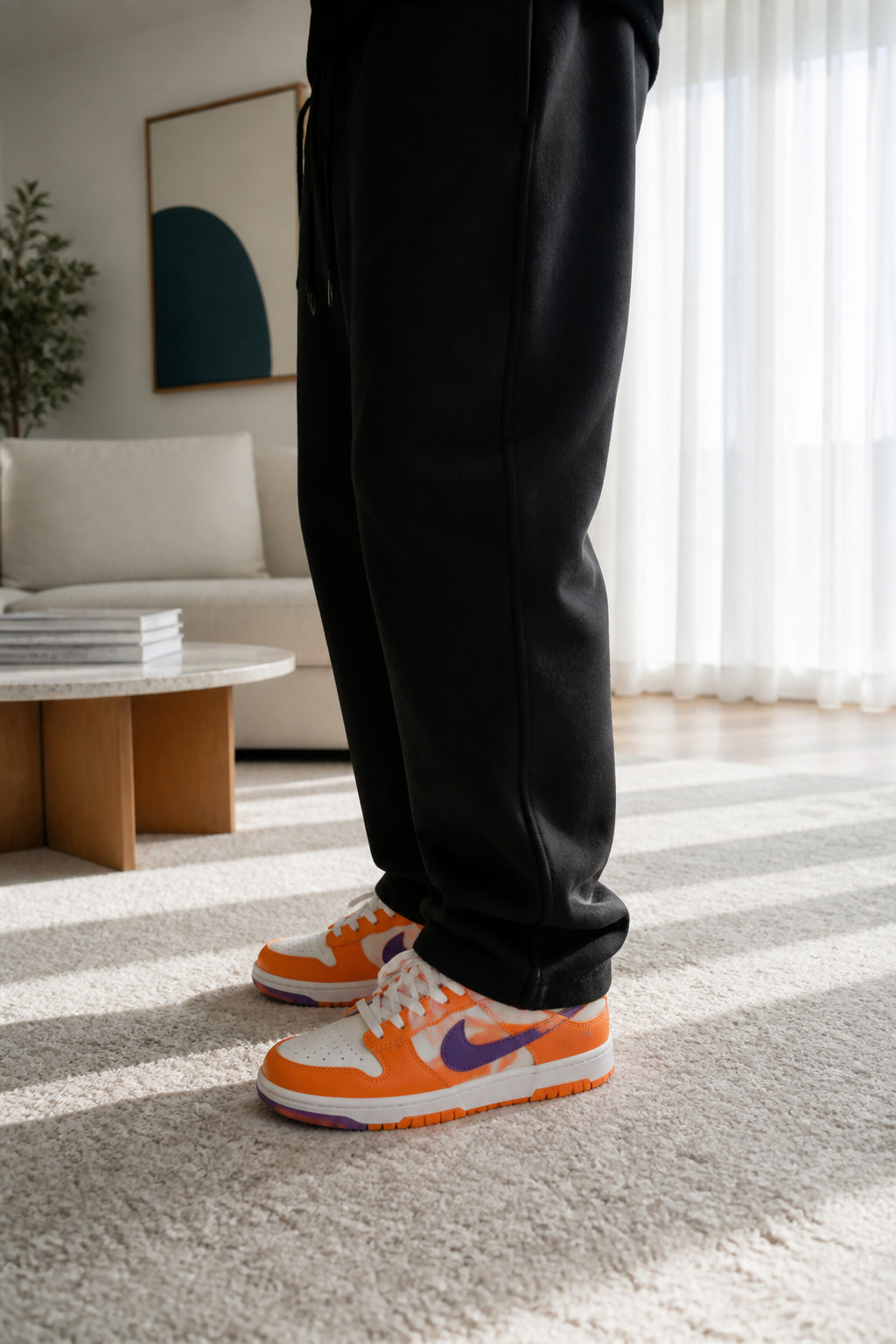
The Nike Dunk Twist Low at $120 is the safest sneaker bet with sweatpants, but safe is where the mistakes start. I used to throw on any white trainer and wonder why I still looked like I was walking to spin class. The fix is in the pant break: a half-inch of fabric resting on the shoe, no more. Pool around the ankle and you are in gym territory; hem too high and the proportions turn juvenile.
The Ugg Classic Ultra Mini Platform at $160 works if you commit to the sock. A no-show sock sinks the whole look into loungewear; a chunky crew in oatmeal or slate gray pulls the outfit toward deliberate. The platform height helps here, adding structure that balances the slouch of the pant.
Weight matters too. A heavy sole like the Dunk’s needs a straighter sweatpant leg; the lighter Ugg platform can handle a slight taper without looking top-heavy. The sock color should never match the shoe exactly; that is the fastest way to look like you are wearing a uniform.
7. Long Coats
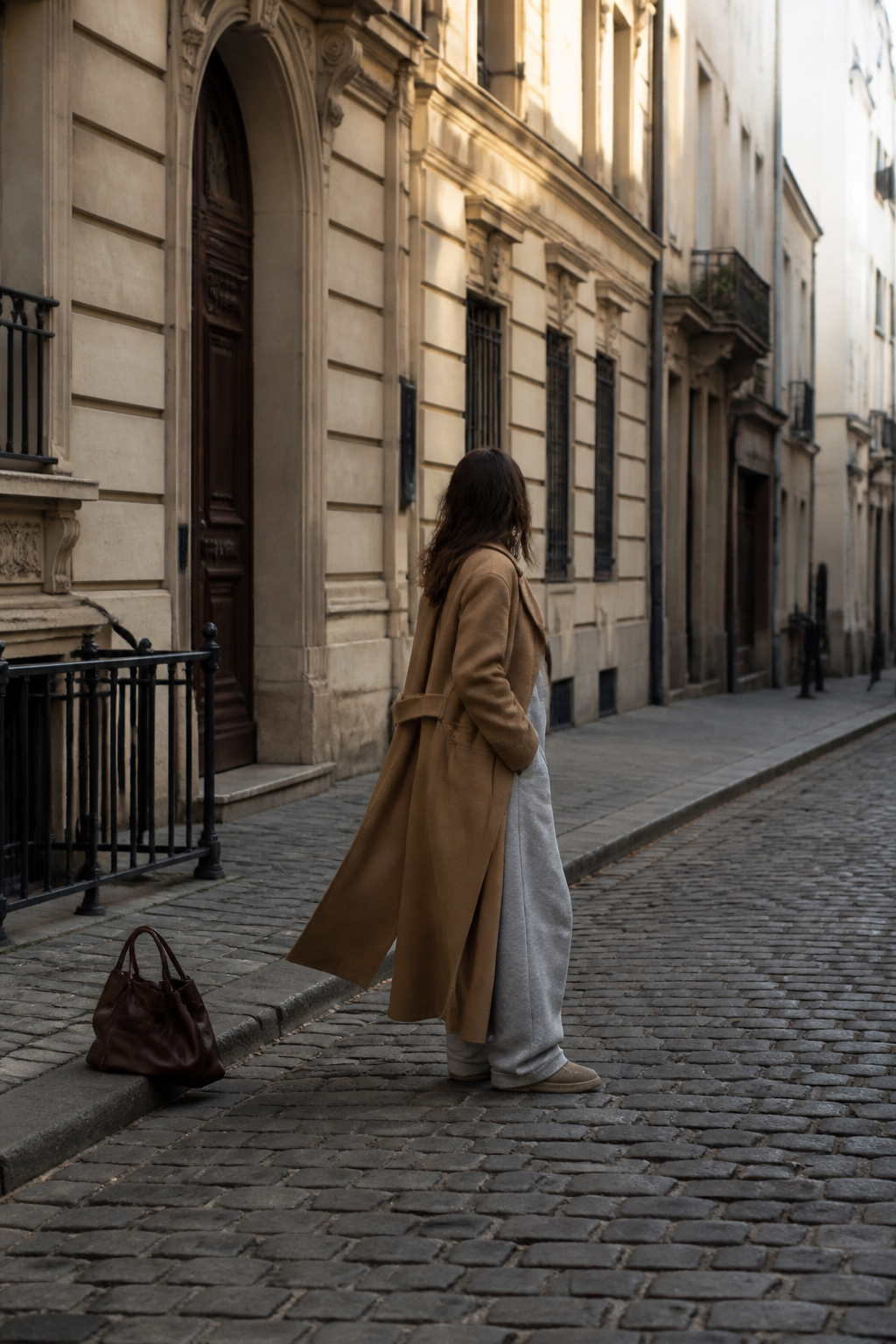
A full-length wool coat turns baggy sweatpants into something you can wear to dinner. The vertical line from shoulder to hem does the heavy lifting: it pulls the eye upward and cuts through the volume of wide-leg or flared sweats in a way a cropped jacket never will. The coat needs to hit mid-calf or lower to get the proportion right; anything shorter breaks the line and leaves the outfit looking accidental.
Structured dusters or camel wool styles work for more formal occasions than a teddy coat ever could. I have seen this combination land in street-style roundups with a leather belt bag swung across the body and a pointed-toe bootie underneath; the bootie elongates the ankle where the sweatpant hem lifts. A crisp neutral coat in camel or black reads as intentional, especially when the sweatpants themselves stay in a matching tonal family. Gray sweats with a gray coat and silver jewelry keeps the palette clean without trying too hard.
8. Leather Jackets
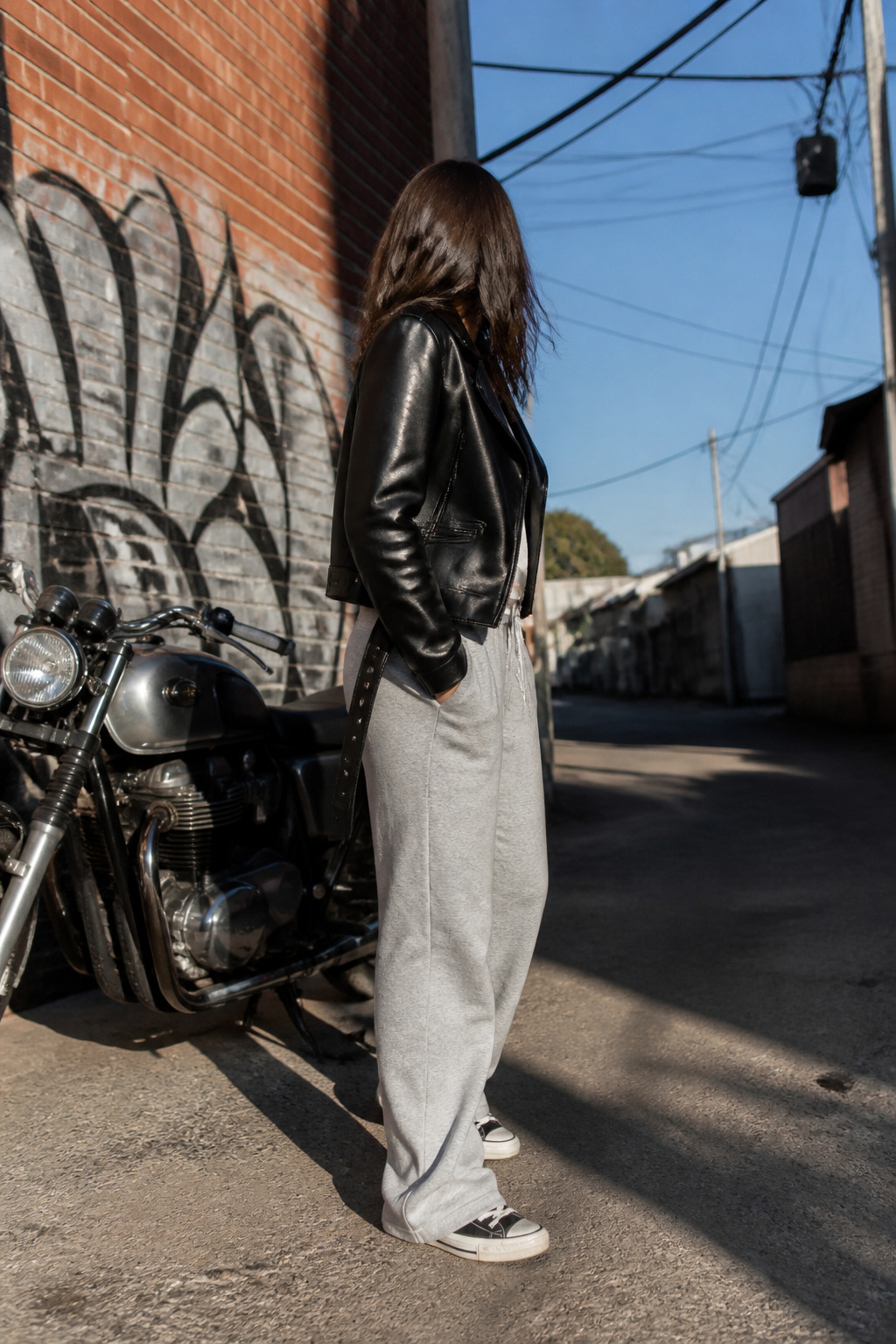
A leather jacket is the fastest way to make sweatpants feel like a decision, not a default. The contrast between the soft fleece and something harder, more structured, gives the whole outfit intention. I reach for a fitted moto style when I want this effect; the clean lines keep the silhouette controlled instead of adding more volume on top of volume. Oversized bombers, which I own and love for other outfits, blur that contrast and read more sloppy than deliberate.
For concerts or casual dates, this pairing works because the jacket does the heavy lifting. A vintage black leather layer over straight-leg sweatpants, a white tank tucked in, and sneakers is the simplest version, and the one I see photographed most often. The baseball cap in that formula is optional; the jacket is not. Without it, you’re in pajamas. With it, you’re in a sweatpants outfit that actually left the house on purpose.
9. Accessories
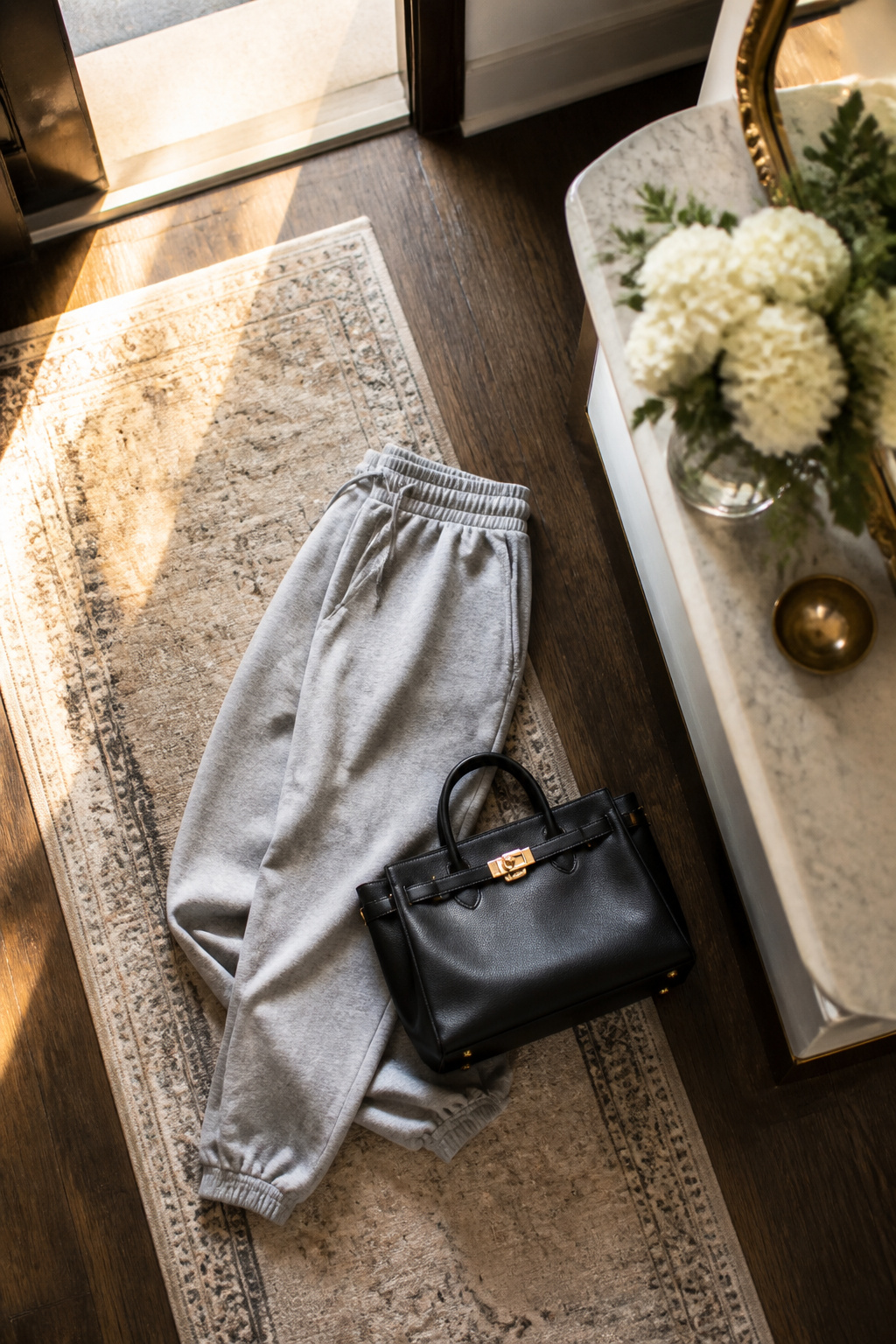
A structured bag against soft sweatpants creates the tension that reads as intentional style rather than accident. The Loewe Leather Belt at $990 gets the headlines, but hardware matters more than price; a $36 Cloverpost earring or a $58 BaubleBar ring set shifts the same energy if the lines are clean. Belts work best when they cinch something, so a half-tuck or a bodysuit underneath gives the buckle a job. Chunky gold earrings or a sharp trench add structure without the four-figure commitment, and a sleek ponytail does more than you’d expect. The mistake is piling on soft pieces and wondering why the look collapses. One hard accessory minimum, chosen for its shape, keeps sweatpants outfits from reading like you gave up.
10. Layering with Turtlenecks and Bodysuits
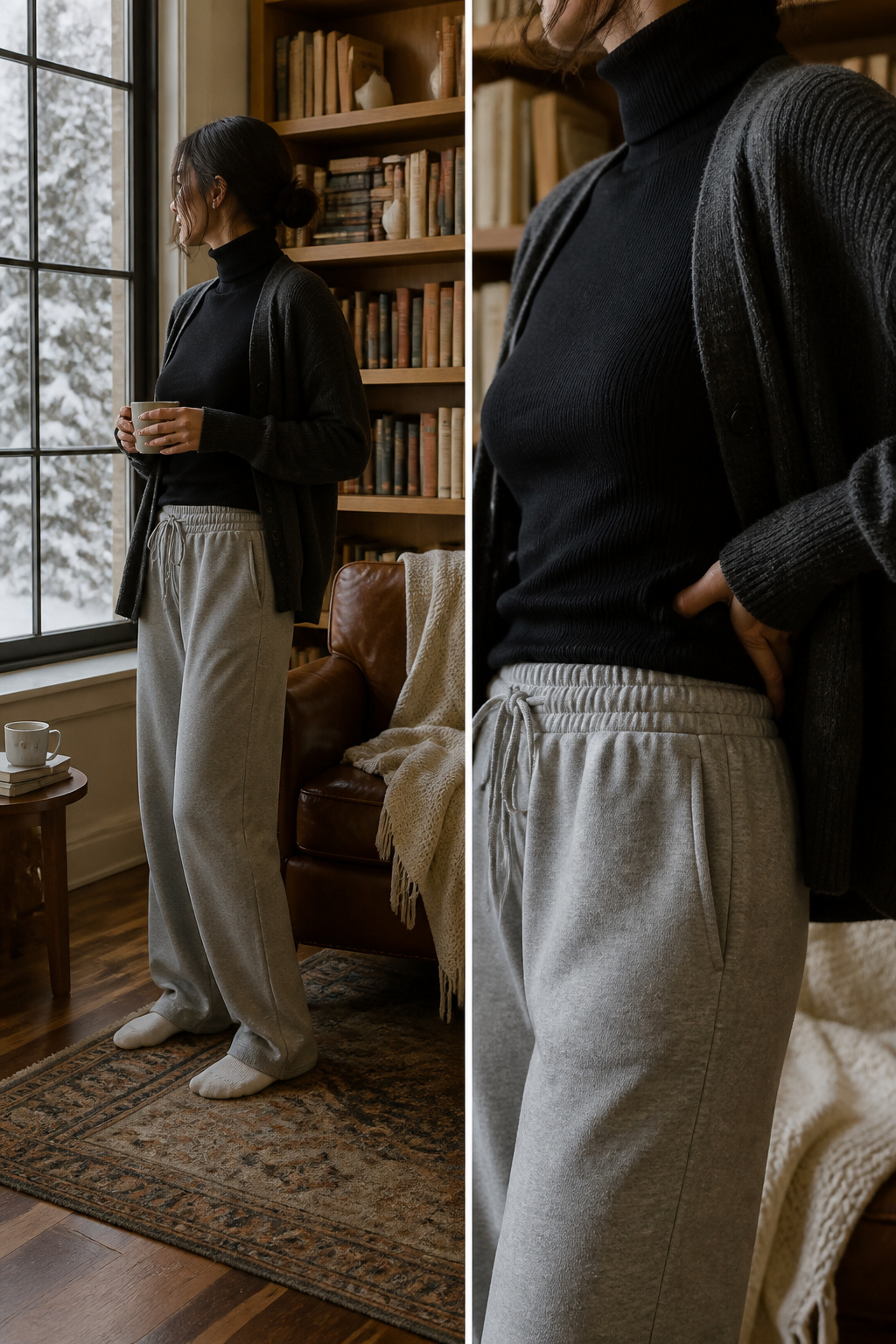
Fitted base layers do the heavy lifting underneath sweatpants’ relaxed silhouette. A turtleneck adds structure at the neck that reads intentional rather than loungewear, especially in winter when that vertical line draws the eye up. I’ve found the fabric weight matters more than the label: too thin and the collar collapses after one wash, too thick and you’re fighting bulk under a sweater all day.
Bodysuits solve the bunching problem that ruins a tucked-in look with stretch waistbands. The snap closure at the crotch is non-negotiable if you actually plan to use a bathroom without stripping from the top down. I learned that after a few afternoons of re-tucking in coffee shop stalls.
This combination, a smooth base layer and structured top, creates the clean foundation that makes every jacket or coat you throw on top look like you planned the whole thing. Without it, even expensive outerwear reads sloppy against the volume of sweatpants.
Balancing Proportions
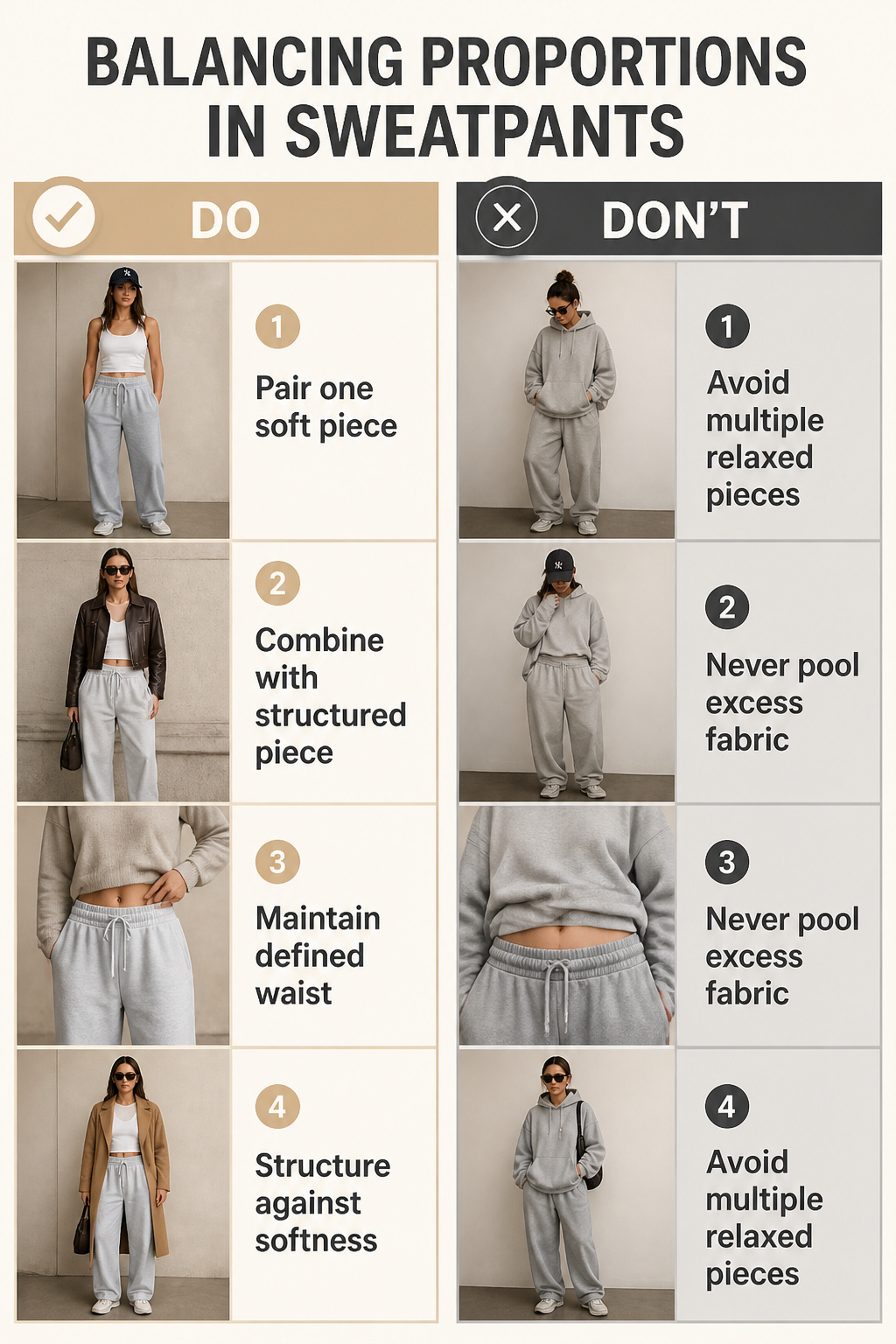
The fastest way to ruin a sweatpants outfit is wearing two relaxed pieces at once. Baggy joggers with an oversized hoodie reads like you grabbed laundry off the floor. The fix is one soft piece, one structured piece: wide-leg sweats stay intentional with a fitted tank, a baby tee, or a cropped jacket holding the line at your shoulders.
Waistband discipline matters even more. A slouchy pant needs to hit at your actual waist or just below, never pooling into a fold that hides where your torso ends. That fold is what makes the whole silhouette collapse. I learned this the hard way with a pair of FRAME joggers that sat low enough to need constant hoisting, and the outfit looked sloppy until I switched to a higher rise and tucked a thin sweater just at the front.
Structure against softness works at every layer. A camel coat or cropped leather jacket over sweats creates the same tension: the eye registers the tailored shoulder first, then accepts the relaxed leg as chosen, not defaulted. Tonal dressing helps too, gray on gray or chocolate brown head to toe, but only if the waist stays defined. Without that anchor, monochrome just extends the blur.
Where Sweatpants Work
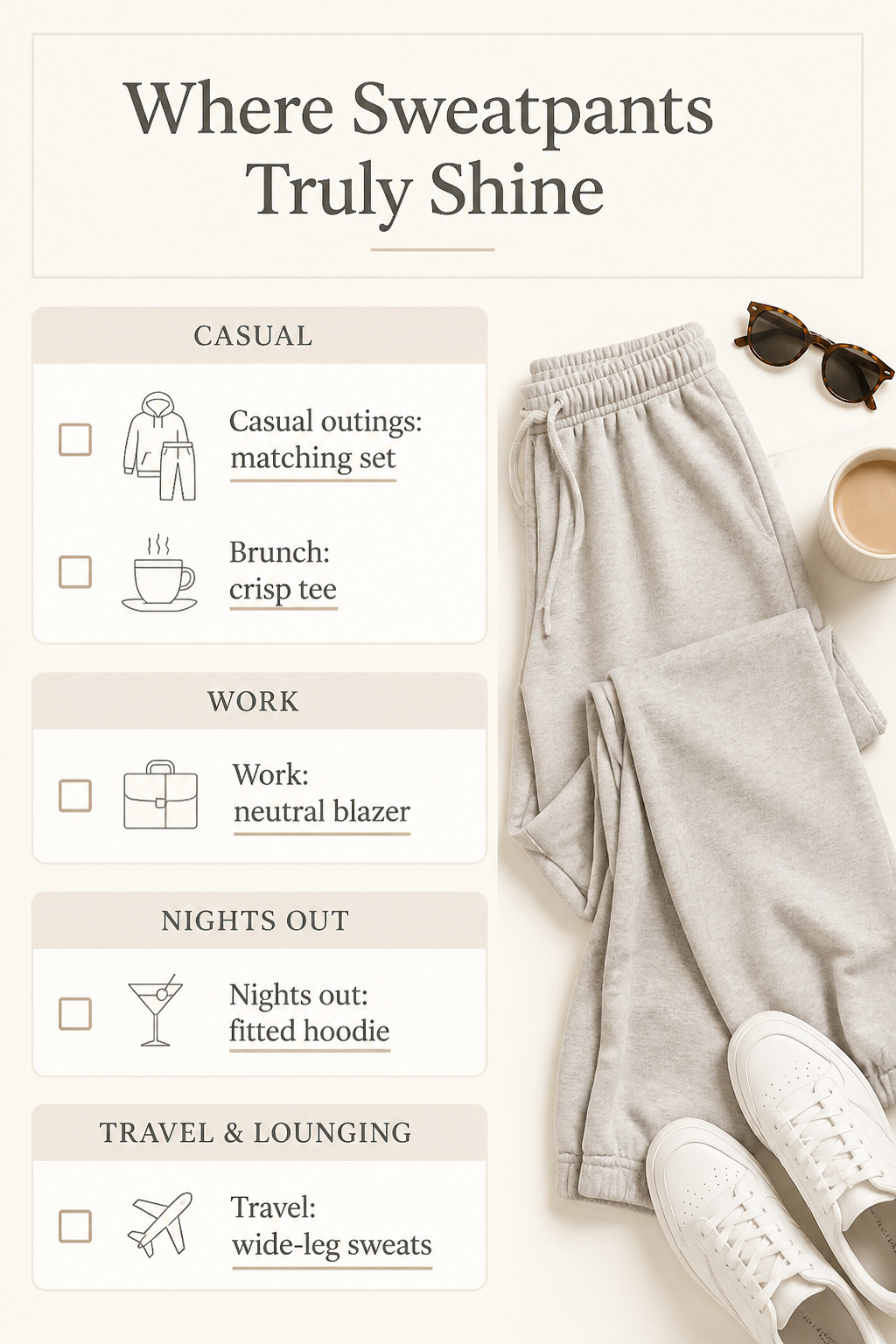
The right question with sweatpants outfits is not can you wear them somewhere, but which construction reads deliberate enough for the room. A matching set and white sneakers carries casual outings without apology; the uniform quality does the styling work for you. Brunches that lean café rather than diner call for the same set, or swap in a crisp tee and let the footwear upgrade to something with structure.
Work is where the split happens. One path: neutral sweatpants with a neutral blazer and a basic top, the monochrome disguise so complete the bottom half registers as trousers until someone looks twice. The other path leans in with contrast, an oversized blazer and a mesh bodysuit with a pointed-toe flat or kitten heel. The first reads safer; the second reads like you planned it, because you did.
Nights out need the most intervention. Baggy sweatpants with a fitted hoodie and heels, or the blazer-and-bodysuit combo with hardware on your bag, signal that you dressed rather than escaped. Wide-leg sweatpants for travel and lounging make sense, but their relaxed waistband and roomier leg are the wrong proportions for anything where you need to look held together.
Color Coordination
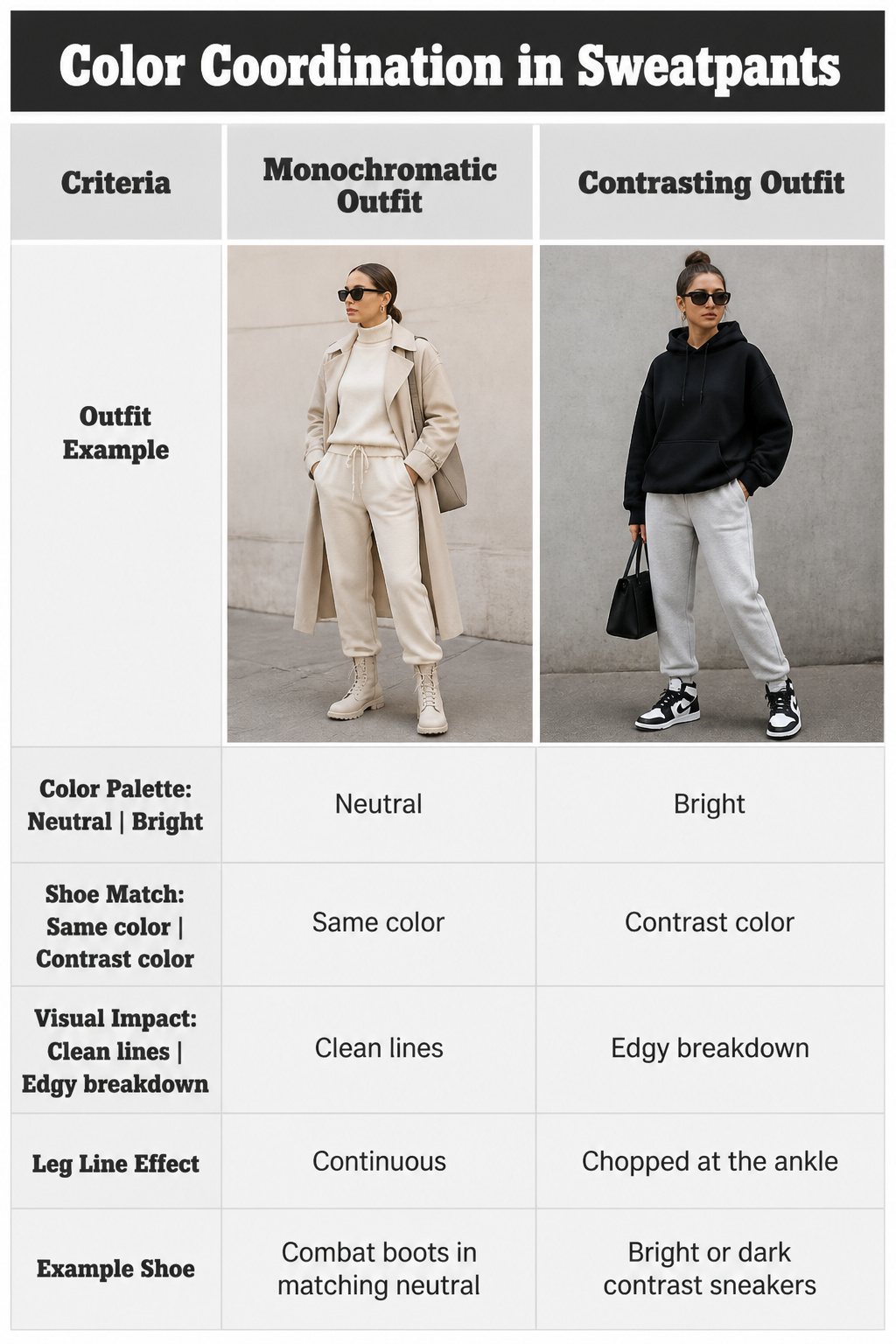
Monochromatic dressing is the fastest way to make sweatpants look like an actual decision. A cream turtleneck with matching bottoms and a trench reads intentional, not accidental, and the neutral palette photographs cleanly in any light. The Zara Basic Jogging Pants at $30 come in black, vanilla, sea green, and light blue, which makes building that single-color story easy without hunting across stores.
Where the shoe lands changes everything. Matching the shoe to the pant color keeps the leg line continuous and reads longer; a contrast shoe chops the silhouette at the ankle. Combat boots in a matching neutral let the eye travel straight down, while a bright or dark contrast draws attention to where the sweatpant ends. Both work, but only one stretches the leg.
Frequently Asked Questions
What shoes should I wear with sweatpants?
Sneakers, heels, or loafers depending on where you’re headed. The Nike Dunk Twist Low at $120 is the safest sneaker bet, while a black heel against gray or white sweatpants reads intentional for nights out. The key is the pant break: a half-inch of fabric resting on the shoe, no more, or the whole look collapses into gym territory.
How do I style sweatpants for a night out?
Let the heel height clear the pant cuff without dragging, and keep the top sleek with a fitted sweatshirt or go full contrast with a logo piece. The Nine West Reina Ankle Strap Sandal at $99 sits in the sweet spot where the strap keeps the foot secure and the heel gives enough lift. The heel must sit high enough that the cuff floats, not folds; anything less and you’re wearing house pants to dinner.
How do I make sweatpants look chic?
Combine one soft piece with one structured piece, and add at least one hard accessory for its shape. A matching set does the polish work for you at $28 or $215, while an oversized blazer with sharp shoulders creates the contrast that reads as intentional rather than lazy. Monochromatic dressing in cream, gray, or chocolate brown also photographs cleanly and reads as a deliberate choice.
Can I wear sweatpants to work?
Yes, but only with a blazer that signals workwear and sweatpants that stay tapered and clean. Shoulders should sit square even when the cut is relaxed, and the hem needs to fully cover the waistband or the whole thing collapses into slouch. Pointed-toe flats or a low kitten heel finish it without trying too hard; skip anything cropped or shrunken.
What tops go well with sweatpants?
Crop tops, fitted tees, turtlenecks, and bodysuits all work, but the proportion is what matters. A crop should land where your torso is narrowest, turning the waistband into a deliberate feature. Bodysuits solve the bunching problem with stretch waistbands, and the snap closure at the crotch is non-negotiable if you plan to use a bathroom without stripping from the top down.