A first tattoo in 2026 can cost under a hundred dollars or take less than twenty minutes, but the deciding factor is whether you want meaning you can explain or meaning you never have to. The catch is that small text blurs faster than imagery, so a single word chosen for its romance at twenty-two can read like a faded bruise by forty. What separates the tattoos people keep from the ones they cover is line weight and placement, not the size itself; a nickel-sized turtle behind the anklebone holds its shape for decades if the outline is bold, while hairline script on the inner wrist starts surrendering to time before the scab falls off.
1. Initials of Someone You Love
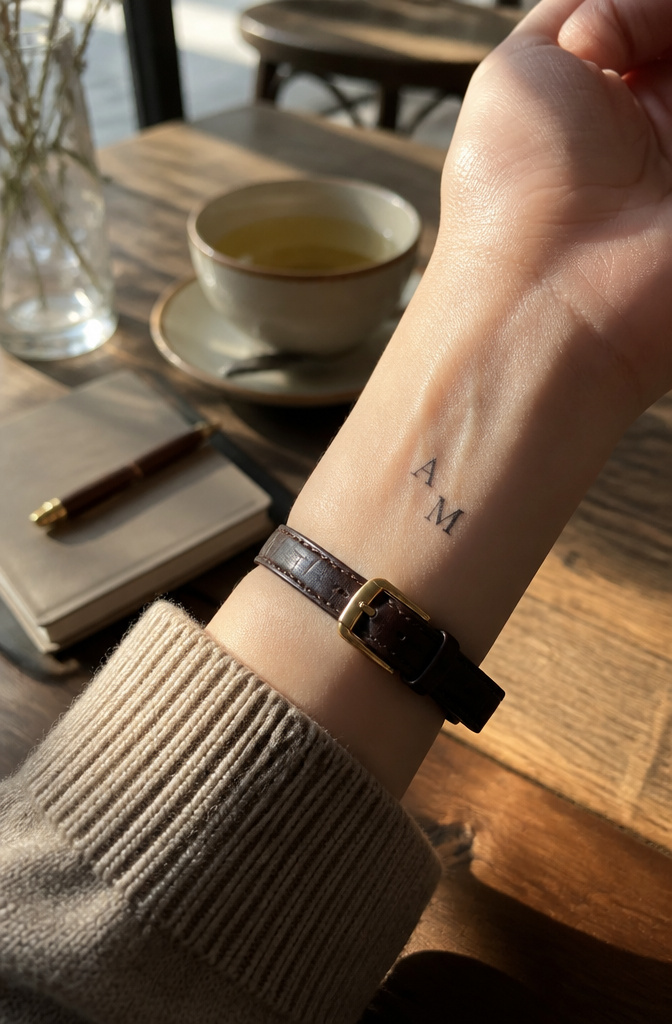
Initials hit the sweet spot for a first tattoo because two letters fit almost anywhere and carry weight without demanding space. The wrist, ankle, or inner arm all work; the design stays readable at under an inch tall and hides easily under a watch strap or sleeve when needed.
The meaning is flexible by design. One letter stays ambiguous enough to shift if life changes, and even two initials keep the reference private unless you explain it. That discretion matters when you’re still testing how visible ink feels in a conservative office or at family dinners.
Pain tolerance is the other quiet benefit. Lettering takes minutes, not hours, so you learn what the needle feels like without committing to a session that outlasts your numbness. Start with a pet’s initials if human names feel too risky; the emotional tie is just as real and the stakes stay lower.
2. Minimalist Lines or Dots
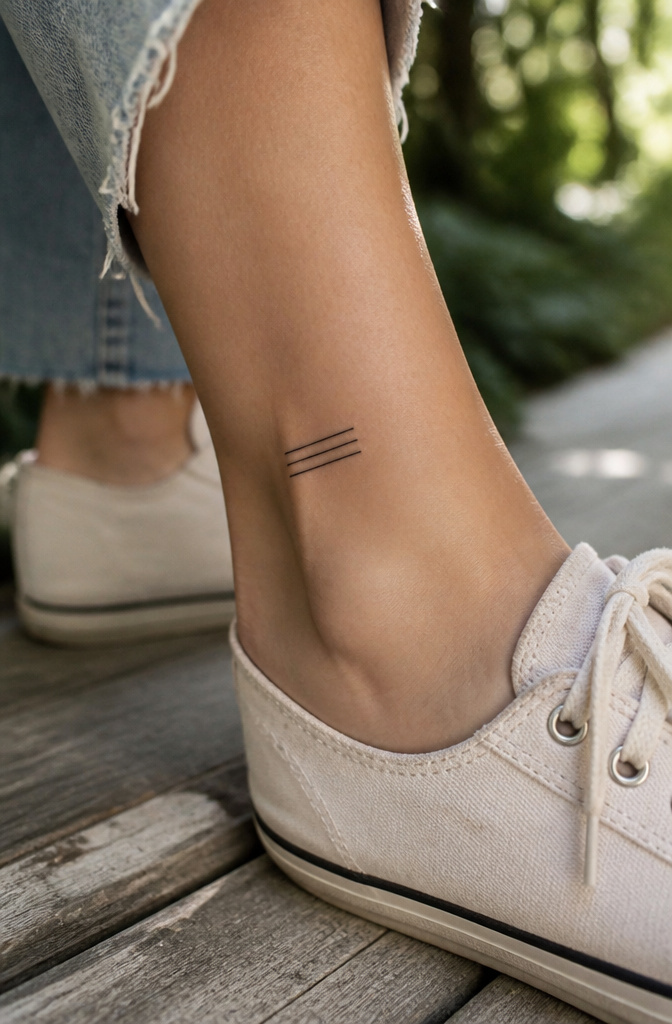
Minimalist lines or dots sit at the quiet end of the tattoo spectrum, which is exactly why they work so well for a first piece. Three thin marks on the ankle, a single dot behind the ear, a short horizontal line on the wrist: these designs heal fast because the needle barely has to travel, and the session ends before adrenaline turns to fatigue. The wrist and ankle are the placements that disappear under a watch band or a sock when you need them to, so discretion is built in.
The tattoo community pushes these designs on newcomers for practical reasons, not just aesthetic ones. Living with something this small teaches you what healed ink looks like on your own skin, how sun exposure changes it, whether you actually enjoy the commitment. That knowledge matters when you start thinking about larger work. If you do outgrow the design, it covers easily; the real estate stays available for something bigger later.
I find the hesitation around "too simple" misses the point. Your first tattoo is not your last statement. It is a way to meet the needle without the pressure of a complex piece, and lines or dots handle that introduction better than almost anything else.
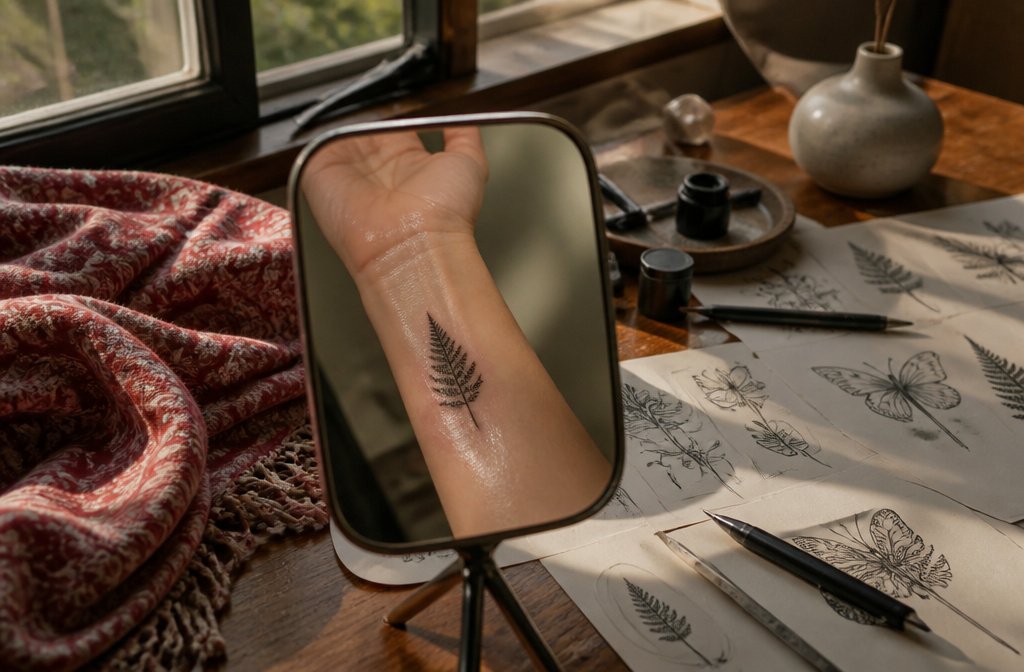
3. Small Flower or Plant
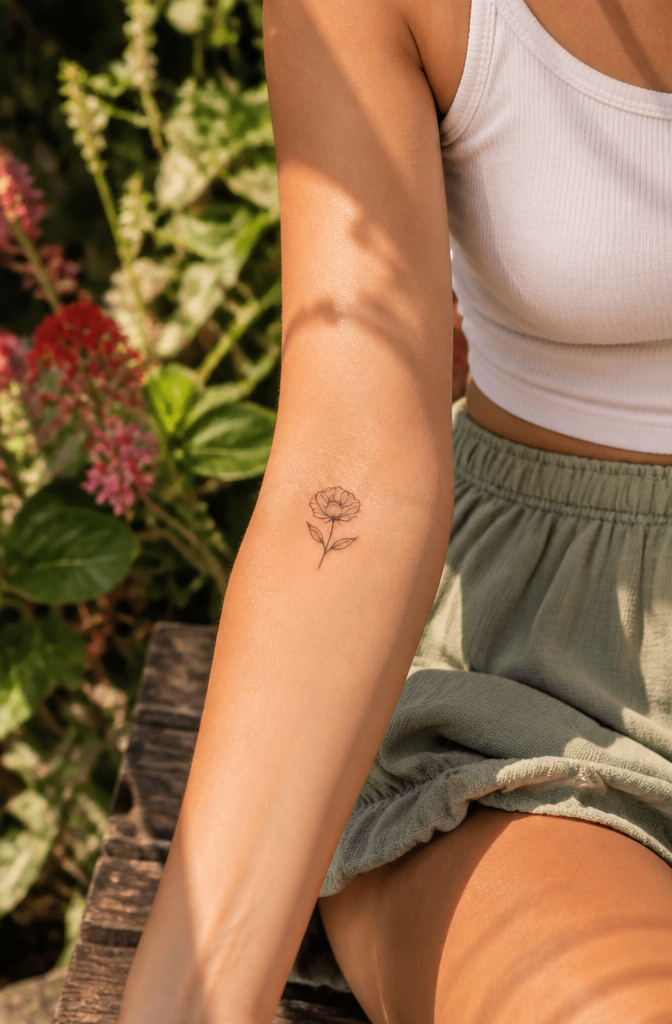
A small hibiscus with minimal shading was one of my first tattoos, and it still holds up years later. The simple outline of a flower or plant works especially well for a first piece because the design stays readable even at a small scale, whereas heavy shading or color can blur over time and turn a delicate idea into something muddy.
Botanicals also carry weight beyond how they look. A flower tied to a specific memory, a plant that grew in your grandmother’s yard, a bloom from a trip that mattered, these give the tattoo a reason to stay on your body that has nothing to do with trend cycles.
Placement matters for keeping that detail crisp. The inner arm or ankle are solid choices for a first botanical; both spots stay mostly protected from sun and friction, which helps the fine lines hold, and most clothing covers them easily if you need that option. The outer arm works if you want it visible, but think ahead about whether you’re building toward a larger collection or stopping at one.
4. Star, Moon or Heart
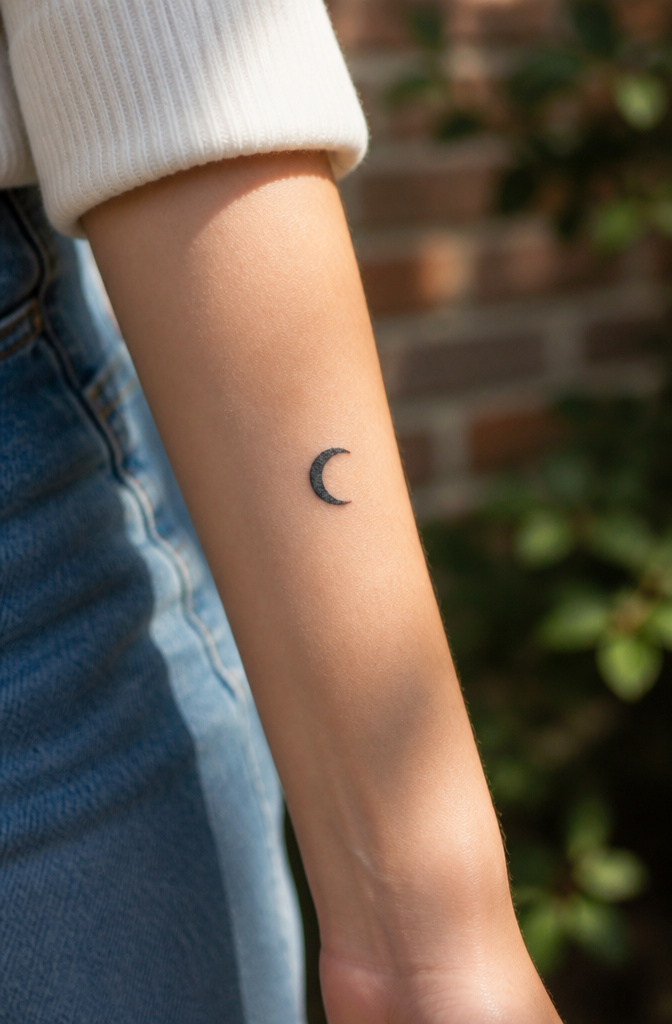
Stars, moons, and hearts sit in that sweet spot where a tattoo can mean everything or absolutely nothing at all, and either way works. The outline of a small crescent moon on an ankle reads as quiet and personal; the same shape on an outer forearm becomes something you show off with a tank top in July. Simple shapes hold their edges even at tiny sizes, which matters more than most first-timers realize. A star with clean geometry won’t blur into a blob the way fine lettering tends to. A heart filled in solid, maybe half an inch across, ages like a small stamp rather than a fading sketch.
Placement splits the decision cleanly. Want it seen? The outer arm is the obvious move. Prefer to keep it for yourself, or for a partner, or for no one in particular? Wrist or ankle hides under most sleeves and socks without any effort at all.
There’s no pressure to go big or go home. A well-placed small tattoo can make just as much of a statement as a larger one, whether you’re going for something with symbolic meaning or just want to express yourself.
— BuzzFeed
That point lands hardest with these three symbols in particular. A heart can mark a person, a loss, a recovery, or simply the fact that you liked how it looked one Tuesday. The moon can track a phase that mattered, or just pair nicely with the earrings you already own. The flexibility is the feature, not the flaw.
5. Butterfly
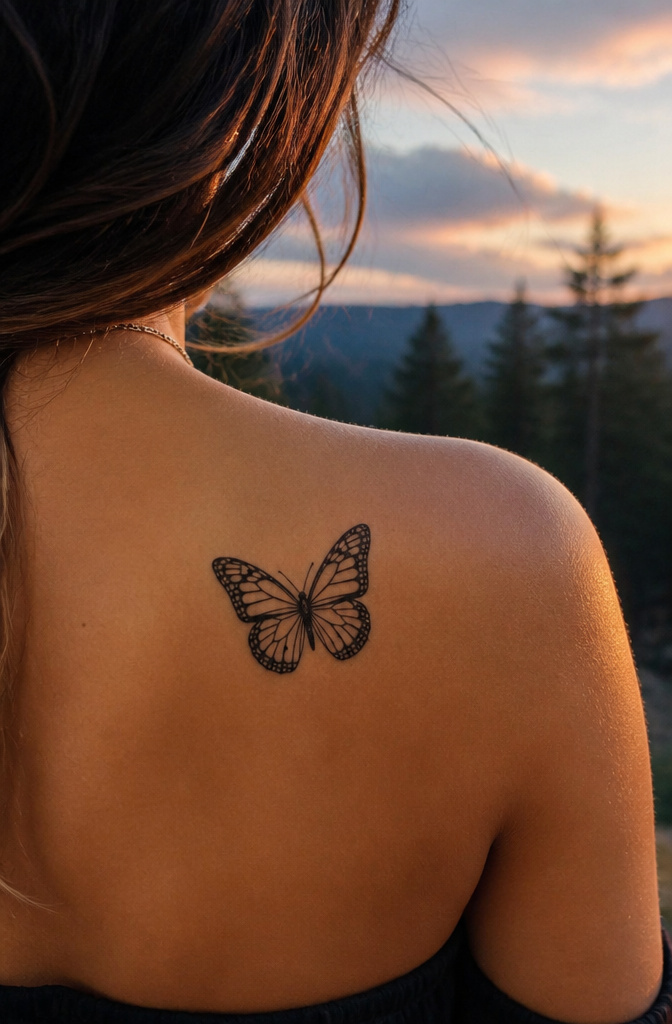
Butterflies earn their place on nearly every small first tattoos ideas mood board for a reason the drawing itself reveals. Wing geometry compresses well; the veining stays readable even when the whole piece spans just a few centimeters, and the silhouette still reads instantly as butterfly rather than ink blob.
Placement matters more with this design than with a simple dot or line. The shoulder blade gives the wings a natural slope that mimics how an actual butterfly rests, and the ankle’s curve can make the same stencil feel like it’s mid-landing. I have seen both work, but the ankle placement tends to blur faster from sock friction and shoe contact if the line weight is too fine.
Most first-timers choosing this motif arrive at it because the meaning feels personal rather than borrowed. Transformation tracks cleanly onto life changes people actually mark: recovery, divorce, graduation, the year everything finally shifted. The butterfly carries that weight without needing text underneath explaining it.
6. Your Star Sign
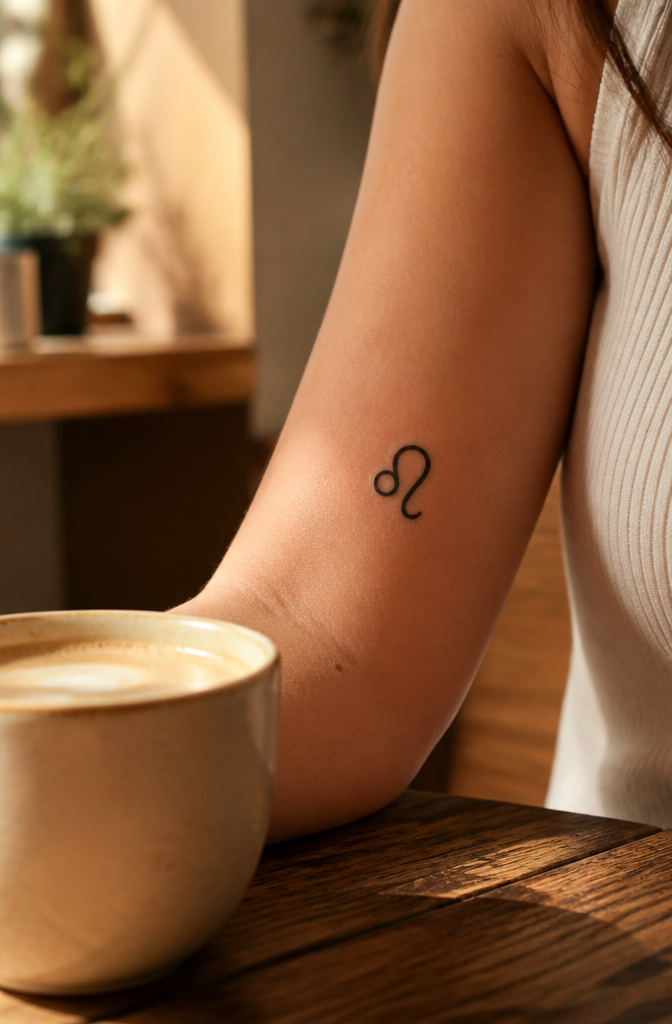
Zodiac symbols were my gateway into thinking about tattoos seriously. The glyph for Leo looks like a tiny scribble, yet anyone who knows astrology reads it instantly. That built-in recognizability matters for a first tattoo. You do not need to explain what it is.
The symbol itself is the compact choice. Some people prefer the animal or figure, like the ram for Aries or the fish for Pisces. That adds variety without adding size. Either way, the design stays readable at small scale, which is exactly what a first-timer usually wants.
Placement splits cleanly on intent. The outer arm works if you want the symbol visible in short sleeves. The ribcage keeps it intimate, visible only when you choose. One tattoo artist I read described ribs as her go-to for clients who want something easier to hide. The outer arm is what she suggests for showing it off.
Personal meaning is already attached. You were born under the sign whether you care about horoscopes or not. That gives the tattoo a story without requiring extra imagery.
7. Your Favorite Artist’s Flash
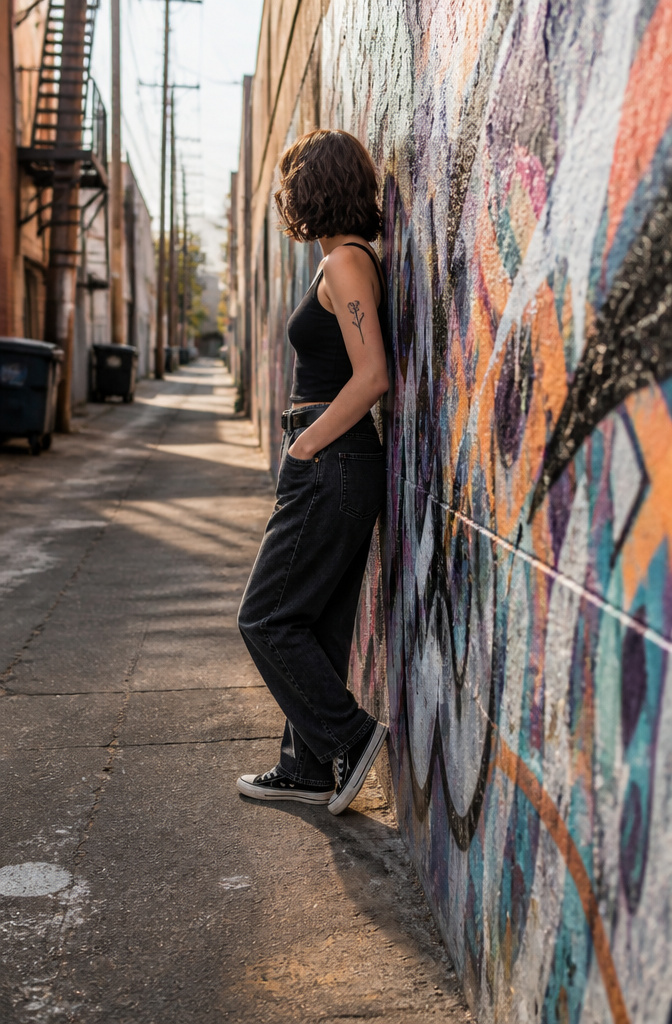
Flash tattoos are designs an artist draws in advance, which clients claim from a set sheet rather than bringing in their own idea. The artist has already solved the composition, worked out the line weight, and settled on a size that actually fits a body. For a first tattoo, that pre-made structure removes a lot of the decision fatigue that can stall people for months.
The price is usually set before you sit down, so there is no surprise when the session ends. You also see exactly what you will get, which matters when you do not yet have the vocabulary to describe what you want. Most flash sheets lean toward small, relatively simple designs, the scale that heals cleanly and lets you test how you feel about wearing something permanent.
Social media makes the search practical now. Tattoo artists post flash sheets to their Instagram Stories regularly, and following a handful whose line work appeals to you means those designs appear without active searching. Once a flash piece is claimed, the artist typically retires that exact design, so the piece you choose stays singular in their portfolio. If something catches your eye, booking quickly matters more than deliberation.
8. Tiny Animals
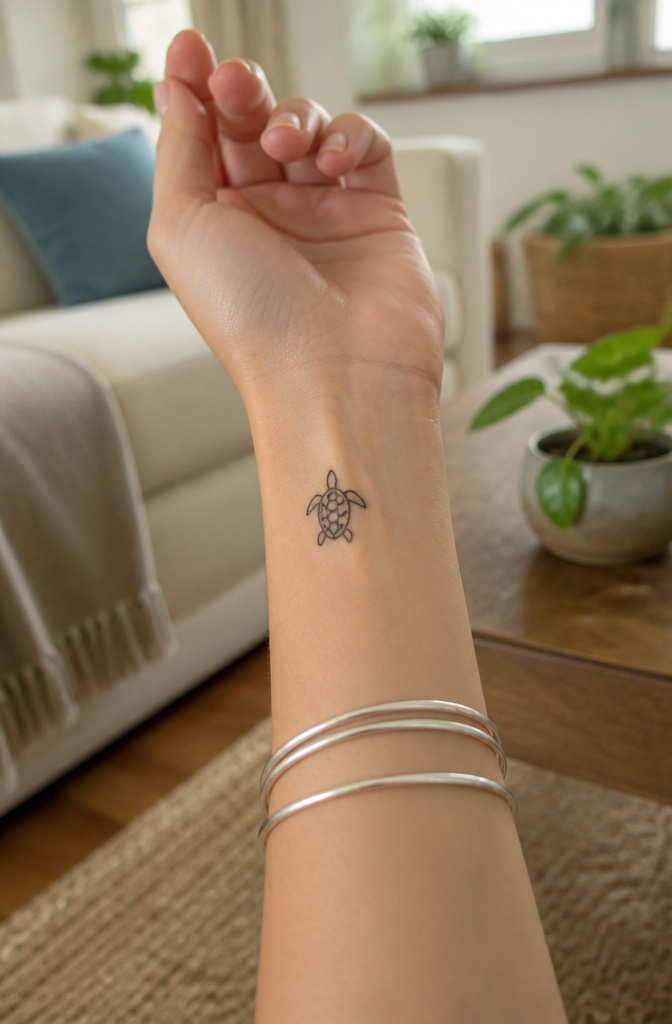
A turtle the size of a nickel still reads as a turtle because the silhouette is unmistakable: the domed shell, the four stubby legs, the small head just barely lifted. The same holds for elephants, rabbits, birds, bees. What separates the ones that last from the ones that blur into gray blobs is the line weight. Bold outlines carry the design; fine detail inside them drops out as the skin ages or the ink settles. A single needle passing for whiskers or feather texture looks crisp on day one and muddy by year three.
Placement matters more with animals than with symbols because the shape has to match the space. A turtle across the inner wrist works because the shell rounds naturally with that curve of bone. An elephant behind the anklebone, trunk pointed down toward the heel, keeps its proportions honest; the same elephant floating on a shoulder might read as a blob with a hose. The body part gives the tattoo its scale, not the other way around.
9. Simple Geometric Shapes
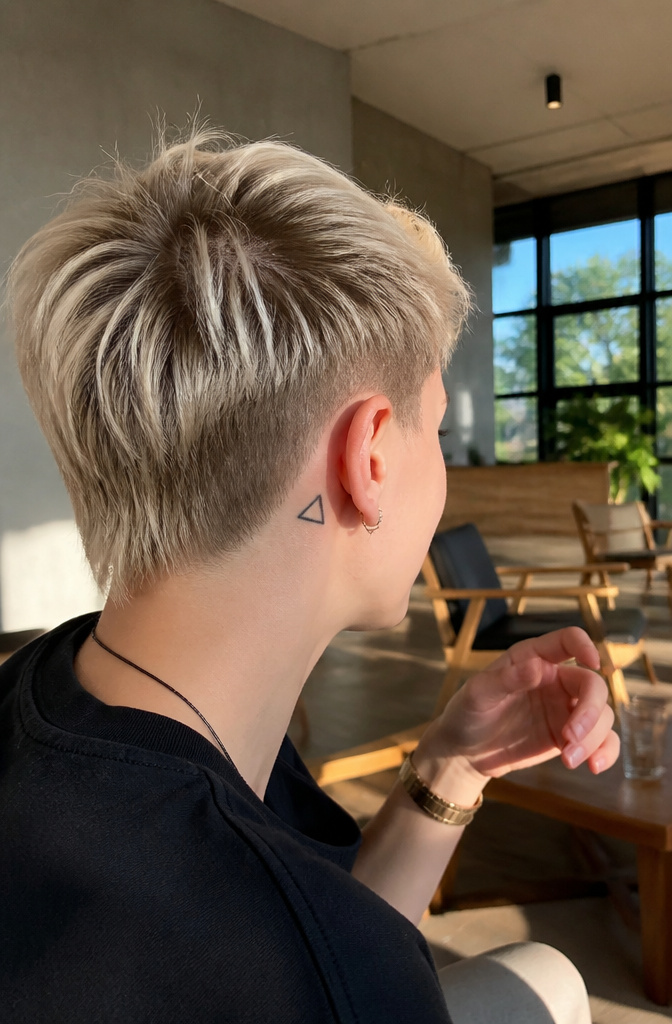
Clean lines hold up. Arrows, triangles, and other simple geometric shapes stay readable as skin shifts over time, where busier designs blur and lose their shape. The ink settles, the lines spread slightly, and a basic form still reads as what it was meant to be.
What drew me to this category, looking through portfolios, was how a single triangle behind the ear can become part of a sleeve five years later. That expandability matters when you are twenty-six and unsure how deep this goes. A friend started with a tiny arrow on her wrist, added a second pointing the opposite direction, then built outward until she had a full forearm piece that still incorporated the original. The first tattoo did not need to be hidden or covered; it became the anchor.
Placement flexibility is another quiet advantage. A small circle or line works on the ankle, the collarbone, or the ribcage without needing the space a detailed piece demands. The pain tends to be shorter, the cost lower, the commitment easier to justify if nerves are part of the equation.
10. Words or Phrases
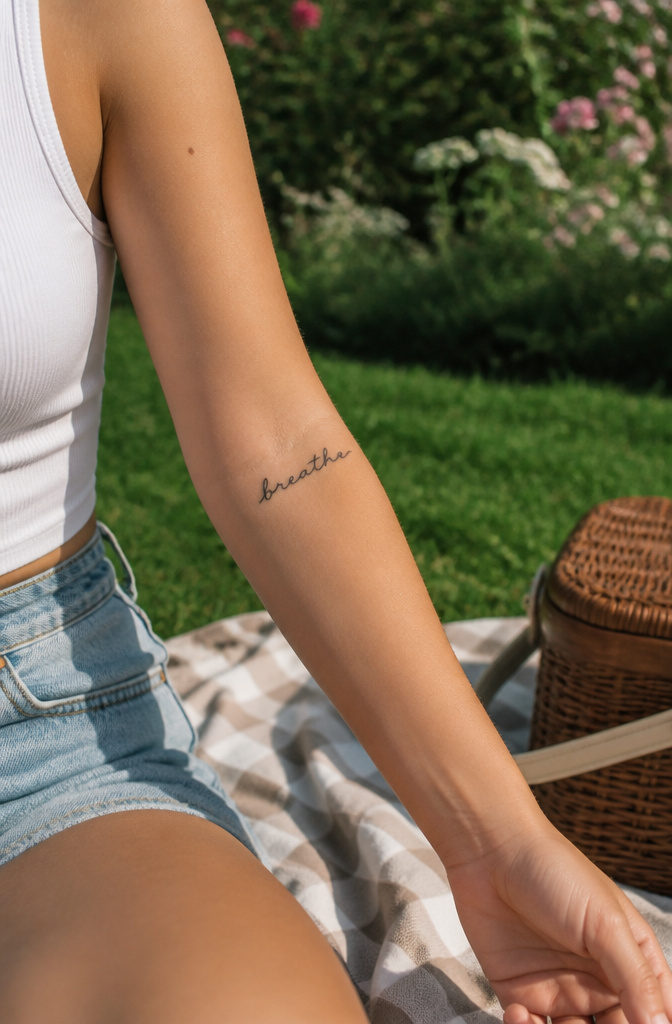
A single word on skin looks effortless, but the ink does the opposite of disappear. Small text blurs faster than imagery, because every letter is a line fighting to hold its edge. Wanderlust in a hairline script sounds romantic at twenty-two; at forty it can read like a bruise that forgot to fade. The font choice matters more here than with any other tattoo style, because serifs and ultra-thin strokes are the first to surrender to time and sun.
Love works better than longer words for exactly this reason. Fewer letters, fewer failure points. The inner arm protects the investment: less UV exposure means the pigment stays where the artist put it, not feathered into a soft blue halo. That placement also keeps the message personal, visible to you and chosen company rather than every stranger at the grocery store.
Where It Goes
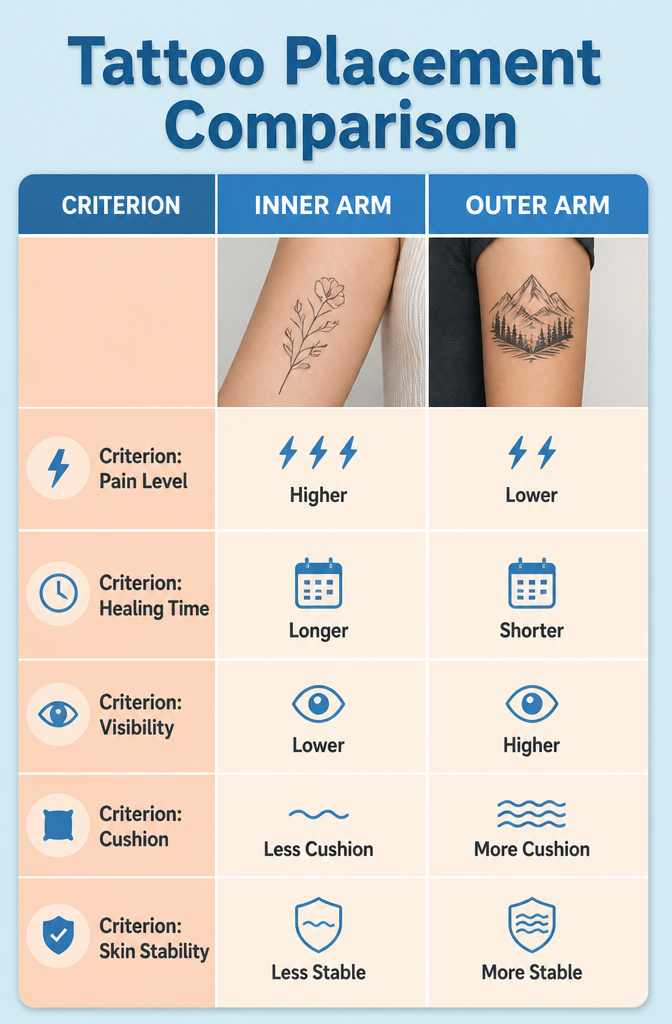
Areas with more bone or thin skin tend to hurt more, which matters when you do not yet know your own tolerance. The ankle, wrist, and inner arm sit near the surface with little padding, so the needle registers sharply. These spots also heal more slowly because the skin flexes constantly and rubs against shoes, watchbands, or sleeves.
The outer arm offers a different trade. Muscle and fat beneath the skin dull the sensation, and the flat surface lets an artist work without the awkward angles of a curved ankle bone. Visibility is higher there too, which works if you want the piece seen rather than hidden.
For a first design, placement shapes both the pain you feel and the healing you manage. A palm-sized piece on the outer forearm stays cleaner through daily life than the same size tucked inside a wrist that spends eight hours on a keyboard. Thin lines and delicate work hold better on stable skin that does not stretch and crease with every movement.
If you are still testing whether tattooing sits right with you, start where you can control both variables: enough cushion to keep the session bearable, and enough exposure to tend the healing skin without peeling back a bandage every hour.
What the Needle Feels Like
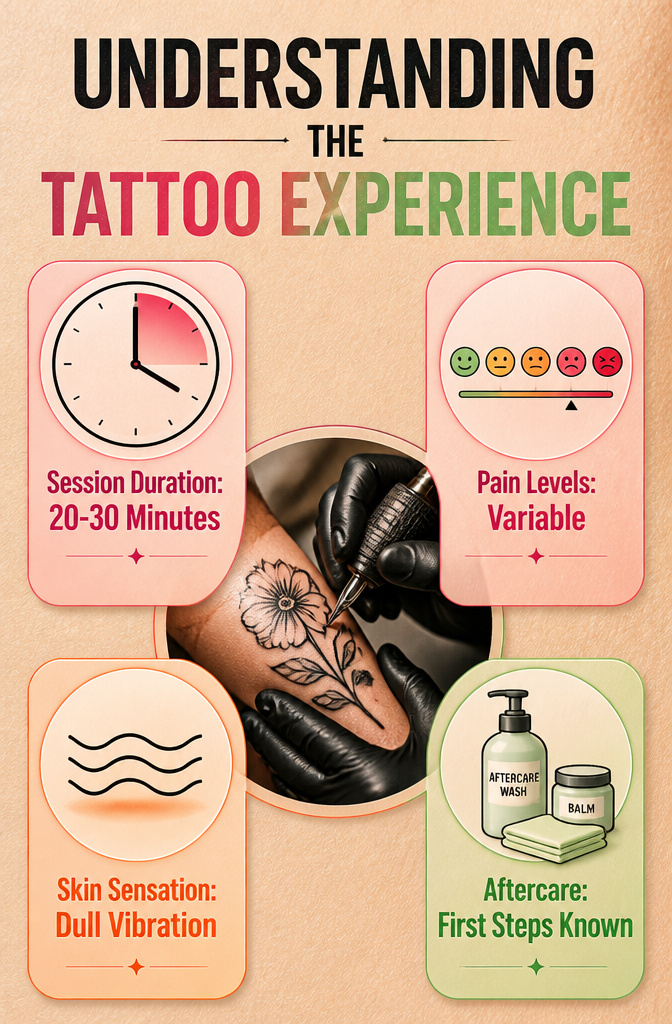
A small tattoo runs out of skin before it runs out of your tolerance. The needle still bites, but the session ends in twenty or thirty minutes, well before the adrenaline crash that turns larger sittings into an endurance test. You get the full arc: the initial sting, the dull vibration that follows, and the relief of the artist wiping the last line clean. That complete picture matters because knowing your own pain response shapes every tattoo that comes after.
Some spots feel like a cat scratch, others like a rubber band snapping against bone. A first-timer who picks the ribs learns something different about herself than one who starts on the outer forearm. Both walk out with usable data. The artist I spoke with calls small work a "feel for the experience start to finish," and that framing holds up: you understand the studio rhythm, the aftercare itch, how your skin heals, whether the high wears off fast or lingers. None of that requires a three-hour sitting. If larger pieces are in your future, that self-knowledge saves you from committing to a full sleeve placement before you know how your body handles it.
Healing and Aftercare
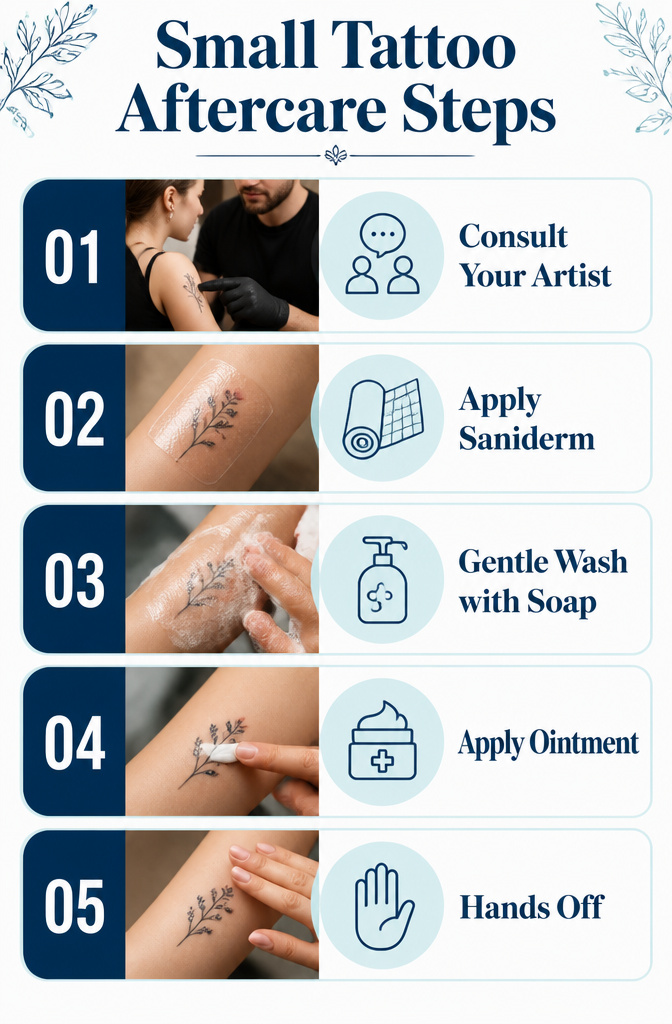
Saniderm changed how I handle the first seventy-two hours, and most reputable artists now include it in the aftercare kit they hand you at the door. The clear adhesive film seals out bacteria while letting the skin breathe, which means no more waking up to a stuck bedsheet or a scab pulled loose in your sleep. Small tattoos heal faster than large ones, usually settling in two to three weeks instead of a month, but the daily discipline stays identical: gentle wash with unscented soap, pat dry, thin layer of the ointment your artist names, and hands off.
Neglect shows faster on a small design, not slower. A blown line on a three-inch piece takes up proportionally more real estate than the same flaw hidden in a sleeve, and uneven healing leaves a tiny word illegible where a big tattoo has surrounding detail to distract the eye. The aftercare is where cheap becomes expensive.
Finding the Right Artist
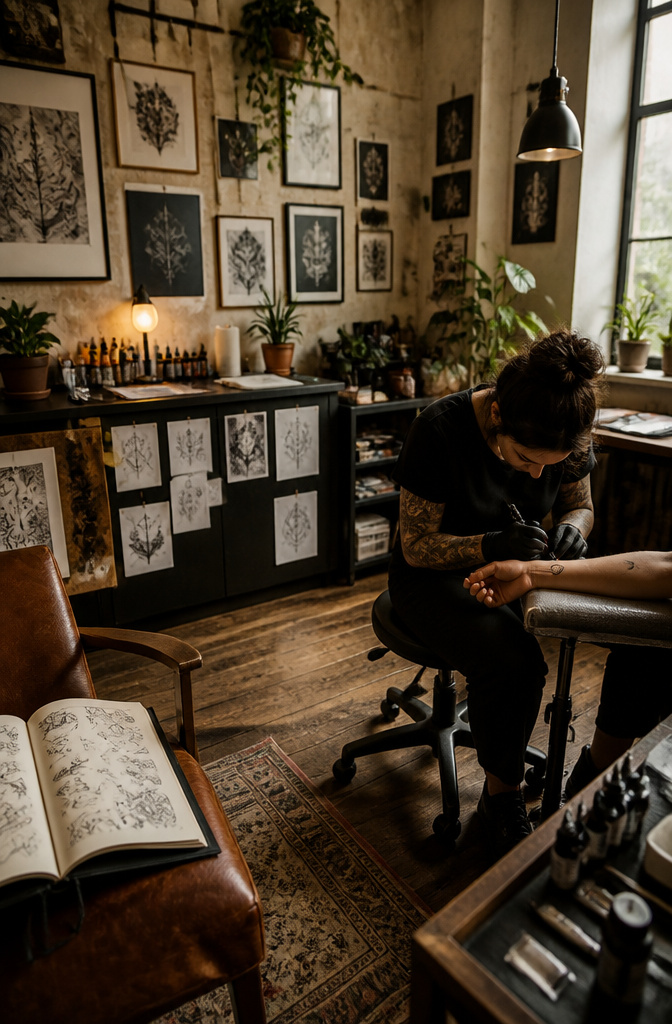
A small tattoo lives or dies on line work, and not every artist cares about a single needle the way they care about a full sleeve. Scroll Instagram or TikTok with your exact design in mind: a fine-line heart requires different hands than a bold black star. Look for healed photos, not just fresh work, because skin changes a design over weeks. The portfolio should make you stop scrolling; if you are convincing yourself it is good enough, keep looking.
Book the consultation before you book the appointment. A fifteen-minute conversation tells you whether the artist asks about placement for aging, whether they scale designs to your body, whether they seem bored by something small. The ones who treat a wrist dot with the same precision as a back piece are the ones worth waiting for.
Frequently Asked Questions
What are some good first tattoo ideas?
Strong options include initials of someone you love, minimalist lines or dots, simple flowers or plants, stars, moons, hearts, butterflies, your star sign, flash art from an artist’s pre-drawn sheet, tiny animals with bold outlines, simple geometric shapes, and single words or short phrases. Each stays readable at small scale and lets you test how wearing permanent ink feels before committing to larger work.
How much do small tattoos hurt?
Small tattoos hurt less than large ones primarily because the session ends quickly, usually in twenty to thirty minutes, well before adrenaline crashes turn the experience into an endurance test. Pain varies by spot: bone and thin skin areas like the ankle, wrist, and ribs feel sharper, while the outer arm’s muscle and fat dull the sensation noticeably.
What should I consider when choosing a tattoo artist?
Match the artist’s specialty to your exact design, since fine-line hearts require different hands than bold black stars. Scroll their healed photos, not just fresh work, because skin changes ink over weeks. Book a fifteen-minute consultation first to see whether they treat small pieces with the same precision as large ones, and whether they ask about how your placement will age.