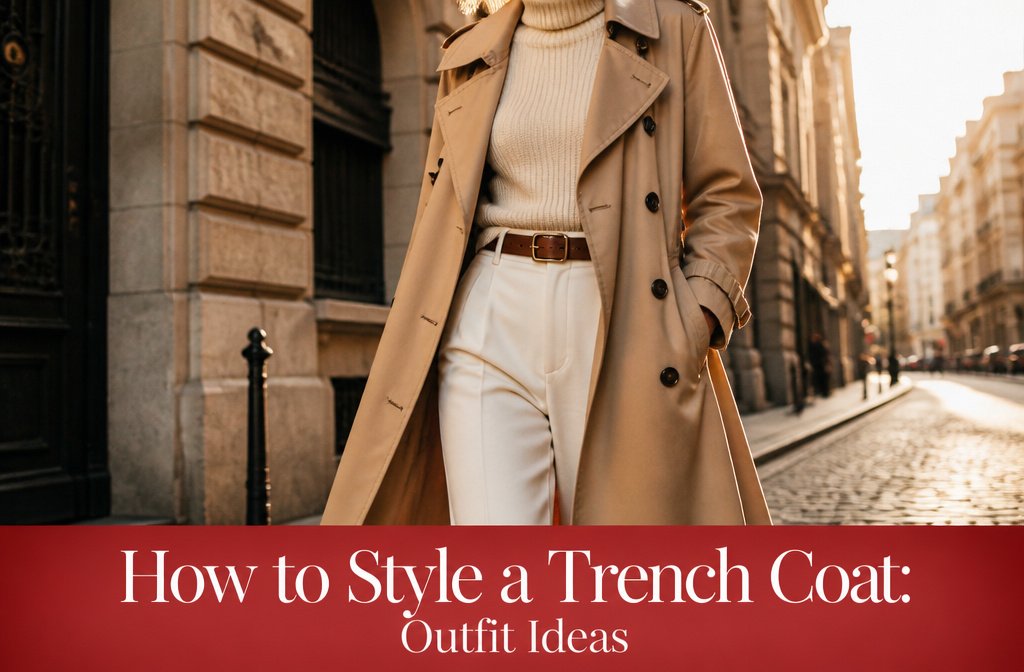
A trench coat that actually works across ten different outfits costs you one adaptable piece and the discipline to stop adding more. Most women get stuck at the first combination, convinced the coat only belongs over business attire. The real test is whether it still buttons cleanly over a thick merino turtleneck without pulling at the shoulders, because that gap between seasons is where it earns its keep.
1. Casual with Jeans and Sneakers
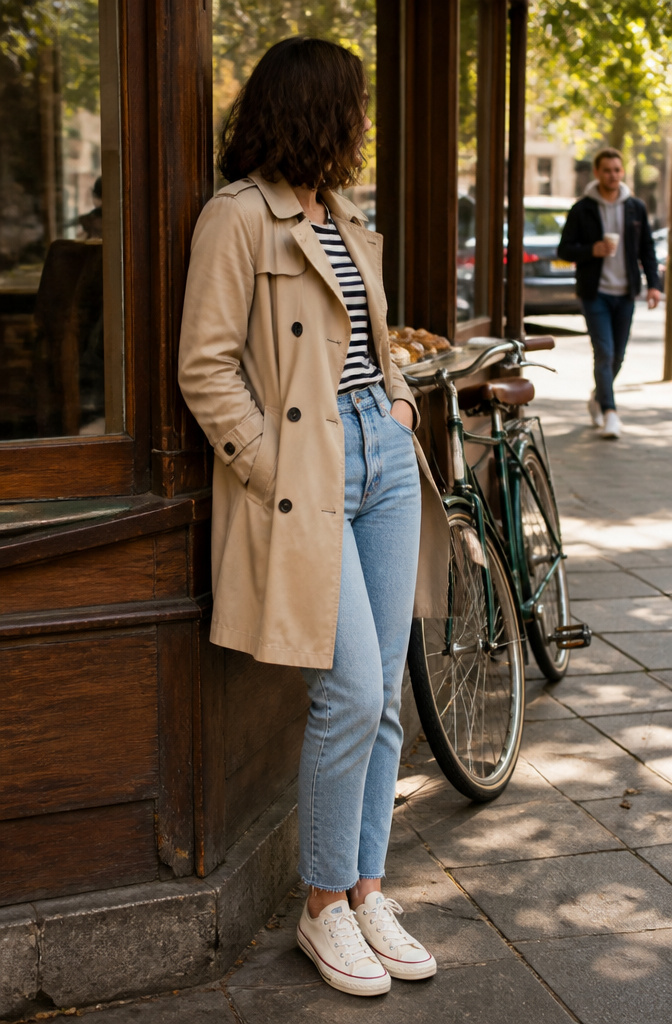
The question I get most is whether a trench coat works for everyday errands or just feels overdressed. It pairs with jeans and sneakers more naturally than you’d expect, and that combination is probably how most women already wear theirs.
A beige or camel trench over a striped tee and light-wash denim reads intentional without trying hard. The stripe underneath does the visual work so the rest can stay simple. Straight-leg jeans sit cleaner under the hem, but wide-leg cuts work if the trench length hits mid-thigh or lower so the proportions don’t compete.
Sneaker choice matters more than you’d think. Low-top canvas keeps the line slim and vintage-feeling; chunky soles add deliberate contrast but can tip the look toward costume if the trench is already oversized. One balanced element is usually enough.
This is the outfit that convinced me the trench coat isn’t only for offices or rain. The structure of the coat does the polishing, and the denim does the relaxing. You don’t need to add much else.
2. Dressed Up with Dresses and Heels

A black trench thrown over a little black dress is the combination I keep reaching for when I need to look pulled together in under ten minutes. The coat does the heavy lifting; the dress just needs to be clean. For lengths, a midi dress hits that sweet spot where the trench hem and dress hem don’t fight each other, though a shorter dress works if you want the contrast. Heels matter here: classic pumps or pointed-toe boots keep the line long, while kitten heel mules add a quieter polish that still reads intentional. Leave the trench slightly open so the dress underneath shows, or cinch the belt to create an hourglass shape if the event calls for more structure. Silk or leather trenches read more evening than cotton gabardine, though you sacrifice some practicality for the sheen. The real gap most women hit is the event that isn’t quite a gala but still demands effort; this pairing covers it without looking like you tried too hard.
3. Layered with Knitwear

A trench coat only earns its keep if you can actually wear it when the temperature drops. The test is whether the coat still buttons cleanly over a thick sweater without pulling at the shoulders or bunching at the sleeves.
Turtlenecks are the obvious starting point, and the weight matters more than the color. A mid-weight merino layers smoothly and holds its shape; cashmere gives more warmth for the same bulk but pills faster and costs more to replace. I reach for merino on days when the coat stays on indoors, cashmere when I know I will be outside long enough to need it.
The fit rule here is skimming the body, not tight. You want to see the line of the sweater underneath without the coat clamping down on it. Slide a flat hand between the coat and your shoulder blade; if your fist fits, the cut is too generous and the whole thing starts to look like a costume. If you cannot button the belt without a visible strain across the back, the sweater is too heavy for that coat, full stop. The coat should fall straight from the shoulder, not ride up or bow outward where the knit ends.
Wool-blend or cashmere-lined trenches handle this best in actual winter. Cotton gabardine, the classic spring fabric, will layer over a thin knit but leaves you cold and oddly formal with anything thicker.
4. Business Casual with Tailored Trousers
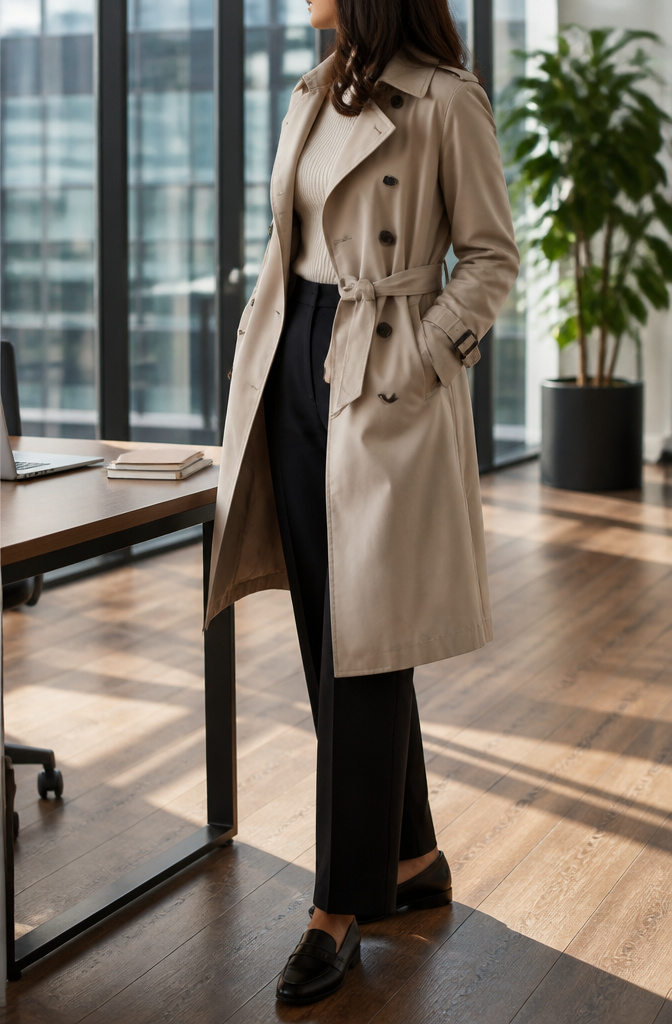
A trench coat over full suiting reads like you forgot your overcoat; the belted silhouette fights the jacket underneath and the whole thing feels like outerwear happened to you. The smarter move is to wear it as the structure itself, buttoned over a fine-gauge knit and tailored trousers with a clean line through the leg. Straight or slim cuts keep the hem from bunching above the ankle, while a wider leg needs enough length to break cleanly at the shoe so you are not managing a puddle of fabric.
For shoes, a loafer keeps the tone deliberate and low, but a low heel works if your office leans sharper. The Gap Icon Trench Coat at $168 has the length and neutral color that lets the trousers do the tailoring without the whole look tipping into costume. That price point makes it a usable entry point for this particular outfit, and the cotton holds enough shape to read intentional rather than rainy-day afterthought.
5. Sporty with Hoodies

A hoodie under a trench coat sounds easy until the hood bunches at your neck like a flotation device. The weight of the fabric is the first place this goes wrong. A mid-weight cotton French terry sits flat enough to layer; anything with a brushed fleece interior or a kangaroo pocket will fight the trench’s lining and leave you looking padded.
The hood itself needs a decision. Tucked inside the collar, it creates a clean line from the back but can ride up and gap. Left outside, it reads deliberate, almost streetwear, yet it only works if the hood is relatively shallow. Deep scuba hoods drown the trench’s proportions entirely.
For the bottom half, slim joggers in a substantial ponte or double-knit keep the silhouette from collapsing into slouch. Leggings are sharper still, though they require a longer trench to balance the volume up top. I have tried this with wide-leg joggers more than once, and the result was always the same: a shapeless column from shoulder to ankle. The joggers need to taper, or the coat needs to hit above the knee, never both wide and long.
6. With Stripes

A Breton tee in navy and white is the stripe pairing readers keep coming back to with a camel trench. The high-contrast banding sits cleanly against the coat’s neutral field without competing for attention, and the French-navy base echoes the depth of a classic trench’s darker horn buttons or lining.
Striped knits work on the same principle. A finer-gauge striped sweater, like the ones La Ligne builds its line around, layers easily underneath since a trench should skim the body with room for exactly that kind of interior layer. The combination reads as intentional rather than thrown-on because the stripe’s geometry plays against the coat’s long vertical lines.
This pairing also solves the shoe question. Jeans and sneakers with a striped tee under a trench is a reader-tested formula for casual days, and the stripe does the styling work so the rest can stay basic. Camel or beige trenches carry it best; the warmth of the coat softens the nautical crispness of the stripe into something you can wear inland, in October, without looking like you’re headed to a marina.
7. Over a Suit

The double-breasted trench was built for this exact job. Its generous cut was originally designed to layer over a military uniform, and that extra room across the chest still matters when you’re sliding it over a structured blazer. A single-breasted coat sits closer to the body, which looks sleek until you try to fasten it over a suit jacket and realize you’ve built a fabric traffic jam at your waist.
The trench hem should clear your suit jacket by at least two inches. Anything shorter and the jacket bunches underneath; anything longer and you lose the clean line that makes this pairing look intentional rather than accidental. Camel or black reads as the most deliberate choice here, giving you that structured, pulled-together silhouette that works for a morning presentation or an evening flight without needing to change what’s underneath. A pastel or neutral tone softens the whole thing if your office leans more creative than corporate, though the effect is closer to "stylish commuter" than "corner office."
8. With Accessories

The trench coat’s own belt is the first place most women go wrong. Fasten it traditionally and the coat keeps its military-structured shape, which works for offices and evenings. Tie it loosely at the back and the whole silhouette relaxes into something that reads casual without trying hard. Swapping the factory belt for a bold leather or chain version is the single fastest way to make a neutral trench feel like yours, though it only works if the coat’s hardware is simple enough to let the replacement belt star.
Bags compete more often than they help. Structured leather handbags keep the polished line going; crossbody bags break it. The shape matters more than the label. A wide-brim hat or beret adds chic without noise, while a silk scarf at the neck does the Parisian thing the sources keep mentioning. Sunglasses finish it, but oversized only works if your coat’s lapels are standard width, not exaggerated. Neutral trenches with colorful accessories give personality without chaos, and that mix is how most women I see actually solve the "this feels generic" problem. The coat is a template. The accessories are where the decision happens.
9. In Monochrome Looks
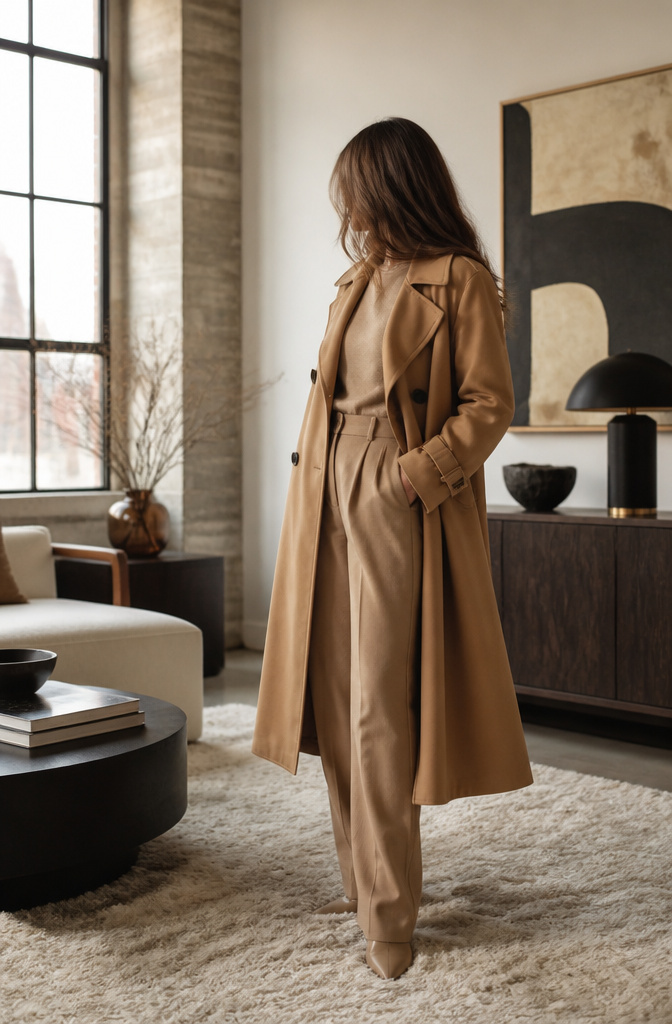
Monochrome dressing removes the guesswork from mornings. A camel trench coat worn over tonal trousers and a sweater reads as deliberate rather than accidental, and the repetition of one warm neutral does what beige always does: it looks like money. The eye reads continuous color as luxury because nothing breaks the line.
All-black underneath a black trench has the same effect with a harder edge. The coat becomes architecture instead of layering piece. But camel-on-camel is the stronger move for 2026, and a structured camel trench coat with defined shoulders gives the look its spine. Without that structure, the outfit collapses into a puddle of sameness.
Beige rewards repetition in a way brighter colors resist. It does not fight itself. One camel piece lookssafe; three look considered. The trick is varying texture so the eye has something to do: ribbed knit against smooth wool, matte against slight sheen. The trench coat handles the sheen. The sweater handles the matte. The trousers split the difference.
I tried this with a black trench first and wondered why it felt funereal. The same shapes in camel felt expensive immediately. Color was the only variable.
10. With Cropped Styles
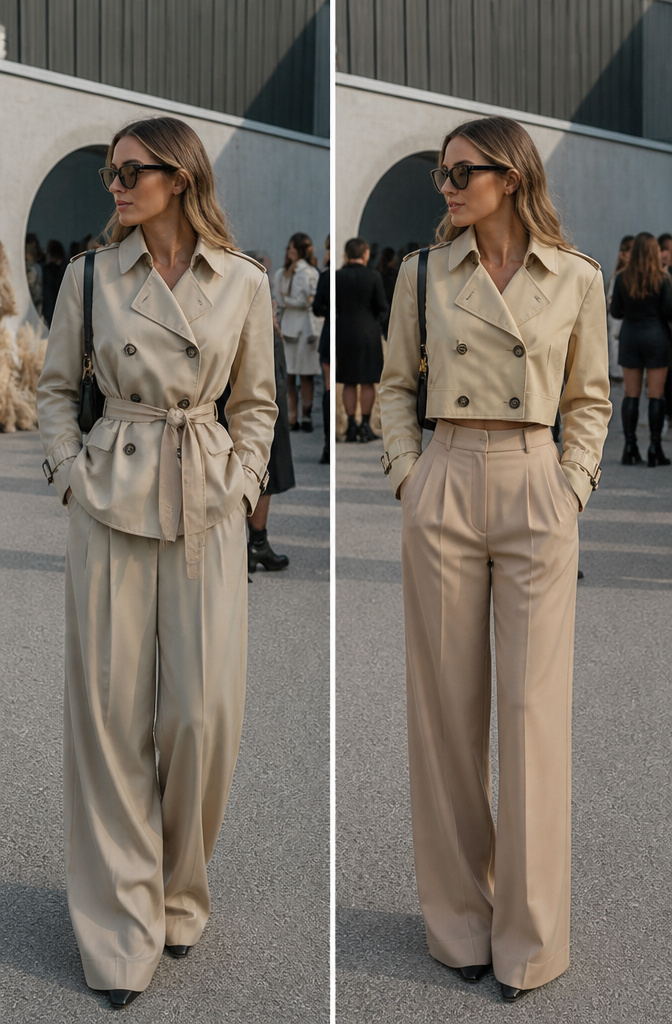
A cropped trench lands at the hip or high thigh, which changes almost every rule the classic length lives by. The shorter hem draws the eye to the waist, not the knee, so the piece underneath becomes the whole outfit. High-waisted pants or a skirt sitting exactly at that line keeps the proportions clean; anything lower and the coat starts to look like a misplaced shirt.
Petite frames tend to wear this length well, since the cut won’t overwhelm or shorten the leg. Curvier builds or taller women often need more caution: too short and the coat can read boxy, while very tall wearers sometimes look like fabric is missing rather than intentionally cropped. The Sherlock Short Trench Coat at €325 sits right in this range, hitting just below the hip with a structured shoulder that keeps it from feeling like an afterthought.
Slim trousers and ankle boots ground the look; sneakers work too if the pant is tailored enough. What I notice comparing these to the longer silhouettes is that the belt matters more here. On a full-length trench the belt is optional. On a cropped version, cinching the waist is what separates intentional style from borrowed outerwear.
Trench Coat History

The trench coat was built for British soldiers in World War I, cut from water-resistant gabardine invented by Thomas Burberry to keep men dry in trenches and mud. Storm flaps, deep pockets, epaulettes, and a back vent were not decorative touches; they kept rain off, held gear, and let a soldier move. Those functional details still shape the silhouette you see today.
Women started wearing surplus military trenches after World War II, and Hollywood sealed the shift. Audrey Hepburn in that rain-soaked Breakfast at Tiffany’s scene made the coat feel less borrowed and more owned. Over a century later, Burberry and Aquascutum still anchor their identities to it, and British style icons like Kate Moss wear the cut regularly.
The reason it never drops out of style is that it was never designed for fashion in the first place. It solves a real problem, transitional weather, without asking you to rebuild your wardrobe around it. That practicality is what turned a uniform into a staple.
How a Trench Coat Should Fit

The trench coat should skim the body without feeling tight, with enough room to layer a wool sweater or blazer underneath and still bend your arms and button it up. In the fitting room, check the shoulder seam: it should sit right at the edge of your shoulder bone, not hanging off it or pulling inward. Sleeve length matters too; with your arms relaxed at your sides, the cuff should break at your wrist bone, covering shirt sleeves but not swallowing your hands.
Length shapes the whole silhouette. A coat that falls just below the hip to mid-thigh works well with slim trousers and ankle boots. Knee-length flatters most body types and pairs cleanly with shirts and loafers. Full-length trenches sit below the knee and need heeled boots and high-waisted bottoms to keep the proportions from dragging you down.
When ordering online, the common trap is sizing for your usual jacket and ending up with something too trim to layer. Size for the sweater you will actually wear under it. The coat should feel loose, but not so loose that wind catches the fabric and you lose your shape entirely. A tailored cut keeps your figure defined while leaving room to move.
Seasonal Versatility

A trench coat’s fabric decides which season it actually belongs to. Cotton gabardine handles spring and fall rain without trapping heat; wool blends or cashmere-lined versions carry winter; and a lightweight linen trench coat is the specific piece that makes summer work, worn more for silhouette than shelter. Transitional weather is where the trench earns its reputation. The April stretch between winter and full bloom forces the hardest dressing decisions, and the trench coat exists almost specifically for that gap. Vogue put it plainly: the trench is the "humble hero of rain and noncommittal temps," upgraded for spring and looking more exciting than ever.
The humble hero of rain and noncommittal temps has been upgraded for spring and is looking more exciting than ever.
— Vogue
That means one coat can carry you from March drizzle through May sunshine if you match the weight to the week. A cotton blend with a removable lining comes closest to true year-round use. Silk or lightweight linen versions read evening-ready in summer; heavier cotton with lining saves you from buying a separate winter coat you will not want to store.
Color Choices
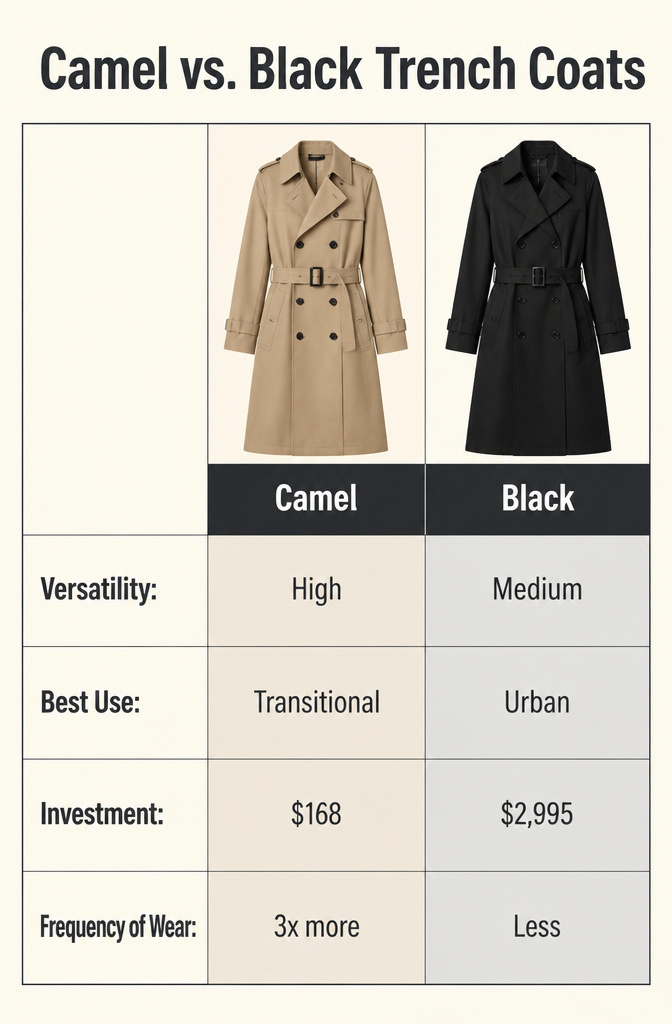
Camel and beige are the most versatile starting points for a trench coat. They read as neutral in almost any light, pair cleanly with navy, black, cream, or olive, and never quite date themselves. Black works better for urban wear, especially if your wardrobe leans dark and you want the coat to function as a crisp top layer rather than a warm contrast. Bolder colors like red make sense when the rest of your outfit is quiet and you want one piece to do the visual lifting, though that choice narrows how often you reach for it.
The Burberry Castleford at $2,995 sits at the investment end most of us are not buying. The Gap Icon trench at $168 covers the same silhouette without the guilt of a dry-cleaning bill for a subway commute. Most women will wear a camel or beige option three times as often as a statement color, which is the math that matters.
Styling Accessories

The belt on a trench coat is part of its architecture, not an afterthought. Swapping it out only works when the replacement is narrower and flatter than the original so the coat still closes cleanly. A wide waist-cincher or anything with heavy hardware will bulk underneath the buckle and distort the line.
Hat shape matters at the collar. A trench’s lapels sit high and close to the jaw, so a brim that angles upward, like a fedora or a shallow cloche, keeps the face visible. A floppy wide brim fights that structure and pushes the whole silhouette off balance. If the coat’s collar is popped against weather, the hat needs to sit back enough to leave that line alone.
Bag straps are the detail that ruins an otherwise good look. A crossbody strap cutting across the double-breasted front breaks the coat’s vertical seam and keeps it from hanging right. A shoulder bag with a short strap that sits above the waist belt, or a handheld tote once the coat is open, keeps the closure intact. Short straps above the belt, long straps only when the coat is open is the rule that sorted out most of my morning indecision.
Scarves belong under the collar, not looped over it. Knotting a lightweight wool or silk scarf inside the neckline lets the lapels fold as designed; anything thicker belongs with a different coat entirely.
Frequently Asked Questions
How should a trench coat fit?
A trench coat should skim the body without feeling tight, with enough room to layer a wool sweater or blazer underneath and still bend your arms and button it up. The shoulder seam should sit right at the edge of your shoulder bone, and the cuff should break at your wrist bone. Size for the sweater you will actually wear under it, not your usual jacket size.
Can you wear a trench coat casually?
Yes, a trench coat pairs with jeans and sneakers more naturally than you’d expect. A beige or camel trench over a striped tee and light-wash denim reads intentional without trying hard. The structure of the coat does the polishing, and the denim does the relaxing.
What color trench coat is most versatile?
Camel or beige are the most versatile starting points. They read as neutral in almost any light, pair cleanly with navy, black, cream, or olive, and never quite date themselves. Most women will wear a camel or beige option three times as often as a statement color.
When should you wear a trench coat?
You can wear a trench coat in any season and for almost any occasion. Cotton gabardine handles spring and fall rain, wool blends carry winter, and lightweight linen works for summer. The trench earns its reputation in transitional weather, especially that April stretch between winter and full bloom.