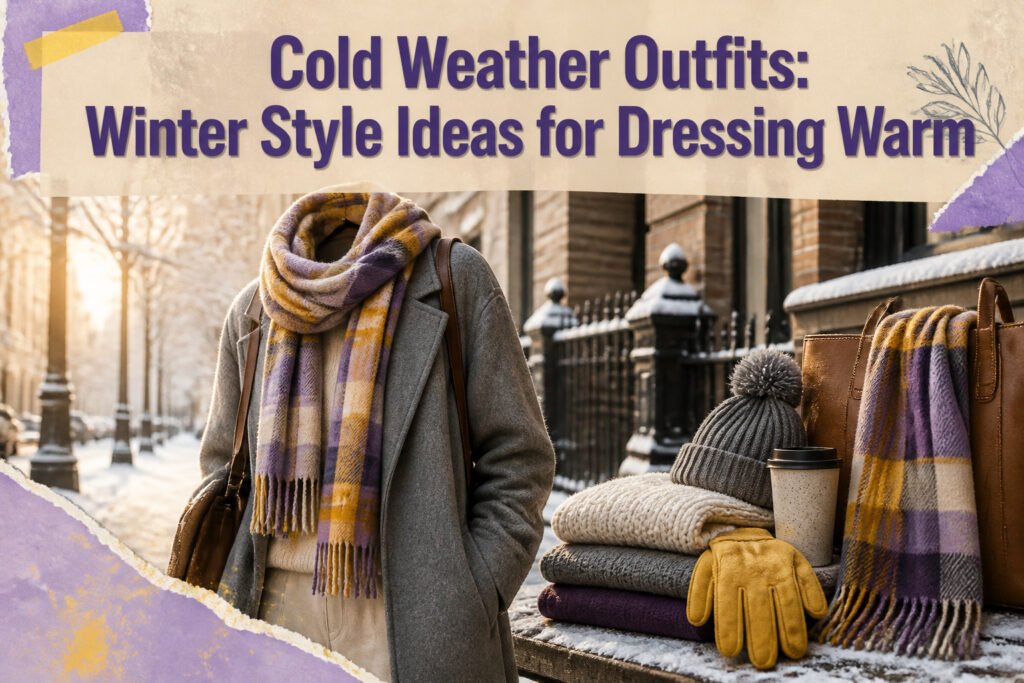
Cold weather outfits are built from the inside out, and the common mistake is starting too thick. A chunky knit under your coat leaves no room to adjust when the temperature shifts, which is why the real work happens in thin base layers like $7.90 Uniqlo Heattech socks and fitted thermals that trap heat without ruining the silhouette you actually wanted to wear.
1. Statement Coats
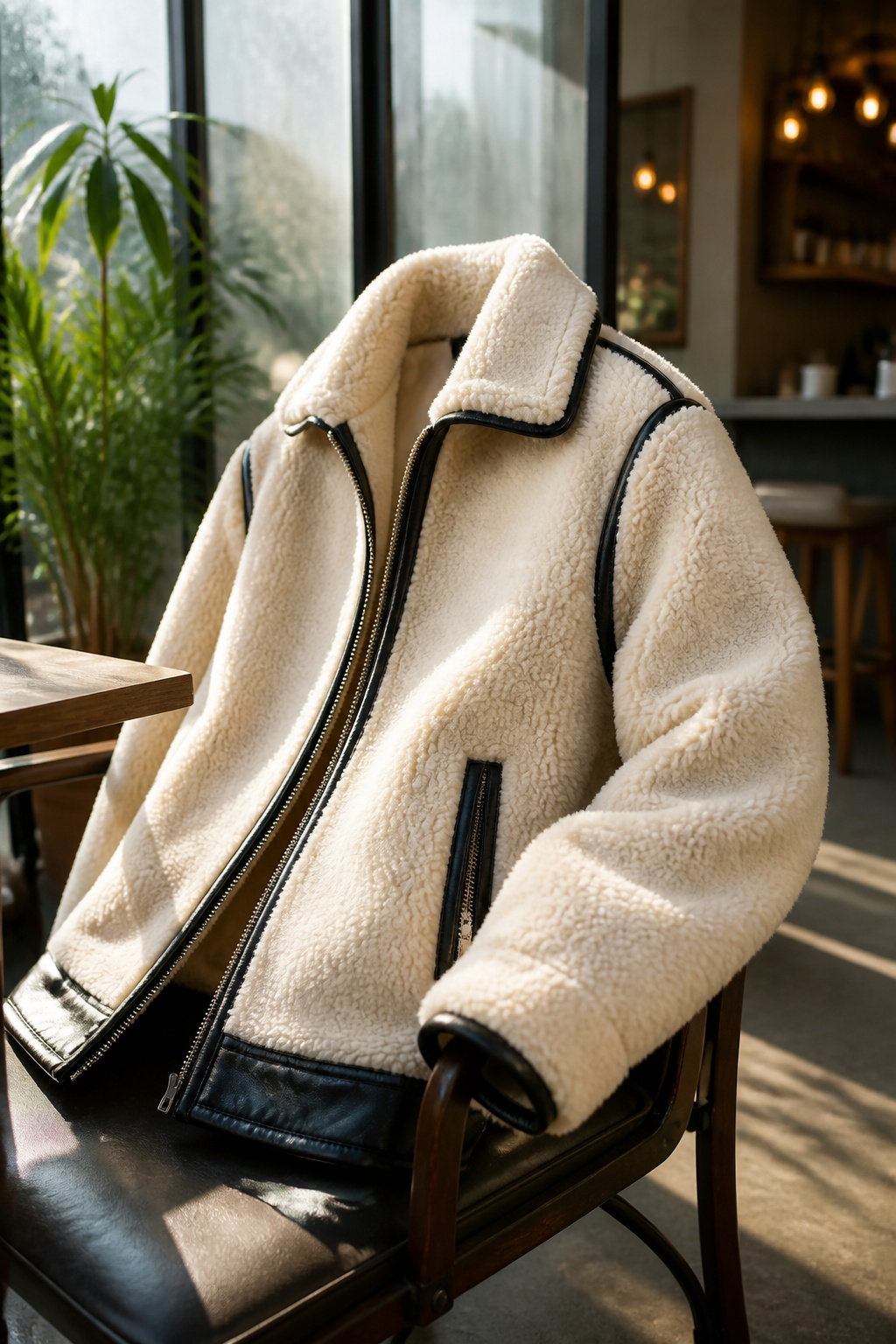
A single bold coat does more for a cold weather outfit than three forgettable layers ever will. The Gap Sherpa & Leather-Trim Jacket at $268 is the kind of piece that earns its place: the shearling body reads casual, the leather trim pulls it together, and the whole thing works over jeans and a tee or something dressier underneath.
Color or pattern on the outside changes everything when your base is basic black, navy, or gray. Last winter I watched a friend in a leopard coat walk into a restaurant looking dressed up while the rest of us in safe neutrals just looked bundled. The coat was doing the work. Same principle applies to a cherry red crewneck or a strong plaid, but the outer layer gets seen first and longest.
One well-chosen jacket also simplifies the morning. Reach for the statement, throw on the basics, leave the house. The arithmetic of warmth still matters, yet a single strong layer covers more of it than people expect, and the visual payoff is immediate.
2. Layering Pieces
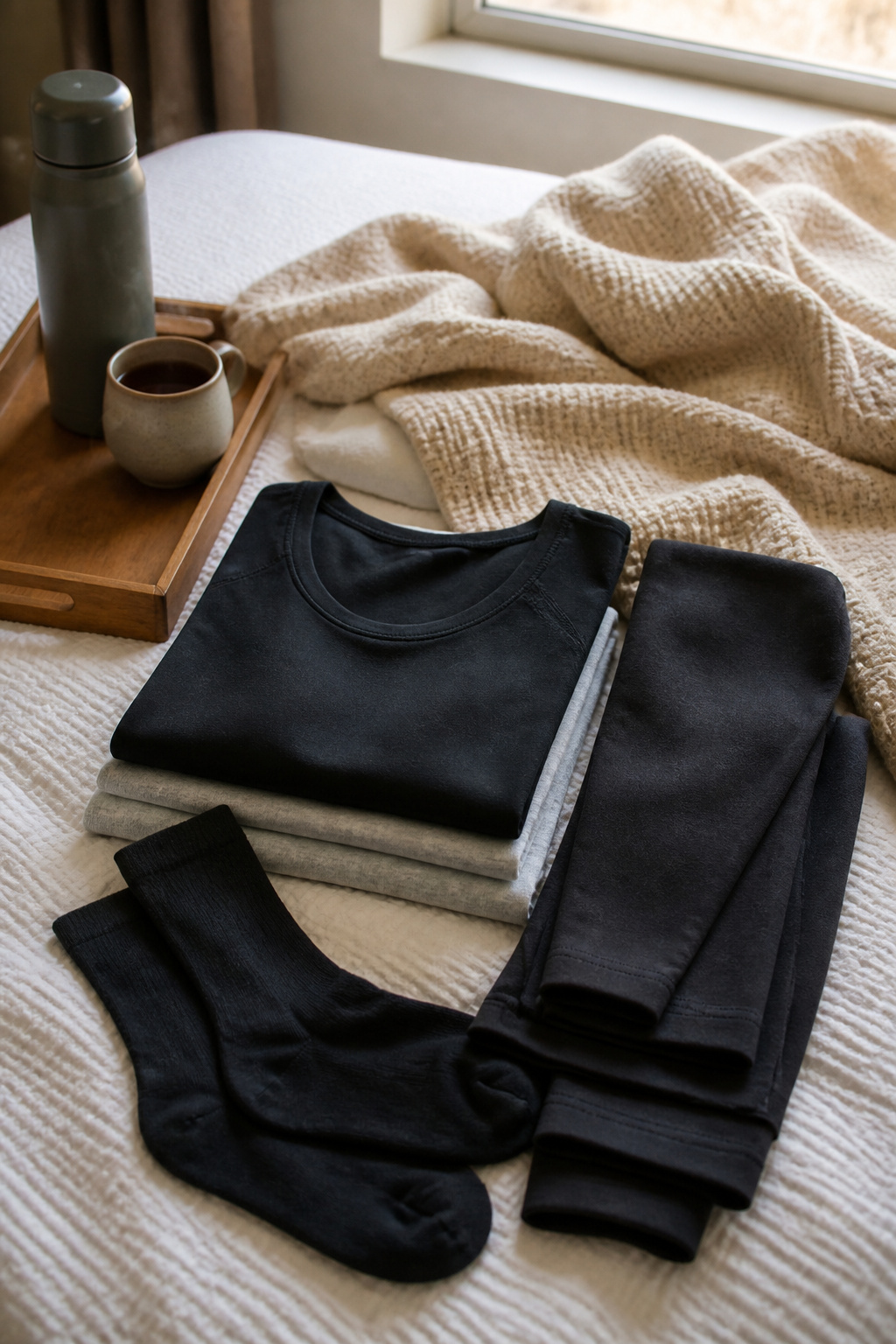
Fitted base layers are where cold weather outfits actually start, and the mistake most people make is beginning too thick. A chunky knit under a coat leaves you nowhere to go when the temperature drops another ten degrees, and suddenly you’re sweating through a coffee run and shivering on the walk home.
Uniqlo Heattech Socks run about $7.90 and sit thin enough under boots that you don’t size up. Fleece-lined tights at roughly $15 do the same for dresses, giving the look of sheer hosiery with actual warmth built in. The point is starting thin and building out, not the reverse. A fitted long-sleeve tee or thermal leggings under your regular clothes add heat without the bulk that ruins a silhouette. Last winter I finally stopped reaching for the heavy cashmere first thing in the morning; the lighter layers underneath meant I could actually keep a coat on indoors without overheating.
3. Warm Accessories
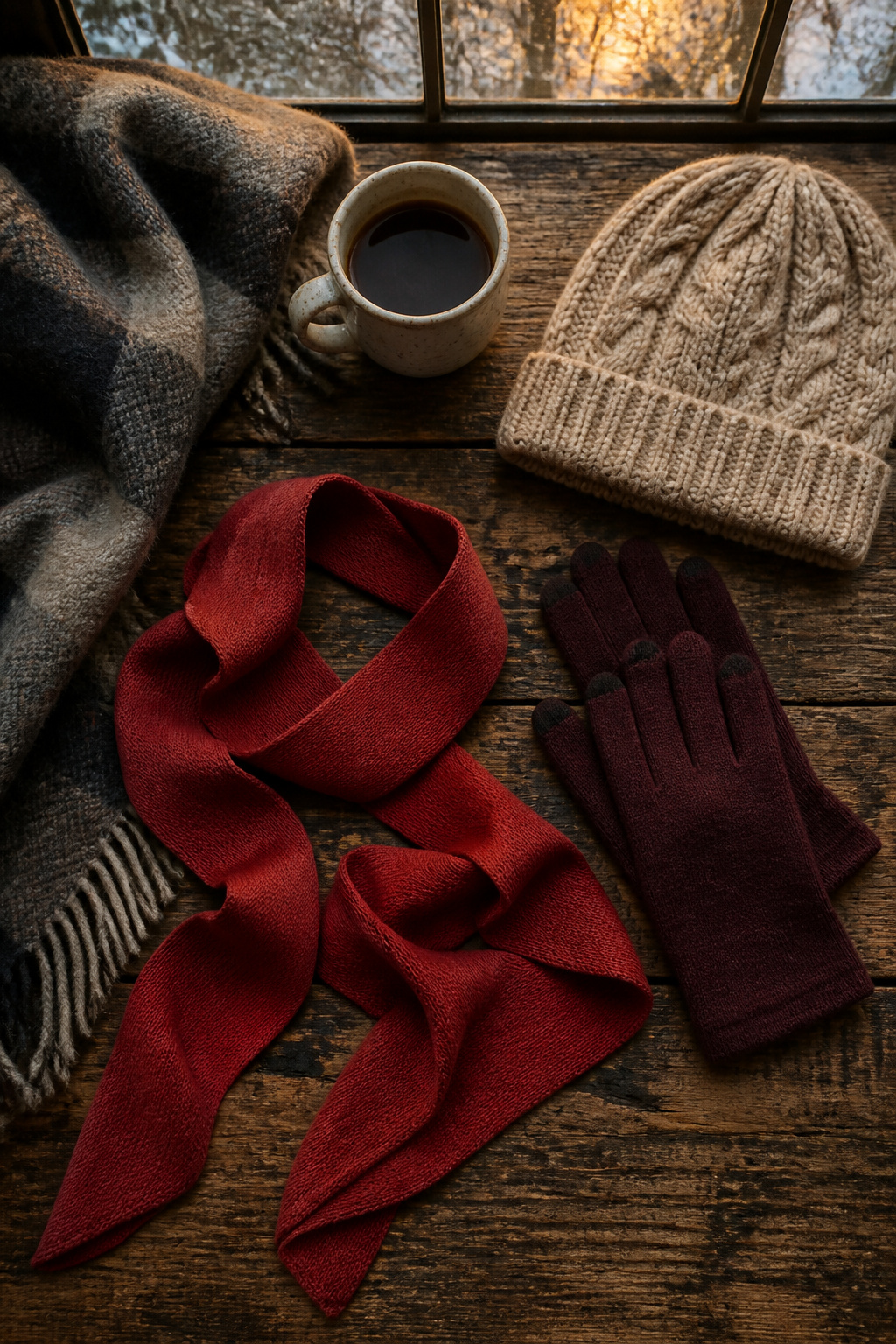
Accessories are where my closet goes to die. I have drawers of gloves I never wore because the fingertips were useless on a phone, scarves that turned out to be too short to wrap properly, beanies that rode up and left my ears freezing. The ones that actually earn their space are the ones that solve a real problem, not the ones that looked cute on the rack.
The Madewell x Alexa Chung Skinny Scarf, $98, is narrow enough to knot without bulk but long enough to loop twice, which means it works under a coat collar without fighting it. Frame makes a cable knit beanie that stays put. For gloves, Sealskinz touchscreen gloves run about $15, 98% merino wool, and the conductive fingertips actually work; I have paid twice that for leather pairs that did not.
Accessory-wise, off-piste picks include Madewell x Alexa Chung’s colorful striped scarf, Frame’s cable knit beanie, and a pair of stompy, lace-up boots from Banana Republic.
— Vogue
What Vogue gets right is that these pieces read as attitude, not afterthought. A scarf this thin would not keep you alive in Vermont, but for a city commute it is enough, and it does not compete with the coat. My rule now: one color, one texture, one quirk. More than that and I am dressing the accessory, not using it.
4. Knitwear

Cashmere, alpaca wool, and high-percentage wool blends are the only knits worth spending on for real cold. A sweater’s fiber content matters far more than its brand name. Look for 100% wool or close to it; blends with acrylic trap moisture and leave you clammy.
The Alex Mill Charlotte Fairisle Sweater runs $228 and lands in that sweet spot of warm enough for daily wear without the investment of luxury cashmere. Alpaca wool has the edge for anyone sensitive to itch, since it contains no lanolin, the waxy substance in sheep’s wool that irritates skin. It also repels water better than standard wool, pulling moisture away while the crimped fibers hold insulating air pockets.
I used to grab whatever merino tag looked premium and learned the hard way that 30% wool with acrylic filler performs like costume apparel in February. Now I check the tag first and the label second.
5. Footwear
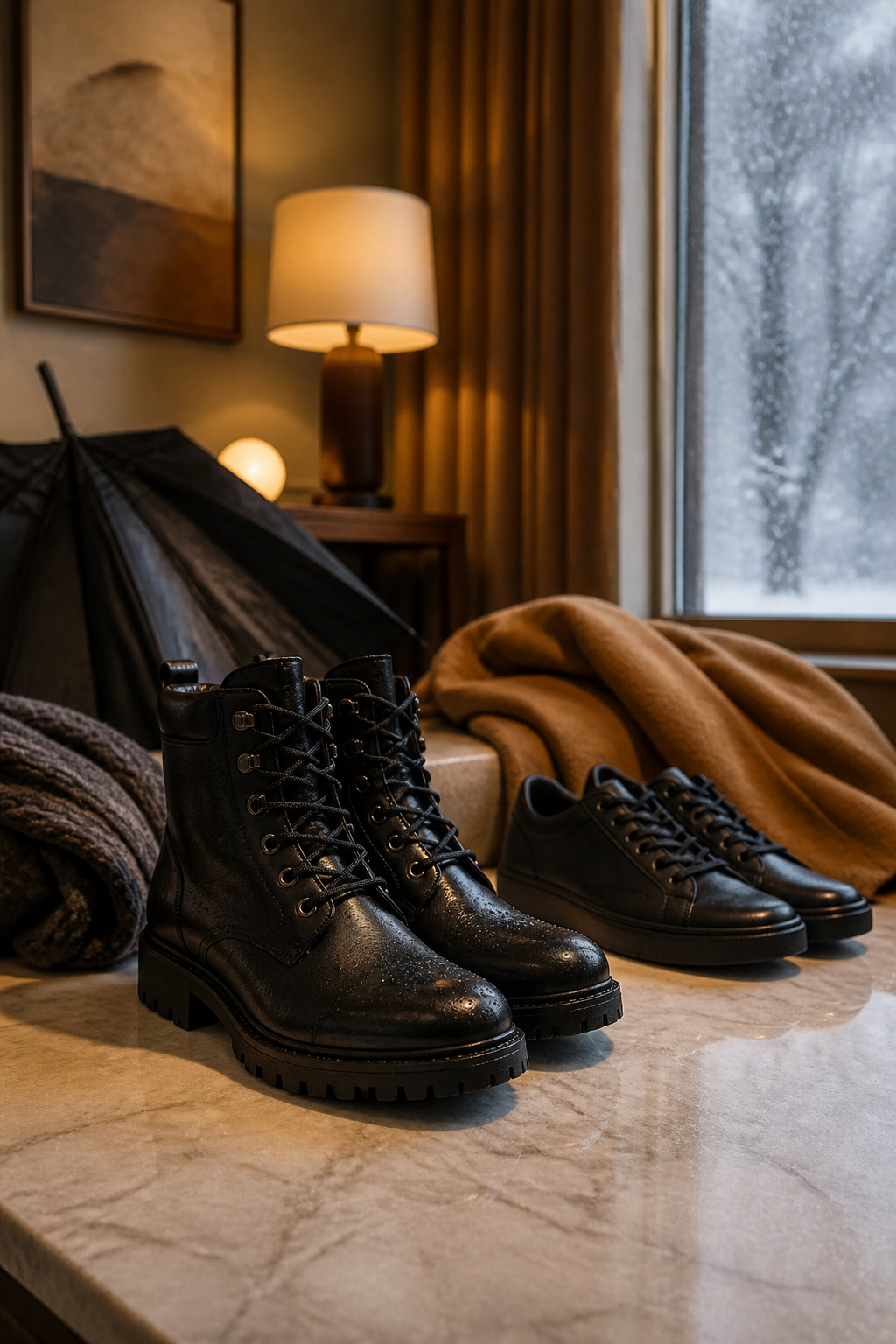
A lug sole boot with actual water resistance handles slush in a way a fashion sole never will. I learned this the winter I treated a pair of sleek leather boots as all-weather gear and spent three hours with cold, damp socks after the first sidewalk puddle. The rubber tread and sealed seams matter more than the buckle count.
For days when boots feel heavy, a streamlined sneaker works with faux leather pants for a casual look that still reads intentional. The key is keeping the silhouette clean, not bulky, so the outfit holds together.
Invisible fur lining keeps a boot sleek while adding the insulation you actually need. A classic chunky shape with solid grip handles icy mornings without looking like you are headed for a trail you are not on. Pair them with jeans that hit right at the top of the shaft, or tuck trousers into a knee-high style when the occasion calls for it.
6. Dresses and Skirts
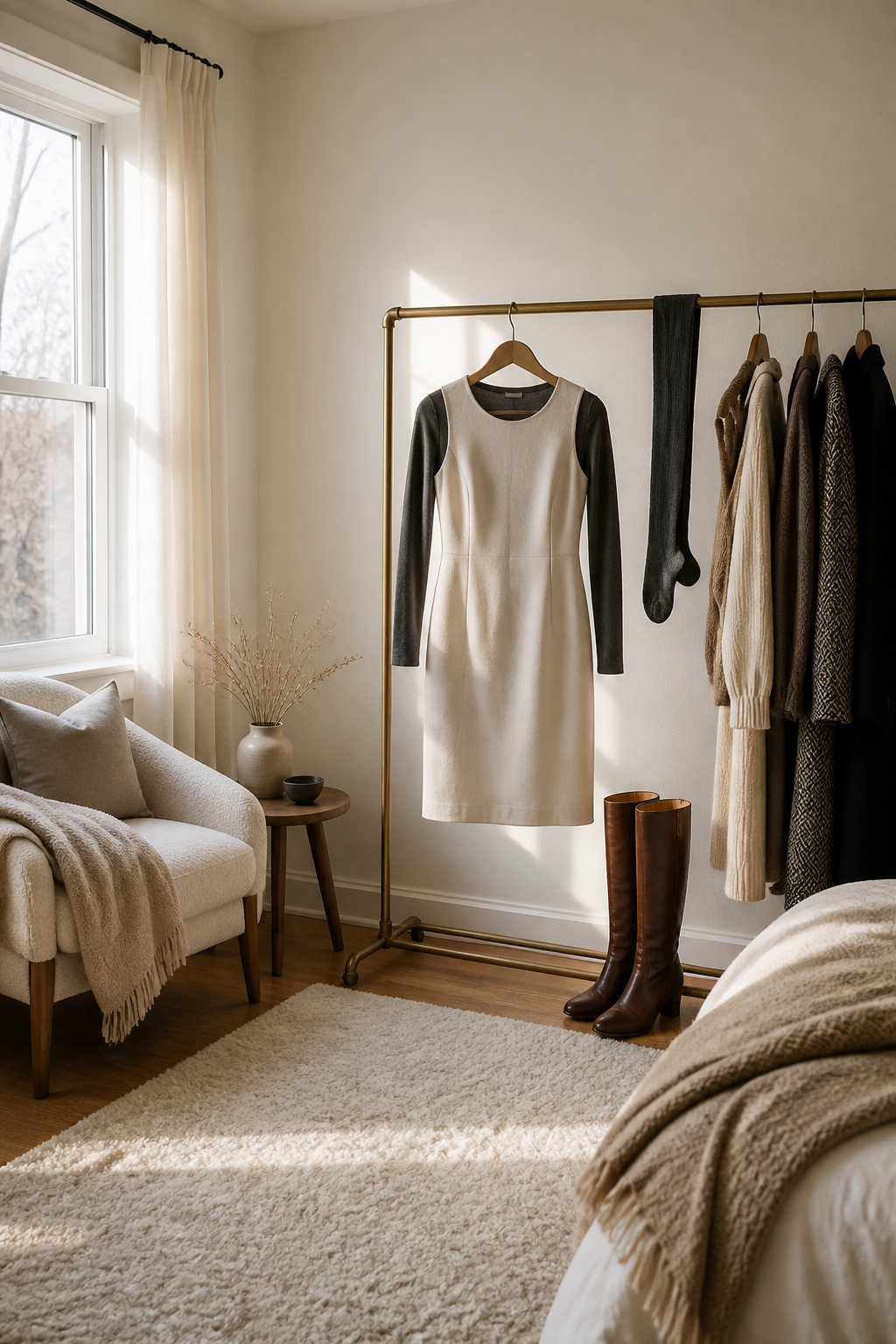
A fitted long-sleeve tee under a dress works in winter only if the dress shape agrees. Sheath styles and anything with a defined waist cooperate because the base layer stays flat against the body. A-line dresses fight the same setup; the extra fabric at the hips pushes the tee into ridges that read as bulk, not warmth. I learned that distinction by forcing the combination once and spending the evening tugging at side seams.
Thermal tights or fleece-lined leggings solve the leg problem without the same fit risk. The fleece-lined tights that look sheer from a distance carry the same visual weight as regular hosiery but add a hidden layer against the cold. A short dress that worked in September needs only that swap, plus boots, to function in January.
The mistake is assuming a thick knit dress replaces proper layering. A chunky sweater dress traps air at the torso and leaves legs exposed, so you end up overheating above the knee and freezing below it. The better move is a lighter dress with a smart base layer underneath and thermal tights beneath that, which lets heat distribute evenly and keeps you inside the outfit instead of counting minutes until you are back indoors.
7. Pants
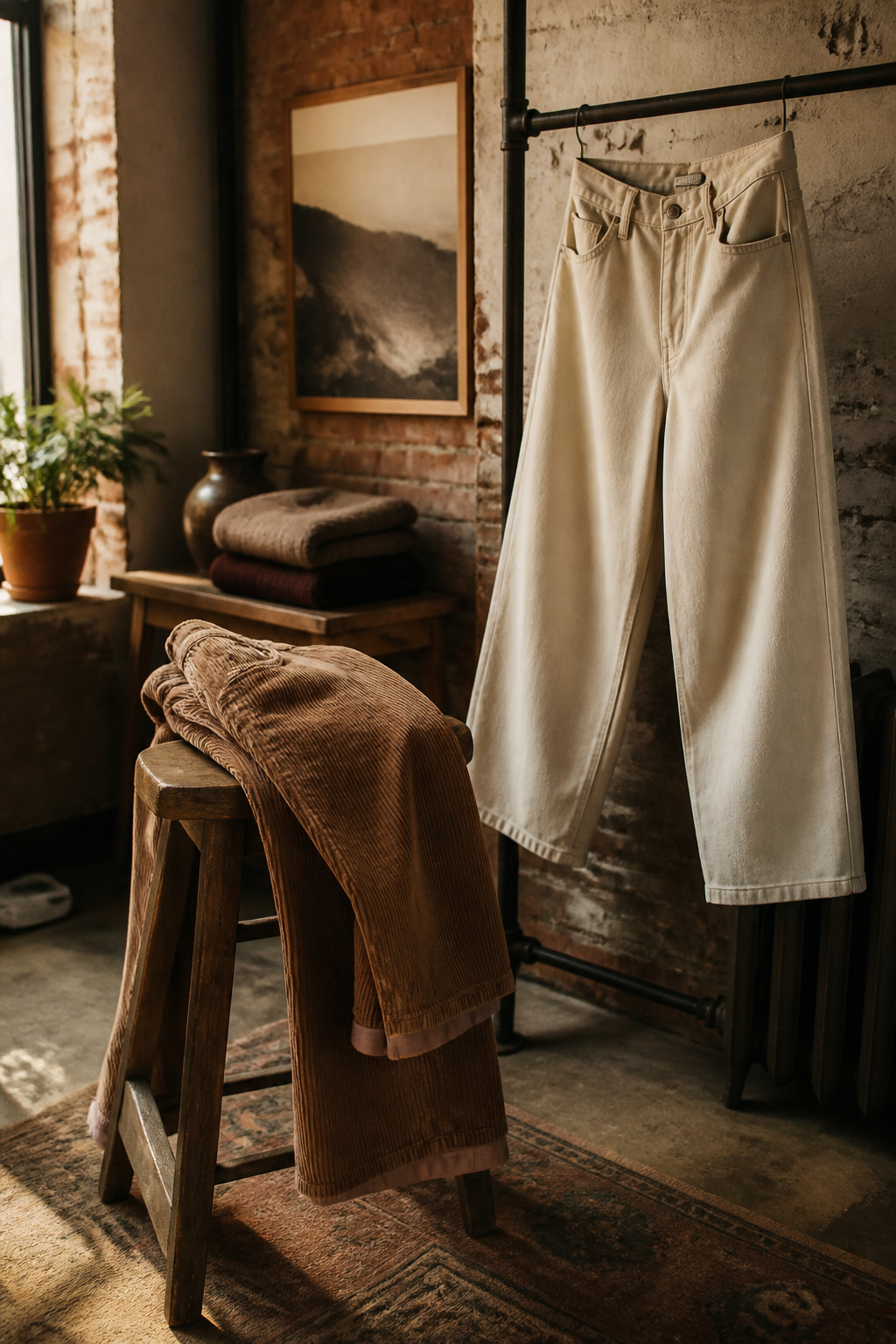
Corduroy’s ribbed texture traps heat naturally, which makes it the first thing I reach for when denim stops feeling warm enough. The FRAME cords in my closet get softer with each wash, though the Velcro-like surface does collect lint, so a quick roll with a lint remover before heading out is non-negotiable.
Wide-leg cuts solve the thermal-layer problem in a way skinnies never will. The Citizens of Humanity Ayla Baggy Pants at $260 leave enough room for a thin merino base layer underneath without distorting the silhouette. That same clearance is why Abercrombie’s Curve Love Relaxed Cargo Pant works for curvier fits; the extra ease through the thigh and hip accommodates both shape and long underwear.
For something lower-rise through the conscience, Carve Designs makes the Tibby Flare Jeans in organic cotton. Flares pair well with winter boots and the cut vents heat less than a straight leg would. Baggy and wide-leg styles are the practical choice here; fitted pants force a choice between warmth and circulation that no one needs to make in January.
How I Layer in Real Life
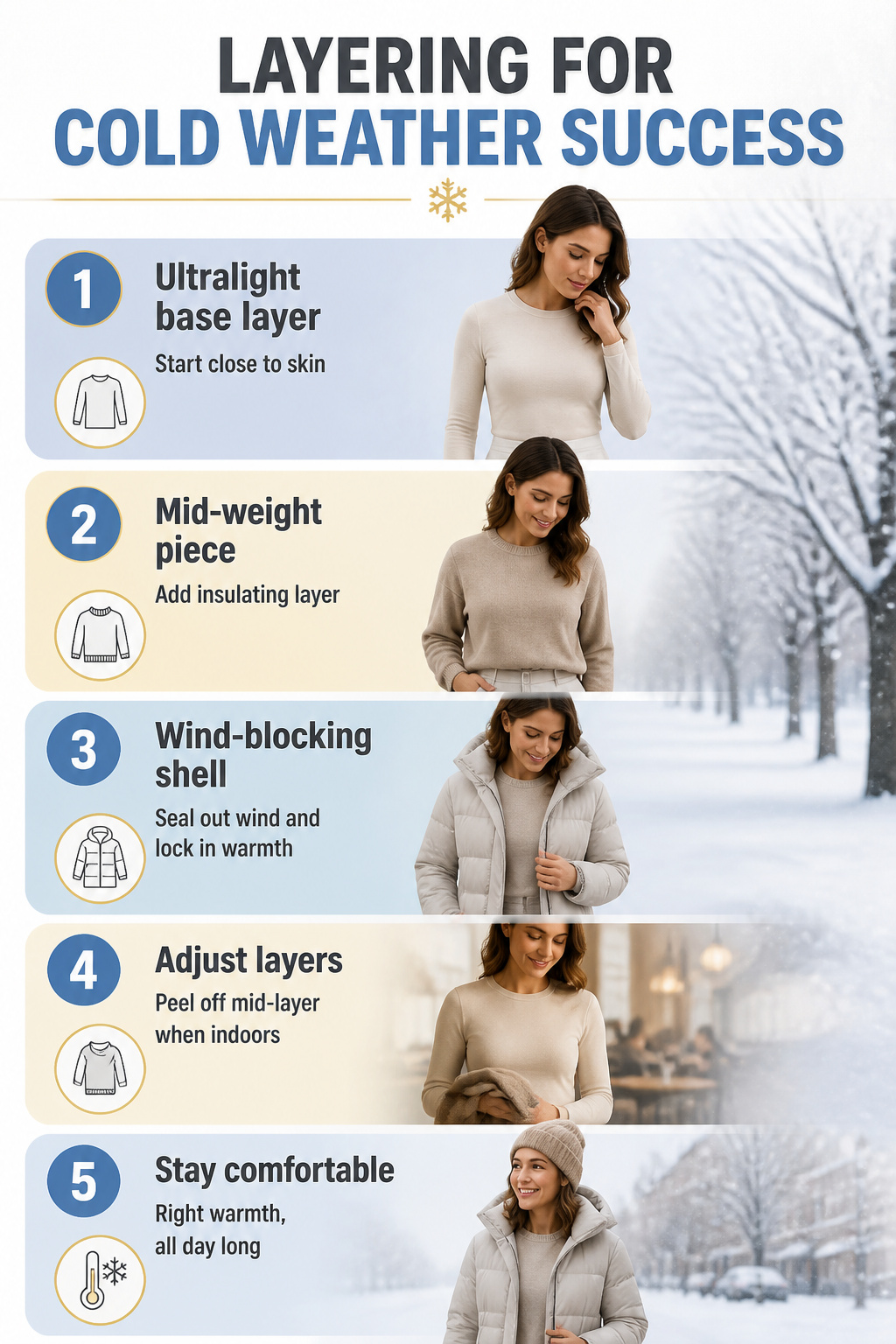
The biggest mistake I made last winter was pulling on a chunky knit first thing and calling it layered. By noon I was sweating through a coffee shop line with no way to cool down without stripping to my bra.
The thin layer closest to skin is what actually controls temperature. I start with an ultralight base, something like the cashmere blend pieces Intimissimi cuts at £49, fine enough to trap heat without registering as an extra garment. That sits under everything else and gives me somewhere to go when I walk indoors.
- Add the mid-weight piece that does the visible work.
A sweater vest, a light jumper, a long-sleeved dress, this is where the outfit starts to look like something. The base layer underneath means I can choose something less bulky than I would need if it were my only warmth.
- Top with the shell that blocks wind and holds the system together.
A puffer, a wool coat, whatever the day demands. The shell’s job is to seal the layers I’ve built, not to be the whole strategy.
Skipping step one and going straight to thick knits leaves no adjustment room. The base layer is the reason I can peel off that mid-weight piece in a heated restaurant and still look dressed.
What the Fabric Labels Actually Mean

Wool percentages on a label are not just numbers. A sweater marked 30% wool behaves almost exactly like the synthetic it is wrapped around, trapping sweat and turning clammy within an hour of walking through a cold parking lot. That was the hard lesson from a charcoal turtleneck I kept for two winters, convinced the wool content meant warmth. It pilled at the collar in three weeks and held dampness like a sponge. The 80% wool replacement, heavier in the hand from the first touch, kept heat through actual wind and stayed presentable past its first season.
Alpaca carries no lanolin, so the itch factor disappears without the cashmere price. Cashmere itself pills fastest of the natural fibers, the short staple length working loose with friction. Acrylic blends are the ones to skip; they do not breathe, and that clammy feeling after rushing for a train is the fiber holding moisture against your skin rather than drawing it away.
A blend is not always a downgrade. The right mix can add stretch for fit or durability for daily wear. But when warmth is the job, the percentage matters more than the fiber name.
Why I Stopped Buying All Black for Winter
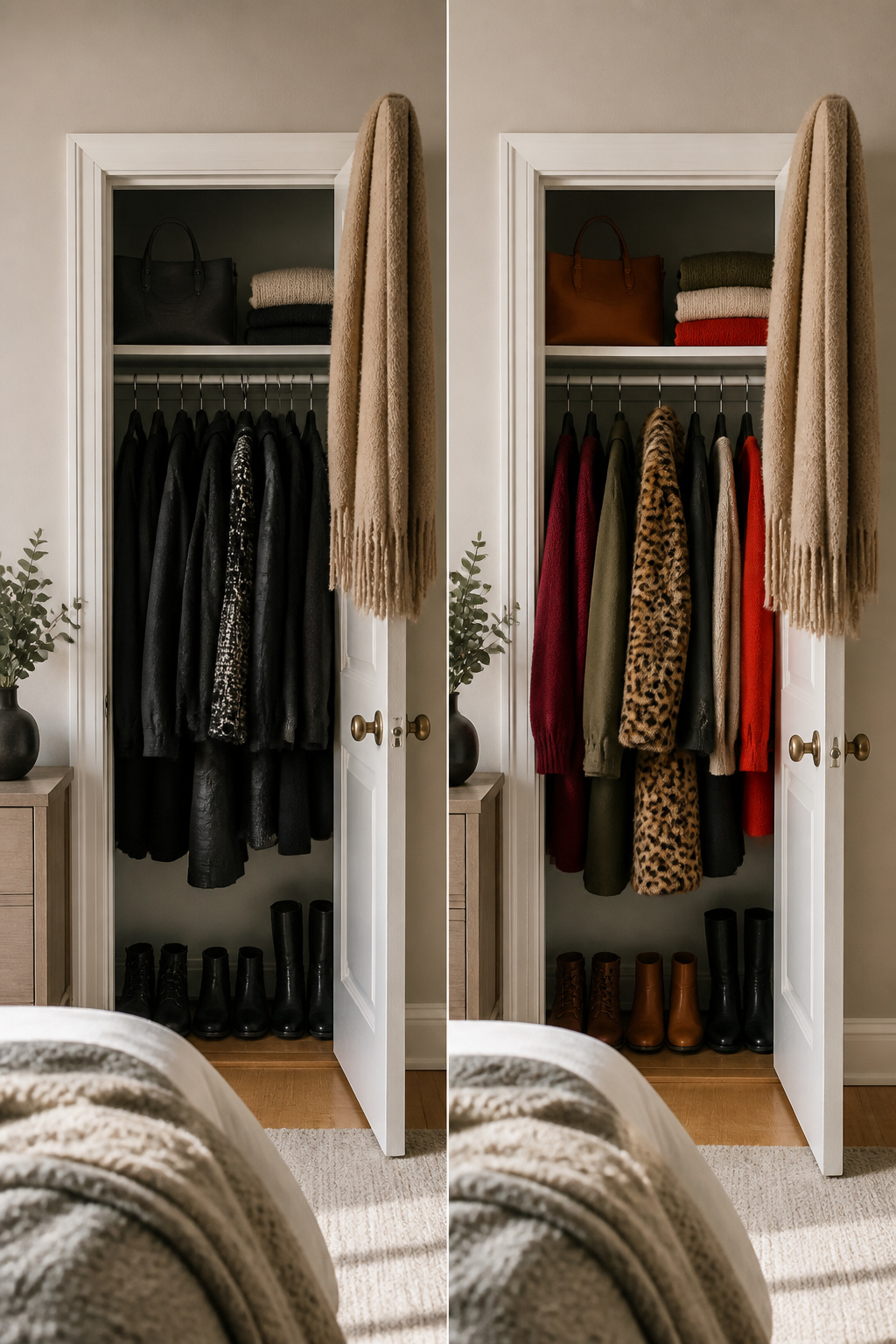
For years my winter closet was a wall of black: black coat, black boots, black turtleneck, repeat. The assumption that color belonged to spring felt like common sense, not a choice I was making. Then I noticed something after a week of solid gray skies. The mornings I grabbed a burgundy scarf or an olive sweater, I walked lighter. The psychology tracks: color signals to the brain that the environment holds something worth engaging with, which matters when every tree outside is bare.
A single statement piece does the lifting without a closet overhaul. My leopard coat gets more compliments than every neutral I own combined, and it redeems the same black pants and boots I was already wearing. A bright wool coat or embellished puffer works the same way. The neutral base stays; the coat becomes the outfit.
One bold layer is the difference between disappearing into winter and showing up anyway. The black pieces do not need replacing. They need one thing in front of them that says someone made a decision.
When Fit Fails
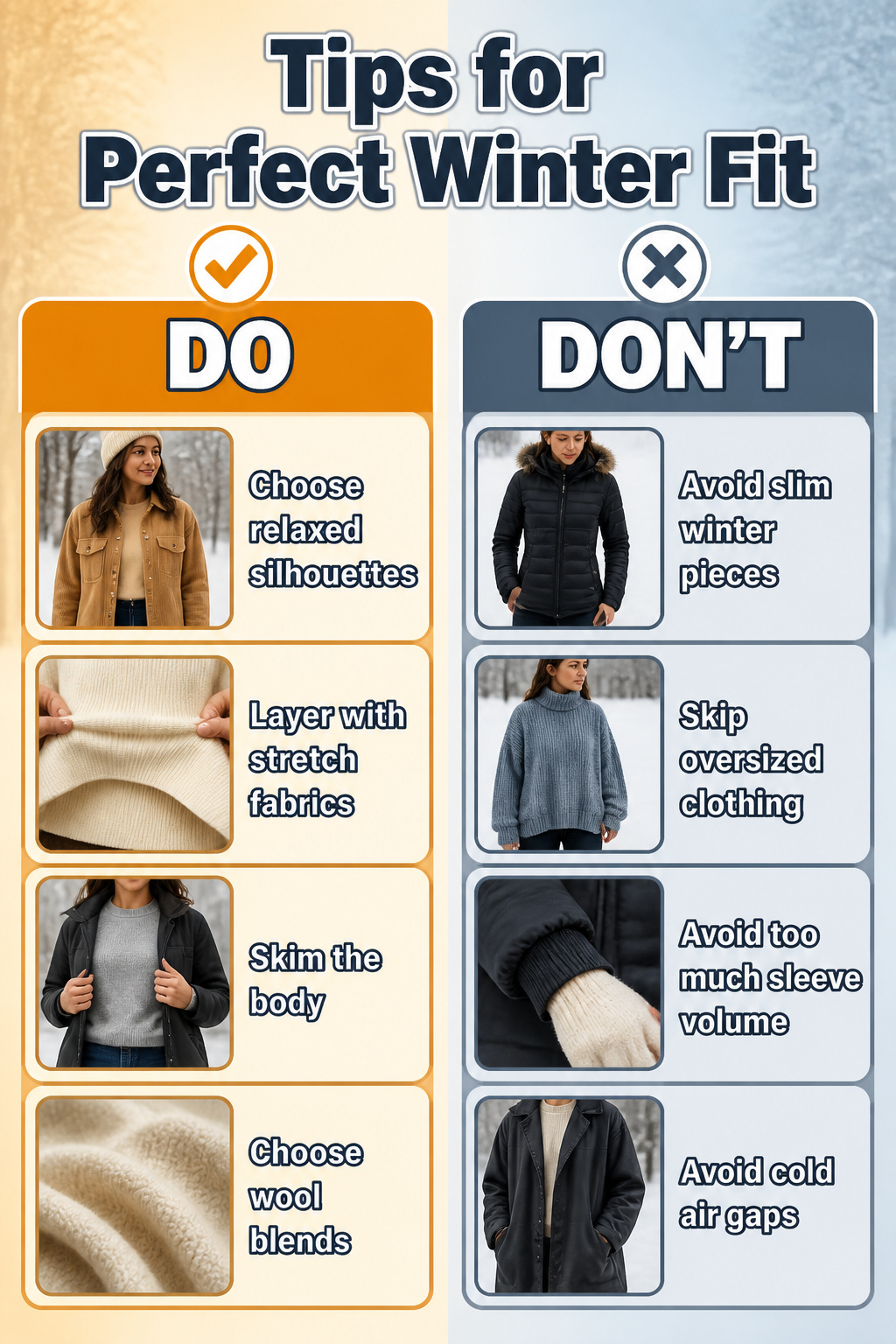
Relaxed silhouettes with stretch fabrics solve the winter problem I keep running into: warmth that actually lets you move. A shacket in stretch corduroy, like the Hudson style from Carve Designs, layers over a tee or a sweater without turning you into a cardboard cutout. The organic cotton has enough give that you can reach for a coffee or buckle a car seat without the whole jacket riding up.
The mistake I see most often is buying winter pieces too slim to fit anything underneath, or so oversized that cold air pools at the hem and wrists. A winter layer should skim the body, not hug it or swallow it. Body shape matters here. If you carry weight through your midsection, a relaxed cut with structure at the shoulder keeps the silhouette intentional rather than sloppy. Narrower frames need to watch sleeve volume; too much fabric and the gap between coat and glove becomes a draft channel.
Wool helps when fit is borderline. Its naturally crimped fibers trap heat in air pockets, so a slightly looser weave still insulates. I reach for higher-percentage wool blends when I want warmth without the squeeze of a too-tight knit.
Frequently Asked Questions
How do I stay warm without sacrificing style?
A single statement coat does more for your look than multiple forgettable layers. The Gap Sherpa & Leather-Trim Jacket at $268 works over jeans and a tee or dressier pieces underneath. Color or pattern on the outside changes everything when your base is basic black, navy, or gray.
What are the best fabrics for winter clothing?
Cashmere, alpaca wool, and high-percentage wool blends are the only knits worth spending on for real cold. Alpaca carries no lanolin, so the itch factor disappears without the cashmere price, and it repels water better than standard wool. Skip acrylic blends entirely; they trap moisture and leave you clammy.
How can I layer effectively for winter?
Start thin and build out, not the reverse. An ultralight base layer like Intimissimi’s cashmere blend pieces at £49 sits closest to skin and controls temperature. Add a mid-weight piece that does the visible work, then top with a shell that blocks wind and holds the system together.