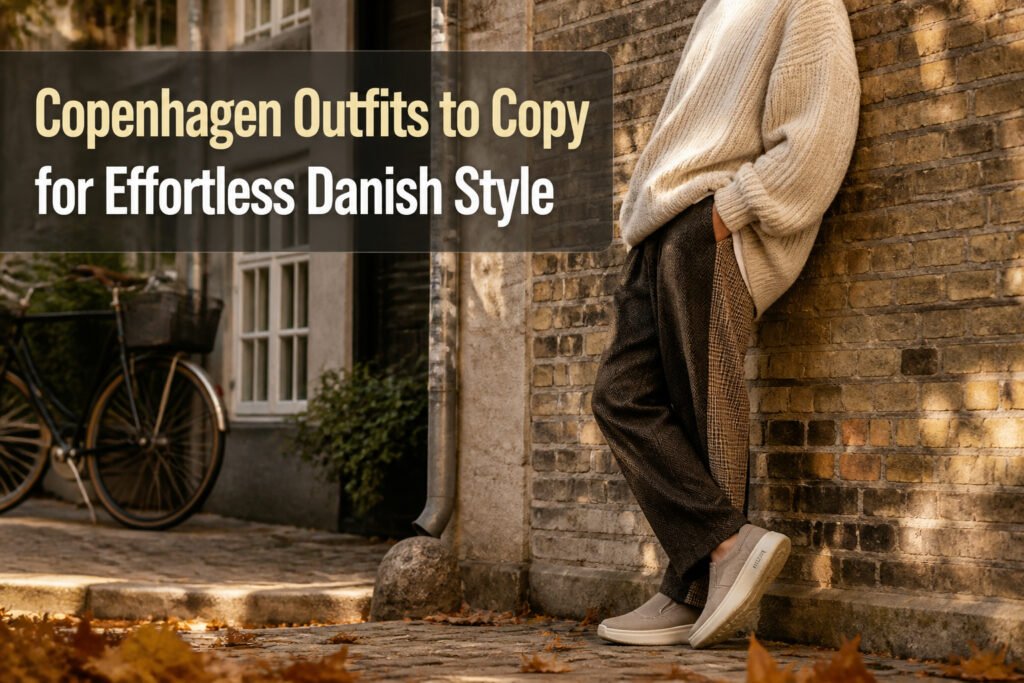
The oversized knit that defines Copenhagen outfits only works if you buy two sizes up and let the shoulder seam drop past your collarbone. Size it right and it drapes with intention; size it to fit and it reads as a mistake you didn’t catch. The Kizik Vegas 2, built for cobblestones and hands-free bike stops, is what locals actually wear to get there.
1. Oversized Silhouettes
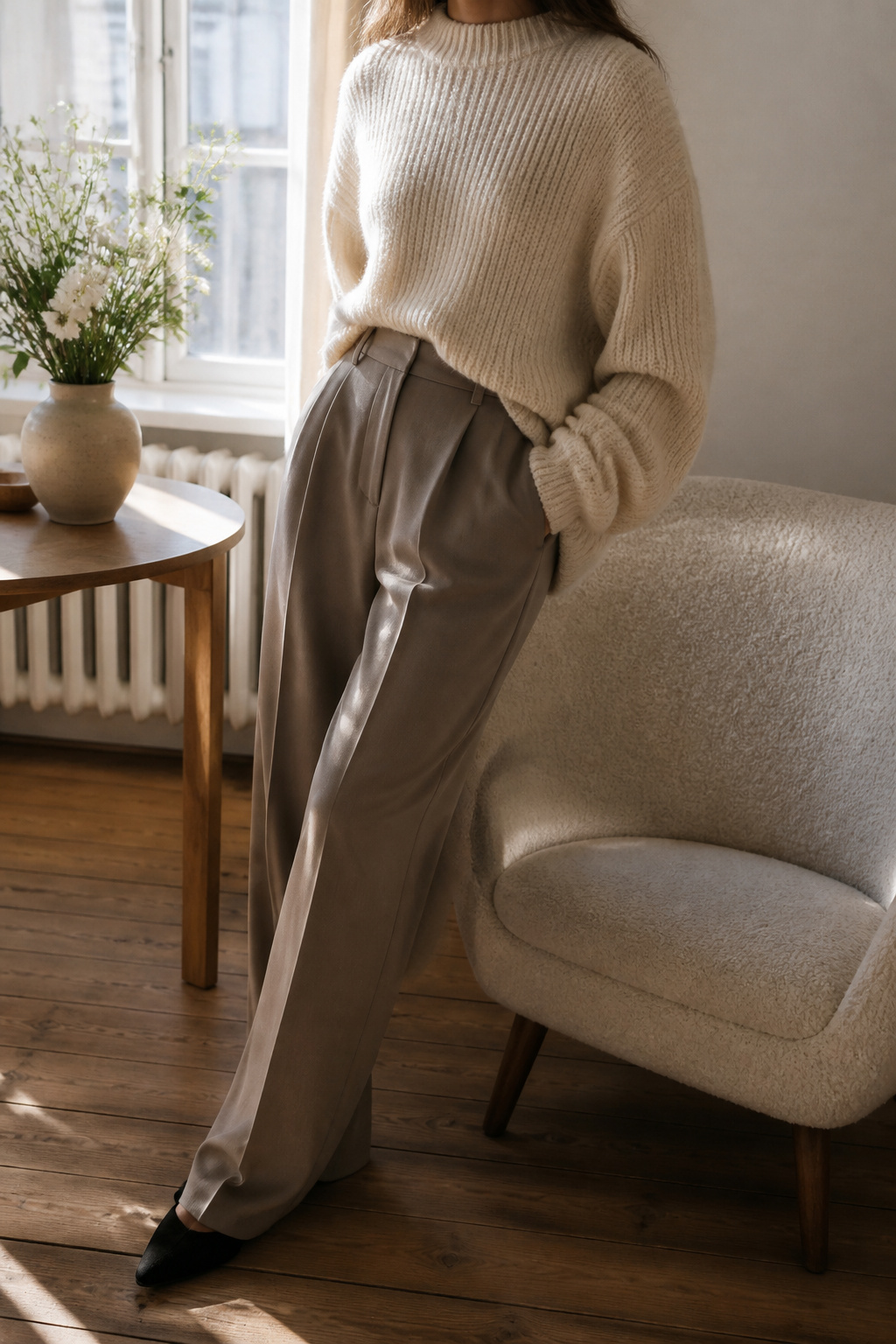
The first oversized knit I tried was two sizes up from my usual, and the difference was immediate. The shoulder seam dropped past my collarbone, the sleeve pooled at my wrist, and instead of looking sloppy, it settled into that deliberate drape Copenhagen style is known for. This is the move: size up one or two sizes in knitwear, tops, shirts, jackets, or dresses, then let the fabric do the work.
For anyone worried this only flatters tall frames, the fix is in how you wear it. A French tuck in front keeps the volume from swallowing your shape. Rolling sleeves to the forearm creates a narrow line that balances the width above. If the piece has enough length, a belt at the natural waist turns excess fabric into soft gathering that works on curves as well as straighter builds. I have seen this same oversized knit look completely different on three friends: one left it loose over tailored high-waisted pants, another cinched it, the third cropped the sleeve and let the hem hit mid-thigh as a dress. The common thread was intention, not body type.
2. Layering Techniques
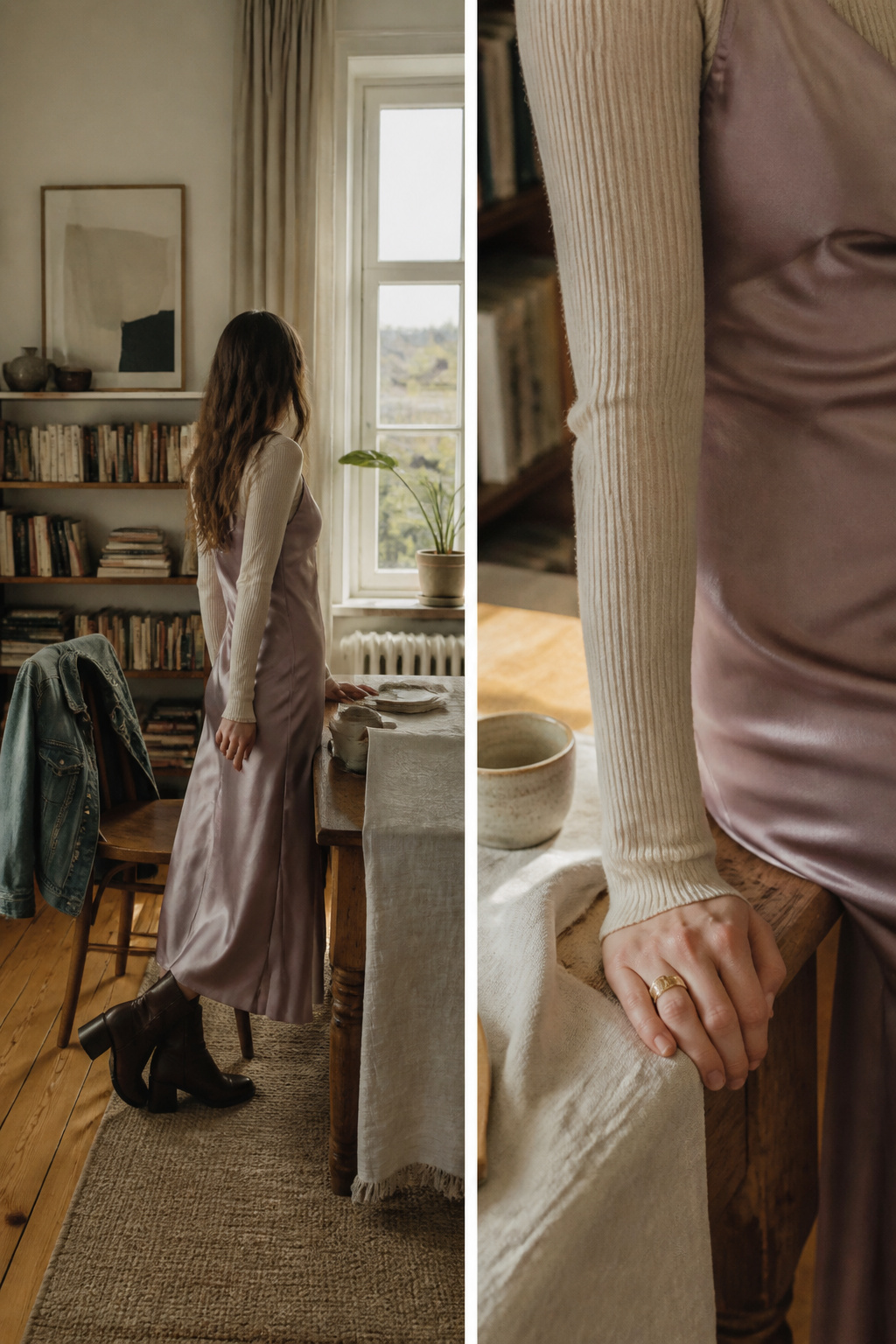
Copenhagen outfits build their quiet energy through layers that do actual work against weather that shifts hour by hour. A long-sleeved knit under a slip dress, or a bomber jacket slipped beneath a trench, keeps warmth while the eye reads the contrast between fabrics. The slip dress from Urban Outfitters at $39 sits at a price point where experimenting feels low-risk, and the denim jacket from Rag & Bone at $498 shows where the investment goes if you wear one piece daily.
Texture does the heavy lifting. Denim against wool, cotton under leather, linen peeking from a chunky knit: each pairing creates depth without demanding attention. What stopped me on a bike tour there was a sheer tulle mini dress layered over a boxy white tee and jeans, the glitter catching light while the base layer kept the whole thing movable for pedaling.
The practical payoff is what makes this replicable at home. A cami over a tee on warmer days, the same cami under a blazer when the temperature drops; one piece rotated through three seasons. The mistake is matching textures too closely, which reads as accident rather than intention. Layering wins when each piece could almost stand alone.
3. Bold Colors and Prints
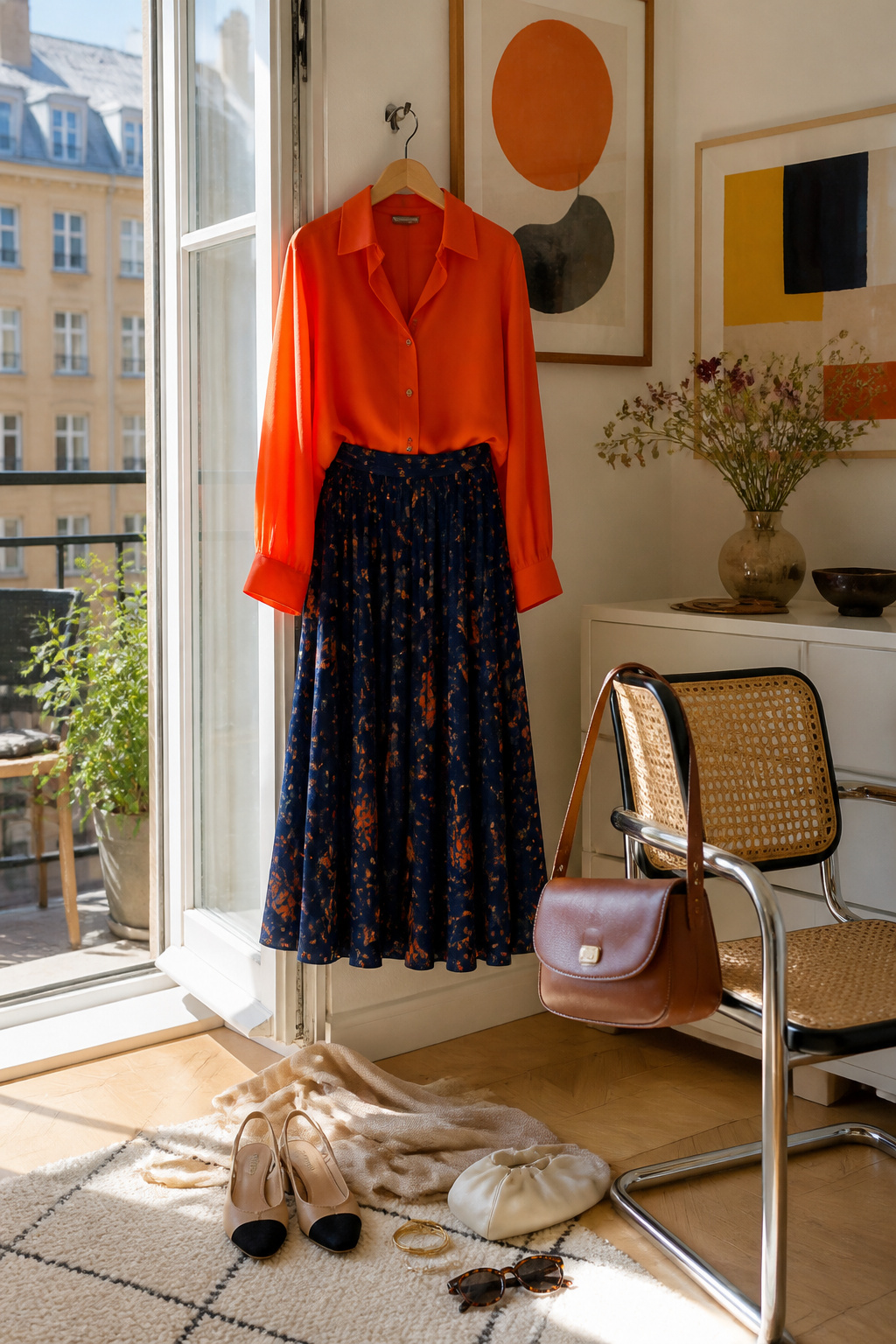
Copenhagen street style moved past the beige-and-black uniform years ago. Tangerine, fuchsia, and emerald now sit right next to navy, camel, and cream, and the locals wear them like they never got the memo that brights are supposed to scare people. What keeps it from looking like a costume is the same thing that makes it wearable back home: one or two pieces do the loud work, and the rest stays quiet.
I have seen this go wrong on my own body, and the mistake was always trying too many colors at once. The Copenhagen women who get it right pair unexpected contrasts, like pink against red or brown against blue, but they ground the whole thing with black accessories and a neutral base layer. Powder yellows and baby pinks showed up heavily on the autumn/winter 2024 runways, yet the streets still treat red as the forever classic, head-to-toe or not.
If the full color-block feels like too much, start with a bright bag or scarf against your usual coat, then move inward to knitwear when you trust the combination. The rule that matters here is specific: one bold piece, one bold pairing, then stop. More than that and you are dressing for a runway, not a Tuesday.
4. Comfortable Footwear
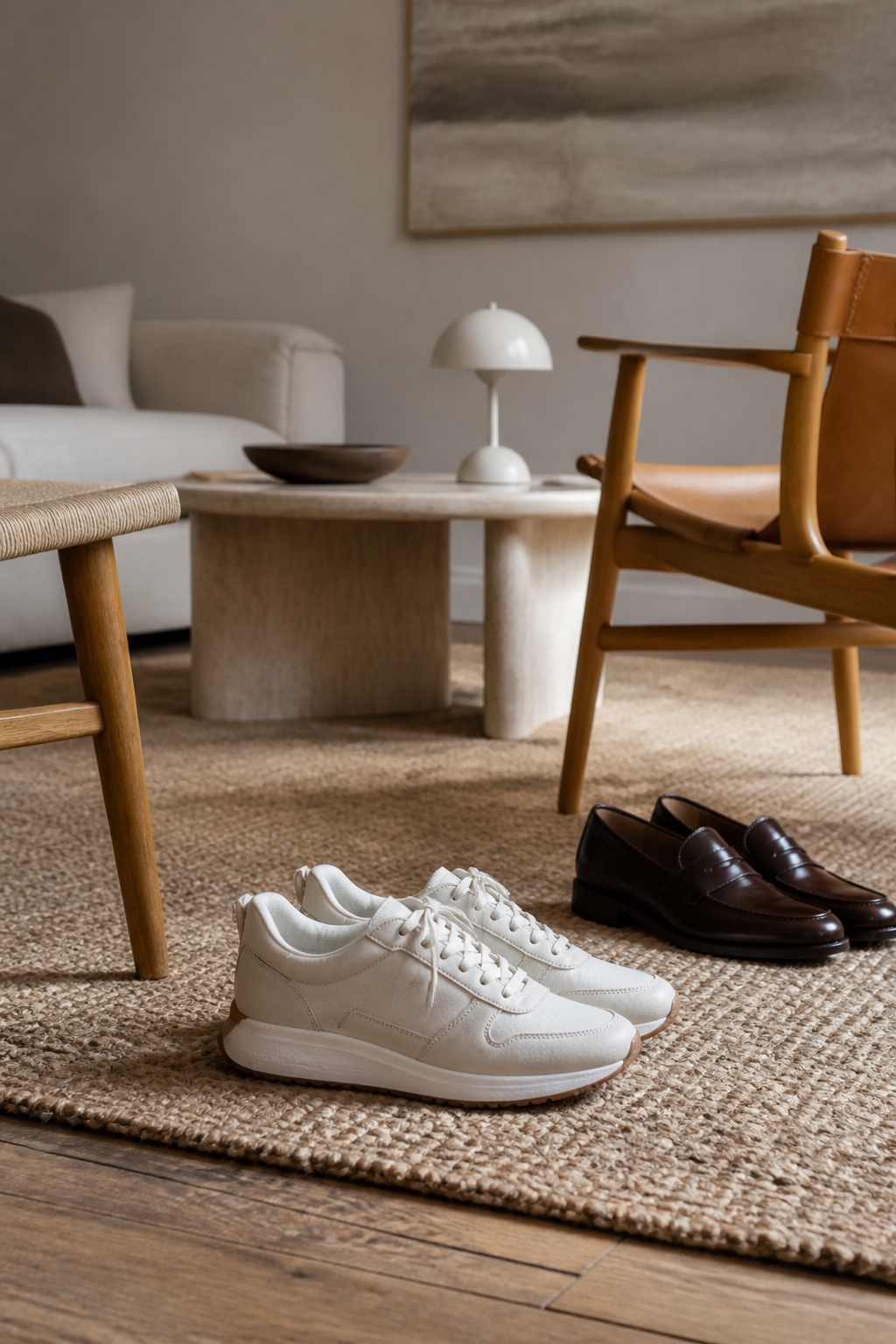
Copenhagen style treats shoes as infrastructure, not afterthought. Cycling is the reason. When half the city rolls to dinner on two wheels, a four-inch heel is simply impractical, so the look defaults to sneakers, loafers, and even flip-flops worn straight through to evening plans.
The sneaker to know is Kizik. Their Vegas 2 and Siena models come up repeatedly in Copenhagen packing lists for a reason: the hands-free entry means you can slip them on at a bike rack without breaking stride, and the structured heel holds up against cobblestones that would chew through flimsier soles. I have yet to find a US equivalent that nails the same balance of support and minimal bulk under wide-leg denim.
Loafers fill the gap when sneakers feel too casual. A brushed leather pair or a Birkenstock Naples clog gives the polished-but-practical note that Danish dressing does well. The clog in particular works with floaty dresses in a way that feels intentional, not apologetic.
Flip-flops are where Copenhagen diverges hardest from American assumptions. Leather kitten-heel thongs and even jelly pairs from the Melissa x Ganni collaboration show up at restaurants and runway events alike. The rule seems to be: if the rest of the outfit is deliberate, the footwear reads as choice rather than surrender.
For translating this to a US wardrobe, the priority is walkability over statement. A shoe that works for a ten-block walk to dinner will earn its place in rotation; one that demands a car service won’t, no matter how photographed it was in Denmark.
5. High-Low Fashion Mixing
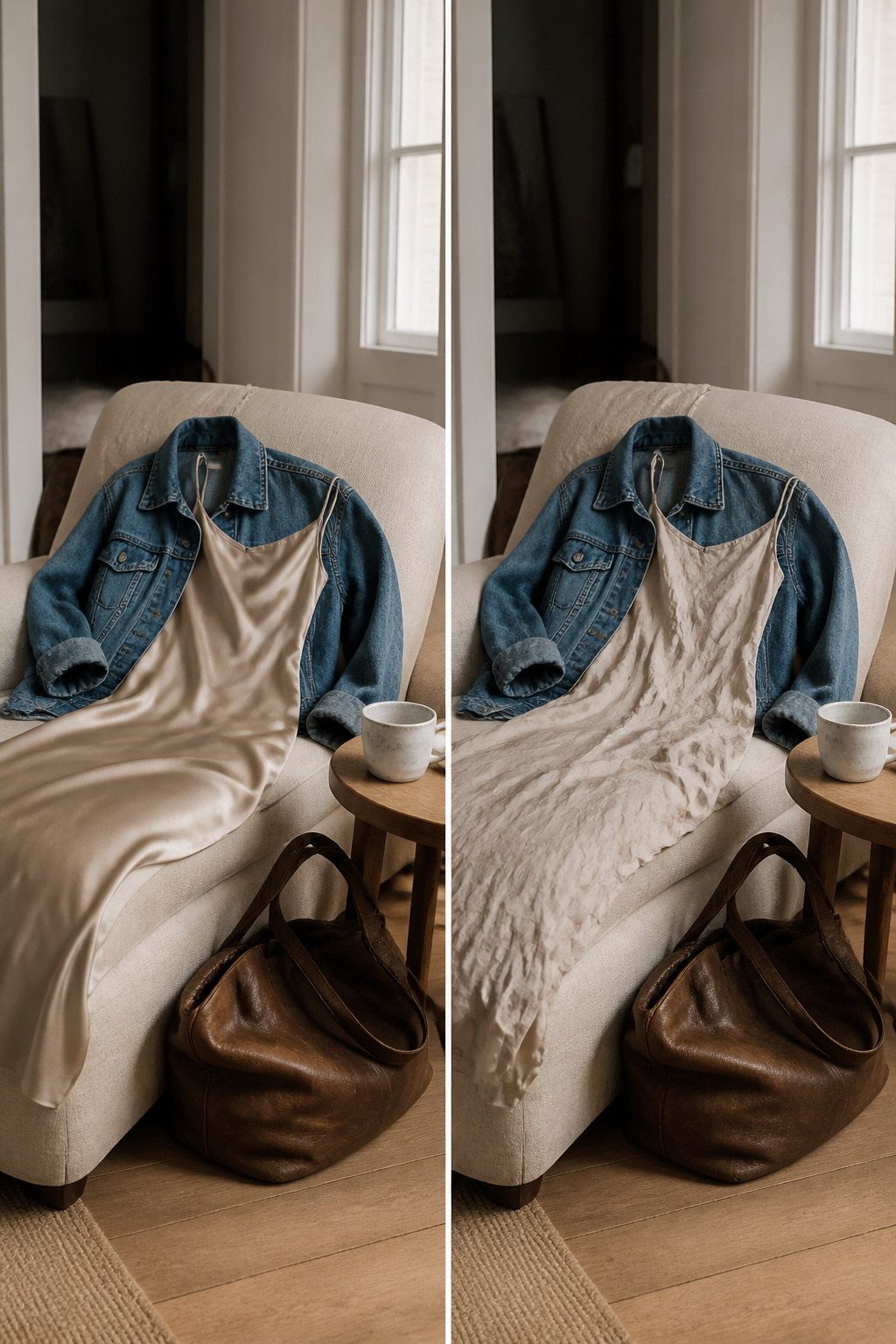
A silk slip dress with a denim jacket, or a hand-painted vintage Armani jacket thrown over a thrifted striped mini dress: the high-low mix is where Copenhagen outfits become personal rather than branded. The formula is not about budget exactly. It is about refusing to let one label do all the talking.
The high side tends to be the piece that lasts: a designer bag you carry daily, gold hoops you never take off, a Longchamp East/West shoulder bag at $690 that structured the whole look. The low side is where the experiment lives. A freebie tote bag, not close to a fashion choice but somehow the actual number one bag on Danish streets. Sporty shorts with a feminine blouse, or a playful patterned sweater with a silk-satin midi skirt. The contrast is the point.
I have watched this go wrong by making the expensive piece too loud and the cheap piece too apologetic. The jacket or the bag needs to feel lived-in, and the high-street find needs to hold its own shape. A Ganni white tank works because the cut is doing something, not because the logo is visible. When the balance tips toward either showroom or afterthought, the outfit falls flat.
6. Statement Accessories

A single accessory can turn a sweatshirt and jeans into something that reads intentional. Copenhagen women treat this as a discipline, not an afterthought: the base stays quiet so one piece can speak.
The right piece is sculptural rather than merely big. A shoulder-grazing scarf adds movement without fighting the silhouette. Leather knee boots ground a simple coat-and-shorts pairing with weight and texture. The goal is one focal point that pulls the outfit together, not a collection of competing moments.
Bags are where personality lands most naturally. A patterned tote introduces print without committing your whole wardrobe to it; a classic leather bag in an unexpected shape does the same work more quietly. Belts with substantial hardware, like those from Dehanche, transform proportion season after season. Sunglasses follow the same rule: elongated, aviator, or wrap-around styles read as deliberate where basic frames disappear.
The Copenhagen difference is restraint. One statement, not three. The accessory should feel like something you chose once and reach for constantly because it solves more problems than it creates.
Adding in accessories, like a shoulder-grazing scarf and leather knee boot, are the perfect example of how a Scandi girl can turn a simple outfit into one that’s truly statement-making.
— Vogue
This means building your collection around pieces that work across multiple outfits rather than one-look wonders. A belt that only suits one pair of trousers is a costume piece. A scarf that reads with a coat in October and a T-shirt in April is the investment.
7. Effortless Hair and Makeup
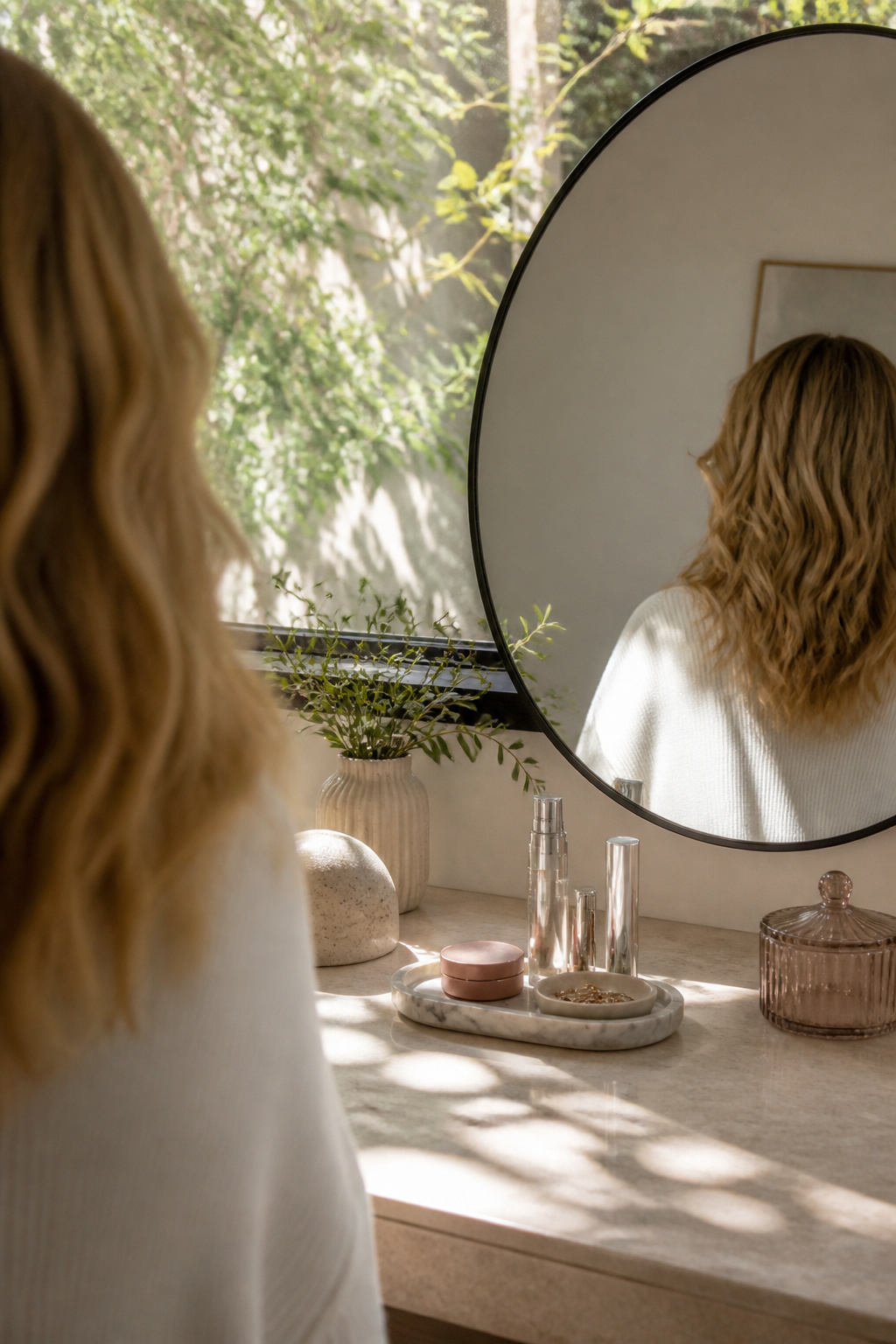
The no-makeup makeup look that finishes most Copenhagen outfits only works with skin that reads as cared-for, not neglected. A dewy moisturizer gives the glow, then a sweep of mascara, cream blush, and lip tint do the rest. That order matters: starting with tint and adding moisture after turns the whole thing greasy by noon.
For hair, loose waves or a messy bun read as intentional when the texture is consistent. Claw clips and scrunchies help, but the line between undone and unfinished sits at whether the style holds its shape when you move. If strands fall out in random clumps, it is unfinished. If a few pieces escape around the face while the bulk stays put, it reads as the Danish version of effortless.
Living Libations Best Skin Ever is what sources cite for the serious hydration boost underneath all of this. Without that base, the minimal products sit on top rather than blending in, and the look collapses into plain tired.
8. Sustainable Choices
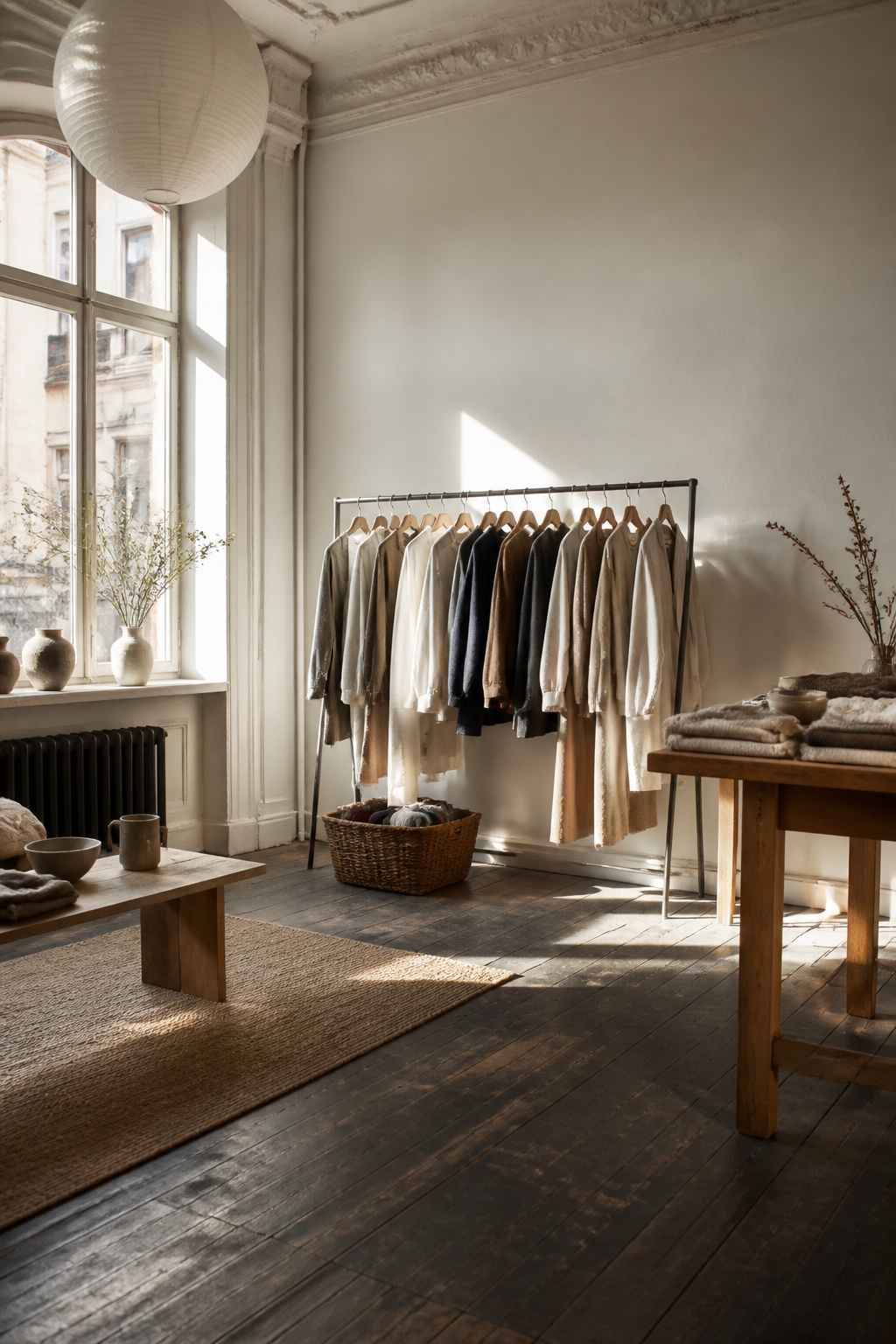
Copenhagen’s reputation for sustainability isn’t a marketing layer on top of the clothes; it’s how the clothes are chosen in the first place. Quality-over-quantity shopping means buying a white T-shirt or a leather piece you will actually wear through fifteen washes, not one that pills by the third. Natural fibers like breathable linen, organic cotton, and soft wool cost more upfront because they last. The math works out when a single pair of well-made jeans replaces three fast-fashion pairs that split at the seam within a year.
Vintage and secondhand finds fit this system naturally. A striped neutral sweater from an op shop carries the same Scandinavian minimalism as something new, and the individuality is the point. When I evaluate whether to invest in a piece, the test is whether it layers with what I already own and whether the fabric still looks right after a season of wear. If it needs a specific shoe or bag to make sense, it fails. The Copenhagen wardrobe is built on staple separates that create endless styling opportunities on their own.
9. Everyday Wear
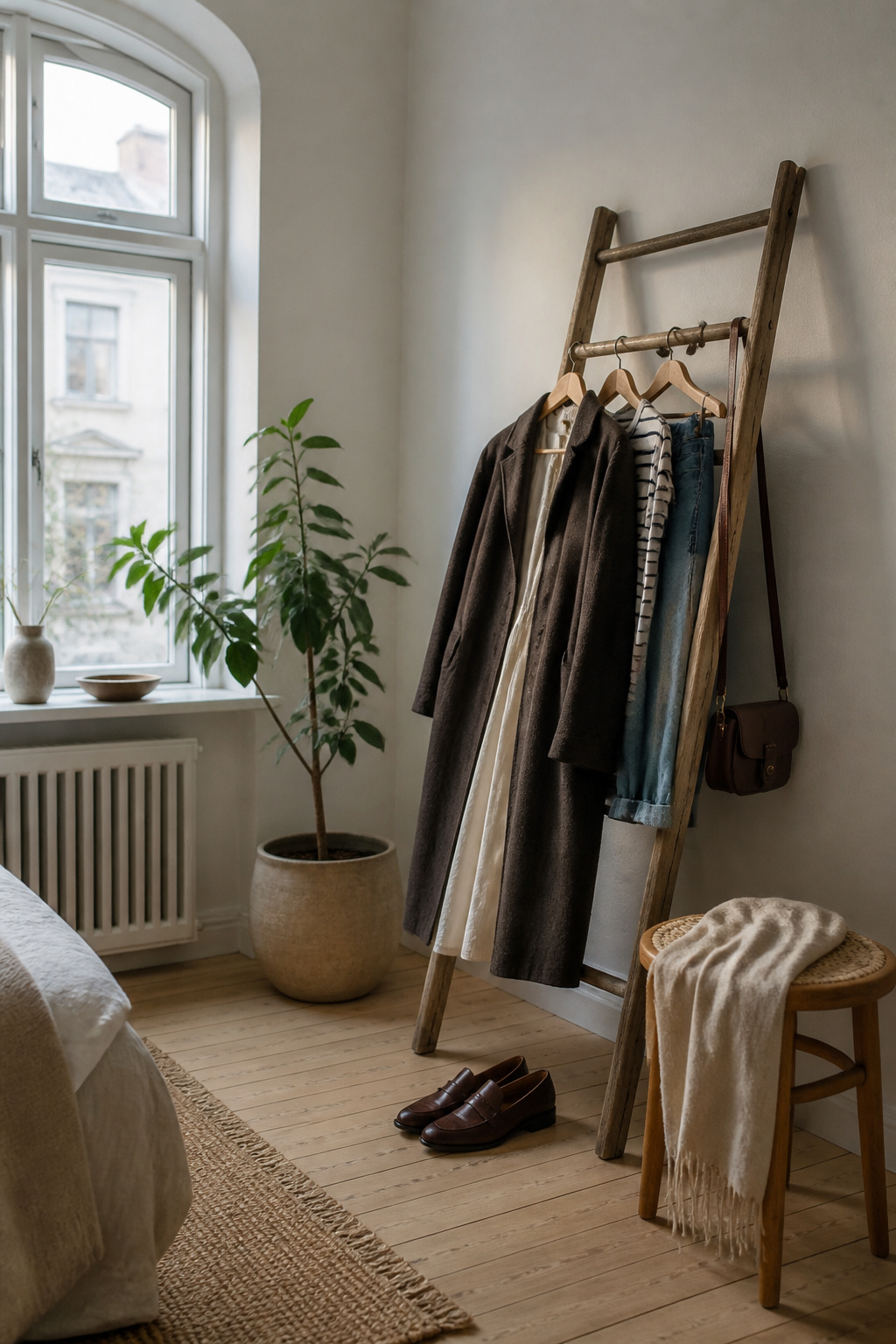
The Danes wear their best pieces on Tuesday morning, not tucked away for Saturday night. Relaxed tailoring and versatile dresses are weekday staples here, built for cycling across cobblestones and sitting through long coffee meetings. That practicality changes what lands in your cart. A coat needs to work over a sweater at 8 a.m. and look intentional with a bold accessory by 8 p.m., or it does not earn the hanger space. Natural fibers like linen, organic cotton, and soft wool matter because they handle the daily wear. Since shifting my own buying this way, the cost-per-wear math on a single well-made dress has beaten three trend pieces I would have grabbed before. The outfit you live in earns the investment.
10. Confidence as Key
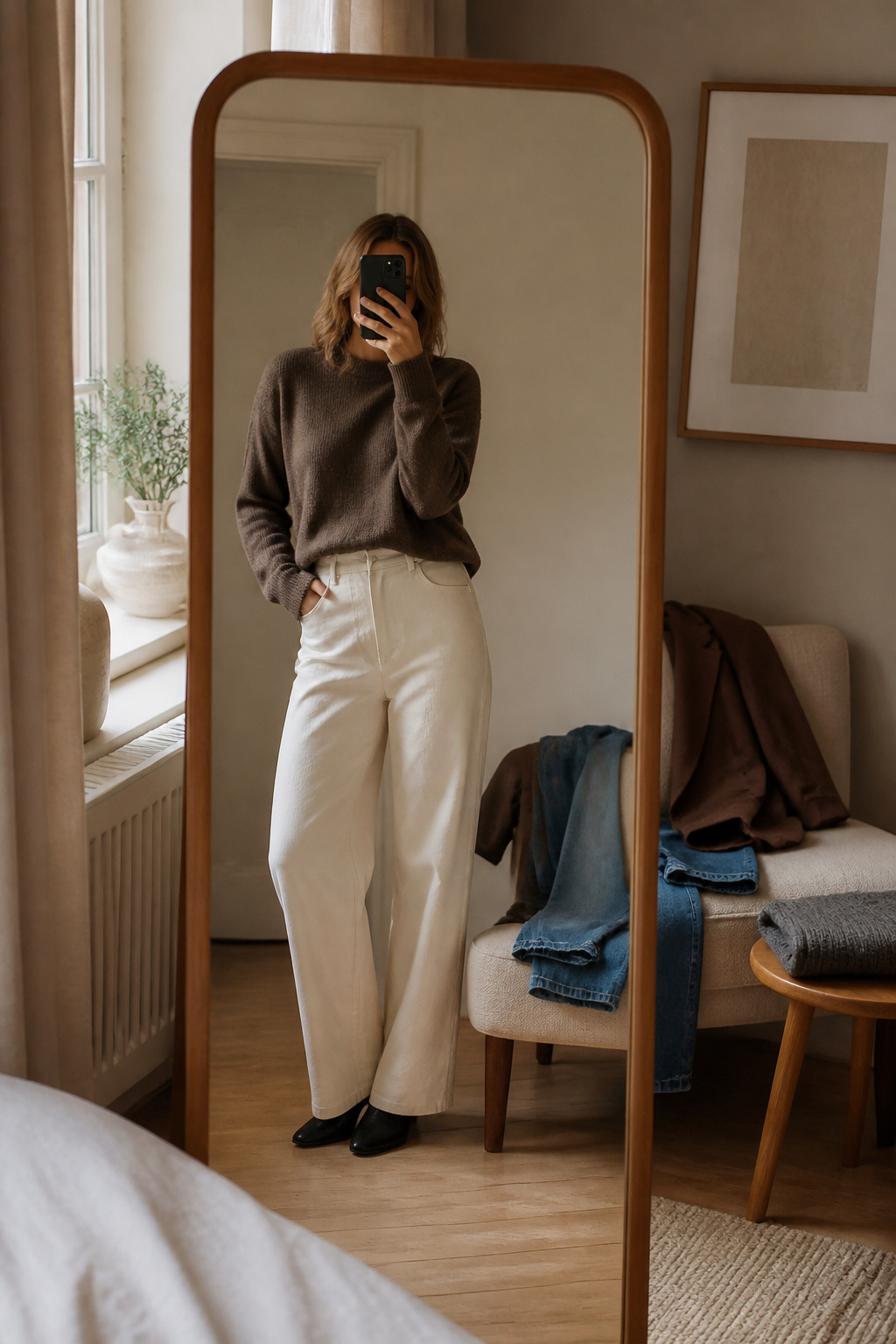
Copenhagen style only clicks when the person wearing it feels like themselves. The oversized silhouettes, the deliberate layering, the unexpected color pairings; each piece is a tool, not a rule. What struck me, reading through how Danish women actually dress, is that every "rule" in the other nine outfits bends for comfort or mood. A woman in a backless shirt and worn jeans at a café looks intentional because she chose it, not because a runway approved it. The hygge mindset runs through this: dressing with joy rather than performance. The best Copenhagen outfit is the one you stop thinking about once you leave the mirror. Personal expression enters when you swap the suggested boot for a loafer, or wear the statement accessory with a simple tee instead of the pictured dress. The framework gives you permission; your own preference does the rest.
Copenhagen Fashion Week Influence
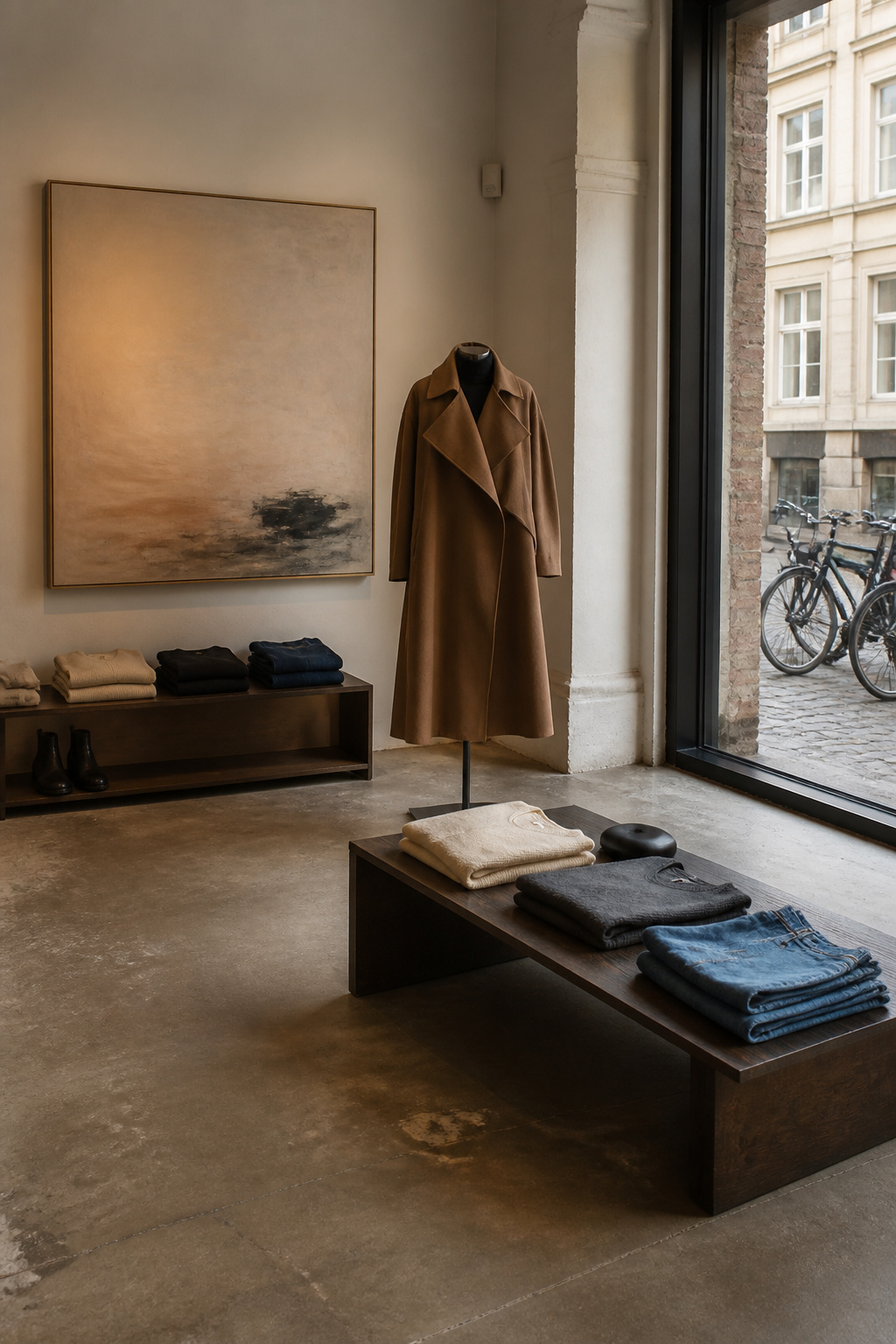
Copenhagen Fashion Week operates on a six-month cycle, but the looks that survive past the first Instagram wave are the ones that solve real problems. I watched this play out in real time tracking street style outside the Ganni and Stine Goya shows: the attendees who looked most pulled together weren’t wearing runway pieces head-to-toe. They had taken one directional element, a Cecilie Bahnsen voluminous sleeve or a BITE Studio sculptural coat, and grounded it in the practical dressing the city actually demands for cycling and weather.
The runway-to-street timeline matters here. Within about two weeks of the February and August shows, you can spot which trends will translate by watching what local women keep wearing after the photographers leave. The ones that stick share DNA with Copenhagen’s design heritage: function first, quality construction, then personality layered on top. Acne Studios might show extreme proportions, but the street version scales back to wearable volume.
The mistake I made early was treating Copenhagen Fashion Week as a prescription rather than a filter. I’d see a styling trick on a showgoer and copy it exactly, missing that she’d adapted it from a runway look that required three other specific pieces I didn’t own. The outfits worth borrowing arrive in street style already edited for real wardrobes. Watch for repeats across multiple attendees in different combinations: that’s your signal a trend has moved from performance to habit.
Scandi Minimalism vs. Maximalism
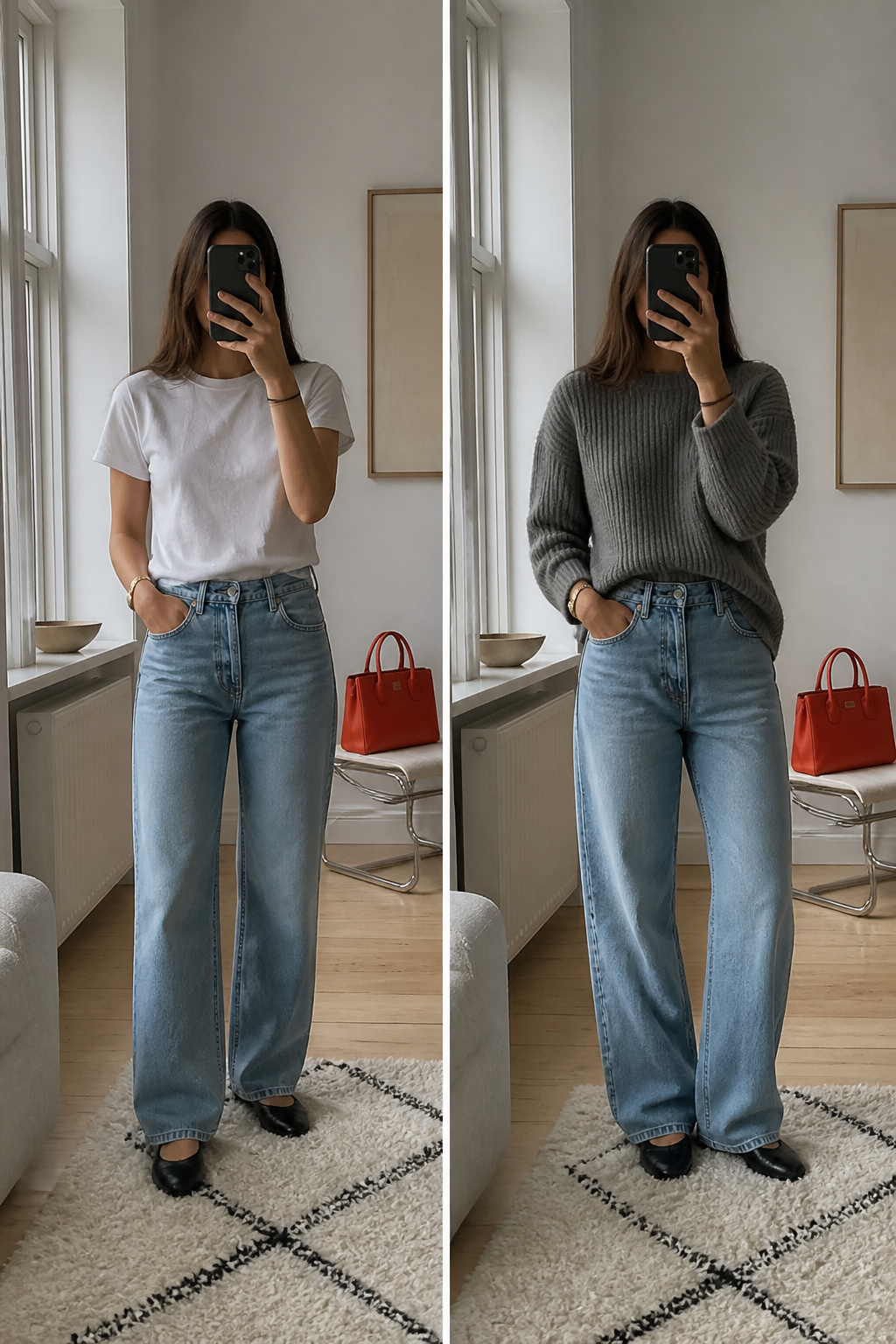
Copenhagen style used to mean something you could sum up in three words: clean lines, quiet colors, nothing extra. The Scandinavian wardrobe still rests on those bones of white tees, leather pieces, and denim that works with everything, but what changed is who gets to have the fun.
Copenhagen Fashion Week shifted the whole conversation. Ganni, Acne Studios, and Stine Goya proved Nordic dressing could keep that practical backbone and still throw in bursts of color, playful prints, and pattern clashing that would have made the old guard wince. Stripes with florals, animal prints with checks, the clashier the better.
The constant underneath is function. Cycling everywhere and braving all seasons means comfort never left the equation. Individuality just found room to breathe.
For someone building outfits from real pieces, the lesson is tactical. Keep those minimalist staples as your base, the well-cut denim and versatile leather, then let one element do the talking. A patterned knit, a bold accessory, one hit of personality against the quiet. The polished feel comes from intention, not volume.
Practicality in Fashion
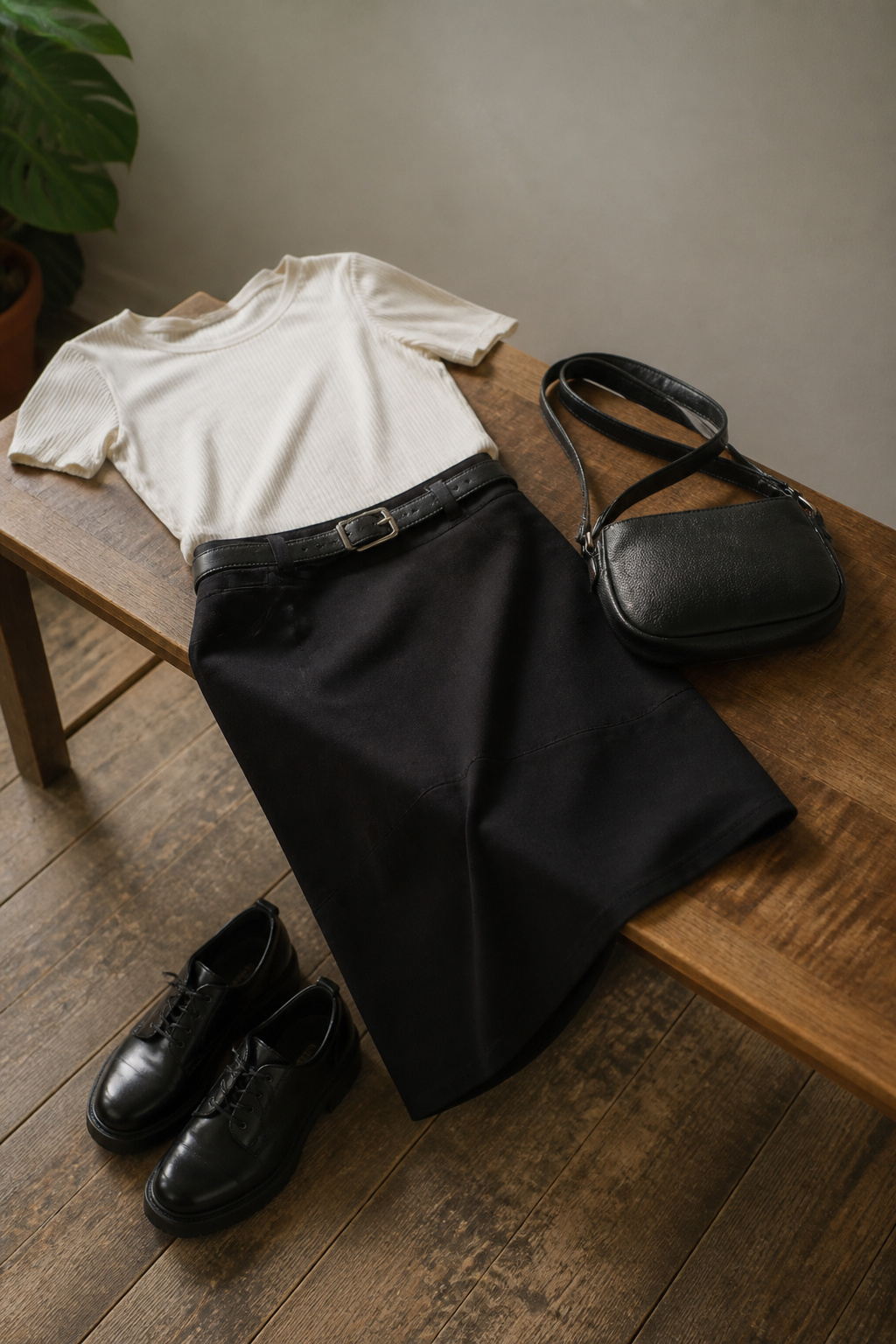
Copenhagen’s bike lanes aren’t a scenic extra; they’re the main road, and that reality reshapes every garment choice you see on the street. A skirt that rides up on a saddle, a coat that flaps open at speed, a bag that slips off one shoulder: these are failures, not quirks. Hem lengths tend to hit at the knee or below, where fabric stays put against a bike frame, and the A-line shapes that dominate Danish wardrobes aren’t just flattering; they allow full leg rotation without bunching or binding.
Fabric matters more than silhouette. Breathable layers that handle temperature shifts between outdoor riding and overheated cafes get priority over delicate dry-clean-only pieces. Waterproofing lives in the outerwear, not the outfit underneath. Crossbody bags and small backpacks win over top-handle totes for the same reason; hands stay free for brakes, and weight distributes across the torso instead of pulling one arm back. The "effortless" look everyone copies is, in part, engineering dressed up as taste. A Ganni wrap dress or an Acne wool coat functions because it was built for this commute first and the photograph second.
Frequently Asked Questions
What is the Copenhagen look?
The Copenhagen look blends comfort, quality, and individuality through oversized silhouettes, deliberate layering, and practical pieces built for cycling and shifting weather. It pairs timeless staples with bold colors and playful prints, always grounded in function first. The result reads as effortless because every piece was chosen to work in real daily life, not just for photographs.
How can I make my outfits look effortlessly chic?
Invest in quality, well-cut basics that fit properly, then add personality through unexpected touches like clashing colors, prints, or one sculptural accessory. Keep silhouettes relaxed but intentional: a French tuck, a rolled sleeve, or a belt at the natural waist turns volume into shape. The balance between comfort and polish matters more than any single piece.
What colors are popular in Copenhagen fashion?
Neutrals like navy, camel, and cream form the base, paired with vibrant brights including tangerine, fuchsia, and emerald for energy. Unexpected combinations such as pink against red or brown against blue keep the look modern. If full color-blocking feels like too much, start with a bright bag or scarf against your usual coat, then move inward as you trust the combination.