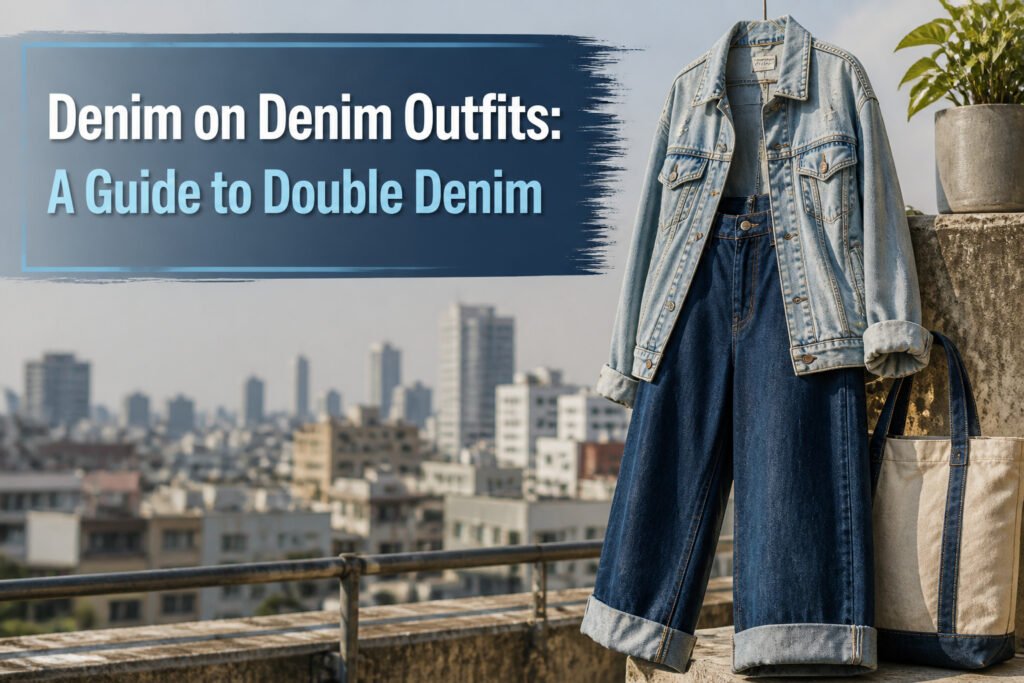
Denim on denim outfits are simply two or more denim pieces worn together, and the only thing that separates a polished look from a costume is contrast. Matching washes flatten into a single shapeless block, which is why the old "Canadian tuxedo" joke stuck around. The fix is lighter on top and darker below, a pale chambray shirt against rigid indigo jeans, enough variation to read as intentional styling rather than an accident.
Contrasting Shades

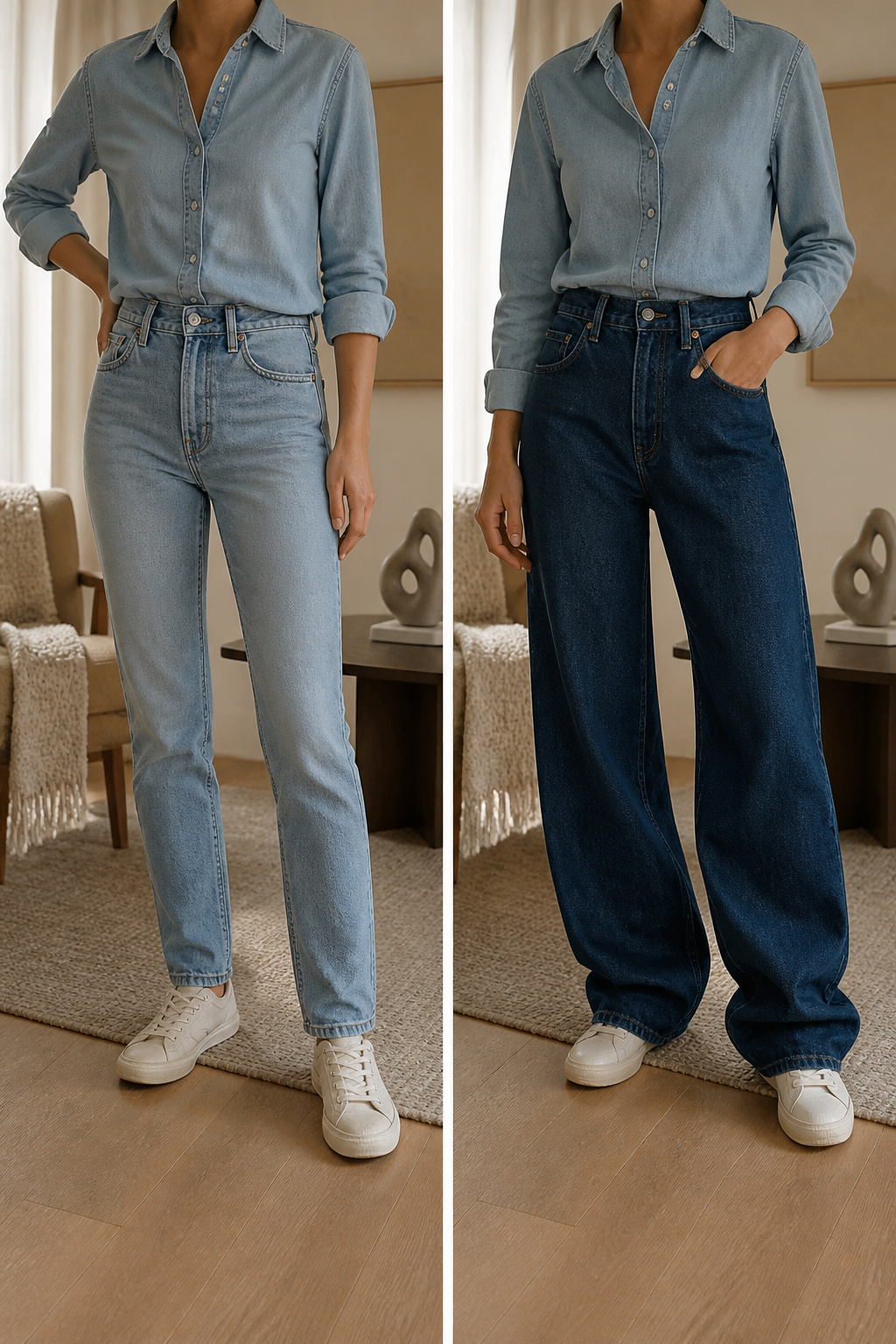
A light-wash denim shirt with dark indigo jeans is the combination I reach for first, and the reason is simple: wash variation is what keeps double denim from looking like a uniform. Matching shades flatten everything. Two pieces in the same tone merge into one shapeless block, which is where the old "Canadian tuxedo" joke came from. The fix is contrast, and it does not take much. A pale chambray top against rigid dark jeans creates enough depth to read as intentional styling rather than an accident.
Current consensus has shifted hard on this. Denim on denim is no longer a faux pas; for fall 2025 it ranks as a reliable go-to move. The WGSN forecast specifically flags varied washes as the instant-cool factor. Black and white denim also work here, though the principle stays identical. Pair a black denim jacket with classic blues, or dirty vintage fades with structured dark trousers. The gap between top and bottom matters more than which direction you take it. Lighter on top and darker below tends to elongate the leg, which is why I default that way for daytime. Reverse it for evening if you prefer the grounding effect of dark shoulders above a lighter jean. Either works; same-wash does not.
Fit Balance
The first time I tried double denim, I paired baggy jeans with an oversized denim jacket I had borrowed from my sister. The mirror told the whole story: shapeless, swallowed, and definitely not intentional. That outfit taught me that one fitted piece paired with one relaxed piece is the difference between looking styled and looking like you raided a lost-and-found bin.
Fit checks matter more when you are layering the same fabric twice. At the waistband of your base jeans, two fingers should slide horizontally between your body and the closed band. Less than that and the denim will pinch and ride; more and the weight of a tucked-in shirt or jacket will pull everything south by noon. In the leg, aim for about a finger’s width of ease at the thigh and knee when you stand normally. That small amount keeps the line clean without turning into a stovepipe.
A rigid denim jacket with stretch jeans gives you structure where you need it and comfort where you move. Reverse it with a fitted chambray shirt and straight-leg rigid jeans. The contrast in fabrication does the styling work so the silhouette stays intentional, not accidental.
Thoughtful Layering

Two denim pieces, a top and a bottom, are the easiest starting point for denim on denim outfits, but a third piece can work if you break it up deliberately. A cropped jacket hits right at the waistband and creates a clean horizon line; oversized versions need either a slim leg below or a belt cinched at the waist so the shape doesn’t swallow you whole. The tie-waist belt on a denim jacket reads seventies and refined, especially over bootcut jeans or a matching skirt for a fresh spin on the skirt suit.
A denim vest layers without adding bulk, and the cutaway style feels stylishly rebellious over a neutral tee with roomier jeans, bootcut, baggy, or wide legs. If you are wearing more than two denim garments, keep shoes, bags, and jewelry simple and non-denim so the outfit reads cohesive, not chaotic. Non-denim options like a long cardigan or wrap do the same work of breaking up the uniform; the point is contrast in texture or weight, not more blue. Once the fit, wash, and proportions are right, the look stops being a statement and becomes a signature.
Accessories That Break the Line
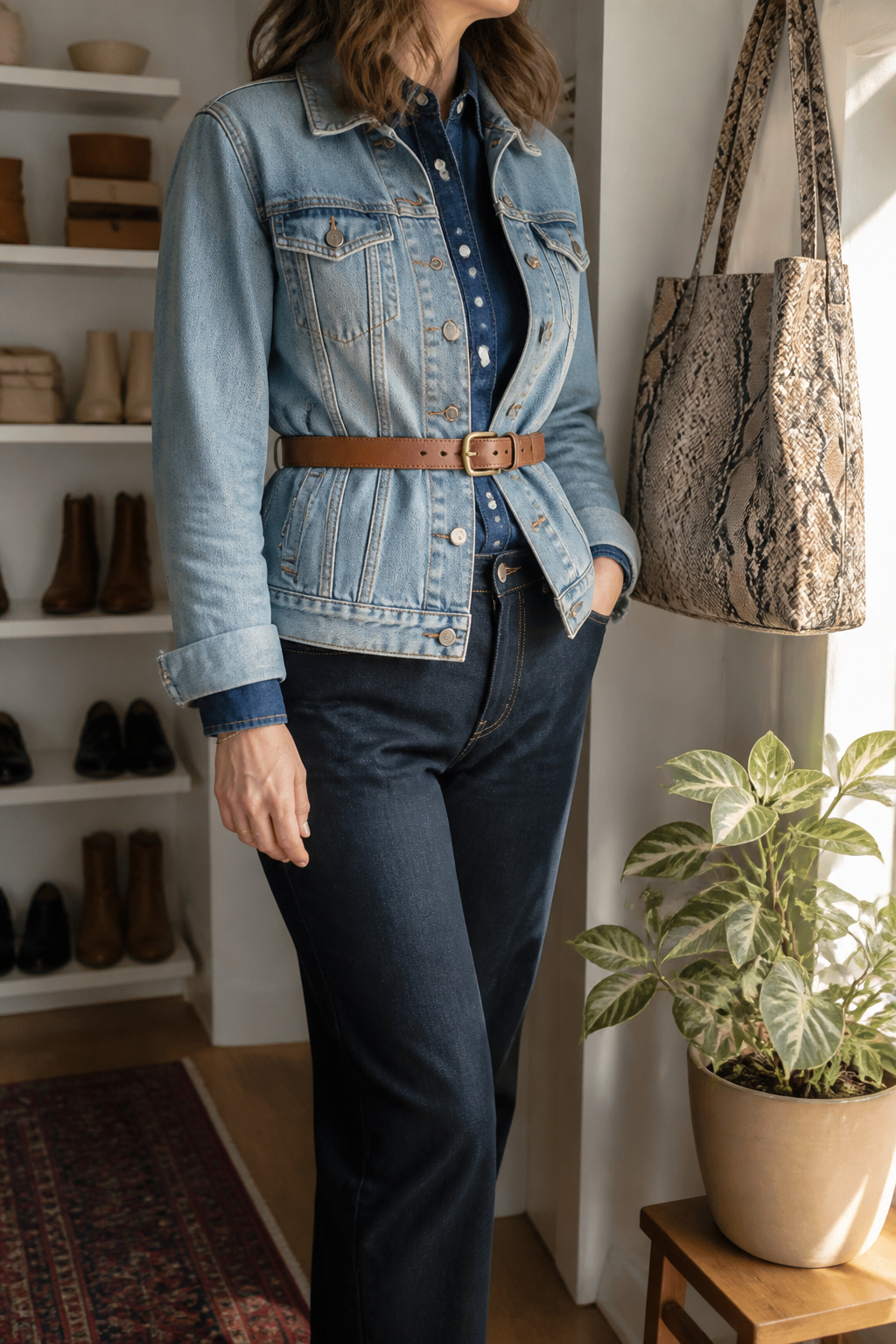
A belt does the most obvious work of interrupting denim on denim, but the material matters more than the match. One approach pairs a brown leather belt with black shoes; the mismatch reads intentional, not accidental. Chunky hoops or layered chains draw the eye upward and add weight against all that cotton. Shoes shift the whole register: sneakers keep it casual, boots add drama, heels sharpen the silhouette. The difference between costume and finished look often comes down to a single accessory that refuses to blend in.
Punchy accessories, like a python print tote and graphic scarf, bring the classic-as-it-gets duo into the now.
— Vogue
A python print or graphic scarf works because it introduces something denim cannot be. The same principle applies at any budget: one piece that breaks the line is usually enough, and two risks clutter. Sculptural jewelry in minimal shapes serves the same end for quieter tastes. The finished outfit needs one element that says someone made a choice.
Texture Mixing
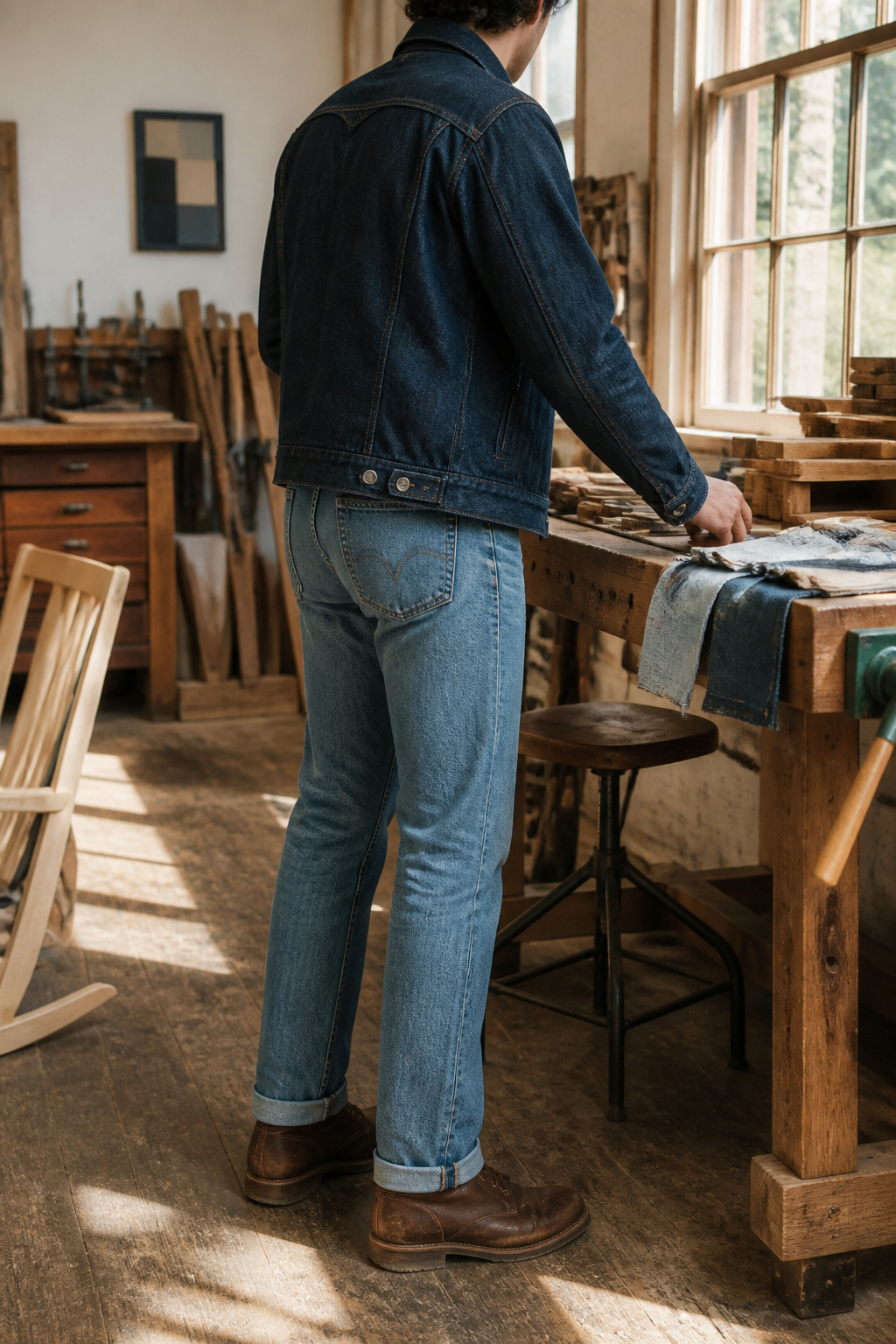
Rigid denim against stretch twill creates the kind of depth that keeps a denim on denim outfit from flattening into a single costume piece. The sources point to selvedge and Japanese denim as prime examples: clean, structured surfaces that sit deliberately against softer, more pliable fabrics. That contrast in hand feel reads visually even when washes sit close on the color wheel.
Weight matters just as much as weave. A 12-ounce raw jacket worn over lighter, washed jeans carries two separate histories in one look. Raw denim develops character through wear, gradually mapping the body, while its partner may already hold its shape from the factory. The gap between them is what makes the combination feel lived-in rather than matched.
White denim offers a useful test case. Sources note that mixing ecru, optic white, and natural ivory in similar weights still produces dimension because the textures differ. Without that variation, you are wearing a uniform. With it, the outfit earns its cohesion from material intelligence, not color blocking.
Occasion Calibration
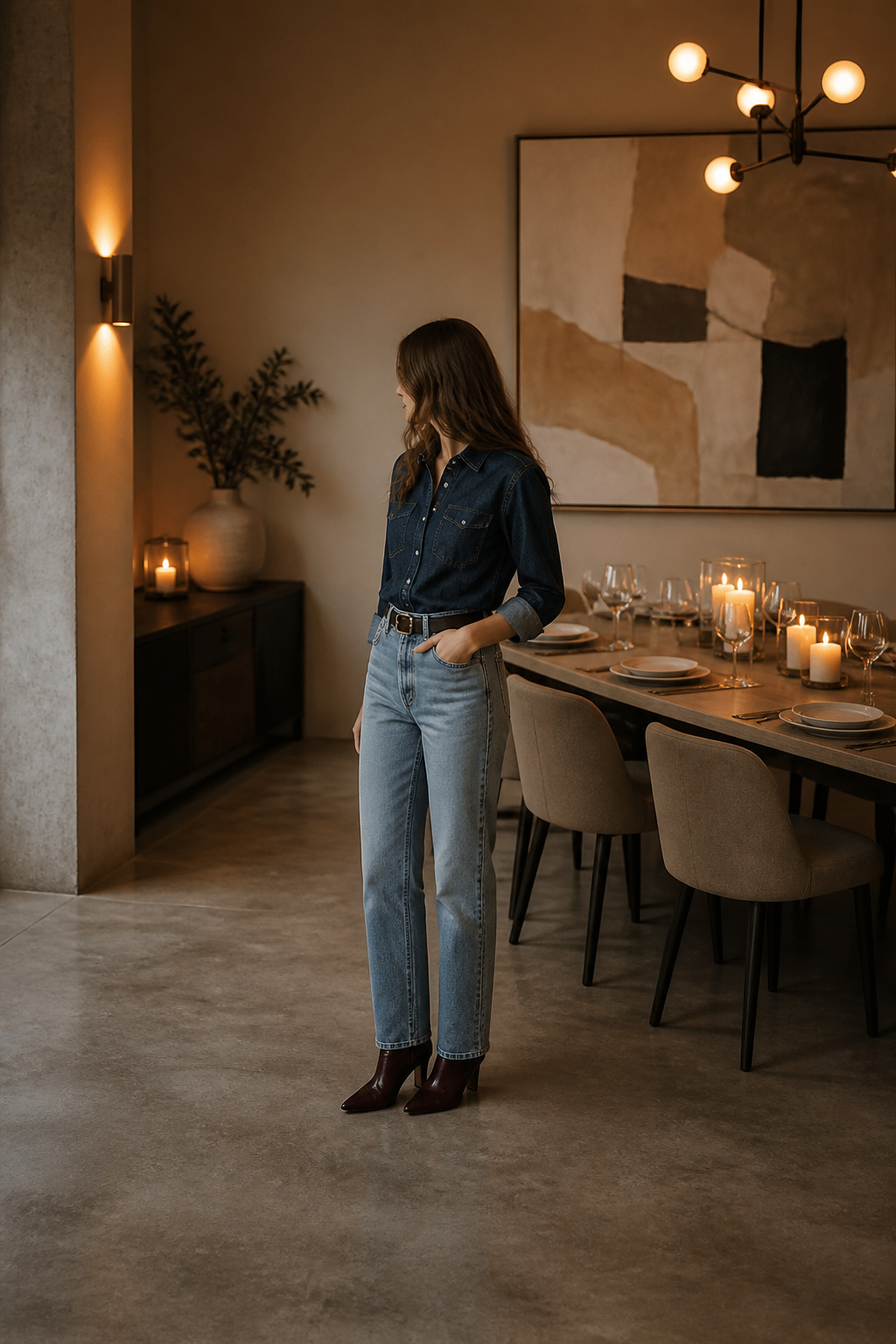
The same denim on denim outfit reads completely different with swapped shoes or jewelry. A dark wash shirt and straight-leg jeans with white sneakers and a canvas tote is weekend errands; swap in heeled boots, a slim leather belt, and small gold hoops, and the same two pieces handle a casual dinner. Two pieces are the practical limit unless you are deliberately building a three-denim look with a neutral tee and non-denim accessories to keep it cohesive.
There is no age ceiling on double denim. What shifts is the styling. Slightly modern cuts, darker cleaner washes, and structured but not tight silhouettes read as polished rather than chasing youth. Streamlined shapes like tunics or popover tops add polish where a cropped jacket would feel too casual, and minimal sculptural jewelry finishes the look without noise. The goal is precise and quietly confident, not a statement piece.
The Core Pieces
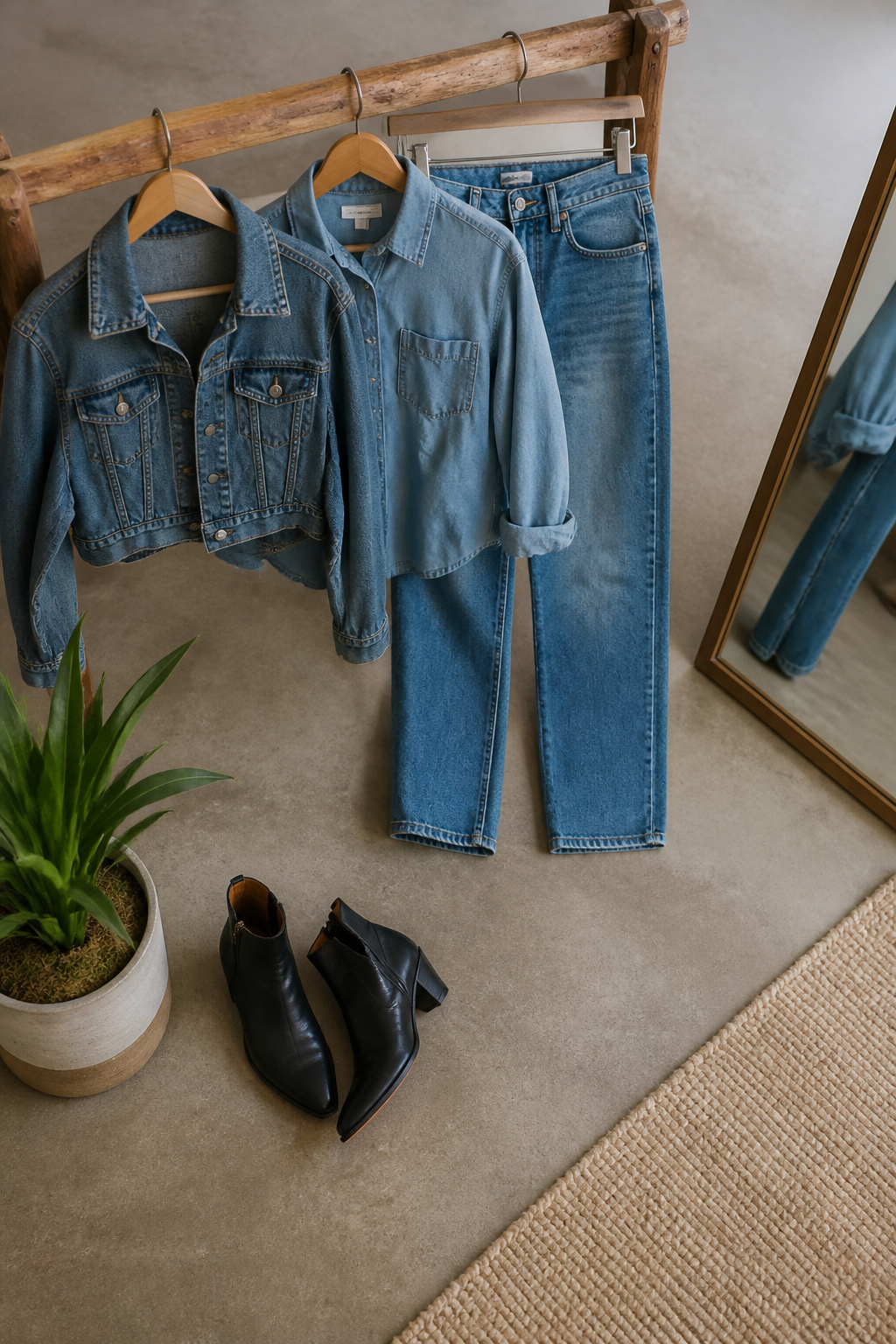
A double-denim wardrobe runs on five categories, each with its own range of shapes worth owning.
- Denim jackets come cropped, oversized, or belted. The cropped version sits clean over high-waisted jeans; oversized layers over bulk without swallowing your frame; belted gives shape when the rest of the outfit is loose.
- Denim shirts split into button-ups, chambray, and fitted cuts. Chambray is the workhorse here: soft enough to tuck, structured enough to stand alone. A fitted denim button-down keeps the line sleek under a jacket.
- Denim jeans cover skinny to wide-leg, with high-waisted as the anchor rise. Two strong silhouettes are the minimum: a dark straight or slim for evenings, a relaxed straight or wide-leg in softer wash for weekends. A third pair in black, charcoal, or ivory builds monochrome outfits that read modern rather than costume.
- Denim skirts run mini, midi, or maxi. The midi is the practical buy; it pairs with denim tops and non-denim alike without the mini’s flash or the maxi’s event-only feel.
- Denim vests complete the set as the third layer in a three-piece look. Worn over a neutral tee with jeans and a jacket, they add depth without competing for attention.
Two pieces is the standard entry point. Three works when shoes, bags, and jewelry stay simple and non-denim, letting the denim do the talking without shouting.
Fit and Proportion
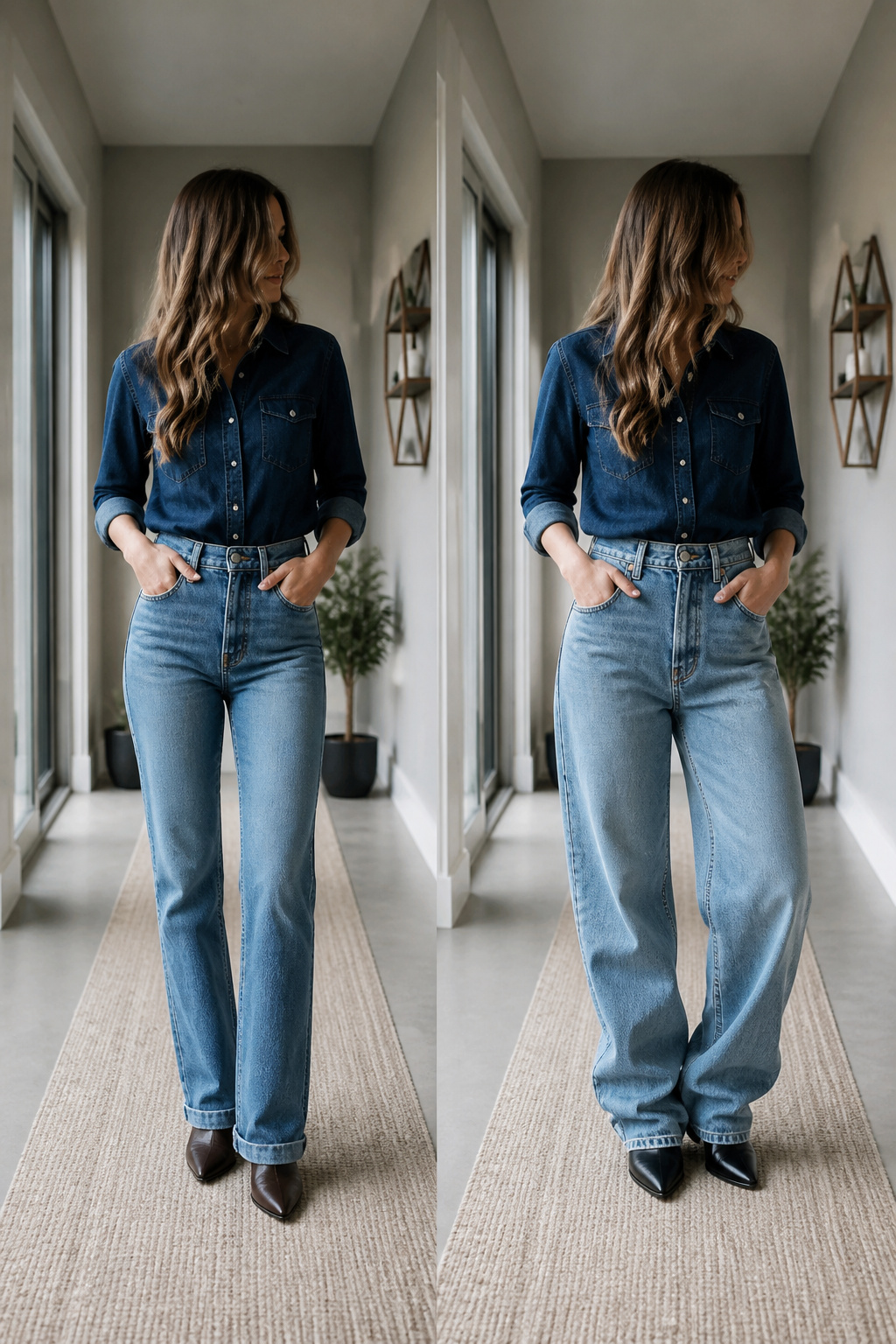
The difference between denim on denim outfits that look intentional and ones that look like you got dressed in the dark usually comes down to one fitted piece paired with something looser. A crisp dark denim button-down tucked into slouchy straight-leg jeans reads polished because the structure up top balances the ease below. Reverse it and the same principle holds: a cropped denim jacket over high-rise wide-leg jeans gives the look a put-together edge rather than a sloppy one.
This fit pairing matters at every age and on every body shape. Wardrobe advisors who specialize in ageless dressing emphasize it because proportion does more to flatter than any wash or accessory. Structured but not tight is the sweet spot; tight on tight tends toward costume, while loose on loose collapses into bulk. The goal is contrast, not matching volumes.
I have found that the easiest way to test this before leaving the house is to look at the silhouette in a full-length mirror and ask which piece is doing the shaping work. If neither is, or if both are, something needs to swap.
Wash and Color
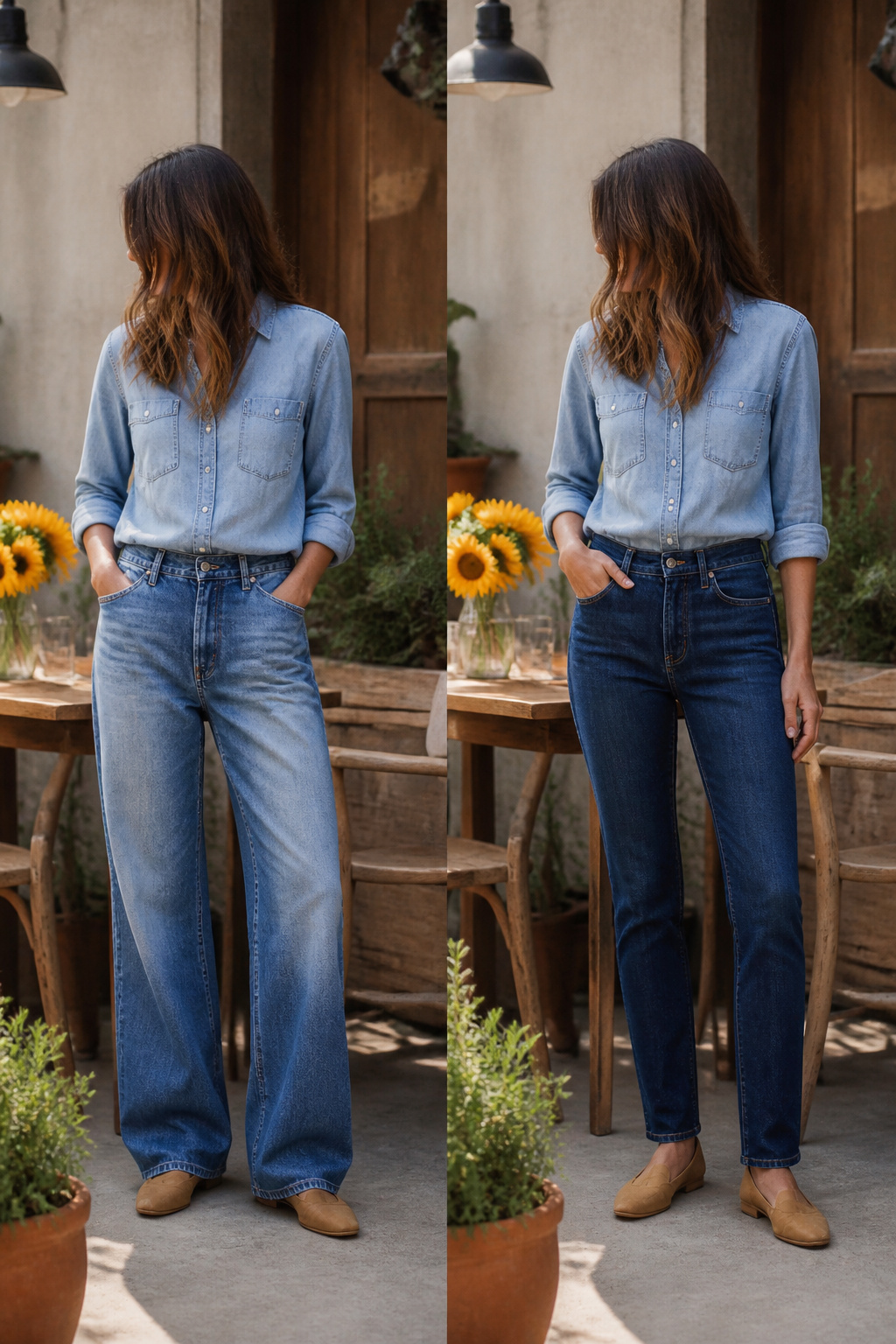
Two pieces in the same wash flatten the eye. The sources describe the most reliable fix as light on top, dark on bottom: a pale chambray shirt against indigo jeans, or a faded jacket over darker denim. That vertical contrast builds depth without trying hard.
I used to think matching washes looked polished, but a single tone reads as uniform rather than intentional. The real move is separation. Clean black-on-black works because it leans sleek, not because the pieces match; white or ecru denim softens the whole look and drops the Western reference entirely.
Texture matters here too. A fluid chambray half-tucked into structured dark jeans, or raw denim against stonewash, keeps the outfit from looking like one sheet of fabric. Even within the same shade, different fabric weights do the work of contrast.
Layering Techniques
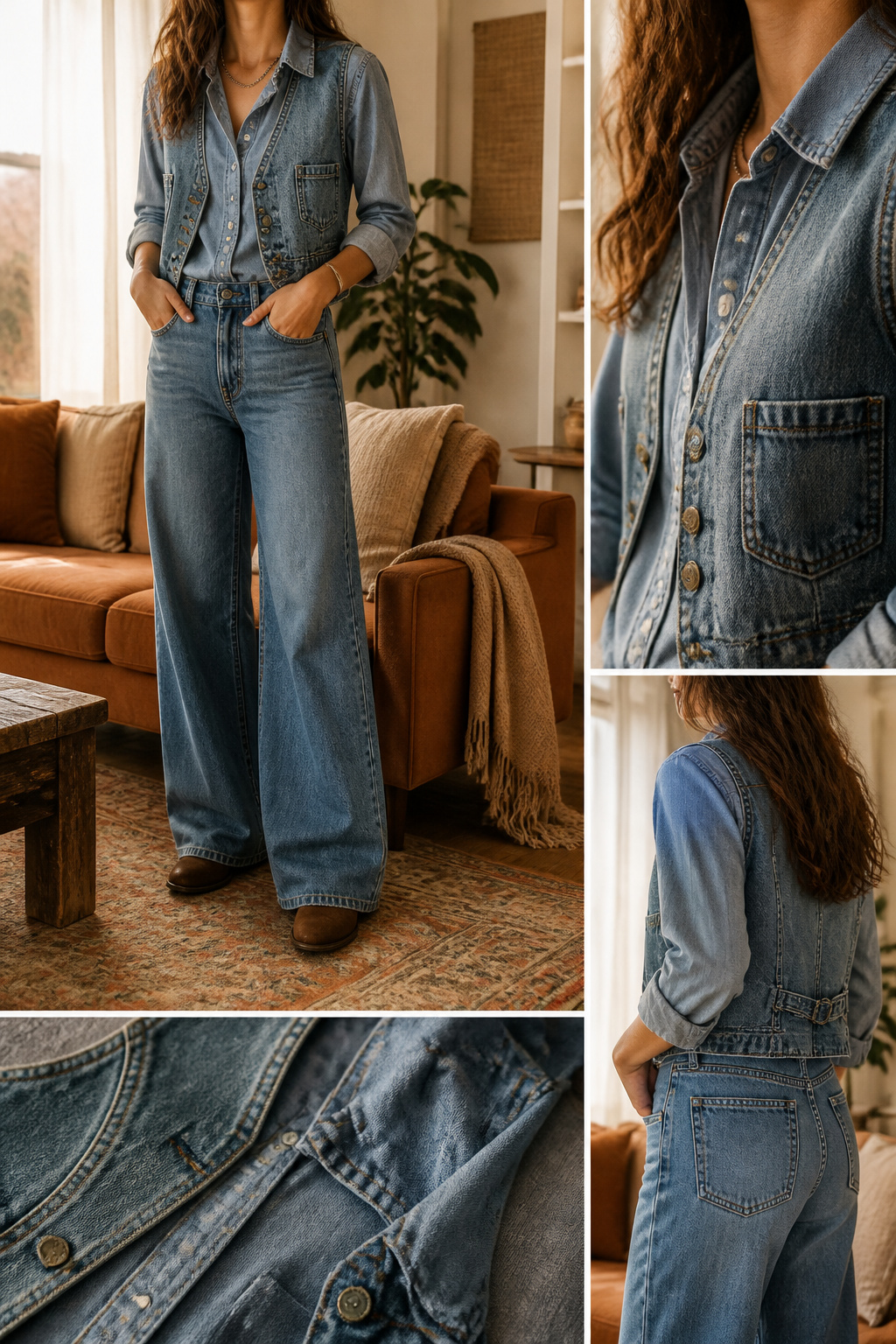
A single layer of denim on denim reads intentional; stacked layers read editorial. The difference is weight and what sits between.
A lightweight denim vest over a chambray shirt gives you two technically denim pieces without the bulk of doubled jackets. Denim waistcoats in particular pair cleaner with roomier jeans, bootcut or wide-leg, where a full blazer would sit too heavy on the hips. I have worn this exact combination with a longline denim skirt in matching wash, and the monochromatic effect works because the vest breaks at the right ribcage point rather than fighting the waistband.
For actual warmth, a non-denim layer does the breaking up for you. A camel or black overcoat thrown over a denim shirt and jeans pulls the look together in one gesture; a cardigan or wrap does the same softer work. The denim trench is the middle path, denim in name but usually lighter in weight than a jacket, and it functions as outerwear that still reads as part of the story.
Multi-layered denim, a corset over a jacket over jeans, builds a runway effect. It demands the pieces vary in wash or treatment. Single-layer, a shirt tucked into jeans with no topper, is what you wear when the clothes need to move through a day without comment. I default to single-layer for work-from-home days and add the vest or coat only when the occasion asks for the extra beat.
Frequently Asked Questions
Is denim on denim still a faux pas?
Double denim is not a faux pas anymore; it is one of the most relevant trends heading into fall 2025, with WGSN specifically flagging varied washes as the instant-cool factor. The old "Canadian tuxedo" joke only held when people wore matching shades that merged into one shapeless block. Contrast in wash and intentional proportion are what make it read as styled rather than accidental.
Can you wear denim on denim at any age?
There is no age ceiling on double denim. What shifts is the styling: slightly modern cuts, darker cleaner washes, and structured but not tight silhouettes read as polished rather than chasing youth. Streamlined shapes like tunics or popover tops add polish where a cropped jacket would feel too casual, and minimal sculptural jewelry finishes the look without noise.
How many denim pieces are too many in one outfit?
Two denim pieces is the practical standard, but three can work if you balance them deliberately. A denim vest over a neutral tee with jeans and a jacket adds depth without competing, and keeping shoes, bags, and jewelry simple and non-denim keeps the outfit cohesive rather than chaotic. More than three denim garments rarely works outside editorial styling.