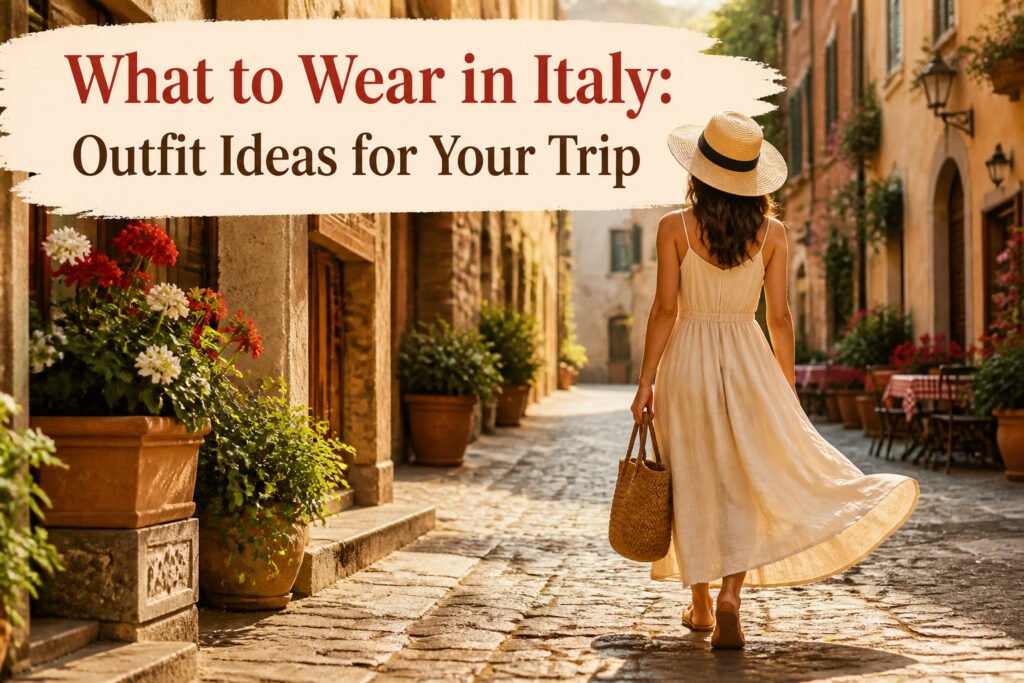
Seven Italy outfits will get you through a 10-day trip in a carry-on, but only if every top talks to every bottom. The formula that actually works is 4 dresses, 1 jumpsuit or matching set, and 3 pairs of shoes, with linen as your fabric of choice for 89-to-108-degree summer days. I learned the hard way that denim cut-offs stay in the suitcase while tailored black trouser shorts slip into every setting from museum queues to trattoria tables.
1. Linen Dresses
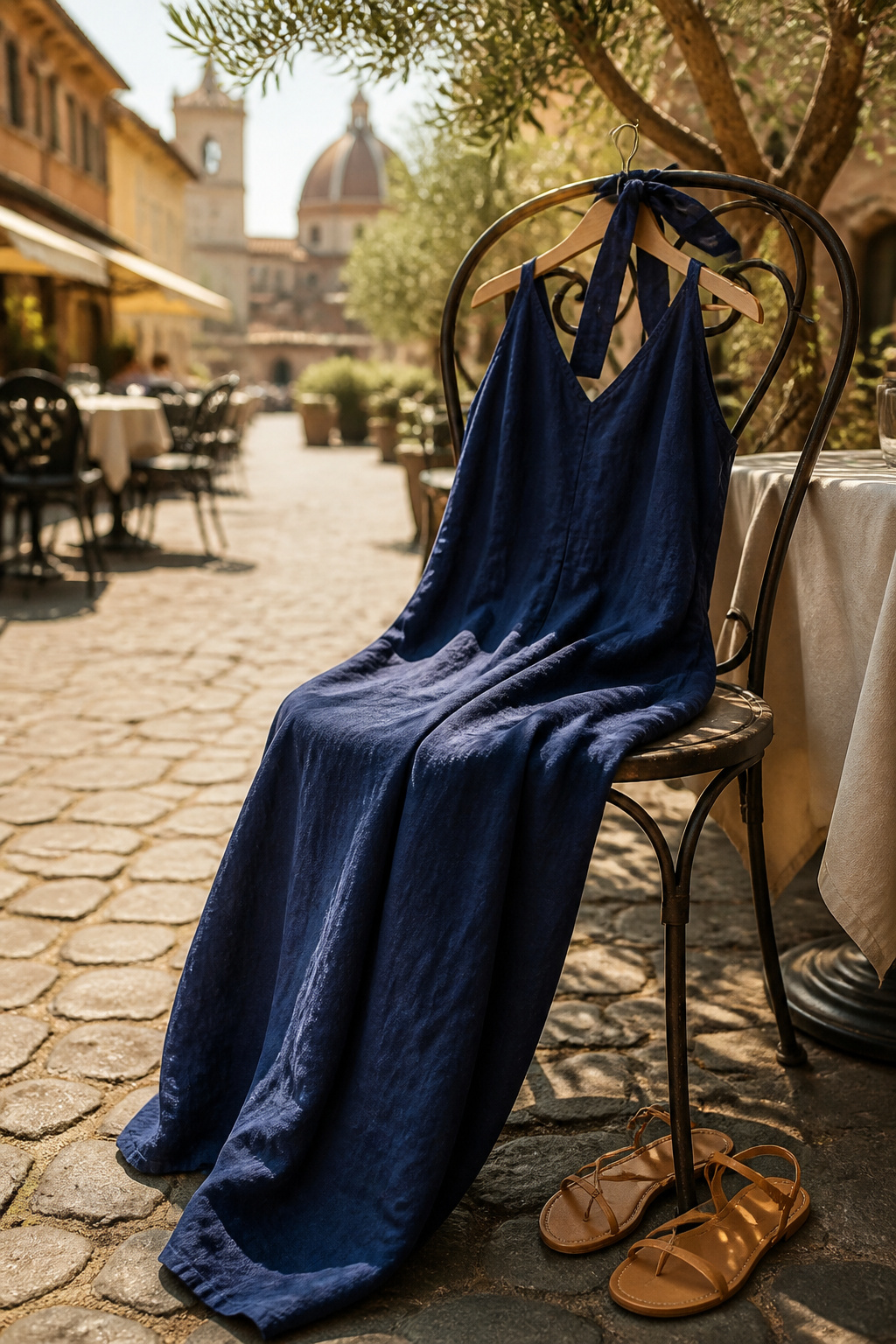
Linen is the unofficial fabric of Italian summer for good reason. Temperatures in July and August run 89 to 108 degrees, and humid midday heat in Rome or Florence can feel crushing without shade or AC. A linen dress dries fast enough that sweat from three hours of cobblestones won’t haunt you at dinner.
The day-to-night shift matters more in Italy than back home. I lived in linen dresses during a June trip to Florence when it pushed past 100, and the same midi that felt breezy at the Uffizi still looked pulled-together at a trattoria that evening. Darker hues help hide the inevitable gelato mishap, while a halter or structured cut keeps it from reading too casual once the sun drops.
A few I had my eye on: the Meshki Rosie linen halter midi at $189, paired with Margaux’s Palermo sandal at $335. The spend is real, but these pieces anchor a week of mix-and-match packing. Cotton poplin works similarly if linen wrinkles bother you, though it lacks that same dry-to-the-touch coolness after hours in the heat.
2. Comfortable Walking Shoes
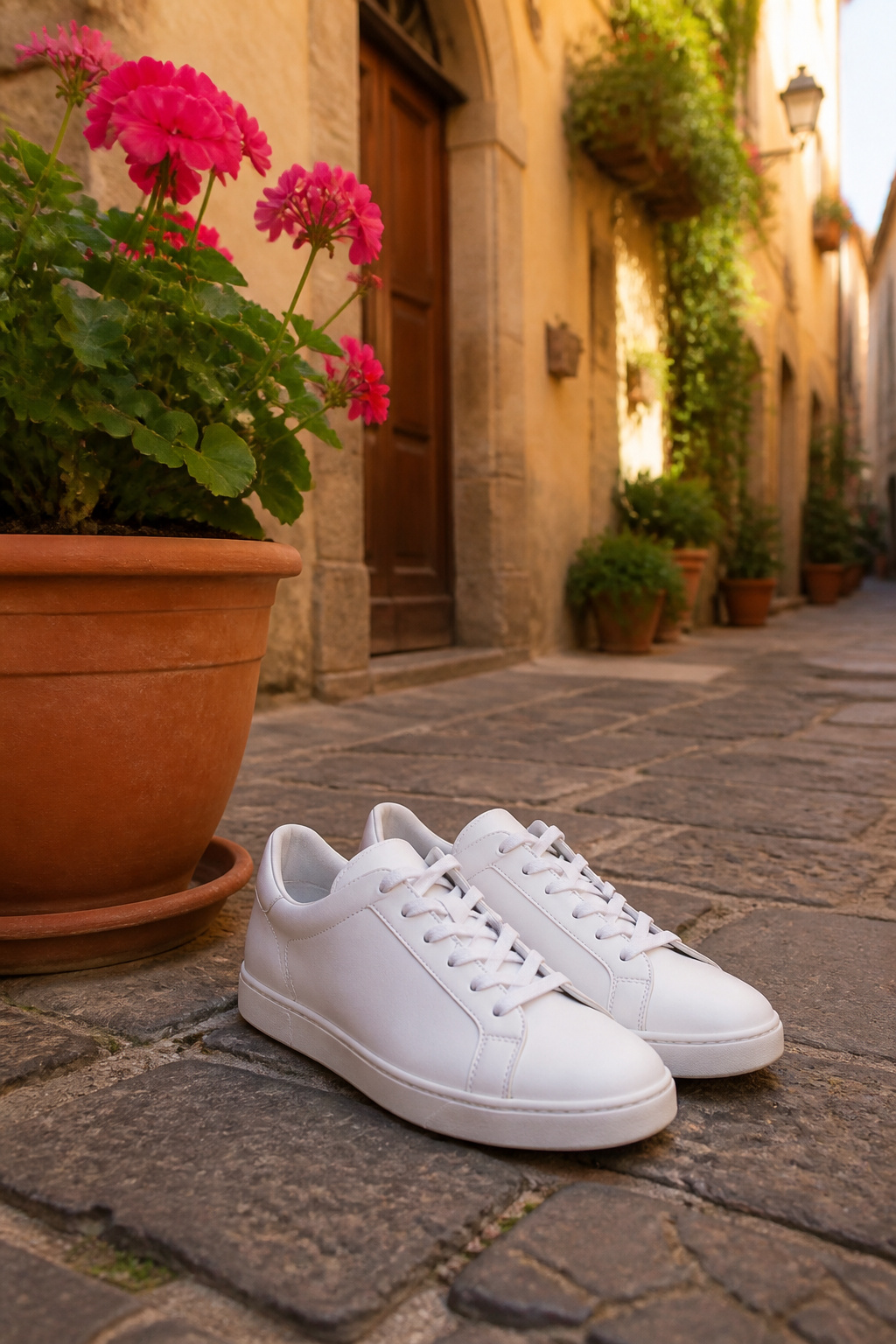
The wrong shoes on cobblestone streets will ruin your trip faster than any outfit choice. Those picturesque Roman hills and uneven stone surfaces in Florence demand footwear that can handle the terrain without looking like you came from a gym. White plain sneakers are the most versatile option here; they pair with everything from linen skirts to cropped trousers and look far more polished than traditional athletic styles. Dr. Scholl’s makes a comfortable, affordable leather version that holds up well for full days of walking.
Sandals work too, but only if they are genuinely sturdy. A flat leather sandal with some structure will survive cobblestones where flimsy styles fold and blister. The real mistake is packing anything you have not already broken in. New shoes on day one of a trip almost guarantee blisters, and you will feel every step. Test-drive anything unfamiliar weeks ahead, and keep blister bandages in your bag as insurance.
Italians absolutely notice footwear even when tourists assume they do not. In tourist cities you can wear sneakers to dinner, but a plain white leather style reads as intentional; running shoes read as tourist gear. The sandal or sneaker you choose is doing more work than any other piece in your bag.
3. Tailored Shorts
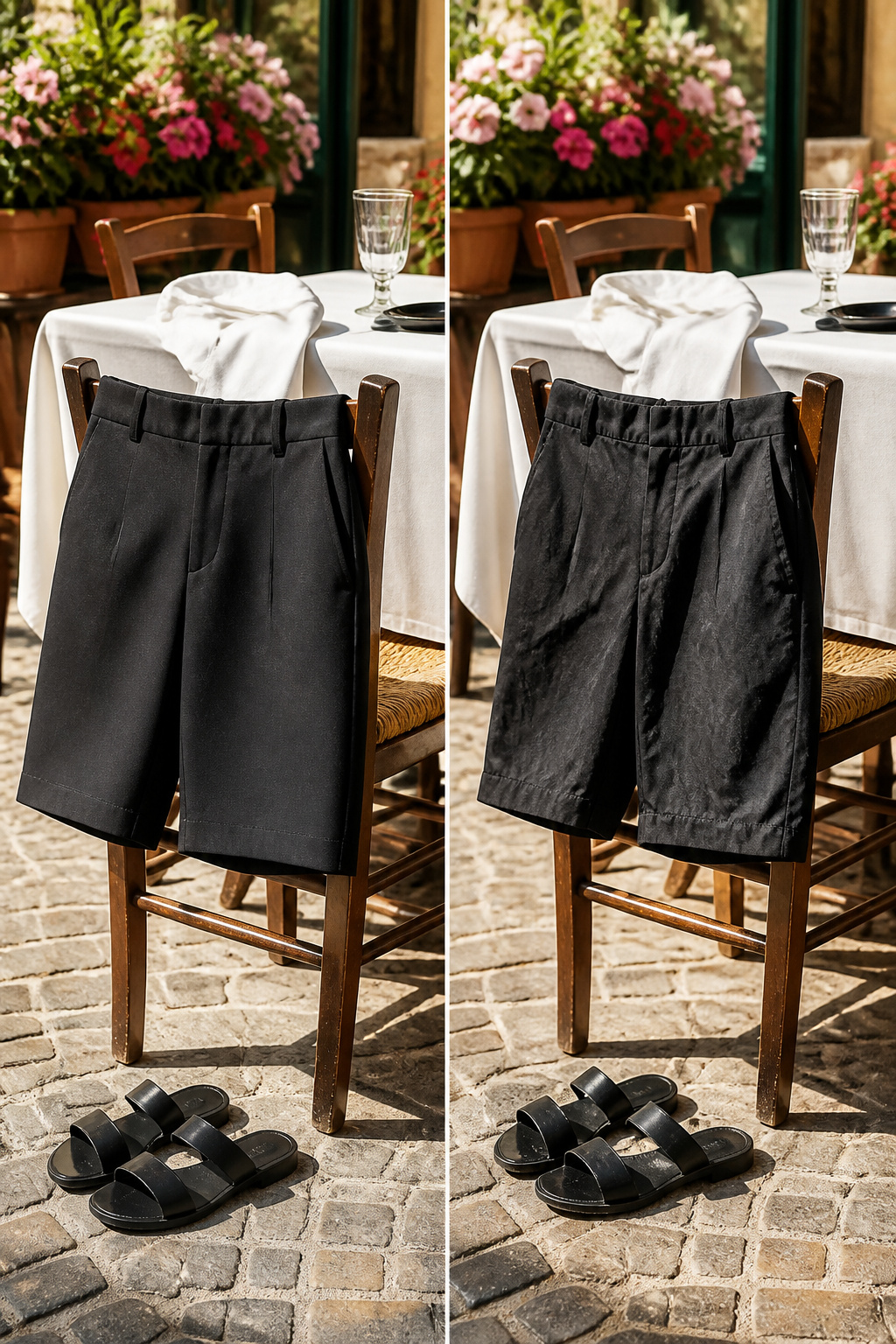
The first time I packed for Rome, my denim cut-offs came with me. They stayed in the suitcase. Italian cities read jean shorts as too casual, even in July heat, while a pair of black trouser shorts slipped into every setting without a second glance.
The inseam matters: aim for a tailored length that hits mid-thigh or just above the knee, in a fabric with enough weight to hold a crease. Linen works, but wrinkled tourist linen is its own cliché. A cotton-blend twill or lightweight wool keeps the structure through a morning of museum queues and an afternoon of gelato stops.
The real distinction is intent. Tailored shorts with a plain tee and leather sandals signal you understood the assignment. Denim cut-offs, however expensive, signal beach town or backyard barbecue. In Florence or Milan, that difference gets you seated at the café table rather than hovered over by the waiter deciding whether to ask you to leave.
I learned this the hard way, sweating through a church entry line in pants because my shorts had stayed home. Now trouser shorts are my first reach for Italian summer packing. They handle cobblestones, dress up with a button-down, and never leave me guessing what side of the line I am on.
4. Lightweight Tops
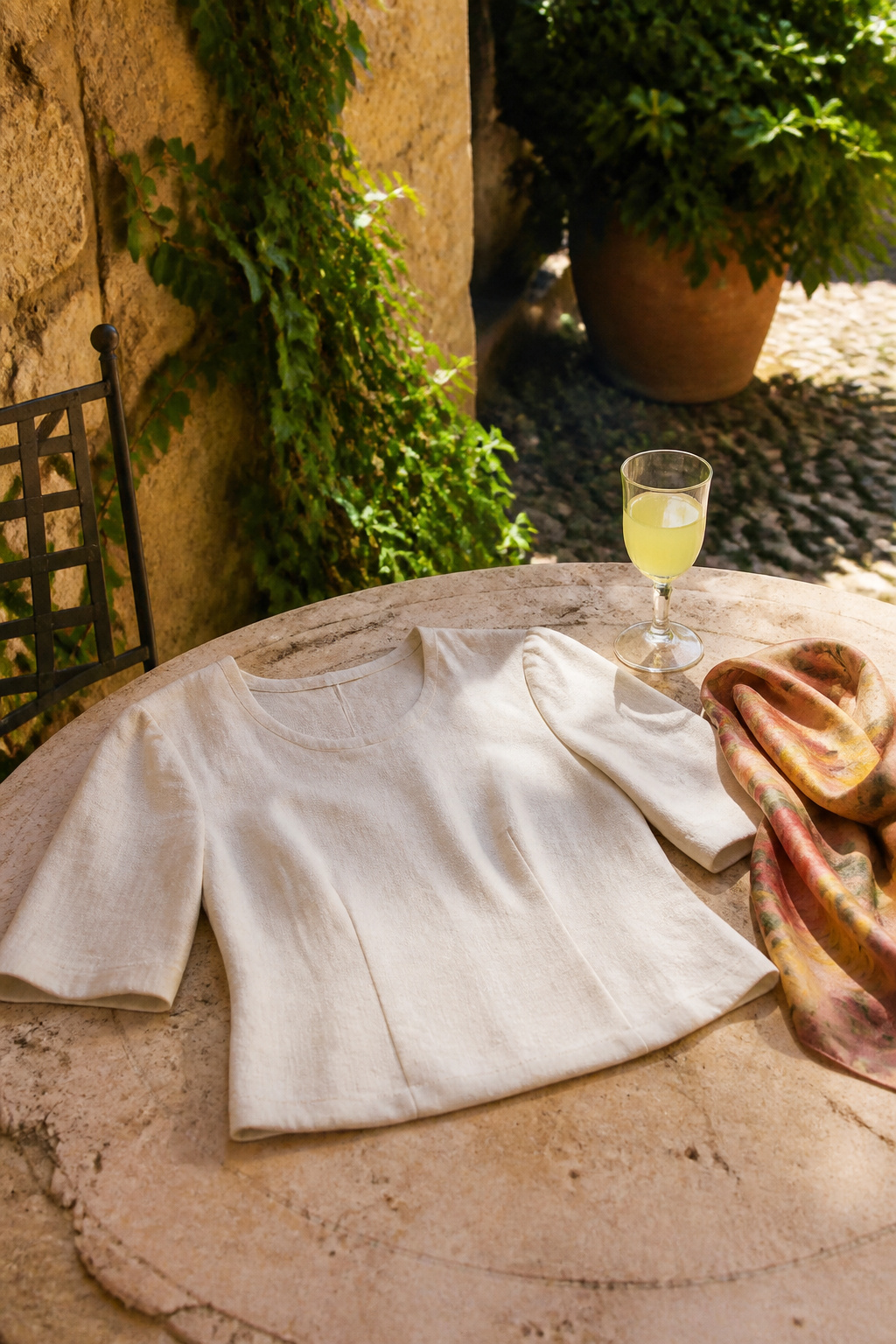
Cotton and linen tops are the real workhorses of an Italy summer wardrobe, and linen wins for speed if you hate sink-washing in hotel rooms. The fabric dries fast after a day of sweat in 89-to-108-degree heat, which means one or two pieces rotated through a trip instead of packing a top for every single day.
Sleeve length matters more than you think. Churches in Italy often require shoulders covered, so a short cap sleeve or elbow-length top saves you from scrambling for a scarf at the door. I still throw a lightweight silk scarf in my bag as backup with strappier styles, but a sleeved top removes the question entirely.
Romantic detailing fits the setting, though I’d skip anything overly flowy. A fitted linen tee or a cotton blouse with a slight puff sleeve hits the right note without looking costume, and both fabrics breathe through midday heat that sends everyone hunting for shade or AC.
5. Maxi Dresses
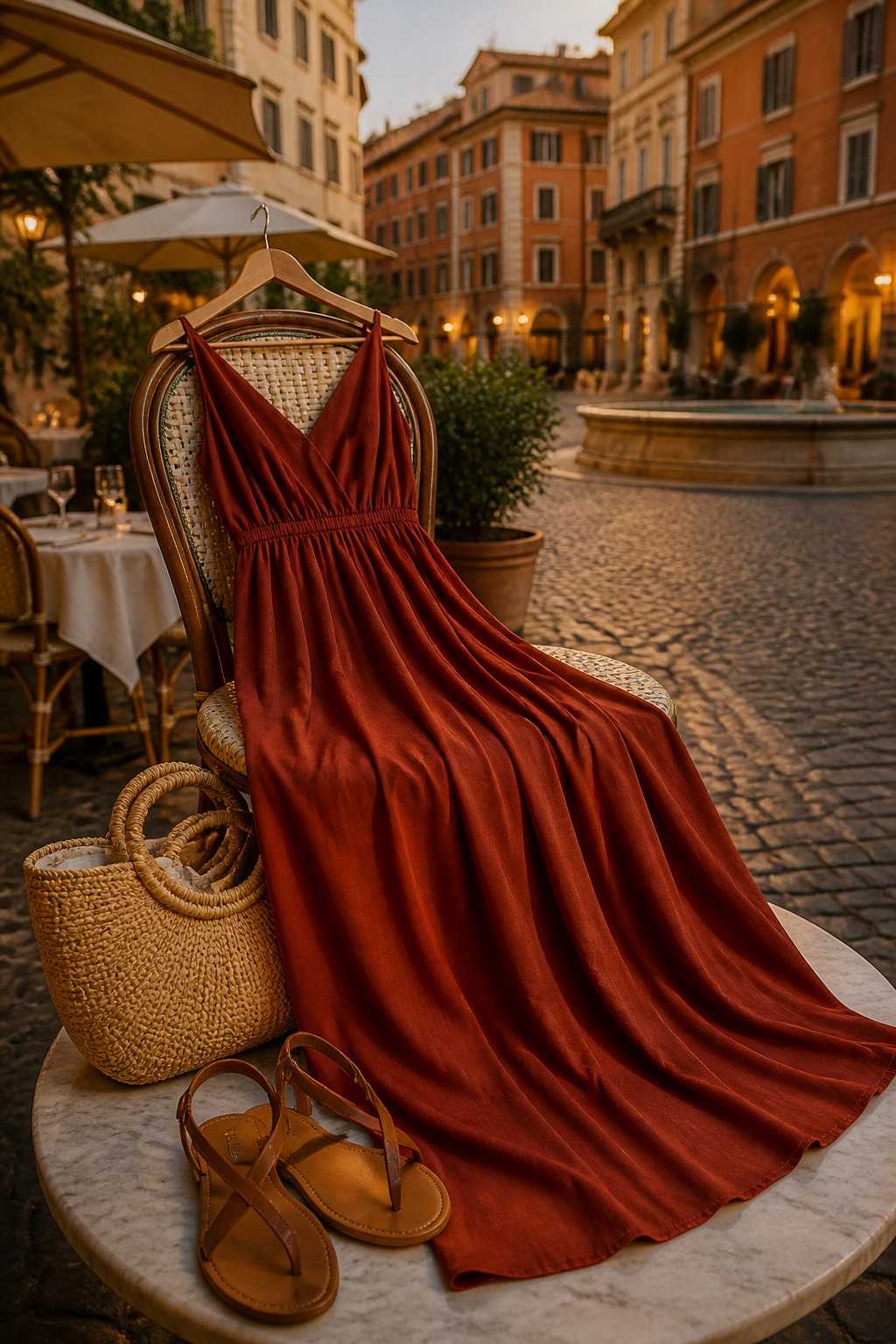
A maxi dress is the one piece I still pack even when I am trying to travel light. The length covers knees and shoulders with nothing to add, which means it clears modesty requirements for churches without a cardigan or scarf in your bag. I have worn the same solid-color maxi from a morning at the Duomo straight through to dinner at a trattoria; the fabric was light enough for 90-degree streets and the cut still felt appropriate after dark.
Prints can work, but I get tired of them faster and they read more "tourist at a vineyard" than versatile. Solid colors let one dress serve as three different looks with swapped accessories. Below-the-knee or full length is the threshold that qualifies as modest at most Italian churches, though I have seen the rule enforced more strictly in Sicily than in Rome. Quick-dry material matters more than you think: hand-washing in a hotel sink actually works when the fabric cooperates, and that is how I keep the bag under seven pounds.
6. Jumpsuits and Rompers
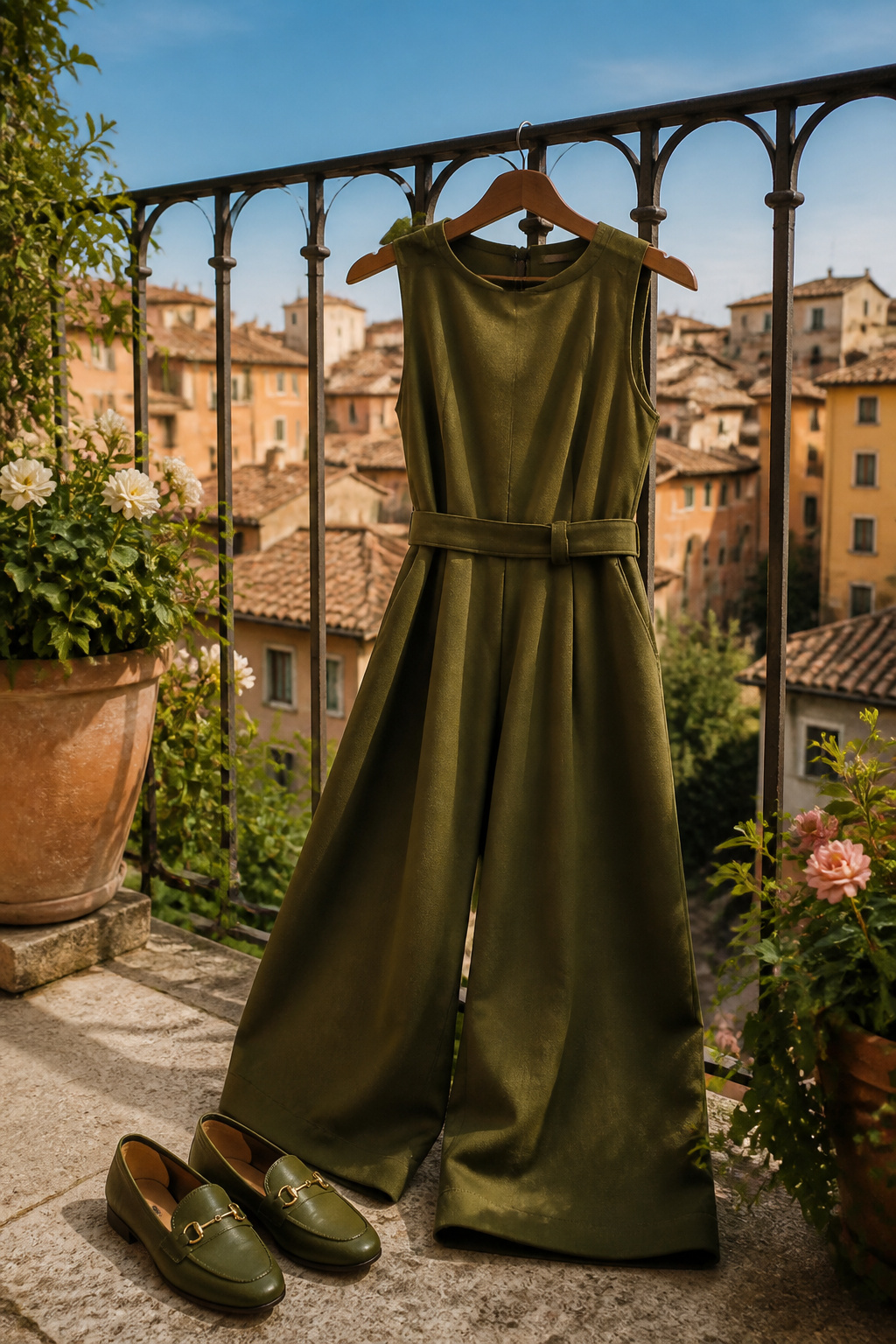
One-piece dressing removes the morning decision of what matches what, which matters more in Italy than at home when you are working from a 22-inch carry-on. A wide-leg linen jumpsuit in solid navy or olive reads as intentional at a trattoria table; printed rayon versions in busy florals tend to read as pool cover-up the second the light flattens. The practical downside is real. Older Italian buildings, especially the small churches and family-run restaurants you will want to visit, often have narrow stalls or squat toilets with nowhere to hang a bag while you manage a full-zip torso. I plan bathroom stops around my outfit on those days.
A tailored romper with a defined waist and a button front solves half the problem. You can get in and out without dropping the whole garment, and the structure signals "dressed" in a way elastic-waist shorts sets do not. Rompers with a blazer-weight fabric and inseams under four inches look finished; anything longer or softer drifts toward sleepwear. If you pack one jumpsuit, make it the kind you can belt and wear with loafers, not sneakers, so it earns its square footage.
7. Layering Pieces
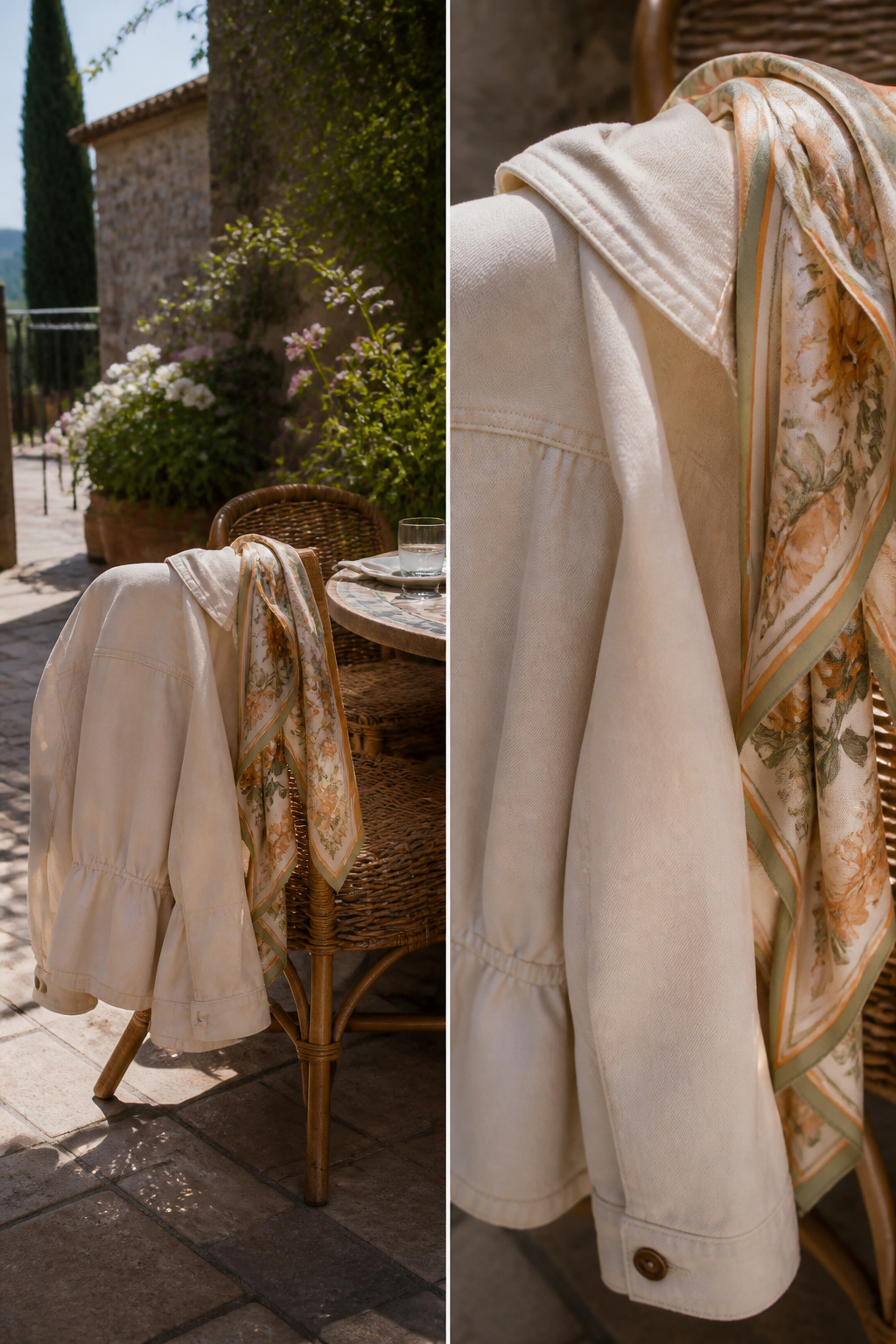
A light jacket or cardigan lives in my bag from April through October in Italy, and the reason is practical: shoulders must be covered to enter most basilicas, no exceptions. The guard at Santa Maria Maggiore in Rome turned away a woman in a sleeveless linen dress ahead of me last June. She had not packed a layer. I watched her sit on the steps while her group went inside.
Cashmere wraps work, though I prefer something with structure. An ecru denim peplum jacket packs the same warmth but looks intentional at lunch after the church visit. My husband once lent me his button-up when I forgot a cover-up entirely, and that worked too, but borrowed shapes rarely sit right through a full day of walking.
The layer itself is what matters, not what you wore underneath. Striped tops, simple tanks, even the sleeveless dress that got that woman stopped, all become appropriate once shoulders disappear. I choose crossbody-friendly layers that do not need constant adjusting. A scarf can technically cover shoulders, though I find them fiddly to keep in place while climbing campanile stairs.
Temperature drops fast after sunset along the canals or hillside towns, so this same piece carries you from cathedral to aperitivo without a return trip to the hotel.
What Shoes Actually Last

The white sneakers that have held up for twelve-mile days in Rome are a pair I found on Amazon for under $60. They are the only walking shoes I bring to Italy now, and they have outlasted sandals that seemed fine on hotel carpet but turned traitor on the Spanish Steps. That particular pair of sandals left me hobbling toward a pharmacy for blister bandages I should have packed but did not.
The break-in period I once ignored still costs me. New leather loafers went straight into my suitcase for a spring trip to Rome, and by the third hour on cobblestones I understood why every guide insists on weeks of test-driving at home. Italian cities do not forgive stiff soles. The locals in Milan had already transitioned past open-toed shoes in April; my sandals marked me as a tourist before I spoke a word.
Running sneakers are sensible for sightseeing, even if they read casual. Italians wear them. What matters is that your feet survive the day.
How I Layer for Churches

The first time I forgot a cover-up in Italy, I ended up borrowing my husband’s button-up at the last minute. A happy accident, but not one I wanted to repeat.
Most churches require women to cover their shoulders, and some guard attendants will turn you away at the door. A lightweight silk scarf tossed in your bag works with strappy sundresses, though a dress with sleeves removes the scramble entirely. Since this is Italy, the sleeved options that feel right still read romantic rather than office-bound. I leave anything overly flowy at home.
The scarf I now pack weighs 3 ounces. That number matters because I used to bring a heavier wrap that felt like a burden by day three. Coverage rules vary by church, some stricter than others, so the layer lives in my bag even when the forecast reads hot. Temperature layering and modesty end up being the same problem solved once.
The Capsule I Actually Pack
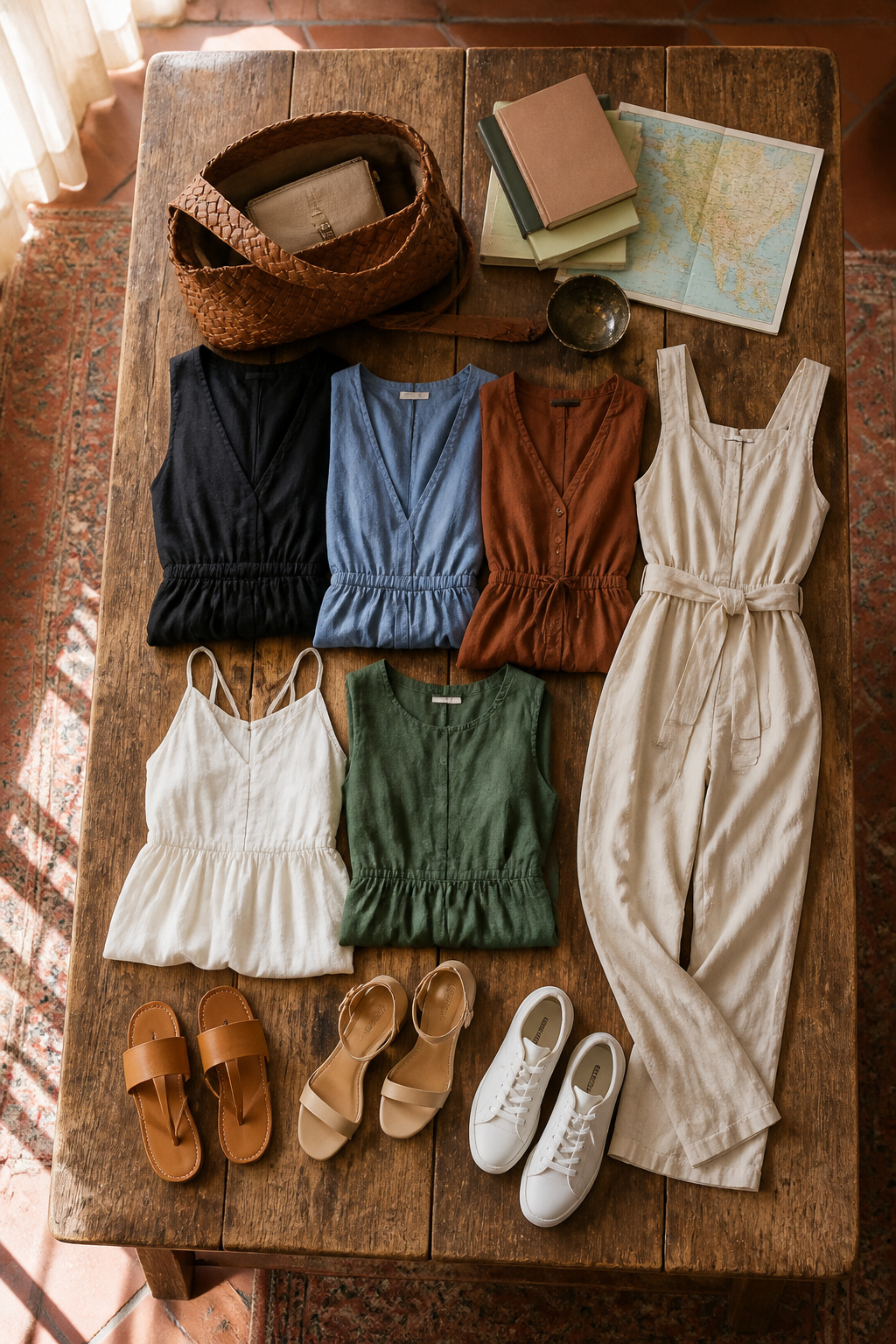
The formula that actually fits in a carry-on for 10 days breaks down to 4 dresses, 1 jumpsuit or matching set, and 3 pairs of shoes. One sightseeing outfit and one dressier option per day sounds generous until you realize the pieces need to do double duty. A leopard or polka-dot print that reads old Hollywood at dinner still works for daytime if the cut is simple enough, and a white dress with the right sandal becomes evening-ready with a swap to walkable heels.
Shoes are where most of us overpack. The three that earn their space: flat tan sandals for daily walking, one pair of walkable heels for dinner, and sneakers reserved for travel days. I used to break in new footwear on trips. The blister bandages in my bag now are a habit from learning that lesson the hard way. Test-drive anything new for weeks at home, or leave it behind.
A capsule only functions if every top talks to every bottom. The jumpsuit fills a gap no single piece does: one item that looks intentional for a nicer dinner without requiring you to coordinate. Two bags finish it, one scaled for day and a smaller option for evening. With that framework, the carry-on closes without sitting on it.
Why I Dress Up More Than at Home
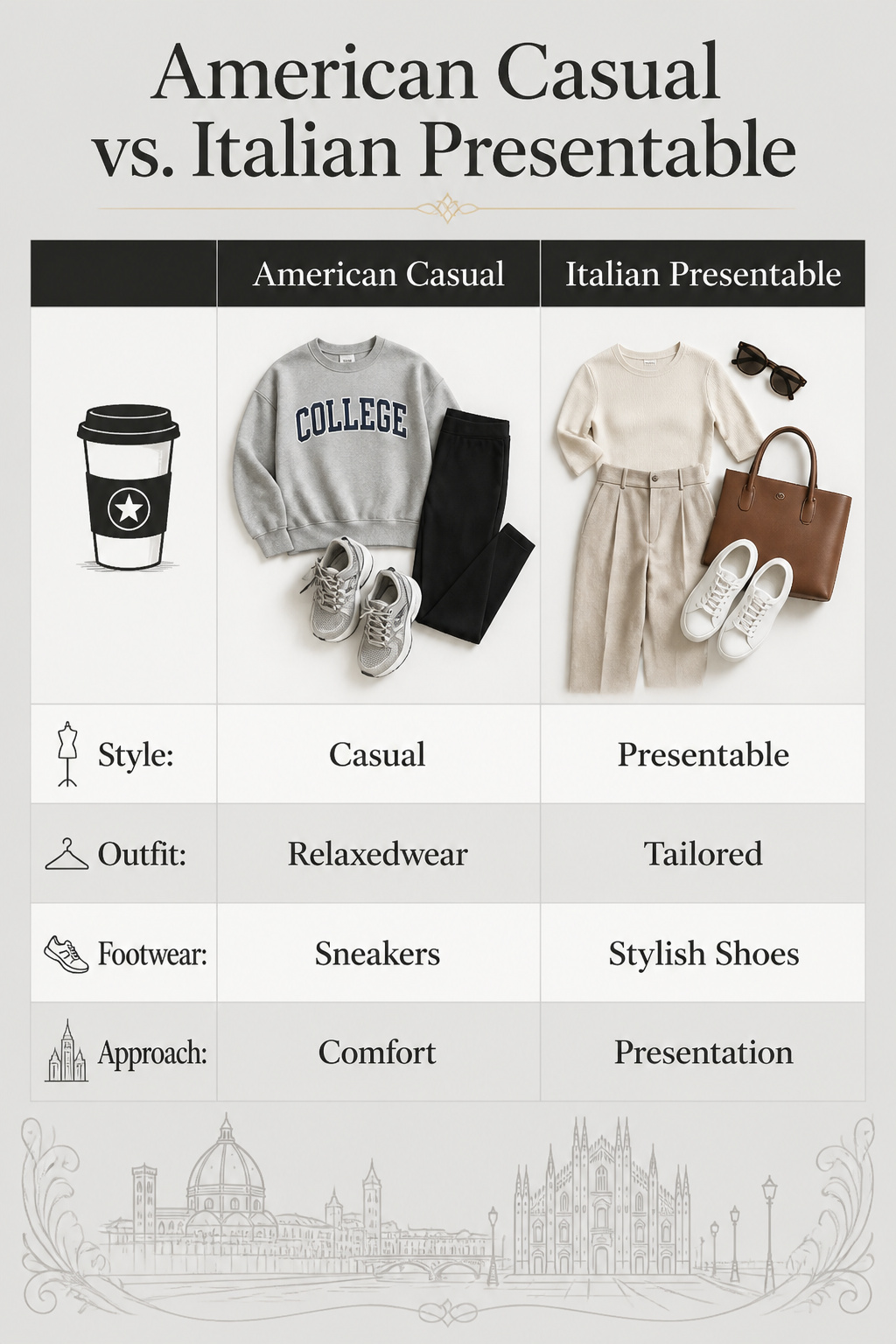
The gap between American casual and Italian presentable hit me three hours into my first morning in Milan. I had packed the same leggings and oversized college sweatshirt I wear to grab coffee at home, and standing at a tram stop surrounded by women in pressed linen trousers and fitted knits, I looked like I had dressed for a red-eye flight I was still finishing.
That sweatshirt never left the hotel again. What changed the trip was realizing Italians dress for the city they live in, not the vacation they are on. In the major cities, especially Rome, Florence, and Milan, the baseline is stylish yet practical: tailored shorts with a plain tee rather than athleisure, clean white sneakers worked into a smart look rather than running shoes paired with sightseeing clothes. The tennis shoes I brought were fine once the outfit around them looked intentional, not like I had stopped mid-workout.
Smaller towns read more traditional, but the same principle held. I stopped thinking about what was comfortable enough to tour in and started thinking about what showed I had noticed where I was. The effort was the whole point.
Frequently Asked Questions
What should I wear in Italy during the summer?
Linen and cotton are the fabrics that actually work in Italian summer heat. Temperatures in July and August run 89 to 108 degrees with humid midday conditions, and linen dries fast enough that sweat from hours of walking won’t follow you into dinner. A dark linen midi dress or cotton poplin top handles both the heat and the day-to-night shift that matters more in Italy than back home.
Are shorts acceptable in Italy?
Tailored shorts in a mid-thigh or just-above-the-knee length are fine; denim cut-offs are not. Italian cities read jean shorts as too casual even in peak heat, while black trouser shorts in cotton-blend twill or lightweight wool slip into cafés, churches, and museums without a second glance. The difference is intent: structured fabric with a crease signals you understood the local baseline.
What type of shoes should I bring to Italy?
White plain sneakers and sturdy flat leather sandals are the two essentials. Cobblestones and Roman hills destroy flimsy footwear, and Italians notice whether your sneakers look intentional or like gym leftovers. Break in everything weeks before you leave; new shoes on day one almost guarantee blisters. Keep blister bandages in your bag regardless.
How should I dress for visiting churches in Italy?
Cover your shoulders or risk being turned away at the door. A short cap sleeve or elbow-length top removes the scramble entirely, though a lightweight silk scarf tossed in your bag works as backup with strappier styles. Below-the-knee or full-length dresses also clear most modesty requirements without extra layers.
What are some packing tips for Italy?
Build a capsule where every top talks to every bottom. The formula that fits in a carry-on for ten days: four dresses, one jumpsuit or matching set, and three pairs of shoes. One piece should work for both sightseeing and dinner with only an accessory swap. Shoes are where most travelers overpack; test-drive anything new at home for weeks, or leave it behind.