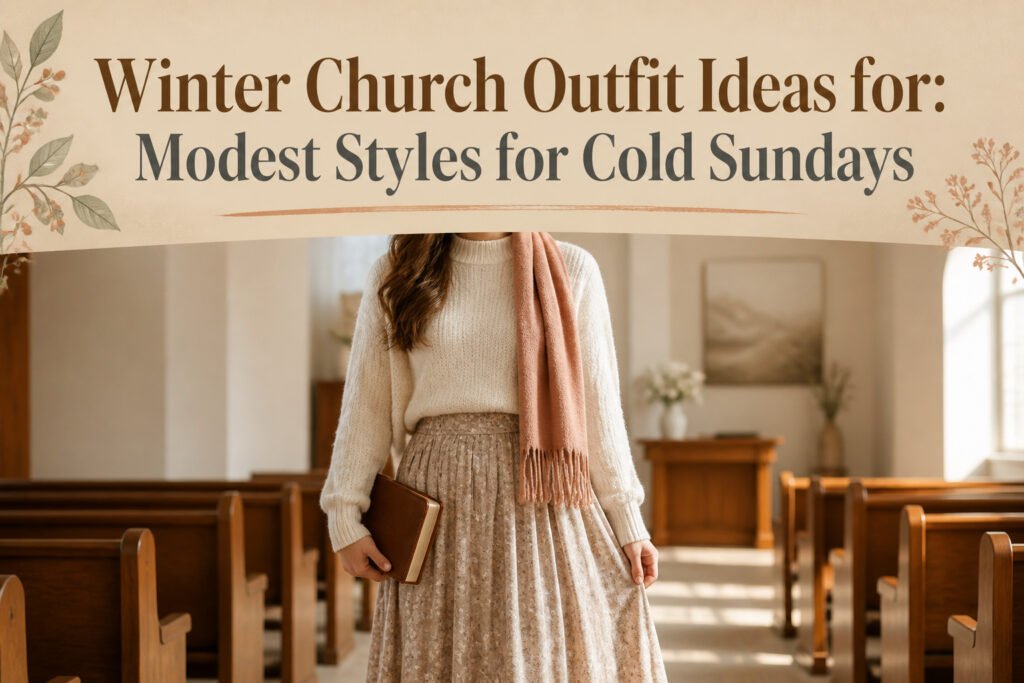
Winter church outfits run from a quick sweater-and-skirt pairing to a full velvet dress, and the deciding factor is usually the thermostat in your sanctuary, not the calendar. The cable-knit that reads cozy at home goes lumpy under a coat unless the gauge is fine enough to keep its line through the whole service.
1. Matching Sets
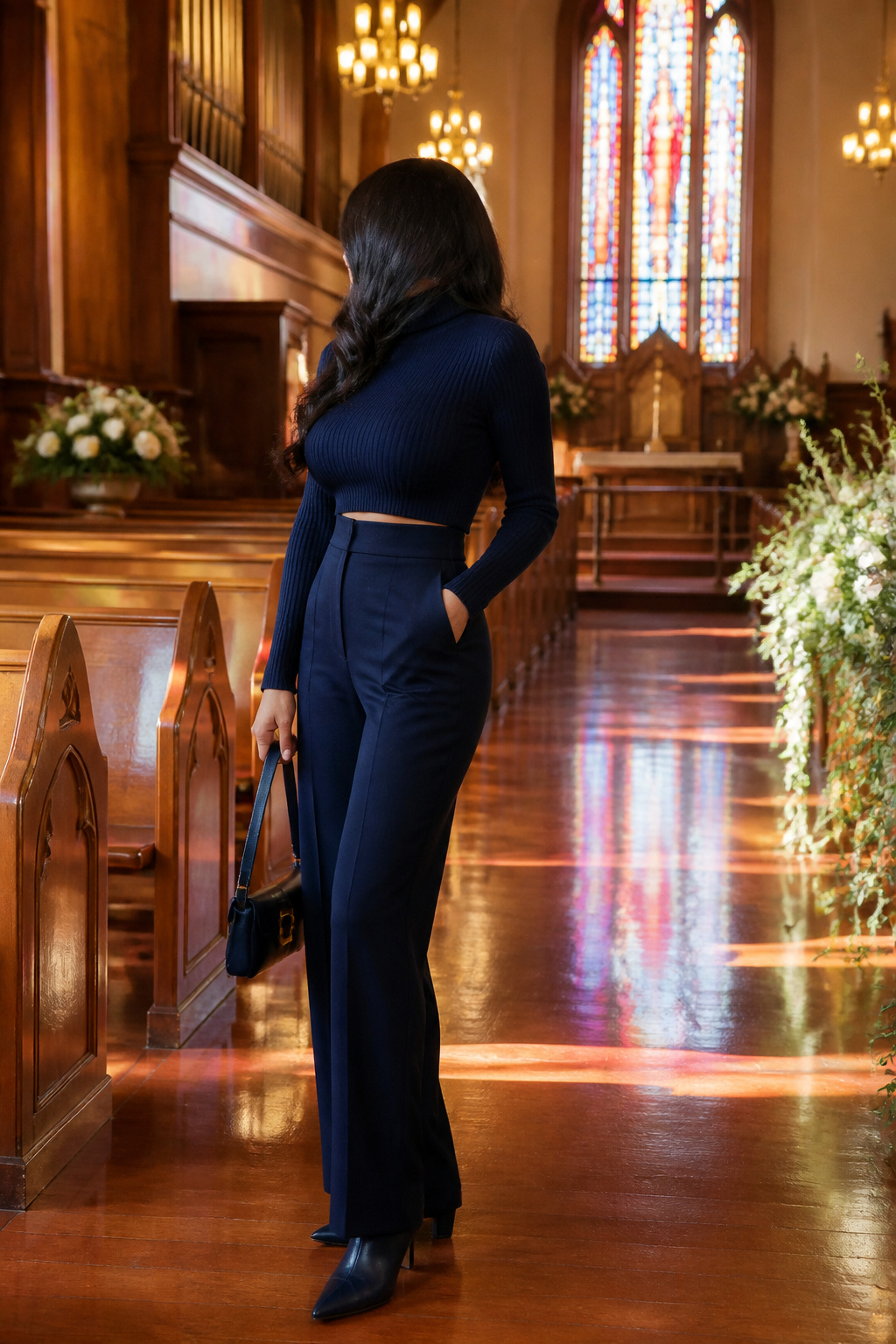
Soft knit and structured fabric matching sets read as intentional the second you walk in, and that matters when the morning is already rushed. A two-piece set in wool, cashmere, or a heavy knit keeps the upper and lower body covered, so the cold from the parking lot to the pew never becomes the thing you think about. The clean line created under a tailored coat or longline coat is what makes this work for church rather than looking like loungewear; the silhouette stays refined from service through brunch. Stick with high-quality fabrics rather than thinner knits that lose shape by the end of the morning. Ankle boots finish the look without requiring separate styling decisions, which is exactly what a Sunday morning needs.
2. Long-Sleeve Dresses

Midi length hits the workable standard for winter church outfits because it clears the pew, covers tights, and still lets tall boots do their job underneath. Wool-blend, jersey, and knit fabrics each handle the season differently: wool-blend holds structure through a service, jersey drapes soft under a coat, and knit gives the stretch that keeps you from fidgeting through the sermon.
What changes the equation in January is not the dress itself but the sleeve. A three-quarter sleeve that felt modest in October becomes a problem when the sanctuary heat hasn’t kicked in yet. Long sleeves are the non-negotiable, which is why a fitted turtleneck underneath extends the season so effectively. It adds the warmth of a base layer without the bulk that ruins a line, and thermal knits in soft, stretchy material let your skin breathe through a longer program. I reach for jewel tones like emerald or ruby when the knits come out; they read seasonal without trying too hard, and a belted waist or scarf on top keeps the look intentional rather than improvised.
3. Sweater Dresses
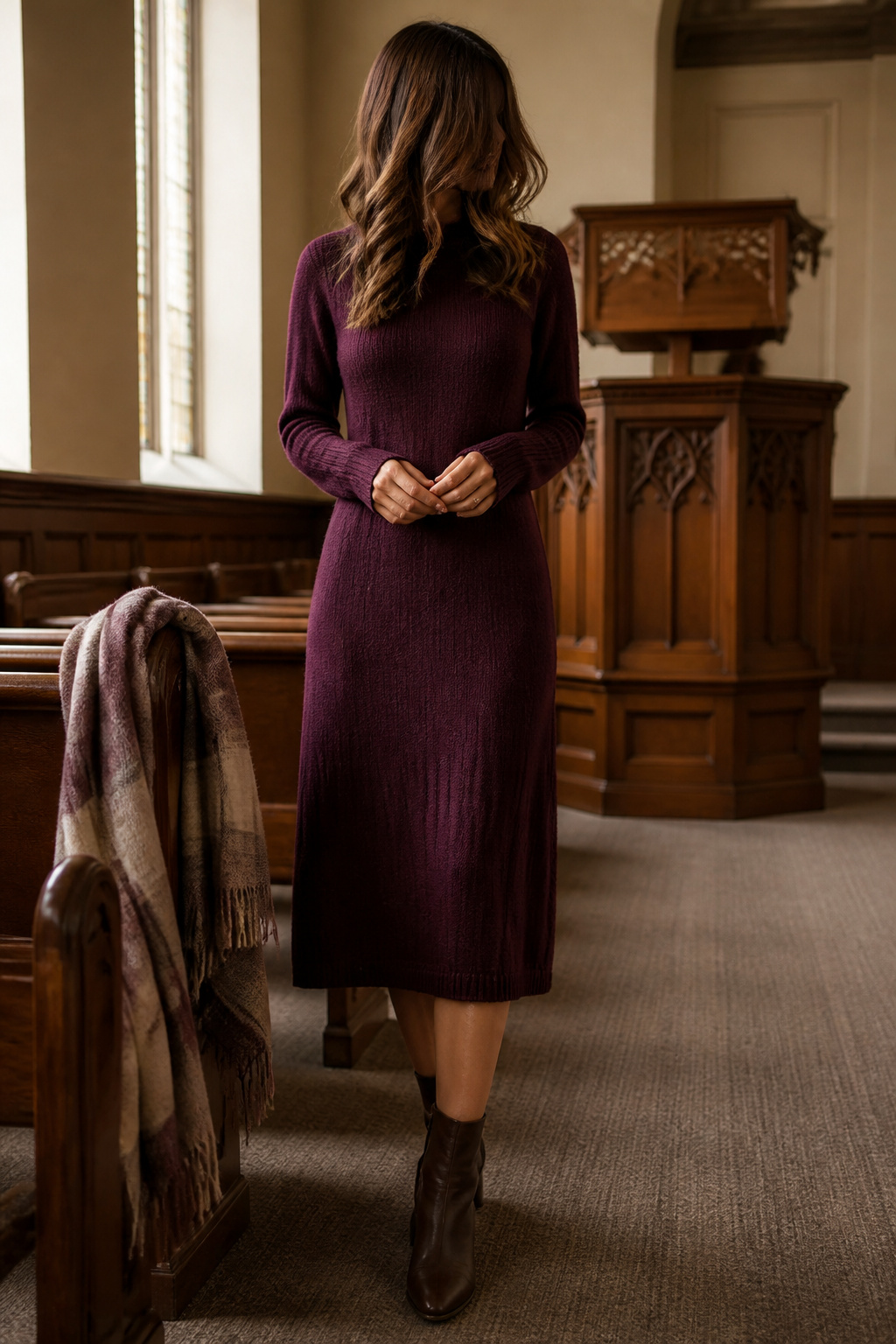
A sweater dress is the single piece that answers most "is this acceptable for church?" questions in winter. The knit structure reads as covered-up by default, and the fabric weight does the rest of the deciding.
Fine-gauge knits in wool or a dense cotton blend sit closer to the body and work best under a belted coat, where the silhouette stays neat for a more formal service. Heavy cable knits, especially in camel or ivory, stand alone without a belt and read as intentionally relaxed rather than underdressed. Skipping the belt on a cable knit keeps it from looking like you tried to force office tailoring onto weekend fabric.
Jewel tones change the register fast. Deep plum or forest green in a midi length with tall boots gives the seasonal nod without leaning into holiday costume. For moderate climates, the same dress with tights or leggings and a scarf at the waist adds warmth without adding bulk. The belted waist versus loose decision is really the only styling choice that matters: one sharpens the line for earlier services, the other lets the knit do what it was made to do.
4. Wide-Leg Pants and Knit Tops

Wide-leg pants have settled the old question of whether trousers belong in a pew, and the answer for winter 2026 is yes, with conditions. Wool trousers in a 10–12 ounce weight drape cleanly past the ankle without clinging to tights or thermal leggings underneath. Anything lighter can ride up or bunch at the knee once you add a base layer; anything heavier risks looking like office suiting that never left the cubicle.
The knit top is where the balance lives or dies. A fine-gauge turtleneck or fitted thermal base layer under a crewneck keeps the waistline defined without the bulk that turns a coat into a tent. I learned this the hard way last season with a chunky fisherman sweater that looked elegant alone but swallowed the trouser line entirely once my longline coat went on. The fix was swapping to a finer knit, same warmth, half the silhouette.
Structured outerwear finishes the logic. A blazer worn under the coat gives you shape at the shoulders even when the coat comes off for coffee hour, and a longline coat in a neutral keeps the vertical line uninterrupted from neck to hem.
5. Skirt and Sweater Combos

A skirt and sweater is the combination most people already own, which is exactly why it goes wrong so often. The pieces are there; the proportions are not.
Tucking or choosing a fitted sweater is what keeps the line clean. An oversized knit throws the balance off unless the skirt is narrow underneath, and even then you are managing bulk through every hymn. A fitted turtleneck or a slim pullover that hits at the high hip lets an A-line or pleated skirt do its job without competition. I have seen the difference between a look that reads intentional and one that reads accidental, and it is usually an inch of waist definition.
Skirt length matters once you sit. A midi that falls mid-calf stays put on the pew; anything shorter demands constant adjustment and the tights become the whole focus. Pencil skirts work here too, though they ask more of the sweater. Too long on top and you lose the waist entirely; too short and the proportions feel off for a service.
The real failure is not the pieces but the pairing. A swing skirt needs the slim top. A fitted skirt can handle slightly more volume above. Get that wrong and you are not underdressed, you are just off.
6. Formal Winter Church Dresses

Velvet and satin sit at the edge of most winter church outfit advice, which is strange because holiday masses and special services still happen. A long-sleeve velvet church dress in navy, burgundy, or emerald handles the dress code without turning the sanctuary into a runway. Satin works the same way in deep charcoal, though it reads a touch more formal and a touch less forgiving of dry sanctuary air.
The trick is coverage that still moves. Long sleeves matter here more than in any other church outfit category because these fabrics are rarely worn with a cardigan or coat through the service. A graceful silhouette means the dress does the work, not the accessories. Gold or neutral jewelry keeps the look anchored in the occasion rather than the trend cycle.
White or pink winter church dresses in these fabrics offer contrast against the season’s darkness, though they read more bridal than some congregations prefer. Fine florals or subtle plaids can soften the formality if the event sits somewhere between standard service and holiday pageant. The mistake most make is treating this as the default instead of the exception; it is the least common need on this list, which is exactly why getting it right matters more.
7. Casual Yet Polished Looks
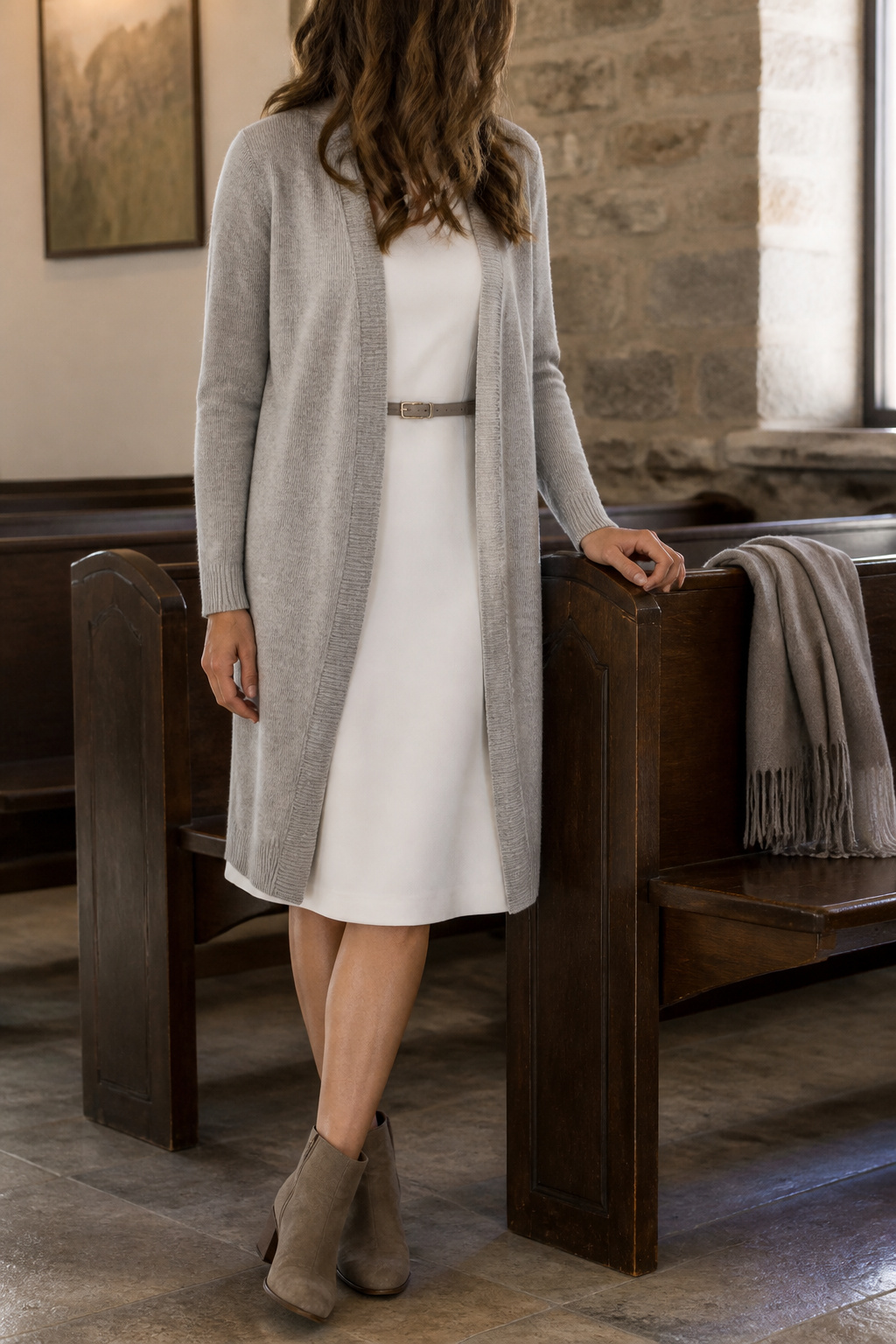
The line between too relaxed and properly dressed for Sunday usually comes down to fabric weight and whether the silhouette still holds its shape. A soft knit cardigan can work for church if it is structured enough to look intentional, not like something grabbed for warmth alone. Pair it with a simple dress or a flowy blouse tucked into high-waisted trousers and the effort shows without crossing into formality.
Knit dresses bridge this gap well in moderate winter climates, especially when the knit has enough body to drape rather than cling. Add tights or leggings underneath for warmth, then signal polish with a belted waist or a scarf in emerald or ruby tones. The accessory does the dressing-up; the base layer stays comfortable. Ankle boots and a tailored coat finish the look without adding stiffness that a more formal service might demand.
8. Church Outfits With Leopard Print
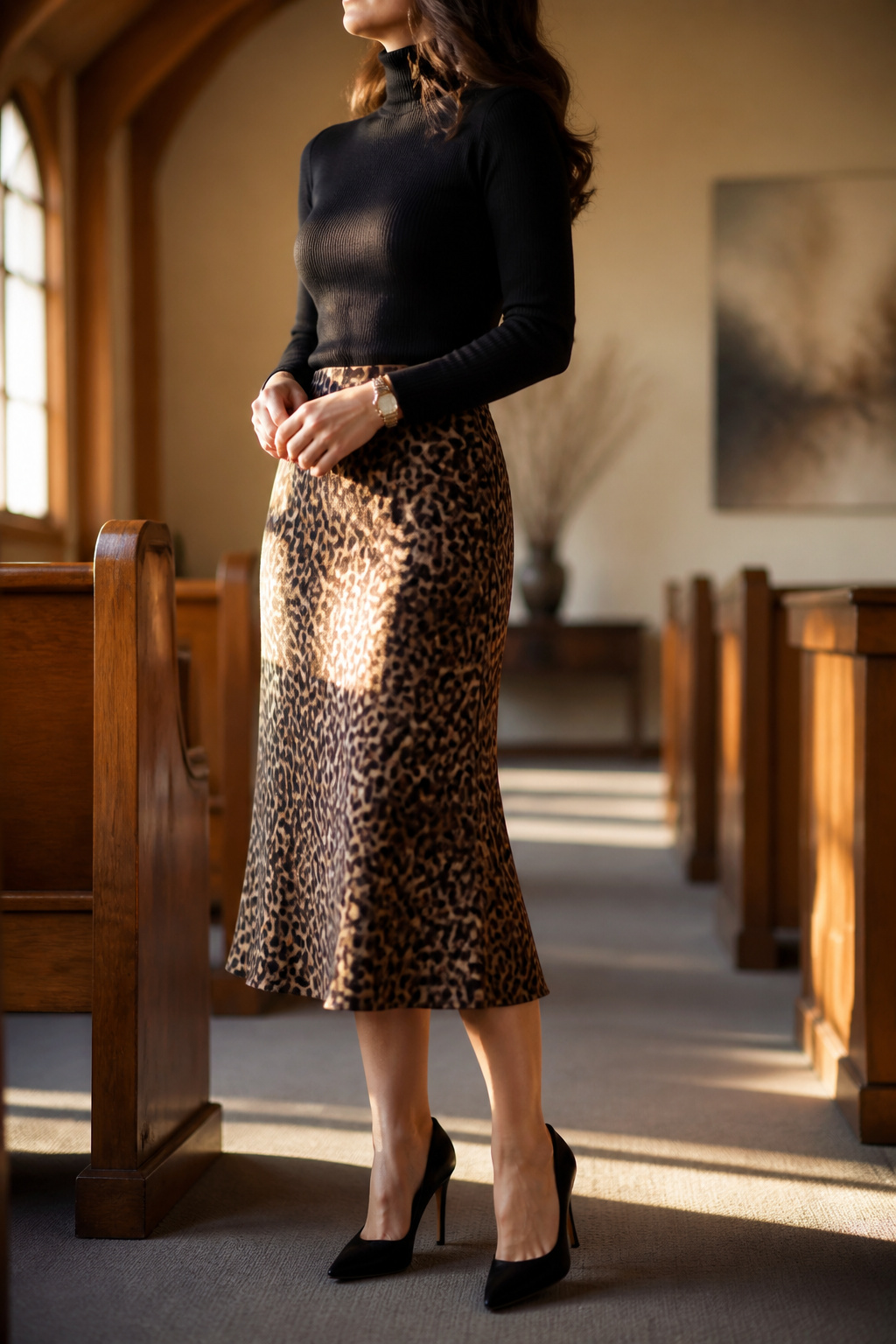
A leopard print skirt works in a church setting when you treat the pattern as the single statement and keep everything else quiet. The sources both reach for a black turtleneck, which reads as intentional rather than an afterthought pulled from weekday errands. Scale matters more than you might expect. A smaller, denser animal print disappears into texture at a distance and feels more considered than a large, graphic rosette that demands attention from every pew. The slit on the longer skirt from the first source is worth noting here: it adds movement without shortening the silhouette, and the black boots underneath continue the leg line rather than chopping it.
Tights are nonnegotiable for winter, and black ones ground the outfit in a way that bare legs never would. Mary Jane pumps or ankle boots both work; the key is that they share a color family with your top so the eye travels upward to your face, not sideways to the pattern. If the skirt is pleated, let it do the volume work and keep the fitted top tucked or cropped to match. The balance between structured and fluid is what keeps this from looking like a party outfit you wore anyway.
A smaller-scale leopard print reads as texture, not costume, in a room full of solid colors.
9. Neutral Church Outfits

Cream, camel, and soft gray read as intentional restraint, not an afterthought. I reach for them when the service falls between holidays, when burgundy feels insisted-upon and emerald starts to look like costume. These tones need one warm element or they flatten to wallpaper under fluorescent tubes. A camel coat over ivory works because the depth contrast carries interest without shouting. Soft gray risks washing out most, so I pair it with something that has body, a ribbed knit or wool with visible weave. The trick is texture as your color, since the tone itself stays quiet. Under church lighting, matte fabrics hold their own better than anything silky. I learned that the hard way with a satin-lined cream blouse that turned me gray-green in the third pew.
10. Christmas Sunday Outfit
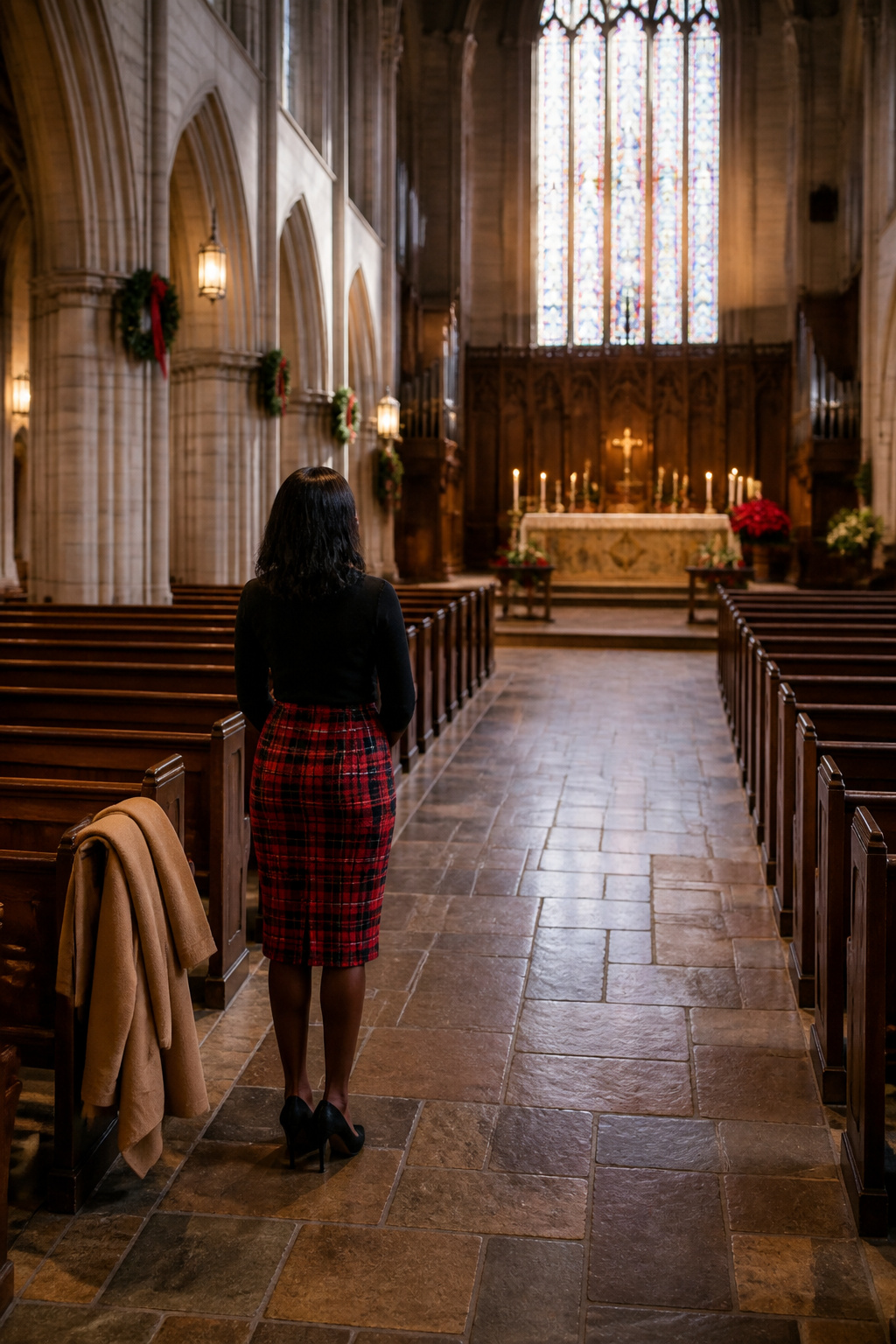
Christmas Sunday carries its own dress code, and the line between festive and costume is thinner than most people think. A red plaid skirt with a black turtleneck reads exactly right for the pews: the pattern nods to the season, but the tailored shape keeps you looking like you’re there for the service, not the spectacle. Pointy black pumps finish it without tipping into holiday-party territory.
What separates a Christmas Sunday outfit from any other winter church look is intention directed at a specific hour, not the season at large. The same lightweight turtleneck you’d layer under a cardigan in January becomes the base here, but the swap to a plaid skirt signals why you dressed up. A ribbed sweater or vest in a textured knit adds warmth for the walk from the car without the bulk that would make you sweat through the sermon.
Neutral outerwear still matters. Camel or black wool keeps the outfit intact once the coat comes off indoors, and a beret or structured scarf adds warmth without competing with the skirt’s pattern. The goal is someone noticing you look pulled-together, not someone naming the theme of your outfit before you sit down.
11. Skirt With Boots

Boot height with a skirt is the single decision that either pulls the whole look together or splits your leg at exactly the wrong spot. Taller boots need a flared skirt or dress that lands above the knee, and you want at least some gap between the boot top and the hemline. That open strip of tights or skin keeps the eye moving upward instead of chopping the line. Ankle boots work with a midi skirt that hits mid-calf, but the shaft should be slim and the heel present, otherwise the heavy boot competes with the longer hem. Heeled ankle boots with tights and a sleek overcoat give the cleanest finish; the heel adds the length that the covered ankle takes away. I have made the mistake of wearing flat ankle boots with a midi pencil skirt and watching the whole shape sink toward the floor. A small heel, even an inch and a half, changes the geometry entirely.
12. Sweater Over a Dress
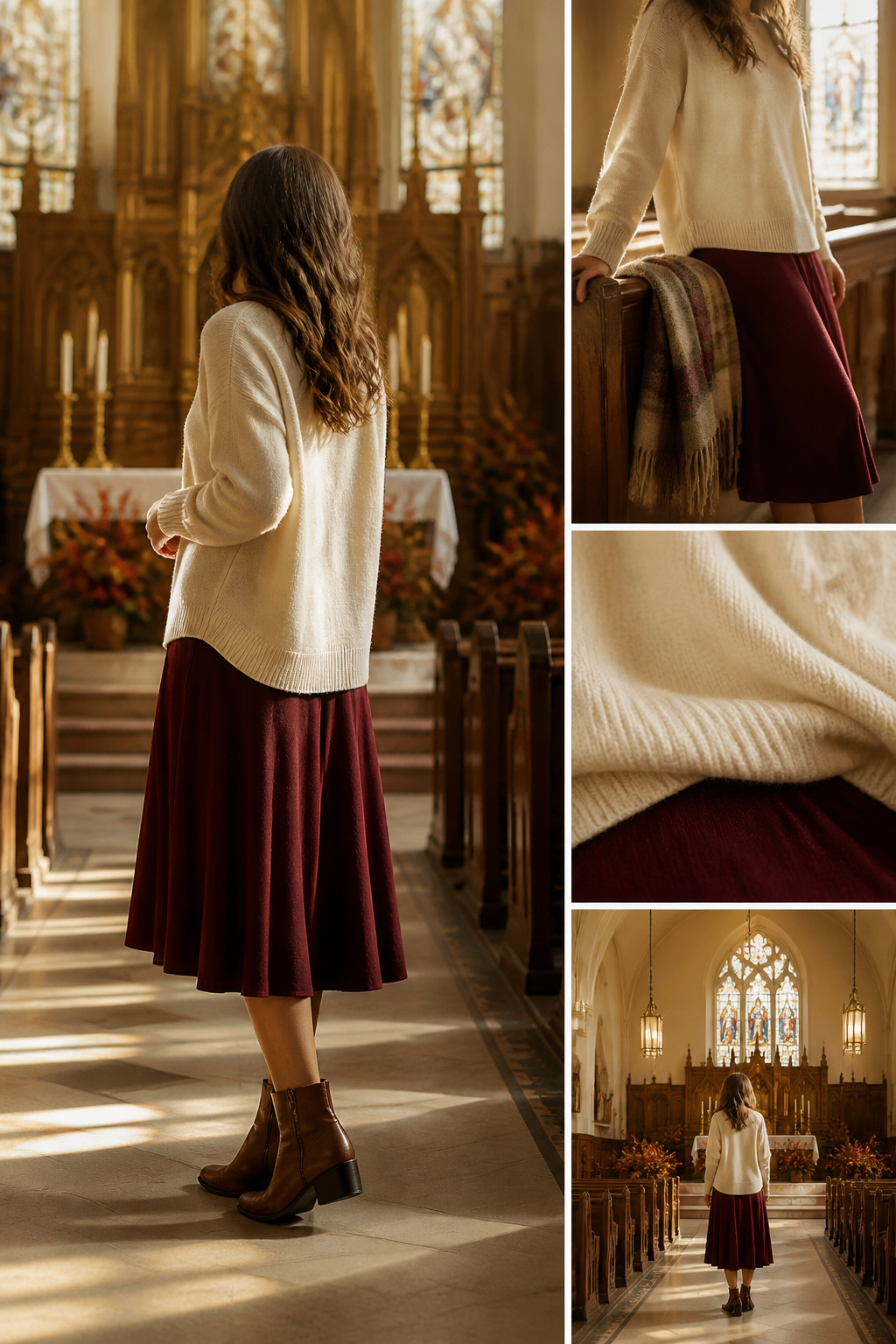
A sleeveless dress you loved in September does not need hibernating once the sanctuary heating kicks on. A medium-weight crewneck or fine-gauge turtleneck layered over it turns that same piece into something December-appropriate without the bulk of a coat you cannot remove.
The sweater length matters more than most people think. Cropped styles or ones that hit exactly at the natural waist fight the dress line underneath and create a ridge where you want smooth movement. Something that skims past the hip, ending two to four inches below the dress waistline, lets the skirt flare or fall the way it was cut to. I learned this the hard way with a thick fisherman’s knit that sat right at my waist and made the whole silhouette read as two boxes stacked.
Ribbed cotton or lightweight merino work better than chunky cable here. The dress fabric shows through cable gaps, and the overall shape goes lumpy fast. A finer gauge keeps the lines clean enough that the outfit still feels intentional when you pull the sweater off for coffee hour and the room has warmed.
13. Sweater and Skirt Outfit
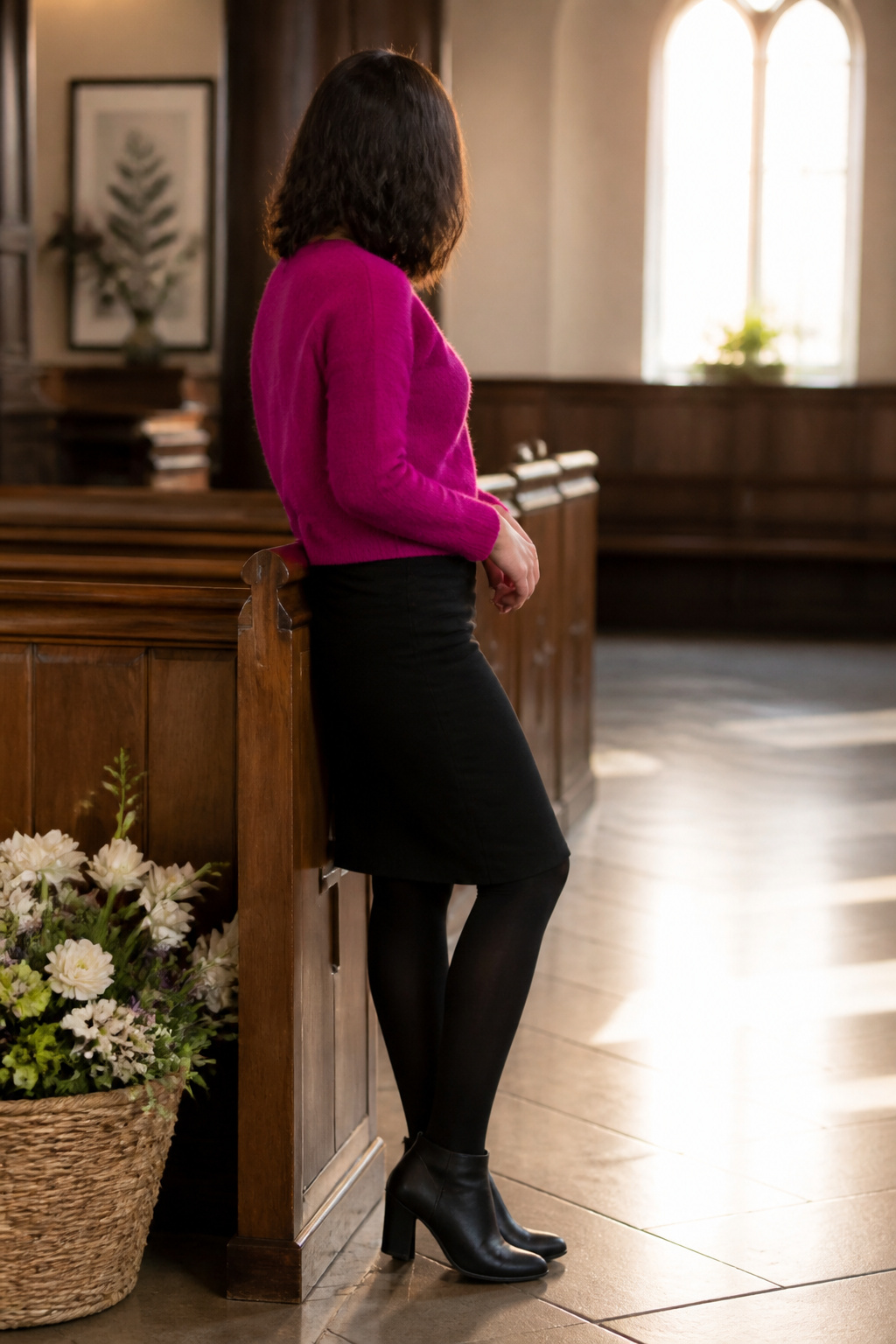
A matched sweater-and-skirt set reads as intentional the way a grab-and-go pairing usually does not. The knit and skirt share a color story or texture, so the eye travels without interruption from shoulder to hem. The failure point is almost always at the waistband, where a thick sweater meets a fitted skirt and creates a lumpy shelf that ruins the line.
Half-tucking works on thinner merino or cashmere blends, but a chunky cable knit needs a full tuck with strategic smoothing. Lift the sweater hem a hand’s width above the waistband, fold the excess into itself like a soft roll rather than a hard crease, then let the skirt band sit over that bulk. A skirt with a wide, structured waistband hides the maneuver; a narrow elastic band will telegraph every ridge.
Proportion matters more here than with separates. A cropped sweater that hits exactly at the skirt’s natural waist keeps the silhouette clean without any tucking gymnastics. Midi lengths in heavier wool or knit skirts hold their shape against winter static and pew-seat friction better than lightweight pleated versions that collapse by the service’s end. Tights in a shade that matches the skirt, not the shoe, extend that uninterrupted vertical line the set is built to create.
Layering That Keeps Shape

A fitted thermal base layer sits closest to the skin on winter Sundays, and the real test comes when the coat comes off in the pew. I learned this the hard way after sitting through an entire service with a bulky cable-knit bunched under my arms because I’d skipped the lightweight base and gone straight to thick. The three-layer system keeps shape: start with that fitted thermal or a thin turtleneck, add a textured mid-layer like a ribbed sweater or cardigan for depth, then finish with a structured outer piece such as a tailored wool coat or belted trench. Materials should be soft, stretchy, and breathable since you’ll be indoors for a while. Neutral outerwear in camel or black lets the outfit underneath read as intentional once sleeves come off. The mid-layer does the visual work; the outer layer only frames it for the walk from the car.
Fabrics That Hold Up to Heat and Cold

Wool, cashmere, and heavy knits are the fabrics that actually keep you warm when the thermometer drops below freezing. I learned this the hard way after showing up to a January service in a chiffon blouse layered over nothing but hope; the sanctuary felt fine once I thawed out, but the walk across that parking lot was miserable. Thin materials like lightweight cotton or chiffon have no place in a winter church outfit unless they are deliberately layered beneath something substantial or backed by an internal lining for insulation.
The real challenge is the building itself. Most churches run hot enough to make a wool coat feel like a sauna, then you step outside into air that hurts your lungs. A fitted thermal base layer underneath your sweater or blouse adds warmth without the bulk that would make the sanctuary unbearable, and the same logic applies under dress pants or a long skirt. Breathable, stretchy materials against your skin let you shed the jacket indoors without arriving drenched in sweat. Look for jacket dresses in wool blends or cashmere if you want one piece that handles both temperatures; pair them with closed-toe pumps or heeled boots and you have solved the coat-rack problem entirely.
Color Choices for Winter Services
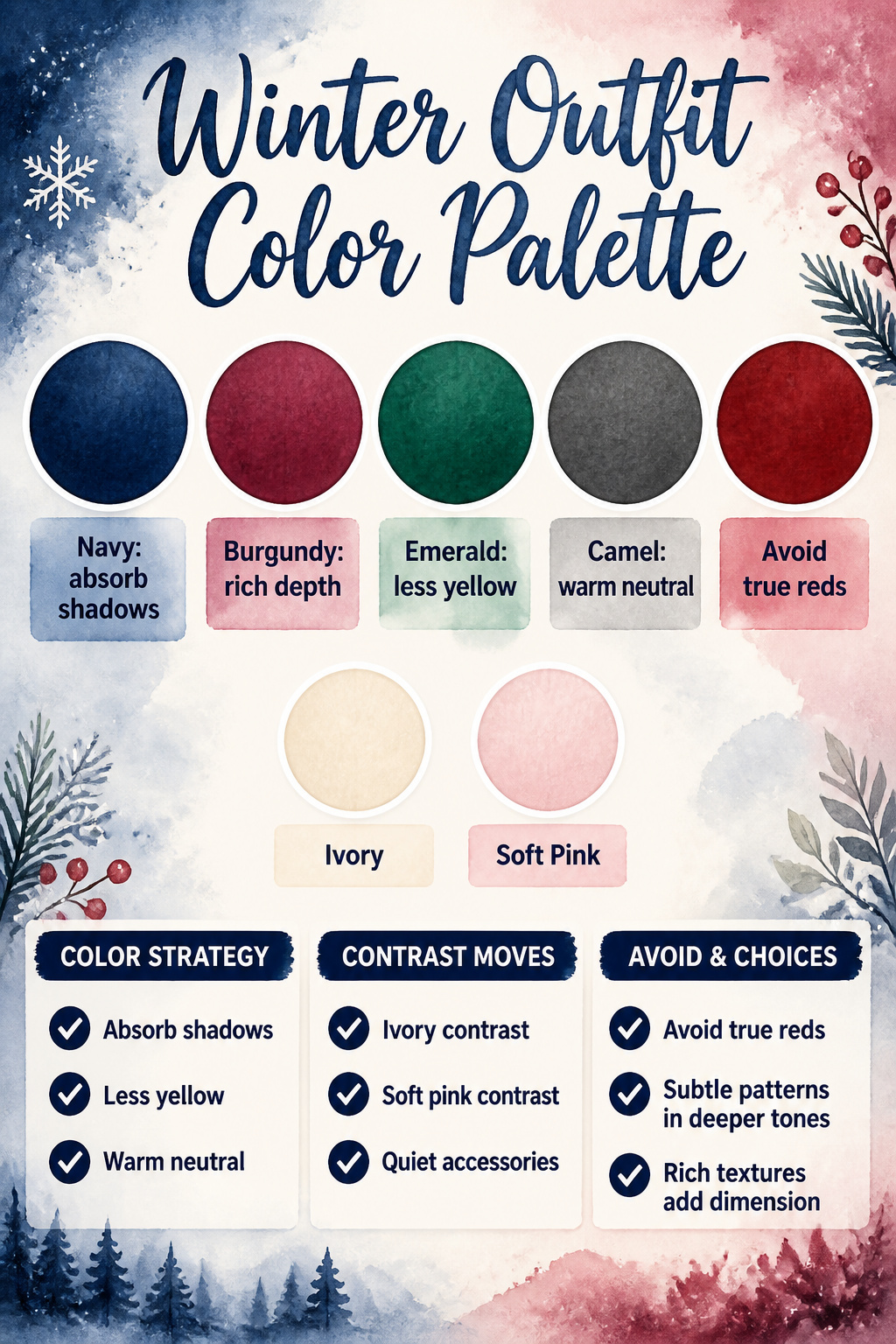
Navy, burgundy, emerald, and charcoal form the backbone of most winter church outfits I see done well. These four read as intentional rather than default, and they share one useful trait: they absorb shadows instead of throwing them back. Church lighting runs warm and uneven, often overhead and dim, and colors with too much yellow in them can flatten to mud in photographs. The cooler undertone in navy and charcoal keeps definition in the face. Burgundy and emerald carry enough depth to look rich without needing perfect light.
Ivory and soft pink work as the contrast move, not as the main event. A pink winter church dress or white winter church dress against a dark coat gives the eye somewhere to rest, though I would keep the accessories in gold or a quiet neutral so the palette does not split in too many directions. Blue reads calmer still, almost retreating, which suits a service where the outfit should not arrive before the wearer does.
What photographs poorly are true reds and bright pastels. They bloom under incandescent bulbs and turn the wearer into a focal point she did not choose. Subtle plaids, checks, or fine florals in the deeper tones get the seasonal message across without that risk. The texture matters too: tweed, herringbone, and flannel add dimension that a flat weave loses once the light drops.
Accessories That Add Warmth Without Noise

Scarves, gloves, and berets do the quiet work of keeping a winter church outfit intact, but where they land once you sit down matters more than most advice admits. A silk scarf that slips off every time you shift in the pew becomes a distraction you did not plan for. I look for lightweight cashmere or fine wool scarves that fold small enough to tuck into a coat sleeve or lay flat across a lap without bulk. Berets stay put better than slouchy beanies if you secure them with a small pin, which also gives you a place to put it when you move indoors: pinned to your coat until you reclaim it. Gloves are the simplest, since they slip into a pocket or purse, though I prefer pairs with enough structure that I can set them on the seat beside me without them looking like dropped laundry. The sources keep outerwear in neutral shades so the outfit still shines once the coat comes off, and the same logic applies to accessories. A beret in camel or charcoal reads as intentional even when it is not on your head.
Frequently Asked Questions
Can you wear pants to church in winter?
Tailored wool trousers are a chic and appropriate option for colder months. Choose wool in a 10–12 ounce weight so they drape cleanly past the ankle without clinging to tights or thermal leggings underneath. A fine-gauge turtleneck or fitted thermal base layer on top keeps the waistline defined without the bulk that turns a coat into a tent.
Are sweater dresses acceptable for church?
A sweater dress is the single piece that answers most ‘is this acceptable for church?’ questions in winter. The knit structure reads as covered-up by default, and the fabric weight does the rest of the deciding. Fine-gauge knits in wool or dense cotton sit closer to the body for formal services, while heavy cable knits in camel or ivory stand alone without a belt for a more relaxed feel.
What fabrics are best for winter church outfits?
Wool, cashmere, and heavy knits keep you warm when the thermometer drops below freezing. These fabrics hold structure through a service and handle the real challenge of churches that run hot inside and freezing outside. Thinner materials like lightweight cotton or chiffon only work when deliberately layered beneath something substantial or backed by an internal lining for insulation.
What are good colors to wear to church in winter?
Navy, burgundy, emerald, and charcoal form the backbone of well-done winter church outfits because they absorb shadows instead of throwing them back under warm, uneven church lighting. Ivory and soft pink work as contrast moves against a dark coat. True reds and bright pastels photograph poorly and turn the wearer into an unchosen focal point.