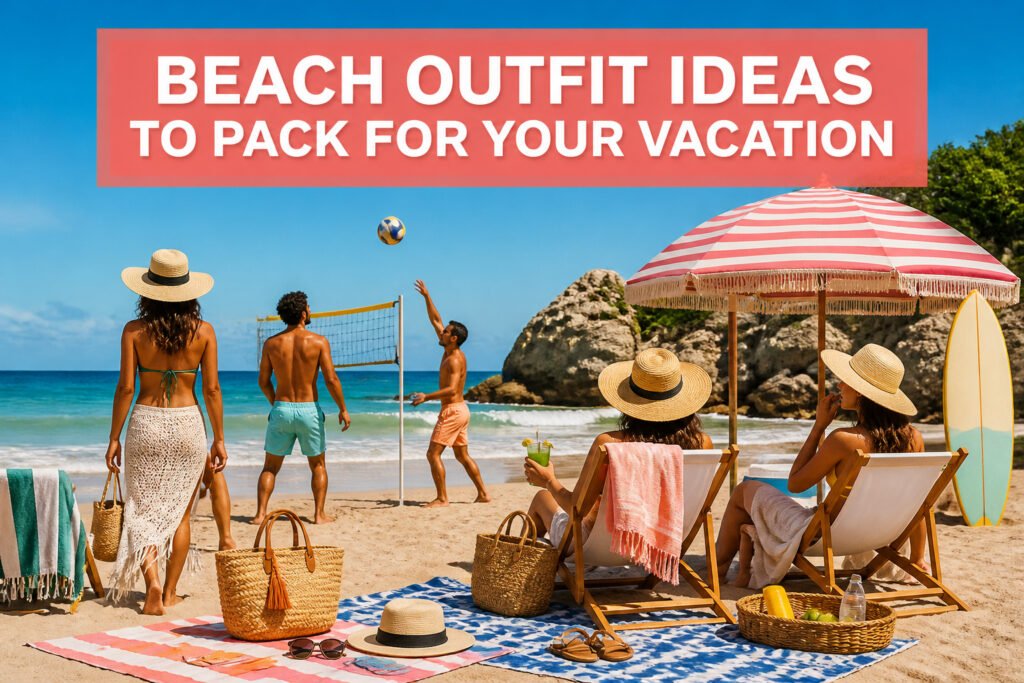
The right beach outfit depends less on finding a single perfect piece and more on how many hours you plan to spend between sand and town without a change of clothes. A $200 Tropic of C one-piece, for example, functions as both swimsuit and top for a midday reservation if you add a pareo and sandals. The real decision is whether you want to pack lighter or keep more options.
1. Sleek One-Piece
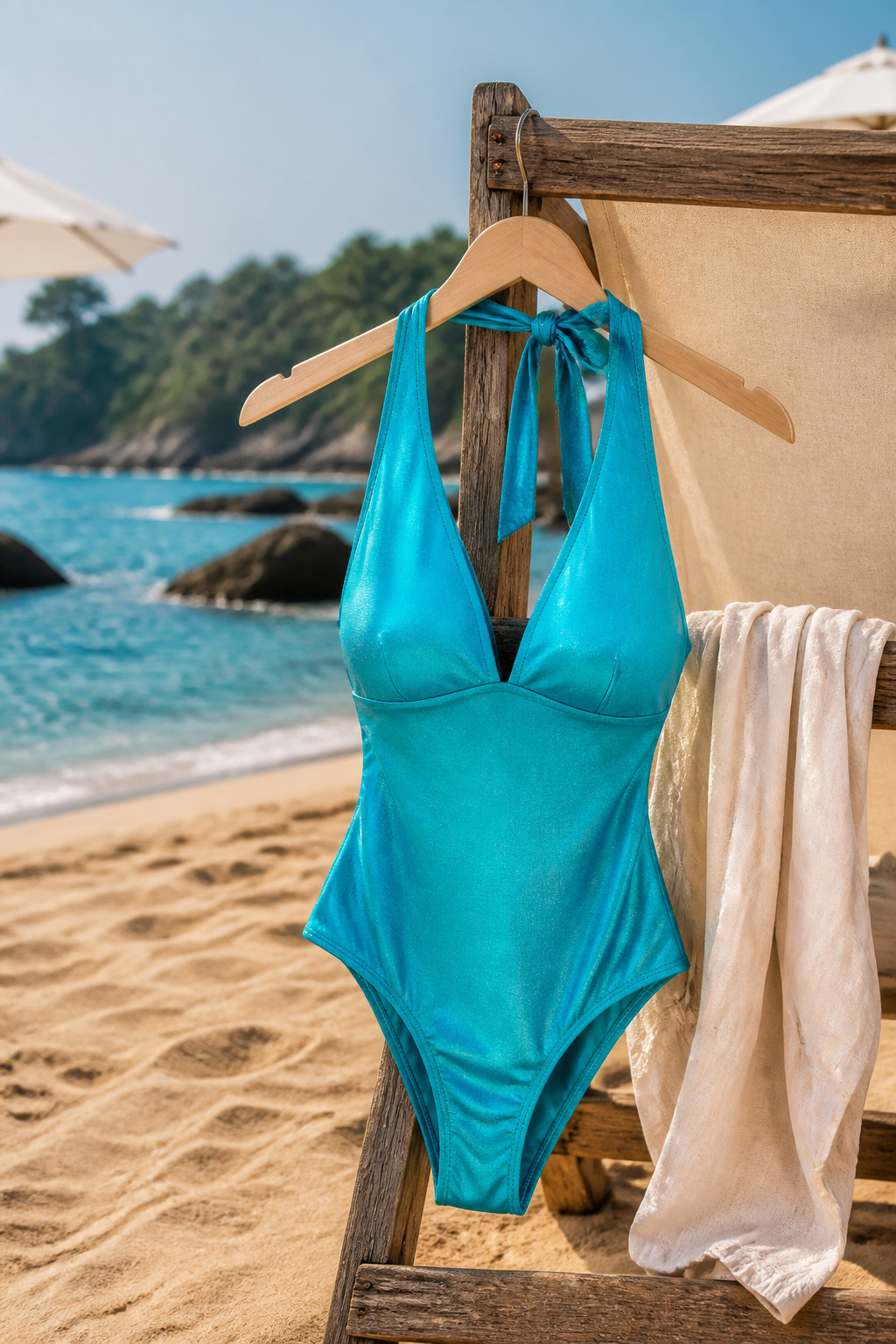
A $200 Tropic of C one-piece bought me more outfit mileage than any bikini I have packed. The cut is structured enough to read as a top when you pull on a pair of trousers or a skirt and walk into town for lunch, which matters on beach days that do not stay on the sand.
Bikinis force a change before you leave the waterline. The one-piece does not. For active swimming, the same support that keeps everything in place during a lap also keeps the shape looking intentional under clothes. I have worn mine straight from morning snorkeling to a midday reservation with only a pareo and sandals added.
The price sits at the edge of what I would call foundational, but the cost-per-wear drops fast when one garment covers two functions. If your vacation mixes water time with walking and eating, this is where the one-piece outperforms separates. A bikini is more flexible for tanning or sizing mismatches, which is fair, yet for a trip where you want to pack lighter and still look pulled-together, the sleek one-piece wins.
2. Printed Pareo
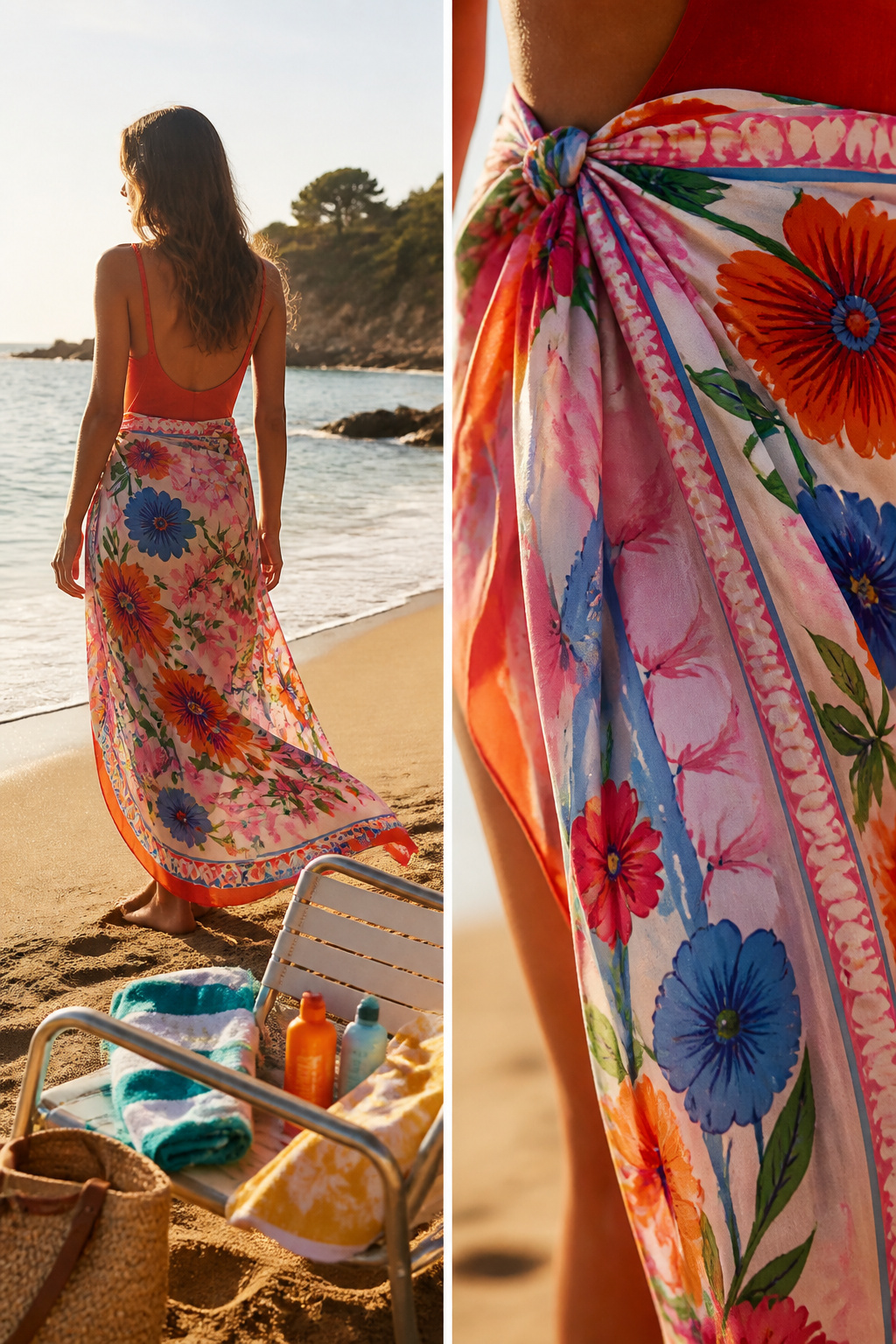
A $330 La DoubleJ printed pareo does the work of three separate cover-ups without eating the space. I tie it as a low-rise skirt over a one-piece, knot it into a halter dress for lunch, or drape it as a shoulder wrap when the midday sun hits. The mistake most people make is treating the fabric like a towel: pulled tight and tucked under like a sarong from 2002, which gives a bulky knot at the hip and reads as beach blanket, not clothing. The fix is keeping the drape loose and letting the print sit at an angle so the fabric moves. For the lido look Vogue keeps pointing to, the pareo plus a figure-hugging suit and wide-brim hat is the entire formula.
3. Wide-Brim Hat

A 5-inch brim blocks roughly 40 percent more UV to the neck and shoulders than a 3-inch brim, which is the difference between reapplying SPF 50 at noon and not worrying about it until dinner. The Janessa Leoné Waverly Wide hat runs $287 at Nordstrom, and that price starts to make sense once you’ve watched a cheap straw hat fray at the crown after one season of salt spray and humidity. The fibers swell, the weave loosens, and the brim warps into something that shades unevenly. Leoné’s hats are hand-blocked and tightly woven enough to survive a week in a carry-on if you stuff the crown with tissue and lay the hat flat, brim down, on top of folded clothes rather than crushing it under shoes. The lido look is simple: a figure-hugging one-piece with a printed pareo and wide-brim hat. Colorful flip-flops are also a must.
The lido look is simple: a figure-hugging one-piece with a printed pareo and wide-brim hat.
— Vogue
That pairing works because the hat does the heavy lifting on coverage, so the rest of the outfit can stay minimal and actually pack flat.
4. Raffia Tote
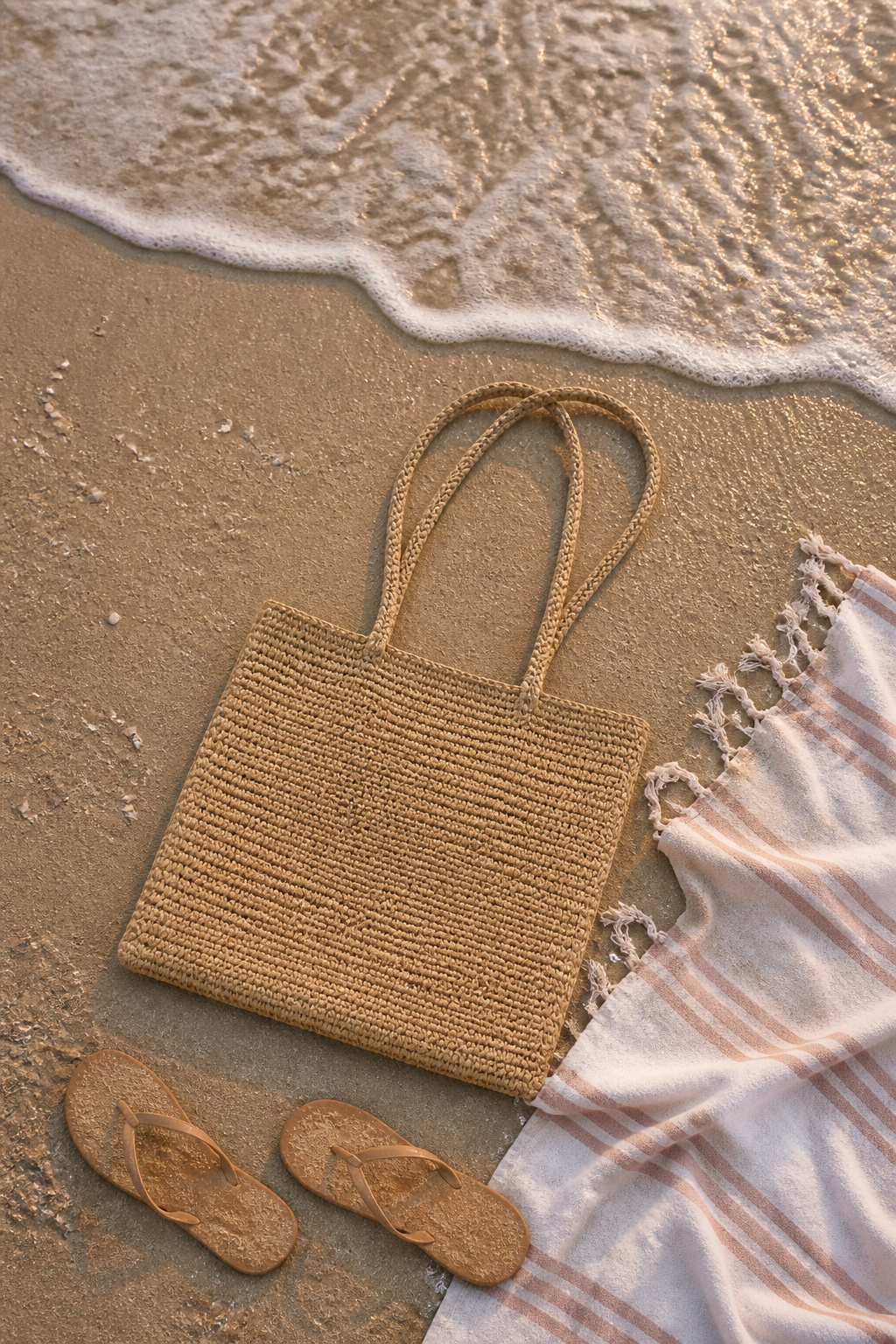
A $1,200 raffia tote from The Row buys structural details that start mattering by day two of a beach trip. The flat base sits upright on uneven sand instead of keeling over, and the handles are long enough to actually sling over a shoulder when your hands are full of a wet towel and a coffee. That interior pocket keeps keys findable without dumping sunscreen and sand onto your cover-up.
By day three, the cheaper tote tells a different story. The $45 version I have watched friends wrestle with, its seams already soft from humidity, lets grit work into every opening until the lining feels like a beach itself. The handles cut in, so it hangs from a forearm instead, and the single cavernous compartment means you are pawing past sunglasses and SPF to find anything.
The Row mini Barn tote is the one Vogue singled out for good reason. Whether that reason is worth twelve hundred dollars depends on how many vacations you take and whether you have ever watched a bag collapse sideways into wet sand. For a single annual trip, the math does not work. For someone who lives out of a tote from June through August, the cost-per-wear starts to look less absurd, especially when the alternative is replacing a cracked straw imitation every other season.
5. Terry Tank
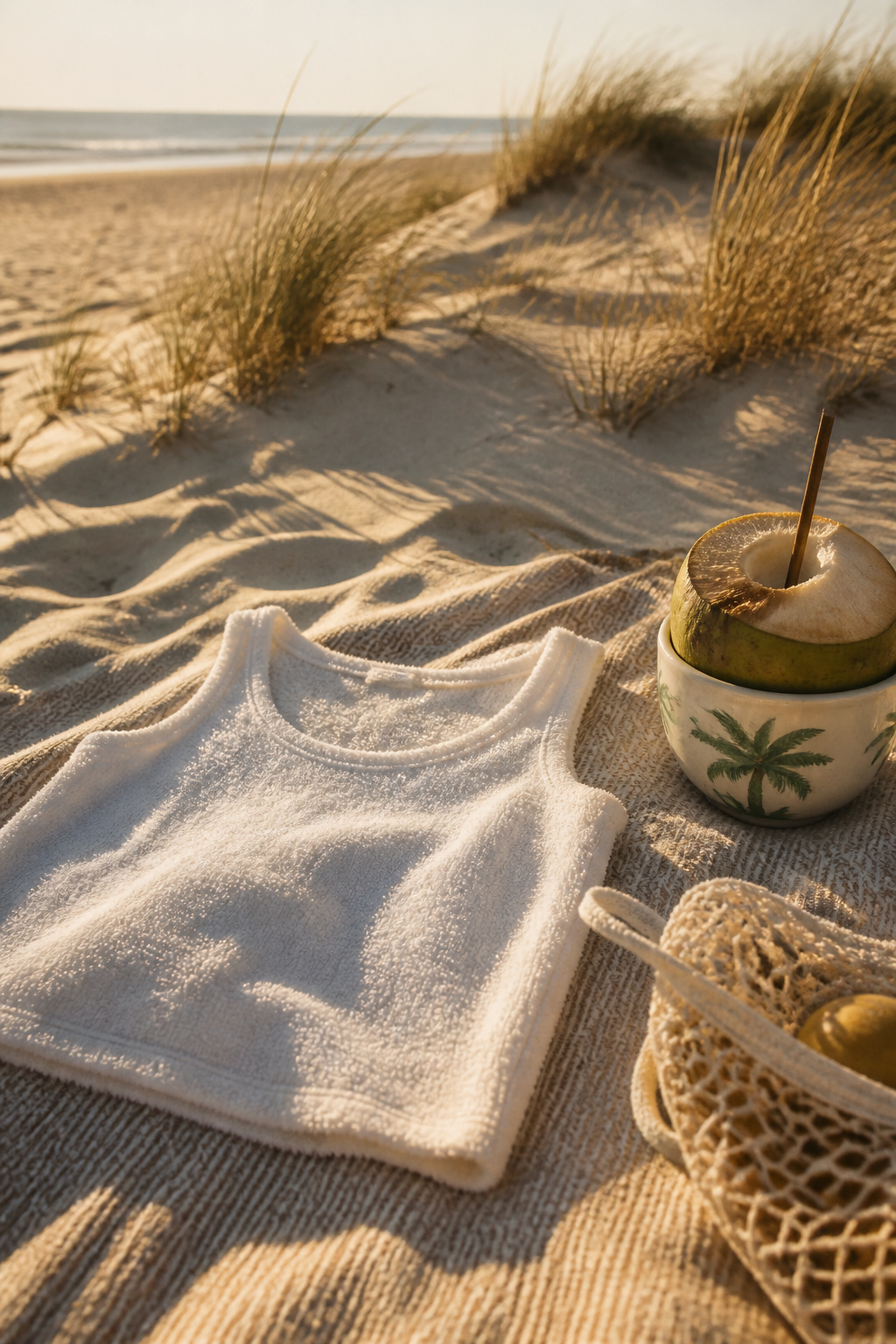
Terry cloth lands differently from linen or cotton when you are still damp from the water. Those fabrics grab at wet skin and hold the chill; terry pulls moisture away and creates actual space between the fabric and you, which means the Suzie Kondi Tia tank at $225 functions as real clothing rather than a soggy layer you cannot wait to peel off.
Length is what makes this piece workable rather than just expensive. It hits low enough on the hip to be worn straight over a bikini bottom without the bare midriff situation that reads poolside-only, yet it is not so long that tucking into high-waisted shorts turns into a bunched wad at your waistband. That middle ground matters when you are packing light and need one top to carry you from morning swim to lunch in town.
6. Comfy Sandal
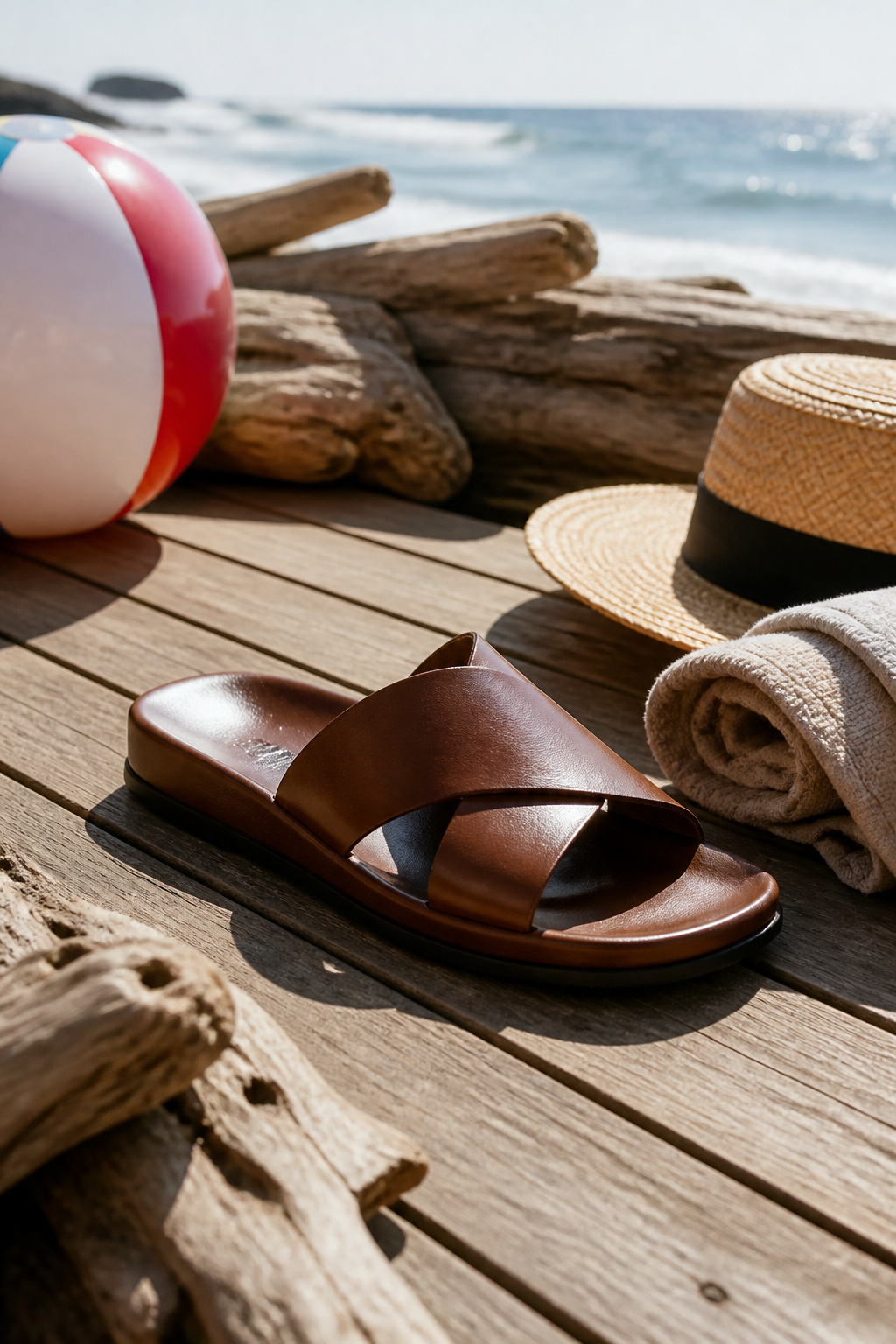
A sandal that survives a mile of boardwalk is built differently from the one you kick off at the towel edge. The A.Emery Jalen at $250 gets this right: arch placement sits where your foot actually bends, not an inch forward where fashion brands put it to slim the silhouette. Strap width matters too, because a cord-thin loop digs in once sand and swelling start. Wider straps distribute pressure across the top of the foot, and a leather or molded footbed forms to you instead of staying flat like a hotel shower shoe.
I learned the hard way at a beach with a 200-yard walk from parking. The sandals I had packed were essentially straps on a cardboard-thin sole. By the time I reached the sand, the balls of my feet were burning and the back straps had rubbed raw spots. That walk back, over hot asphalt, was worse. Now I check three things before a beach sandal makes my bag: real arch support, straps wide enough to handle grit, and a footbed that does not fold in half when I bend it. The Jalen passes all three, which is why it costs what it does and why I no longer try to save the money.
7. Lightweight Cover-Ups
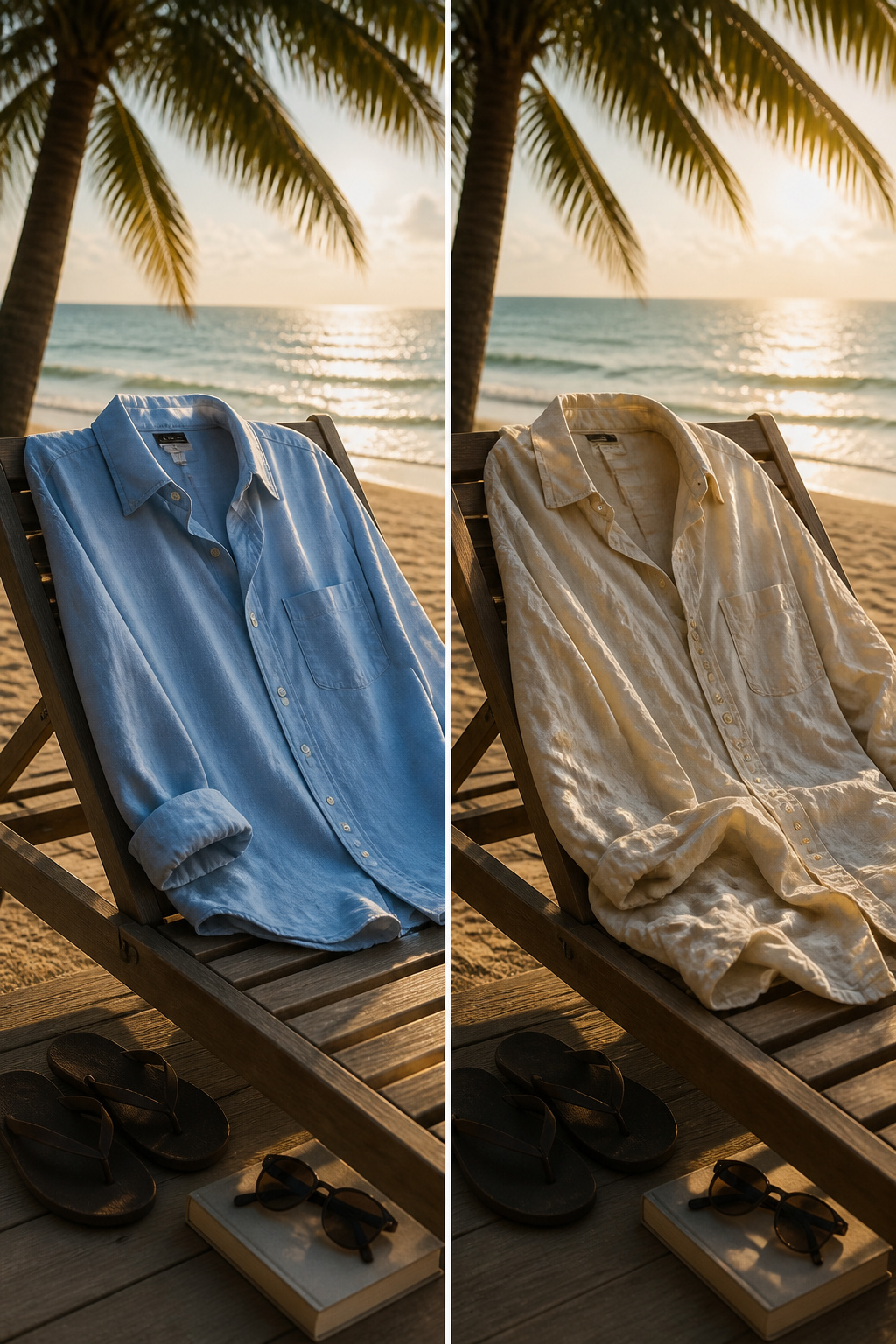
Crochet dresses catch the breeze beautifully, but the open weave lets most UV pass straight through. A tight cotton weave blocks significantly more sun than loose crochet, which matters when you are sitting on sand that reflects light back up. I have watched friends turn lobster-red through what looked like decent coverage.
An oversized men’s linen shirt from a department store basics line does the same job as a marketed beach cover-up, often with better fabric weight and at half the price. The men’s cut gives you actual sleeve length and torso coverage, not a cropped fashion shape that rides up the second you reach for a drink. Linen softens with washing and looks intentional when wrinkled, which cover-ups rarely manage.
The real test is holding the fabric up to light in the store. If you can see your hand clearly through it, the UPF is minimal no matter what the tag claims.
8. Swimwear Options
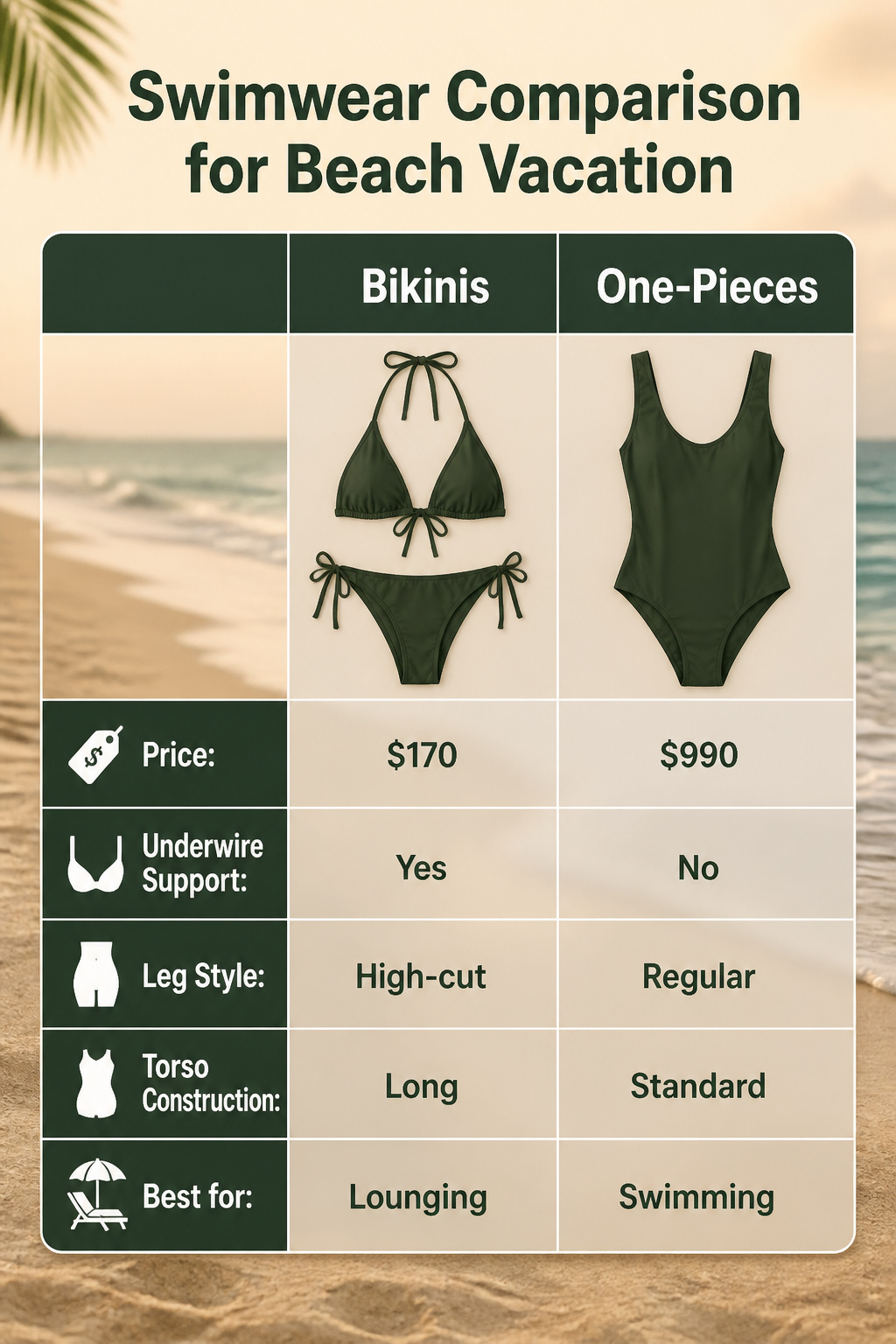
Swimwear runs from about $170 to $990 for bikinis and one-pieces worth packing, and the gap matters less than what you actually do in it. Underwire keeps everything in place if you plan to swim laps or bodysurf; I learned that the hard way at a beach volleyball game where a bandeau top I bought for the cute factor spent forty minutes sliding south. High-cut legs look sharp on a lounge chair but can dig in after twenty minutes of real movement. Long-torso construction is the detail that saves a walking afternoon, since standard rises hit mid-hip and keep riding up. For pure lounging with a book, that high-cut leg and a lower support level is probably the right call. Match the construction to the day, not the photo you saw on the rack.
9. Layering Pieces
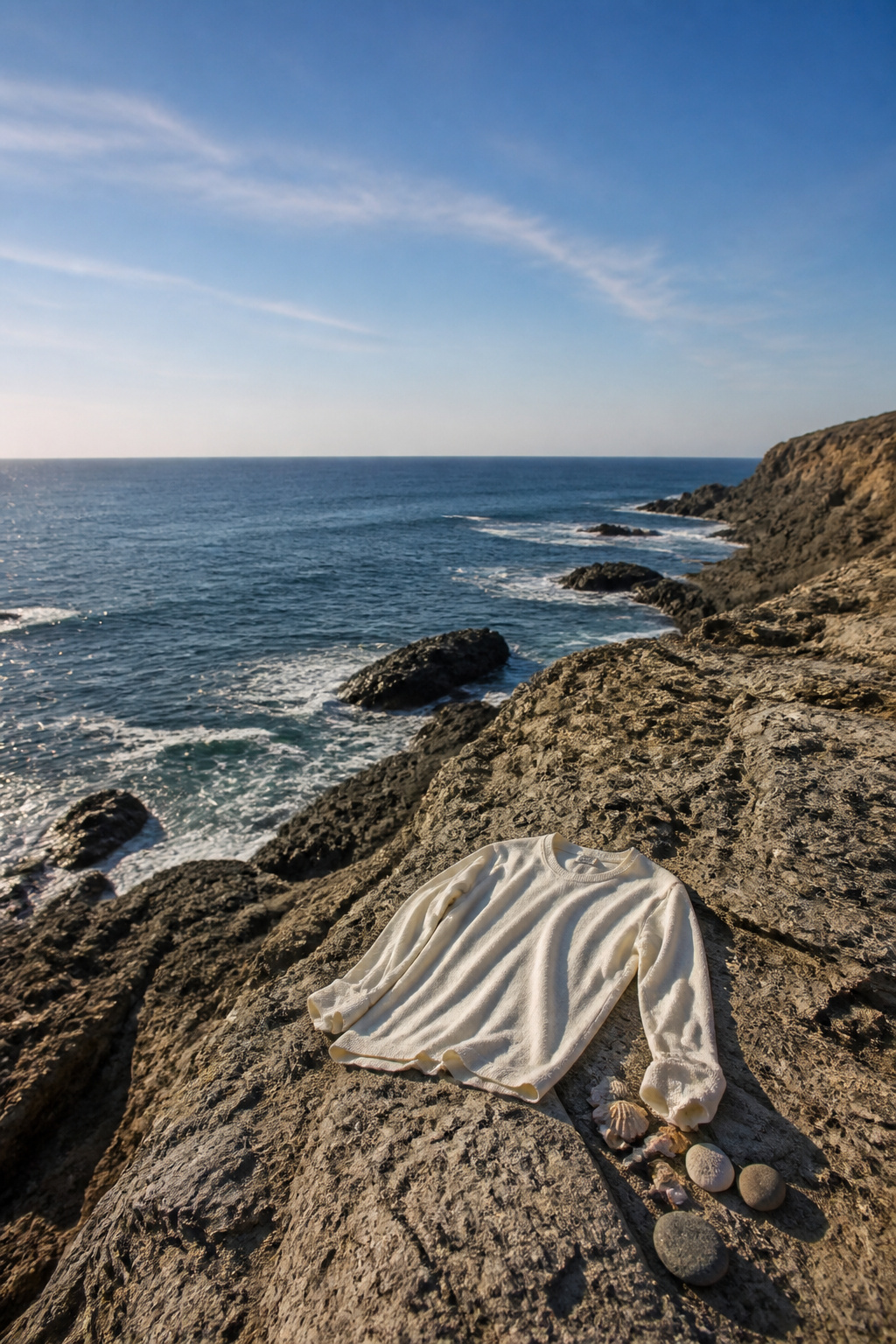
French terry handles dampness in a way fleece never quite manages. The looped cotton side sits against your skin and wicks moisture outward instead of trapping it, which matters on a beach day when the temperature drops to 65 and the fog rolls in. I learned that distinction the hard way, standing on a Cape Cod beach in a sweatshirt that stayed clammy for an hour after the sun disappeared.
The sweatshirt threshold, for me, is 68 degrees. Below that, bare arms stop feeling refreshing and start feeling like a mistake.
Unlined linen-cotton blends work the same trick when you need a layer over a swimsuit. They breathe while you’re warm, dry fast when the breeze picks up, and unlike anything with a waterproof membrane, they don’t seal moisture against your skin. Membrane-backed jackets belong in mountain packs, not beach totes.
A long-sleeve tee in a low-70s forecast gives you the same flexibility: roll the sleeves at noon, pull them down when the thermometer edges toward 70, and skip the full layer entirely if the clouds hold off.
Beach Essentials Beyond Clothing
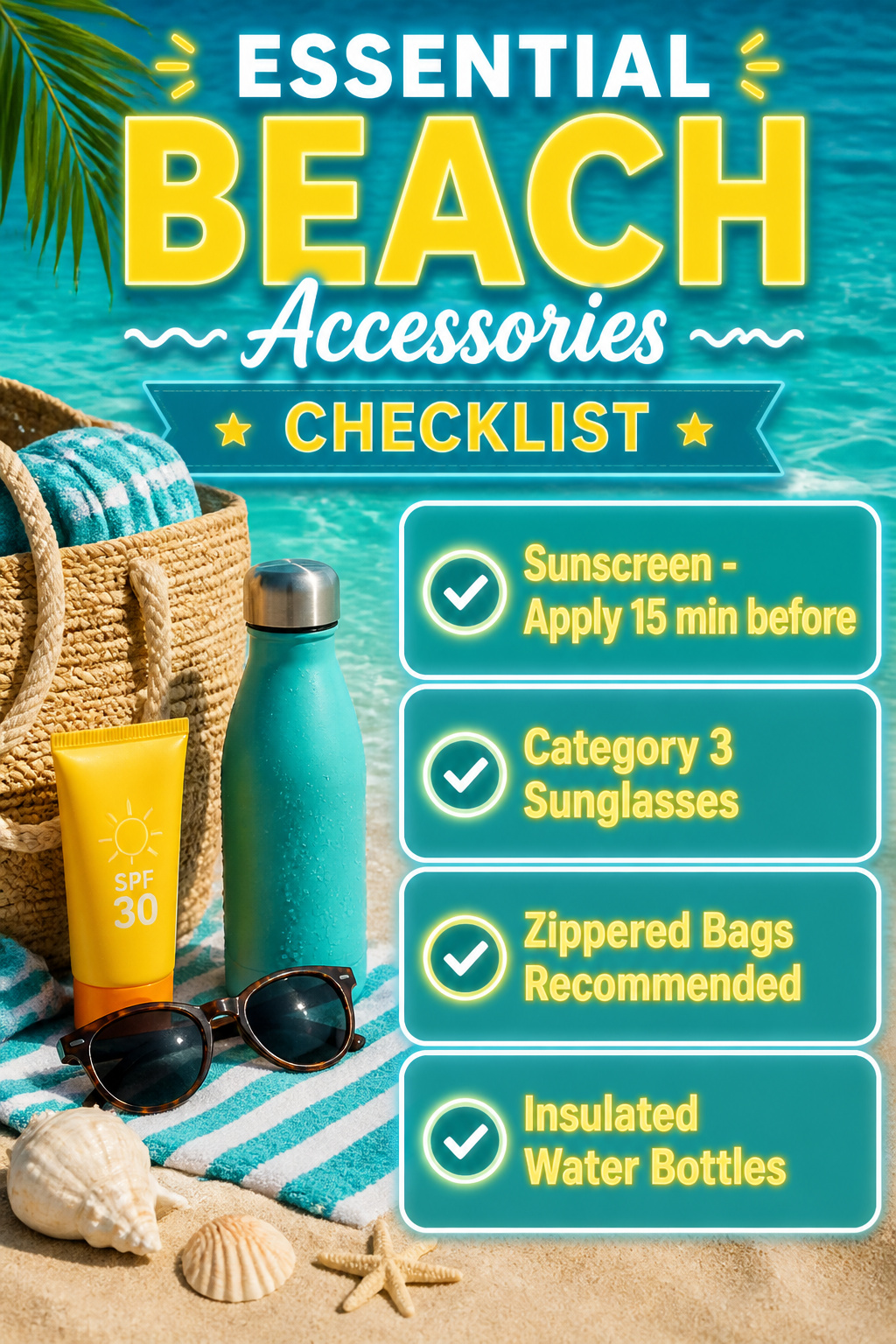
The right accessories keep beach outfits wearable for hours instead of minutes. Sunscreen goes on dry skin fifteen minutes before you step outside, not after you’re already sweating on the sand. I learned that timing the hard way on a morning in Key West when I thought a quick rub at the car counted as preparation.
- Sunglasses need category 3 lenses, the standard that actually blocks enough UV at water’s brightness without distorting color so badly you trip over a towel
- Bags without zippered or snapped pockets lose things: my lip balm in Tulum, my room key in Malibu, a twenty-dollar bill that blew straight into the surf at Jones Beach
- Water bottles with insulation matter more than the cute factor; warm water in ninety-degree heat means you drink less and head inside sooner
A beach outfit only works if you’re still comfortable enough to stay in it.
Outfits by Temperature
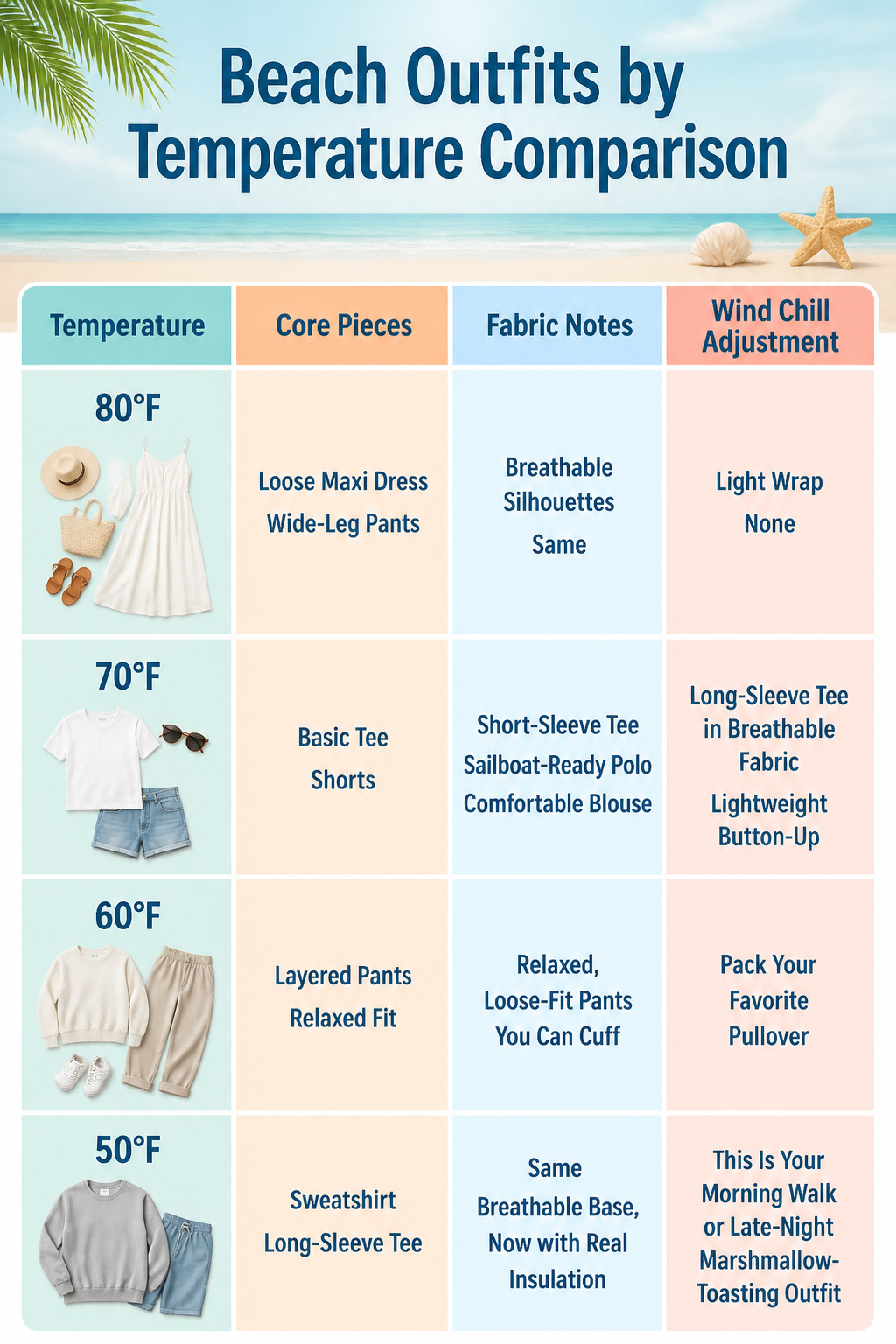
The wind off the water is what actually matters, not the number on your weather app. I learned this the hard way on a March morning in Malibu that read 68 degrees on my phone but felt like the inside of a refrigerator once the fog rolled in. Dress for wind chill, not air temperature, or you will end up huddled under a rental umbrella while everyone else walks the shoreline.
Here is how the outfits shift:
| Temperature | Core Pieces | Fabric Notes | Wind Chill Adjustment |
|---|---|---|---|
| 80°F | Loose maxi dress or wide-leg linen pants | Breathable, breezy silhouettes | Still pack a light wrap; ocean gusts happen |
| 70°F | Basic tee and shorts | Short-sleeve tee, sailboat-ready polo, or comfortable blouse | Add a long-sleeve tee in breathable fabric or a lightweight button-up if clouds show up |
| 60°F | Layers with pants instead of shorts | Relaxed, loose-fit pants you can cuff | Pack your favorite pullover; one gust changes everything |
| 50°F | Sweatshirt or long-sleeve tee | Same breathable base, now with real insulation | This is your morning walk or late-night marshmallow-toasting outfit |
At 70 degrees, the basic tee and shorts combo still works, but the low 70s on a cloudy day already wants that extra layer. By 60 degrees, pants replace shorts entirely, and the relaxed fit through the leg matters because you will be cuffing them against wet sand. Fifty degrees is not beach weather in any honest sense, but it is real beach vacation weather if you are walking early or staying past sunset, and a sweatshirt you can toss on makes the difference between a memory and a mistake.
Why Linen and Cotton Win
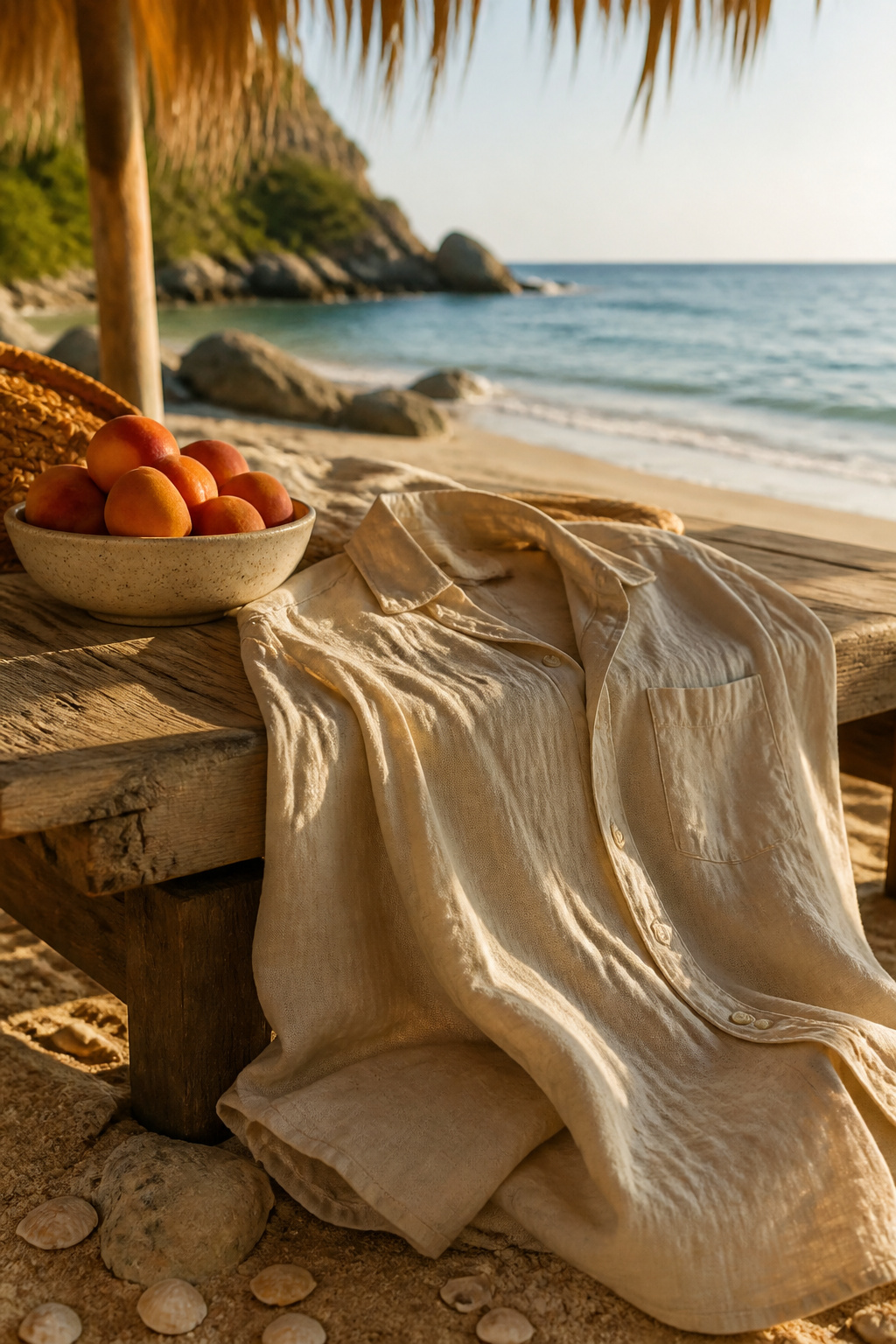
Linen, cotton, and gauze dominate beach packing lists for one reason that becomes obvious the moment you step off the sand: they actually let moisture escape. A linen-blend shirt I bought in Santa Monica dried in roughly twenty minutes after a dip in the Pacific, while a rayon cover-up from the same trip stayed damp through dinner. Synthetic "beach fabrics" marketed as quick-dry tend to trap humidity against your skin, and after three hours of coastal air, that trapped moisture starts to smell. Twenty minutes versus never dried is the difference between throwing something back in your bag and wearing it again the same afternoon. Cotton gauze works similarly, its open weave creating channels for air movement that polyester knits simply don’t replicate. The wrinkling that linen critics complain about becomes irrelevant at the beach; the salt and wind will distort anything anyway.
Frequently Asked Questions
What are the best beach outfits for hot weather?
Loose maxi dresses or wide-leg linen pants in breathable, breezy silhouettes work best when the mercury hits 80. Linen, cotton, and gauze let moisture escape rather than trapping it against your skin, so you stay comfortable even after stepping out of the water. A light wrap is still worth tossing in your bag because ocean gusts can surprise you even on the hottest days.
How should I dress for the beach in cooler temperatures?
At 60 degrees, swap shorts for relaxed pants you can cuff and pack a favorite pullover because one gust changes everything. Fifty degrees calls for a sweatshirt or long-sleeve tee in real insulation: this is your morning walk or late-night marshmallow-toasting outfit. French terry handles dampness better than fleece, and unlined linen-cotton blends dry fast when the breeze picks up without sealing moisture against your skin like waterproof membranes do.
What accessories should I bring to the beach?
A wide-brim hat with at least a 5-inch brim blocks roughly 40 percent more UV to your neck and shoulders than a 3-inch brim, which means less frantic sunscreen reapplication. Sunglasses need category 3 lenses to block enough UV at water’s brightness without distorting color so badly you trip over a towel. Your bag should have zippered or snapped pockets unless you enjoy losing lip balm, room keys, and cash to the wind; a raffia tote with a flat base sits upright on uneven sand and keeps your hands free for wet towels and coffee.