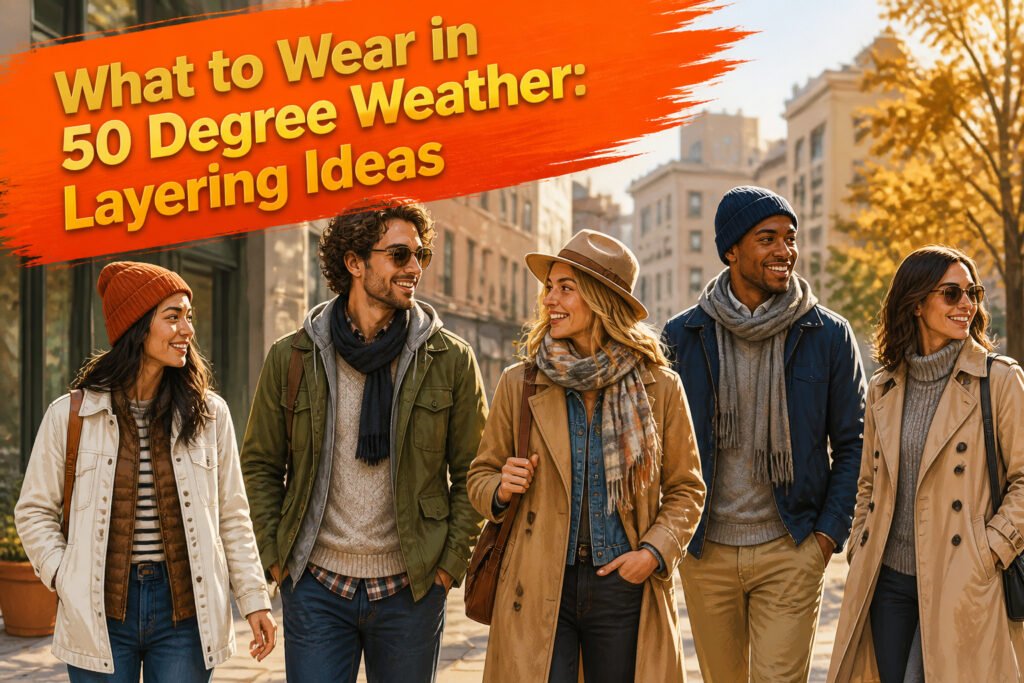
Seven layers, not one thick sweater, get you through 50 degree weather without sweating by noon or shivering by four. The catch is that the same jacket works in Denver and fails in San Francisco because coastal humidity pulls heat through fabric that dry air leaves alone. I learned that packing one October outfit for both cities: the wool pullover and lightweight coat that kept me comfortable in Colorado left me stiff from fog off the Golden Gate.
1. Layered Shirts with Jeans

A breathable base layer under an open flannel or chambray shirt is the 50 degree weather outfit I reach for most mornings. The system is simple: base, mid, outer. Cotton blends or a long-sleeve tee handle the base fine on calmer days, though merino wool pulls ahead if you’ll be walking between a heated office and a parking garage that still holds November chill. Merino regulates temperature and resists odor across those shifts, which matters more than you’d think when the thermostat swings ten degrees between spaces. Mid-weight jeans finish the look without adding bulk; the open shirt acts as your outer layer you can actually tie around your waist by afternoon if the sun wins out. Skip thick thermal base layers here. They are built for temperatures well below 40 degrees and will leave you sweating through the cotton by ten in the morning.
2. Chunky Sweaters with Linen Pants

A chunky knit sweater paired with heavier-weight linen pants solves the problem most people create for themselves at 50 degrees: dressing for two temperatures at once. The sweater traps warmth up top where you need it, while the linen below stays cool enough that you won’t overheat walking into a heated building.
The mistake is grabbing summer-weight linen and assuming the fabric alone checks some imaginary "breathable" box. That gauzy weave belongs to 80-degree mornings; in 50-degree air it offers no insulation and leaves your legs stiff from the chill. Switch to a linen with substance, a 7-ounce or heavier weave sometimes sold as "winter linen" or linen-cotton blend, and the outfit changes entirely. The pants still move air, but they also block wind and hold enough body heat to feel comfortable on a shaded patio.
Natural fibers regulate moisture better than synthetics in this 45-to-60-degree range, which matters more than people realize. You’re not standing still in 50-degree weather; you’re walking between temperatures, maybe carrying coffee, maybe catching a train. The chunky knit buys you warmth without a coat, and the right linen keeps you from arriving damp.
3. Trench Coats Over Tees

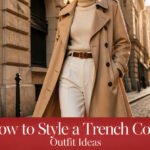
A trench coat over a simple tee is the 50 degree weather outfit that bridges casual coffee runs and morning meetings without a second thought. The tee stays light enough that you are not sweating through your lunch break, while the coat blocks the wind that makes fifty feel like forty in the shade. I reach for cotton or a thin merino blend underneath, fabrics that keep you warm without overheating once you step indoors.
The belt matters more than most people think. Cinched at the waist, it keeps the whole shape from collapsing into a bulky column of fabric. Without it, the trench swallows your frame and the look reads sloppy rather than intentional. For work, this same combination layers neatly under the trench: tailored trousers, a fitted tee or blouse, and the coat comes off the minute you hit your desk. Offices stay between 68 and 72 degrees regardless of what is happening outside, so your base layers need to stand alone. The belted waist is what saves the silhouette when the coat is doing the heavy lifting against the cold.
4. Fleece Hoodies or Pullovers

Fleece works as a mid-layer because it traps body heat without the weight you’d get from wool. A lightweight fleece pullover folds small enough to stash in a tote when temperatures climb past noon, which makes it useful for a day that starts at 50 degrees and ends closer to 60. The catch is that fleece has no wind resistance, so a breezy day will cut straight through it unless you add an outer layer.
I learned this the hard way on a damp morning in coastal California. The fleece hoodie felt fine in the car, but twenty minutes of foggy wind off the water left me colder than if I’d worn a thinner cotton sweatshirt with a shell on top. For damp 50-degree weather near the coast, fleece alone is a mistake. Pair it with a vest or lightweight jacket, or swap it for wool layered under something that blocks wind. The plush brushed versions feel cozier against skin, while smoother technical weaves layer more cleanly without catching on a coat sleeve.
5. Lightweight Jackets
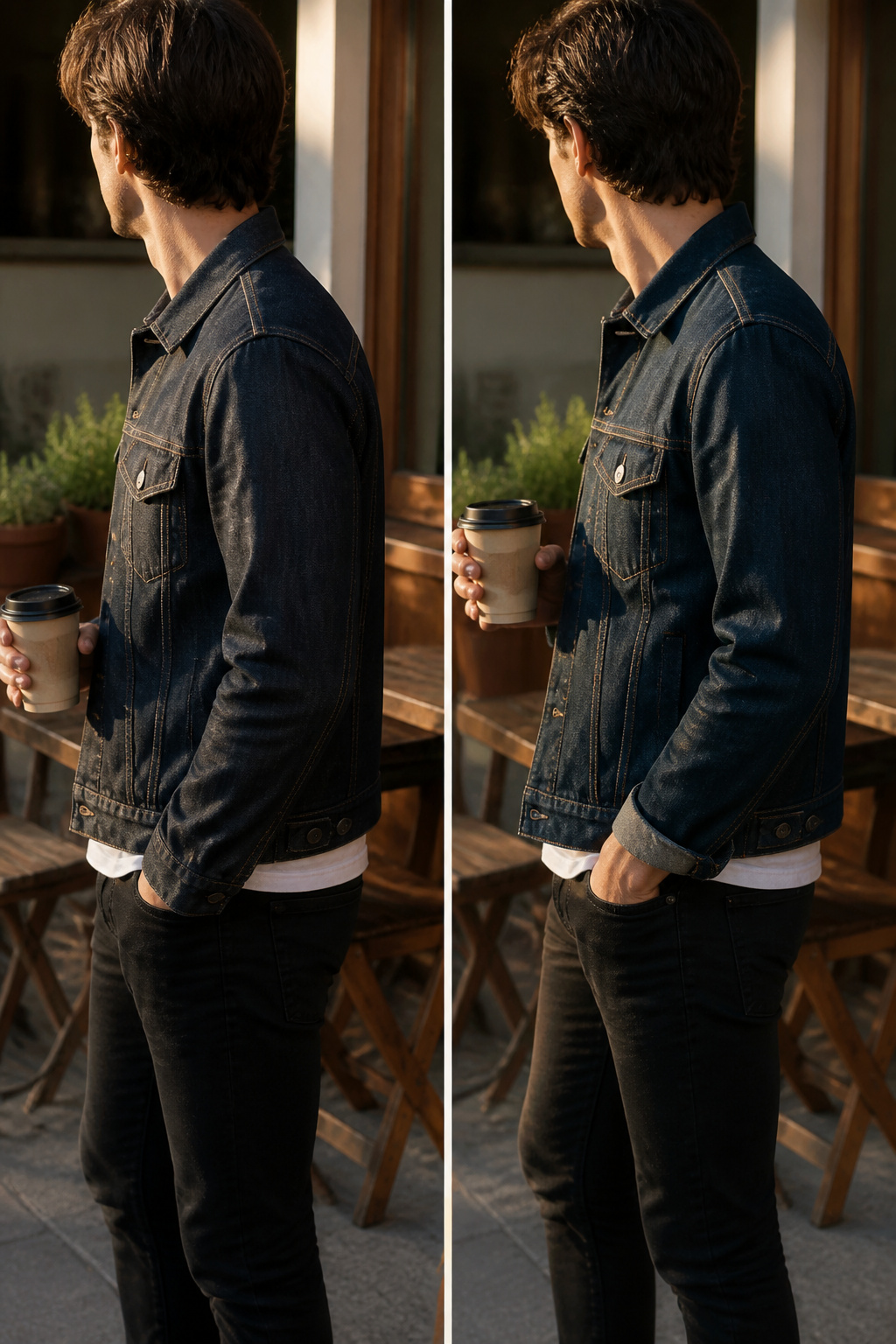
A denim jacket is the first thing I reach for on a dry, mild 50-degree day. The rigid cotton twill blocks just enough breeze without turning a midday walk into a sweat, and it layers over everything from a thin tee to a lightweight sweater. Mine is a standard Levi’s trucker, unlined, which means it lives in that narrow band between September and November and again in March. Below 45 degrees, it fails; above 60, I end up tying it around my waist by noon.
Bombers handle wind better than denim ever will. The ribbed cuffs and waistband seal out gusts, and the nylon shell slides over a hoodie without bunching. A varsity-style cut with light padding, like the reversible Nike Sportswear version, gives you room to add that hoodie underneath without feeling strapped in. The full zipper is the detail that matters here: it lets you vent heat fast when the sun comes out, which it always seems to at 2 p.m.
Puffer vests are what I grab when my core needs warmth but my arms need to move. The down or synthetic fill traps heat across your chest and back, while the sleeveless cut keeps you from overheating on a hike or during a commute that involves carrying bags. A midweight vest with a tailored fit, like Nike’s Therma-FIT Windrunner, works over a slim long-sleeve tee without looking like you forgot the rest of your coat. These are transitional pieces, not winter gear: none of these jackets replaces a real coat once temperatures drop below 40, and treating them like they do is the mistake that leaves you shivering by evening.
6. Scarves, Hats, and Gloves

A scarf fills the gap when you realize halfway through dressing that you skipped a mid-layer. I keep a lightweight cotton or thin wool one draped over my coat rack for exactly that morning panic, and wrapping it once around my neck buys enough warmth to skip going back to the closet. The beanie does more work than you’d think at 50 degrees because heat loss from your head is real and immediate, not something you notice until you’re already cold. Light knit gloves handle the 20-degree swing between an 8 a.m. commute and a midday coffee run, and they’re the first thing off when the sun actually hits. I learned that order the hard way: gloves first, stuffed in a crossbody bag or tote, then the scarf loosened, then the beanie if the wind dies. Skip the heavy wool scarves and insulated gloves entirely; they are designed for temperatures well below 50 and will be uncomfortable.
7. Ankle Boots and Sneakers

Ankle boots in leather or suede handle the dressier side of 50 degree weather outfit planning better than anything else in the closet. I reach for mine with midi skirts or tailored trousers when the occasion calls for polish, and the closed toe keeps the chill from creeping in. The same temperature makes bare ankles a gamble for most people. Unless you run warm, that strip of skin between hem and shoe collects every draft, and the day turns uncomfortable fast.
For casual days, leather sneakers or clean canvas with socks are the practical default. High-tops that cover the ankle do more of the boot’s warmth work without looking like you’re trying. The Nike Air Force 1 High and similar styles keep the silhouette streamlined while solving the coverage problem.
Loafers sit in the middle ground that work outfits often need. They read professional without the formality of a heel, and a thin sock underneath solves the bare-ankle issue without adding bulk. I swap these in when ankle boots feel too heavy for the office but sneakers would read too casual.
How I Layer in Three Pieces

The three-layer system every outdoor guide eventually lands on, breathable base, insulating mid, protective outer, is the same one that saves my mornings when the thermostat reads 50 and the afternoon sun is still a promise rather than a fact. I start with a lightweight long-sleeve tee in cotton jersey or a thin waffle knit, add a cardigan or sweater, then finish with a light jacket, denim or utility, that I can peel off by lunch. Air trapped between those layers does the actual insulating work; three thin pieces outperform one thick sweater because you control the gaps. Last Tuesday looked like this: a Nike Dri-FIT long-sleeve under a cashmere crewneck, topped with an old trench. The office ran warm, the walk there did not, and I never touched the thermostat. The base layer is the one you keep on all day, so make it something you would wear alone.
Wool, Cashmere, and Cotton Blends
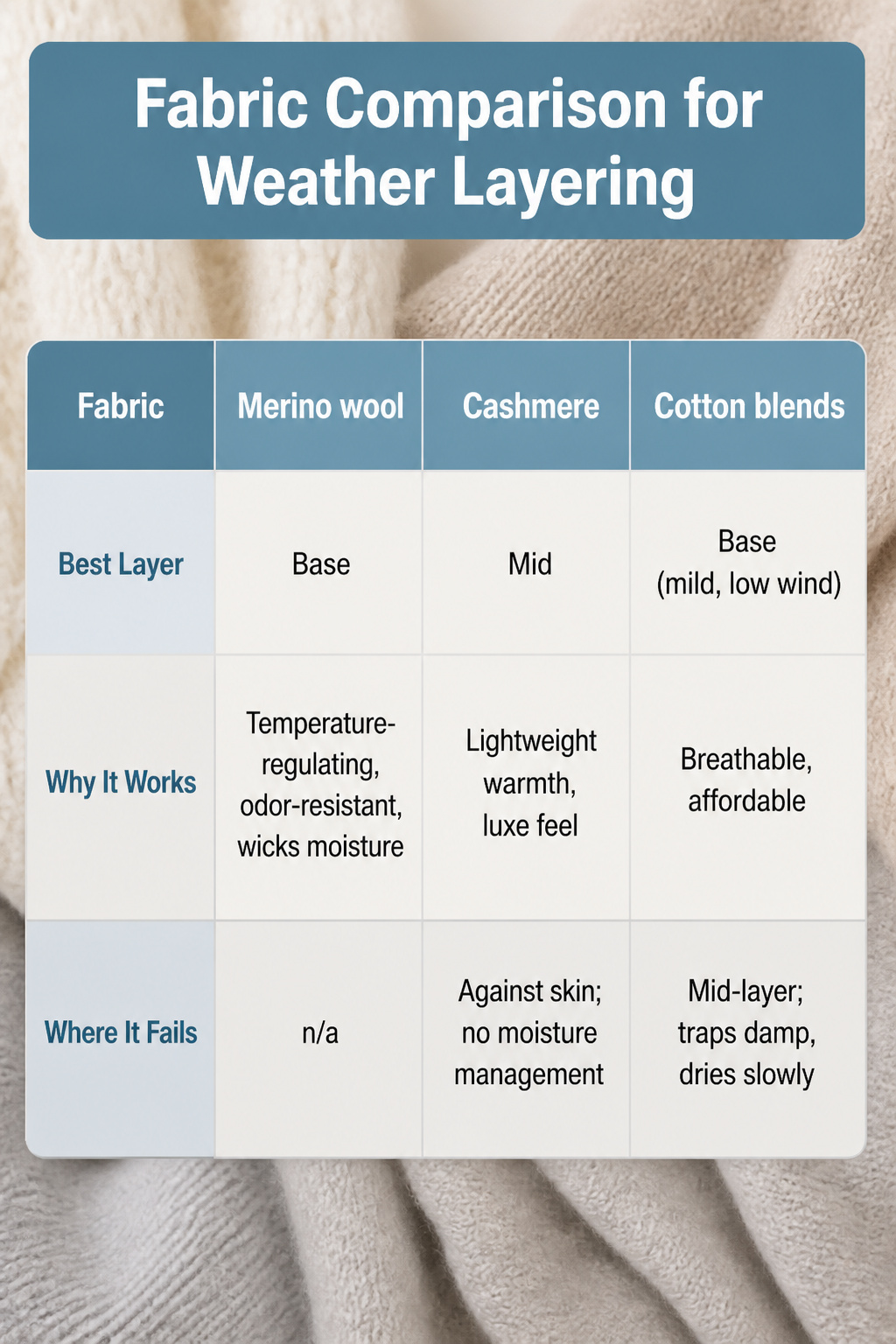
Merino wool, cashmere, and cotton blends each earn their place in a 50 degree weather outfit, but only if they stay in the right layer. Get it wrong and the whole system collapses.
Merino wool belongs against your skin. The International Wool Textile Organisation notes that wool maintains a more stable microclimate between fabric and body than other common fibers, which matters when a brisk walk pushes your temperature up and shade pulls it back down. It wicks moisture and resists odor, so you can wear it under something else all day without turning clammy.
Cashmere works as your mid-layer warmth. Light weight for the heat it traps, it sits over that base and under a jacket without adding bulk. I reach for it when I want the warmth of a chunky knit without the chunky.
Cotton blends make sense as the base layer on truly mild days with low wind. Breathable and cheap, but the catch is moisture: cotton absorbs sweat and dries slowly. Wear it as a mid-layer over wool and you create a damp pocket that steals heat instead of holding it.
| Fabric | Best Layer | Why It Works | Where It Fails |
|---|---|---|---|
| Merino wool | Base | Temperature-regulating, odor-resistant, wicks moisture | n/a |
| Cashmere | Mid | Lightweight warmth, luxe feel | Against skin; no moisture management |
| Cotton blends | Base (mild, low wind) | Breathable, affordable | Mid-layer; traps damp, dries slowly |
Casual, Work, and Evening Outfits

A chunky sweater and well-fitted jeans with clean white sneakers handles Saturday errands without any fuss. The same sweater moves to Monday when you swap the sneakers for suede desert boots and trade the cardigan for a trench: the base layer never changed, but the silhouette reads office-appropriate. For dinner, keep the boots and the trench, but switch the jeans for a leather skirt or a midi silhouette, and let the sweater shrink to a finer cashmere knit or a silk blouse under that cashmere poncho. Jewelry and heels do the rest. The one-swap rule is what keeps a 50 degree weather outfit from becoming three separate wardrobes. I have watched friends pack entire suitcases for a weekend when a single bag of mixable pieces would have covered every plan.
Coastal Humidity Against Dry Inland Air

Humid air at fifty degrees carries cold straight through fabric that would feel fine in dry conditions. The same jacket works in Denver and fails in San Francisco because coastal moisture pulls heat from your skin faster than still, dry air ever will. I learned this the hard way packing one October outfit for both cities: the wool pullover and lightweight coat that kept me comfortable in Colorado left me shivering through a foggy Golden Gate afternoon. Inland, you can get away with lighter mid-layers since the air itself does less damage. Near the coast, that faux leather outer layer or hooded scarf becomes non-negotiable not for style but for function. The three-layer system still applies, but the middle layer needs more weight where humidity lives.
Spring Lightness Against Fall Weight

The same 50 degree weather outfit reads completely different in March than in October. Last spring I reached for a wool pullover in a pale oatmeal shade, paired it with lightweight pastel trousers, and kept an open-front coat nearby that I could peel off by noon. The layers were breathable from the start, because spring 50 degrees warms fast and you want to be able to shed weight without losing the look.
Come fall, that same thermometer calls for the opposite instinct. Deeper burgundy, olive, and navy tones feel right because they match the heavier textures the season allows. A cable knit sweater under a wool trench coat builds toward winter rather than away from it, and you are not expecting to strip down by afternoon. The crisp evenings stay crisp.
The three-layer formula still holds either way: breathable base, insulating mid, light outer shell. What changes is the weight within each tier and your willingness to carry what you might not remove. Spring dressing asks you to plan for disappearance. Fall dressing asks you to commit.
Frequently Asked Questions
What should I wear in 50-degree weather?
A 50 degree weather outfit works best as a three-layer system: breathable base, insulating mid, and light outer shell. Three thin layers outperform one thick sweater because air trapped between them does the actual insulating work. Start with cotton jersey or merino wool against your skin, add a cardigan or sweater, and finish with a light jacket you can peel off by lunch.
How do I layer for 50-degree weather?
Build from the inside out with a lightweight long-sleeve tee, a cardigan or sweater for warmth, and a denim or utility jacket on top. The base layer is the piece you keep on all day indoors, so make it something you would wear alone. This structure handles everything from a 42-degree morning to a 58-degree afternoon because you control the gaps between layers rather than relying on one heavy piece.
What jackets are ideal for transitional weather?
Denim jackets, lightweight bombers, and trench coats each fill a specific slot. Unlined denim handles dry, mild 50-degree days but fails below 45. Bombers seal out gusts with ribbed cuffs and waistbands, and their full zippers vent heat fast when the sun hits. Trench coats bridge coffee runs and meetings; cinch the belt to keep the silhouette intentional rather than sloppy.
What shoes should I wear in 50-degree weather?
Ankle boots in leather or suede handle dressier occasions, leather sneakers or canvas with socks work for casual days, and loafers sit in the professional middle ground. High-top sneakers like the Nike Air Force 1 High cover the ankle and solve warmth without looking like boots. Skip bare ankles unless you run warm; that strip of skin collects every draft.
Can I wear dresses in 50-degree weather?
Yes, but pair them with transitional layers and solve the coverage problem. A midi skirt or leather silhouette works with a chunky knit sweater and ankle boots for evening, or switch to a finer cashmere knit or silk blouse under a poncho. The same sweater-and-base combination from your casual outfits adapts here; jewelry and heels do the rest of the shifting.