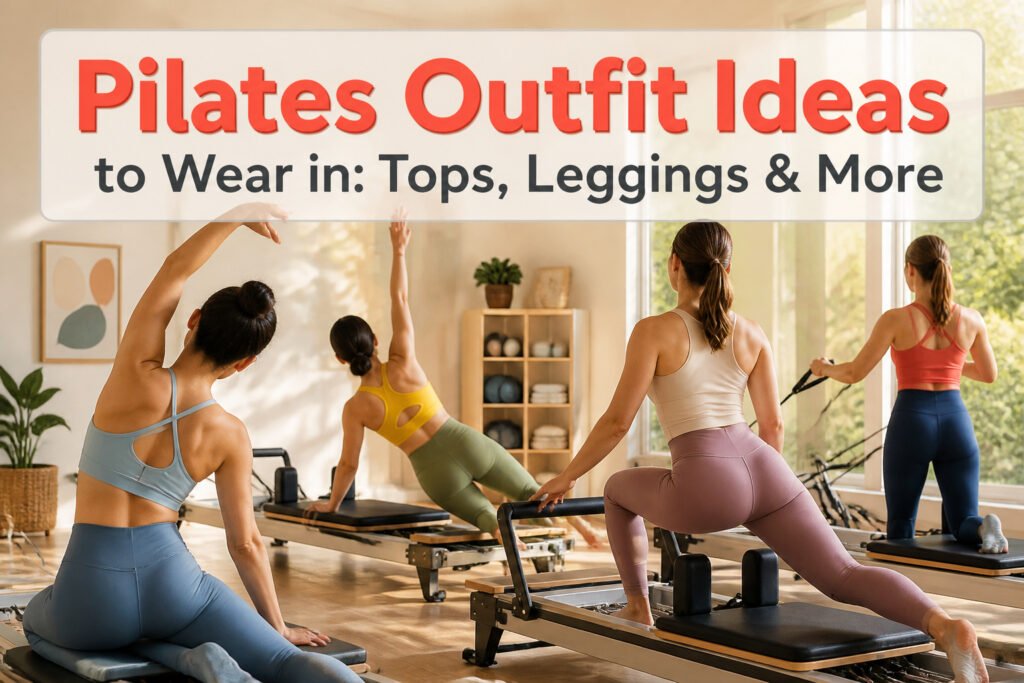
The right Pilates outfit is the one you stop thinking about the moment class starts. That only happens if every piece fits close enough to stay out of the equipment and out of your way, which rules out the baggy tee most beginners grab first. Flat seams, four-way stretch, and a waistband that sits flush without compression are the details that separate a session spent adjusting from one spent working.
1. Fitted Tops
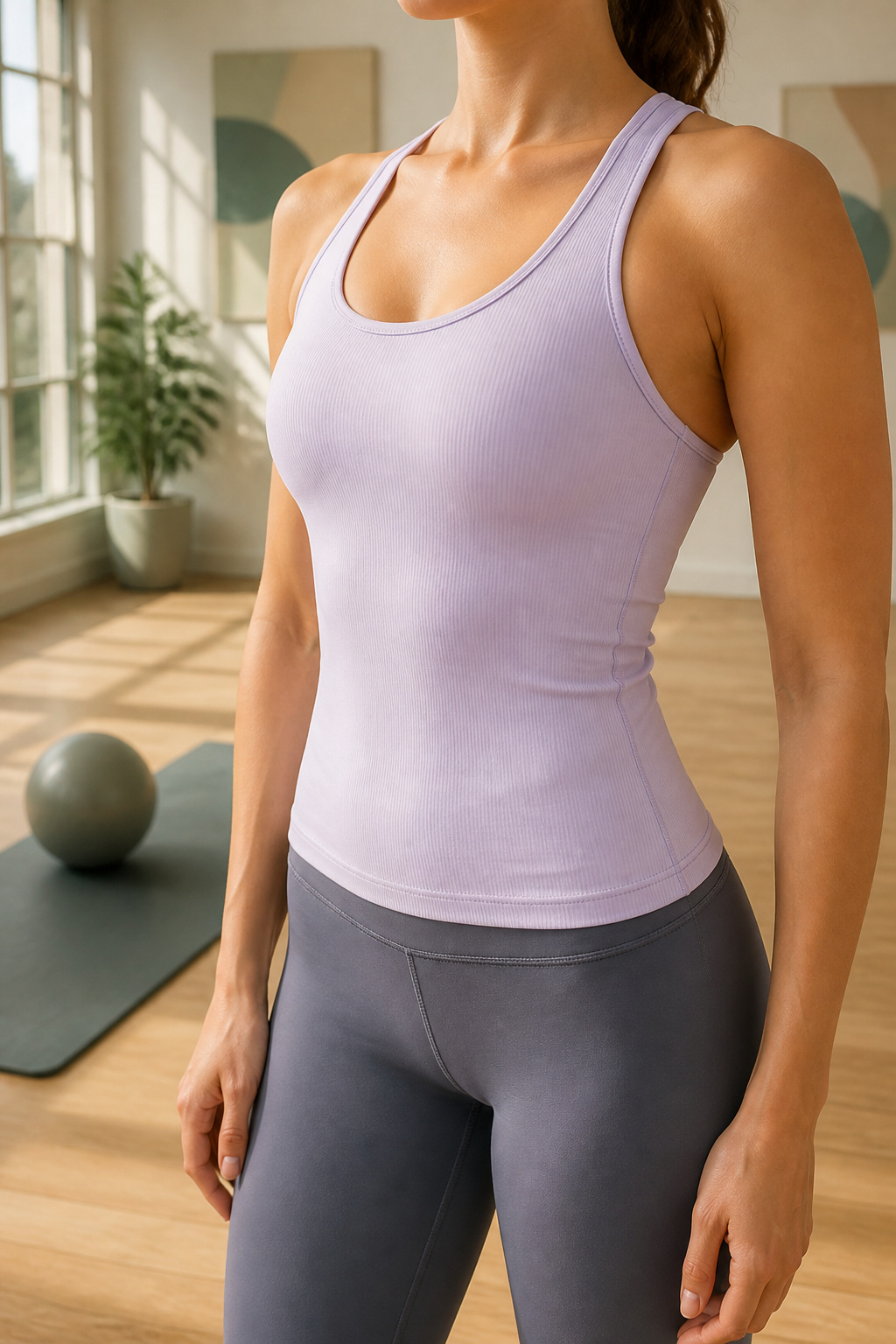
A fitted top is the first thing to get right for Pilates, because loose fabric blocks both your view and your instructor’s. Twice I have been mid-reformer and felt a shirt tail snag on a spring; once I spent half a session pulling a baggy tee out from under my shoulder blades while trying to hold plank. The right fit keeps you in the work, not in your clothes.
Three styles handle this well. A fitted tank gives coverage without bulk and stays put through roll-ups. A longline sports bra works alone if you prefer less fabric on your torso, or under an open layer. Wrap tops solve the temperature problem studios create: cold at the start, warm ten minutes in, and the wrap lets you adjust without a full change.
The fit should sit close but not restrictive. If you are adjusting mid-class, the size is off. Flat seams matter here too, since you will spend time on your back and twisting.
2. Conforming Stretch Leggings
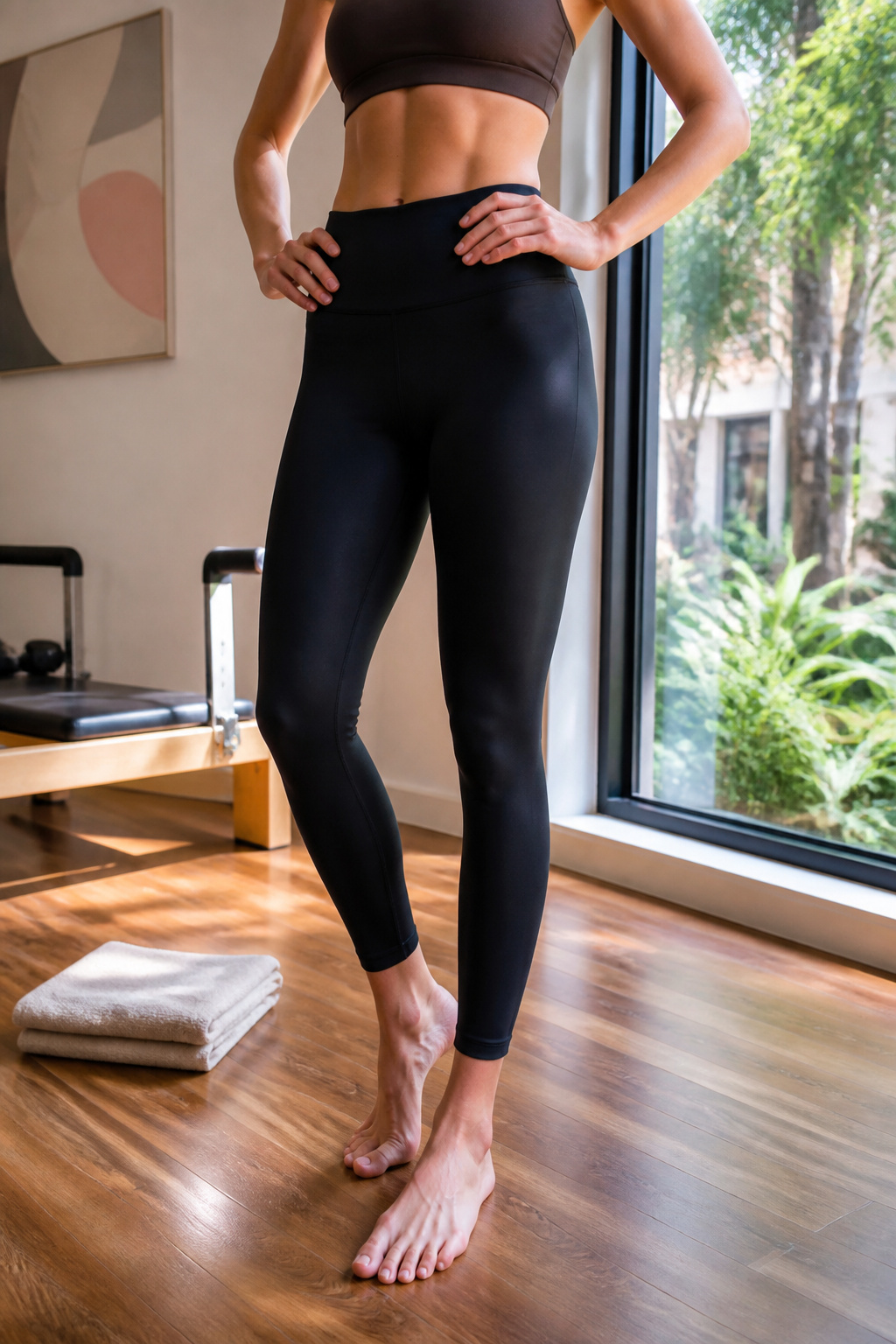
The leggings you pull on for Pilates should disappear the moment class starts. Flat seams matter here: any raised stitching along the inner thigh or waistband will grind into your skin during the hundred small adjustments of mat work or the sliding carriage of a Reformer. I learned this the hard way with a pair I grabbed from an old running drawer, seams that sat proud of the fabric, shifting an inch left then right every time I rolled from my back to my stomach. By the thirty-minute mark I was adjusting more than exercising.
High-waisted styles stay put through every teaser and pike. Low-rise cuts leave you yanking fabric back into place, which breaks concentration and, on a Reformer, risks catching the equipment. The waistband should sit flush and wide, not ribbed and compressive; twisting and folding demand fabric that gives rather than fights.
Breathable, stretchy, moisture-wicking material completes the equation. You want enough recovery in the weave that the legging springs back after deep lunges, enough wick that sweat does not pool against your lower back during planks. Black remains the reliable choice, though brighter colors and patterns have moved firmly into Pilates fashion if that is more your speed.
3. Low-Impact Sports Bras
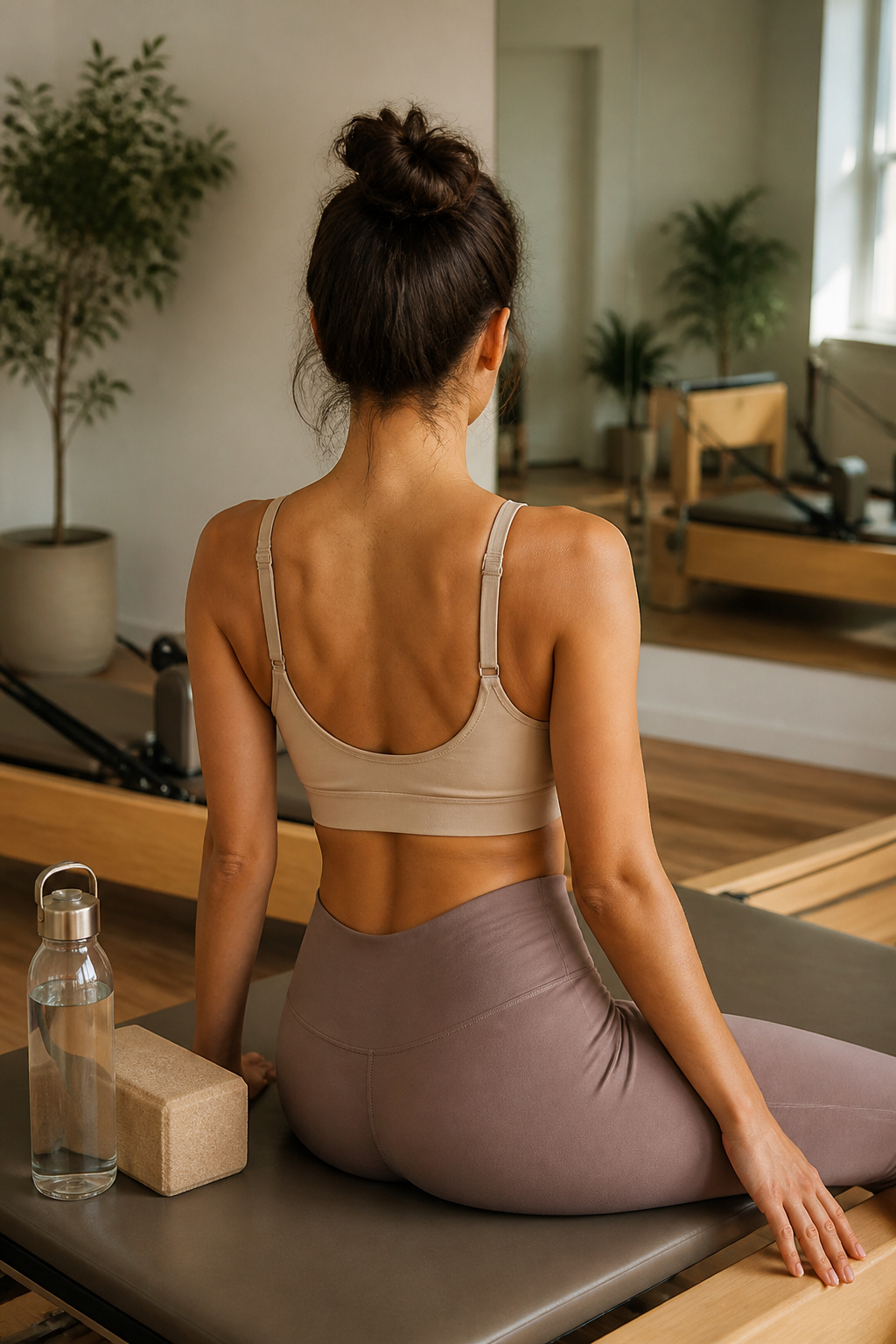
A low-impact sports bra hits the right balance for Pilates: enough structure to keep everything steady through planks and rolling exercises, but not so compressive that deep breathing feels like a fight. The best ones stay put during twists and lengthening movements without clamping down on your ribs.
Styles that work as standalone tops tend to have more coverage at the front and straps you can actually adjust. Layering bras, the kind meant to disappear under a tank or fitted tee, often run lighter and sit closer to the skin. Both have their place. Hot Pilates classes call for wearing one solo; a cooler studio means throwing a wrap top or light long sleeve over the top before and after.
Breathable, sweat-wicking fabric matters more than heavy padding. Racerbacks hold straps in place during shoulder work, and soft seamless designs skip the seams that dig in when you are holding slow, controlled positions on the mat.
4. Grip Socks

Reformer classes demand a grip on the carriage and footbar that bare feet or regular socks simply will not give. Most studios require rubber-dot grip socks for exactly that reason: the pattern on sole and heel keeps you from sliding when the carriage moves under you. Without them, even a polished studio floor can turn a controlled lunge into a scramble for balance.
I learned this the hard way, walking into my first class in ordinary cotton socks and having to buy a pair at the front desk. The APL Lux Logo Socks look cleaner if you want something that reads more like a regular crew sock, or Grip Crew Socks if you want a dedicated non-slip sole built for the work. Ordering ahead beats studio prices, and having them ready means you are not that person fumbling at the check-in desk.
5. Hair Ties and What Actually Works
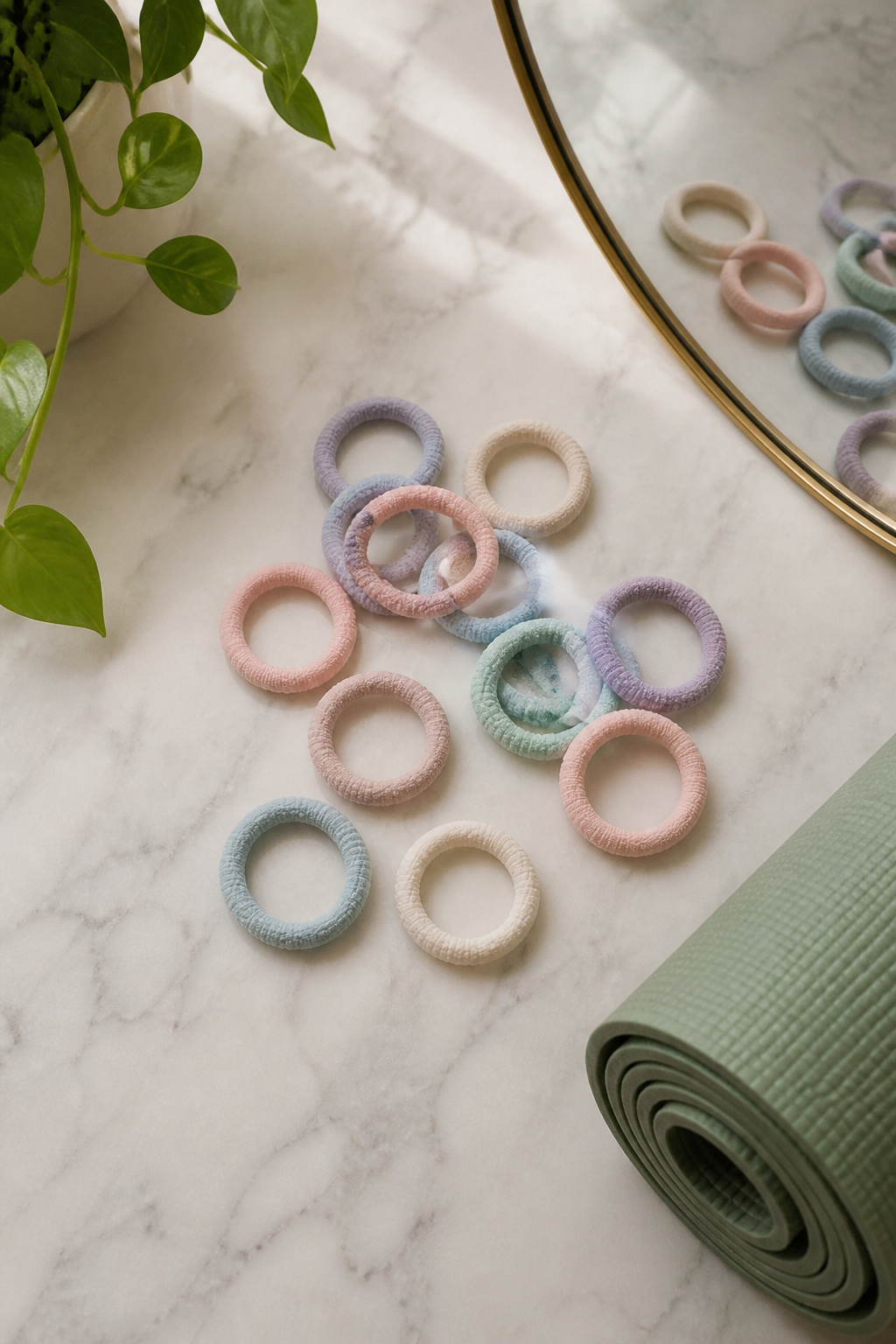
A loose strand of hair across the eyes during a rollover on the reformer is the kind of small distraction that throws off a whole sequence. Keeping hair completely off the face matters most during inversion and extension work, where your line of sight already shifts and your balance is already tested.
Thick, grippy bands hold where thin elastics fail. The narrow satin ties I tried for six months slipped out of ponytails within the first ten minutes of class, especially once sweat came into play. Thicker bands with a matte, textured surface stayed put through teaser and long spine exercises without needing a reset. Headbands, meanwhile, never worked for fine hair. They slid backward during any forward flexion and required more adjusting than they were worth, which pulled attention away from the practice exactly when focus mattered most.
A 3-pack of mini scrunchies with a soft, snag-free fabric handles the job without catching or pulling. Nothing excessive, nothing distracting.
6. Matching Sets
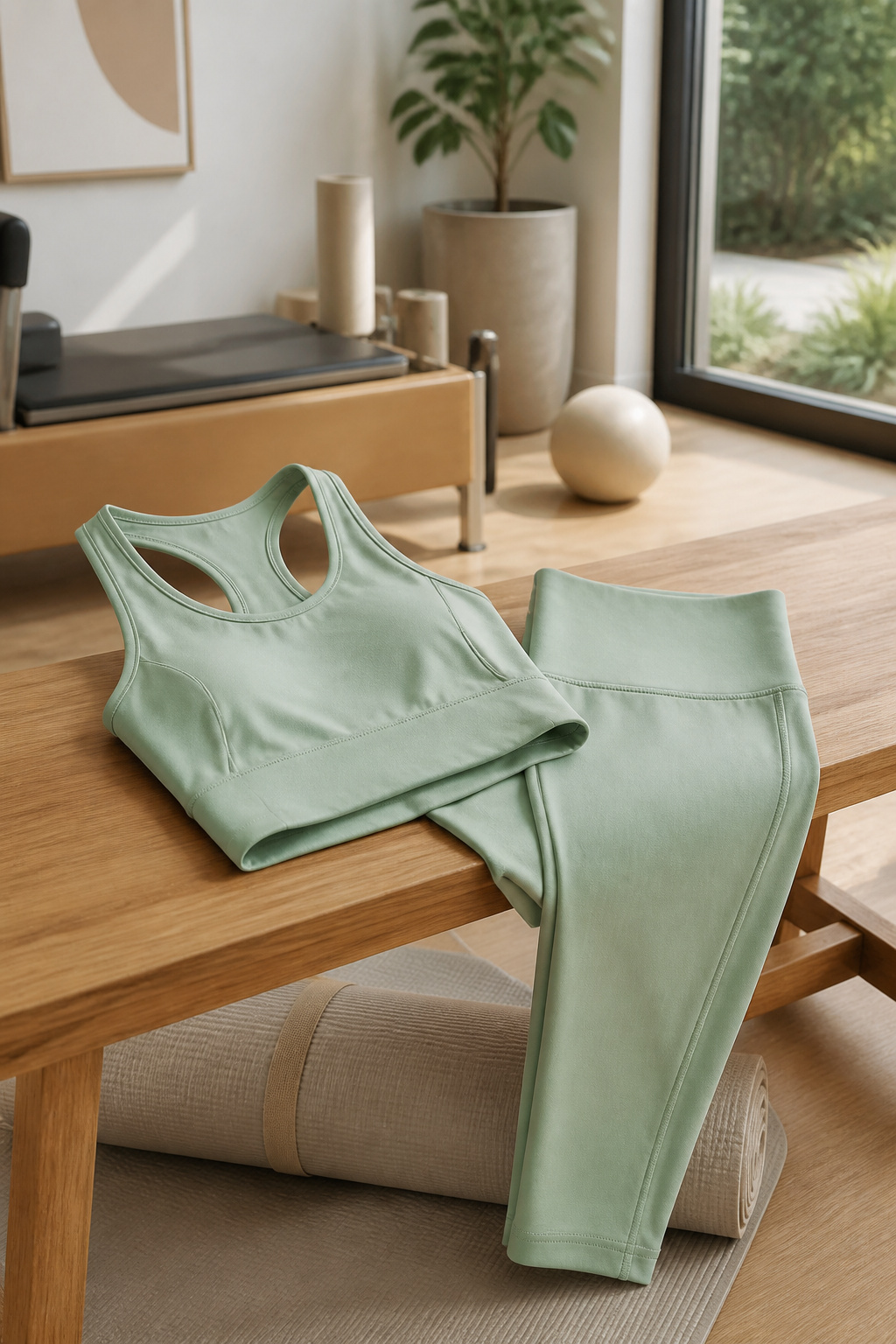
A matching set does the decision-making for you. The top and bottom arrive already coordinated, so the mental load of getting dressed drops to almost nothing. That alone is worth something on mornings when you’re already calculating travel time to the studio.
The current range runs from accessible to investment. Vuori’s AllTheFeels cami and legging pairing sits around $74 and $110, while Alo’s halter bra with ruched-front capris offers a fresher silhouette at a similar tier. For something that never quits, Lululemon’s black tank and long legging duo has proven it lasts past trend cycles. I own one set in that neighborhood, maybe $150 all in, and the cost-per-wear math has worked out better than the cheaper separates I replaced more often.
A set also travels well. The sweatshirt comes off before the reformer, and what’s underneath already looks intentional. That kind of polish without the effort is what makes the matching set category worth the slight premium over mixing pieces yourself.
7. Jumpsuits and Unitards

On mornings when the coffee has not kicked in yet, a single piece of clothing that removes every decision is the only thing I want. A jumpsuit or unitard does exactly that: no waistband to dig in during a rollup, no shirt riding up when you invert on the reformer. The fabric is typically buttery soft and breathable, and the whole thing moves as one layer against your skin.
The tradeoff is real. Bathroom breaks mean stripping down to nothing in a studio stall, which is not ideal if you are drinking water the way instructors want you to. Some days that hassle is worth it; some days it is not.
Short lengths work well for heated summer sessions, while full-length styles double as leggings if you throw a zip-up hoodie over the top afterward. Strappy back designs add something if you are feeling bold, though I tend toward the simplest cut on days when decision fatigue is already high. Forest green reads as pulled together in a way black sometimes does not, and the right fit hugs without squeezing.
8. Layering Pieces

Walking into a studio that feels like a refrigerator at 7 a.m. taught me to keep a lightweight layer in my bag no matter what the weather looks like outside. A cropped hoodie or zip-up jacket slips on while you’re still waking up your muscles, then comes off the second the hundred starts. After class, that same piece goes back on while your body cools down, which matters more than you’d think: letting muscles drop from working temperature too fast leaves you tight the next day.
The pieces I actually wear in are the fitted ones the instructor can see form through. What stays folded in my bag is anything loose enough to catch on the reformer straps or bunch up during rolling exercises. Roomy quarter-zips and soft wraps work better as cover-ups for before and after than as layers you try to move in. Most studios run warm once the class fills, but the variation from one to another is real enough that I never skip the backup layer entirely.
Fabric That Performs
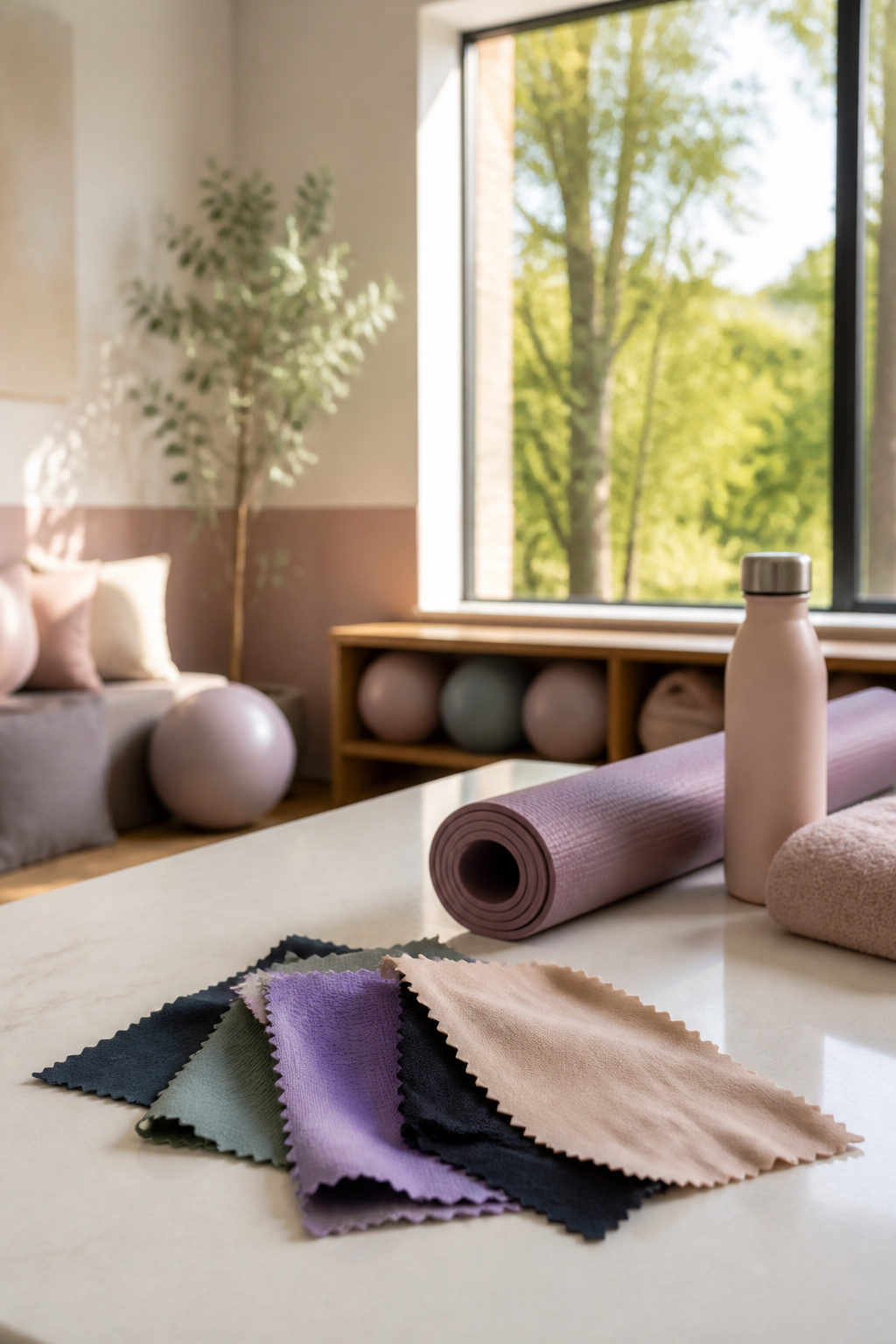
Breathable fabrics matter more in Pilates than in almost any other workout because the movements are slow and deliberate. You stay in each position long enough to overheat in the wrong material, and you need enough stretch to let your spine articulate fully without the fabric fighting back.
Four-way stretch with moisture-wicking is what stops a session from becoming a distraction. Nylon-spandex blends and performance polyester are the fiber names worth checking on tags. They pull sweat away from skin while recovering their shape after a deep spinal twist or teaser hold. Cotton-heavy blends absorb moisture and stay damp; they also bag out at the knees and seat within a few wears, which throws off the fitted silhouette you need to check alignment in the mirror.
Flat seams or seamless construction are worth the extra few dollars. Raised seams on inner thighs or along the waistband turn into irritation points during rolling movements like the pelvic curl or shoulder bridge. I have learned to turn garments inside out in the store and run a finger along the seam; if I feel a ridge, I put it back.
What to avoid: anything labeled "compression" for high-impact training. That level of squeeze restricts the lateral breathing Pilates depends on and can make side-lying leg work genuinely uncomfortable. Low-impact support is the category that belongs here, not the strapped-in feeling of a long-distance run.
Color and Style Right Now

The "Pilates Princess" aesthetic has filtered down from TikTok into the studios I actually visit, and it looks different in practice than it does on the feed. Soft pinks and whites dominate the look, often with leg warmers and ballet-inspired tops that would feel out of place in a spin class. For me, that femininity works best in small doses. A light pink hoodie over neutral leggings reads as intentional without feeling like costume.
Matching sets solve the morning decision problem entirely. Black remains the default for a reason, but I’ve started seeing more women in tonal pastels, blush paired with cream, or a single pale shade head to toe. The set you choose should still pass the fold test — if the waistband digs when you’re curled into a teaser position, the color stops mattering.
Prints are showing up more than they used to, though I tend toward solids that mix with what I already own. The champagne-and-soft-pink combinations I’ve spotted lately work because they feel calm rather than loud, energy that matches the workout itself. Brands like Alo and Lululemon push these palettes hard, but Old Navy and Target have caught up enough that you can test the look without committing to a $120 set.
Why Fit Matters More Than Trend
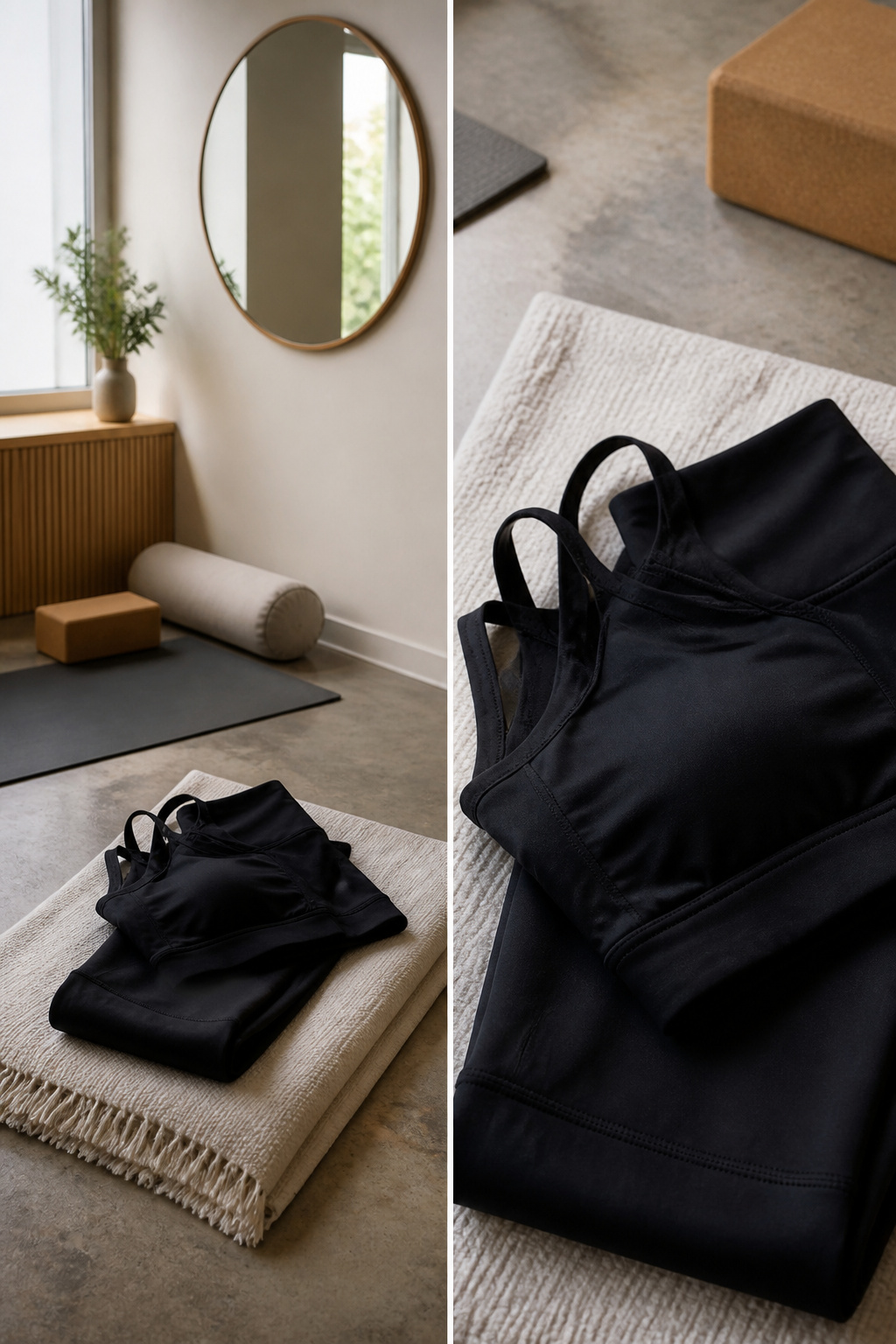
The first time I stepped onto a reformer, I wore an oversized tee I had thrown on for yoga. Halfway through footwork, the hem bunched under my shoulder blades and I spent the rest of the session tugging fabric instead of checking my pelvic tilt. Fitted clothing matters in Pilates because you need to see your core engage in the mirror, and loose layers only hide what the instructor is trying to correct.
Body shape awareness is where most guides stop short. What flatters in a mirror outside the studio, like a high waist that smooths the midsection, often functions differently on the mat. My own proportions mean low-rise bottoms need constant adjustment during leg circles, so I reach for form-fitting leggings that stay secure through repeated movement. Biker shorts work better for me in heated sessions, offering that same close fit without extra fabric catching on the carriage.
The goal is stability, not style points. Form-fitting pieces keep your attention on alignment rather than on what just shifted.
First Class, First Outfit
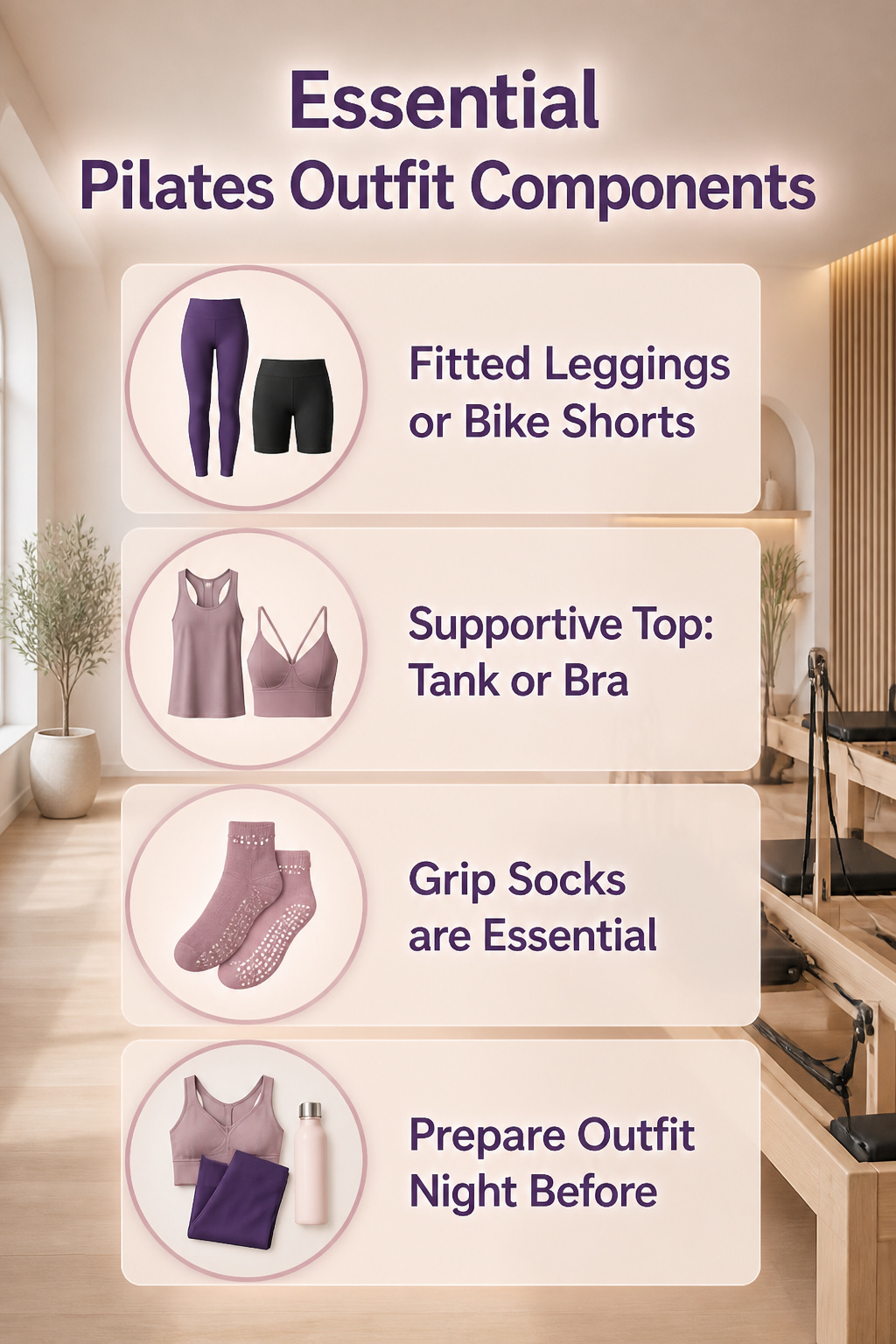
The first Pilates class I ever walked into, I was wearing the oversized tee I slept in and cotton leggings that sagged every time I rolled onto my back. Within ten minutes the instructor politely suggested I tuck the shirt in; within twenty I was peeling it off and wishing I had dressed like I knew what I was doing.
Fitted leggings or bike shorts are the foundation. Leggings hold warmth if the studio runs cool; bike shorts spare you extra fabric if you tend to run warm or simply prefer less between you and the mat. Either way, loose pants are a liability. Baggy fabric catches on reformer equipment and obscures the alignment your instructor needs to see.
A supportive top means a fitted tank, crop, or longline sports bra. Anything that falls toward your face during core work will, guaranteed, fall toward your face. I learned that the hard way, mid-teaser, with a breezy muscle tee that became a blindfold.
Grip socks are non-negotiable at most reformer studios. They keep you stable on the machine and keep the studio hygienic. Shoes stay in your bag; this is a socks-or-barefoot discipline.
One practical habit I picked up after that first class: lay the outfit out the night before. Motivation is thinner at 6 a.m. when nothing is ready.
Frequently Asked Questions
What should I wear to Pilates for the first time?
Wear fitted leggings or bike shorts, a supportive top like a fitted tank or longline sports bra, and grip socks. Loose clothing catches on reformer equipment and blocks your instructor’s view of your form, which is why close-fitting pieces matter from day one. Laying the outfit out the night before helps on early mornings when motivation runs thin.
Do I need special shoes for Pilates?
No shoes are needed for Pilates. Most studios require grip socks with rubber dots on the sole instead, which keep you stable on the reformer carriage and footbar while keeping the studio hygienic. Barefoot works on a mat, though many studios still prefer socks even then.
What tops are best for Pilates?
Fitted tanks, longline sports bras, and wrap tops all work well. The key is fabric that stays put: loose shirts fall toward your face during core work and can snag on springs or bunch under your shoulder blades. Wrap tops solve the temperature swing problem, letting you adjust as the studio warms up without a full change.
Can I wear layers to Pilates?
Yes, and you should keep a lightweight layer in your bag. Studios often run cold at 7 a.m. and warm up fast once class fills, so a cropped hoodie or zip-up jacket works for before and after. Wear fitted layers the instructor can see form through; save looser wraps and quarter-zips for cover-ups rather than active movement.