
A Chelsea boots outfit looks pulled-together in about the time it takes to lace sneakers, but the cost is attention to where the hem lands. Most people get the ankle wrong: jeans that bag above the shaft or crops that hover two inches too high turn intentional into accidental. The fix is stricter than it sounds. A 1-inch gap between hem and boot top is the measurable line between clean and sloppy, and the same number shows up again for full-length jeans that must never drag more than 1½ inches.
1. Skinny Jeans
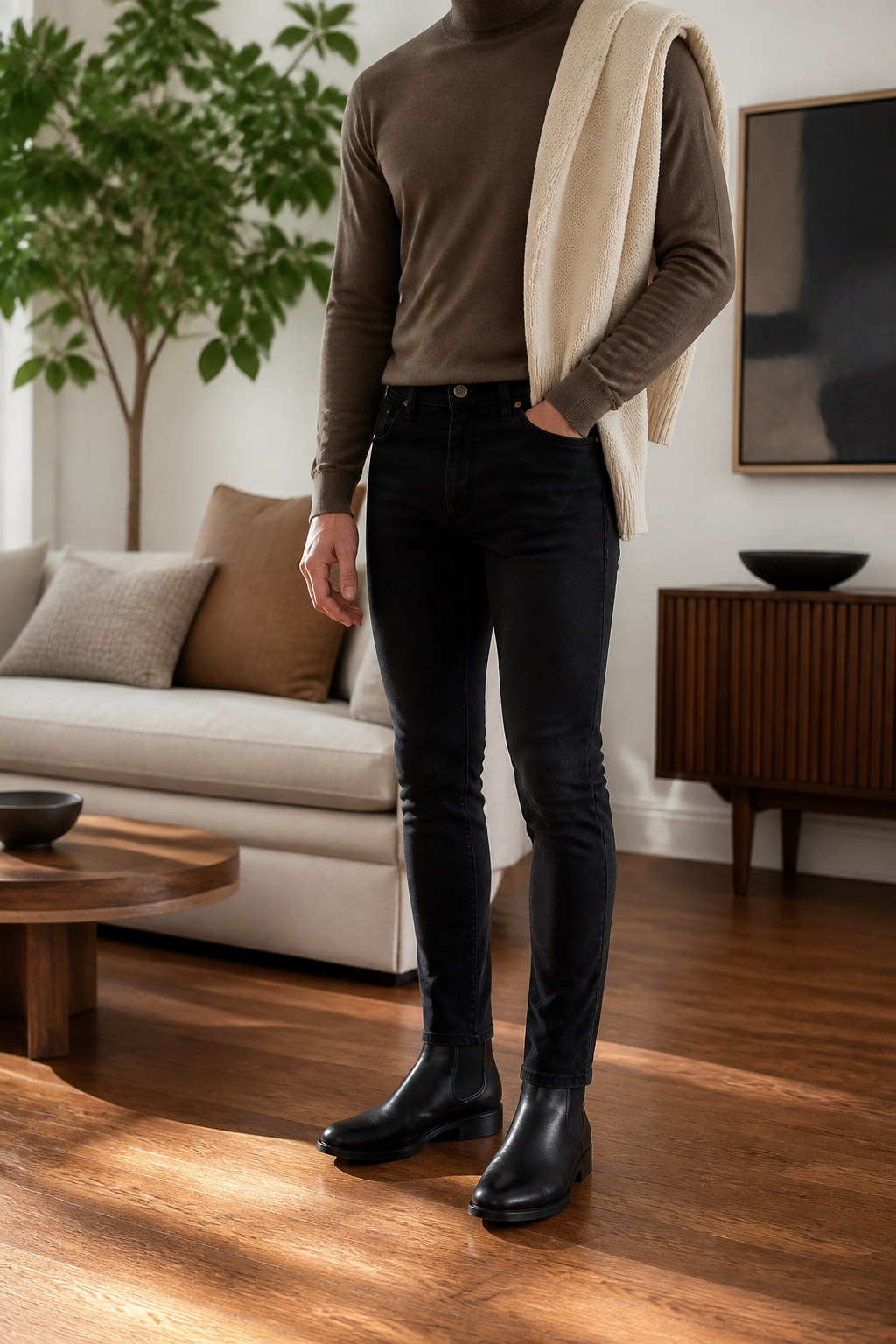
Skinny jeans and Chelsea boots are the pairing most often cited, and the reason is simple: the narrow leg mirrors the boot’s slim shaft so the whole line stays clean from hip to heel. The catch is the ankle. Jeans that claim to be skinny often relax at the hem and bulk up above the boot, which breaks the silhouette. What works is a pair tight to the ankle with the hem hitting right at the boot’s top, no tucking and no cuff that adds volume.
For tops, the balance lives in the contrast. A fitted turtleneck or thin knit keeps the outfit sleek; an oversized sweater gives it ease without looking accidental. The oversized route only works if the jeans are doing their job below, because volume on top and bulk at the ankle turns the shape into a column. I have watched this go wrong on myself with jeans that bagged out by noon, and the fix was always a stricter fit through the calf. A cropped puffer or blazer on top finishes either version without competing for attention.
2. Straight-Leg Jeans

Straight-leg jeans are the pair I reach for first with Chelsea boots because the hem sits just where it needs to: grazing the top of the shaft so no ankle shows but the boot still reads as intentional. A cropped straight-leg works here too, and the 1-inch gap or less between hem and boot top keeps the line clean without breaking the silhouette.
Where this pairing can look sloppy is in the upper half. A structured blazer pulls it back from casual into territory that works for a morning meeting or dinner afterward. I learned that lesson after wearing the same jeans and boots with an oversized cardigan and catching my reflection in a shop window; the shapeless top made the whole outfit feel like I’d rolled out of bed. The blazer gives the straight leg its anchor.
Full-length straight-leg jeans need to skim the boot without dragging, so the hem covers the shaft by an inch or two at most. Anything longer pools at the ankle and hides the boot entirely, which defeats the point of choosing a Chelsea boot outfit in the first place.
3. Wide-Leg Jeans

Wide-leg jeans and Chelsea boots are a pairing that lives or dies on length. The hem should hit at the ankle or slightly above, skimming the top of the boot rather than swallowing it. Any longer and the fabric pools; any shorter and you risk showing skin you probably did not plan on.
Tuck in the top or go cropped to keep the silhouette from turning into a shapeless column. A loose blouse works if you half-tuck it; a fitted tee or cropped sweater does the balancing for you. I have seen the volume of wide legs completely erase a good boot line when the wearer let a long sweater hang untucked. The eye needs that break at the waist.
Substantial soles on workwear-inspired Chelseas hold their own better here than slim classic pairs, which can disappear under all that fabric. Structured blazers or cropped jackets add polish, but the real fix is simpler: control where the denim ends and let the boot actually show.
4. Flare Jeans

Flare jeans with Chelsea boots is the proportion almost no one talks about, and that silence costs a lot of women a morning of failed outfits. The hem has to just graze the top of the boot, maybe kiss the floor at most, which means a trip to the tailor is non-negotiable unless you hit genetic lottery on inseam. Too short and the break looks accidental; too long and you’re walking on denim, not wearing it.
The boot itself reads casual, so the top half should lean that direction too. A structured blazer or sharp silk blouse fights the easy energy of the Chelsea and the flare together. Better to reach for a worn-in tee, a slouchy knit, or a denim shirt in a different wash. A cropped jacket or a vest that hits at the high hip keeps the silhouette from turning into a bell-bottom costume. I learned this the hard way after trying to dress up the combination for dinner; the boots wanted beers and a parking spot, not reservations.
5. Cropped Jeans

The sweet spot with cropped jeans and Chelsea boots is keeping the hem about 1 inch above the boot, maybe a hair less. That gap is where the boot’s elastic panel and ankle curve finally get to do their job. Anything higher and you’re in sock territory; anything lower and the whole point of choosing a cropped cut disappears under fabric.
I learned this the hard way with a pair I ordered online that hit mid-ankle, nowhere near the boot top. The shaft got lost entirely, and the outfit looked like I’d simply bought pants that were too short. When the gap stays under that 1-inch mark, the boot reads as intentional, not accidental.
The same rule holds whether you’re working with straight-leg crops or a wider leg that needs balancing. For wide-leg cropped styles, the hem should still land right around the top of the boot, not hovering two inches above it. The volume below needs that anchor point to keep the silhouette from feeling top-heavy.
6. Leggings

Leggings are the easiest way to wear Chelsea boots when comfort is the whole point. The boot has to swallow the legging hem completely, so tuck the legging all the way in, never let it bunch at the ankle. Black leather boots with black leggings give the cleanest line, and a pair of socks peeking out at the top breaks the look up a little, or you can hide them entirely for something sleeker.
An oversized sweater is the standard pairing here, and it is the most casual option in the whole lineup. A cropped puffer or a long coat works too, but the sweater-and-legging combo is what gets reached for most often. Cozy socks pulled over the legging top, rather than hidden underneath, add an extra layer that reads intentional rather than lazy. A longer tee or tank underneath the sweater helps if you want a little more coverage.
7. Skirts

A mini skirt in a heavier fabric keeps the proportions from feeling top-heavy against a sturdy Chelsea boot. Think wool, tweed, or a thick corduroy rather than something floaty and lightweight. The boot already reads as substantial; the skirt needs to match that weight or the whole look tilts off balance.
Midi and maxi lengths work too, but the boot can disappear entirely if you’re not deliberate. A tiered maxi skirt with a suede Chelsea boot gives the eye texture to follow from hem to leather, while a flowy lace maxi needs something crisper on top, like a button-down, so the boot doesn’t feel like an afterthought peeking out. The same outfit in winter asks for tights in the same color as the boot, which keeps the line long and unbroken. Layer socks over the tights only if the rest of the outfit carries matching bulk; a collared shirt under a sweater handles that balance better than a single thin knit trying to do all the work.
8. Dresses

Chelsea boots with dresses is the pairing that trips people up most often, and the honest answer is that it depends heavily on ankle shape and dress length. The boots hit right at the thinnest part of the ankle, which can visually shorten the leg unless you do something deliberate to counter it. Tights in the same color as the boots create one unbroken line and solve most of the problem immediately; black tights into black Chelseas is the simplest version of this.
For the dress itself, structure matters more than fabric weight. A sweater dress or anything with enough body to stand slightly away from the hips keeps the silhouette from going bottom-heavy. Flowy dresses can work, but only if you add a heavier layer on top, a thick cardigan or a structured jacket, so the boots do not look like they are anchoring nothing.
Sock layering is another route. A chunky knit sock in a contrasting texture, pushed down slightly so it shows above the boot, breaks the line intentionally rather than letting it break by accident. This works best when the rest of the outfit already has some layering going on, a collared shirt under that sweater dress, for instance, so the sock does not read as the only busy element.
Mini and midi lengths are generally easier here than maxi; the long hem with the low boot risks looking like the dress and the footwear are fighting each other. Cold weather makes the choice easier because tights are expected, and tights are what make this combination look considered rather than accidental.
9. Shorts

Shorts with Chelsea boots sit at that awkward intersection where almost no style guide bothers to go, which is exactly why it works. The pairing reads intentional rather than accidental when the shorts are tailored and the top is fitted; a loose tee or oversized sweater throws the proportions into confusion. I reach for this combination in late September or early April, when the temperature hovers in the mid-sixties and full denim feels premature but bare ankles would be reckless. A short leather or suede Chelsea boot, hitting just at the ankle bone, keeps the leg line cleaner than something taller would. Balance is the non-negotiable here: if the shorts are relaxed, the boots and top both need to run slim, or the whole silhouette collapses into shapelessness. Transitional weather is your window; once true summer heat arrives, the boots look like a costume, and deep winter makes exposed knees impractical.
Socks
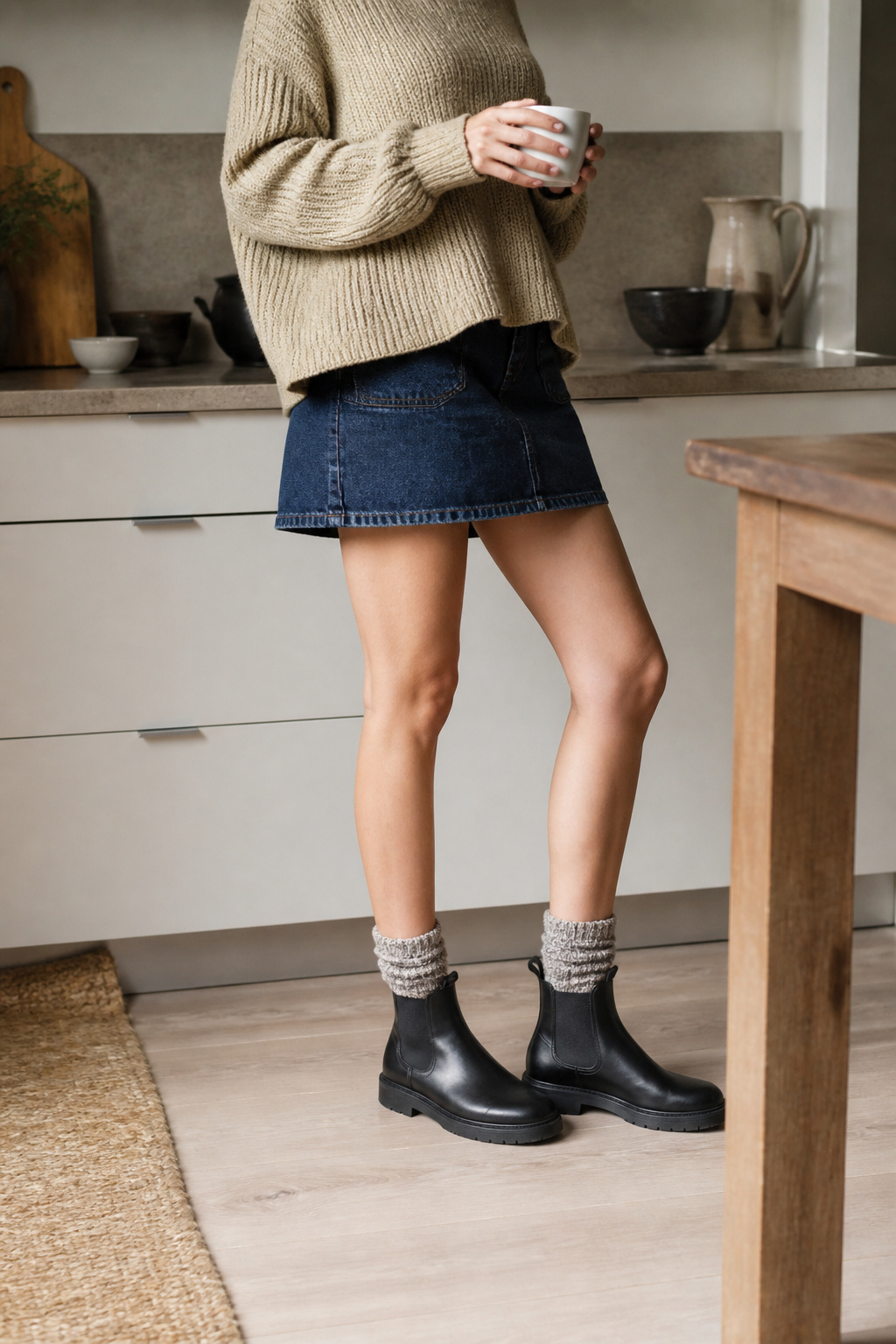
Socks can make or break the comfort of your Chelsea boots, but they are also an easy way to change the style of your outfit. Sometimes the look works best if the socks are hidden, and other times a little peep of your sock looks better. Ruffled socks that peek out at the ankle add an unexpected touch, while thicker socks are the move when it is freezing. The key is to balance the rest of your outfit with the boots, and the socks play into that too. Do not be afraid of getting playful with a visible sock, either: a suede Chelsea boot paired with tailored shorts and chunky socks looked fresh and cool on a recent shoot. Thicker socks for warmth will change the fit slightly, so try them on with the boots before you commit to a full day out.
Colors and Materials
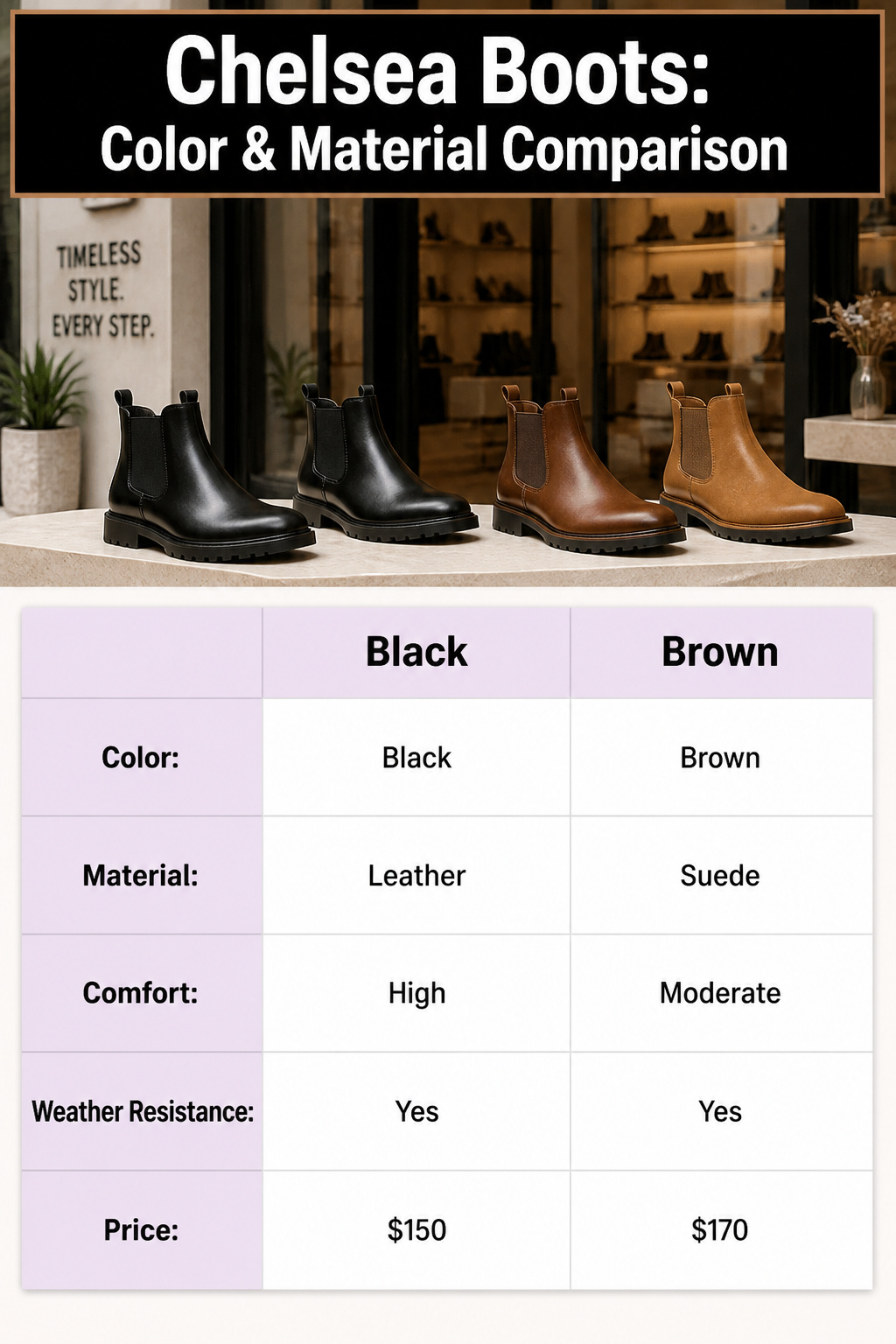
Black Chelsea boots are the workhorse most of us reach for first, and for good reason: they anchor almost any outfit without competing for attention. Brown has been everywhere lately, though, and a tan pair can feel warmer against winter neutrals than black ever does. White or burgundy work if you want something that reads as deliberate rather than utilitarian, but they ask for more planning in the morning.
Leather holds up to daily wear and wipes clean; suede reads softer and more expensive until the first slush hits. The Sam Edelman Laguna Waterproof Lug Sole Boot covers both bases with weather-resistant leather and a lug platform that adds height without the instability of a stiletto. Lug soles are trending for exactly that reason, a chunky tread that balances long layers or boxy coats without looking precious. The Dolce Vita Faint H2O at $170 offers another waterproof entry if you need something that handles commutes, and Caslon’s Chelsea boots sit at a lower price point for anyone testing whether the style sticks in their closet.
Lug-sole Chelsea boots can appear clunky when worn with outfits that are ultra form-fitting or body con.
— Vogue
The fix is simple: pair them with cropped wide-legs or straight jeans that leave a clean line above the ankle, or let them ground a skirt with tights rather than bare legs.
Occasions

Chelsea boots occupy a narrower slice of the occasion spectrum than a lot of style writing suggests. The clean silhouette carries through casual settings without effort: dark jeans, a blazer, and a polished leather or brown suede pair read as pulled-together for smart-casual offices that allow them. Tailored trousers and a blouse with a structured coat or blazer push the same boots into business-casual territory, and a midi skirt with tights softens the look while keeping it office-appropriate.
The jump to formal is where sources disagree on what actually works. A sleek black leather Chelsea boot with a polished finish can substitute for dress shoes under a midi or maxi dress, the structured boot creating contrast against flowy fabric. For men, the same polished black leather pair under a tailored suit reads as contemporary rather than strictly traditional formal wear, though the trouser hem must sit just above the boot top for the line to hold.
What no source covers, and what I will not invent, is formal business environment dress codes. The boots top out at dressy social occasions and smart-casual workplaces. A boardroom or black-tie setting is outside their reliable range, and claiming otherwise would be guessing past the evidence.
Fit and Proportions

Slim or straight-leg jeans land at the top of the boot shaft without bunching, which is the cleanest line you can get with a Chelsea. Skinny jeans work only if they hit exactly at the boot’s top; any excess fabric above the shaft creates a bulge that throws off the whole silhouette. Wide-leg and flared styles need to drape over the boot, and floor length is non-negotiable here. A half-inch gap between cropped hems and boot tops is ideal, though up to 1 inch still reads intentional. Let cropped pants cover the shaft by 1 to 2 inches and the look shifts from accidental to deliberate.
What none of the usual guides address is how much the boot’s own shaft height changes these calculations. A taller Chelsea sits farther up the ankle, which means the same "cropped" pant length reads differently. Keep the gap under 1 inch or cover the shaft entirely; anything in between looks like a fitting-room mistake. Full-length jeans should never drag the ground, but they shouldn’t hover more than 1½ inches above it either. That narrow window is what separates styled from sloppy.
Frequently Asked Questions
What jeans go with Chelsea boots?
Skinny, straight-leg, and wide-leg jeans all work with Chelsea boots, each with its own fit rule. Skinny jeans need to stay tight to the ankle with the hem hitting right at the boot’s top, no tucking or cuffing. Straight-leg jeans should graze the top of the shaft or leave a gap of 1 inch or less. Wide-leg jeans must hit at the ankle or slightly above so they skim rather than swallow the boot.
Can you wear Chelsea boots with a dress?
Yes, though the pairing needs deliberate countermeasures to avoid visually shortening the leg. Tights in the same color as the boots create one unbroken line and solve most of the problem immediately. A sweater dress or anything with enough body to stand slightly away from the hips keeps the silhouette from going bottom-heavy. Mini and midi lengths are generally easier than maxi, which risks looking like the dress and footwear are fighting each other.
What socks should I wear with Chelsea boots?
Ruffled socks that peek out at the ankle add an unexpected touch, while thicker socks are the move when it is freezing. The key is to balance the rest of your outfit with the boots, and the socks play into that too. Do not be afraid of getting playful with a visible sock. A chunky knit sock in a contrasting texture, pushed down slightly so it shows above the boot, breaks the line intentionally rather than letting it break by accident.
Are Chelsea boots still in style?
Yes, Chelsea boots remain a timeless staple. Black is the workhorse most people reach for first, but brown has been everywhere lately and tan can feel warmer against winter neutrals. Lug soles are trending because the chunky tread balances long layers or boxy coats without looking precious. The clean silhouette carries through casual settings without effort and can push into business-casual territory with the right pairing.
How do I style Chelsea boots for winter?
Pair with warm layers and thicker socks, adjusting the boot fit since bulkier socks change it slightly. An oversized sweater with leggings and Chelsea boots is the most casual and most reached-for option in cold weather. Tights in the same color as the boots keep the line long and unbroken with skirts or dresses. Layer socks over tights only if the rest of the outfit carries matching bulk so the boot does not read as an afterthought.