Old money aesthetic outfits range from thrifted blazers at $38 to investment cashmere, but the single factor that separates the look from costume is not the price. It is whether the shoulder seam lands exactly at the edge of your shoulder, because that line cannot be fixed by any tailor. Everything else, the waist, the sleeve length, the drape of an 80–100 two-ply cotton shirt, can be adjusted after the fact. Without that starting point, even the right camel or navy piece reads as borrowed.
1. Tailored Dress Pants and Trousers

Tailored dress pants and trousers sit at the center of old money aesthetic outfits for a reason. Four separate style guides name them as foundational, and the consistency matters. A straight or wide leg in camel, grey, or cream reads as quietly luxurious because the line from waist to shoe stays clean and intentional. Fit matters more than price point here, which is where most people go wrong. I have watched friends drop serious money on trousers that pooled at the ankle or pulled across the hip, thinking the label would do the work. It does not. The same guides that list dress pants as essential also stress that buying off-the-rack without alteration is the single biggest mistake. A waist that fits but a leg that drags, or the reverse, kills the effect entirely. For different body shapes, the same principle holds: a tailor can take a waist-and-hip fit and adjust the leg and length. Thrifted trousers from quality brands, found on Poshmark or in-store secondhand, often have the construction to survive that process. The cost of the alteration is usually modest compared to buying new, and the result outperforms most mid-market options.
2. Well-Fitting Jackets and Blazers

A well-fitted blazer is the single most important piece in an old money wardrobe. Not oversized, not boxy, but one that sits on your shoulders correctly and skims the body without pulling anywhere. The shoulder seam is where this lives or dies: if it sits perfectly on your shoulders, the rest can usually be altered cheaply. A ten-dollar thrift store blazer with good bones and a tailor’s hour can produce something that looks like it belongs in a designer wardrobe.
The structured shoulder line does the heavy lifting visually, making the garment feel genuinely custom-made regardless of what you paid. A camel or dark navy double-breasted version anchors almost any old money aesthetic outfit, moving from a morning meeting to dinner without announcing the shift. I learned this the hard way with a thrifted navy blazer whose shoulders hung half an inch too wide: the tailor could not fix that gap, and the piece never stopped looking borrowed. The shoulder seam must land exactly at the edge of your shoulder; length and waist are fixable, but shoulder structure is not.
Thrift stores and consignment shops remain the best source because older blazers were often made in better-quality fabric than new ones at the same price. A visit to the tailor after is not an extra step; it is the step.
3. Classic Dress Shirts

A classic dress shirt in Egyptian cotton or silk forms the quiet backbone of old money aesthetic outfits, outlasting trend cycles because the fabric does the talking. A weight around 80–100 two-ply cotton holds its structure through years of wear; anything lighter than that starts to read as disposable after a few washes.
The collar makes or breaks the timeless claim. A moderate spread or point collar sits cleanly under a navy or camel blazer without fighting for space, while oversized 1970s disco collars or overly narrow 1990s cuts immediately date the piece. I learned this the hard way with a clearance-rack shirt whose wide collar sat like a shelf above every jacket lapel I owned.
For pairing, the white button-down bridges the tailored trousers and blazers already in the capsule. Tucked into straight-leg wool pants, it reads boardroom; half-tucked into dark wash straight-leg jeans, it shifts to weekend without ever reaching for flash. The sources emphasize this cross-functionality: every item must speak to every other item, and the dress shirt carries more of that burden than its closet footprint suggests.
Color stays in the neutral family, creams and ivories over pure optic white, which can glare in daylight. The absence of logos matters here more than anywhere; a chest embroidery or contrast cuff betrays the effort the aesthetic pretends not to make.
4. Soft Sweaters and Cashmere

Fine-gauge knits sit closer to the body than chunky cable-knits, which matters more than fiber choice when you’re building a silhouette that reads intentional rather than cozy. Cotton, wool, and cashmere each behave differently in practice. Cotton pills fastest, especially under a seatbelt or bag strap, because the short fibers break and tangle on the surface. Wool holds structure longer but can itch at the neckline. Cashmere softens with wear and, if the gauge is tight enough, resists pilling longer than most people expect.
The real difference shows up in layering. A 12-gauge cashmere crewneck slips under a blazer without bulk; the same cut in 7-gauge wool fights the sleeve lining. The mistake that ruins cashmere is the dryer, not the washing machine. I learned this from a thrifted camel crewneck that shrank to a cropped length after one warm tumble. Hand-wash or use the delicate cycle, then lay flat. The thrift stores are where cashmere lives secondhand, often from the same brands charging triple new, and the pieces have already proven they can survive a few seasons.
5. Versatile Shoes: Flats, Mules, and Loafers

Shoes anchor an old money aesthetic outfit faster than almost anything else, and the wrong pair can undo hours of careful styling. A leather sole with genuine welt construction separates the pairs that reshape to your foot over years from the ones that crack across the ball within a season. I learned this the expensive way with a pair of pointed mules I bought for a conference; the upper leather stayed beautiful, but the cemented sole peeled back at the toe before the trip ended. Now I check the join before anything else.
For office hours, a loafer in dark calf reads polished without the formality of a heel. The same loafer with jeans and a cashmere crewneck works Saturday errands without looking like you forgot to change. Mules bridge the gap when you need to leave the desk for dinner, though they sacrifice the closed-toe security that makes loafers practical for commuting. Ballet flats remain the most versatile shape in my own closet for this exact reason: they handle a 9 a.m. meeting, a midday walk, and a 7 p.m. reservation without announcing any of those transitions. The old money trick is choosing versions in materials that age, not decorate. Patent or heavy hardware ages badly; matte leather or soft suede develops character.
6. Structured Handbags

Structured handbags anchor old money aesthetic outfits because shape does the talking, not hardware that catches light. The sources agree on warm neutrals like cognac or tan, and on one point that took me a while to accept: structural integrity beats volume every single time. A clean leather bag in the right shape pulls together every outfit in the wardrobe, while a slouchy trend piece looks dated by next season.
Shape means a defined base that stands on its own, hardware means small and matte, and leather means full-grain that develops patina rather than corrected grain that cracks. The mistake I made early was buying for photographs. A bag that photographs well, oversized and boxy, becomes a burden on real shoulders during real errands. What works for daily use is smaller than what looks dramatic on a feed: enough room for keys, phone, wallet, and one extra layer, but not so large that the structure collapses once half-empty. One good neutral bag in the right shape pays off more than three statement pieces that compete with the rest of the outfit.
7. Leather Accessories

A belt in the same tone as your bag pulls an outfit together without looking like a set. I learned the hard way that matching every leather piece reads costume, not quiet luxury. Three years ago I bought a chestnut belt, gloves, and card case from the same maker; within six months the belt had softened to a honey tone while the gloves darkened to something closer to mahogany. The card case cracked at the corner entirely, the only piece with a painted edge rather than folded leather. Now I stay in one color family, cognac through saddle, but never identical shades across more than two pieces. A burgundy driving glove against an oxblood loafer works because the textures differ; two identically finished burgundy pieces feel like you bought the display set. Small goods matter most where they touch skin. A watch strap or a wallet in your pocket ages faster than a bag handle, and cheap lining shows first at the stress points.
8. Minimalistic Jewelry

Small pearl studs from an affordable brand look identical to expensive ones from across a room, which is exactly why they became my daily default. The old money aesthetic lives in that distance: what registers is the quiet gleam of metal or the soft roundness of pearl, not the name stamped on the clasp. I have watched chunky chain necklaces and logo-heavy pieces climb to the top of drawers, then stay there. They read as trying, and trying is the opposite of the look.
Skip rhinestones, visible logos, and anything that catches light like plastic. A thin gold chain, an understated gold watch, and clean leather straps in cognac or tan do the actual work of pulling outfits together. One friend gave me a pair of flashy crystal earrings that I have worn exactly twice; another gave me simple gold hoops I have not taken off in two years. The difference is not sentiment. It is that one piece asks for attention and the other simply belongs.
9. Dresses and Gowns

A silk dress in navy or ivory does more work in a wardrobe than any statement gown ever could. The old money aesthetic lives in pieces that read as inherited rather than purchased for a single night, which means the fabric drape matters more than the label. Wool, cotton, linen, and silk hold their shape across years while synthetic event dresses pill or sag after two dry cleans.
I learned this the expensive way. A forest green satin gown bought for a winter wedding sat in my closet for three years because the cut screamed "occasion" and nowhere else. Compare that to a cream silk midi with a simple sheath silhouette: worn to a rehearsal dinner with flats, to a gallery opening with a blazer, to a funeral with a black cashmere wrap. Three years, three settings, zero additional purchases.
The silhouette that travels best is the one that does not try to be interesting. A-line or column, natural waist, sleeve length that works alone or under a jacket. Warm grey and camel read as quiet money; white and cream read as summer money. Both stay out of the trend cycle.
Occasion-specific details trap you. Beading, trains, cutouts, anything requiring a special bra. The dress you reach for repeatedly has none of these. It has good seams and a hem that brushes the top of the foot, which is where tailoring earns its keep: an inch too long looks borrowed, an inch too short looks fast fashion.
The Neutral Color Palette

Navy, cream, camel, and warm grey form the backbone of old money aesthetic outfits, and they all work together effortlessly. I noticed this after rebuilding my own closet around these four tones. A camel trouser with an ivory knit and cognac loafer reads deliberate, not accidental, because nothing in that combination fights for attention.
The deeper tones, navy and warm grey, do the anchoring. Charcoal grey and chocolate brown layer in when you want weight without black, which shows up only occasionally here. Forest green works too, though I find it harder to source in the right muted shade.
Most women already own half this palette without labeling it. Your white button-down, the tan coat you bought for interviews, that grey sweater that goes with everything. The shift is simply stopping there. Once these colors form your base, every morning becomes faster. Every piece works with every other piece, which is how a small wardrobe starts to feel like abundance rather than restriction.
Why Tailoring Changes Everything
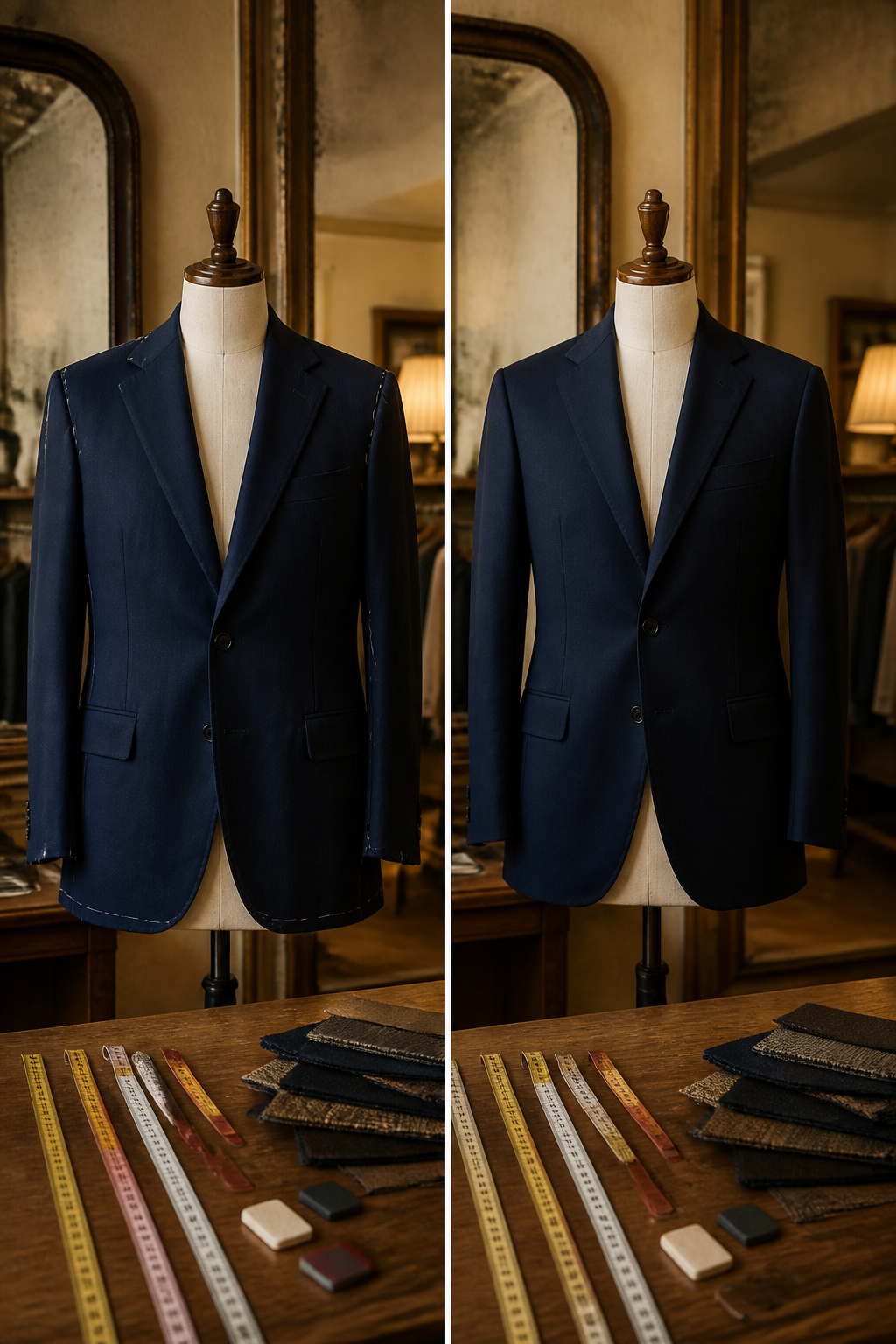
A navy blazer bought secondhand for $38 hung on me like a costume until a local tailor took in the shoulders and shortened the sleeves. That $52 alteration cost more than the jacket itself, and it was the first purchase that taught me an unaltered jacket always looks borrowed.
On a budget, start with the shoulders and sleeve length on blazers. Those two fixes turn a boxy thrift find into something that sits at your collarbone and breaks cleanly at your wrist bone. Waist suppression comes third, worth doing only if the shoulders already fit.
Some things cannot be saved. A jacket with lapels that sit too high, trousers with a rise that gaps at the back, or anything more than one size too large in the chest will fight the tailor. The fabric can only travel so far before the pockets, seams, or grain line distorts.
I learned the hard way with a pair of wool trousers. The waist fit, but the seat was tight. Letting out the center back seam cost $34 and left visible track marks where the old stitches had been. The seat is one place where previous stitching leaves a permanent shadow. Now I check that area in the fitting room mirror before I ever reach for my phone to call a tailor.
Quality Over Quantity in Practice

A blazer that cost two hundred dollars and was worn once a year for six years ran the same marriage of money to use as one that cost sixty and lasted six months before the lining tore. Three quick calculations like that are usually enough to stop a checkout click. The math only works if you actually log the wears, though. Most fast fashion sits at thirty to forty percent of that total because the fabric pills or the seam splits before the second season.
Phasing the cheaper stuff out without landfill guilt turns out to be simpler than the guides suggest. Your cotton Ts with a season of wash left go to textile bins intact, not shredded. Polyester that is already pilling is the harder call: local recyclers exist, but the search takes a dedicated afternoon and a clear label read. What convinced me, reading through a dozen of these programs, was that the real drop-off in damage happens at the choice before buy, not the disposal after.
After three years, a better piece looks like this: the cashmere has softened without thinning, the blazer shoulder still sits where it did on day one, and the only repair is a single button thread. The fast-fashion equivalent, if it survived at all, would need underarm patching, collar warping fixed, or would have been retired at year two. Cost-per-wear at year three is where the gap becomes unmissable: the expensive piece often dips below a dollar per outing while the cheap one never made it past five.
Grooming and Etiquette as Finish

Polished appearance stops at the neck and fingertips more often than people admit. Minimal makeup in this context means even coverage, a brow that holds shape without drama, and lip color that could plausibly be your own. The goal is looking like someone who slept eight hours, not someone who spent forty-five minutes contouring. I learned this the hard way at a dinner where I arrived with a smoky eye and matte red lip; the room was full of women who looked expensive precisely because nothing on their faces asked for attention.
Hair and nails follow the same rule of invisible effort. A trim every six to eight weeks, color that blends regrowth rather than fighting it, and nails short enough to type comfortably read as maintenance, not vanity. Chipped polish or grown-out highlights do more damage to an old money aesthetic outfit than a wrinkle ever could.
Manners close the gap last. A quiet voice in restaurants, a greeting that uses names, and the patience to let doors be held rather than rushing through them. These signals cost nothing and cannot be purchased, which is exactly why they read as genuine.
Budget-Friendly Paths In
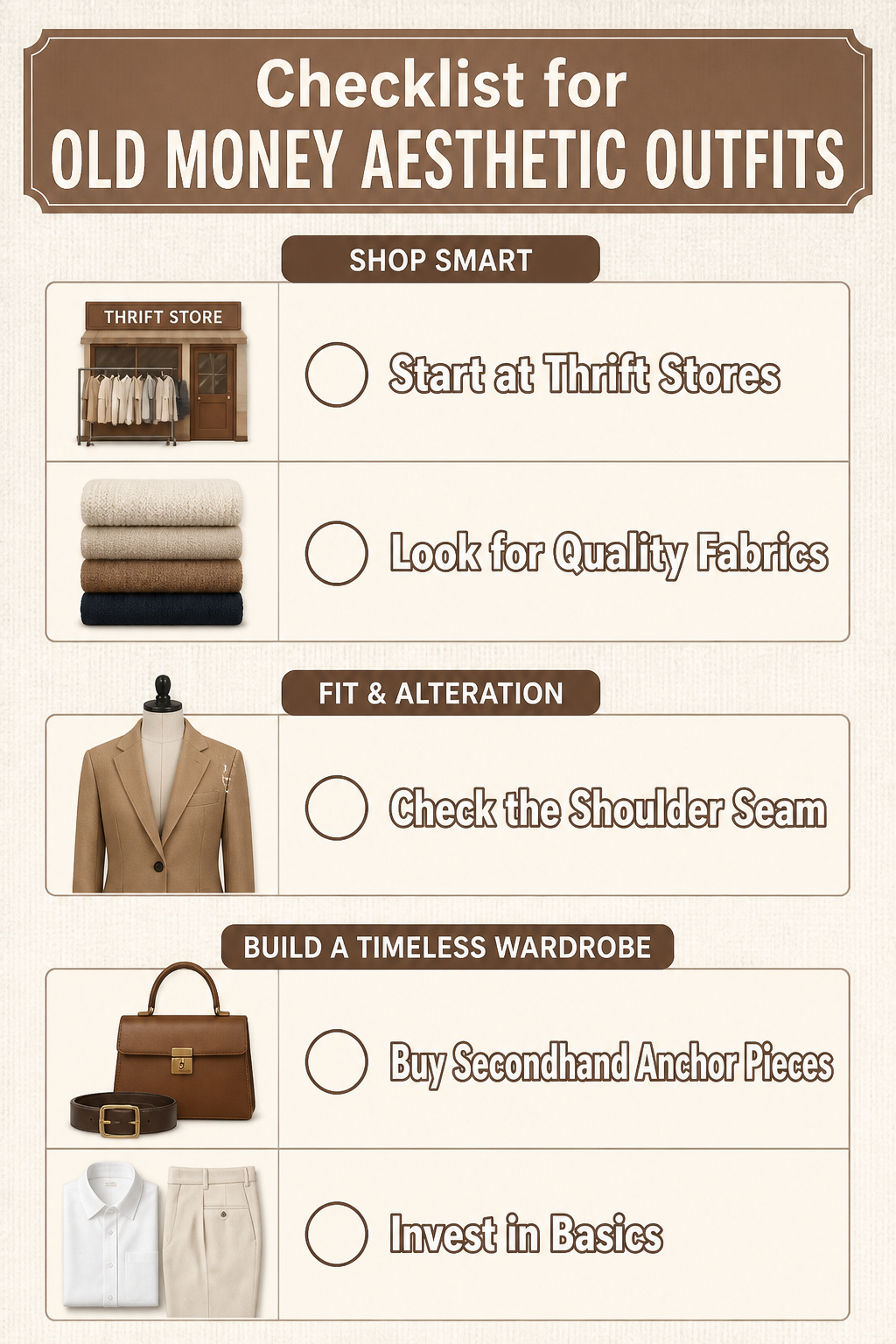
Thrift stores and consignment shops are the best starting point for old money aesthetic outfits because the look was built on pieces made to last. Wool, cashmere, cotton, linen, and silk hold their shape and look far better than synthetics after years of wear. A ten-dollar blazer with good shoulder construction can be altered cheaply and read as designer once it skims the body correctly. The shoulder seam is the one detail you cannot fix, so check that first.
Buy secondhand for the anchor pieces: the double-breasted camel or navy blazer, leather accessories, structured handbags. Buy new for the basics that see daily wear and need precise fit from day one. One good thrifted blazer plus a white cotton shirt and tailored trousers in neutral cream or beige gives you three outfits already. Add soft sweaters and minimalistic jewelry, and the capsule builds itself without the quantity. The old money aesthetic was never about having more; it was about having the right few pieces that work everywhere.
Frequently Asked Questions
Do I need a lot of money to create the old money aesthetic?
Not necessarily. The old money aesthetic is more about quality than quantity, and thrift stores offer the best starting point for building this look on a budget. A ten-dollar blazer with good shoulder construction can be altered cheaply and read as designer once it fits correctly.
How important is tailoring in the old money aesthetic?
Extremely important. An unaltered jacket always looks borrowed, and even a $38 thrifted navy blazer becomes wardrobe-worthy after shoulder and sleeve adjustments. The shoulder seam is the one detail you cannot fix, so check that first; length and waist are fixable, but shoulder structure is not.
What kind of accessories should I choose?
Opt for timeless and understated accessories. A structured handbag in a warm neutral like cognac or tan, a belt in the same tone family as your bag, and minimalistic jewelry like small pearl studs or thin gold chains do the actual work without asking for attention. Skip visible logos, rhinestones, and anything that catches light like plastic.
Can I incorporate modern trends into the old money aesthetic?
Yes, but do it sparingly and thoughtfully. The essence of this aesthetic is timelessness, so while you can add modern touches, they should not dominate your look. Choose trends that complement the classic nature of your wardrobe rather than fight it.
Is makeup important in the old money aesthetic?
Yes, but keep it minimal. Even coverage, a brow that holds shape without drama, and lip color that could plausibly be your own are the goal. You want to look like someone who slept eight hours, not someone who spent forty-five minutes contouring.