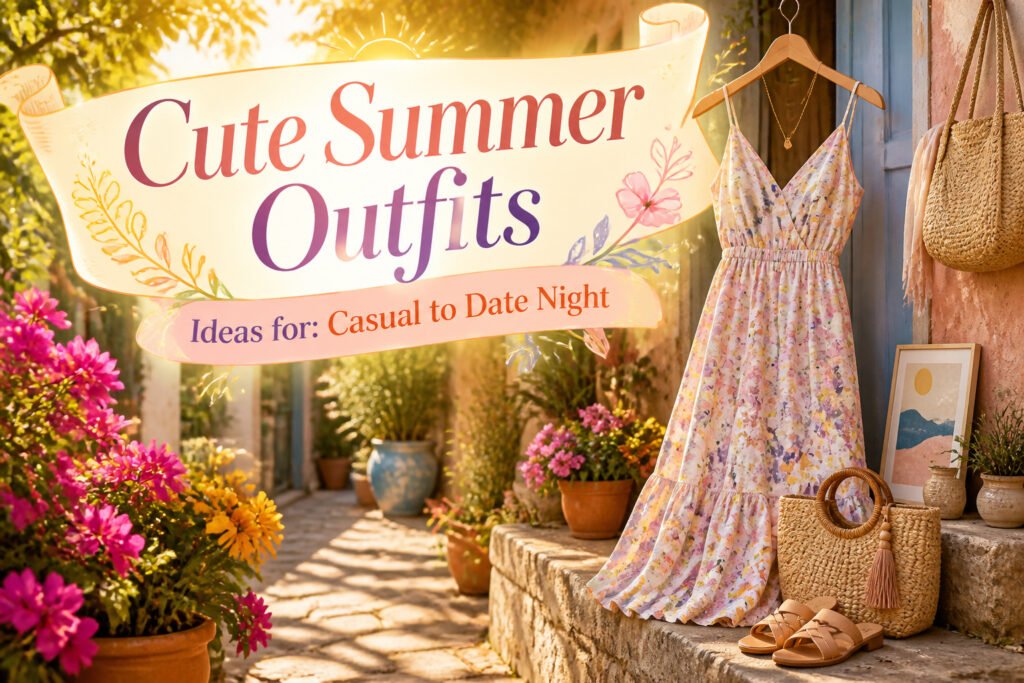
The difference between a summer outfit that survives the day and one that falls apart by noon is fabric weight, not brand name. A midweight cotton tee at 5–6 oz holds its shape through humidity; anything lighter turns limp, anything heavier and you are sweating through your coffee run. That same rule of weight over label applies whether you are dressing for errands, a beach walk, or a candlelit dinner where satin without a breathable underlayer clings the moment humidity hits.
1. Casual Summer Outfits
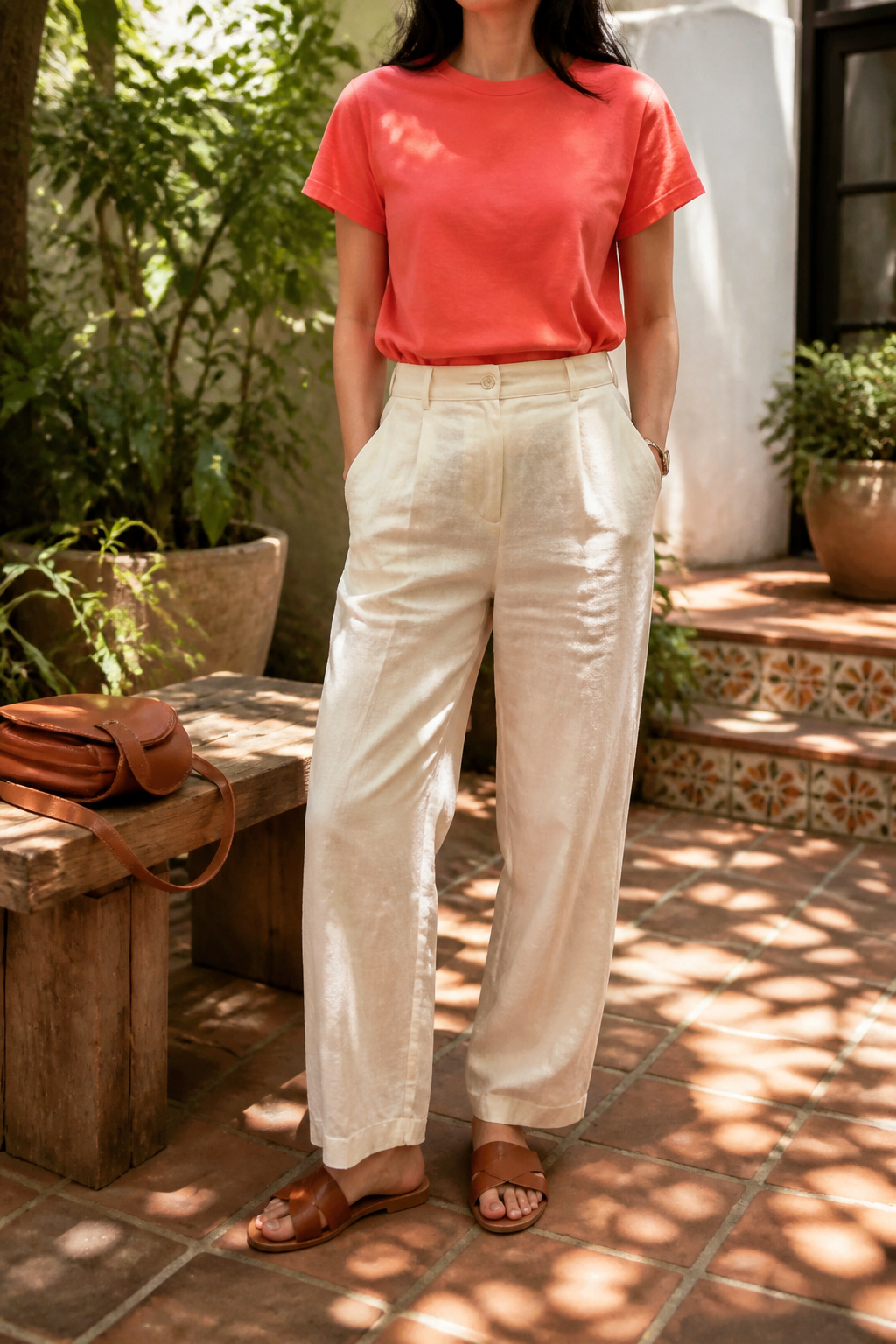
A midweight cotton tee, around 5–6 oz, holds its shape through humidity without turning into a limp rag by noon. Anything lighter and the drape goes saggy; anything heavier and you are sweating through your coffee run. I pair mine with denim shorts for errands or high-waisted linen trousers when I need to look pulled together on a patio call. The linen here matters too: a 230–260 gsm weight stays crisp where cheaper versions wrinkle into a napkin after one sit. These pieces do not ask for much. A leather slide, a small crossbody, and you are dressed for the day without thinking twice about it. The trick is buying the fabric weight first and the label second.
2. Beach Outfits
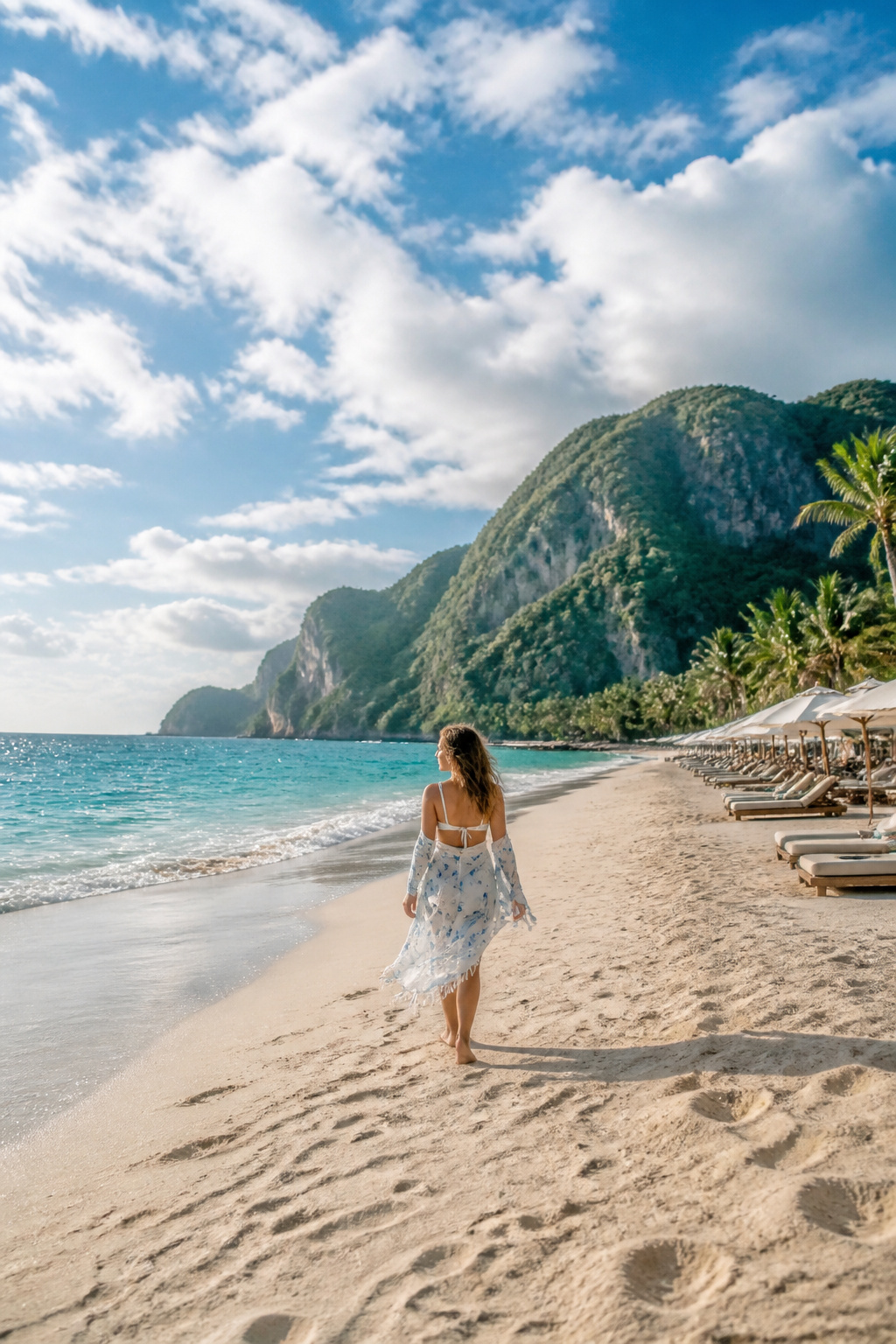
Flowy cover-ups and oversized button-downs thrown over bikinis make up the beach uniform I see done well most often, and the difference between looking pulled together and looking like you grabbed a towel starts with what happens when wind hits. A pareo skirt or sarong ties at the hip and stays put against gusts better than anything loose and open at the bottom, which is worth remembering for the walk from car to sand. An oversized button-down, especially in a lightweight cotton or linen, gives you structure through the shoulders and sleeves even when the fabric moves, and the length matters more than most people think. At mid-thigh, it works for actually sitting in the sand; at knee length or below, it reads as a dress and carries you to a waterfront bar without the costume-change routine. The pareo skirt paired with a lace or embroidered white top sits right in that middle ground, though I’d skip the raffia bag if you’re anywhere near actual water. For a full day that ends with drinks, an oversized button-down over your suit with high-waisted shorts in your tote covers both bases with one piece you already own. A mid-thigh cover-up gets you seated on sand; knee-length gets you seated at the bar.
3. Brunch Outfits
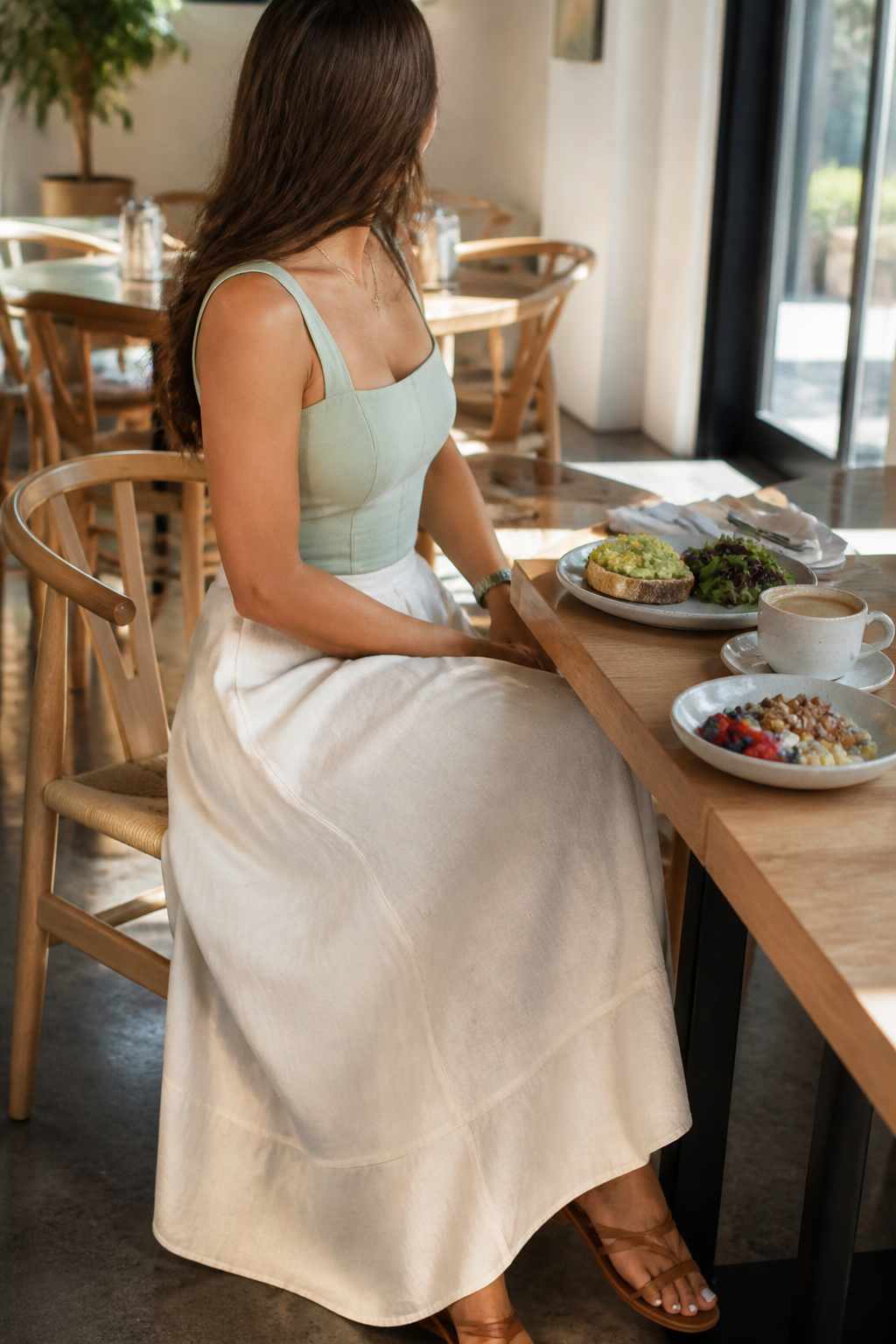
Brunch outfits live or die on the chair test. You sit for ninety minutes over eggs and coffee, then stand for a mirror check before anyone hits the shops. Linen that looked crisp at 10 AM can look like you slept in it by the time the check arrives.
The wrinkling happens most where linen presses against itself. A full skirt with a wide hemline avoids the lap crease entirely, since the fabric drapes rather than folds. Pencil cuts and anything with a front crease are the worst offenders; by dessert the line looks like a topographic map.
Tailored shorts in a linen blend fare better than pure linen pants. The shorter the span of fabric between waist and thigh, the less material there is to crush. I learned this the hard way with a pair of wide-leg trousers that seemed ideal until I stood up and found accordion plets across both knees.
A fitted bodice or sleeveless top in a non-linen fabric keeps the upper half presentable. Cotton poplin or a light knit holds its shape while the linen skirt does the breezy work. The mix reads intentional, not apologetic, and you can walk straight from the table into a dressing room without the outfit announcing where you have been.
Color matters for the same reason. Navy and charcoal hide the shadow of a crease; white and pale pink broadcast every fold.
4. Vacation Outfits
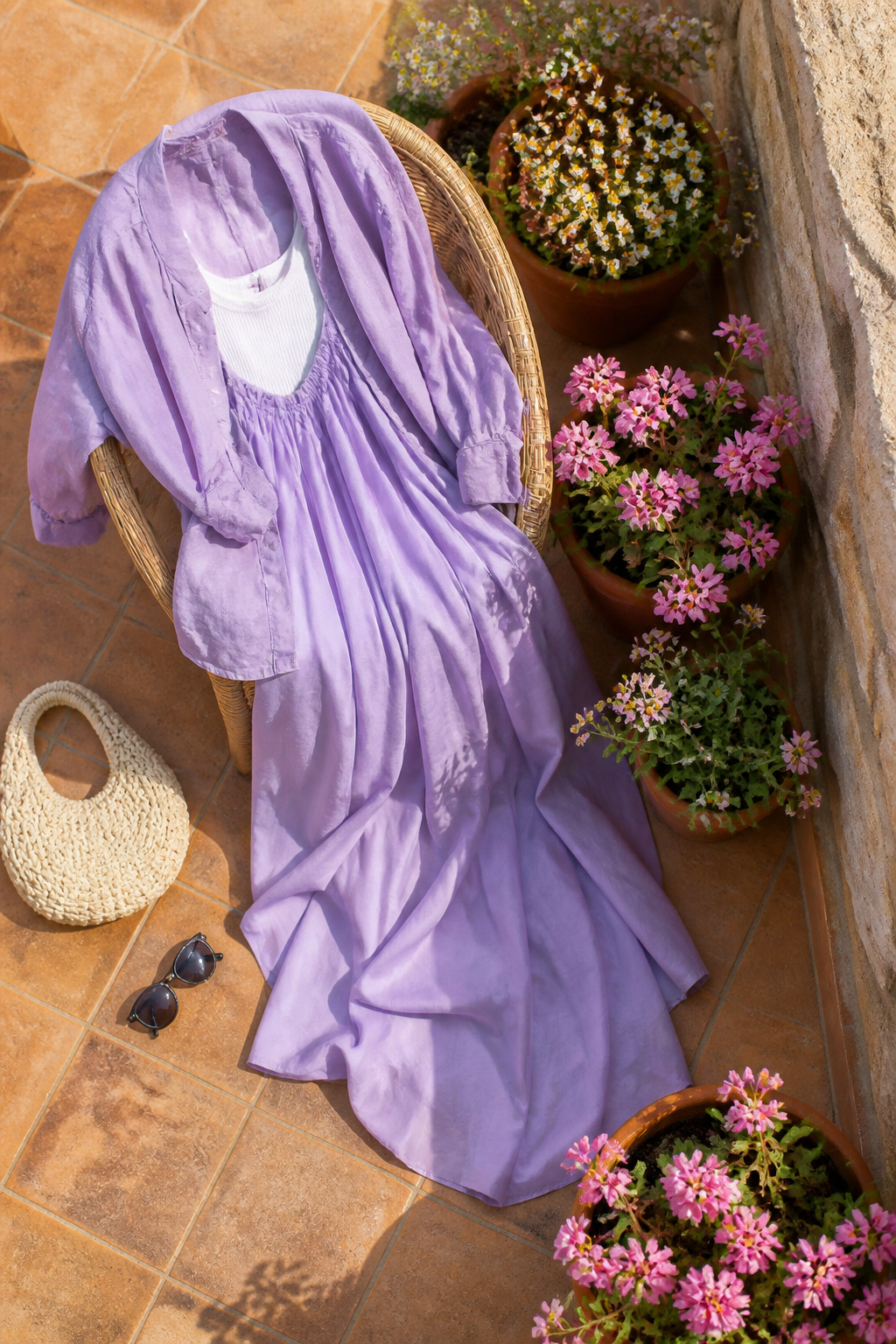
Rolling luggage over cobblestone in Sorrento three summers back taught me that the vacation outfit only works if it works in bad weather too. A flowy maxi dress and oversized button-down looked effortless at 80 degrees, but the morning the temperature dropped and rain hit, I had nothing that layered without looking like I’d raided a lost-and-found.
The pieces that survived my packing now are the ones that handle three scenarios from one carry-on. Relaxed trousers with a white tank and lightweight sweater function for daytime exploring, dinner plans, and that unexpected cool evening. A neutral matching set breaks apart so the bottoms pair with the tank and the top layers over denim shorts. The oversized button-down serves as a beach cover-up, a jacket substitute, or a shirt on its own.
What fails is the outfit built solely for ideal conditions. High-waisted shorts with a tank top and bold prints need perfect sun; add a drizzle or aggressive restaurant AC and the look collapses. Statement sunglasses and sun hats earn their space only if the clothing underneath does the actual work of transition.
5. Date Night Outfits
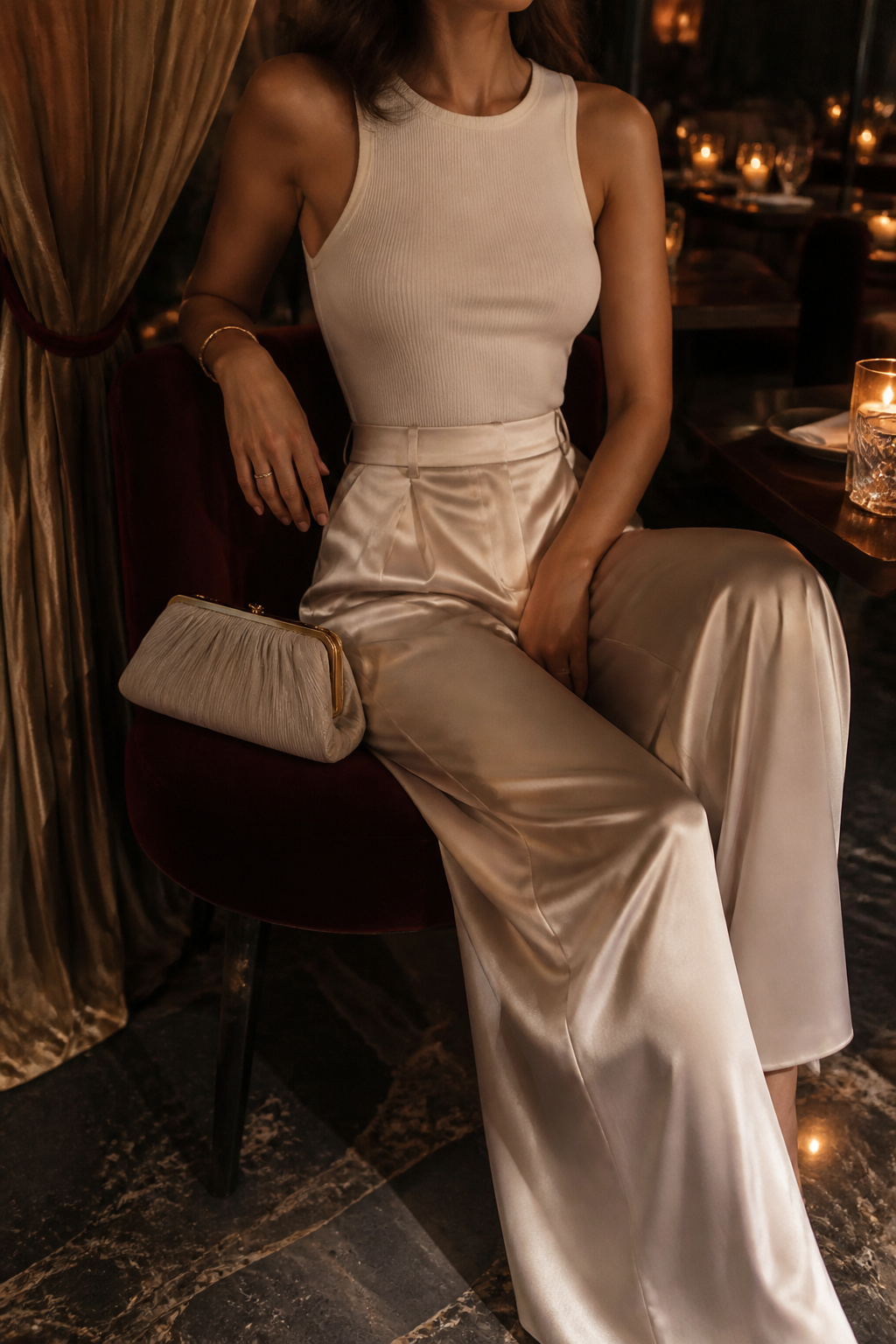
Satin catches light beautifully in restaurant candlelight, but outdoor humidity is where it turns on you. The fabric soaks up atmospheric moisture and clings to every line of your body, which is the opposite of the effortless drape you saw in the mirror at home. A lightweight, breathable underlayer in cotton or rayon prevents that cling without adding bulk you can see through the satin.
Flowy cuts need the same reality check. Wide leg trousers and loose silhouettes photograph with this floaty, elevated energy that makes them look vacation-ready in still images. In person, that same fabric moves in drafts, pools in seats, and sometimes reads as rumpled rather than relaxed. The trick is choosing weight: enough to fall clean when you stand still, light enough to catch genuine breeze. I’ve found the pieces that work hardest are the ones that look slightly less dramatic in the dressing room than they do on camera.
6. Matching Sets
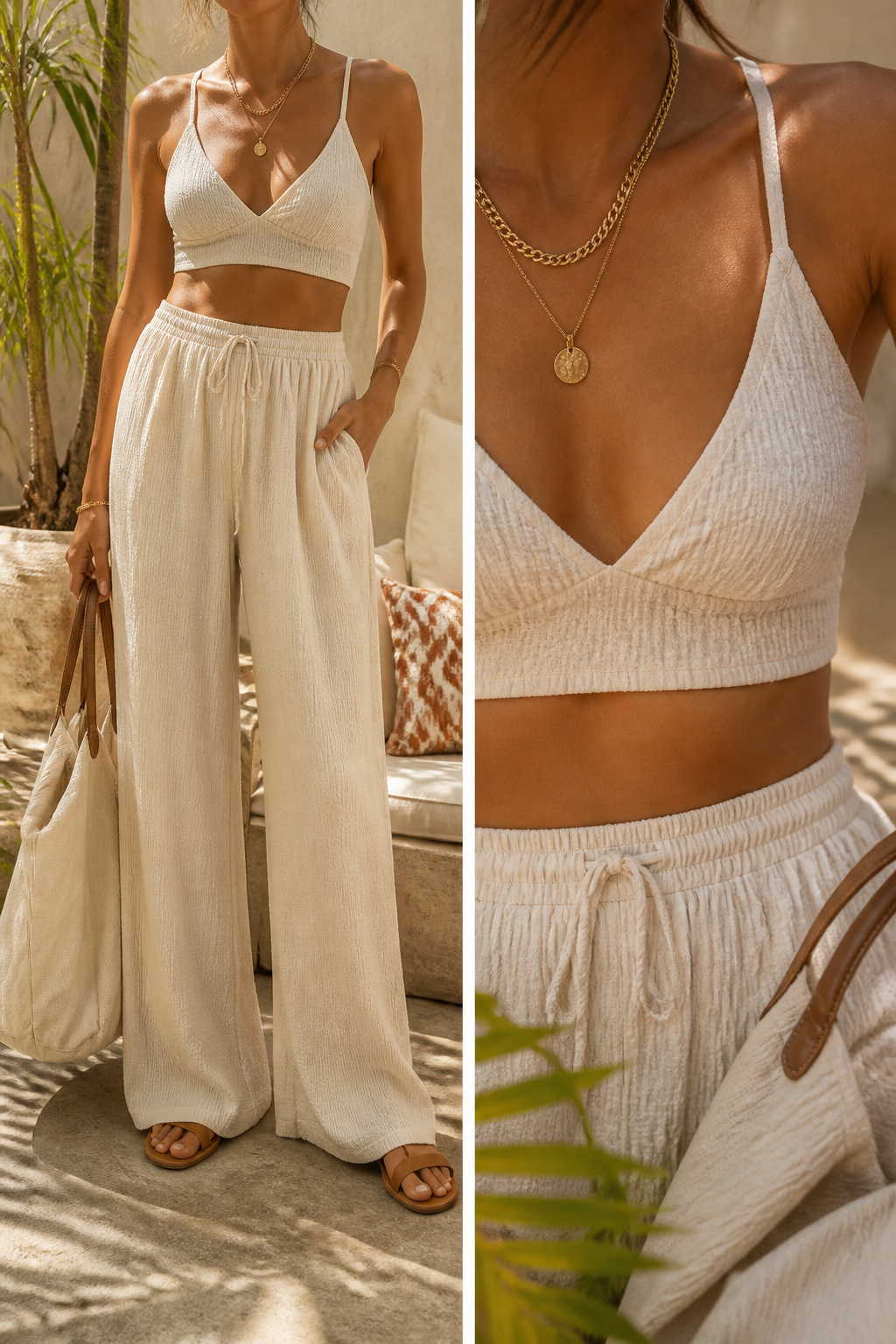
A matching set reads intentional the same way a uniform does: the proportions are already decided, the colors already agree. The trick is in the finishing. Layered jewelry keeps the look from feeling too flat, and a neutral sandal, something in leather or a clean canvas, adds polish without competing.
What sold me on sets was realizing the pieces don’t have to stay together. A lightweight bralette top that came with wide-leg bottoms works just as well with jeans once the heat breaks. The bottoms pair with a tucked tank or a worn-in tee on their own. Pastel tones and lighter fabrics hold up better in summer heat than heavier knits, and they mix back into a wardrobe more easily than bold prints that only matched one thing.
The set earns its space when both halves can live separately. I look for that before I buy now: does the top work with what I already own, and does the bottom? If one piece is too specific, too cropped or too printed to stand alone, the set becomes a single-use outfit, and that is the opposite of what a summer wardrobe needs.
7. Trendy Pieces That Last
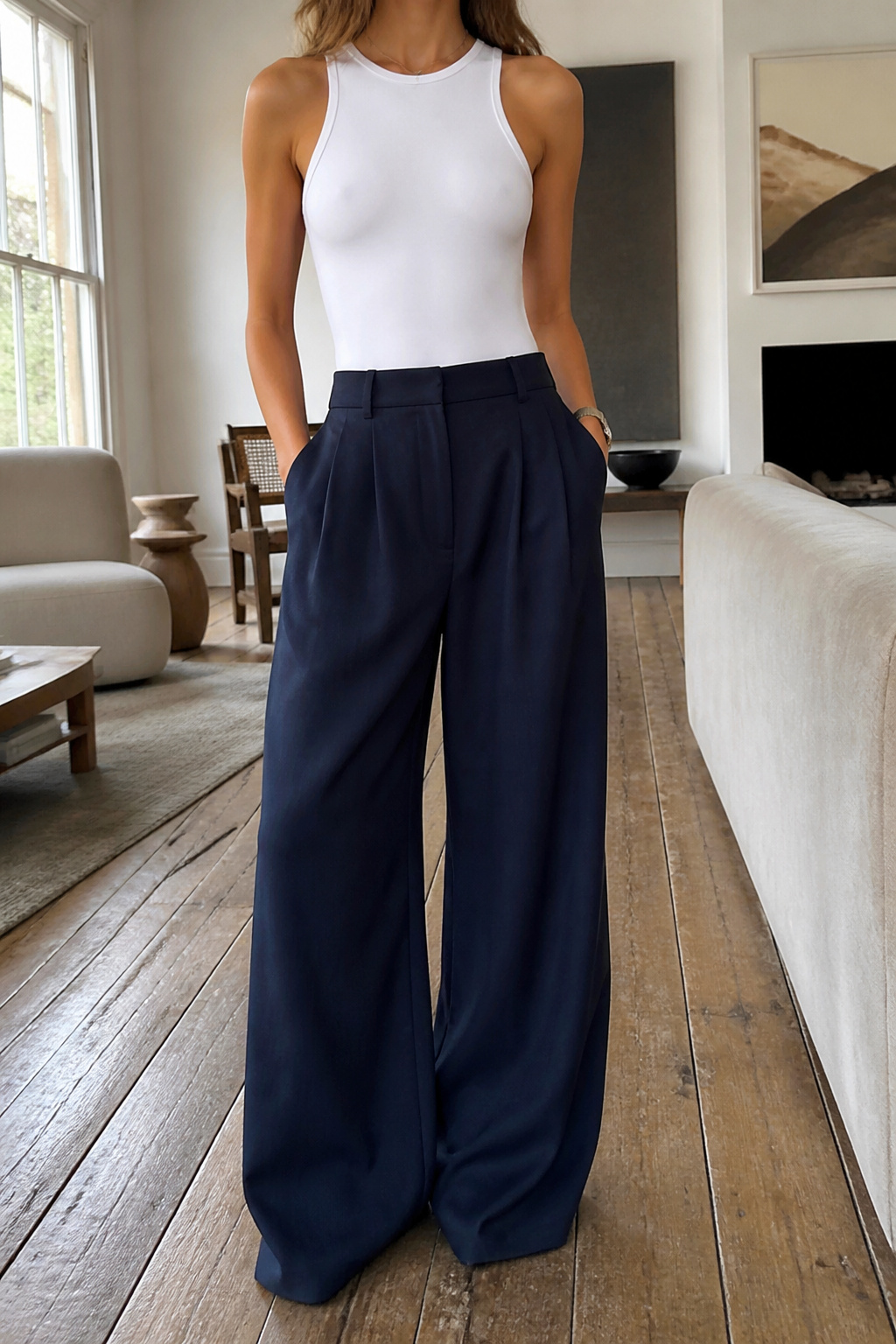
Wide-leg trousers carried me through last summer on days when shorts felt too bare and jeans too heavy. The cut works best when the waist sits high enough to define the narrowest point, which means pear and hourglass shapes get the most payoff from the silhouette, while rectangular frames need a tucked or semi-tucked top to create that same waistline break. I learned the proportion lesson the hard way: an oversized shirt left completely untucked over wide legs swallowed five inches I do not have to lose. The fix is simple. Tuck the front third, or leave one tail out and knot the other at the hip, so the volume reads intentional rather than accidental.
Puddle lengths that kiss the floor are the current move, and a fitted top underneath keeps the whole thing from feeling like pajamas. A bra top, a bodysuit, anything that skims close through the torso, balances the flow below. The oversized shirt layered open over that fitted layer gives you two temperatures in one outfit, and it photographs better than a basic tee.
What matters for longevity is fabric and construction. Linen or a linen blend creases with character; cheap polyester wide-legs look dated the minute the trend slows. Buy the pair that still walks like a trouser when the fashion pages have moved on.
Fabrics That Actually Cool You

Cotton, linen, and jersey are the three fabrics that actually pull heat away from skin instead of trapping it, but the weave matters as much as the fiber. A loose, open cotton weave lets air pass through; a tight poplin can feel like wearing a lunch bag. Linen needs weight to avoid going sheer, and jersey works only when it is lightweight and draped away from the body. I learned to read labels for "100% cotton" or "100% linen" rather than trusting a breezy look, because a synthetic blend will hold sweat even in a pale, pretty color. Rayon can work in summer, but only in a loose weave; polyester and acrylic almost never do. The mistake I made for years was choosing the mint or coral shade over checking what the thing was made of, and I spent too many afternoons in shirts that looked cool and felt like a greenhouse.
Accessories That Earn Their Space
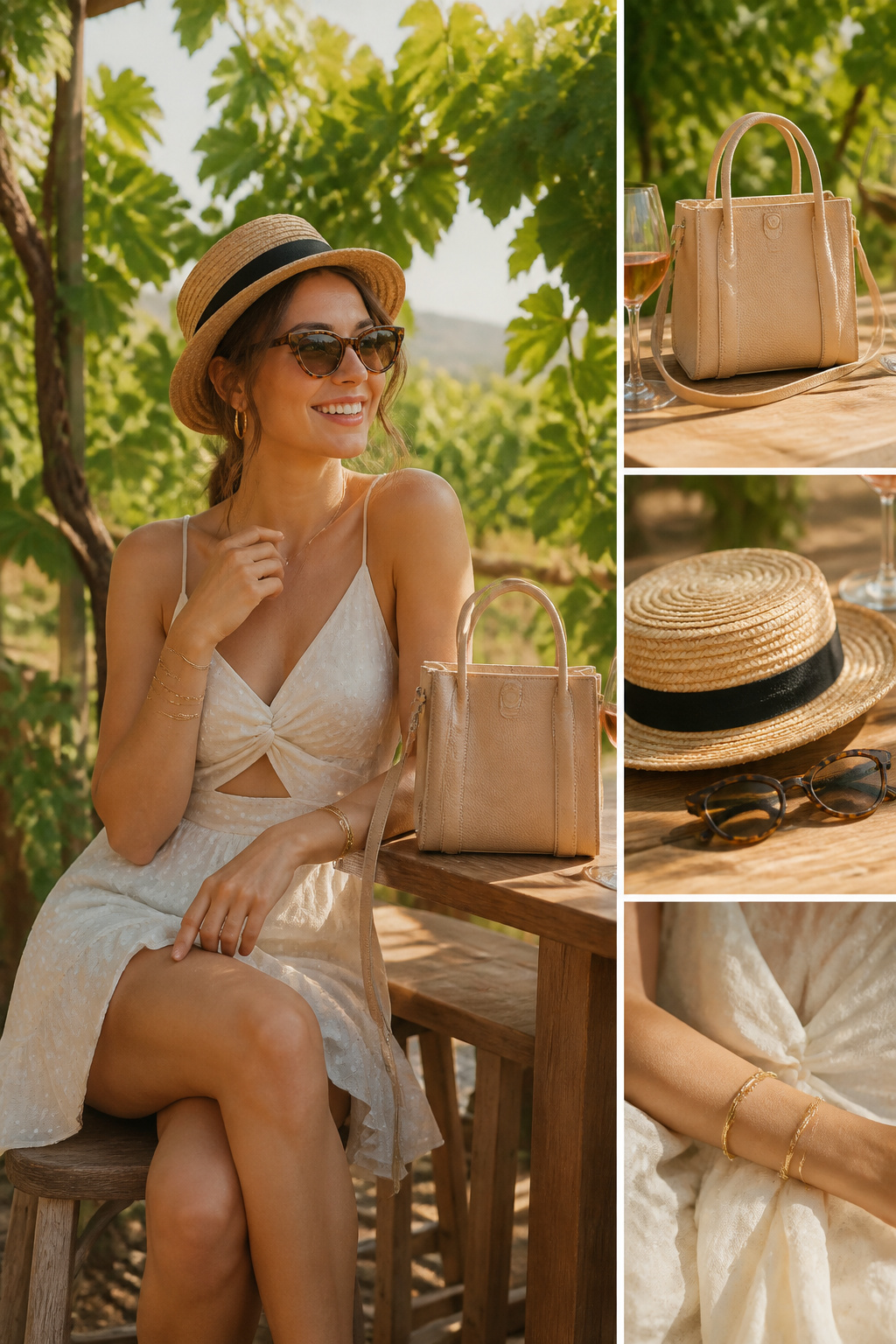
A wide-brim hat reads romantic at a vineyard lunch but turns obnoxious in a crowded outdoor market where you’re dodging umbrellas and elbows. Narrower brims sit better on round faces; longer faces carry wider brims without looking like a costume. I learned this after buying a gorgeous four-inch brim that photographed beautifully yet swallowed my jawline whole. Sunglasses follow the same logic. Oversized aviators feel effortless with a ponytail and jeans for errands, but delicate cat-eyes frame better when your hair is down and you’re aiming for polished.
Bags are where summer accessorizing lives or dies. A crossbody measuring roughly 8 by 6 inches fits a phone, slim sunscreen tube, and lip tint without the bulge that ruins a clean silhouette. Anything larger and you’re carrying a beach bag to brunch. Structured mini totes work for date nights when you need less; soft leather slouches better for daytime when you might add a small water bottle. The strap length matters more than people admit. A crossbody riding at your natural waist elongates; one hitting at hip width cuts you in half. I adjust mine with a knot when the factory setting sits wrong, which is nearly always.
Mixing and Matching What You Own

A neutral palette stretches further than prints when you’re building summer outfits from what you already own. Cream, sand, olive, and faded navy read as intentional rather than repetitive, and five pieces in those tones can yield about twelve combinations without anyone noticing the repeats.
The real test is layering for indoor AC that drops to sixty-eight degrees. A light linen shirt over a tank works better than a cardigan because the collar looks finished at brunch and the shirt comes off clean when you step back outside. My order is tank first, then the shirt left open or buttoned depending on the occasion, with a pair of trousers that could pass for evening if the shirt gets tied at the waist or swapped for a shell top.
Temperature shifts are where most summer outfits fall apart. The pieces that work are the ones that look correct at every layer, not just fully assembled.
Frequently Asked Questions
What are some cute summer outfit ideas?
Casual looks start with a midweight cotton tee around 5–6 oz paired with denim shorts or high-waisted linen trousers. For brunch, try a full linen skirt with a fitted cotton poplin top, since wide hemlines avoid the lap crease that ruins pencil cuts. Beach days call for a pareo skirt tied at the hip or an oversized button-down at mid-thigh length for sand, knee-length for waterfront bars. Date night works best in satin with a breathable cotton or rayon underlayer to prevent humidity cling.
How do I style a matching set?
Layered jewelry and a neutral leather or canvas sandal keep the look from feeling flat. The real value comes when both pieces can live separately: the top should work with jeans you already own, and the bottoms should pair with tucked tanks or worn-in tees. Pastel tones and lighter fabrics mix back into a wardrobe more easily than bold prints, so check that neither half is too cropped or too specific to stand alone before you buy.
What fabrics are best for summer outfits?
Cotton, linen, and jersey actually pull heat away from skin instead of trapping it. Look for a loose, open cotton weave rather than tight poplin, and choose linen at 230–260 gsm weight so it stays crisp rather than wrinkling into a napkin. Jersey only works when it is lightweight and draped away from the body. Read labels for 100% cotton or 100% linen; synthetic blends hold sweat even in pale, pretty colors.