Effortless summer outfits range from a $45 slip dress to a $180 version that survives dry cleaning, and the difference is usually seam finishing and whether the straps adjust. What makes one yours is the condition you dress for: a coffee meeting that turns into evening plans, an office that freezes its own AC, or a body past thirty where a tube top needs rigid denim to read intentional rather than accidental. The 4-inch inseam on shorts, mid-weight linen held up to a window, silicone grip on a strapless edge; these are the details that separate thrown-on from put-together when the list below offers twenty starting points and only your day decides which one works.
1. Capri Pants, Button-Down, and Mule Sandals
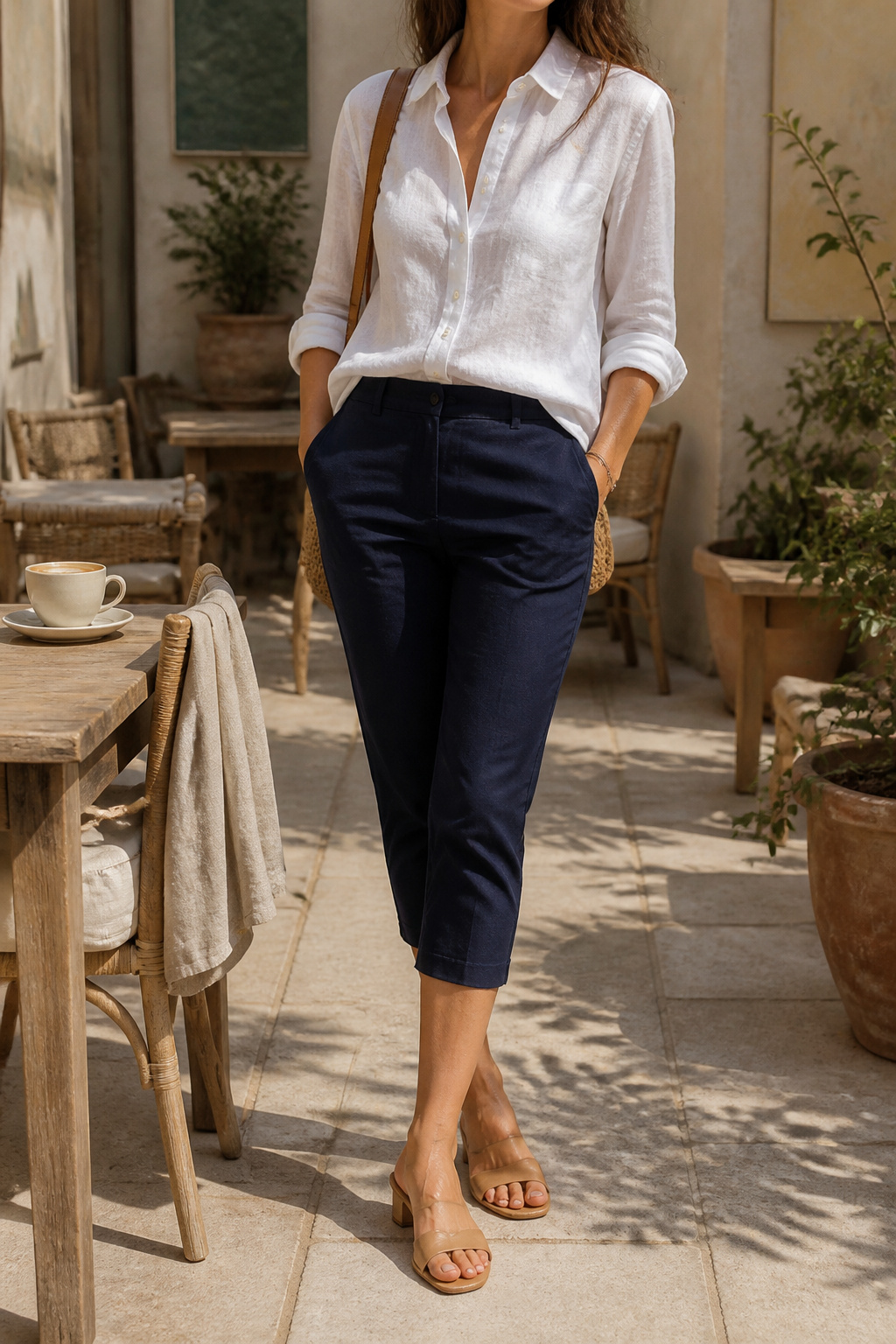
Capri pants land at a tricky length, which is exactly why they read as intentional when the rest of the outfit is built around them. A slim or straight capri that ends just below the calf muscle needs a shoe that extends the leg line rather than chopping it. The ’90s kitten-heel mule does this: the heel height lifts the ankle, and the open back keeps the silhouette from feeling boxed in. On shorter frames, that heel makes the difference between looking proportioned and looking cut off. Taller wearers can get away with a flat mule, though the slight heel still sharpens the whole combination.
The button-down should be relaxed but not surrendered. Oversized works if the sleeves are rolled to the elbow and the hem is either fully tucked or left out with intent; half-tucking a long shirt with capris usually looks like you gave up halfway through. A collar that holds its shape and fabric with some structure, not limp, is what pulls this from thrown-on to put-together. Linen or stretch linen keeps it from reading as office-drone cotton, and the slight wrinkle of linen actually helps here; it signals summer rather than sloppiness.
Color works best when the pants and shoes share a tone and the shirt provides contrast. Navy capris with tan mules and a white or pale blue button-down is the easiest version. The outfit solves the summer problem of needing to look polished for a lunch that might turn into an errand or a meeting that runs into drinks.
2. White Tee, Miniskirt, and Ballet Flats
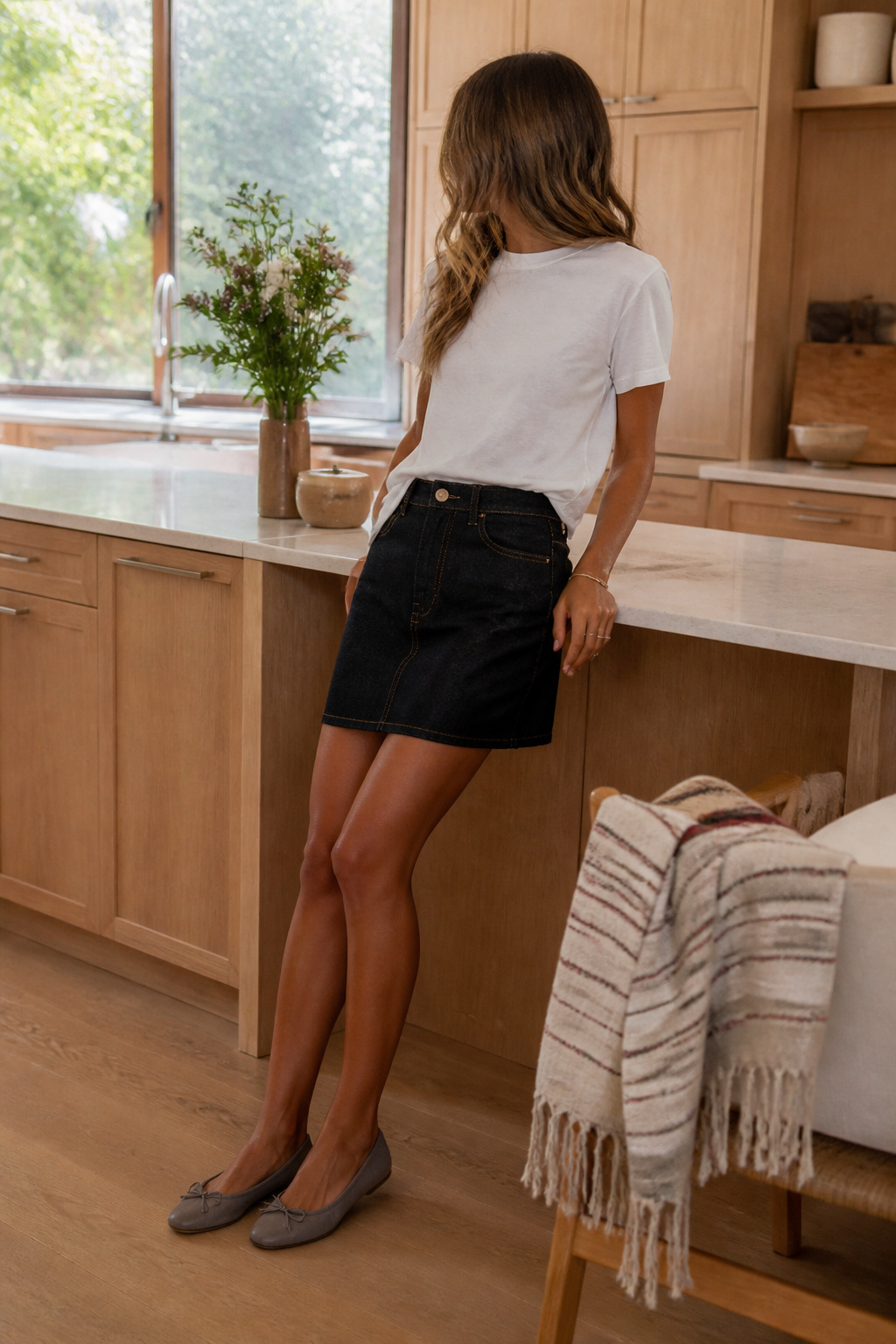
The white tee and miniskirt pairing looks effortless on exactly no one if the tee is the wrong weight or the skirt rides up. A crewneck in mid-weight cotton, not tissue-thin, keeps the line clean without going see-through by noon. I learned the skirt length the hard way: at 34, a hem two inches above the knee felt borrowed, while grazing the middle of the knee looked intentional. Younger readers can go shorter; past 40, the same inch of extra length buys a lot of mobility.
Ballet flats are where this formula usually dies. The pairs that survive past August have a structured heel counter and real leather or suede uppers, not the bonded stuff that peels at the toe in six weeks. I have thrown away enough discount ballet flats to know: the ones worth owning start around $150 and resole cleanly. Anything less is a summer rental, not a shoe.
3. White Linen Dress and Thong Sandals
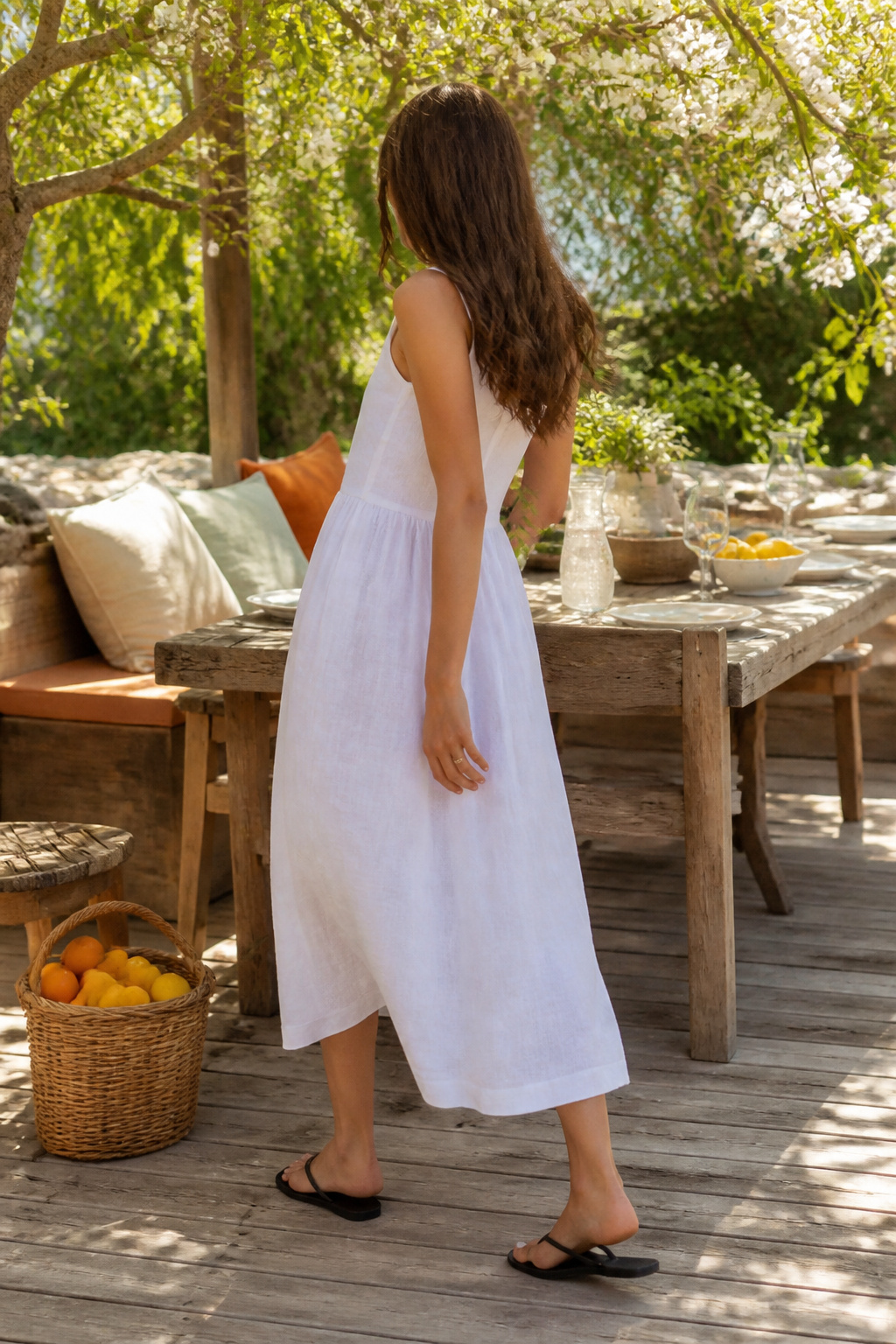
White linen dresses earn their place in every summer wardrobe for the simple reason that nothing else cools you down and pulls together at the same time. The catch is the transparency issue, which sends too many women back inside for a slip that defeats the whole point of wearing linen in the first place. A dress that does not need that layer starts with the weave: hold it up to a window in the store, and if you can read the price tag on the other side, the fabric is too thin to wear alone. A mid-weight linen, roughly the texture of a good napkin, gives you coverage without bulk.
Thong sandals complete the look on paper, but the cheap ones will split your heels open by August. The leather or molded-rubber footbeds that cost a little more upfront outlast three pairs of the $12 variety, and your feet notice the difference by the second week of daily wear. One piece, two accessories, and you are out the door.
4. White Linen Pants, Tank Top, and Button-Down Shirt
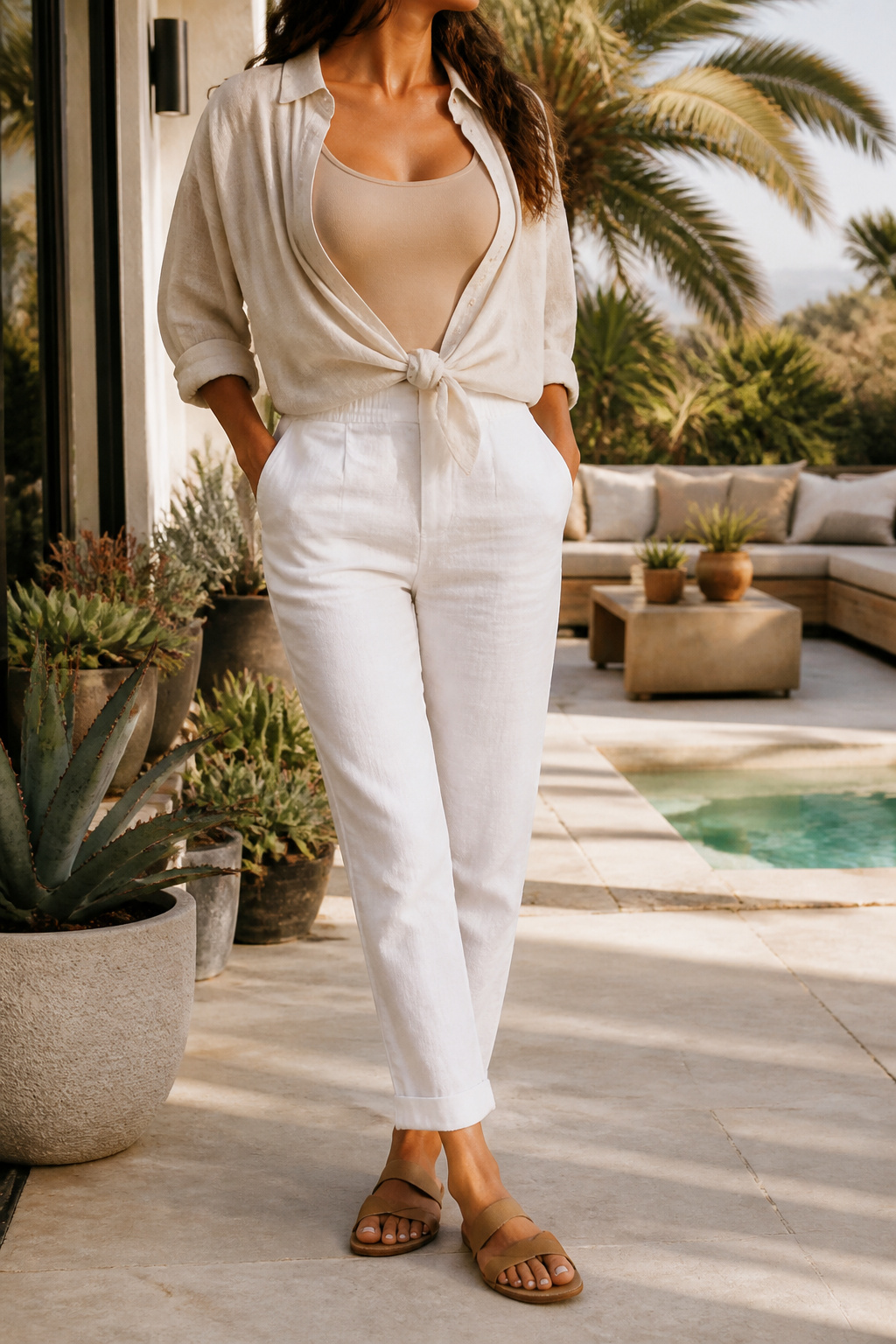
Stretch linen holds its shape better than plain linen through a day of sitting and moving, which matters when you are wearing white pants in public. I learned that the hard way after a morning in 100% linen that looked like I had slept in it by lunch. The small bit of give in stretch linen keeps the waistband comfortable and the legs tidy enough for plans that run straight from a coffee meeting into evening.
The tank underneath needs to be the right one or the whole look falls apart. A razor-back or thin-strap tank stays hidden under an open or tied button-down, but a standard tank shows its straps at the shoulder line and reads as messy. If you are buttoning the shirt, a seamless camisole in a tone close to your skin keeps lines smooth under the gauzier weaves.
Three ways to wear the shirt: tied at the waist for structure, open as a light layer over the tank, or actually buttoned with the sleeves rolled to the elbow. Open works best on truly hot days; buttoned and rolled looks sharper for a patio dinner where the AC might kick in. Tie the shirt only when the pants sit at your natural waist, not lower, or the knot shortens your torso in a way that feels accidental rather than styled.
5. Black Strappy Top and White Full Skirt

The black strappy top and white full skirt is the most dressed-up option in an effortless summer lineup, and the one that actually earns its place in a suitcase you packed in ten minutes. It works for a dinner reservation on a patio, an outdoor wedding where the grass is dry, and even an office with a light jacket thrown over your shoulders for the commute. The contrast reads intentional without trying hard.
A full skirt hits differently if you are petite. The volume can swallow your frame and read costume rather than chic, so the proportion matters more than the label. Look for the waistband to sit at your natural waist, not dropped, and keep the length at or just below the knee so the hem does not become the only thing people see. I have learned to skip the tea-length versions entirely; they divide the line in exactly the wrong place.
The bra situation with strappy tops is where most of these outfits fall apart in practice. Wide-set straps on the top mean your standard bra will show at every angle. A strapless bra works only if the top has enough structure across the chest to hold it in place; otherwise, you are adjusting under the table all evening. Adhesive cups or a bra with a decorative back you do not mind revealing are the two reliable fixes. The Cartolina Nantucket white cotton skirt, with its embroidery at the pockets, gives the look enough detail that the top can stay simple and the underpinnings stay hidden.
6. White Button-Down, White Jeans, and Ballet Flats

An all-white outfit reads as intentional the second you step out the door, but the fabric weight on those jeans makes or breaks whether you look polished or like you’re wearing underwear as outerwear. Twelve-ounce denim or heavier hides pocket bags and stitching that lighter washes broadcast across your backside. I learned this standing in a dressing room with fluorescent lights overhead, turning around to check what the mirror showed.
The coffee-and-kids question is real. I keep a small stain pen in my bag and choose ballet flats in bone or soft gray rather than nude. Nude flattens against white; a slightly cooler tone gives the eye somewhere to rest and reads more expensive than it costs. Patent leather wipes clean in seconds if someone spills juice at brunch.
White-on-white stops feeling brave once you nail the texture difference between the shirt and denim. A crisp poplin top against softer denim twill gives the outfit dimension without adding color. That contrast is what makes the look work from a morning meeting to picking up groceries.
7. Slip Dress and Thong Sandals
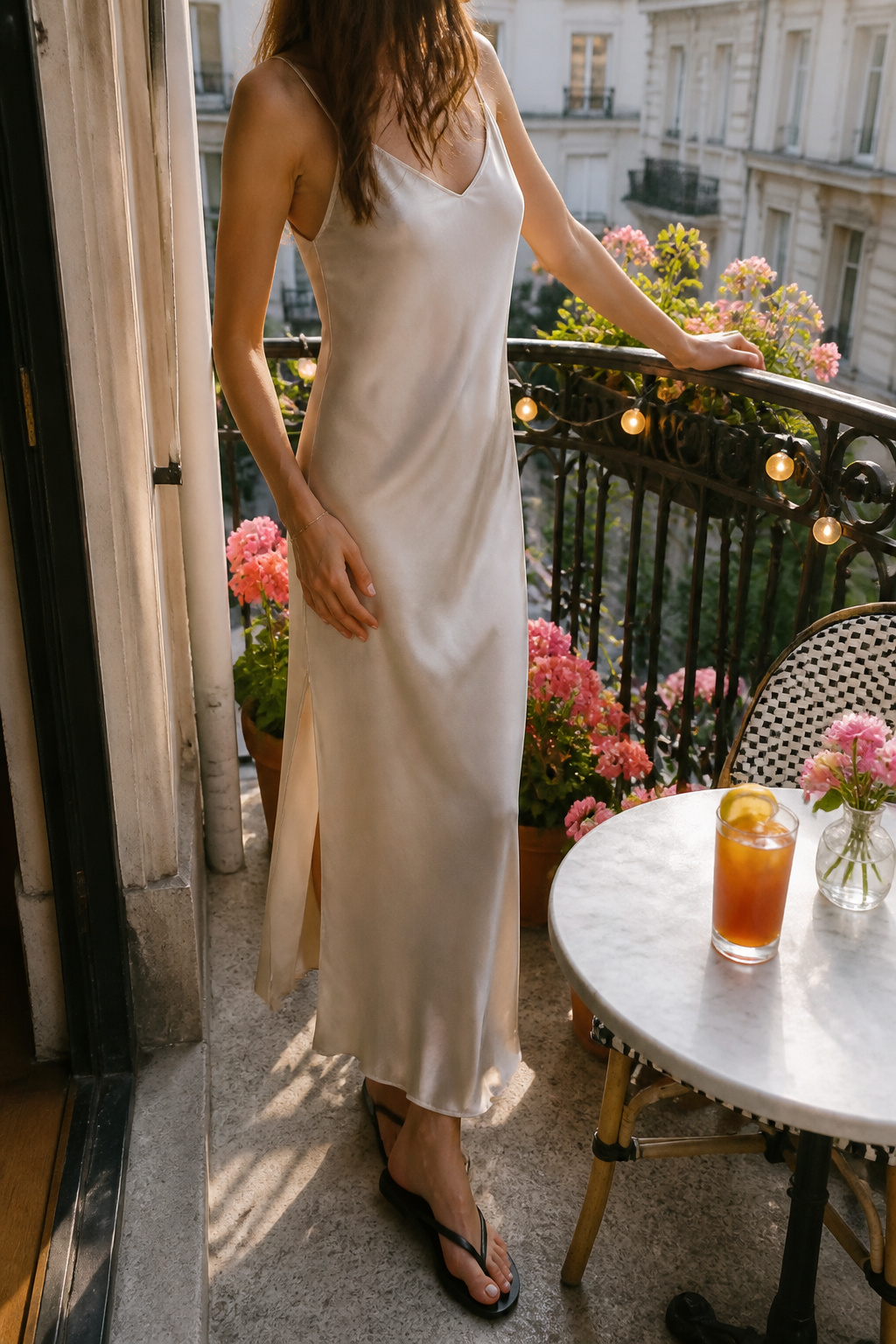
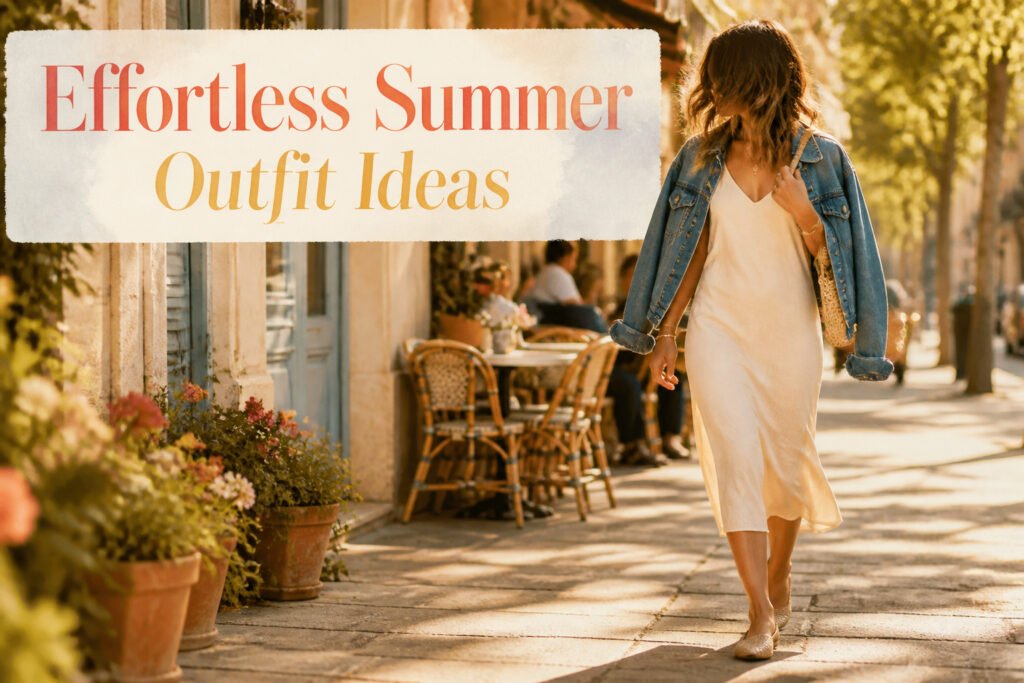
A slip dress reads as daytime when the fabric has enough weight to skim rather than cling. Matte silk or a silk-cotton blend works; anything that catches light like lingerie stays in the evening category. I learned that distinction the hard way after showing up to a morning meeting in something that looked borrowed from a bedroom scene.
Offices with aggressive AC need a structured layer that does not fight the dress. A cropped blazer in the same color family keeps the line long; a cardigan breaks it. The Sol Collective recommends letting the shape do the professionalism so accessories stay quiet.
The price gap between a $45 and $180 slip dress is mostly in seam finishing and strap construction. The cheaper ones fray at the armholes after two seasons; the pricier ones use French seams and adjustable straps that survive repeated dry cleaning. For something you will wear twenty times a summer, that math is worth doing.
You can’t go wrong with a simple white linen dress when looking for an easy and elegant outfit you don’t have to think about. Pair it with black thong sandals for a casual yet elevated look.
The same sandal logic transfers here: black thong sandals against a neutral slip dress keep the look grounded without extra decisions. That is what effortless actually means.
8. Vest and Matching Tailored Trousers

The matching vest and tailored trousers that started showing up everywhere in summer 2024 were really a suit that had its jacket taken away. That subtraction is what makes it work in heat: you get the polish of suiting without the layer you’d sweat through by noon. What convinced me, reading through a dozen of these sets before buying in, was how the vest’s vertical lines do the same elongating work as a blazer without the bulk.
The real problem hits after you decide to try one. Brands cut these as coordinated drops, and the vest sells out in your size while the trousers sit there in four colorways, or vice versa. Buy the half that fits first, then email customer service about whether the missing piece is coming back. Most brands restock mid-season if the set performed; they just don’t advertise it. The alternative is hunting the resale market, where separates from these drops turn up constantly because someone else faced your exact mismatch.
On bodies past sample size, the vest is actually the easier piece. A tailored trouser with room through the thigh and a proper waistband, not an elasticated "comfort" panel, holds its shape when the fabric is summer-weight wool or a wool-linen mix. The vest should hit at the hip bone, not the waist, so it skims rather than clings. If the armhole cuts in, the vest is too small in the chest, not the torso; size up and have the waist taken in. That alteration costs less than replacing a set that never fit right to begin with.
9. Tube Top, Jeans, and Mules
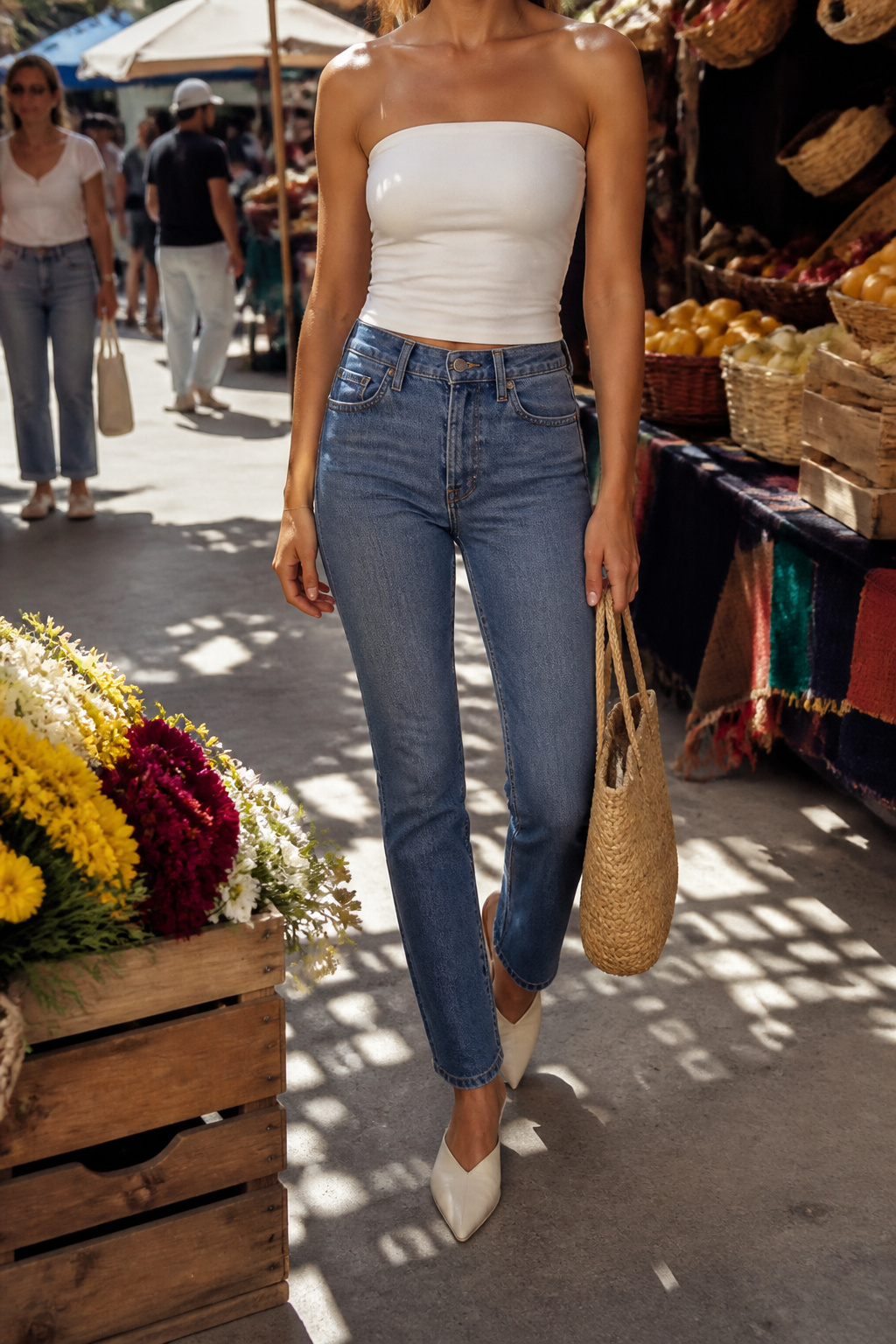
The nineties formula came back hard. Tube top, jeans, and mules sounds simple until you spend an afternoon yanking fabric back into place. Mid-rise jeans solve the problem; anything lower demands constant adjustment, and high-rise cuts bunch the top awkwardly at the waistband. A mid-rise sits exactly where the tube top ends, so the two meet instead of fighting.
On over-30 bodies, the bare-shoulder thing reads differently than it did at twenty. The trick is structure in the other pieces: rigid denim, not stretch, gives the look intention rather than accident. I also stopped buying tube tops without some built-in grip, a silicone strip or elastic band at the top edge, because gravity is not negotiable.
Mules are the weak link. A backless shoe that slips off every third step is not effortless; it is an errand. The ones that actually stay on have a slight vamp across the foot, not the barely-there slide, or a toe shape that narrows enough to hold. I learned this walking through a farmers market in a pair of buttery leather slides that ended up in my tote bag by the tomato stand.
10. Striped Pajama Pants and Button-Down Shirt

Vertical stripes on pajama pants do more of the visual work than most people realize. A stripe running lengthwise elongates the leg, while horizontal bands across the hip can widen it. I learned that distinction the hard way after buying a pair of cotton-poplin pajama pants with wide horizontal stripes and wondering why they looked like loungewear even with a tucked-in blouse. The fabric weight matters just as much as the pattern. Lightweight cotton or a cotton-linen blend reads as intentional summer clothing; anything with a sheen or too much drape tips into territory where it looks like you forgot to change.
The button-down shirt that works here is oversized but not surrendered, to borrow the phrasing that stuck with me from travel pieces. It needs enough structure to signal daywear. I pair mine with a crisp white or pale blue shirt, sleeves rolled to the forearm, half-tucked at the front. Polished flats or simple loafers finish the look and keep it from sliding too casual.
Where this outfit fails is anywhere that requires actual authority: client dinners, first meetings, any room where you need to look like you tried. It works for brunch, for bookstore afternoons, for the kind of Saturday where your plans arrive by text while you are already halfway into lounge mode.
11. Flowy Maxi Dress
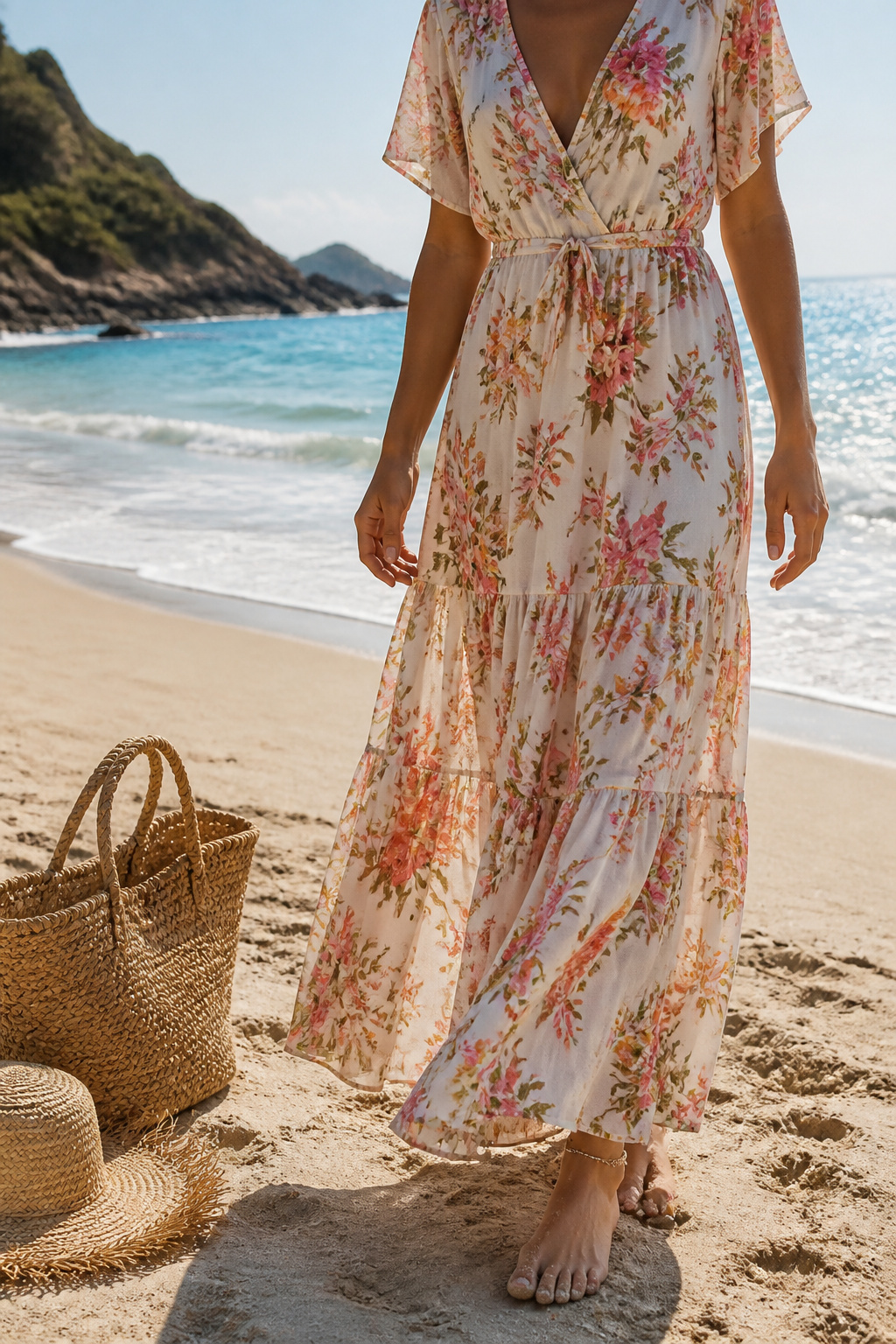
A flowy maxi dress handles heat and coverage in one piece, which is why it keeps coming back for me every July. The length matters more than most people expect: at 5’4", the hem should brush the top of your foot, not pool on the ground, or the whole thing starts reading as costume rather than outfit. Taller frames can carry more fabric, but anyone under 5’6" should watch for skirts that overwhelm the torso and create that tent effect where you lose your shape entirely.
The fix is usually in the waist. An empire cut or a self-tie that hits at the narrowest point keeps the silhouette from going flat. I learned this the hard way with a cotton voile dress that looked romantic on the hanger and like a bedsheet on me; adding a slim leather belt saved it, but I would have skipped the purchase if I had paid attention to where the seam sat.
Fabrics make the difference between wearing the dress and fighting it. Cotton, linen, and rayon actually move air, which matters when the humidity climbs past the point where enthusiasm for layering dies. Bright florals and soft pastels read seasonal without trying to compete with the heat.
For shoes, flat sandals or platform espadrilles ground the look without stealing from it. Raffia adds texture that feels right for the season, and neutral tones keep the focus where it belongs. I have tried the statement-heel route, and it always feels like the dress and the shoes are arguing for attention. One of them has to lose.
12. Casual Sundress
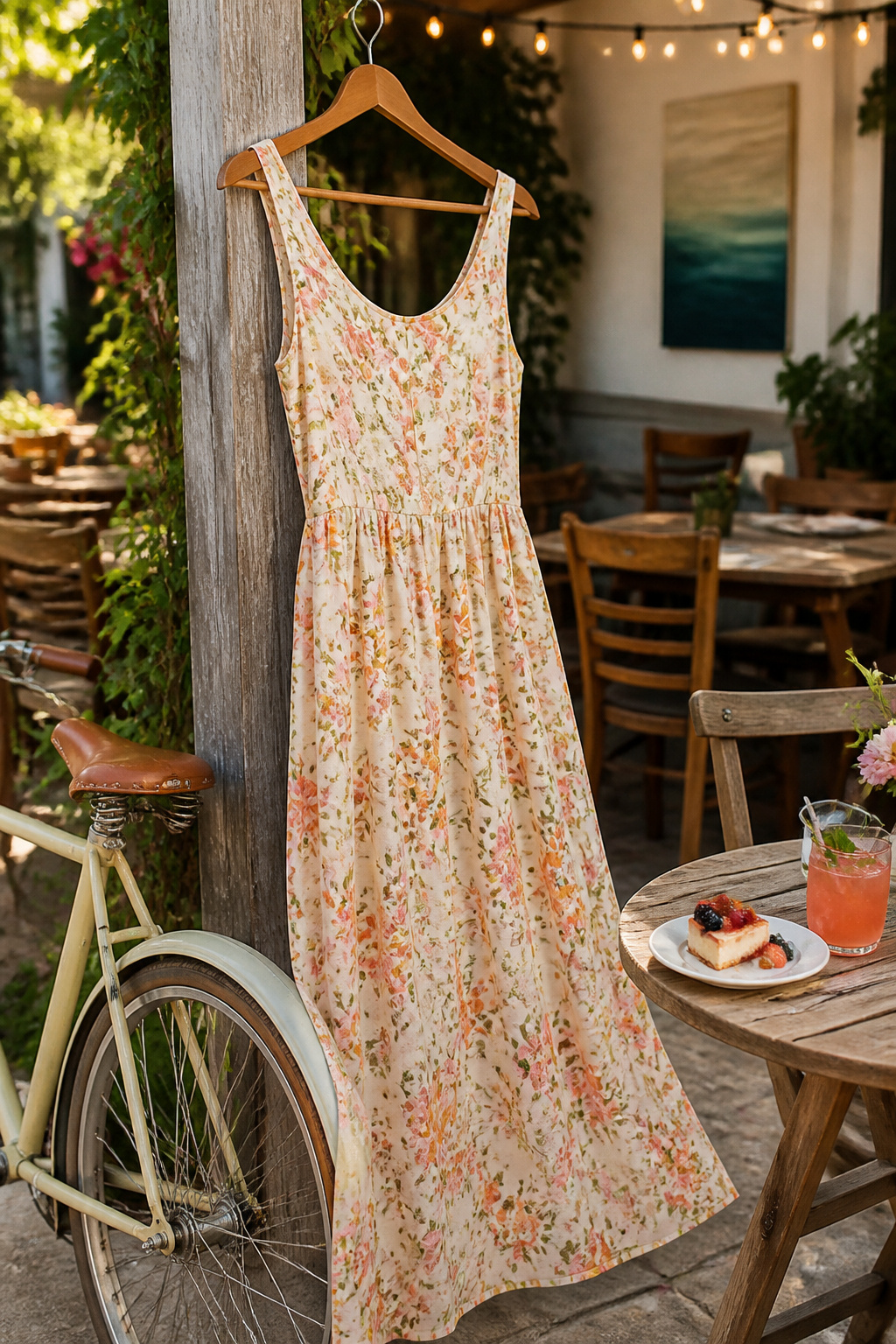
A sundress is the first thing most of us picture for effortless summer outfits, which is exactly the problem. Fifty different cuts land in this category every spring, and the one that actually leaves your closet after July is rarely the one that looked irresistible on the rack.
The neckline matters more than the print. A scoop or a standard V that clears your bra straps by half an inch means you reach for it at 7:15 AM without hunting for specialty underthings. Strapless or racerback silhouettes demand planning, and planned dresses stay hung.
Prints age in predictable ways. Micro-florals read as background noise; oversized botanicals tie themselves to the year they debuted. A medium-scale stripe or a single-color texture carries no timestamp, which is why mine from 2019 still look current. Solid seersucker or a faded gingham in cream and navy will outlast any trend shade the algorithm served you in May.
Fabric weight separates the keepers from the returns. Hold the skirt up to a window: light should come through, but the weave should not read as costume. If it balloons in a breeze, it will balloon while you are carrying coffee. The best sundress I own cost less than lunch and gets worn because it passes all three tests without asking me to think about it.
13. Jean Shorts and Basic T-Shirt
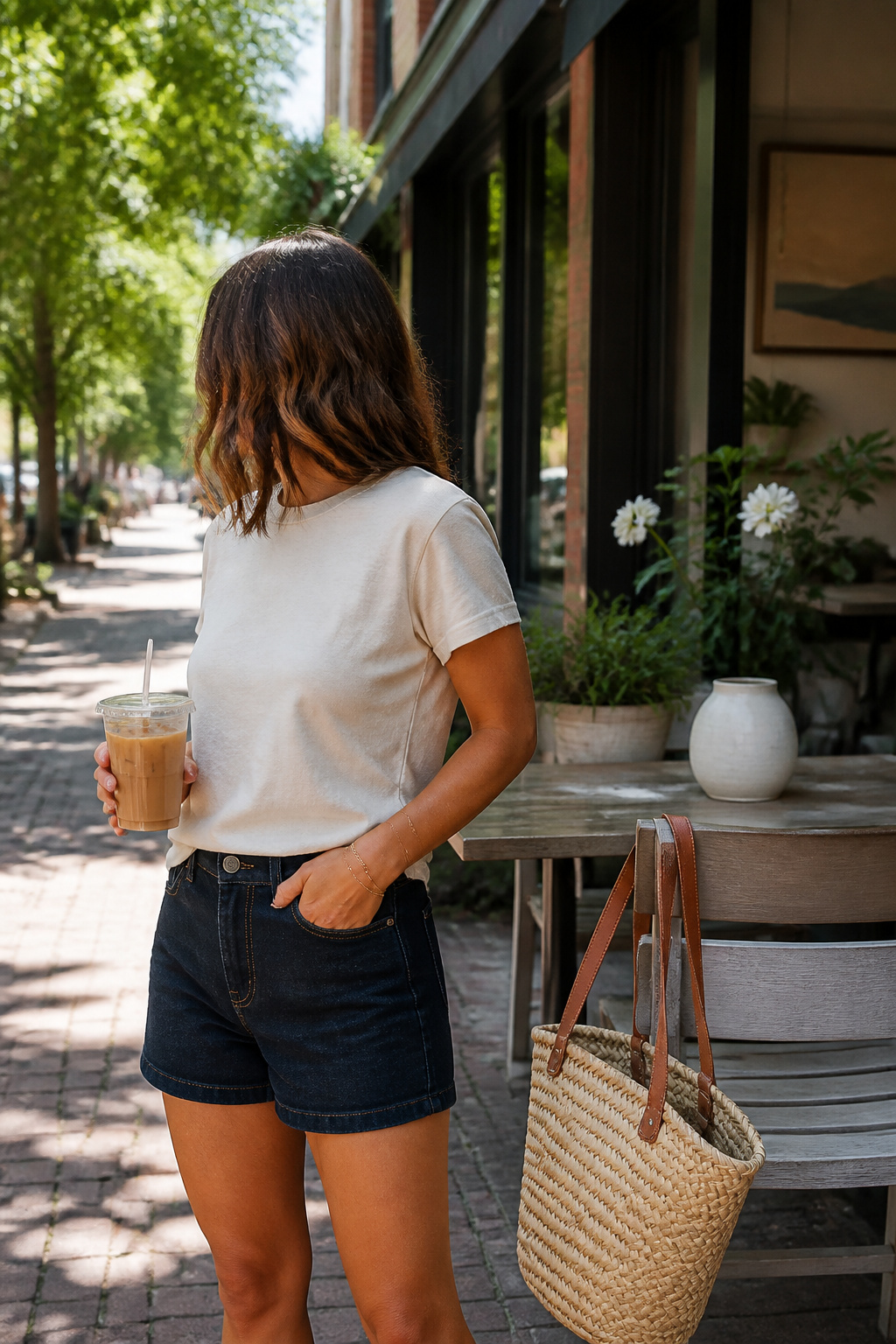
Jean shorts and a basic t-shirt are the outfit everyone already owns and almost no one wears well past thirty. The difference between looking like you grabbed the first thing on the floor and looking like you dressed with intention comes down to a 4-inch inseam and t-shirt weight that does not turn sheer by noon.
A 4-inch inseam hits mid-thigh without cutting the leg in half visually. Shorter lengths, especially those with an unfinished hem, read younger and more casual than most of us want for everyday errands or lunch. The leg line stays longer with that extra inch, and the shorts still work as a swimsuit cover-up at the lake without requiring a full change afterward.
For the t-shirt, mid-weight cotton matters. Anything under 5 ounces goes transparent in direct sun, which defeats the point of a simple look. Thicker fabric also holds its shape through the day instead of clinging where you do not want it to.
At thirty-five, the styling moves the look from default to deliberate. A raffia crossbody bag adds texture and signals that you chose this, not that you settled for it. White denim over regular blue reads more polished for evenings out, but for daytime, dark wash shorts with a heavier tee and that raffia bag is the effortless summer outfit that actually looks finished.
14. Matching Sets

Matching sets started as my shortcut for looking pulled together on mornings when coffee hadn’t kicked in yet. A shorts set in cotton poplin handles heat better than you’d expect, and the structured waist keeps the silhouette from feeling too casual for a lunch reservation. Skirt sets read slightly dressier with the same effort level, especially when the hem hits midi length and you throw on a single pendant necklace.
What convinced me to keep buying them was realizing the pieces earn their closet space separately. The shorts from one set became my go-to with a tucked-in tank; the matching top went with high-rise jeans and looked intentional rather than orphaned. Linen and Tencel blends travel best, wrinkling less than pure linen and drying overnight in a hotel bathroom. Heavier cotton piqué looks crisp but creases in a suitcase; save that for days you’re dressing at home.
The real value is building three outfits from two pieces if you choose colors that play with your existing neutrals. A terracotta pant set pairs with the cream blouses you already own; a navy shorts set talks to every white or striped top in your drawer. Skip the busy prints unless you love wearing the full set exclusively, because separated they fight with everything else.
15. Lightweight Midi Dress

A lightweight midi dress lands right where office dress codes relax without disappearing entirely. The hem sits between the knee and ankle, which means it works with real desks and real lunch walks without the constant adjustment a mini demands.
Sleeves make or break whether you can wear it straight from a meeting to a patio. Cap sleeves read casual; a short flutter or elbow-length sleeve reads intentional. For air-conditioned offices, a three-quarter sleeve in cotton voile or a thin crepe beats sleeveless and saves you the cardigan hunt.
Whether to belt depends on the waist seam. A defined waist looks finished on its own. A drop-waist or shift cut needs a narrow belt in leather or matching fabric, placed at your actual waist, not lower, or the whole silhouette goes sack-like.
The shoe that keeps this length from looking like you grabbed what was clean is a low-block heel or a refined flat with a pointed or almond toe. Bulky sneakers shorten the leg line against a longer hem; a strappy sandal that shows most of the foot keeps the proportions level.
16. Breezy Linen Pants and Relaxed Button-Down

Breezy linen pants and a relaxed button-down are the softer answer to the crisper white-linen-and-tank look everyone already owns. The pants gain their ease from the cut, not the color. Sage, dusty blue, and warm terracotta all read as intentional in an office where white would look like vacation luggage.
The workplace line sits at the shoulder seam. A button-down cut to hang straight from the collarbone, not collapse past it, stays professional even when the fabric is loose. Sleeves rolled twice show forearm; sleeves pushed above the elbow look like you are about to load a dishwasher.
Stretch linen, if you can find it, holds the pressed crease through a commute better than plain weave. The trade is real: pure linen breathes more, but by hour three it resembles a paper bag. I have worn both to the same open-plan floor, and the stretch pair got me through a 2 p.m. presentation without the mid-meeting scrunch.
The wrinkle acceptance curve bends with your day. Morning meetings need the fresher press; a dinner you walked to forgives more. Let the linen wrinkle where you move, not where you sit. That distinction saves the whole outfit from looking like you slept in it. Loafers or beige slides finish it, and the crossbody keeps your hands free for iced coffee and the door.
17. White Jeans and Simple Top
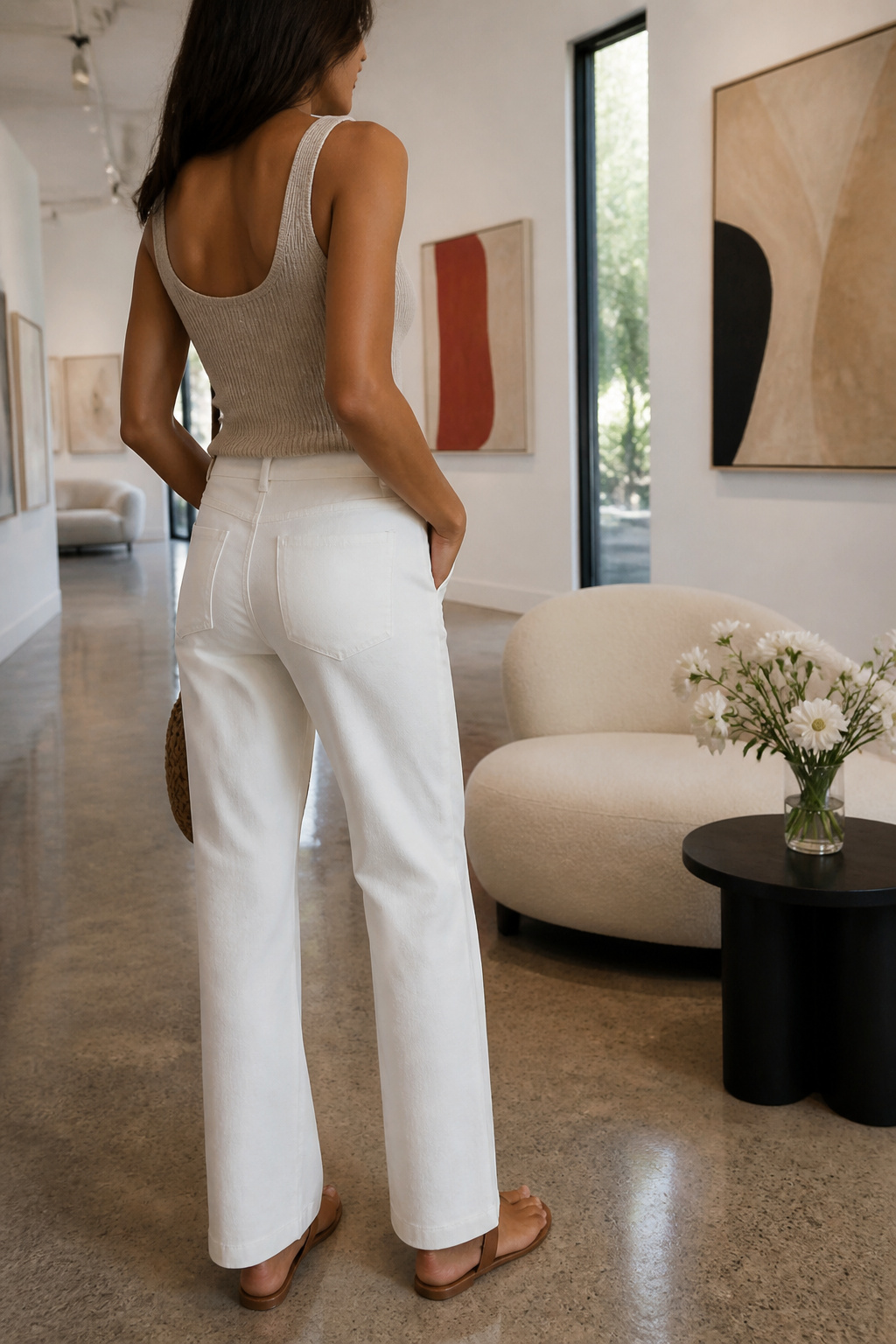
White jeans read as summer in a way no other denim does, but the outfit dies if the top fights for attention. A ribbed tank in oatmeal or a thin cotton crewneck in washed black gives the jeans room to be the statement without tipping into laundry-day territory. The line between simple and boring is texture, not color: a slubbed linen tee holds light differently than a flat jersey one, and that difference is what makes the look intentional.
Three variations keep this from becoming a uniform you dread. Tuck a silk bandana at the throat like a loose necklace, or swap the cotton top for a cotton-cashmere blend that holds its shape through humidity. The third option is footwear: a leather sandal with a visible stitch turns the same jeans-and-top combination into something that looks considered rather than repeated.
I have worn white jeans with a white tee four Junes in a row and only recently noticed the resentment building. The fix was rotating the texture of the top, not the color. One year it was a piqué polo, the next a tissue-weight turtleneck on a cool evening. Same pants, same ease, different enough that I did not feel photographed.
18. Denim Dress

A denim dress is the one-piece answer to the jeans-and-top rut, but summer weight matters more here than with a jacket or pair of pants. Anything above 10 to 12 ounces reads stiff and hot; a 6 to 8 ounce chambray or lightweight denim weave moves like a sundress while keeping the structure that makes denim useful. The sleeveless mini Katey P. wears for casual dinners out lands in that lighter range, and the cut keeps it from looking like you forgot the rest of your outfit.
Wash is where most denim dresses go wrong. Medium and light washes with even fading feel current; the dark, uniform indigo that works in winter reads heavy and costume-like once July hits. The same goes for excessive distressing or contrast stitching that pushes toward the farmer association. A clean wash with minimal hardware solves most of that problem before you add shoes.
Brown accessories, as in the belted mini with Birkenstock Big Buckle sandals and a leather sling bag, steer the look away from workwear territory. The brown makes the buttons pop without adding another competing color. Rope twist hoops and mixed-metal bracelets finish it without looking like you tried to "dress up" denim, which is usually where the effort shows.
19. Casual Dress with Tie-Waist
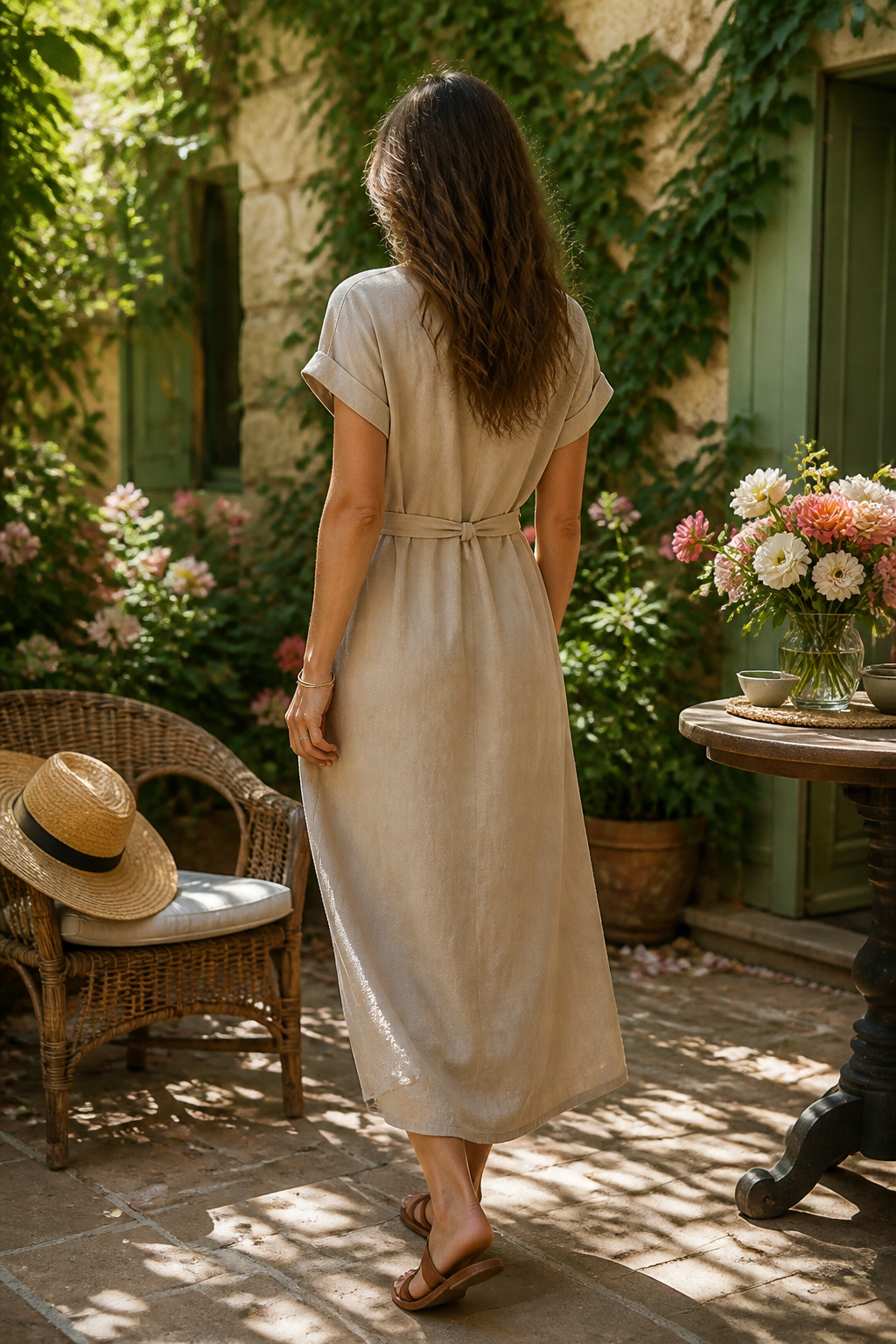
A true tie waist adjusts at least two inches on either side of the knot. Decorative versions, the ones stitched down or with fixed loops, only pretend to give shape. The difference matters most for straight-waisted bodies like mine, where the fabric needs to actually cinch rather than sit on top of nothing.
I learned this the hard way with a cotton-poplin dress that looked tailored in the listing but gapped at the sides because the ties were just ribbon ends sewn to the seams. The fabric that actually works is a soft viscose or a lightweight crepe, something with drape that collapses flat when you knot it. Linen and structured cotton bulk at the tie and stand away from the body, which defeats the point of an easy summer dress.
The best ones have ties that thread through internal channels, so you control how tight and where the emphasis falls. I pull mine slightly above the natural waist, which gives the straightest torsos the suggestion of curve without any built-in construction.
20. Nautical Outfits

Navy and white returns every June like a tide you can set your watch by. The trick is wearing it without looking like you are auditioning for a yacht club you do not belong to.
Start with the stripes. A Breton-weight cotton, not costume-knit polyester, reads as a shirt you already own rather than a theme purchase. I skip the wide sailor collars and anchor buttons; those live on mannequins in harbor gift shops. One striped top in a medium weight, white ground with navy stripes, will carry through July without repeating itself too obviously.
The red question comes down to surface area. A red stripe tote works because it is one deliberate note against the larger field of blue and white. A red dress with navy accessories flips the ratio and loses the restraint that makes this feel modern. The sources I trust keep red at accessory scale: a bag, a sandal strap, maybe a narrow belt.
Footwear finishes the calibration. Clean white leather sneakers keep the whole thing grounded in an actual day. Block heel sandals or espadrilles, the ones with real height but a walkable base, shift the same pieces to evening without a full change. One pair of each, both in white or natural, covers the whole summer.
Lightweight Fabrics That Actually Last

Linen, cotton, and Tencel are the three fabrics that keep a summer outfit from becoming a portable sauna. The trouble starts when a label reads "linen blend" or "cotton-rich" without showing the actual percentages. A 30% synthetic blend can trap enough heat to cancel out the breathability you paid for, and online listings rarely flag this clearly.
Fabric weight is the number that matters, but most retailers bury it or skip it entirely. When it is listed, look for ounces per square yard: roughly 4–6 oz for a summer shirt that will not go transparent after three washes, lighter than that for something that will not survive the season. Thread count works differently for cotton than the marketing suggests. Percale in the 200–400 range stays crisper and cooler in humidity; anything above 600 tends to weave the fibers so tight that air stops moving through.
Linen softens with washing but needs to air dry and be ironed while slightly damp if you want it wrinkle-free. Cotton can take machine washing cold and tumbling dry low, which is why it outlasts most alternatives in real rotation. The blends that promise both easy care and breathability usually fail on one or both. After enough summers of shirts that went limp by August, I check the care label before the price tag.
Versatile Pieces Worth Owning

A cost-per-wear under three dollars is where a summer staple earns its hanger space. A sixty-dollar linen button-down worn twenty times beats a thirty-dollar trend piece worn twice, and the math gets sharper when that button-down also covers your shoulders at a morning meeting, then ties at the waist for dinner.
The five qualities that make this work are neutral color, classic silhouette, quality fabric, simple details, and versatile styling. A crisp cotton button-down in white or cream checks every box. So does a sundress in a straight or slightly fitted cut, and tailored shorts that hit mid-thigh and sit well with both flats and a low heel. Linen, cotton, and Tencel are the fibers that survive repeated wears without looking tired.
Testing versatility before buying means laying the piece against three items already in your closet. If it fails the third pairing, it stays on the rack. The 15-piece mix-and-match concept builds from here: lightweight trousers, one or two easy dresses, a crisp blouse, simple layering tops, then accessories that shift the tone. A belt or different earring can make the same outfit feel new without a full closet spiral. When every piece plays with everything else, your wardrobe becomes a system rather than a collection.
Accessories That Change the Outfit
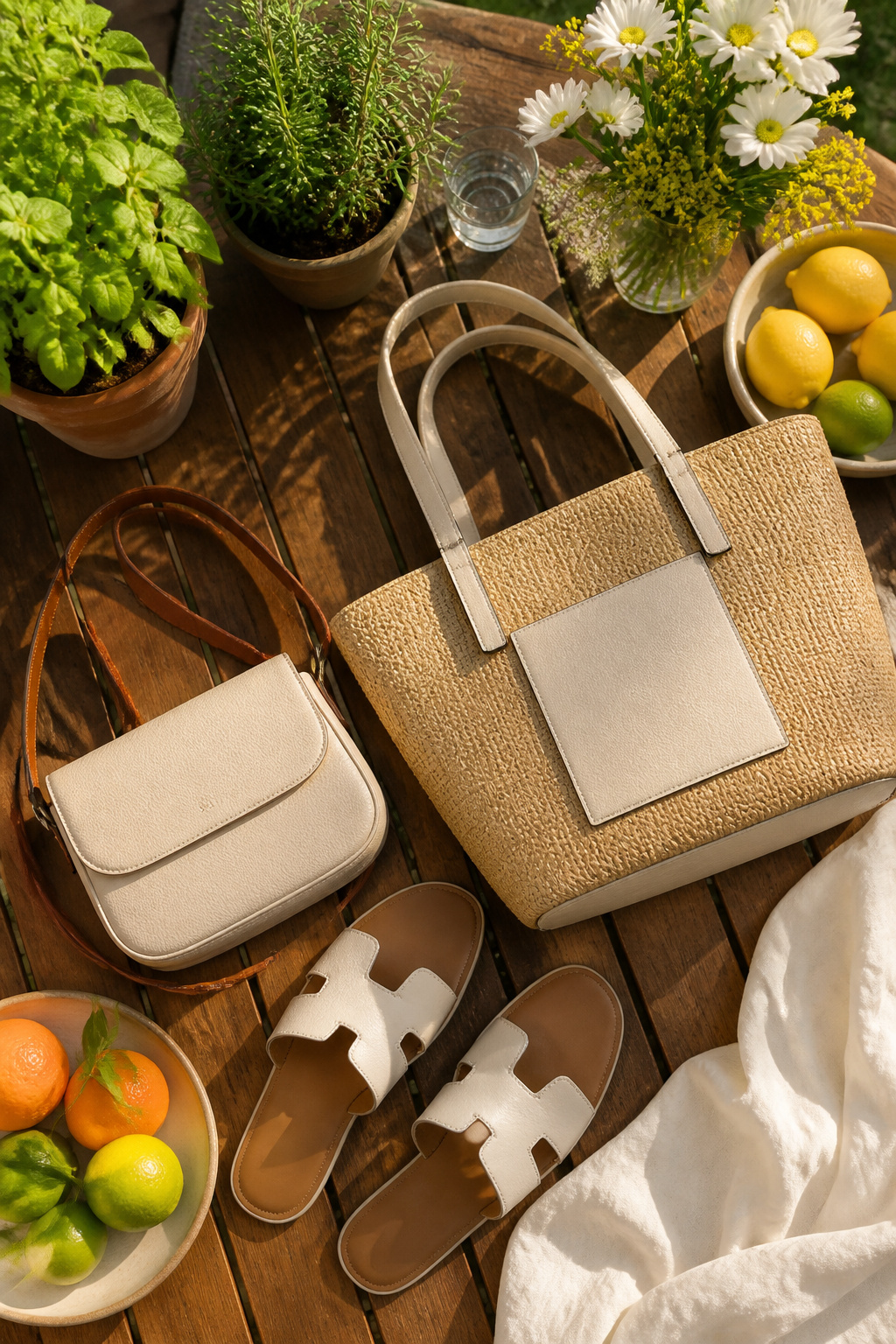
The easiest way to kill a summer outfit is to buy an accessory that only works with one thing. I made that mistake with a beaded clutch that sat unused for two years because it clashed with everything except the dress I bought it for. A bag, a shoe, or an earring should earn its place by working across at least three outfits or it becomes expensive clutter.
For bags, three covers most of a summer. A structured mid-size tote handles work and daytime errands. A smaller crossbody or shoulder bag shifts the same trousers and blouse into evening territory. A woven or textured option fills the casual weekend gap. The sources point to this directly: change the bag and the shoe, and a shift dress moves from office to drinks without a full change.
Jewelry follows the same rule. One pair of simple earrings that read polished but not loud, and one piece with more presence for when the occasion needs it. Sandals do the heavy lifting in summer. Clean white leather sneakers, minimal leather sandals, and a block heel or espadrille give you the full range from errands to dinner. The block heel especially earns its keep; it raises the outfit without the discomfort of a stiletto on warm pavement.
Neutrals make this possible. White, cream, navy, beige, and gray across accessories means the shoe you wore with jeans on Saturday works with the shift dress on Tuesday. One accent color, something like olive or soft blue, keeps it from feeling sterile without breaking the system.
Casual Against Polished
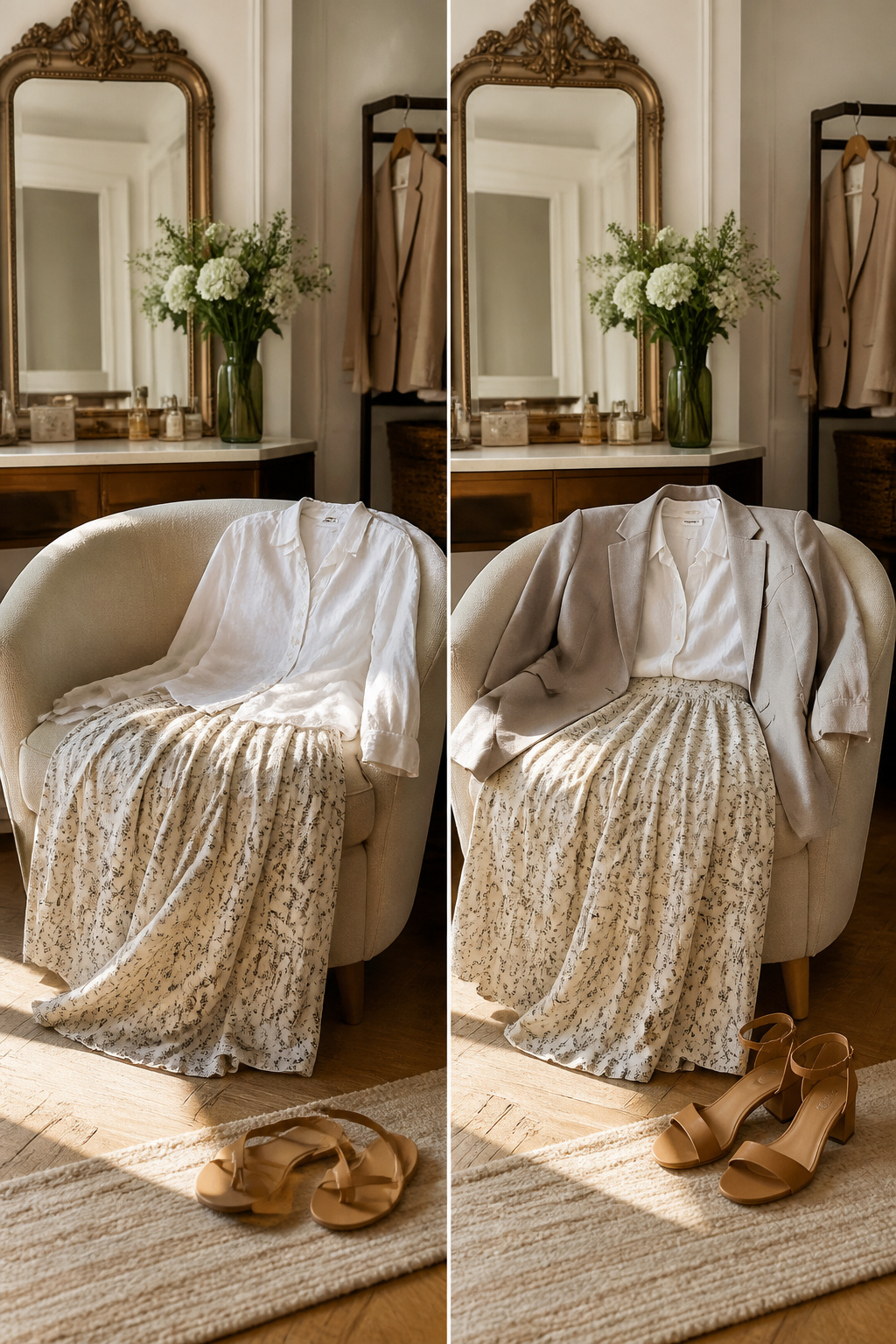
A cotton midi skirt from Cartolina Nantucket reads one way in flat sandals with a denim jacket slung over your shoulders, and another entirely with block heels and a slim chain necklace. The embroidery at the pockets does the work of looking considered, so you are not adding much to look pulled together.
The same linen trousers that feel relaxed with a striped tee and white sneakers become a client-presentation option when you swap in a crisp button-down and keep a blazer nearby. The fabric does not change; the shoe and the top do. I have had days where a 10 a.m. meeting ran long and a dinner invitation appeared by text at 4 p.m. The ribbed tank and midi skirt I was already wearing stayed on; I traded sneakers for espadrilles and added the open linen shirt as a layer. That shift took roughly ninety seconds.
A sleeveless denim dress works for a casual night out with Birkenstock sandals and a woven bag. The brown leather makes the buttons pop in a way that feels intentional rather than thrown-on. For something sharper, belt it and switch to block heels. The dress itself is doing the same job either way; the accessories are what signal you knew where you were headed.
The fastest move is almost always the shoe. A block heel or an espadrille reads prepared; a flat sandal reads available. Everything else follows.
Frequently Asked Questions
What are some quick summer outfit ideas for busy mornings?
Stick to simple formulas with fewer pieces: lightweight trousers with a fitted tank and blouse, a matching set with sandals, or a dress that needs no layering. A shift dress, flowy midi skirt, or lightweight maxi dress works as a single-piece shortcut. The less you have to coordinate before coffee, the faster you get out the door.
How can I transition my summer work outfit to an after-work event?
Start with a shift dress or another easy base, then change the mood with accessories. Swap in statement jewelry, a smaller bag, or a sharper shoe to move from office-ready to evening-ready without a full change.
What shoes pair well with women’s summer office attire for comfort and style?
Ballet flats are the easiest choice because they work with dresses, skirts, and trousers alike. In more relaxed offices, polished sandals can also work. Choose lightweight, supportive styles and keep the rest of the look simple so the shoes add polish without dominating.