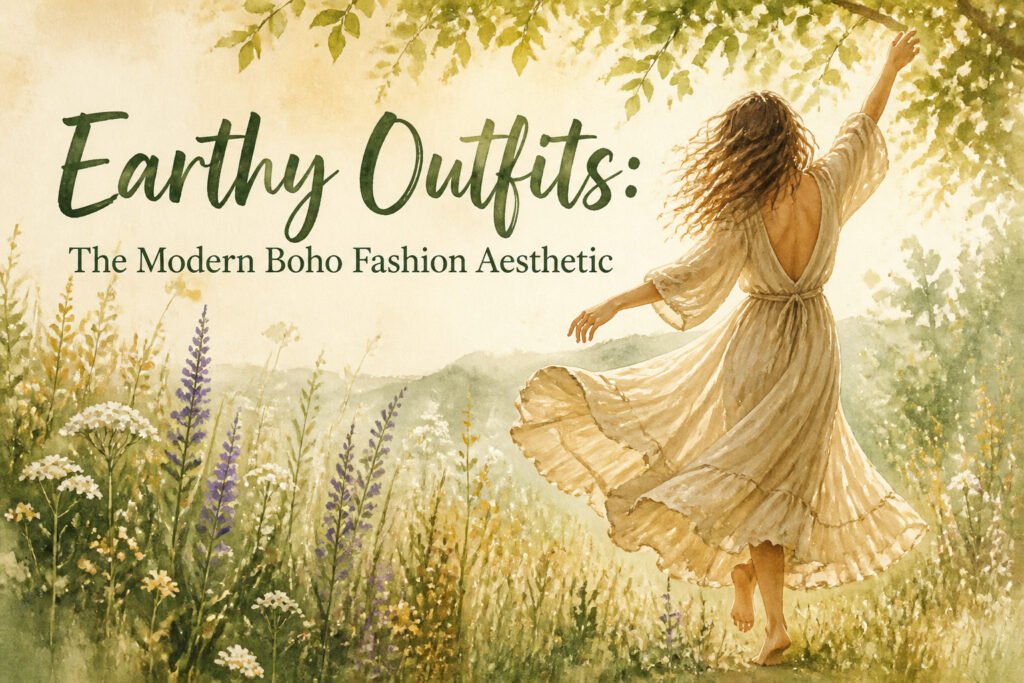
Earthy outfits are built from natural fibers that age with you rather than against you. The catch is that cotton softens while linen stiffens, and both demand replacement on a timeline synthetics never trained us for. A $90 linen shirt worn eighty times costs about the same per outing as a $24 cotton top that pills after twelve washes and sits in your drawer out of guilt.
Flowing Maxi Dresses

A maxi dress earns its place at the center of an earthy wardrobe because the length does the work. The fabric pools and sways with actual steps, which reads as movement rather than costume, and the hemline spans seasons without requiring a closet overhaul.
The colors that ground the look are terracotta, olive, mustard, and brown. These shades read as intentional against skin tones rather than washed-out, and they pair back to whatever neutral footwear is already on the shelf.
Sleeve and neckline choices determine whether the dress feels current. A three-quarter sleeve or a simple scoop neck keeps the silhouette clean; bell sleeves or a plunging smocked bodice tip easily into festival territory. One dress in a warm earth tone moves from sandals to boots with only a layer change, which is where the practicality lands. A cropped denim jacket or an oversized cardigan over the shoulders handles the temperature shift, and the same belt that cinched the waist in July can sit higher on the ribcage in October.
Cotton and linen blends age well here. The fabric softens with washing, and the drape improves rather than collapsing.
Oversized Cardigans

An oversized cardigan is where an earthy outfit either finds its shape or loses it entirely. The knit needs real weight, a gauge thick enough to hold a straight line across the shoulders instead of collapsing into a droop. Buying two sizes up instead of one is the mistake that kills the look, and I have been there: a merino-cotton blend I ordered online hung past my fingertips and widened at the hem like a bathrobe, no matter how I tugged it. The shoulder seam should still sit at the shoulder. On a shorter frame, a cardigan that hits mid-thigh shortens the leg; at hip length, it lengthens. For closures, a single visible horn button two-thirds of the way down looks deliberate. A full row of small buttons, or worse, a missing button with a visible gap, reads like you grabbed whatever was clean. I leave mine open now unless the piece was built to close, with a placket that lies flat.
Natural Fiber Tops
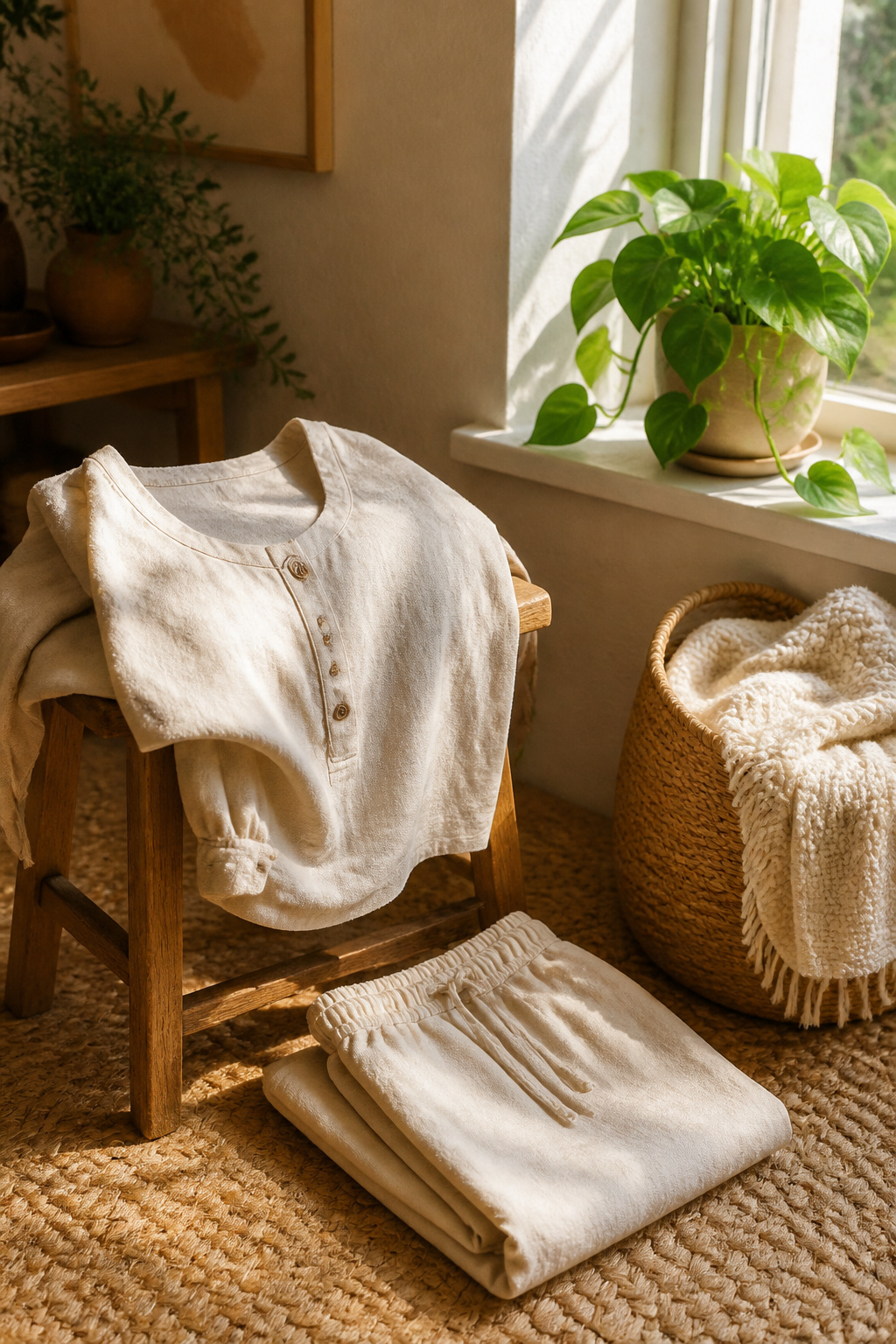
Cotton softens into something better than it was new, which is why my oldest jersey tees outrank anything I bought last season. Linen stiffens for the first three washes, then gives in and drapes like it finally trusts you. Hemp never really stops being hemp: it loosens slightly, stays upright, and wrinkles in the sharp, deliberate way that reads as texture rather than neglect.
The breathing part gets talked up constantly, but the real difference is the settling. Natural fibers relax, drop their original shoulders, and need replacement on a timeline synthetics never trained us for. A cotton voile top might look spent after two summers of steady wear where polyester would still hold its shape and feel clammy doing it.
Price per wear only works if you actually wear them. A $90 linen shirt worn eighty times costs about the same per outing as a $24 cotton top that pills after twelve washes and sits in your drawer out of guilt. Linen’s acceptable wrinkles are the ones that fall vertically; horizontal creases across the chest mean the fit is off or the fabric is too heavy for the cut. Cotton pilling shows up first at the underarms and along the side seams, which is your signal to relegate it to layering rather than toss it.
Wide-Leg Pants
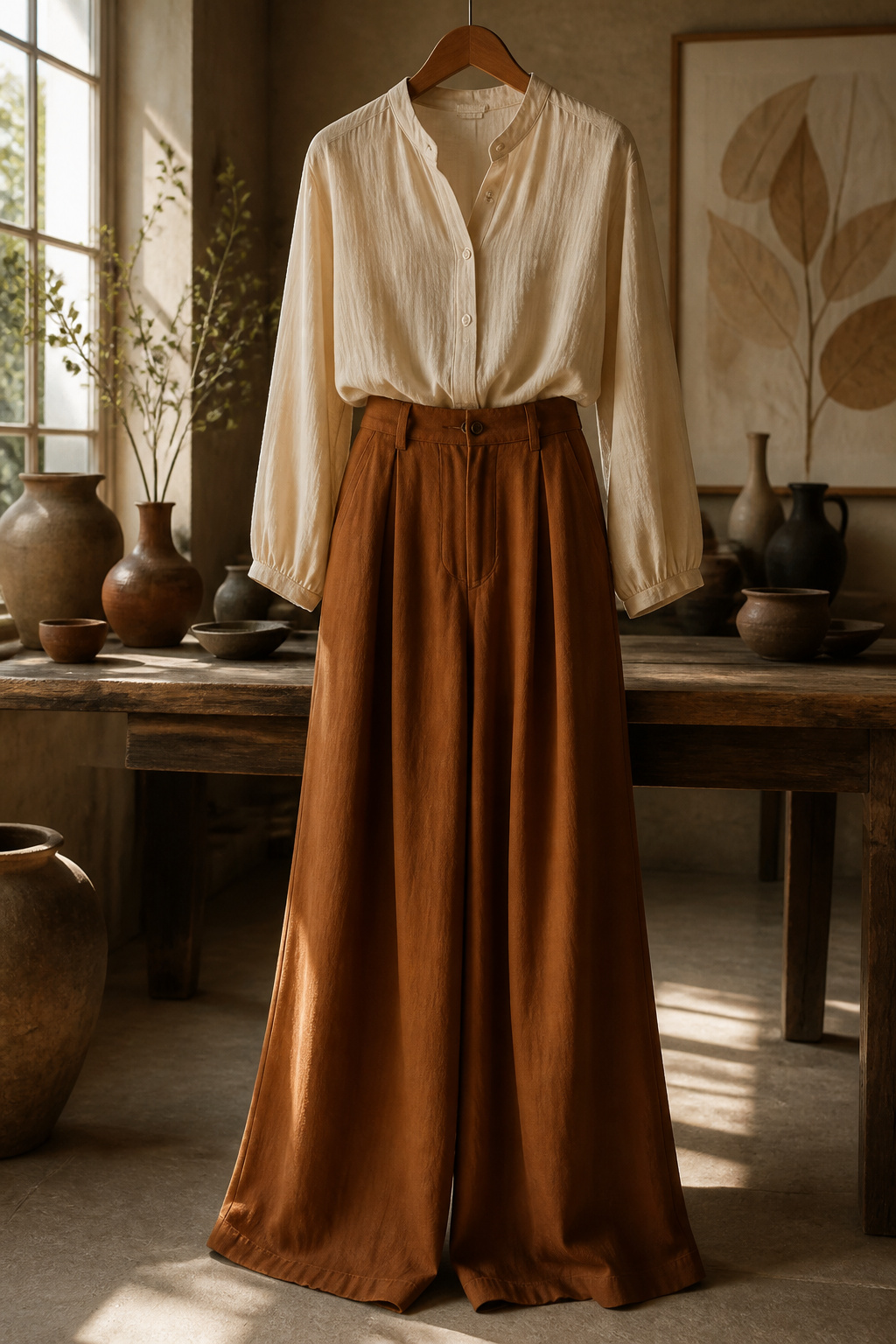
The waist on wide-leg pants is what separates a flattering earthy outfit from a costume. A true high rise, sitting at or just above the natural waist, gives the longest leg line possible. Anything lower cuts the torso in half and turns the volume below into a tent.
Petite frames need less fabric to avoid looking swallowed. A moderate flare from the knee down keeps the silhouette balanced without requiring heels, though a low platform or slim clog adds just enough height to keep the hem from dragging. Taller builds can handle fuller cuts and flat sandals.
Linen blends carry the look through July and August, when heavier fabrics would feel wrong. Come October, switch to a structured cotton twill or a light wool that holds the shape without stiffness.
The mistake I see most is the shrunken top. A fitted tee or cropped tank against billowing pants throws all the visual weight to the hips and reads as top-heavy. A tucked-in blouse with some ease through the body, or a slim but not tight knit, lets the pants do the work without competing.
Fringe Details

Fringe on a bag or a boot reads earthy only when the rest of the outfit stays quiet. A suede crossbody with four-inch fringe works with a plain white tee and rigid jeans because the texture gets the spotlight. Add a fringed hem and a tasseled necklace and the whole thing shifts to costume, fast. Bags and boots carry fringe best because they move with you without demanding center stage. Jewelry is trickier: one piece, yes, but the layered, jingling look stacks too high for a Tuesday grocery run.
The maintenance is where I draw the line. Fringe tangles in car doors, knots in the washing machine, and sheds until your hallway looks like you shaved a horse. If the piece sheds after three wears, the upkeep isn’t worth it unless you love the repair. Real leather fringe holds its shape; synthetic versions mat and tangle into something you eventually toss. Artisanal fringe, the kind hand-tied and slightly uneven, ages better than factory-cut perfection. That unevenness is the signal you’re after, not the uniformity of a costume bin.
Woven Bags

The woven bag market runs from floppy straw totes that collapse under a car seat to structured leather-and-rattan frames that actually stand upright on a conference table. That structure matters if you plan to carry a laptop; a reinforced base and leather corners prevent the sag that turns a work tote into a farmer’s market afterthought. I learned to spot the difference between glued seams and true weave by checking where the handle meets the body. Glue yellows and cracks, especially at stress points, while a woven attachment will loosen before it breaks and can be re-knotted.
Handcrafted quality shows in the irregularities: a slightly thicker reed here, a tighter coil there. Machine-made bags look identical row to row, which reads as cheap up close. A bag that costs more should feel heavier in your hand before you fill it; lightweight rattan often means a cardboard core wrapped in veneer.
Rain is the real limit. Untreated straw warps and mildews, so a sudden downpour means stuffing the bag with newspaper and air-drying it slowly, never near heat. In dry climates like Arizona or Colorado, a good woven bag works year-round with heavier layers; in humidity, I treat mine as May through September, switching to leather when the air stays wet.
Layered Jewelry
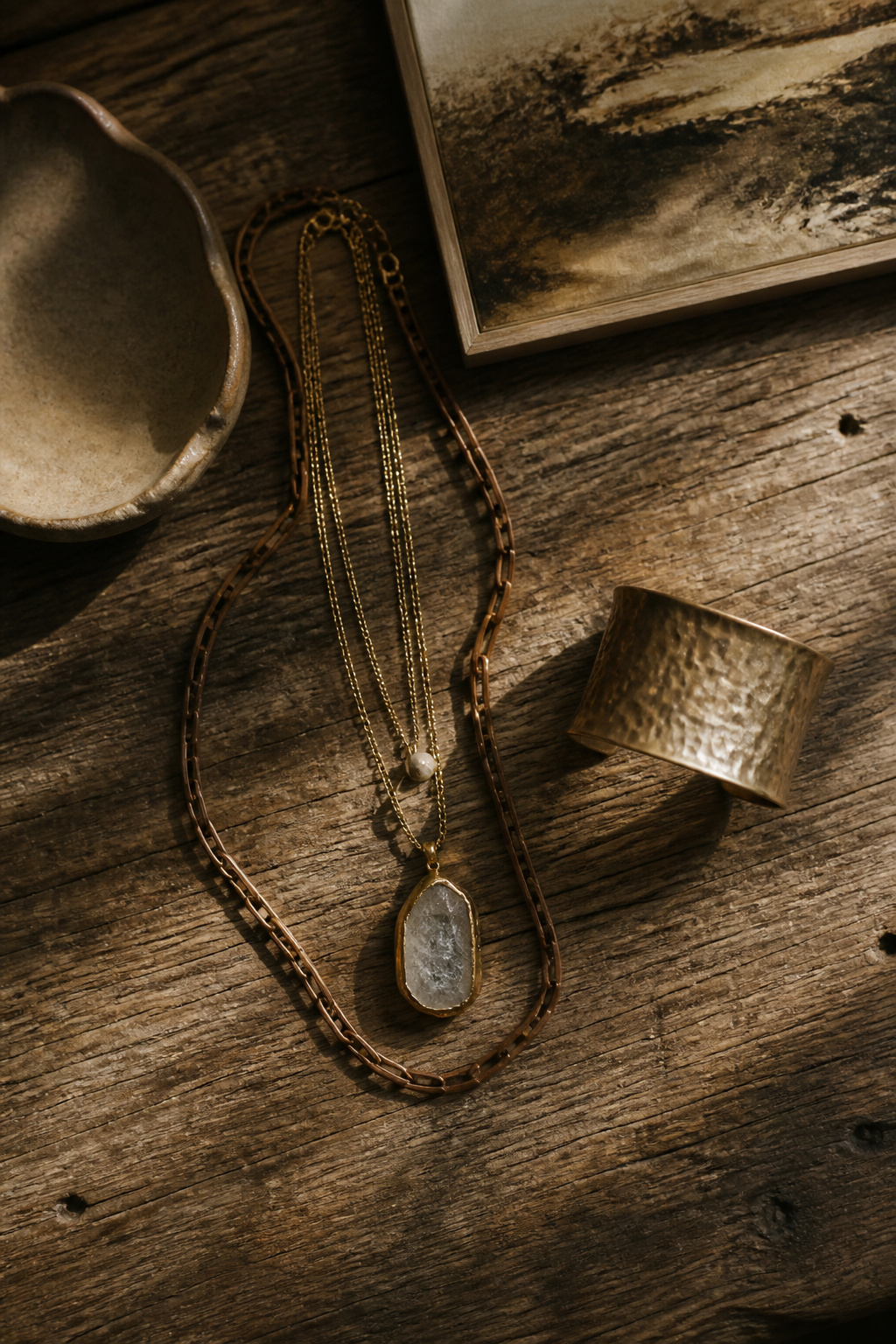
Wood, hammered metal, and stones with uneven edges carry the warmth that polished alloys lose. I keep three pieces as my ceiling for daytime: a thin wooden chain, one raw-cut stone pendant, and either a cuff or a ring, never both. Brass and silver only mix when one piece clearly dominates, like a wide hammered cuff against a single silver band; equal weights of each look accidental.
The tangling problem is real with layered chains. I store mine on a shallow ceramic dish with a folded cloth between strands, or hung flat on wall-mounted pins if the chain is delicate enough to kink. For travel, a soft roll with individual channels works better than any jewelry box I have owned.
The shift to evening happens by weight, not by swapping. Adding one heavier piece, a larger stone or a thicker metal coil, changes the register of the same linen top without a trip to change. Leave the delicate strand in place; let the new piece sit slightly higher or lower so each has its own line.
Boho at Work

A linen blazer in olive or sand replaces the fringed cardigan without losing the story. The shape stays sharp through the shoulders and waist, but the weave lets light through in a way wool won’t, so the piece reads as texture rather than costume. Under it, a cotton knit in a slubbed yarn gives the same warmth as a standard merino crewneck, except the slight irregularity catches the eye the way a print would without breaking office calm.
The line sits at fabric weight and proportion, not at color. A flowing peasant blouse under that blazer pushes the look toward weekend; a fitted shell or a thin turtleneck keeps it within most dress codes. Trousers stay structured, though a brushed cotton twill in tobacco or stone earns the earthy label where standard chino cloth would not. Leave the paisley, the tassels, and anything ankle-bellied for off-hours. Accessories carry what the silhouette cannot: a leather belt with a hand-buckled patina, a single cuff bracelet in hammered bronze. One piece speaks; three compete.
Color as Ground
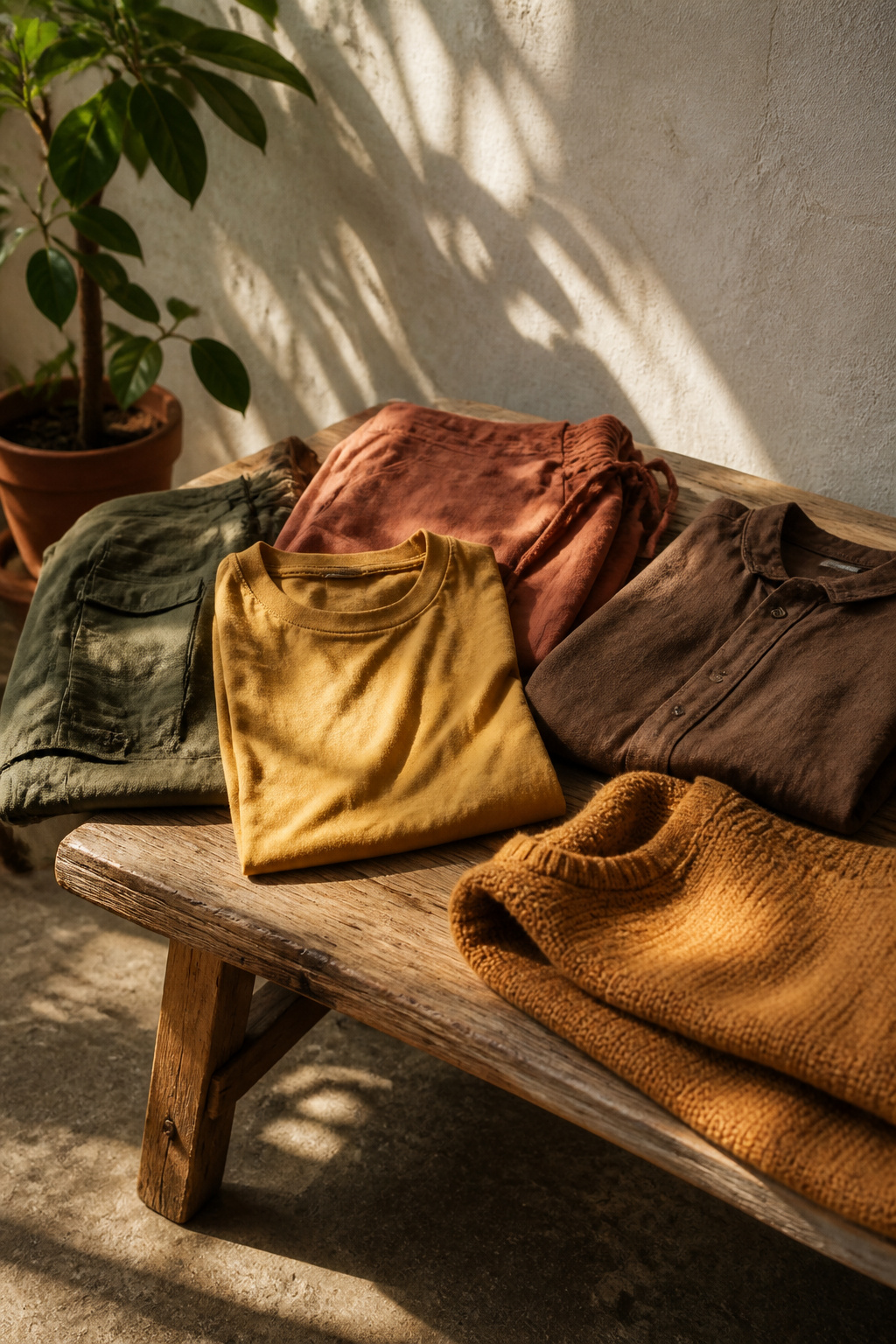
Terracotta, olive green, mustard yellow, and rich brown function as your working neutrals in earthy outfits, though not all of them play equally nice with what you already own. Olive and brown slip into a closet full of navy, cream, or black without much negotiation. Mustard needs more thought; it fights with cool pinks and certain reds, so you are committing to a warmer overall palette if you bring it in. Terracotta sits somewhere between, pairing easily with denim and ivory but looking suddenly costume-y against jewel tones you might still love.
These colors change in the wash, and that is part of why they work. A mustard cotton tee that softens toward straw after a year of laundering looks intentional, not ruined. The same fading in a synthetic blend reads as cheap. Linen and cotton age with dignity; cheaper rayon versions pill and go muddy. If you want the weathered look, buy natural fibers and stop chasing the original saturation. If you need the color to stay exact, earthy tones are probably the wrong choice for that piece.
Texture Over Time
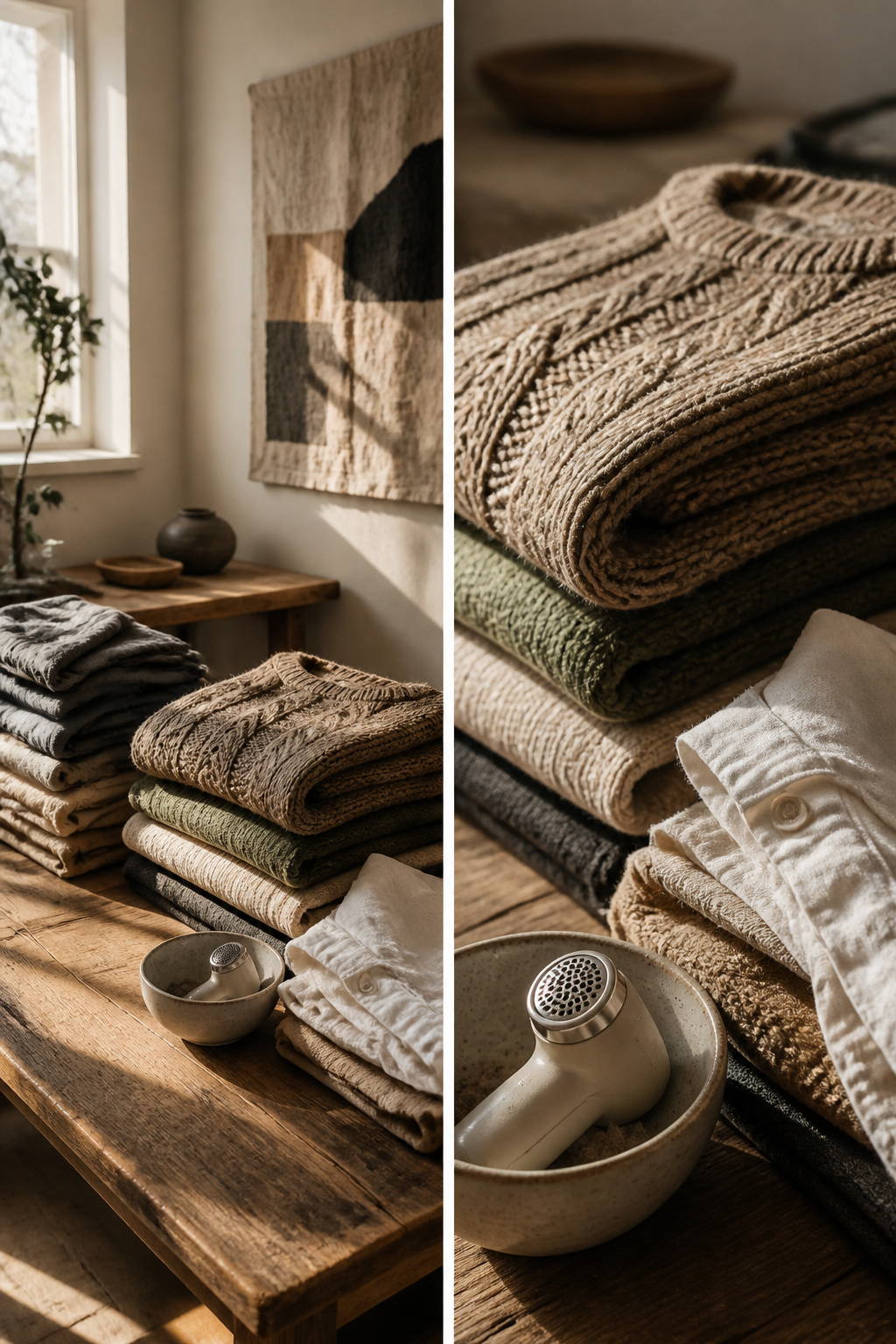
Cotton softens in the wash until the fibers relax into something that drapes instead of standing away from the body. That shift from crisp to lived-in is part of what makes an earthy outfit look intentional rather than sloppy. Linen does the opposite of soften; it creases immediately and steams out slowly, which is why I keep a small travel steamer in my closet rather than fighting the iron every morning. The rumple that stays after steaming, the one that looks like you moved through your day, reads as texture. The crease that looks slept-in reads as neglect.
Chunky knits pill where the arms rub against the torso, and the pills gather fastest on the cheapest acrylic blends. A fabric shaver takes them off in thirty seconds, though doing it too often thins the yarn. I run mine once at the start of each season and otherwise let the surface age. A piece crosses from character to shabby when the structure goes, not the surface: a sweater that pills but holds its shape still works; one that has stretched at the shoulders or runs at the seams is done.
Not Hippie, Not Festival
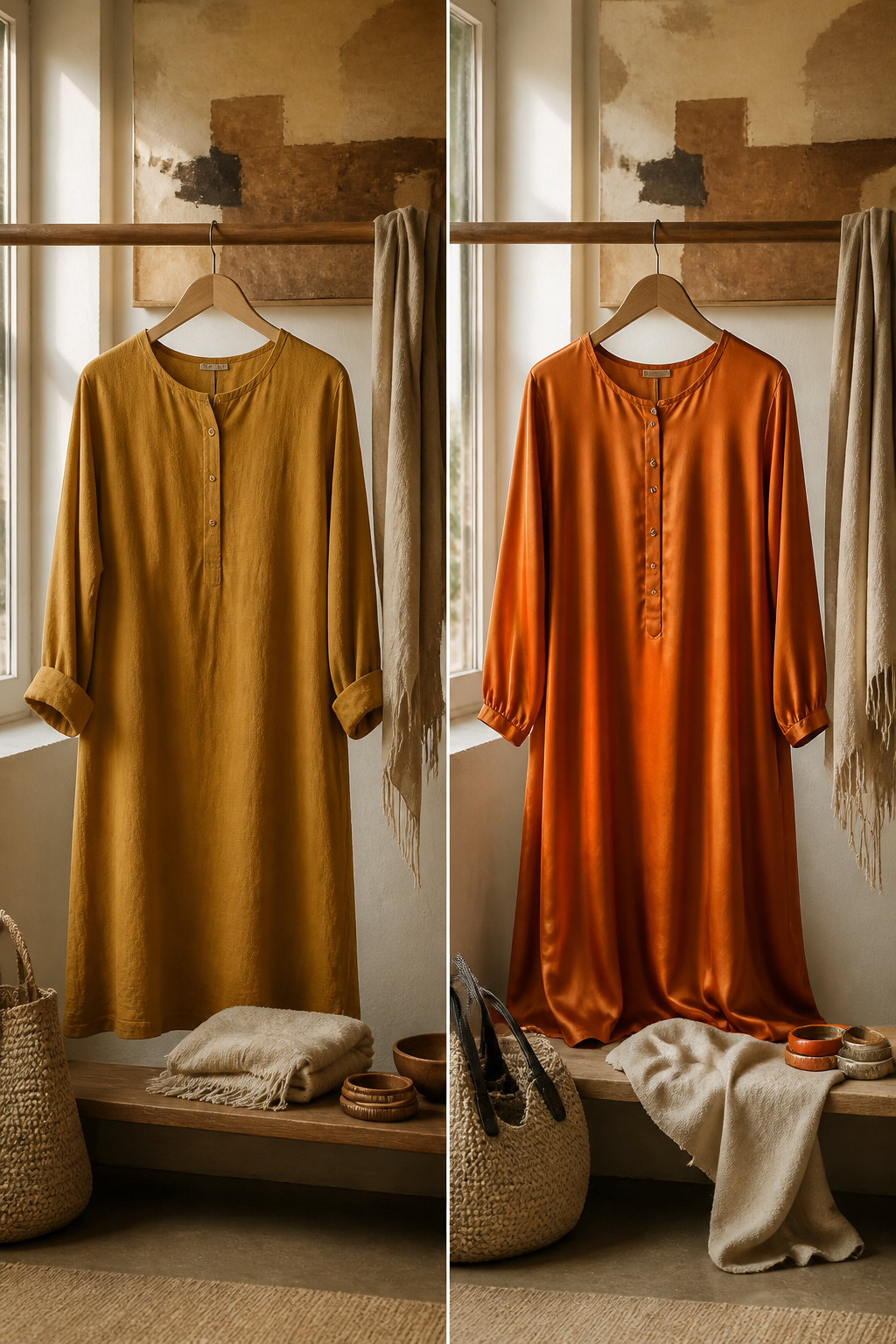
A single piece tells you everything. Hold up a garment and the fabric does the talking first: cotton, linen, silk, or wool means someone built it to last; polyester with a loud geometric print is shouting festival, not wardrobe. The same cut in ochre or rust reads as earthy boho; in neon coral it reads as costume, even if the tag says the same designer.
Sophisticated muted tones earn their keep through repetition. A top in washed terracotta pairs with the jeans you already own, with a midi skirt, under a blazer. That versatility is the whole point of moving toward quality over quantity. Bright neons and synthetic prints usually sit unworn by March because they demand a specific mood, a specific event, a specific you that does not show up often enough.
The longevity question is practical. Natural fibers soften and shape to you over years; synthetics pill, trap heat, and date themselves through sheen alone. I have learned to check labels the way I check seams: not obsessively, but quickly, before the checkout screen. If the composition list starts with polyester and the pattern looks like it belongs on a concert poster, I close the tab.
Frequently Asked Questions
How do I style boho and earthy outfits without looking outdated?
Choose modern fits and quality natural fabrics instead of literal 1970s reproductions. One statement boho element per outfit keeps the look current; a warm earth-tone maxi dress moves from sandals to boots with just a layer change, and a linen blazer in olive or sand replaces the fringed cardigan for a sharper silhouette.
What are the essential pieces for an earthy outfit wardrobe?
The core pieces are flowing maxi dresses in terracotta or olive, oversized cardigans with real weight through the shoulders, natural fiber tops in cotton or linen, wide-leg pants with a true high rise, fringe details on bags or boots only, woven bags with structure, and layered jewelry in wood or hammered metal. Cotton and linen blends age best, softening with washing rather than collapsing.
Can earthy outfits work for professional settings?
Yes, with the right fabric weight and proportion. A linen blazer in olive or sand stays sharp through the shoulders and waist while the weave reads as texture, not costume. Pair it with a fitted shell or thin turtleneck and structured trousers in brushed cotton twill; leave paisley, tassels, and ankle bells for off-hours.
How is the modern boho aesthetic different from hippie or festival fashion?
The fabric does the talking first: cotton, linen, silk, or wool signals something built to last, while polyester with loud prints shouts festival. Sophisticated muted tones like ochre or rust earn their keep through repetition and versatility; bright neons and synthetic prints usually sit unworn by March because they demand a specific mood that rarely arrives.
What accessories work best with earthy outfits?
Natural materials carry the look: woven bags with reinforced leather corners, wooden jewelry, hammered metal cuffs, and leather belts with hand-buckled patina. One piece speaks; three compete. For jewelry, keep three pieces as your daytime ceiling, and mix brass and silver only when one piece clearly dominates the other.