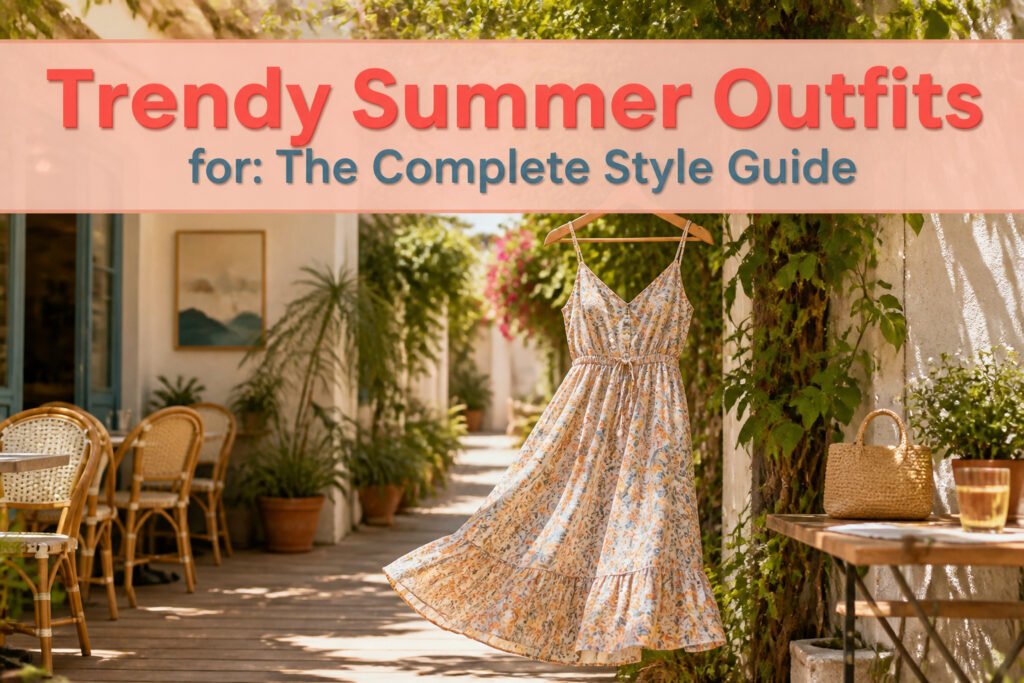
Trendy summer outfits are the pieces that keep you cool without looking like you stopped trying. The difference between an outfit that works and one that fails usually comes down to fabric weight and proportion, not price or brand. A lightweight chambray shirtdress breathes where heavier denim traps sweat, and a three-inch inseam on shorts hits the sweet spot for most heights, while the wrong torso length on a romper turns it into a costume.
Chambray Shirtdress
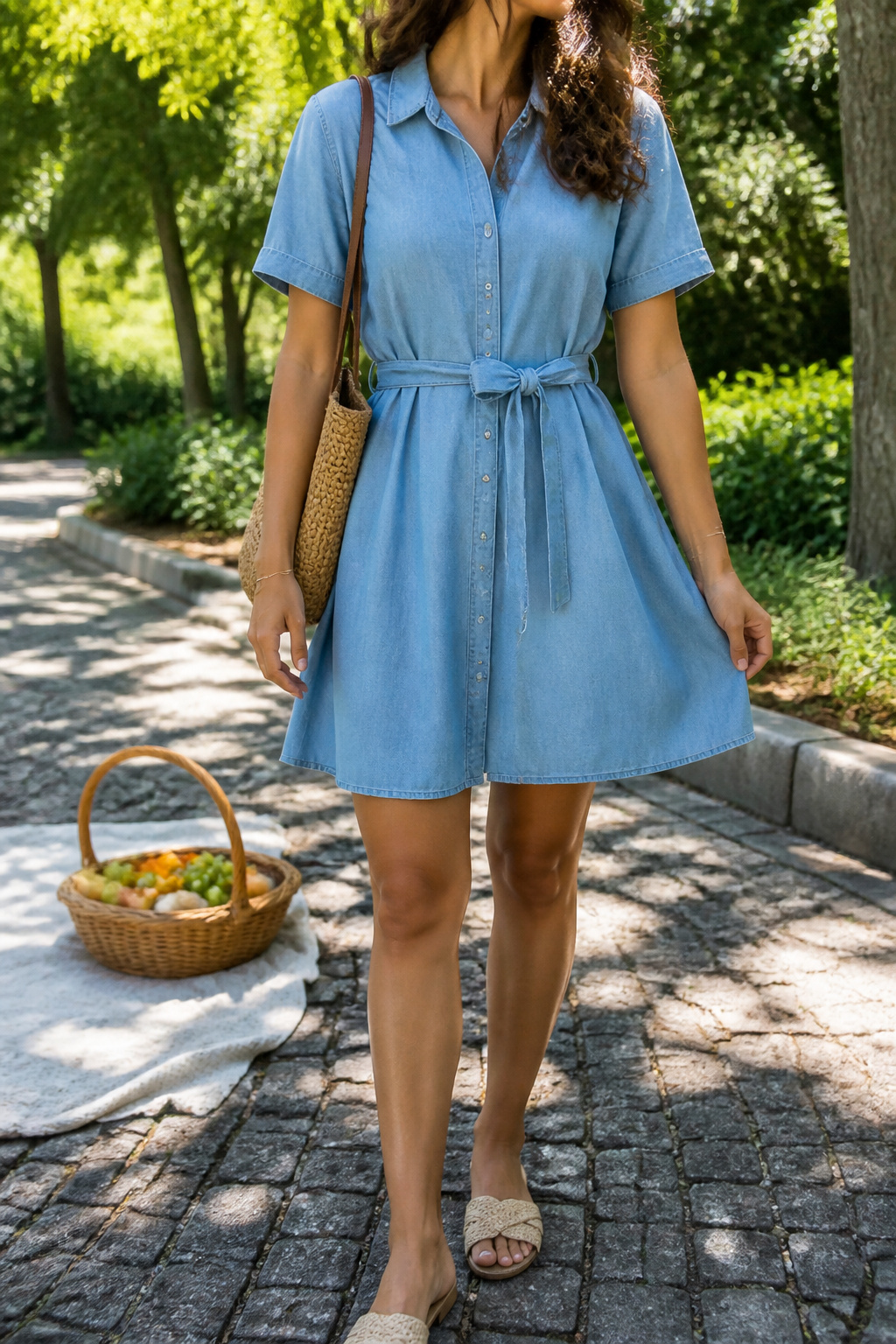
Chambray carries the ease of denim without the stiffness, and a shirtdress cut makes it one of the few pieces that actually transitions from grocery runs to a casual office without looking like you tried. The fabric weight matters more than most people realize in summer heat: a lightweight chambray breathes where heavier denim would cling and trap sweat against your skin.
The Old Navy chambray shirtdress hits this balance well enough that it became my gateway into the style after watching them all spring. A utility version from Revolve offers crisper structure if your office leans more polished than creative, but the classic cut works for more body shapes since the belted waist and A-line skirt don’t demand a specific proportion to look intentional.
What sold me on owning one rather than borrowing the idea with separates is the single-piece simplicity on ninety-degree mornings. No matching required, no layered cling, and the looseness that keeps you cool still reads finished because the collar and buttons do the styling work for you.
Romper
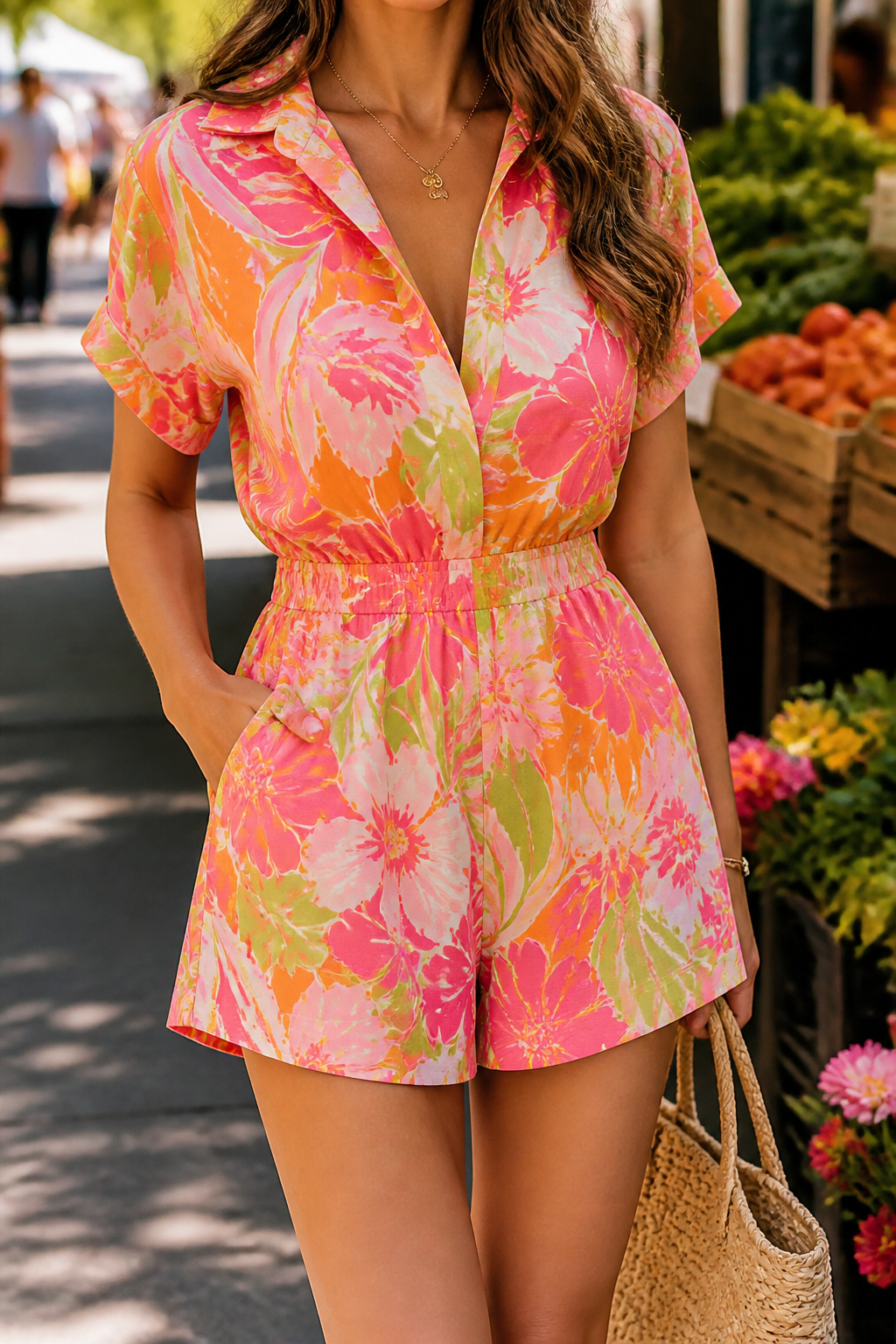
A romper removes the morning guesswork of what matches what, which is half the appeal. One zip or button and the outfit is coherent. The downside is real, though, and anyone who has worn one to an outdoor concert already knows it. Bathroom stops take longer, full stop. If that rules it out for you, a matching short set gives the same visual effect without the gymnastics.
Torso length is the make-or-break detail that determines whether a romper looks proportional or like a costume. A long torso swallowed by a standard cut will strain at the crotch and ride up in back; a short torso in a long-rise style ends up with fabric bunching above the waist. The fix is measuring from shoulder to natural waist and comparing it to the garment’s listed rise before ordering. Most returns happen because this step gets skipped. For length, a three-inch inseam hits the sweet spot for average heights, shorter if you are petite, longer if the event leans conservative.
Linen Shorts and a Tee
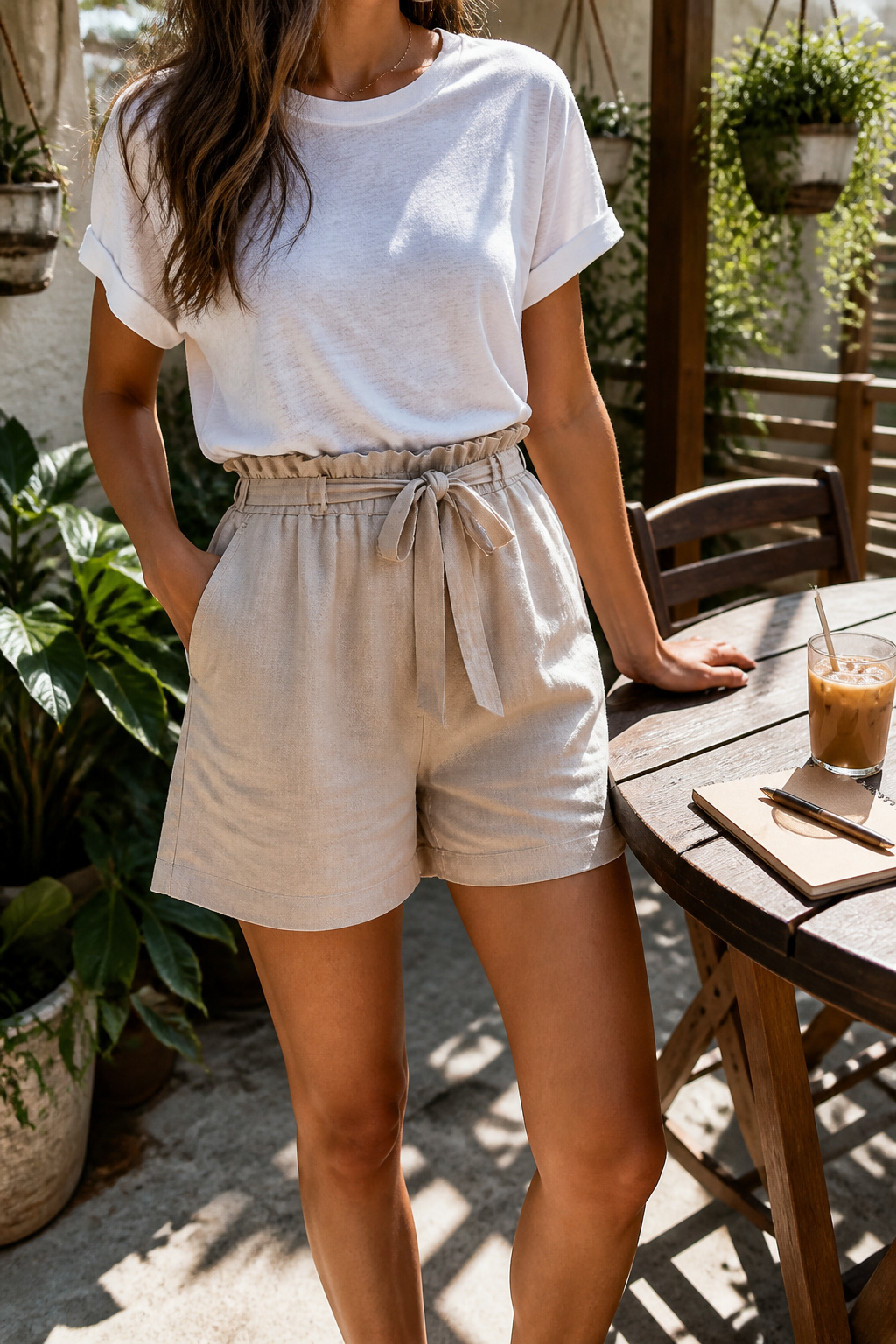
Linen shorts with a paper bag waist sit higher on the torso, and that extra fabric gathered at the top does forgiving work across midsections. The ruched band softens a softer stomach, adds curve to a straighter frame, and stays put without a belt digging in during a humid afternoon.
The tee matters just as much as the shorts. A mid-weight cotton crew, not tissue-thin, keeps the outfit from sliding into sloppy. The tuck is where most get lazy: a full front tuck with the shirt bloused slightly over the waistband reads intentional, while an untucked oversized tee or a tight military tuck each fight the relaxed proportion of the linen. Black against tan linen is the combination that keeps resurfacing in my own rotation, simple but not careless.
Natural fabrics win here for the obvious reason. Linen, cotton, rayon, these actually let heat escape rather than trapping it against skin. The wrinkling is the tax you pay; in Texas-level humidity, the breathability still comes out ahead.
Denim Shorts and Crop Top
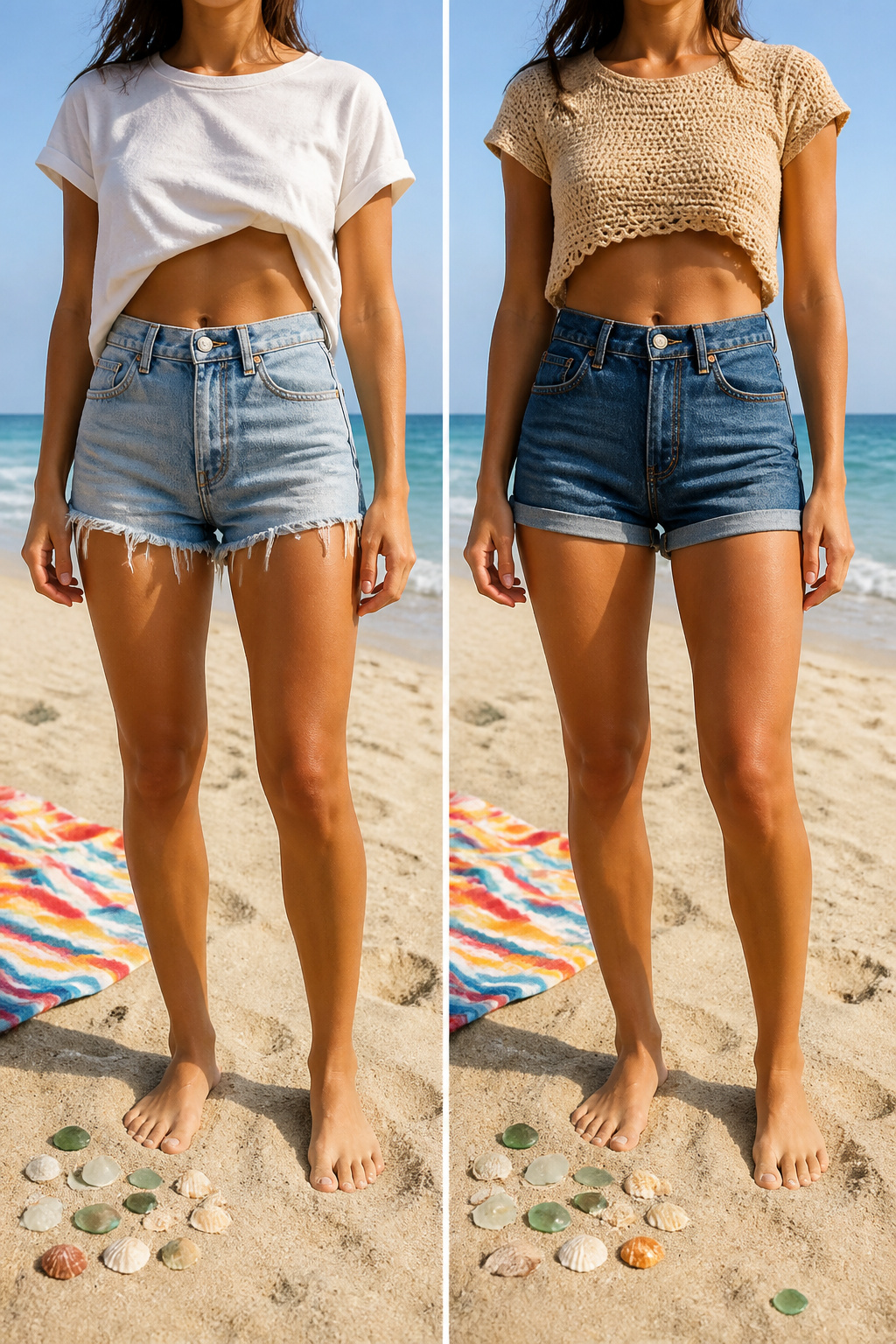
The inseam on denim shorts matters more than most people think when pairing them with a crop top. I learned this after buying three pairs in the same size, each a different length, and watching two of them sit unworn. A shorter inseam can visually lengthen legs, while a longer one anchors wider hips. The proportion between where the shorts end and where the top begins is what makes the outfit work, or not.
High-rise shorts sit at the natural waist and create a cleaner line with a cropped hem, which is why they became my default. Mid-rise versions left me tugging fabric upward all morning, especially after sitting. The gap of exposed midriff looked accidental rather than intentional.
Stretch denim was my other misstep. The pair I grabbed off a sale rack felt perfect at 9 a.m., soft and forgiving. By lunch the seat had bagged out enough that the shorts looked a size too large. Non-stretch or minimal-stretch cotton holds its structure through actual wear, which matters more than that initial comfort promise. The outfit reads sharper when the denim keeps its shape against the softer line of the top.
Easy Breezy Sundress

A sundress only earns the "breezy" label when the armhole sits low enough that air moves through, not just around, the torso. Shallow armholes trap heat against the body; the right depth lets the fabric lift and fall with any motion. Fabric opacity matters just as much in practice as it does in principle. Hold the material to a window in the store: if the outline of your hand reads clearly, the midday sun will render the same service to whatever you wear underneath. The wrong bra destroys the look faster than any cut or color mistake. Visible straps or a band that shows through a low armhole turn an effortless piece into something requiring constant adjustment. Seamless, low-back, or adhesive options solve this without adding bulk. For anyone building summer outfits from scratch, the sundress asks the least: one item, one decision, and the body does the rest of the work keeping cool.
Knit Dress
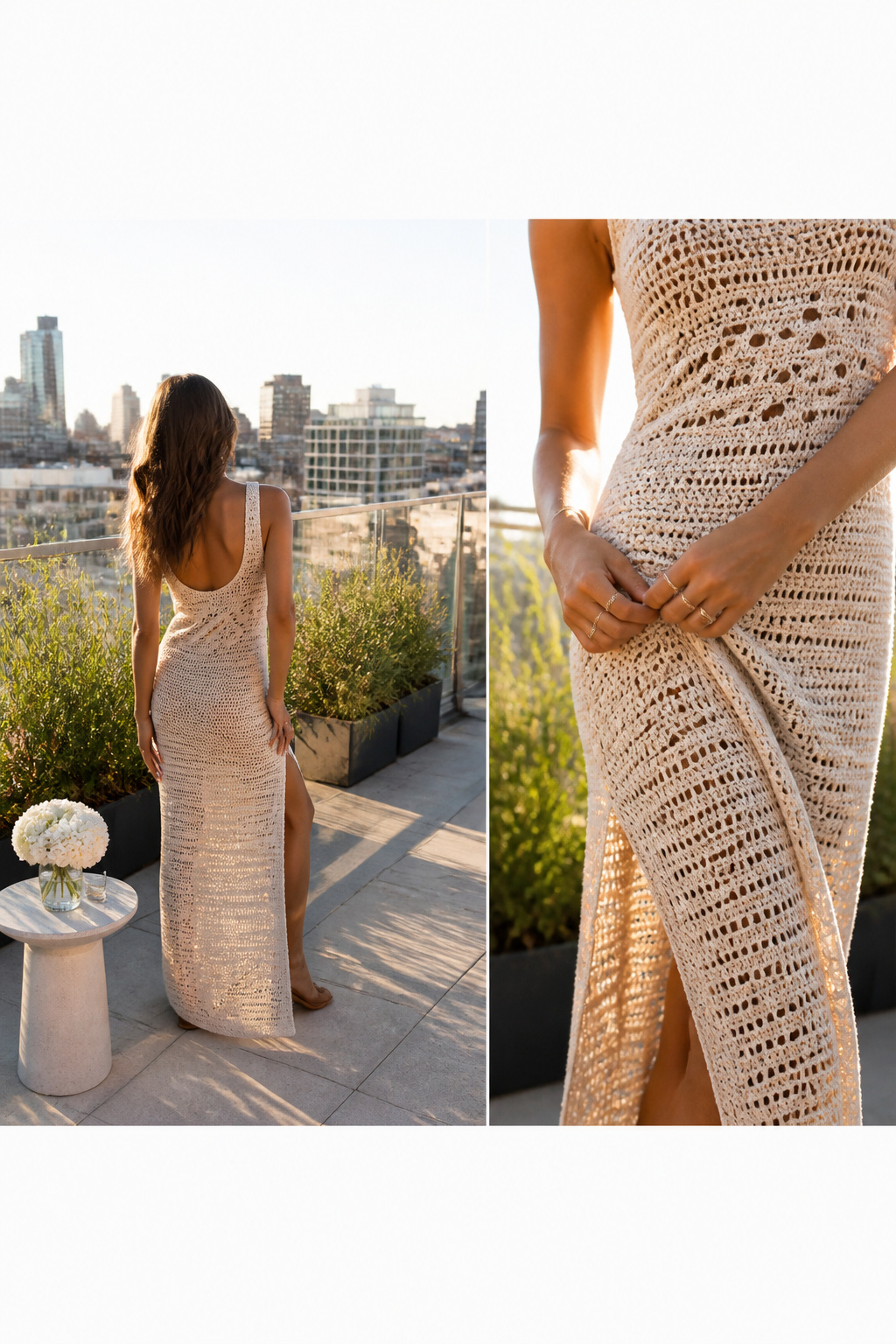
Crochet knit dresses read beach vacation but land in offices and dinner reservations just as often, which is where the real test happens. The A.L.C. Carolyn crochet dress at $450 carries its weight in open-stitch construction that actually ventilates; the Zara crochet dress at $129 hits a similar visual note with tighter weave that runs warmer. A knit dress works for summer when the stitch is loose enough to see daylight through and the occasion has air conditioning within twenty minutes. Outdoor weddings in direct sun at 2 p.m. are the line it crosses into regret.
The underwear line issue nobody discusses: crochet texture grabs fabric underneath and broadcasts every seam, every edge, every shape. Seamless skin-tone thongs solve part of it; going without works only if the dress is fully lined, which the budget version rarely is. I learned this standing in a hotel bathroom mirror at 5 p.m., the outline of my cotton bikini briefs embossed across the seat like a topo map.
Maxi Dress
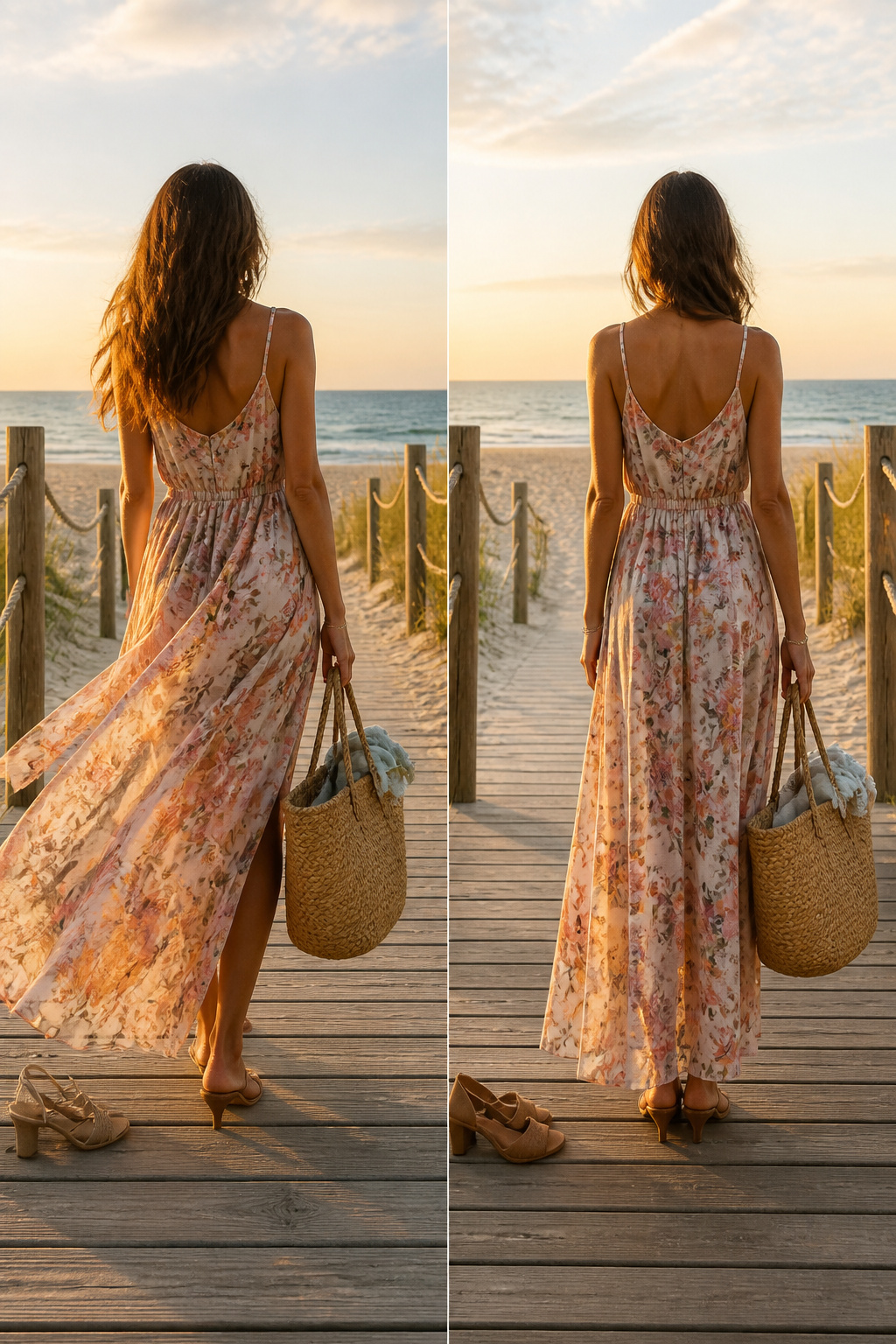
The maxi dress is the dress length of this summer, and the right one earns its keep by working twice in the same day. A flowy floral piece with chunky slide sandals and a woven tote reads as easy daytime, then swaps those sandals for kitten heels and a sleek clutch to carry you into dinner without changing the dress at all. That shoe swap is where the savings live, one garment doing two occasions.
The tripping hazard is real. Excess length at the hem catches on stairs, drags in parking lots, and turns a graceful silhouette into a liability. A temporary hem with iron-on tape or a few hand stitches buys you the right proportion until you decide whether the dress stays. No tailor needed, and the fix peels out if you want the full length back for taller shoes later this season.
Midi Skirt
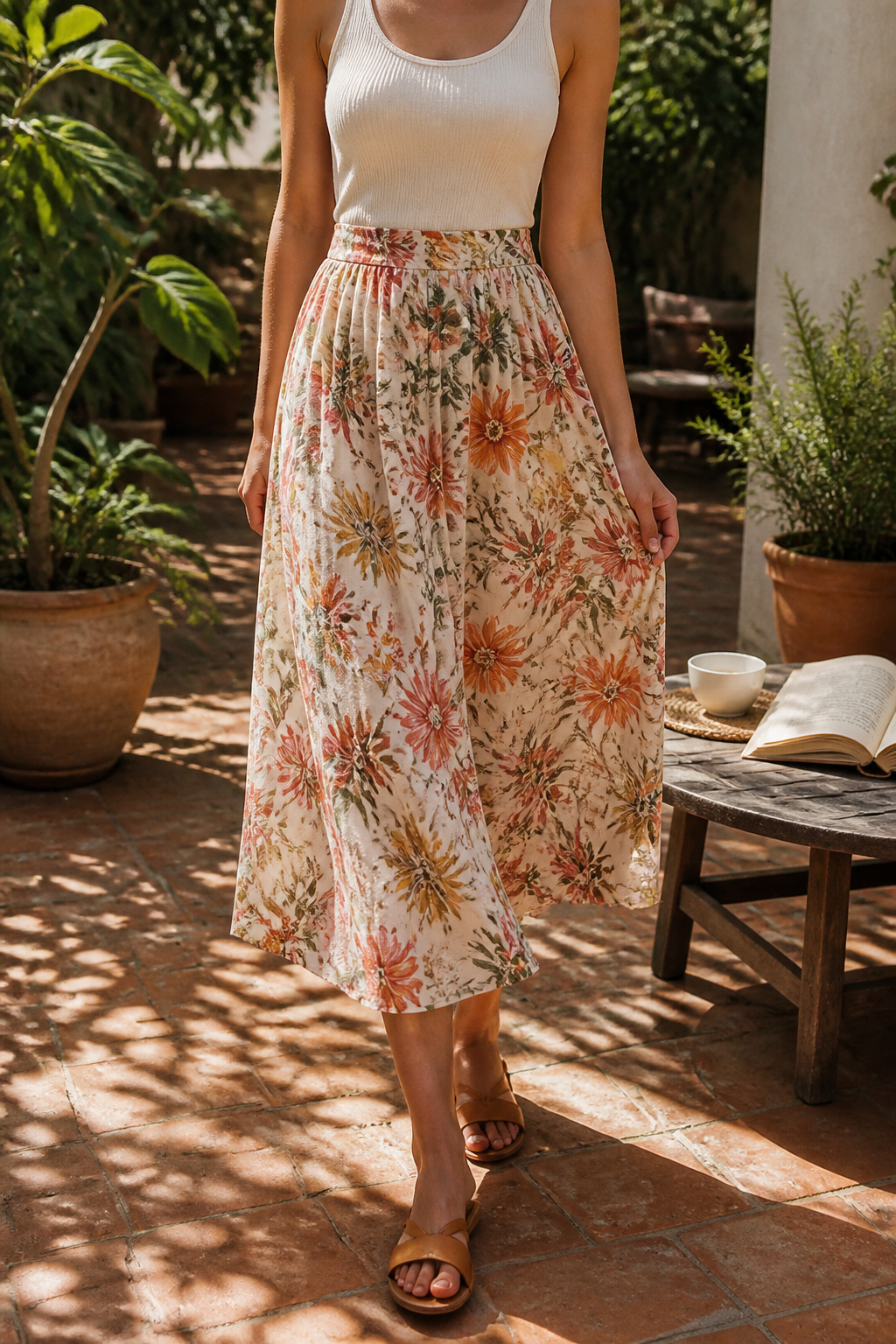
The midi skirt is the hemline that splits rooms. Half the women I know own three; the other half tried one once, felt it aged them ten years, and never looked back.
What separates the two camps usually comes down to calf width and where the hem hits relative to the ankle. A fuller calf needs the skirt to skim past the widest point and stop at the narrowest, which is almost always slightly below mid-calf rather than at it. The ankle bone is your landmark: the hem should break either well above it or fully below it, never right at it. Anything grazing the top of the ankle shortens the leg in a way that reads immediately as frumpy, no matter how expensive the fabric.
Shoe choice is what rescues the length when the proportions are already decent. Clean white sneakers with a slight platform give the casual version a modern, street-level feel; they also add that fraction of height that keeps the midi from looking matronly. For evenings, a pointed-toe mule in leather or suede extends the foot and creates one continuous line from hip to toe. The mistake is the ankle-strap sandal, which cuts the leg at its worst point and makes even long calves look stubby. I learned that one at a summer wedding, standing in photos next to a friend in mules who looked effortlessly tall while I looked like I was wearing my mother’s church outfit.
Linen Shirt
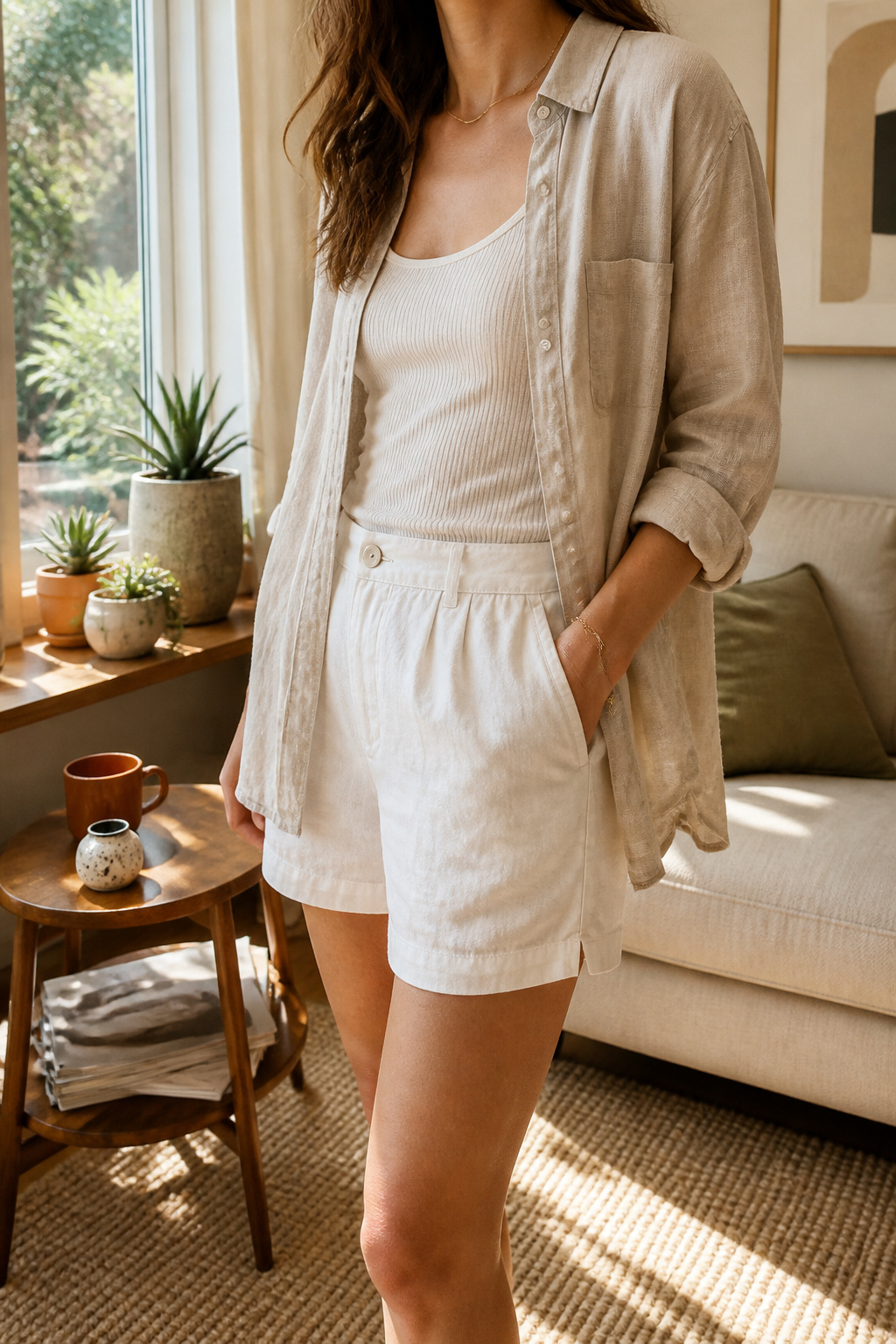
A linen shirt only works if you stop fighting the wrinkles. The fabric is light and airy, which is why it survives the Texas heat, but it also wrinkles if you look at it wrong. Accept the rumple as part of the look, and choose colors that make that rumple read as intentional.
Closed up, a linen shirt needs structure to avoid the just-rolled-out-of-bed effect. White or tan reads crisper than pale blue or gray, which can look like you slept in them. Worn open over a tank, the same shirt becomes a layering piece, and the wrinkles matter less because the eye reads the whole silhouette instead of judging the shirt alone.
The bold-color route changes the math. Citrus orange, ocean blue, sunny yellow, jungle green, tropical florals, geometric patterns: these turn the wrinkle into texture rather than mistake. A bright green linen shirt over a white crochet tank with strappy sandals is resort-wear that still works for grocery runs. The print does the heavy lifting; the wrinkle is just proof you are actually wearing it.
Flowy Dresses
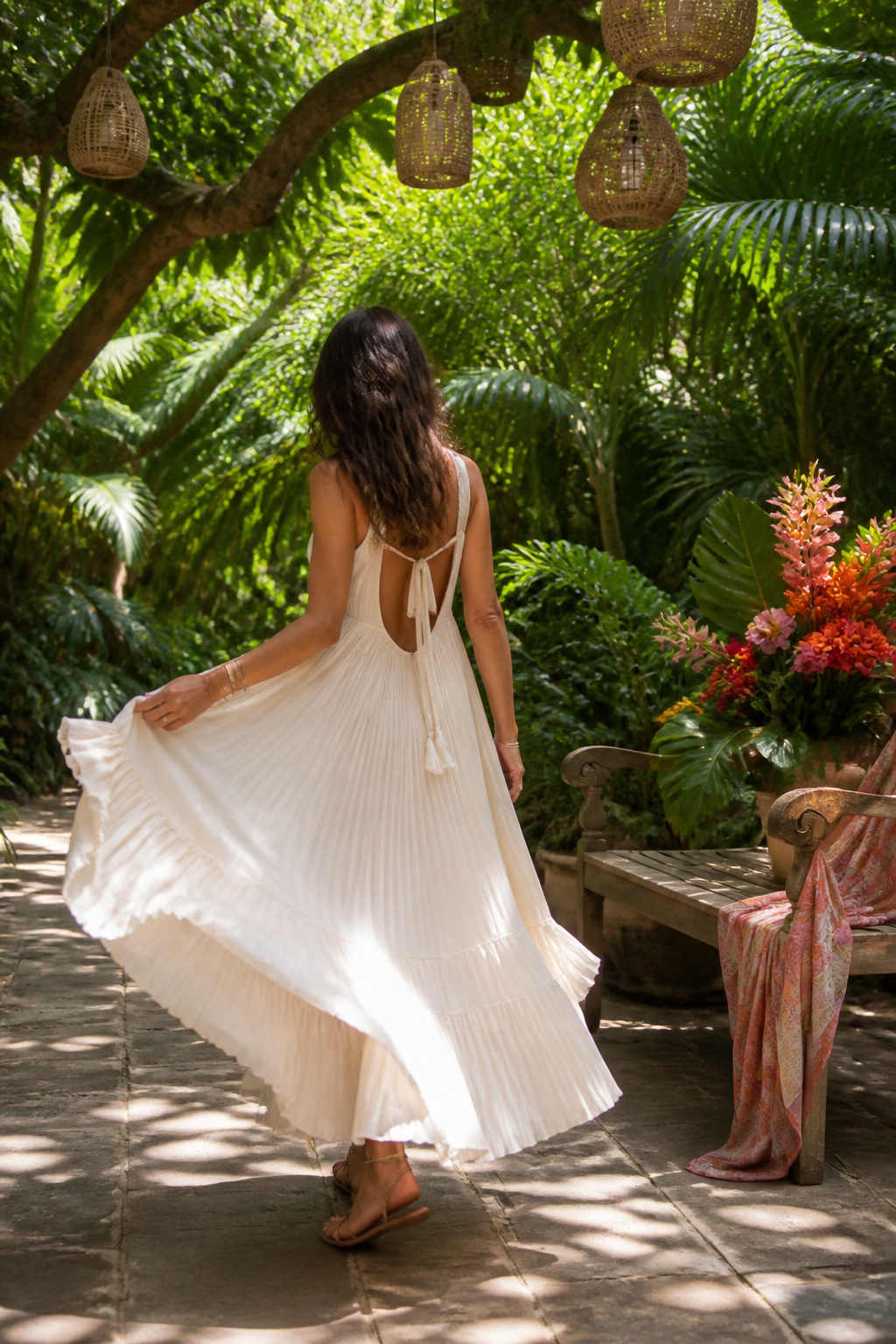
Flowy dresses carry more fabric and more movement than a standard sundress, which is exactly where the trouble starts. That extra volume can read as maternity wear when you are not pregnant, especially in certain cuts. The belt decision matters here. A thin tie at the natural waist adds shape without turning the dress into something fitted; skipping it entirely works only if the dress has a defined waist seam or a v-neck to break up the fabric.
Cotton, rayon, and linen handle humidity better than anything synthetic. Rayon in particular can surprise you, it drapes beautifully but some weaves cling the second the air turns thick. Linen wins for staying truly separate from your skin, though it wrinkles. Cotton sits in the middle, reliable but not exciting.
For casual summer wear, a flowy dress over a swimsuit or with flat sandals covers most warm-weather situations without looking like you tried. The fabric choice matters more than the print.
Nautical Stripes
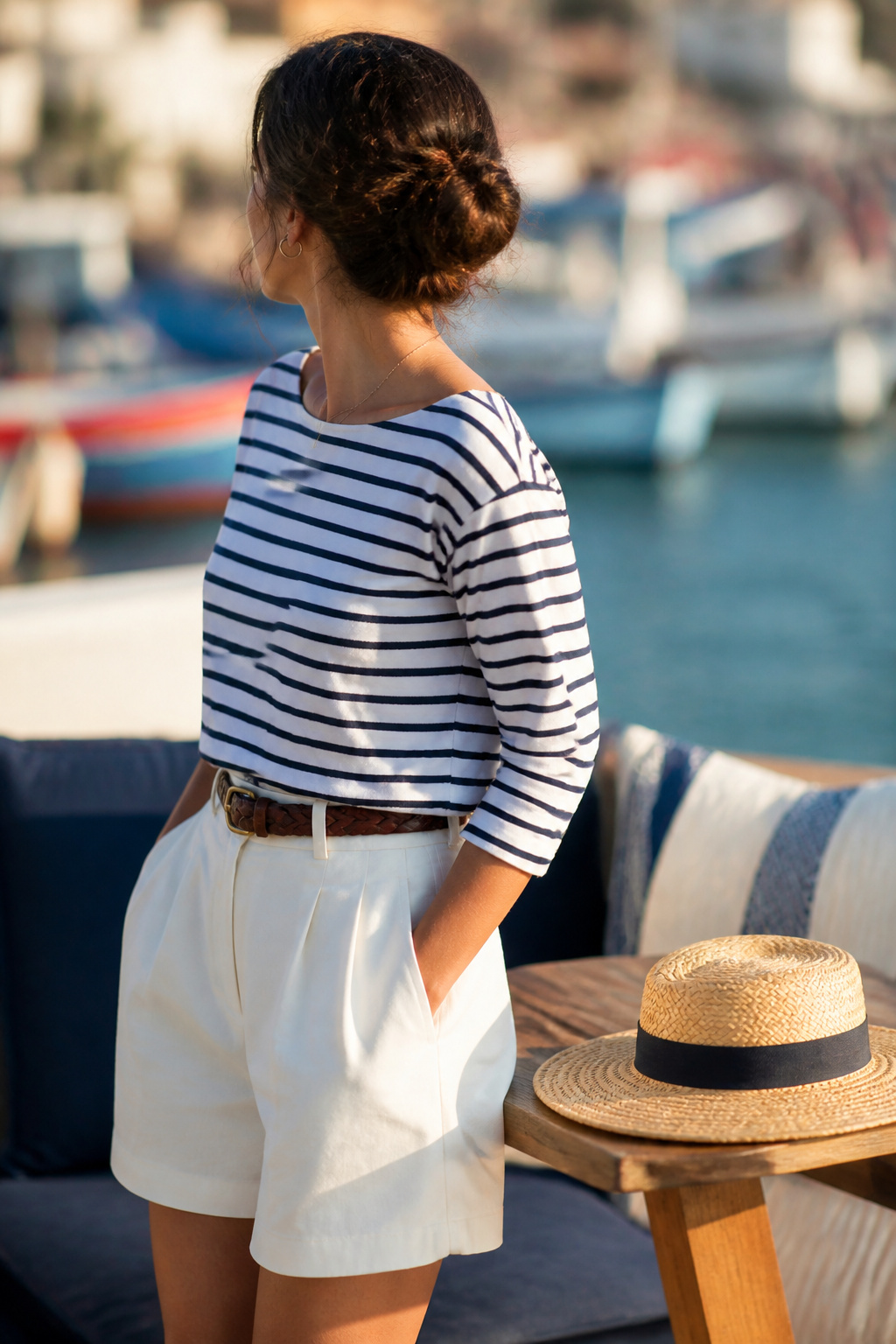
Stripes are a major yes for summer: classic, clean, and dressable up or down without much effort. The Mango printed blouse at $80 lands right where quality meets accessibility, with a weight that drapes rather than clings.
Horizontal stripes still trigger that knee-jerk fear of widening the torso. Fit evidence says the cut matters more than the pattern. A slightly relaxed silhouette with a lower armhole and a hem that hits at mid-hip** breaks the line across the body instead of drawing a straight band**. Tighter fits and higher necklines are where the stripe risk actually lives; give the fabric room to fall vertically and the eye follows that movement instead of getting stuck on the repeat.
I reach for my striped tops with white denim or a simple khaki short, and the blouse does the work from there. No layering required, no jewelry necessary unless the mood strikes.
Sporty Summer Outfits
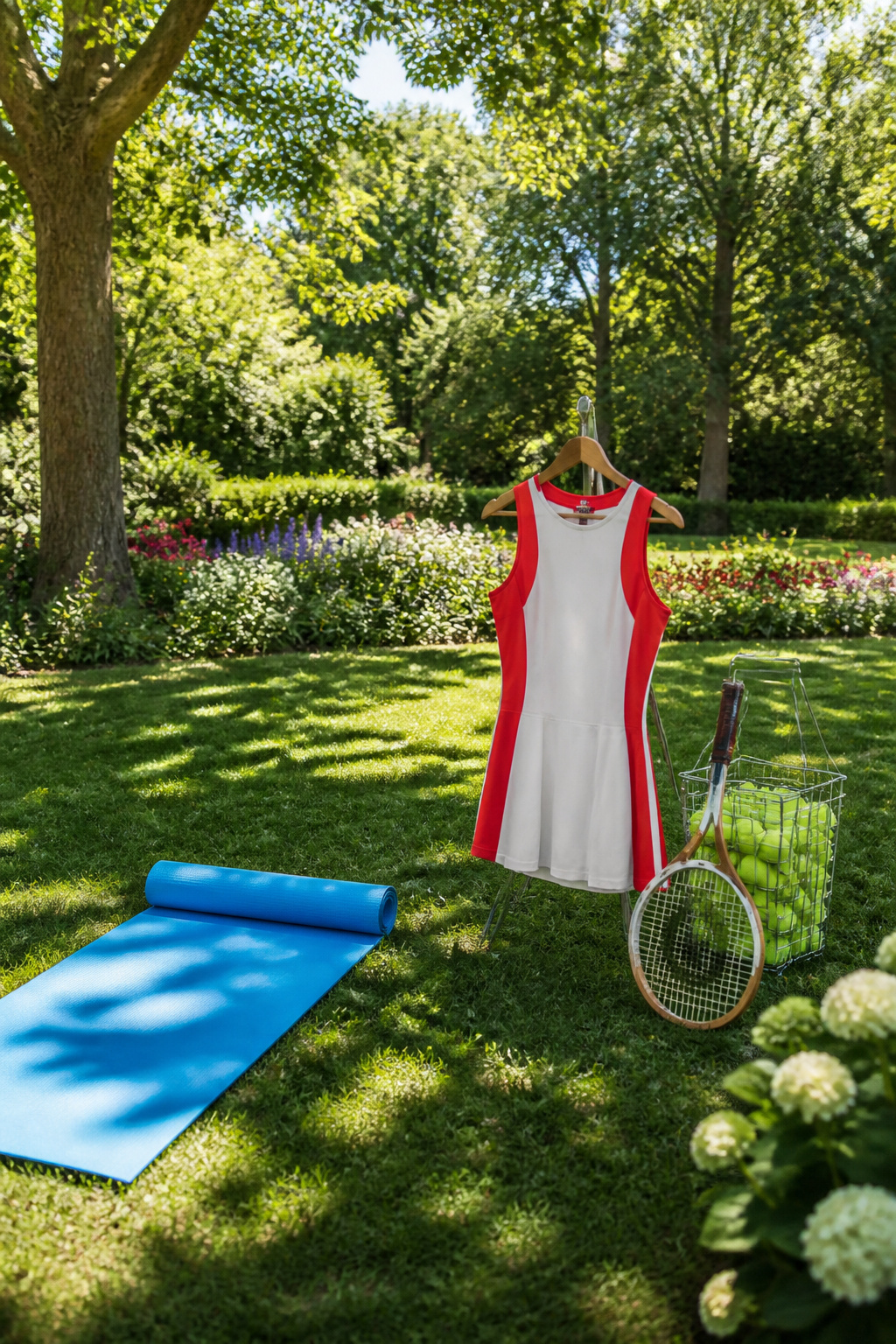
Athletic energy got an upgrade this summer, and the pieces are more wearable than they sound. Tennis dresses have become a staple for women who have never held a racket, and matching sets in neon pink, bright green, and electric blue read as streetwear rather than leftover workout clothes.
The sock and sneaker combination is what makes or breaks the look. Vintage-looking sneakers with a tennis dress turn it into a court-to-coffee outfit; skip the socks and the whole thing looks like you forgot to change after the gym. A monochrome set with bike shorts and a cropped tank works the same way, especially with a relaxed zip-up tied over your shoulders once the temperature climbs.
Stylist Landess calls the tennis dress a double win: cute, easy, and it looks like effort went in. That is the sweet spot for pieces that need to move from errands to lunch without a full change. The palette leans poppy, so if neon feels like too much, one bright piece against neutral sneakers keeps the energy without the costume effect.
Vacation Vibes
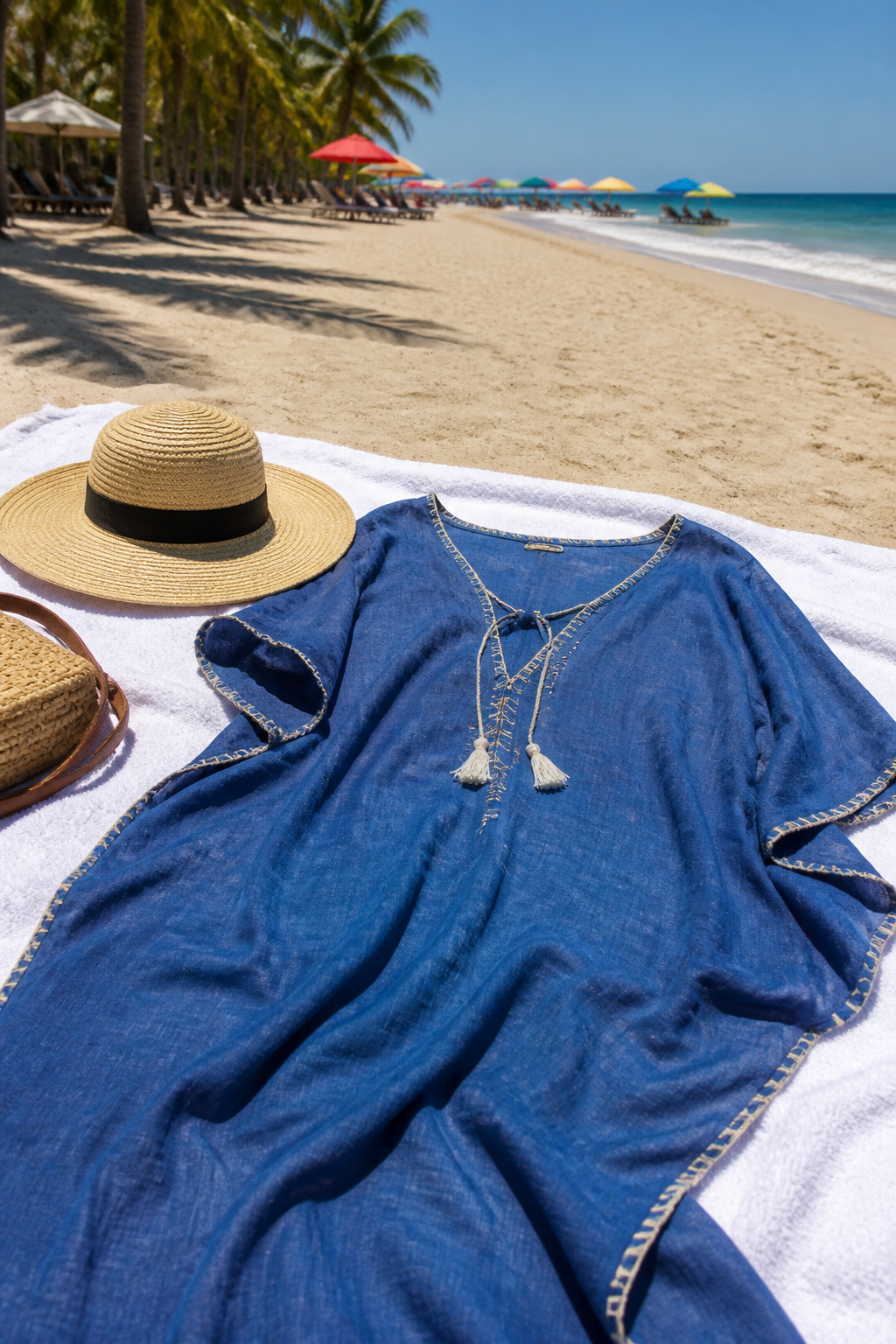
The vacation aesthetic falls apart when everything in your suitcase is too sheer, too short, or printed with pineapples. A linen caftan, the loose ankle-length layer with a slit, works at the resort bar and over jeans back home. The shorter kaftan, spelled with a K and usually hitting mid-thigh, tends to read strictly poolside. The difference matters because one earns its closet space and the other sits folded in a drawer for eleven months.
I bought a white crochet cover-up in Tulum that I wore exactly twice: once at dinner where the lighting was dim enough to hide the lining gaps, and once to a pool party where it belonged. The error is buying something that only makes sense with a tan and a cocktail in hand. The pieces that transition are the ones you could wear to a Saturday farmers market without explaining yourself. A long cotton caftan in a solid color, a wide-brim straw hat that blocks actual sun, leather sandals with a real sole. These items do not need the vacation to justify their existence.
Summer Night Out

The temperature drop between dinner and last call wrecked more of my summer nights than I care to count. Cotton and linen are the fabrics that actually breathe at 85 degrees, but by midnight they do nothing against a 17-degree swing. A gauzy layer you can tie at the waist or drape over shoulders solves this without the bulk of a jacket you will not carry past the first bar.
Mesh dresses and silky slip dresses read night-out right, yet that sheerness works against you once the air cools. A lightweight crochet tank or asymmetric top in cotton or rayon underneath gives you coverage to keep and shed as needed. The bold color story, sultry red or bright orange, carries through after dark without relying on bare skin for impact.
Shoes are where the night falls apart. Strappy sandals sink into grass on the walk from the car and blister by the second stop. A sleek block heel or structured flat in leather handles both surfaces and the hours between. Let one statement piece, a bold maxi or leopard print skirt, do the work; keep the shoe simple and the accessories minimal. The outfit reads intentional, not overplanned.
Beach Vacation Outfits

A beach outfit and a swimsuit cover-up solve different problems. The cover-up gets you from your towel to the snack bar; the outfit gets you from the hotel through sand and salt air to a dinner table without looking like you just climbed out of the ocean.
The walk from beach to dinner needs fabric that sheds sand rather than trapping it. Linen and gauze shake clean with a single swipe, which is why they anchor most resort wardrobes. A bold citrus orange or ocean blue in a tropical floral or geometric print reads intentional, not accidental, and shifts easily under restaurant lights.
Your bag is the piece that has to do two jobs at once: carry your paperback and contain a damp suit without soaking everything else. A woven raffia tote with a separate lined compartment solves this, though in a pinch any structured straw bag works if you seal the wet items in a hotel laundry bag first.
The simplest formula pairs a breezy maxi dress with chunky slide sandals for sand, then swaps in kitten heels and a sleek clutch the hotel lobby bathroom. One-and-done dressing only works if the dress itself feels like an outfit, not like a towel with sleeves. Tie straps, open backs, and subtle ruching are the details that tip it from poolside to proper.
Wine Tasting Attire

Red wine finds white cotton fast, and a tasting room floor is usually gravel or packed dirt that turns a stiletto into an ankle hazard. The temperature swings matter too: ninety-degree sun on the patio drops to cellar-cool sixty degrees underground, so a sleeveless linen jumpsuit in olive or burgundy hides spills and carries you across both zones. I learned the gravel lesson the hard way at a Paso Robles vineyard, watching a woman in a floaty white sundress pick her way across the parking lot in wedges while I stood there in block-heel sandals that let me actually walk. Darker colors or small prints mask the inevitable dribble down your chin or blouse, and a light jacket tied at the waist handles the cellar chill without looking like you came prepared for a weather emergency. Skip the dry-clean-only silks; something you can blot with club soda in the tasting room bathroom and finish the afternoon in is the better move.
Fabrics That Actually Cool You
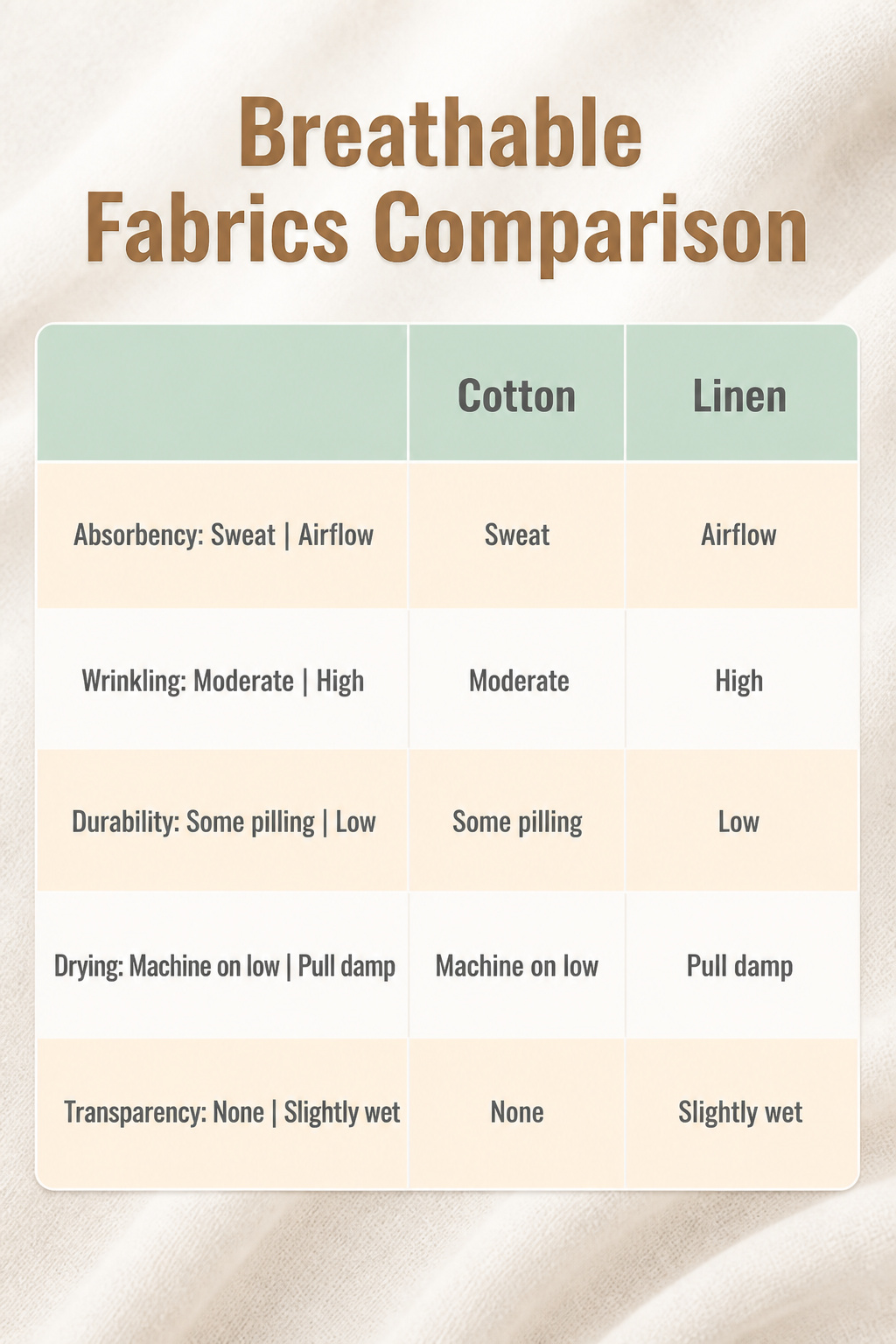
Breathable fabrics are the backbone of any summer wardrobe that actually functions once you step outside. Cotton, rayon, and linen each handle humidity differently, and knowing which does what keeps an outfit from becoming a mistake you feel stuck in by noon.
Cotton absorbs sweat rather than wicking it, so the fabric turns damp and stays that way in heavy air. That dampness can lead to pilling over time, especially where straps rub or bags sit. Linen, by contrast, lets air pass through so freely that it barely touches the skin, though it wrinkles if you look at it wrong, as anyone who has sat in linen shorts for twenty minutes already knows. The tradeoff is worth it in real heat. Rayon falls between the two, draping like silk but weakening when wet, which means it can go slightly see-through in the wrong humidity and stretch out of shape if you hang it dripping.
Machine-drying cotton on low and pulling linen while still slightly damp both extend wear far longer than the care tag minimum. Rayon wants flat drying, no exceptions, or it develops the kind of permanent sag that makes a trendy summer outfit look accidentally thrifted.
Day to Night Adjustments
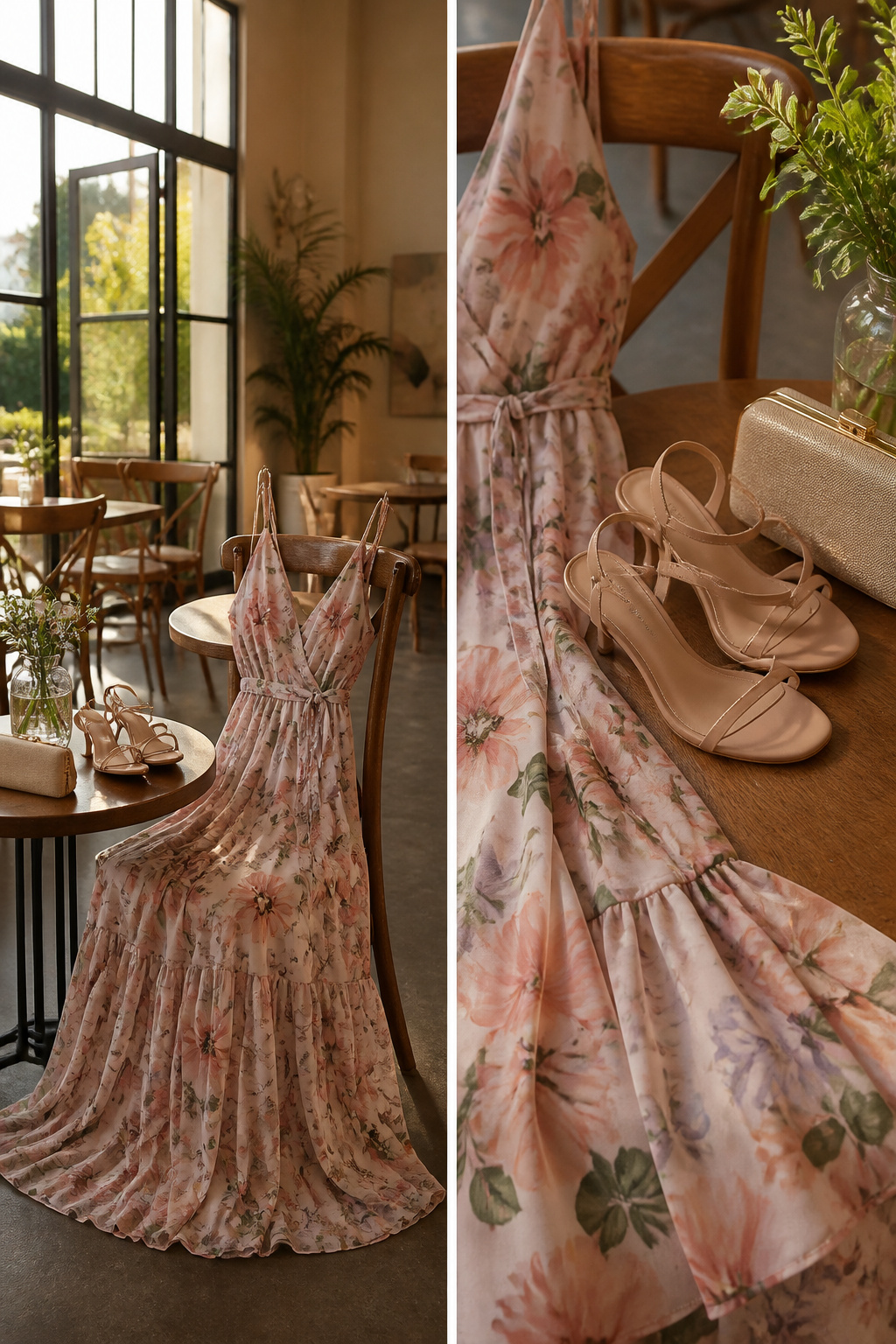
The casual-to-dressy pivot lives in four swaps you can make at 5 pm in an office bathroom. I have done this with a floral maxi dress and chunky slide sandals from the morning, the woven tote still warm from the sidewalk. Off came the sandals, on went kitten heels I keep in a dust bag under my desk. The woven tote went into the cabinet; a sleek clutch came out of my laptop bag. Jewelry shifted from a single delicate chain to small sculptural hoops that catch restaurant light. A deeper lip color, the one I apply without a mirror now, finished the register change in under four minutes.
The maxi dress carries this better than anything else in my summer rotation because the hemline already reads intentional. Tie straps, open backs, ruching, subtle textures, those details do the work after dark without extra layers. One statement piece stays the star; the rest stays sleek. A bold maxi with simple shoes, minimal metal, that is the balance that reads expensive rather than busy.
For a brighter evening option, swap the floral for a solid in sultry red, bright orange, or green. The same kitten heels and clutch hold. Leopard print works here too, though I find it needs the simpler shoe more than the solids do. Asymmetric tops or halter tanks in classic black pair with a brightly-colored skirt for a sleek date-night look that does not require the morning dress at all.
Accessories That Earn Their Keep
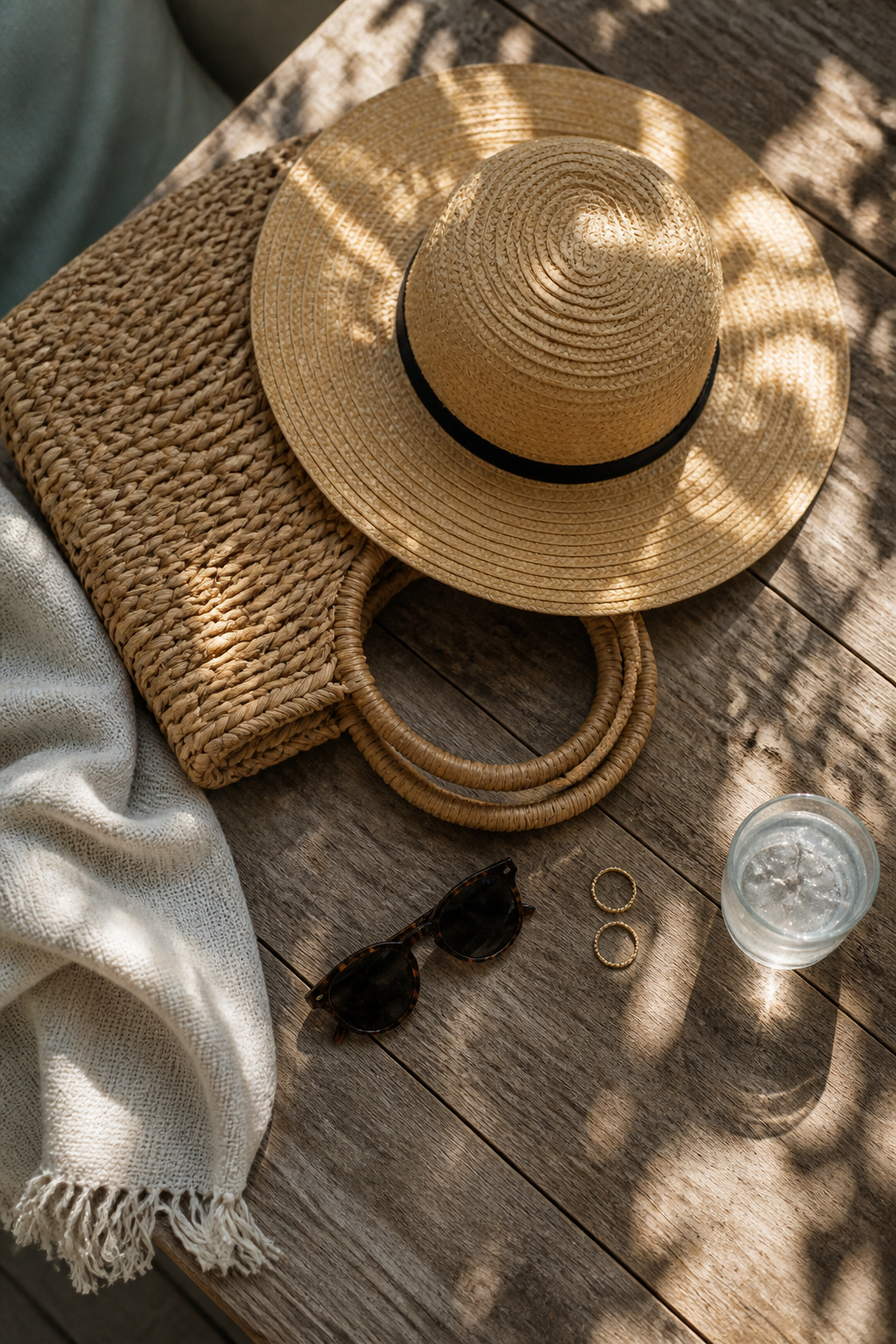
A wide-brim straw hat only works if it stays on your head. The one with the flimsy ribbon tie looked romantic online, but a breeze off the lake sent it cartwheeling into a parking lot before I’d finished my coffee. Now I look for an inner band that grips, or I skip the brim entirely and wear a baseball cap with actual personality.
The straw bag that sheds is the one with loose weave and raw edges. After two afternoons, my shoulder looked like I’d hugged a hay bale. Tight weave and lined interiors are the only straw bags that survive a season, and even those I check for finish along the straps where friction lives.
Jewelry is where I’ve overbought most. The stackable rings and statement earrings photograph well, but most mornings I reach for the same delicate chain. It clears a crewneck, disappears under a buttoned collar, and reads intentional with a scoop or a halter without ever competing. One necklace. That’s the ratio that holds up.
Bags with structure cost more upfront and cost less per wear. The slouchy tote that needs both hands to close, or the tiny clutch that fits a lip balm and optimism, both stay home more often than they should.
Color and Pattern Choices

Bright colors read differently under a camera flash than they do on a sidewalk. Citrusy orange and sunny yellow photograph with real punch, which is why they dominate vacation posts, but jungle green and ocean blue tend to look richer in person where the eye catches depth the lens flattens. For a summer where you will be in photos, the orange or yellow piece belongs front and center; for dinner where you are not, the green or blue reads as more expensive.
Florals carry age signals that matter more than most people admit. Tropical florals with large, scattered blooms skew younger and more playful, which works at a resort but can feel costume-like at a weekday lunch. Smaller, denser florals in subdued bases read more mature; the wrong one lands dated rather than classic. The line sits at scale: palm-sized blooms feel current, dime-sized repeats need careful handling.
Stripes are simpler. Medium width, roughly the span of two fingers, flatters most bodies because it does not warp visually the way pencil-thin lines do across curves, nor does it add bulk the way thick boat stripes can. A medium stripe in navy and white or black and camel behaves almost as a neutral; it pairs with the bold solids above without competing. My own striped tanks get more wear than I expected for exactly this reason: they solve the problem of a bright skirt or a patterned bottom without introducing another voice.
The balance that works is one bold element per outfit. A citrus top with a medium-stripe bottom, or a floral skirt with a solid cami and strappy sandals. Two loud pieces fight; one lets the other breathe.
Frequently Asked Questions
What are some trendy summer outfit ideas?
Trendy summer outfits for 2026 include chambray shirtdresses, rompers, linen shorts with tees, denim shorts and crop tops, breezy sundresses, knit dresses, maxi dresses, midi skirts, linen shirts, flowy dresses, nautical stripes, sporty matching sets, and vacation-ready caftans. Each works for different occasions, from casual errands to dinner out, with fabric choice and proportion being the details that make them function in real heat.
How do I style a maxi dress for summer?
Pair a flowy floral maxi with chunky slide sandals and a woven tote for daytime, then swap in kitten heels and a sleek clutch for evening without changing the dress. The shoe swap is where the outfit earns its keep across two occasions. Check that the hem does not drag; a temporary fix with iron-on tape or a few hand stitches prevents tripping until you decide on the final length.
What fabrics are best for summer outfits?
Cotton, linen, and rayon are the breathable fabrics that actually let heat escape rather than trapping it against your skin. Linen wins for staying separate from skin in humid air, though it wrinkles. Cotton absorbs sweat and can stay damp in heavy humidity. Rayon drapes well but weakens when wet and can stretch out of shape if hung dripping. Machine-dry cotton on low and pull linen while still slightly damp to extend wear.