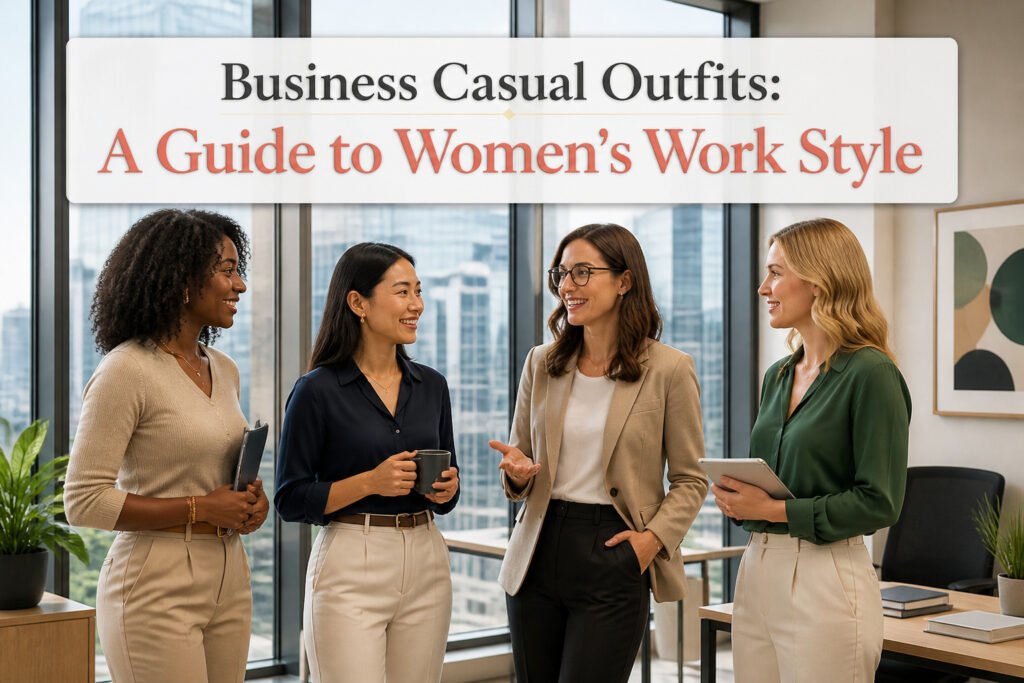
Business casual outfits are the professional standard most American women actually work in: not a full suit, but something more structured than weekend wear. The catch is that the same pieces read very differently depending on whether your office faces clients or sits behind a creative desk. A navy cotton-blend blazer around $65, worn weekly for three years, can carry you through both if the shoulder seams sit exactly where they should.
Blazers and Jackets
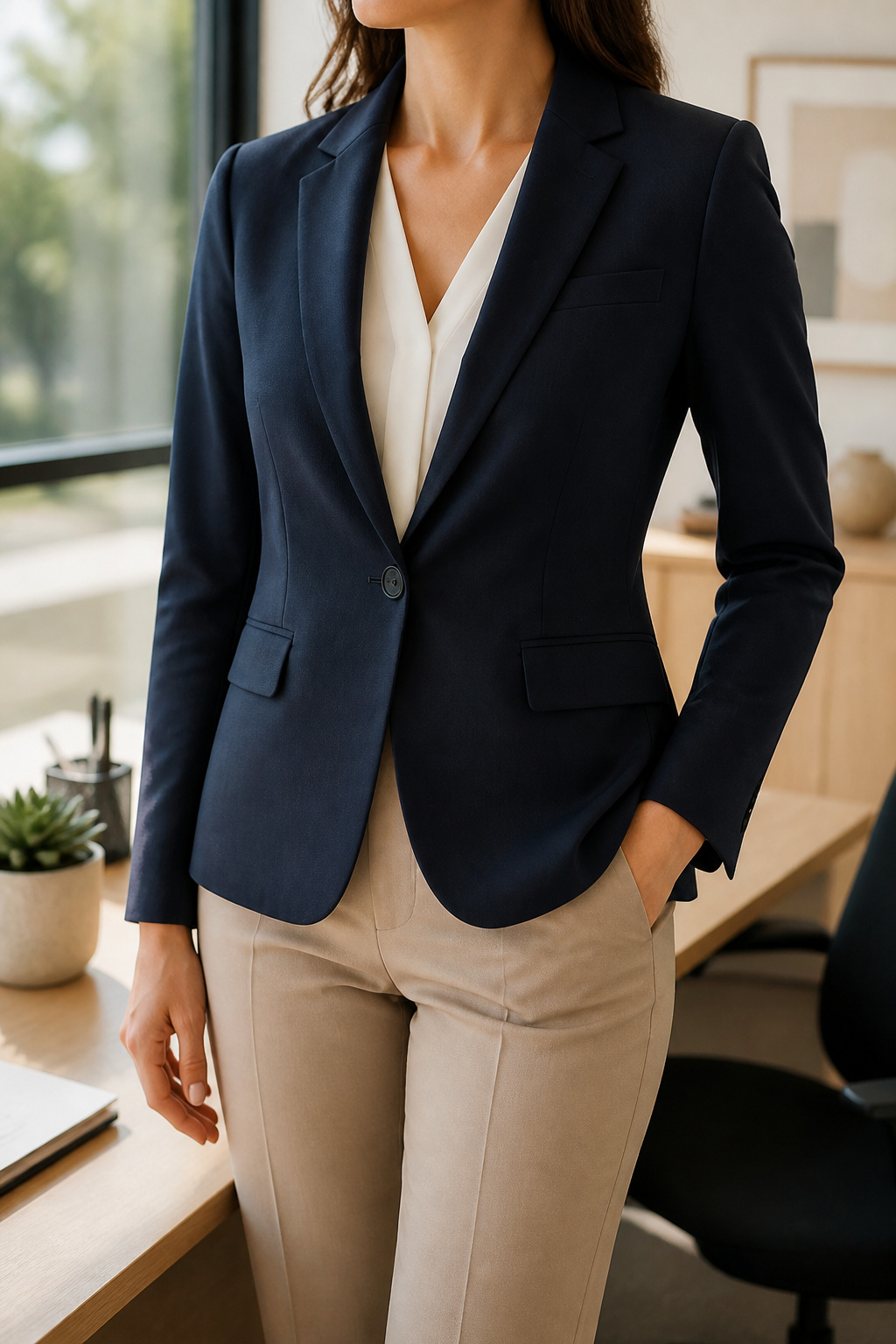
Tailored blazers in black, navy, and beige are the piece that makes business casual actually work. Without one, a blouse and trousers read as separate items you happened to put on; with one, they read as an outfit you thought through.
The difference between a blazer that pulls things together and one that looks like outerwear comes down to structure. Office blazers need shoulder seams that sit at your actual shoulder, not past it, and a length that hits mid-hip rather than skimming your thighs. Fabric matters too: a lined twill or light wool holds its shape through a day of sitting and standing, while an unlined knit drapes like a cardigan and loses the authority you’re after.
I spent my first two office jobs wearing a black polyester blazer that looked fine until noon and then started sagging at the lapels. The replacement, a navy cotton-blend piece I found for around $65, held up through three years of near-weekly wear. A decent blazer for regular office use generally runs $40–$120, with the lower end hitting sales at places like Maurices (their Faux Suede Blazer Vest sits at $44.99, though that particular cut works better for casual Fridays than full business casual). The upper end gets you into better lining and fabric that won’t pill at the cuffs.
Patterned options, plaid or subtle houndstooth, add personality once the neutral foundation is set. Soft knit blazers exist for more relaxed days, but they trade authority for comfort in a way the standard dress code usually notices.
Blouses and Tops

A blouse that reads as business casual usually comes down to fabric weight and whether the thing holds a press. Silk crepe or a mid-weight cotton poplin will skim the body without clinging, and they smooth out under a blazer instead of bunching at the sleeves. A top that is too sheer will betray you in conference room lighting; the camisole underneath becomes the outfit, and that is not the point.
Neckline matters more than people admit. A standard crew or a modest V sits cleanly under the jacket from the previous section, while a wide scoop or anything off-the-shoulder breaks the line and reads weekend. I learned this the hard way with a silk blouse that draped beautifully at home but gaped at the collar once I reached for my coffee mid-meeting.
The sources agree on what tanks a top: anything with a slogan, anything sleeveless without a layer, anything that reads as gym or beach. A crisp button-down or a structured knit top will carry you; a heavy hoodie or sweatshirt belongs elsewhere entirely. Layering is where business casual earns its flexibility, but the base layer still has to do its own job.
Pants and Trousers

Straight-leg pants, wide-leg cuts, and cropped hems all work in a business casual environment, but the fabric and fit matter more than the silhouette itself. Skip sweatpants, leggings, and cargo pants entirely; even a sharp blazer cannot recover the signal those send. I learned this the hard way after assuming a dark ponte legging would pass under a long jacket. It did not, and the day felt like a costume I was trying to talk my way out of.
Cotton, wool, linen, and quality synthetics hold a crease and move like workwear rather than weekend wear. Darker colors in basic finishes mix back to blouses and knits you already own; bright orange or busy florals fight the rest of your closet instead of serving it. If jeans are permitted at your workplace, stick to dark blue, gray, or black in mid-rise straight or flared cuts. Classic denim, cared for properly, lasts years and earns its place by bridging Monday meetings and Friday lulls without a separate purchase.
Skirts and Dresses

Knee-length and midi lengths dominate the conversation for good reason. A skirt that hits at or just below the knee reads as intentional; anything shorter starts to fight the office context. The sources agree on this point, though they leave room in the midi zone for personal preference.
Dresses function as the simplest one-piece solution. A sheath dress, specifically, works as a foundation you can layer under a blazer or cardigan without thinking through separate proportions. The ease is real: one purchase, one decision in the morning, and the structure carries the professionalism for you.
Skirts demand more judgment. A pencil cut in wool or crepe gains authority from the fabric and the close line; the same shape in something shiny or ruffled loses it. Wrap styles and slight flares are acceptable, but transparency, excessive tightness, and slits that read as recreational rather than practical all push a skirt out of business casual territory. Denim, skorts, and sun dresses sit firmly outside the code.
What sits above a skirt matters as much as the skirt itself. A collared shirt or modest blouse anchors the look; sleeveless, off-shoulder, or spaghetti-strap tops drag it toward weekend territory even if the bottom half is perfect. The equation is simple: the more skin the top shows, the more the skirt has to compensate, and it usually cannot.
Footwear
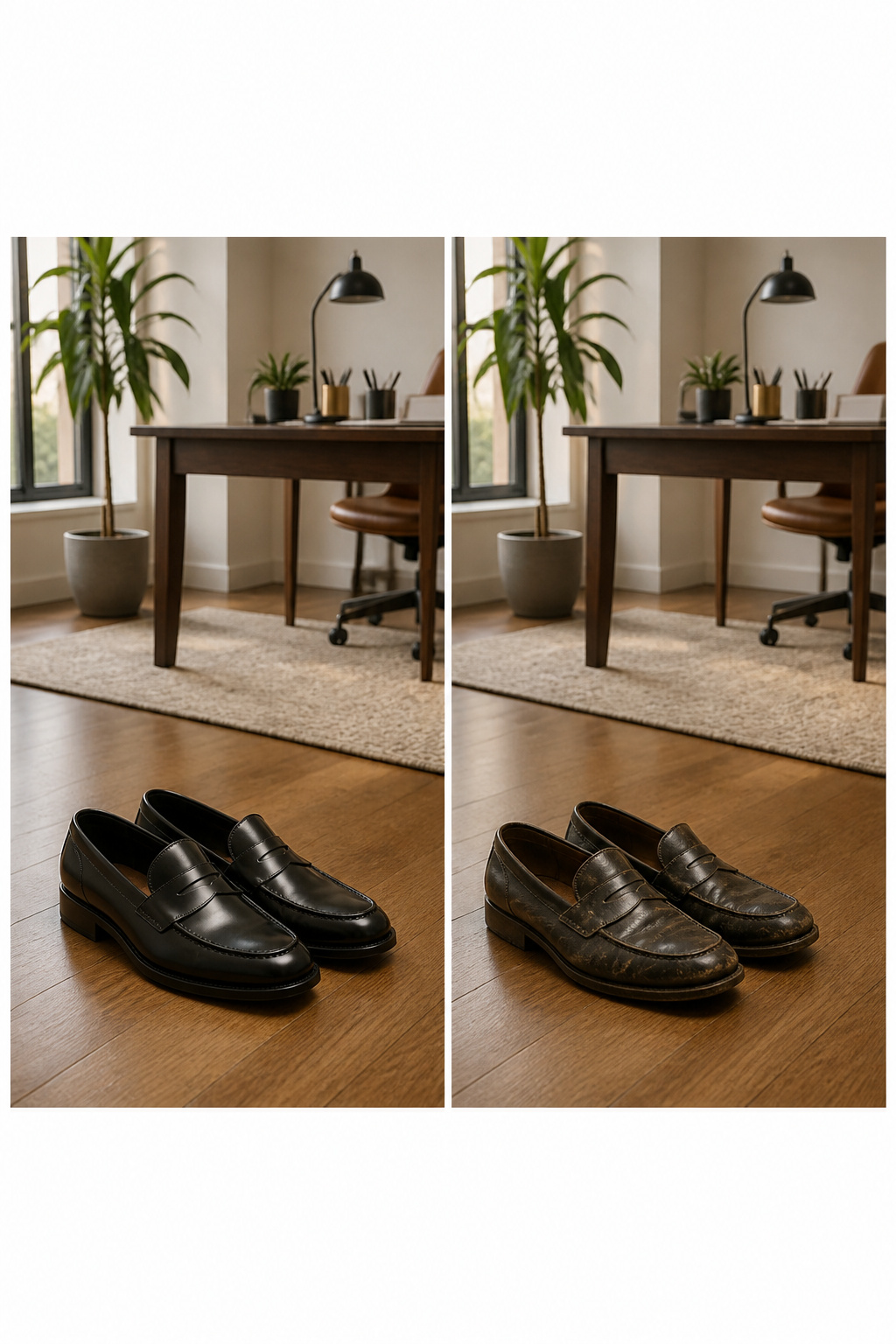
Business casual outfits give you more shoe freedom than a strict corporate code, but that freedom is where most mistakes happen. Loafers, lifestyle sneakers in leather or canvas, mules, flats, Oxfords, boots, and heels all qualify on paper, yet the wrong choice can drag a polished look toward sloppy or push it into overdressed territory.
The gap-bridgers are loafers and clean lifestyle sneakers. A leather loafer reads intentional without trying hard; a canvas sneaker works when the rest of the outfit is structured enough to carry it. Mules and flats stay in the safe zone too, though mules can feel slightly undone if your office leans traditional.
Where it goes wrong is in the details. Patent leather, snakeskin, leopard print, or bright red turn a business casual shoe into an evening statement. Running shoes, flip-flops, and sandals are off the table entirely. Over-the-knee boots read as costume, not colleague. Even an allowed sneaker can sink the look if it looks like you just left the gym. The shoe doesn’t need to be boring, but it does need to know which room it’s in.
Accessories

A medium-sized bag with a structured, geometric shape reads as organized and pulled-together in a way that slouchy alternatives do not. I learned that the hard way after carrying a soft canvas tote to a client meeting and watching it slump against the conference table like a grocery bag. Neutrals or deep, dark hues that already live in your work wardrobe keep the decision automatic on busy mornings.
The same principle holds for jewelry and belts. A thin leather belt in black or cognac can salvage a blouse-and-trouser combination that otherwise looks like two random pieces, but a wide statement belt competes with the outfit instead of finishing it. For jewelry, small hoops or a simple pendant add polish; anything that clicks against the keyboard or catches light across the room has crossed into distraction.
Bags also need to match the actual load. An A4-sized bag fits a laptop and documents without the bulging silhouette that undermines the whole point of "structured." Small bags and clutches, by contrast, signal evening or weekend, not work.
What Business Casual Means Now

The term "business casual" lands differently depending on which floor you’re walking onto. For women today, it means polished without the full suit: trousers, pencil skirts, slacks, blouses, button-downs, polos, sweaters, and sports coats, paired with loafers, mules, flats, Oxfords, boots, or heels that stop short of stiletto territory. Creative offices stretch further. Client-facing roles stay closer to traditional. I spent years treating both the same and learned the hard way that wearing a knit polo to a law-firm lunch made me the only one in the room without a collar that buttoned.
Summer is where the definition gets tested. Fewer, well-structured pieces in lighter colors keep the look intact without the layers. The real test is the after-work transition. A complete change is rarely practical; refreshing makeup or swapping shoes does the actual work. For interviews, the same wardrobe reads differently: step one notch above the daily office standard, stick to neutral colors and classic prints. The ambiguity is the point. Different companies, industries, and career levels each set their own line, and the women who read it best watch what the senior women in their specific building are actually wearing.
When to Wear It
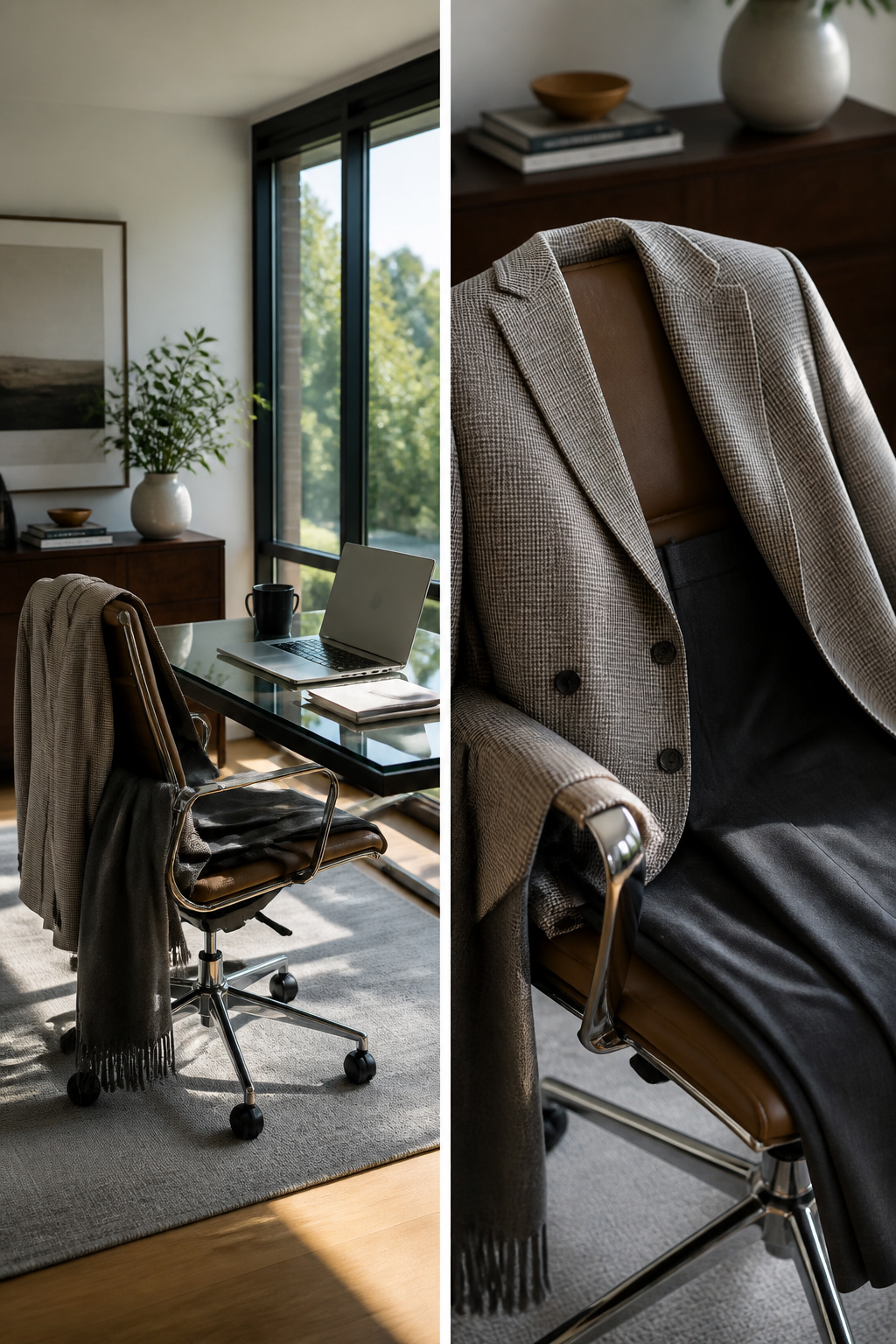
The question that keeps surfacing in comments is whether business casual outfits really stretch across an entire day or if you end up changing at 5:00. Most of us have been caught in the gap between a client meeting and dinner with nothing to change into, so the test of a good piece is where else it can go.
For office days, the baseline is straightforward: something that reads as intentional under fluorescent light and still feels right by hour nine. A mid-weight blazer in a weave with some texture, not shine, paired with trousers that have a real waistband rather than an elastic one, usually does it. The same blazer, left open over a shell with the sleeves pushed to three-quarter length, shifts the register for an after-work event without a trip home. Shoes are the quickest switch; a pointed flat or a low heel in a material that catches light differently than matte leather covers most evening rooms.
Business travel compresses the problem. Wrinkle-resistant fabrics matter here because the same trousers need to look pressed at 7:00 AM in a hotel lobby and again at 4:00 PM in a conference room. A knit top with enough structure to hold its shape through a flight, tucked into those trousers, reads as pulled-together in both settings. The pieces that work are the ones that do not need a hotel iron to recover.
Presentations and meetings are where the polish gets turned up slightly. A collared shirt or a shell with a higher neckline, still in the same color family as the rest of the outfit, signals preparation without looking like costume. The adjustment is small: a button closed instead of open, a tuck instead of a half-tuck.
What separates the useful pieces from the limited ones is whether they can absorb these small adjustments without looking like an afterthought.
Season by Season

The same business casual outfit logic shifts hard when the weather turns. Summer means lightweight fabrics that still hold a line: cotton, linen, and breathable knits that don’t collapse by 2 pm. A midi skirt with a sleeveless blouse and loafers works because the pieces are structured, not because the fabric is heavy. I learned that the hard way after showing up to a July meeting in a silk blouse that looked polished at 9 am and slept-in by noon.
Winter is where most people get bulky. The fix is layering with intention: a thin merino base, a blazer, and a lightweight jacket rather than one thick sweater that can’t come off. Tailored trousers replace skirts, ankle boots replace sandals, and a scarf or textured tweed adds depth without noise. The mistake is treating layers as an afterthought and ending up with four items that can’t coexist in one room.
September and March are the real traps. The office runs hot, the commute runs cold, and the forecast is a lie by Wednesday. Those months call for pieces that split the difference: a cardigan that works under a blazer, trousers in mid-weight fabric, shoes that handle rain without looking like rain gear. I keep a folded puffer in my tote for exactly this window; it saves outfits I would have otherwise abandoned for something heavier and worse.
Frequently Asked Questions
What does business casual actually mean for women today, and does it vary by industry?
Business casual for women means polished without the full suit: trousers, pencil skirts, slacks, blouses, button-downs, polos, sweaters, and sports coats paired with loafers, mules, flats, Oxfords, boots, or heels that stop short of stiletto territory. Creative offices stretch further toward flexibility, while client-facing roles stay closer to traditional standards. The definition shifts by company, industry, and even career level, so watching what senior women in your specific building actually wear is the safest guide.
How do you take a business casual outfit from the office to dinner or drinks after work?
A complete outfit change is rarely practical; small adjustments do the actual work. Leave a mid-weight blazer open over a shell with sleeves pushed to three-quarter length, or swap shoes for a pointed flat or low heel in a material that catches light differently than matte leather. Refreshing makeup or hairstyle covers most of the transition without a trip home.
What shoes work for business casual without veering too dressy or too casual?
Loafers, lifestyle sneakers in leather or canvas, mules, flats, Oxfords, boots, and heels all qualify on paper. The gap-bridgers are leather loafers and clean lifestyle sneakers; a leather loafer reads intentional without trying hard, while a canvas sneaker works when the rest of the outfit is structured enough to carry it. Patent leather, snakeskin, leopard print, bright colors, running shoes, flip-flops, and sandals are off the table entirely.