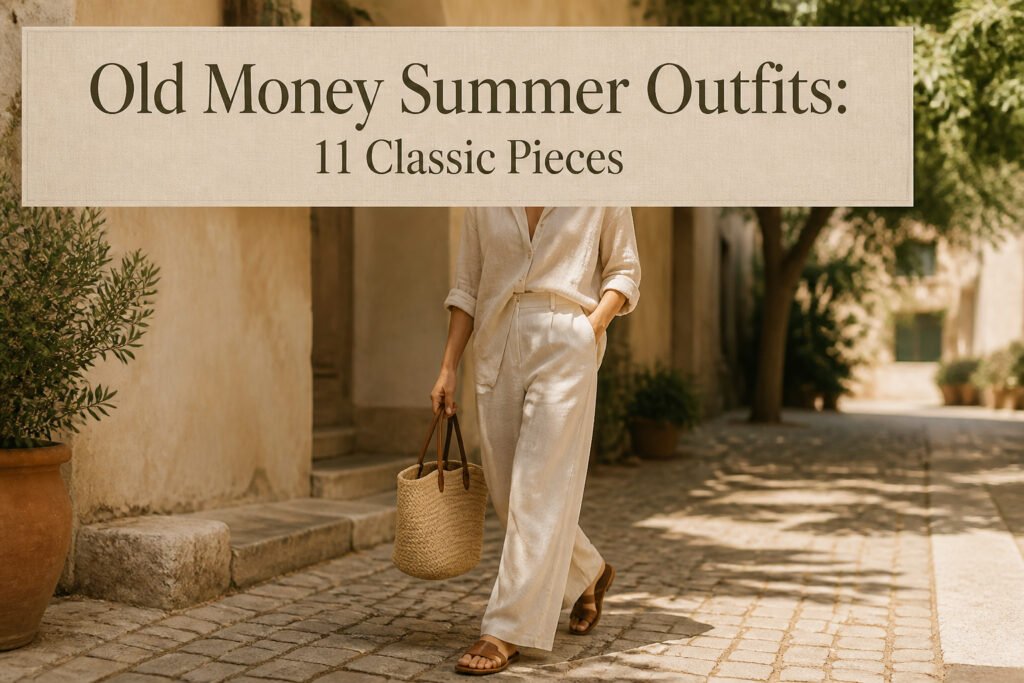
Old money summer outfits are built from a small rotation of natural-fiber pieces in sun-washed neutrals that move between morning errands and evening dinners without needing a change. The trick is that most people get the proportions wrong and buy too many pieces that stay on the hanger. A mid-weight linen shirt at 170–210 gsm, in ecru or pale blue, can carry two different looks in a single day just by rolling the sleeves and switching sandals for slides.
Linen Button-Down Shirts

A crisp linen button-down earns its reputation as the hardest working piece in old money summer outfits by doing the one thing most shirts refuse: it looks intentional when you have no time to think. The heavier weights, around 170–210 gsm, soften without collapsing after repeated washes and hold a pressed edge through the kind of humidity that turns lighter fabrics into tissue paper. I reach for mine in ecru, pale blue, and a warm ivory that reads white without the harshness, and that range covers every bottom I own.
The structure flatters without tailoring. The slight stiffness of mid-weight linen skims rather than clings, which matters if you carry weight through your midsection or shoulders, and the straight hem looks equally right tucked into high-waisted trousers or left loose over shorts. The same shirt at 8 a.m. with flat sandals and a woven belt reads completely different at 7 p.m. with the sleeves rolled to the forearm, a single gold bangle, and your best leather slides. No change of clothes, no mirror check beyond a glance. That is the point of the piece, and why I own three identical cuts in different tones rather than one fussier option that demands its own schedule.
Wide-Leg Linen Pants
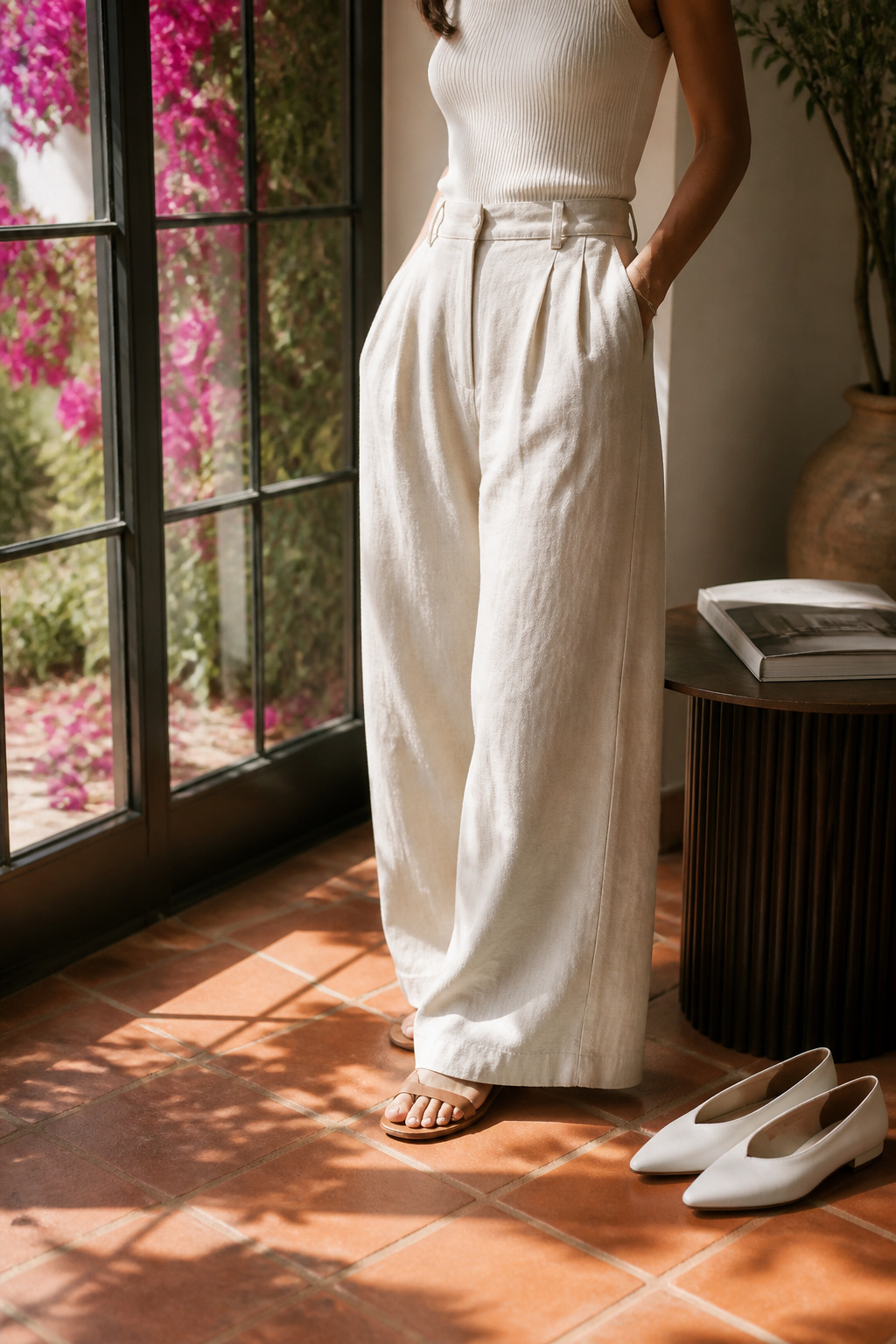
Wide-leg linen pants are the backbone of most old money summer outfits because they move air better than any tailored bottom and still look intentional enough for a dinner reservation. The volume through the leg is what changes the silhouette, not the waistline: a fuller leg from hip to hem elongates a shorter torso, while a slightly narrower cut that flares below the knee reads cleaner on taller frames. The inseam is the part that will make or break the look. I bought three pairs online before I realized why they all looked slightly off; two needed hemming to hit exactly at the top of my foot, and the third had to go back entirely because the rise sat too low to accommodate the leg width. For the expensive rather than beachy effect, sand and stone work better than optic white, which can read resort-wear in bright sun. A warm oatmeal or true khaki, the color of raw wheat, transitions from a morning meeting to evening without looking like you are trying to be noticed.
Tailored Linen Shorts

Tailored linen shorts carry an old money summer outfit further than most people expect, but the length has to land in a narrow window to pull that off. For an office setting, the hem should sit no more than a few inches above the knee; anything shorter shifts the piece firmly into weekend territory no matter how crisp the tailoring. Weekend cuts can rise higher, though going too far in either direction costs you the refinement that makes linen shorts worth owning over cotton alternatives.
The balance comes from what you pair them with. A slightly shorter inseam needs a longer or more structured top to keep proportions from skewing casual. A tucked sleeveless blouse or a half-tucked camp shirt gives the waist definition without competing for attention.
My own mistake was buying a pair that hit mid-calf, thinking the extra length read more polished. They looked like cropped pants that had lost their way, neither authoritative enough for work nor relaxed enough for Saturday mornings. The right inseam for tailored linen shorts is the one that reads intentional, not apologetic. That distinction is what separates an old money summer outfit from simply wearing shorts to the office.
Silk Midi Skirts

A silk midi skirt is the piece that turns a plain white tee into something that looks considered in about thirty seconds. The fabric catches light when you move, and that quiet shimmer reads as expensive without trying. I keep the top simple, always, so the silk gets to be the star.
The midi length hits at the true mid-calf, which is the breaking point for shoes. With flat leather sandals or slides, the skirt reads relaxed and daytime. Add heeled sandals and pearls, and the same skirt becomes a dinner outfit. That switch is why it earns space in a small wardrobe.
I own two: champagne and a deeper camel. The champagne gets worn far more because it layers under every neutral top I already own. Neutral on neutral is the most old money way to wear it, and the color that goes with the most of what you have is the one worth buying.
Summer humidity will ruin silk if you let it. I hang mine on padded hangers in a closet with breathing room, never folded in a drawer where creases set. Steam rather than iron; the heat of an iron plate can leave permanent shine marks on the weave.
Classic Cotton Day Dresses

The difference between a cotton day dress that reads as inherited and one that looks disposable usually comes down to weight and intention. A bodice-lined poplin or mid-weight sateen holds its structure through afternoon sun; the thinner lawn or voile versions turn sheer by eleven a.m. and sag at the seams by August. I have learned to hold fabric up to a window in the store. If the outline of my hand comes through clearly, that dress will not survive six summers.
Necklines and sleeves matter more than prints. A shallow scoop or jewel neck stays current without chasing trends, while cap sleeves or a slim three-quarter length read as deliberate rather than leftover. Flutter sleeves and off-shoulder cuts date themselves fast. I donated a flutter-sleeve midi after one season because it felt costume-like with everything else I owned.
My navy poplin shirtdress with a straight elbow sleeve has outlasted six summers of near-weekly wear. It works with loafers for errands, with a silk scarf for dinner, and the cotton has softened without thinning. The white version I bought in a lighter weight yellowed at the underarms after two dry cleans and went to the donation pile. Heavier cotton costs more upfront, but the cost-per-wear math is not close.
Breton Striped Tops

A Breton striped top reads old money when the stripes are narrow and evenly spaced, about a centimeter apart, because that proportion sits closer to utility than costume. The color matters just as much: a muted navy on cream, not bright white, gives the warmth that separates a yacht club reference from a souvenir shop one. White with navy is the crispest pairing near water, while cream with softer tones handles the rest of the day without looking like you are trying.
I learned the hard way that the dryer destroys the structure. Mine came out shrunken and twisted, the collar ruined, so I replaced it with a long-sleeve version from Ralph Lauren in the same weight cotton. Now it goes on with tailored white pants or clean denim, and the sleeves matter more than I expected: short sleeves read tourist, three-quarter or full length gives the coverage that looks deliberate. Finish with leather sandals or simple sneakers, never boat shoes. The outfit is so simple it only works when every piece is right.
High-Waisted Trousers
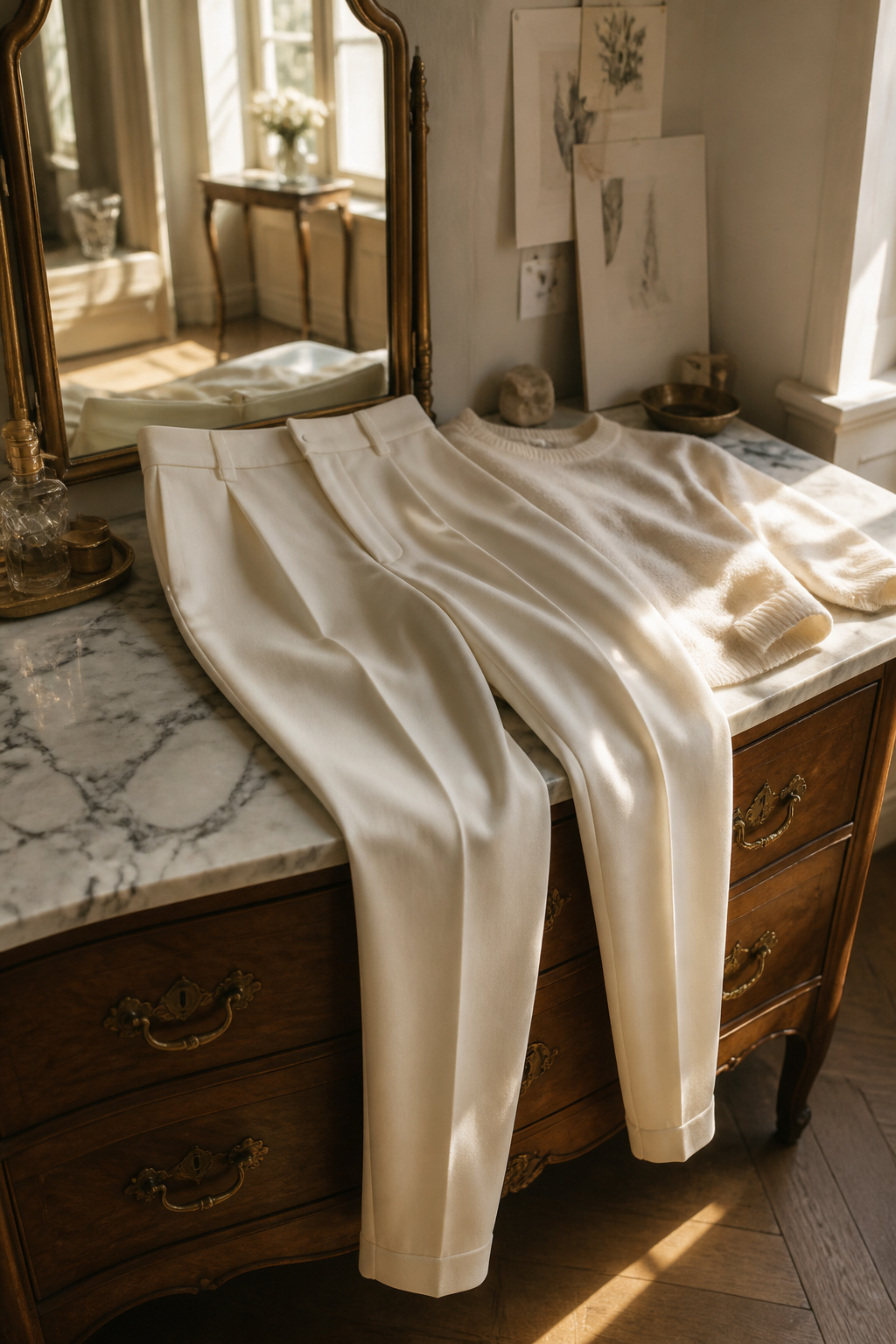
Lightweight linen or cotton trousers with a true high rise, sitting right at the natural waist, keep the silhouette clean through a long lunch without the fabric bunching or the waistband digging in when you’re seated. The rise matters more than the leg line: mid-rise cuts slide down as the afternoon stretches, and you spend half the meal hiking them back up.
The colors that actually extend the leg are the sun-washed neutrals — ivory, cream, oatmeal, tan, camel. Pair them in tonal layers, cream on ivory or tan on camel, and the eye travels upward without the hard stop of a dark contrast waistband. Navy works for evening, but for daytime summer dressing it shortens where the softer tones lengthen.
I found the pairs worth keeping were the ones with a contoured waistband, not a straight cut, because the gap at the back is what ruins an otherwise good trouser. The Alma Wide Leg Pants run with that shape, and the FRAME cords I wear in winter use the same logic — a waist that follows the body rather than fighting it.
Knit Dresses

The cotton-linen blend knit at about 7–9 gauge, or a fine silk-cotton jersey, is what actually survives July without turning into a body stocking. Anything heavier, and the dress starts migrating toward every crevice by noon. I learned this the hard way after three summers of buying "lightweight" merino sheaths that felt fine for exactly twenty minutes.
Ribbing looks refined on the rack but collapses into vertical stripes across a torso after two hours of sitting. A smooth stockinette or subtle pointelle holds its shape because the structure is in the stitch itself, not stretched against your frame. The shapes that work are the ones with engineered seams: a slight A-line from the underbust, a drop shoulder that creates actual sleeve cap room, a neckline that sits flat without binding. I stopped buying sleeveless knits entirely because I kept layering something over them for air-conditioned rooms, then abandoning the whole look as too fussy. A short, set-in sleeve reads cooler anyway, and it means the dress works for dinner without the cardigan negotiation.
Color is where most knit dresses betray their season. Winter navies and charcoal grays absorb light and heat; summer reads come from stone, warm ivory, faded terracotta, the dusty blues of washed shirting. A knit dress in the right weight and wrong color still looks like you grabbed it from the wrong section of your closet.
Espadrilles and Leather Sandals

Espadrilles and leather sandals are the only summer shoes an old money wardrobe really needs. The rope sole on a proper espadrille is stitched, not glued, and that stitching is what separates the pair you resole from the pair that peels apart after August. Mine with blanket stitching around the jute edge are on their third summer; the pair with a glued canvas wrap didn’t make it through one.
Strap width matters more than most people think. Narrow straps on a sandal make a wide foot look wider by cutting across it; a medium-width strap, roughly the width of two fingers, balances most feet. For narrow feet, straps that are too wide slide and gap, so a slimmer cut with an adjustable buckle actually holds the shoe.
The color that earns its keep across every neutral outfit is cognac. Not tan, which can read orange against cream linen, and not dark brown, which fights the lightness of summer fabrics. Cognac sits right in the middle, picking up the warmth in beige, stone, and even navy without competing.
Simple Gold Jewelry and Pearls

Hoops the diameter of a dime, a pair of small gold studs, and one strand of pearls. That is the full jewelry wardrobe for an old money summer outfit, and it took me years to accept how little I actually needed.
The gold that survives salt water and sunscreen without turning your neck green is 14 karat. Anything lower carries too much alloy; anything higher scratches too easily for daily wear. I learned this after a drawer full of plated hoops left green rings on my lobes by August.
Pearl size reads the room for you. Seven to eight millimeters sit right at the collarbone, polished enough for a morning meeting without looking like you tried for evening. Anything above nine starts to announce itself; save that for actual occasions.
My costume jewelry phase ended when I counted: thirty-seven pieces, most of them tangled, and I reached for the same three. The simplification cost more upfront than a season of trend earrings, but the per-wear math settled it inside two years.
Straw Bags and Classic Sunglasses

A straw bag only reads as old money summer outfits if it keeps its shape through an actual afternoon. I learned this the hard way with a floppy market tote that slumped against my hip and dumped my keys at a patio lunch. Structured baskets, half-moons, and small doctor bags with a flat base stay upright on a chair and look intentional rather than accidental.
Sunglasses follow the same rule of proportion. My face is longer than it is wide, so frames that hit at or just beyond my cheekbone width keep things balanced. Wider oval and horizontal rectangles work for me; narrow cat-eyes make my chin look like it goes on forever. Rounder faces tend to need the opposite, more angular width up top to add structure.
The logo part came later. I wore a pair with small gold letters at the temple for two summers before realizing they dated every photo and every outfit to whatever season that brand was pushing hardest. Unmarked acetate in tortoise or olive green goes with the linen, the cotton, the silk, without shouting whose team I am on. They cost about the same secondhand.
The Neutral Palette That Ties It Together

Ivory, cream, oatmeal, tan, camel, and pale blue form the backbone of old money summer outfits, with navy as the dressy anchor and sage or olive for quiet accent. What reads as sun-washed and expensive rather than simply faded comes down to undertone. Warm skin wants the yellow cast of true cream; cool skin turns it cheap and sallow. I learned this the hard way with a camel blazer that sat in my closet for two seasons looking like a thrift store mistake until I realized the shade pulled orange against me. Tonal dressing, keeping everything in the same color family, is what makes the whole look intentional. Cream with tan, ivory head to toe, pale blue with navy. The light does the rest. Skip neon, heavy logos, and harsh head-to-toe black for daytime. A little black at night works, but summer days call for something softer than that.
Why Natural Fibers Win in Heat
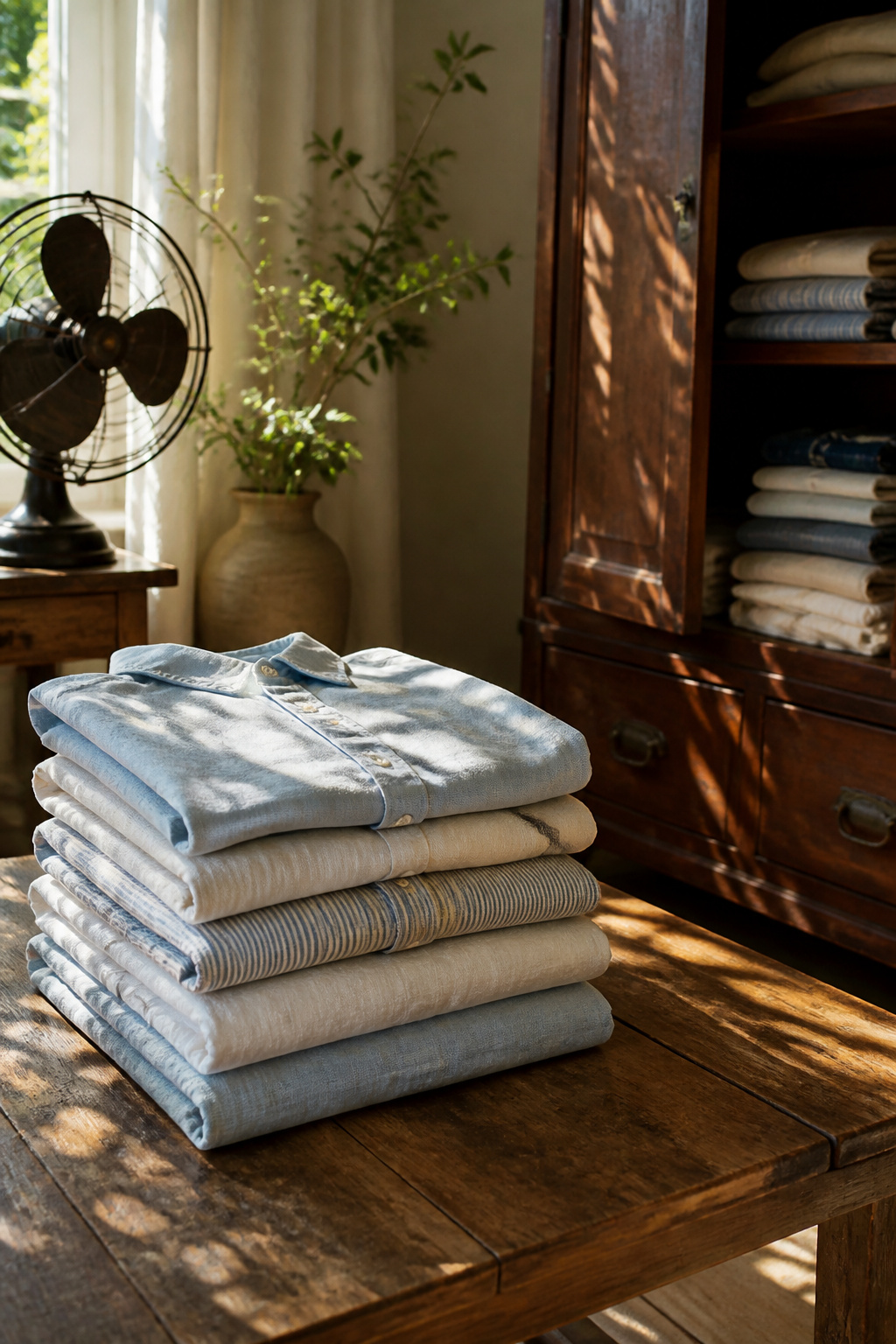
Fabric is the entire outcome in summer, and it is the one thing a photograph cannot show you. Linen and lightweight Giza cotton let air pass through the weave and let sweat evaporate off the skin, so the cloth stays dry against you and keeps its shape through the afternoon. Silk and lightweight leather do the same; they breathe in the heat and hold a softness synthetics cannot copy.
The label to look for on linen is 150 to 200 grams per square meter, the weight that lets air move without collapsing into wrinkles the moment you sit. Giza cotton means Egyptian long-staple fiber woven tight enough to feel crisp but open enough to stay cool; the same shirts that look pressed at noon still hang correctly at six. Synthetic blends ruin this entirely. Anything past about 15% polyester or nylon traps heat, clings where it touches, and takes on a hard shine in direct sun that no amount of styling recovers. The expensive dress that looks cheap at two in the afternoon is almost always the one with that blend.
Building a Capsule That Lasts

A capsule built on old money summer outfits lives or dies by how much you actually pull from it. Last July I tracked every piece I wore: out of 34 summer items hanging in my closet, I reached for just 11 with any regularity. The ratio that held up was roughly one bottom for every three tops, with each bottom crossing into at least four distinct combinations.
Princess Diana’s summer wardrobe worked the same way. Her tailored blazers and crisp white shirts weren’t statement pieces; they were workhorses that moved between yacht decks and school runs without ceremony. Jackie Kennedy made the same calculation. Her fitted shifts and simple flats looked intentional because the pieces were few and the quality was visible up close, not because the closet was large.
What sat untouched taught me more. The printed sundresses and trend-weight accessories I bought for imagined occasions stayed on their hangers while the plain silk skirts and leather sandals I could throw on blind went into heavy rotation. The old money principle isn’t about austerity; it’s about refusing to subsidize clothes that need a specific mood to leave the house.
Frequently Asked Questions
What colors are old money summer?
Ivory, cream, oatmeal, tan, camel, and pale blue form the backbone, with navy as the dressy anchor and sage or olive for quiet accent. The key is tonal dressing: keeping everything in the same color family so cream pairs with tan and ivory works head to toe. Warm skin needs the yellow cast of true cream; cool skin turns that same shade sallow.
What fabrics work best in the heat?
Linen and lightweight Giza cotton let air pass through the weave and allow sweat to evaporate, so the cloth stays dry against your skin and holds its shape through the afternoon. Look for linen in the 150 to 200 grams per square meter range. Synthetics trap heat, cling where they touch, and take on a hard shine in direct sun that no styling recovers.
How do you dress old money in summer?
Light natural fabrics, a pale neutral palette, and relaxed tailoring. Linen button-downs, wide-leg trousers, and silk midi skirts in sun-washed neutrals do the heavy lifting. The look is intentional but never fussy: pieces that move from morning to evening without a change of clothes.
How do you achieve the old money aesthetic?
Focus on timeless pieces, quality fabrics, and understated elegance. A small wardrobe of well-made natural fibers in a tight neutral palette outperforms a closet full of trend pieces. The goal is refusing to subsidize clothes that need a specific mood to leave the house.