
Paris winter fashion is a system of layering built around a temperature range that looks mild on paper but feels colder than the numbers suggest. The wind along the Seine strips warmth fast, and a single heavy coat will leave you sweating on the Metro and shivering in museum courtyards by turns. The belted wool coat, cut just above the knee, is the piece French women treat as their one statement across markets, offices, and evening walks.
Long Wool Belted Coats
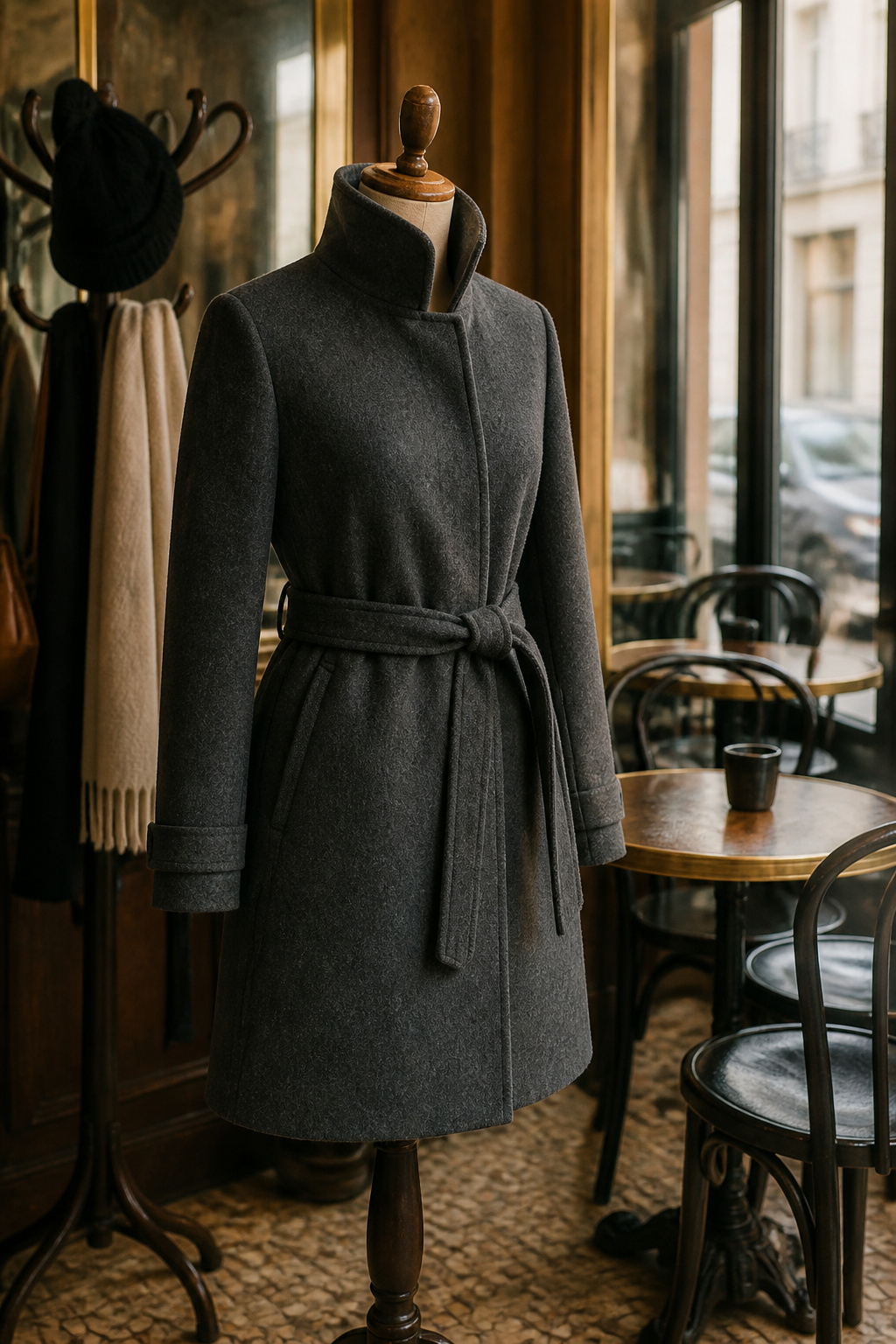
A well-tailored wool coat is the single most important piece for Paris winter. Temperatures there sit between 34°F and 45°F, and the wind cuts straight through anything thin. Without a proper coat, the rest of your outfit is wasted.
The belted shape matters more than the belt itself. A tie at the waist gives structure if you are broader through the middle, and it keeps the coat from wearing you if you are narrow. I have watched the same coat look architectural on one friend and overwhelming on another; the difference was whether the waist had definition.
Length hit just above the knee versus mid-calf is the choice that decides how you move. The shorter cut let me walk faster and sit easily at café tables without the fabric pooling. The mid-calf version looked dramatic in photos but dragged on wet steps and forced me to hold it climbing Metro stairs. For a city spent mostly on foot, above-the-knee wins unless your day is car to restaurant and back again.
French women treat this coat as their one statement piece across markets, offices, and evening walks. Clean lines in black, grey, or deep navy do the work. Deep pockets are non-negotiable; you will carry gloves, a phone, and a folded map more often than you expect.
Chunky Sweater Knits

The gauge that actually blocks wind in a Paris cafe is heavier than the sweaters that photograph well. Fine cashmere layers beautifully under a blazer, but January temperatures sitting between 2°C and 7°C demand something denser. A chunky mohair or cable-knit with a gauge tight enough that light does not pass through the weave will hold heat when the radiator under your table is doing barely enough to fog the window.
Neckline choice matters because you will already be wearing a turtleneck. A crewneck that sits flat against the collar, or a cardigan that opens wide enough to frame it, keeps the line clean. I brought a cable-knit from Sezane two winters ago that I never wore past the first morning. The armholes were cut full for layering, which meant the knit bunched under my arms the moment I added a coat, and the bulk rode up until I was adjusting it every block. The sweater looked right on its own and wrong in the actual outfit.
An oversized cardigan in burgundy mohair gives you the warmth and the drape without that armpit bulk. Wear it over your charcoal turtleneck with jeans and Chelsea boots, and the coat goes on top without a fight.
Turtlenecks

A turtleneck that sits close to the throat, not mid-chest, is what keeps a silk scarf from sliding down into a knot you did not plan. Merino wool wins here for the base layer that does the actual warming: it is lightweight enough to layer under a coat without the bulk cashmere adds, and it breathes on the Metro when the heat surges. Cashmere has its place, but for Paris in winter, where temperatures hover between 37°F and 52°F, merino is the workhorse four sources out of five actually pack. Cotton blends read office-casual; the Parisian look wants the matte, slightly fuzzy surface of wool in black, gray, or beige.
For the coldest days, a thermal top beneath the turtleneck is the move. The neck still needs to be high enough to meet your scarf, or you are just wearing two thin shirts and wondering why the wind still finds you.
Midi Skirts

A midi skirt carries the line of winter dressing in a way shorter skirts never quite manage. The hem falls to that narrowest point of the boot shaft, where tights stay smooth and the silhouette stays clean instead of breaking into bands of skin, skirt, and then boot top. I spent years forcing jeans into every dinner reservation, and the result was always the same: denim that felt too casual for the room, or too tight after the second course, or simply too cold when the wind picked up along the Seine.
Wool midi skirts hold structure without clinging. Pleated versions move better for long walks between arrondissements but need a length that clears the boot by an inch or two, since rain hits four days out of ten and a soaked hem is a ruined evening. Slip styles in heavier satin or light wool work for dinner because they layer under coats without bulk, though the static with tights can be real. The boot itself decides what length reads right: a knee-high shaft needs the skirt to end just at its top, not overlapping, not hovering an awkward hand above. That gap is what makes the difference between dressed and trying too hard.
Monochromatic Outfits

Monochromatic outfits are the fastest way to make a small suitcase look like a plan instead of a compromise. Three neutrals, black, gray, and camel or navy, give you enough range that every top talks to every bottom without you having to think about it. The sources call out black, navy, gray, camel, beige, white, and brown as the core set, and sticking to three keeps the mental load low.
Head-to-toe color reads as effort because it forces the eye to move across texture instead of hue. A jet-black outfit works because the wool coat reads differently from leather gloves, which read differently from sleek denim. The variation in surface does the styling for you.
I once packed navy trousers, a black sweater, and a charcoal coat for a February trip, thinking all dark neutrals were basically the same family. In morning light at the café, the mismatch was obvious, three temperatures of dark that fought instead of blended. Stick to one neutral per outfit, or keep the shift deliberate, ivory into camel into black, so it looks chosen. One shade, or a clear gradient. Anything in between looks like you dressed without a mirror.
Chelsea Boots

Cobblestones will destroy a thin sole by noon, so the rubber needs real thickness, not the dress-boot veneer that looks fine in a store and disappears on Rue des Rosiers. I learned this the hard way on a trip where my "walkable" pair left me hunting pharmacy gel inserts before dinner.
The elastic panel, or goring, should sit high enough to keep the boot snug as you step, roughly at or just above the ankle bone. Too low and the heel slips; too high and the boot fights your stride on café steps. Chelsea boots handle this balance better than zippered styles because there is no hardware to catch or bulk under slim trousers.
A block heel under two inches stays stable on uneven pavement. Once you cross into true heel territory, the cobblestones win. I default to Chelseas on days that move between cold streets and overheated interiors, since the ankle height pairs with tights or bare skin without the commitment of knee-highs that never quite fit under a café chair.
Knee-High Boots
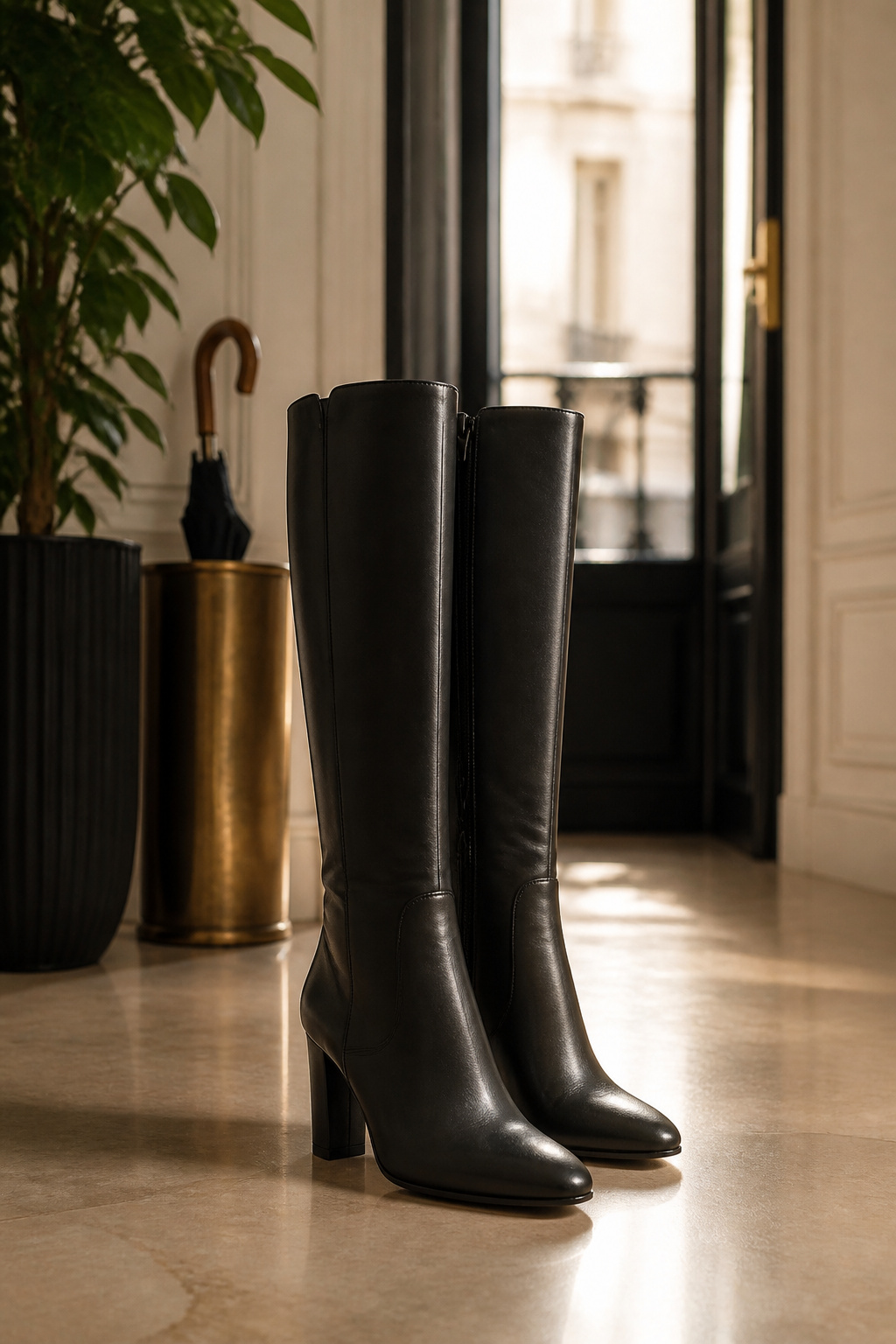
A knee-high boot changes the proportion of every skirt and dress you pack, lifting the hemline visually so a midi doesn’t read as frumpy. The shaft should hit just below where your calf muscle curves fullest; any higher and the boot fights the shape of your leg, any lower and it cuts you at the widest point.
Zippers and seams that lie flat matter more in Paris than they might at home because you’ll likely tuck skinnier pants into boots at least once. A bulky closure leaves a ridge under denim that reads from twenty feet away.
I learned the hard way that soft suede slouches after two hours of walking and never pulls itself back up. That pair looked expensive at breakfast and like a collapsed sock by afternoon. Structured leather or a boot with enough internal stiffness holds its line through a full day.
Thinner tights than ankle boots require work here; the boot shaft does the warming, so 40–60 denier is plenty even in January. With ankle boots, you’re forced to 80 or 100 denier to bridge the gap between shoe hem and skin.
Stylish Sneakers

Parisians treat sneakers as wardrobe, not weekend exception, which means the shape matters more than the logo. Chunky soles and loud branding read as American tourist; minimalist leather in white or cream passes because the outfit still reads intentional. Veja has become shorthand for this look locally, though Adidas Stan Smiths work if the leather stays clean.
Waterproofing is where I made the wrong call. My leather pair dried stiff after one wet afternoon, the uppers cracking where flex mattered most. Winter rain in Paris is frequent enough that untreated leather becomes a liability by day two.
Cobblestones are the other reason to care. A heel can catch between stones, and even pavement connects through metro stairs that punish anything rigid. Comfortable walking shoes are necessary not as an indulgence but as infrastructure; your feet will be the limiting factor on distance, not interest. I would not bring anything that needs breaking in.
Wool Hats and Scarves

The difference between a beret and a beanie is mostly geometry. A beret sits flat and wide, which reads as local in Paris but can look costume if your face is round. A beanie hugs the skull and keeps heat from escaping out the top; this matters more than most people think, since the head is where the body loses warmth fastest.
Scarf length is the detail that separates someone warm from someone adjusting every block. For proper wrapping that stays put through a Metro transfer, the fabric needs to reach past your waist. Doubled and looped, a wool scarf this length seals the gap between coat collar and neck. Cashmere does the same job lighter, which is why I replaced my acrylic one mid-trip after losing feeling in my ears on the Pont Neuf. The cashmere scarf I bought that afternoon cost more than the hat and gloves combined, but it was the only layer I added that actually changed the outcome.
Wool and cashmare are the materials to look for. Muted tones or a single pop of color, red or deep emerald against gray stone, both work; the mistake is thinking the bright shade does all the work while the fabric underneath is thin enough to read a phone through.
Leather Gloves

Leather gloves are the last thing you put on and the first thing that decides whether your morning works. I learned this standing at a Paris metro turnstile with numb thumbs, fumbling for a pass I could not grip.
The lining matters more than the shell. Cashmere feels wonderful against the skin, but cashmere lining wears through at the thumb seam in a single season if you use your phone the way most of us do. My pair did exactly that; by February the wool had gone to felt and the leather sat loose where I needed it tight. Suede or wool linings hold up longer for daily wear, though they sacrifice some of that initial softness.
Touchscreen compatibility is the other make-or-break detail. The conductive patches sewn into fingertips work inconsistently, and cold weather makes them worse. Test the pair before you travel, or plan to pull a bare finger out every time you need to unlock your phone. In Paris winter fashion, this is the unglamorous reality beneath the polished look: a glove that photographs well but fails at a ticket machine is not doing its job.
What Paris Winter Weather Actually Does

Paris winter sits in a narrow band, 34°F to 45°F, but the wind along the Seine and open boulevards strips another ten degrees off that number fast. Rain shows up roughly four days out of ten, so one clear afternoon does not mean the next will follow suit. I stopped trusting a single heavy coat after a morning on the metro left me sweating through a cashmere sweater, only to freeze forty minutes later in a museum courtyard where the wind cut straight through.
The real skill is building in pieces you can peel and replace. Mornings run coldest; by afternoon, galleries and cafes overheat. Evening walks demand everything back on, sometimes with a hat you did not need at noon. A layer system beats one thick coat because the temperature shifts three times in a single day, and you cannot carry the coat you are wearing.
How I Layer in Order

A thermal base layer sits against the skin, light enough to forget about but present enough to matter. Merino wool handles sweat without the clammy aftermath of synthetic blends, which means no damp chill when the metro platform drags on.
The mid-layer is where the day gets decided. A fine-knit cashmere sweater or a turtleneck bodysuit in charcoal or black does the heavy lifting indoors; it reads polished at lunch and still traps heat when the coat goes back on. I skip chunky knits here. They look right in photos, but they are the first thing you regret in a overheated cafe, sleeves bunched, sweating through the armpits while you try to eat a tartine.
The shell is a long wool coat with clean lines, not the statement piece but the frame. It goes on last, comes off first. The order matters because Paris winter moves between extremes: a packed brasserie running twenty degrees warmer than the Seine bank you just left. Stripping from the outside in, you never pull a base layer over a sweaty mid-layer in front of strangers. Reverse it going out. Coat, then sweater, then you are ready for the cold again.
Colors That Read as Local

Black, navy, camel, and gray dominate Paris winter fashion because they let you move between a café seat and a brasserie dinner without the outfit announcing which came first. French women treat even relaxed denim as a canvas that still needs finishing, which is where I kept stumbling. My first trip, I packed the bright puffer I loved from back home, the one that practically shouted across the Tuileries garden. It marked me before I opened my mouth.
The fix is simpler than I expected. One accent is the ceiling, not the floor. A red leather glove, a burgundy scarf looped over your bag strap, and the rest stays in those four neutrals. Camel and ivory together read as intentional, not accidental, because the tones share weight. Winter white, which I saw more of on my last visit, works the same way: head-to-toe keeps it polished, not costume.
What convinced me, reading through enough street shots, is that Parisian casual still has a pressed quality. A navy coat over relaxed denim gets there with a structured bag and sunglasses, not more color. The monochrome base does the heavy lifting so you do not have to.
Footwear for Cobblestones

Paris averages 15,000 to 20,000 steps per day for anyone sightseeing. Those steps land on actual cobblestones in neighborhoods like the Latin Quarter, where Rue Mouffetard runs steep enough that thin soles will leave you feeling every stone by afternoon. I stopped bringing shoes I had not already walked ten miles in; break-in time is not a luxury on this terrain.
Three footwear types handle Paris winter differently:
| Sole flexibility | Heel stability | Weather protection | Comfort on 10+ miles | |
|---|---|---|---|---|
| Chunky-heeled boot | Moderate | High; heel resists cobble gaps | Good with leather treatment | Moderate; weight adds up |
| Flat Chelsea or ankle boot | Moderate to stiff | Flat sole, no catch risk | Good; easier to seal at ankle | High if broken in |
| Sneaker (low-profile) | High | Flat; no heel to snag | Poor in rain or slush | High if broken in |
Sneakers are worn year-round in Paris, but winter slush changes the math. Vejas sell out fast stateside; the Madewell alternative readers favor runs under $100 and goes on sale often. Chunky heels handle the stones better than stilettos, yet even a block heel distributes weight differently than a flat after hour four. The metro connections add steps the map does not show, so the shoe that works for a museum morning fails by dinner. My own rule now: if I have not worn them on a full Saturday of errands at home, they do not fly to Charles de Gaulle.
What I Leave Home

Some items have earned a permanent spot on my leave-behind list after watching what reads as local versus what reads as visitor.
- Leggings as standalone pants are the fastest identifier of an American tourist in Paris. Parisian women wear them under dresses or long tunics, for actual exercise, at home, or for long-haul flights. Never with a regular-length top as pants. Dark jeans or tailored trousers work harder for 15,000-step days.
- Athletic wear outside of exercise registers the same way. A technical jacket or running shoes between the gym and dinner signals that your wardrobe is still thinking about your home routine, not where you are.
- Overly distressed denim reads as effort in the wrong direction. The local default is cleaner washes that do not compete with the architecture.
- Anything requiring constant adjustment, a tug, or a check in every reflective surface drains the pleasure from walking. If you are thinking about your clothes, you are not thinking about where you are.
The one exception I make is travel days themselves. A long-haul flight is when leggings under a tunic, that technical layer, and the shoes built for mileage rather than style all become appropriate. The rules resume the moment the hotel door closes behind me.
Frequently Asked Questions
What should I wear in Paris in winter?
Wear a long wool belted coat that hits above the knee, layered over a merino wool turtleneck and a chunky knit that does not bunch at the armpits. Add Chelsea boots with thick rubber soles, a wool scarf long enough to reach past your waist, and leather gloves with a durable lining. Stick to black, navy, camel, or gray for the base, with one accent piece at most.
How do I layer for winter in Paris?
Start with a thermal merino base layer against your skin, add a fine-knit turtleneck or cashmere sweater as the mid-layer, and finish with a long wool coat as the shell. Strip from the outside in when you enter overheated cafes, reverse the order going back out. Chunky knits work under the coat but are the first thing you will regret indoors.
What are the best footwear options for winter in Paris?
Chelsea boots with thick rubber soles and block heels under two inches handle cobblestones best for daily walking. Knee-high boots in structured leather change skirt proportions but need flat zippers to avoid ridges under pants. Minimalist leather sneakers in white or cream work if waterproofed; untreated leather cracks after one wet afternoon.