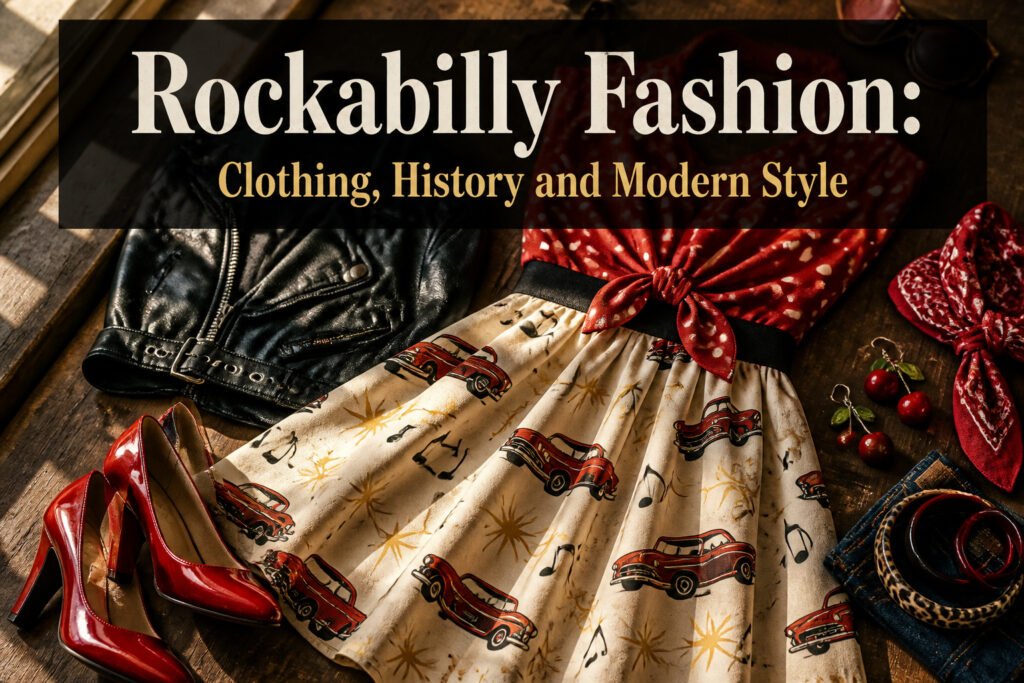
Rockabilly fashion is a working-class 1950s style built on cinched waists, full skirts, and heavy denim, worn with deliberate attitude that made everyday clothes look like a choice. The catch is that two or three references read as personal style; five or six read as costume, so the hair flower or cherry earrings have to be rationed. A three-inch heel in black or red patent leather is the standard for dancing, and anything over four inches looks right in photos but leaves you sitting out after the first song.
Swing Dresses
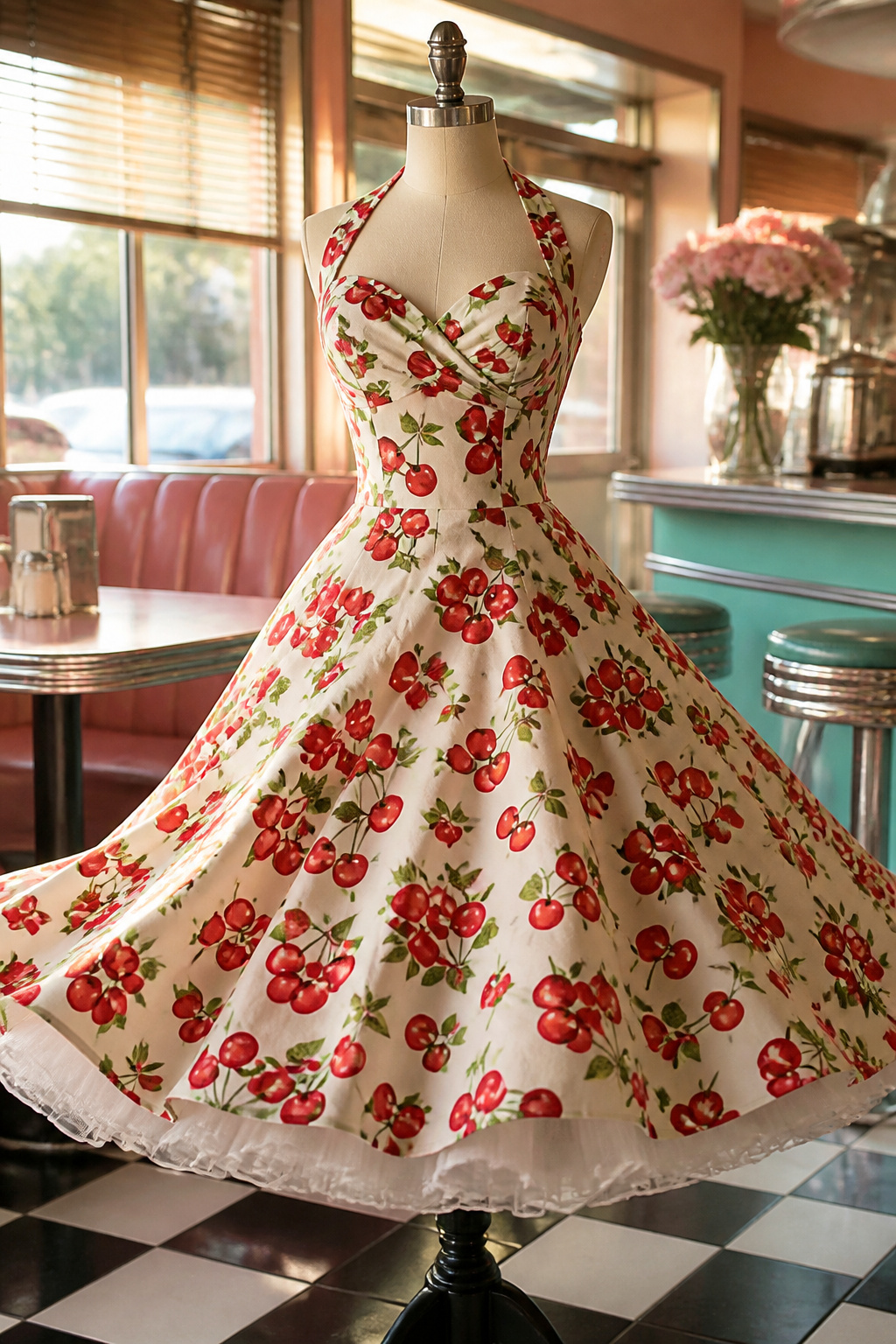
The signature rockabilly dress is built on three connected pieces: a fitted bodice, a nipped waist, and a full circle skirt that carries its own momentum. That skirt needs structure to do its job. A petticoat underneath gives the fabric the volume to swing out and settle back without clinging, which is the whole point of the silhouette.
The hem typically hits at or just below the knee, long enough that the skirt stays put through actual dancing. I have watched too many shorter cuts ride up the moment the wearer spins; this length solves that.
Prints do a lot of the storytelling. Polka dots, cherry motifs, and stripes in red, black, and white dominate the recognizable pieces. The "Audrey" and "Valerie" dresses from several lines come in those exact combinations, and the "Alice" runs stripes in nearly every permutation of the same palette. The effect is immediate and specific: feminine, flirty, and strongly tied to the 1950s pin-up aesthetic that rockabilly borrows from so deliberately.
Pencil Skirts

A pencil skirt sits at the natural waist and narrows straight to the knee, which reads more office or dinner-out than a swing dress ever could. The back vent, usually a single slit, is there because the cut is otherwise too narrow to walk in; it forces a shorter stride, that little wiggle that became part of the silhouette’s appeal.
Tuck in a fitted knit top or a halter and the waist definition does the work. The skirt does not need much else. I find this pairing easier to pull from a modern closet than full-skirted shapes that read costume faster. The proportions are flattering on most bodies because the high waist lengthens the leg line and the narrow cut keeps the volume controlled above and below.
The risk is choosing a fabric too stiff or too thin. A heavy cotton sateen with some stretch holds the shape without looking like a tube. Too much stretch and the skirt bags at the knees by noon.
High-Waisted Jeans

High-waisted jeans carry a small act of rebellion in their very waistband. Borrowed straight from 1950s menswear, they were recut to sit at a woman’s natural waist, not the hip-hugger line that came later. The cut matters: the waistband should actually cinch at your narrowest point, which is why these read as flattering on bodies that low-rise denim actively fights.
The typical pair runs wide through the leg or tapers to a pegged cuff, both silhouettes built from heavy denim with contrast stitching that shows up from across a diner booth. I have seen the same woman wear them rolled at the ankle with scuffed ballet flats one morning and cuffed higher over engineer boots that same evening, and the outfit shifts from borrowed-boyfriend casual to something harder, more deliberate.
This is the rugged side of rockabilly fashion, the look that pairs with striped knits and a bandana rather than petticoats and pumps. The denim carries the memory of workwear, even when the wearer never touched a wrench. That tension, between practical cloth and deliberate style, is what keeps the cut alive sixty years past its first jukebox summer.
Leather Jackets
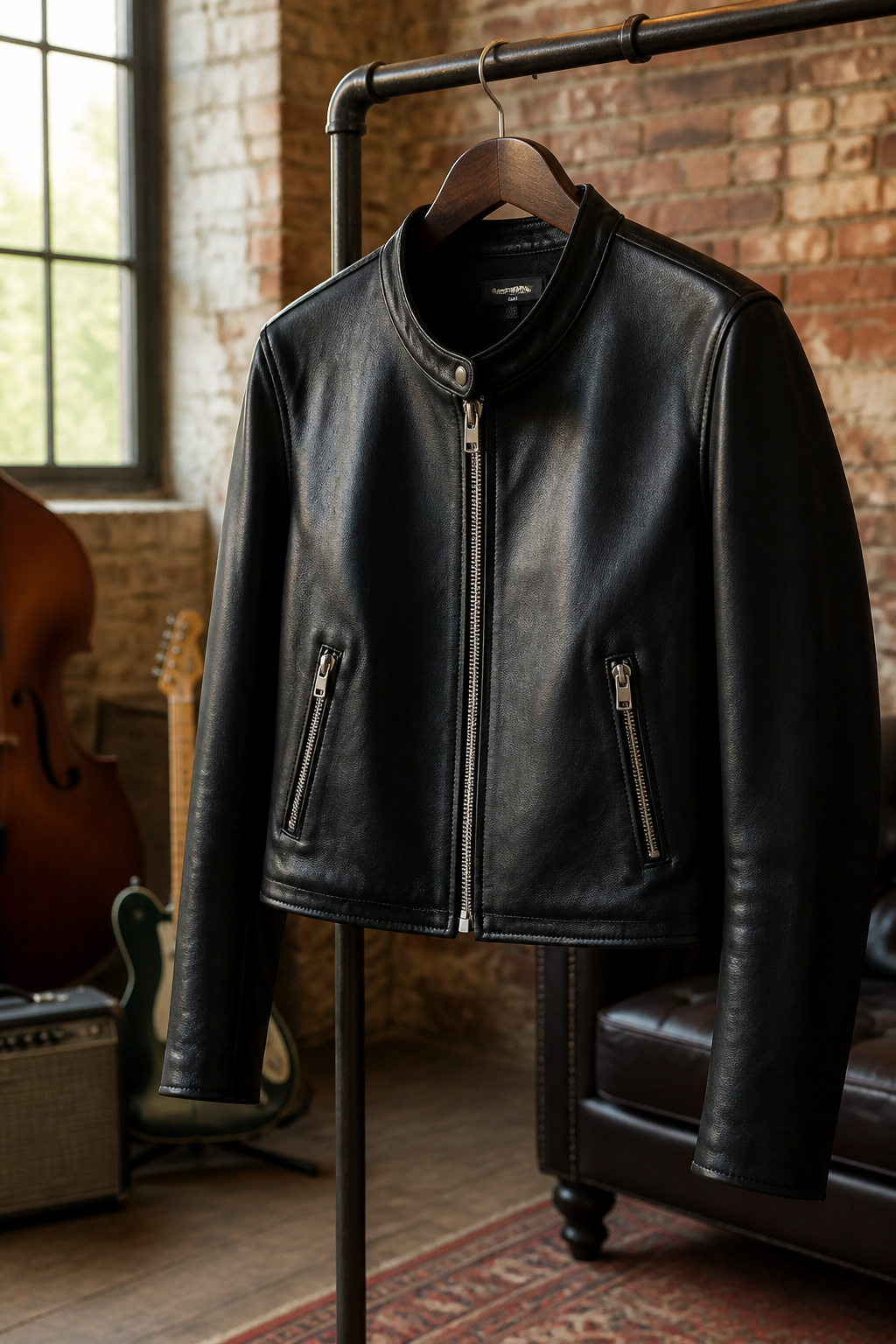
A cropped leather jacket hitting right at the waist reads rockabilly in a way that a blazer or trench never will. That cut keeps the line of a full skirt intact; worn with high-waisted jeans, a slightly longer body works better, though anything past the hip starts looking like standard biker gear and loses the period shape.
The originals from the 1950s were built from horsehide or steerhide, heavy enough to stand up on their own after years of wear. Modern reproductions vary. Some makers still use thick full-grain hides that need breaking in like a pair of raw denim; others cut weight with softer lambskin or corrected-grain leathers that drape immediately but never quite achieve the same armor-like structure. If the jacket arrives comfortable from day one, it is probably too light for the look.
Hardware matters as much as leather choice. Early rockabilly jackets kept zippers and studs minimal, a restraint that later biker styles abandoned. A plain zip front, maybe a small snap collar, and no belted waist gets closer to Gene Vincent’s crew than to anything out of Easy Rider. That simplicity is what makes the piece versatile enough to throw over a sundress or a white tee without fighting the rest of the outfit.
Halter Tops
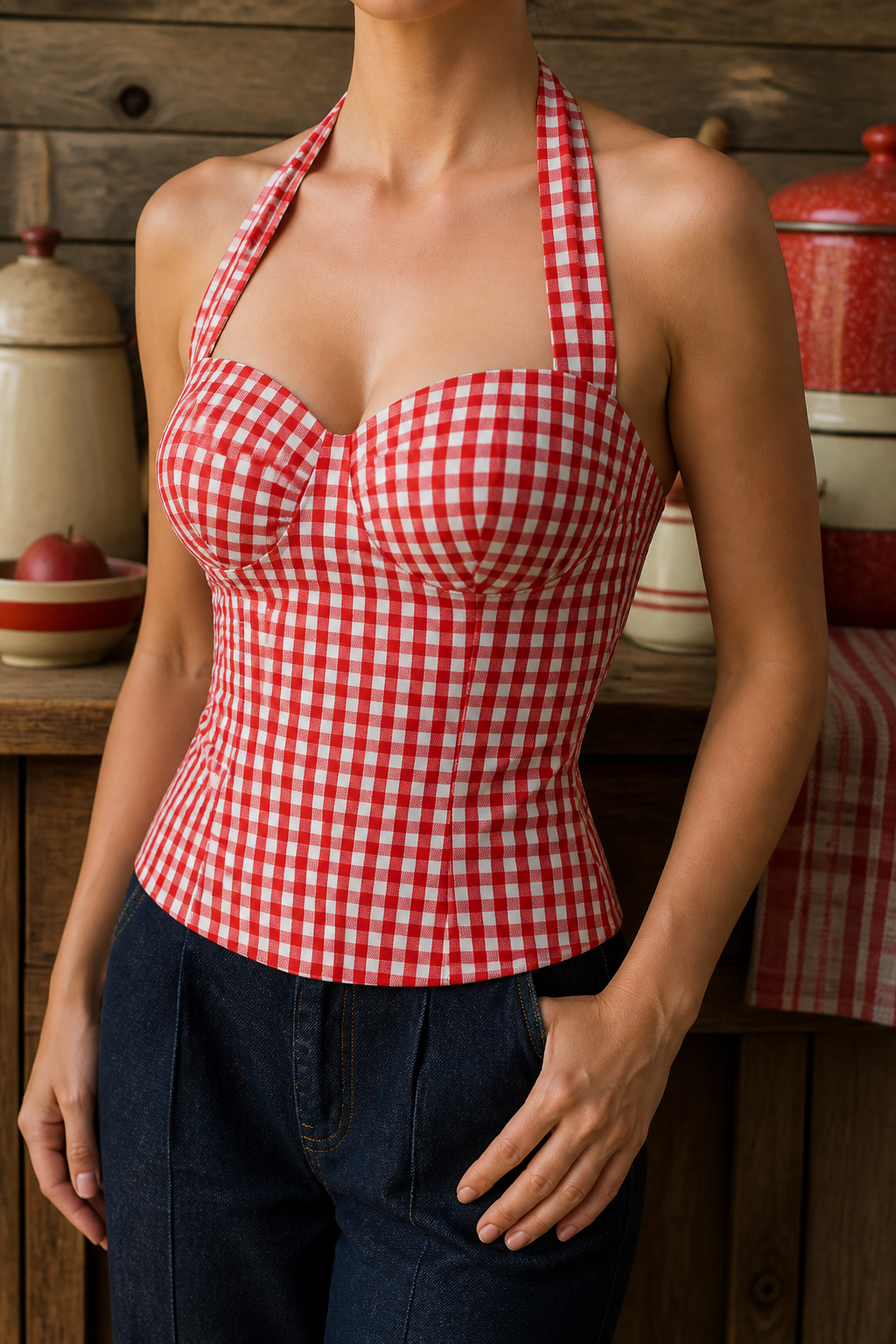
Halter tops carry the rockabilly silhouette into summer without surrendering the shoulder. The cut bares the back and collarbone while the neckline stays high, which means the visual weight sits exactly where a cinched waist wants company.
Cotton gingham and rayon prints are the fabrics that read right here, though a solid works when you need it to talk to the bottom piece rather than shout. A cherry red halter against a black pencil skirt gives the same waist emphasis as a polka-dot version under denim, just quieter. The sources favor bold over pastel, and that holds for halters too: skip the muted florals and let the print or the color contrast do the shaping work.
What convinced me, reading through the common recommendations, is how deliberately the halter serves the same structure as the era’s dresses. The waist is still the point. The shoulder line still frames the face. You are just trading petticoat volume for the drape of the tie at your neck.
Bandanas

A bandana is the cheapest way to test whether rockabilly fashion actually suits you. Cotton holds the fold better than polyester blends, and the classic paisley in red or black reads immediately as period-correct without trying too hard. Tie it at the neck with the point forward for a sweet, almost country-western effect, or roll it narrow and knot it at the back of your head for something tougher. The back pocket tuck, band rolled to show just an inch of print above the denim, splits the difference; it reads as accidental even when it is not. Placement is what separates costume from style here. A full triangle folded bandana tied under the chin looks like a uniform, which is fine for a themed party and wrong for Tuesday groceries. Start with the neck tie, rolled so the fabric sits flat and does not bunch at the collar. If that feels comfortable after an hour, the headband fold is an easy next step.
Cat-Eye Sunglasses

The upswept outer corners of cat-eye sunglasses do more work than any other accessory in signaling rockabilly intent. Even paired with modern denim and a plain tee, that winged shape reads 1950s instantly.
Frame materials tend toward acetate for the sharper, more architectural shapes or slim metal for a lighter, more delicate line. Solid lenses in black or tortoiseshell feel era-appropriate and handle bright sun better, while a subtle gradient softens the look for overcast days or indoor events where you still want the silhouette.
The size of that outer wing changes everything. A modest flick, barely past the temple, gives a quiet nod to the style without overwhelming your face. Push the corner higher and wider toward the brow bone and the effect turns theatrical, almost costume, which works beautifully for a full rockabilly ensemble but can feel unbalanced with casual clothes. I have found the mid-length wing, reaching to about the midpoint of the eyebrow, to be the most versatile: enough shape to register, not so much that it demands a victory roll and red lipstick to justify it.
Retro Knit Tops

A fitted knit top in a fine gauge reads as vintage rather than slouchy, and that distinction matters when the rest of the outfit carries this much intention. The ones that work for rockabilly fashion sit close through the torso, usually in short or three-quarter sleeves, with a boat neck or a modest V that shows collarbone without plunging. Stripes are common, solids equally so, and both tuck cleanly into a high waist because the fabric lacks the bulk of a heavier sweater. I learned the hard way that a modern cotton-cashmere blend with too much drape will bunch at the waistband and kill the line; the vintage-style knits hold their shape through the tuck. The finer the gauge, the more formal the read, which is exactly what separates this look from a weekend tee.
Accessories
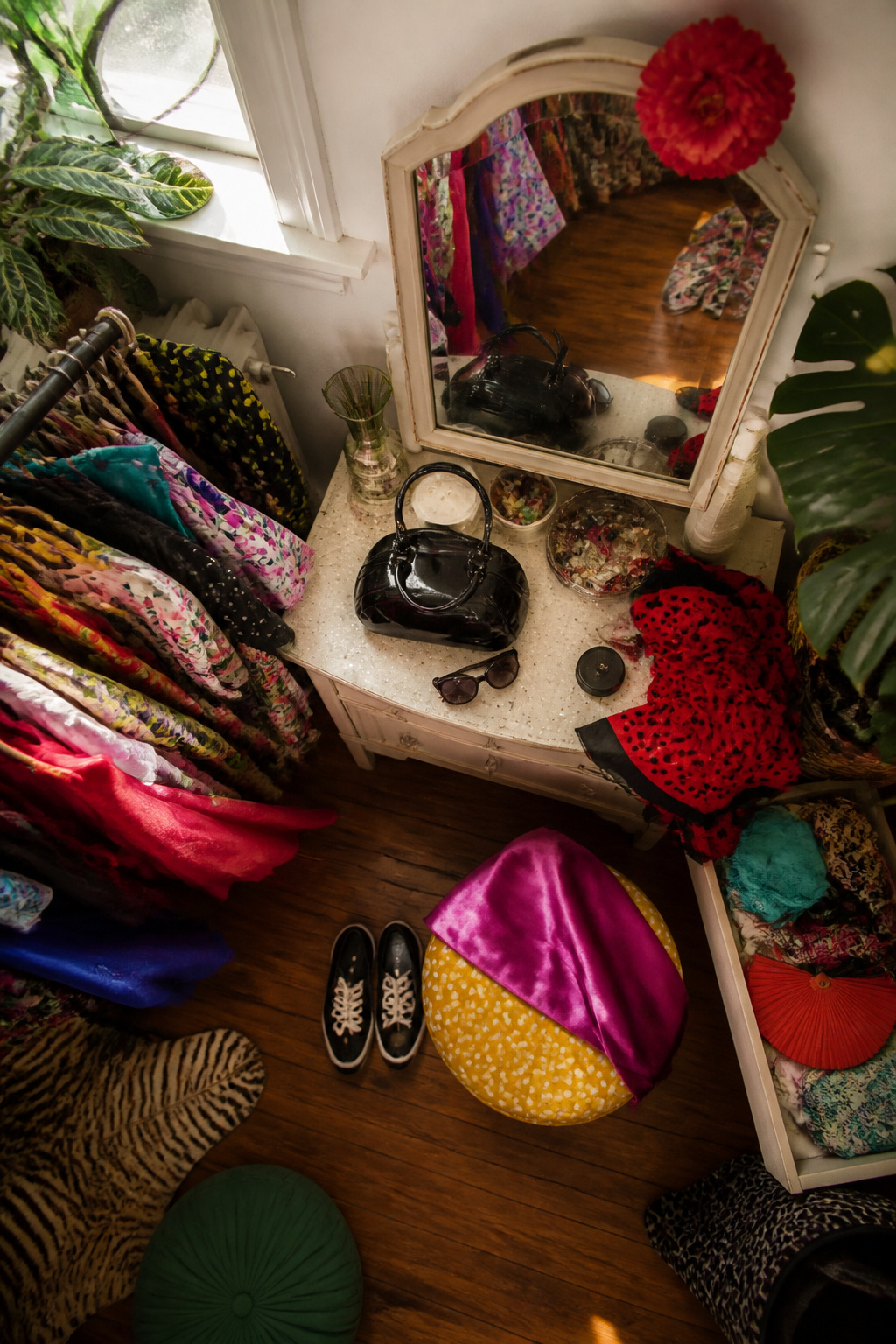
A hair flower pinned above the temple can take a plain black pencil skirt and striped top straight into rockabilly territory without changing a single garment. That single piece does the work because it signals intent: you are dressing the reference, not stumbling into it. The same goes for a wide belt with a rectangular buckle cinched at the natural waist, cherry or dice earrings swinging at the jawline, and the red lipstick that functions as much as accessory as makeup. Jackie Leigh Cline’s Cherries and Coke look stacks the effect deliberately: cherry print skirt, cherry statement necklace, Coca-Cola tee, and those Bettie Page bangs with Old Hollywood red lips. Each layer reinforces the same 1950s Americana theme.
The risk comes in adding every option at once. Two or three references read as personal style; five or six read as costume. Hair flower plus wide belt plus cherry earrings plus seamed stockings plus leopard pumps turns a woman into a display of period signifiers. The pieces that personalize a basic rockabilly outfit are the same ones that destroy it when overused. Pick your favorites and let the rest stay in the drawer.
Footwear

The two main rockabilly shoe styles split cleanly between your bottom half. Pumps with a medium to high heel finish the dress or skirt look. A three-inch heel in black or red patent leather is the standard, and the heel height matters if you plan to swing dance. Anything over four inches looks right in photos but leaves you sitting out after the first song.
Platform creepers or boots handle the jeans side. Creepers borrow directly from 1950s Teddy Boy style: thick crepe rubber soles, suede or leather uppers, and that exaggerated horizontal bulk. The suede versions scuff faster than leather, though both soften and grip a dance floor better than you’d expect from a platform.
For actual dancing, the practical call is between the two. Pumps with a sturdy heel and ankle strap stay on through turns. Creepers give you height without the wobble, and the flat platform base is forgiving on tired feet after midnight. I have watched friends switch midway through a night, which is not elegant but works.
Where Rockabilly Fashion Started
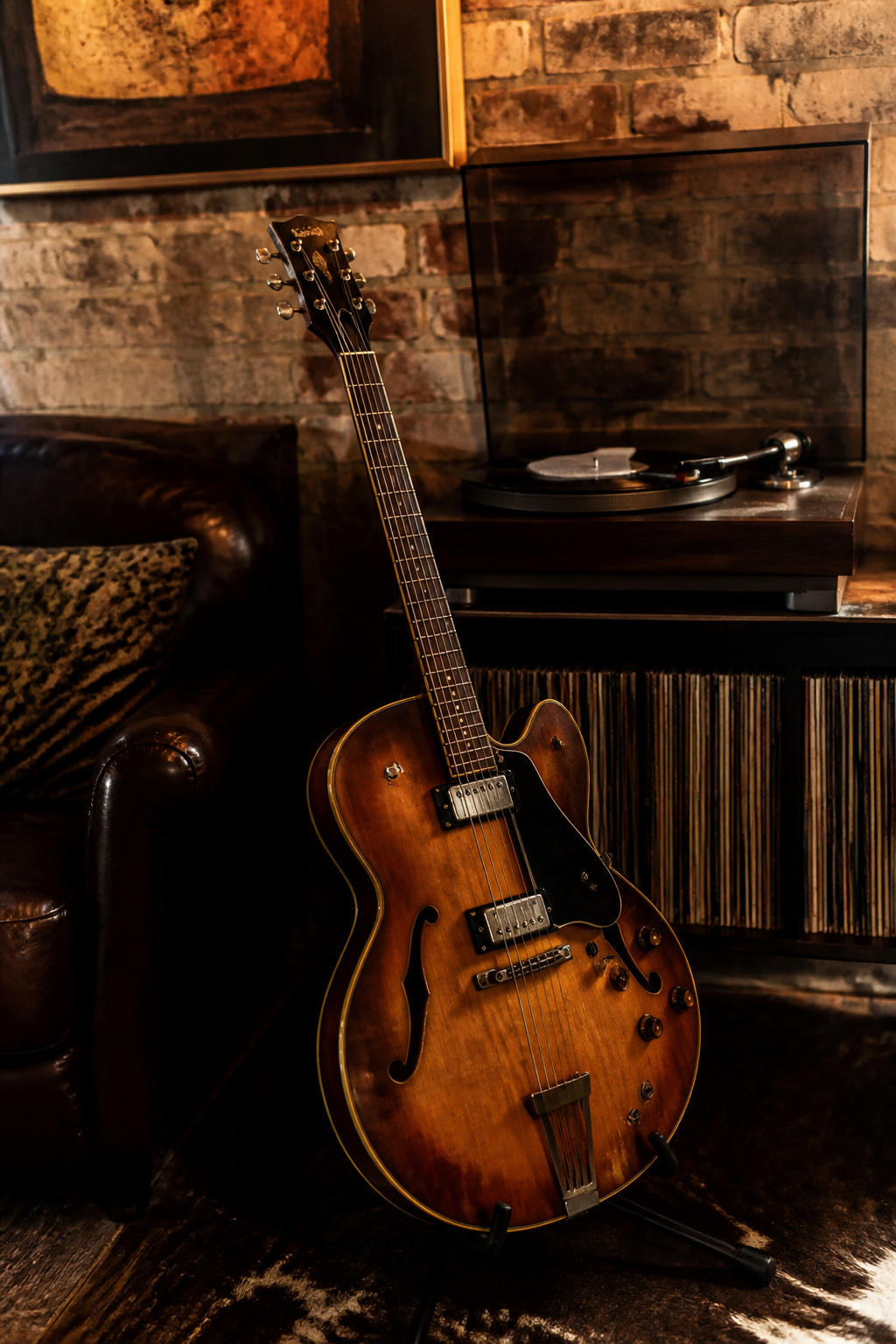
The term "rockabilly" itself only dates to about 1956, a portmanteau of "rock" and "hillbilly" that northern critics first tossed out as a slur. The music had already been brewing in the American South for years before that, white working-class country musicians trading riffs with African-American rhythm and blues players until something new emerged. What they wore followed the same logic: everyday working-class pieces, borrowed or bought cheap, worn with deliberate attitude that made them look like a choice instead of a limit.
Elvis Presley in his early years favored gingham western snap shirts and let the fabric move onstage in ways television censors tried to stop. Johnny Cash dressed black from head to toe, a decision so consistent it became signature without ever needing a costume department. Wanda Jackson, the Queen of Rockabilly, took the same men’s-tailored shapes and made them read as threat and invitation simultaneously. None of these were stage costumes in the later sense. They were clothes these performers already owned, pressed into service by a sound that demanded you look as sharp as the beat felt.
Silhouettes and Prints That Read as Rockabilly

A defined waist sits at the center of every rockabilly piece, whether the shoulder is structured with a sharp seam or left bare in a halter cut. The bottom half either swings wide with a petticoat or clings close in a pencil shape; it never hangs straight down. That active silhouette, moving or fitted, is what separates rockabilly from simply vintage.
The repeat patterns do immediate work. Polka dots, cherry prints, and retro stripes read as rockabilly before a garment’s cut even registers, and they show up across dresses, skirts, bags, and accessories. Leopard print and florals earn their place too, though they read as slightly broader 1950s Americana rather than strictly rockabilly.
The color palette finishes the signal. Red, black, and white do the heavy lifting, with navy appearing often enough to count as a regular fourth. A cherry-print dress in navy and white still scans; the same dress in sage and cream would look like general retro instead. The combination of those colors with those patterns and that waist definition is what makes an outfit legible as rockabilly rather than costume-party vague.
Rockabilly, Pin-Up, and Straight 1950s

Three related styles get mixed together so often that buying the wrong thing is easy. Pin-up was built for the camera, not the commute: tighter fits, bolder makeup, a deliberate performance of sexuality designed to sell products. The actual 1950s mainstream ran far more conservative, with everyday shapes that covered more and cinched less than memory suggests. Rockabilly sits between them, borrowing the decade’s full skirts and fitted waists but wearing them with the rebellious attitude that made parents shake their heads. The difference is posture, not pattern: same halter neck or polka dot, but chosen for yourself rather than prescribed. Capri jeans and denim overalls belong here too, pulled from authentic workwear and paired with bandanas or petticoats as individual choice dictates. I think of it as the 1950s wardrobe you could actually move in, with room to mix the feminine and the rough.
How Rockabilly Dressing Lives Now
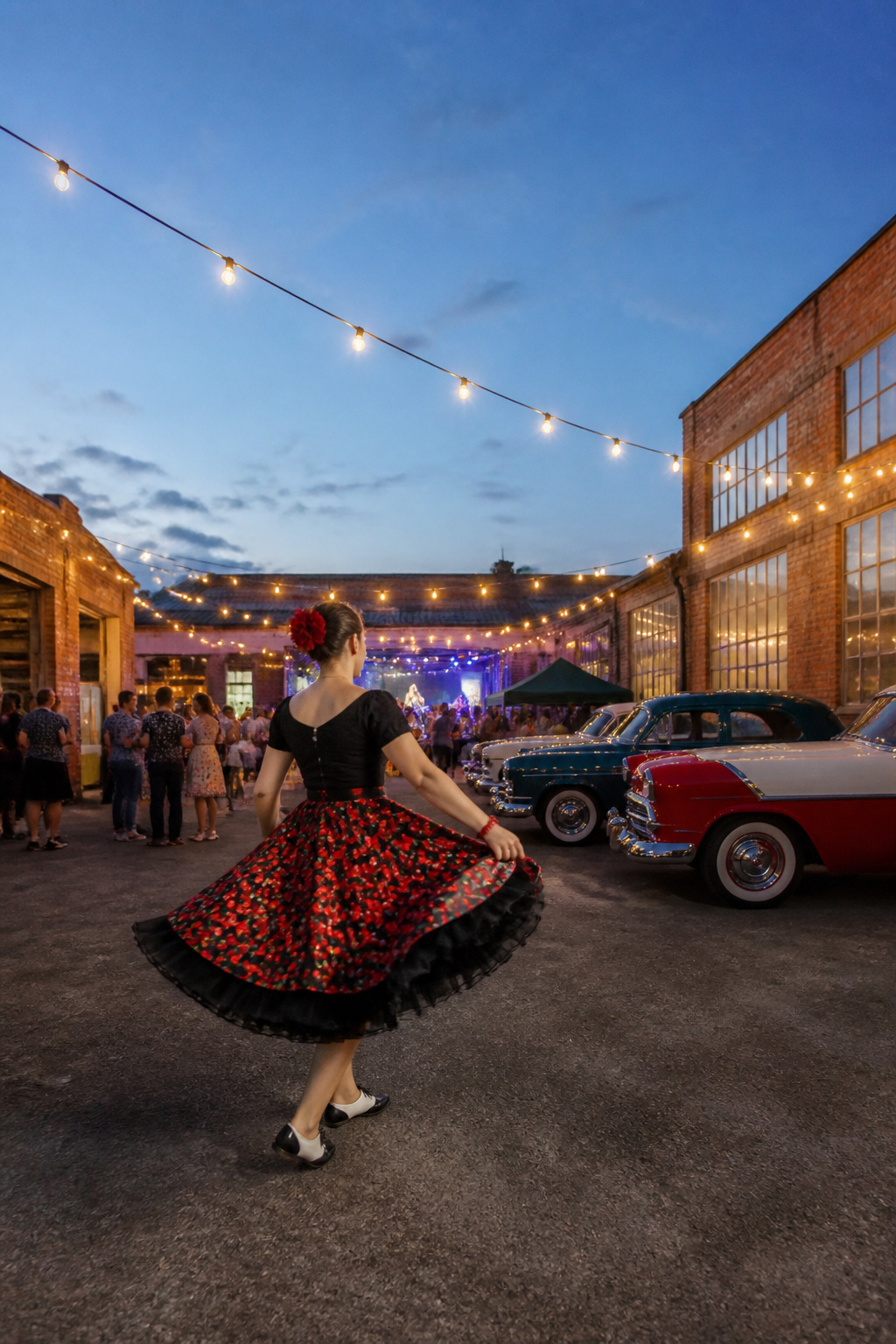
Full skirts and high waists from 1950s rockabilly fashion still show up in contemporary lines, though the distinction matters. Vintage reproduction brands build whole catalogs around the silhouette, while mainstream designers tend to borrow one element, a cinched waist here or a petticoat volume there, and pair it with modern styling that reads more retro-reference than participation.
What keeps the look from becoming costume is the community built around actual events. Swing dance nights, rockabilly weekender festivals, and vintage car shows give the clothes a context that has nothing to do with runway trends. The people showing up treat dressing as participation rather than nostalgia; a halter dress or rolled denim is what you wear to do the thing, not to perform the era. The full skirt works because it moves under dance-floor lights, not because it photographs well for a themed party. That functional difference is what separates someone who collected the vinyl from someone who only streamed the playlist.
Psychobilly and Gothabilly Offshoots

By the early 1980s, some of the rockabillies who wanted something punkier and punks who wanted something different found each other at venues like Klub Foot in Hammersmith, and psychobilly came out of that collision. The Meteors pushed for what they called "pure psychobilly," which meant dropping the cars, pinups, and bubble-gum themes in favor of graveyards, vampires, and zombies, often played for humor. The silhouette stayed: big quiffs, the same bold shapes. But the palette went dark, skull prints and blood-splatter imagery moved in, and accessories got aggressive.
Gothabilly, sometimes called Hellbilly, took a slower route. The Cramps were using the term by the late 1970s, though the style didn’t widen until the mid-1990s when compilation albums started reaching past the local scenes. Where psychobilly goes loud and frantic, gothabilly borrows from Victorian gloom and deathrock: black silks, satins, lace, velvet, corsets, antique jewelry, PVC, and leather. Top hats and cat-eye glasses sit alongside the black or "box red" hair.
Both subcultures are still active, with their own events and dress codes that are distinct enough to spot from across a room.
Frequently Asked Questions
What defines rockabilly fashion?
Rockabilly fashion is defined by a defined waist, active silhouettes that either swing wide or cling close, and a specific color palette of red, black, and white. The style borrows from 1950s working-class clothing, worn with deliberate attitude rather than as prescribed uniform. Polka dots, cherry prints, and retro stripes signal the look immediately across garments and accessories.
How can I achieve a rockabilly look?
Start with one signature piece and build around it rather than layering every reference at once. A swing dress with petticoat, a pencil skirt with tucked-in knit top, or high-waisted jeans with a bandana each establish the silhouette on their own. Add one or two accessories, a hair flower or cat-eye sunglasses, and stop before the outfit turns costume. Two or three references read as personal style; five or six read as uniform.
What are the key elements of rockabilly style?
The key elements are a cinched waist, structured bottoms that either flare with volume or narrow to the knee, and bold patterns in a limited palette. For women, this means swing dresses with petticoats, pencil skirts, halter tops, and high-waisted jeans. For men, cuffed jeans, white tees, and leather jackets form the base. Accessories like bandanas, cat-eye sunglasses, and hair flowers complete the look, but restraint matters more than accumulation.