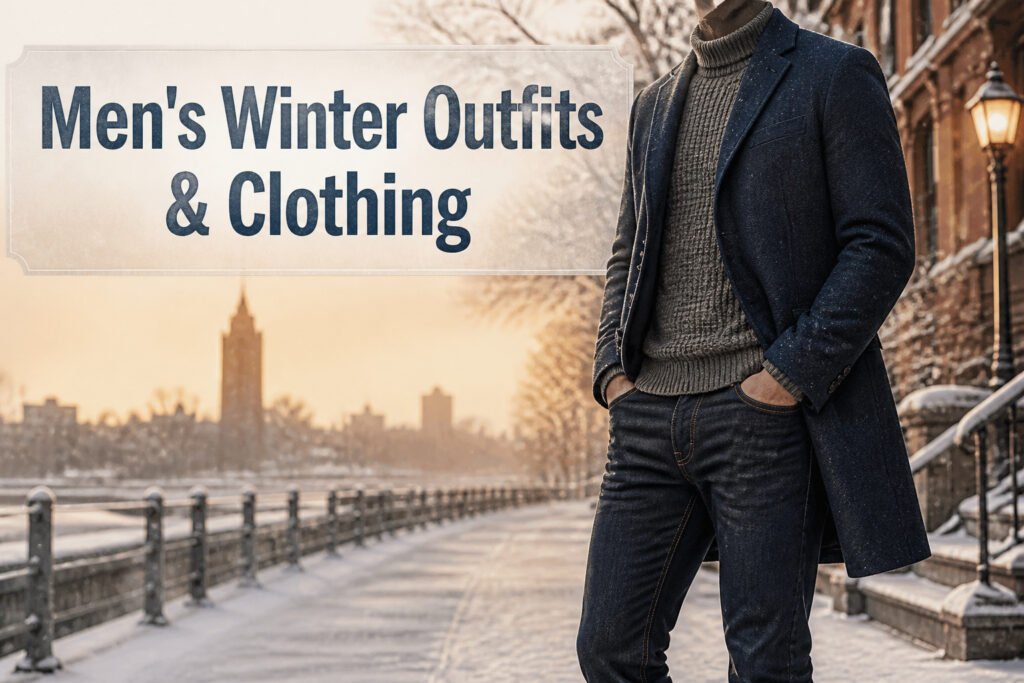
A winter outfit for men is a system of layers that trades bulk for actual warmth, and the system falls apart the moment you get the order wrong. The base layer matters most: merino wool against the skin traps heat while moving moisture outward, something thin cotton fails at completely by absorbing sweat and conducting cold. Get that first layer fitted right and everything above it, from cotton crewnecks to navy overcoats, keeps its shape instead of hiding under thick, shapeless volume.
Thermal Layers
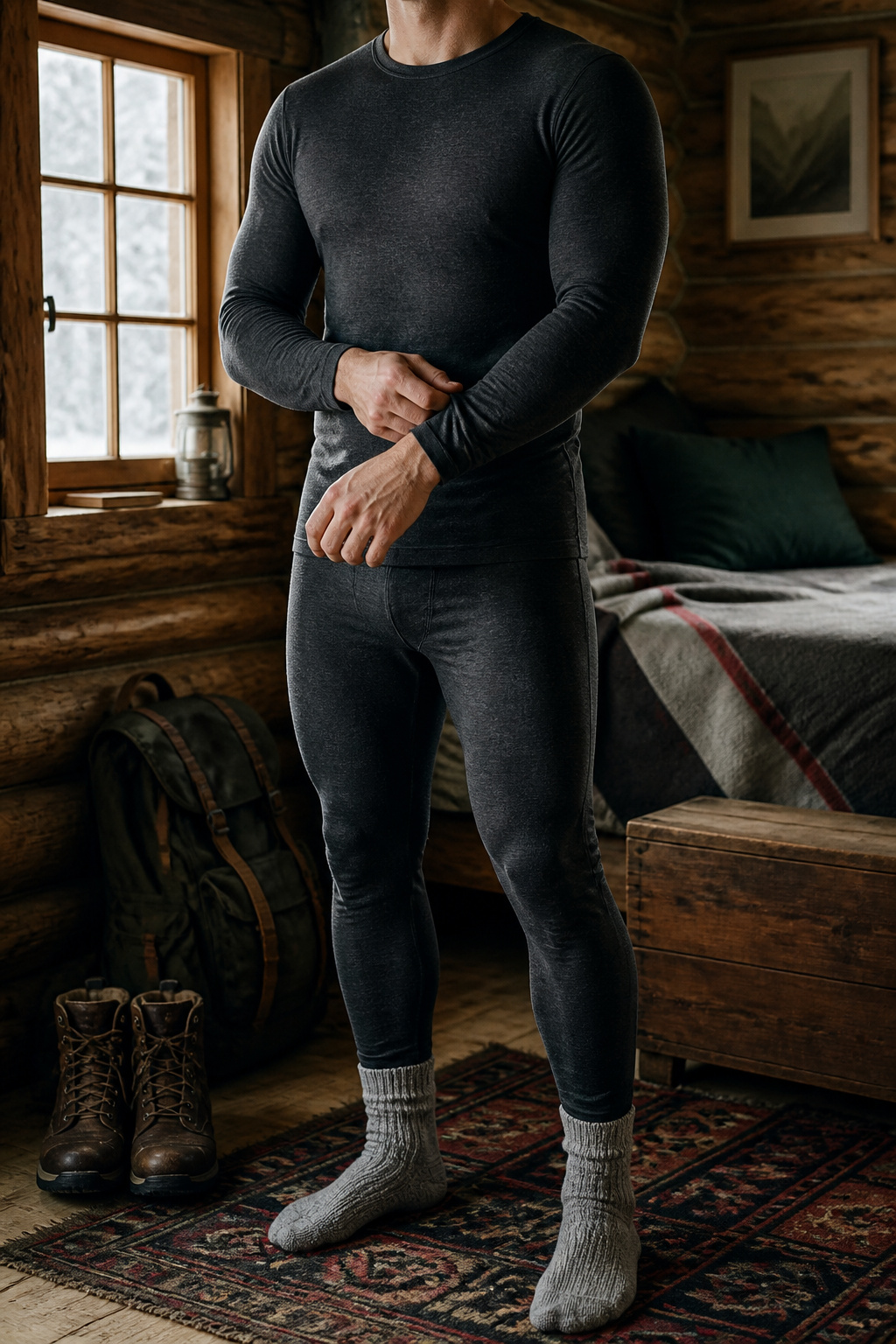
A fitted base layer sits against the skin and makes every winter outfit actually work, because bulk belongs in the outer layer, not underneath. Merino wool handles this better than anything else: it traps heat while moving moisture outward, so you stay warm without the clammy chill that comes from sweat sitting on your skin. Thin cotton fails here every time. It absorbs sweat and conducts cold, which is the opposite of what you want when the temperature drops. Thermal underwear in merino stays hidden beneath fitted outer pieces and lets you wear a real silhouette instead of hiding under thick, shapeless layers. For outdoor activity or extreme cold, this matters most; a couple of close-fitting long-sleeve merino layers keep you warm underneath so you are not adding volume on top.
Cotton Crewnecks

A cotton crewneck sits right where a winter outfit needs flexibility: over the thermal base, under whatever shell the day demands. The fabric traps just enough body heat to matter without adding the bulk of a sweater, which means your shoulders keep their shape under a jacket and your arms move freely. That slimmer profile is what makes it work for commuting or a casual office where a proper knit would read as overdressed.
The tradeoff shows up fast in wet weather. Cotton holds moisture instead of wicking it like the synthetic fleece options, so once sweat or slush soaks through, it stays cold against your skin. I treat crewnecks as a dry-day layer or as the piece I strip off before any real exertion. For the walk to the train in light snow, fine. For shoveling the driveway or a hike that might turn drizzly, a fleece midlayer handles moisture better and the crewneck stays home.
Fleece Sweatshirts

A brushed polyester or cotton-blend fleece sweatshirt fills the gap between your base layer and whatever shell you’re throwing on top. The fabric is essentially a knit that gets mechanically brushed after weaving, raising the surface fibers into a dense pile that traps air against your body. That trapped air is what keeps heat in; standard cotton jersey lacks that raised structure, which is why a fleece pullover warms you faster and holds temperature longer than an ordinary sweatshirt of the same weight.
In a layering stack, this sits right in the middle: fitted enough to slide under a barn jacket or quilted overshirt without bunching, but substantial enough that you notice when it’s missing. The texture also reads as intentional from a distance, which matters on casual days when your outer layer comes off indoors. Pair it with dark denim and lug-sole boots, and the whole thing looks considered rather than like you grabbed the first warm thing in the drawer.
Cashmere Sweaters
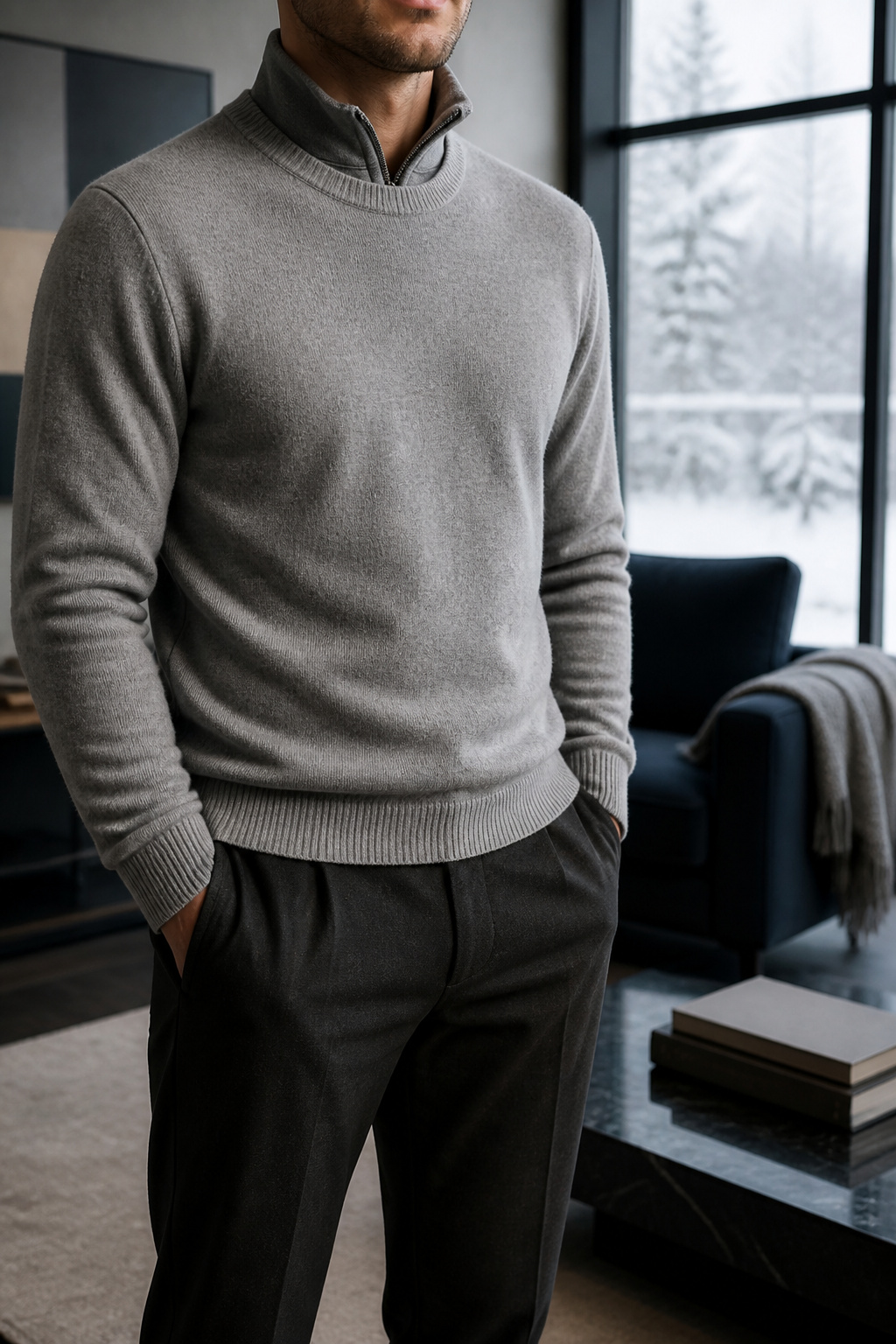
Cashmere earns its place in a winter outfit by doing what regular wool cannot: insulating without the bulk. The fibers are finer and lighter, so a cashmere sweater keeps warmth close to the body while staying thin enough to layer cleanly under a blazer or overcoat. That matters for dressier situations where a chunky lambswool knit would fight the tailored lines.
The cost gap is real, but the performance difference shows up in specific contexts. A navy cashmere crewneck under a wool suit replaces a dress shirt on days when the office runs cold, or it sits under an overcoat with navy wool trousers and black sneakers for an evening out. The texture reads as intentional rather than apologetic.
Heritage wool and cashmere together pull casual pieces toward something sharper. The sweater does not need to be the star; it raises everything around it.
"They make a casual outfit feel put-together in just about any environment."
— Esquire
That is the practical case. One cashmere sweater, kept to neutral colors like gray or navy, bridges the gap between what you already own and what the occasion demands.
Houndstooth Shirts
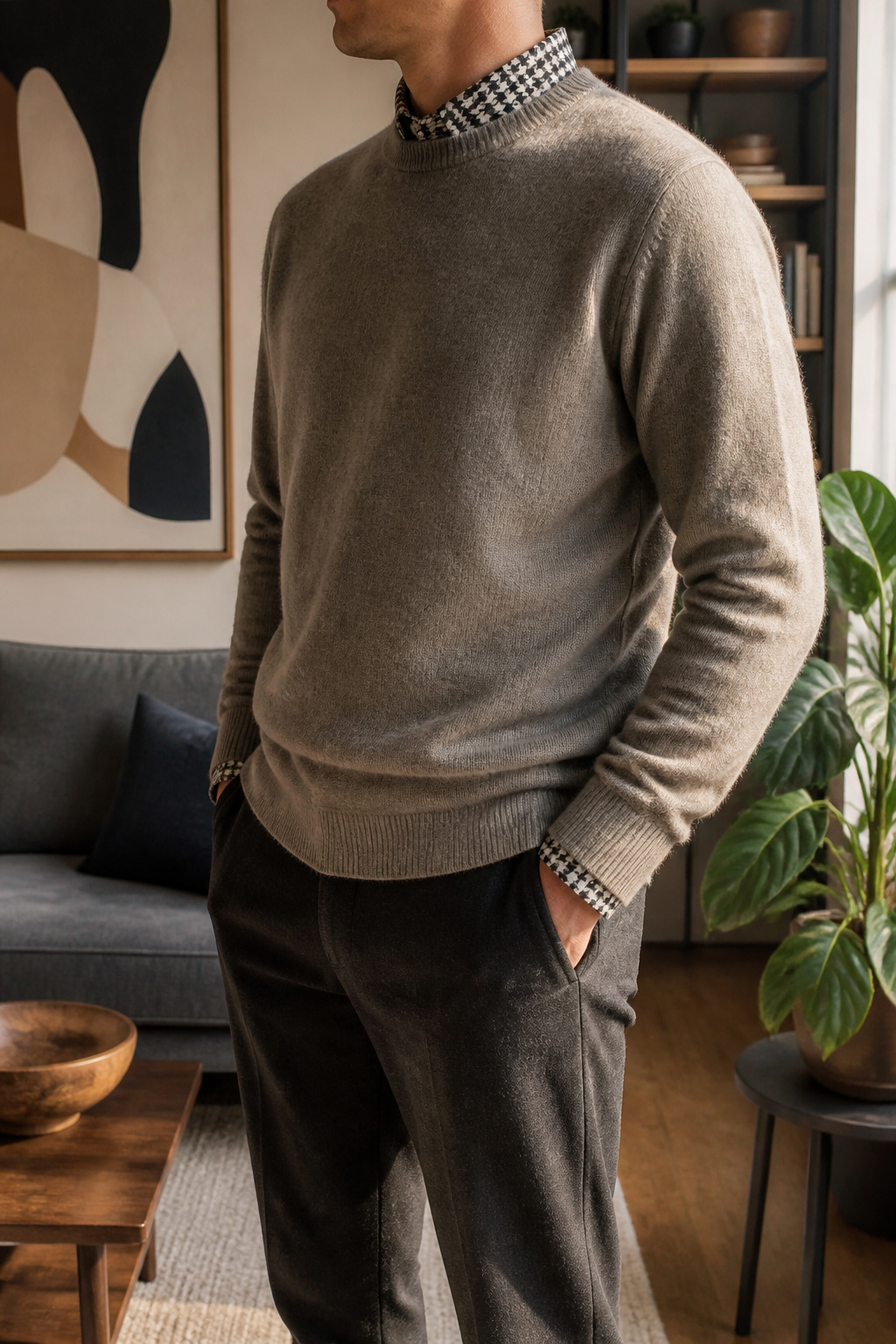
A houndstooth shirt works because the pattern is small enough to read as texture from a few feet away, not as a competing statement. In winter palettes, the classic black-and-ivory or charcoal-and-cream versions feel grounded and seasonal; the same shirt in bright red or lime would read resort-wear even in December.
The scale matters more than most people notice. Oversized houndstooth can turn into a optical argument under a solid cardigan or chore coat, while a tight repeat settles in and lets your outer layer do the talking. I look for something in the 3–8 millimeter range, roughly the density of a tweed weave.
For pairing, the rule is simpler than the blogs make it: keep the outer layer in one of the shirt’s own colors. A cream houndstooth under a charcoal sweater extends the palette instead of fragmenting it. I’ve seen the alternative go wrong at enough dinner tables, a navy windowpane jacket over a brown houndstooth shirt that fought for attention through the whole meal. The shirt lost, but so did the jacket.
Cotton flannel or a brushed twill gives the weight you want for winter; the lighter poplin versions stay in my closet until April.
Wool Suits

Wool suiting changes the game in a cold office. Synthetics trap heat against the body and hold moisture; full wool construction breathes while it insulates, so you stay warm without that clammy shift halfway through a meeting. The cloth weight tells you what season it serves. A 9–10 ounce fabric works for three-season wear, but winter-weight suiting starts around 12–14 ounces and goes heavier. That extra mass blocks wind, keeps its shape under a coat, and drapes with the kind of authority lightweight cloth never manages.
A two-piece in subtle pinstripes splits better than you’d expect. Wear the jacket with a knit polo and dark denim, or run the trousers with a dense sweater and a topcoat. The suit stops being costume and becomes workable kit. The weight matters here too: too light and the pieces look orphaned, too heavy and they feel like armor. A classic wool construction hits the middle where the cloth holds warmth but still moves.
Quilted Jackets
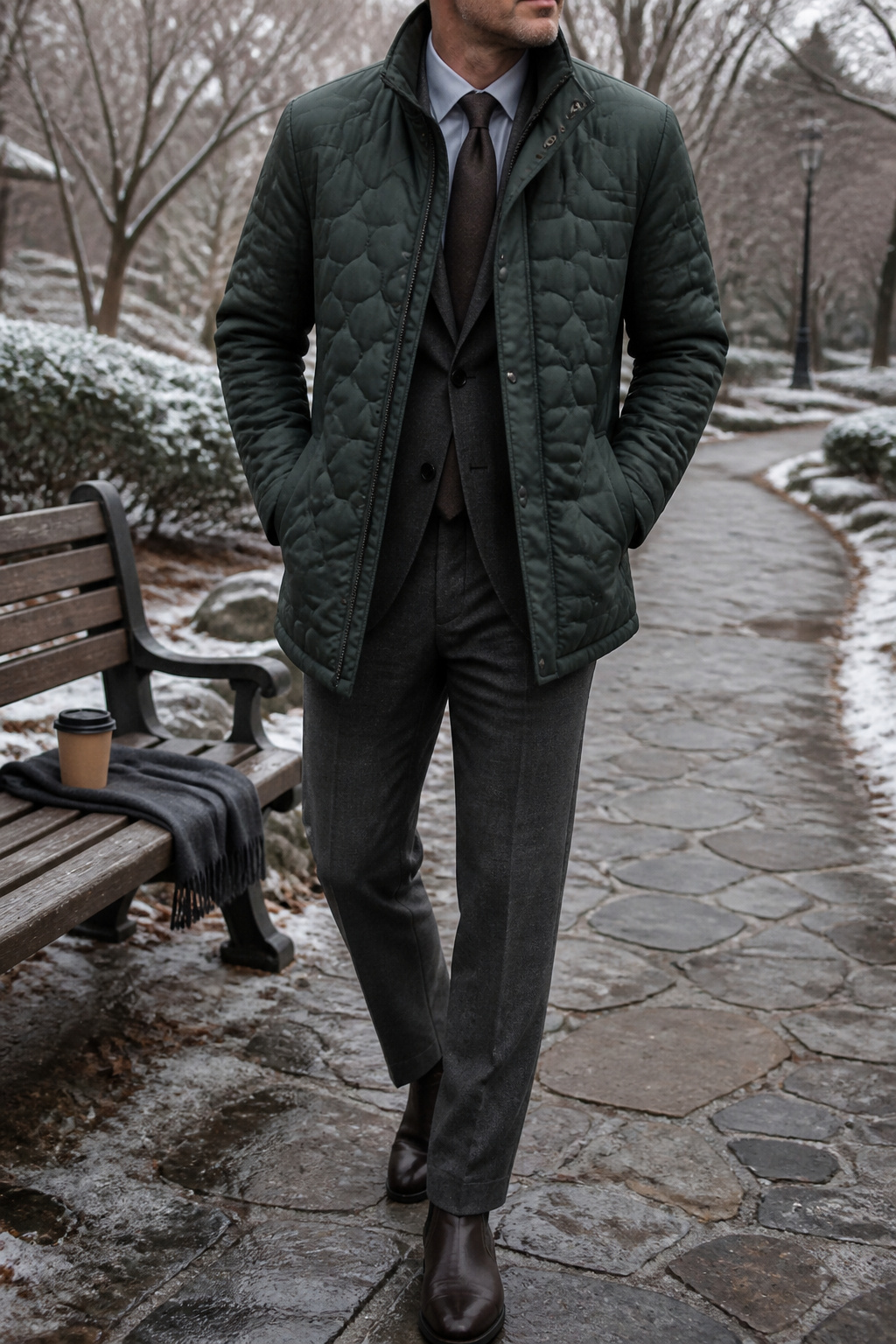
Quilted jackets sit in that awkward middle ground most outerwear tries to avoid, and that is exactly why they earn their place. The stitched channels hold a thin layer of insulation in place without the bulk of a full puffer, which means the silhouette stays trim enough to slide under an overcoat when temperatures drop below what the quilting can handle alone. I look at it as a 35-to-50-degree piece: above that range it serves as outerwear over a sweater or henley, below it becomes the middle layer the sources describe, trapped between a base that wicks and a shell that blocks wind.
The construction matters here more than the fill. Narrower quilting lines lie flatter and read more refined under a coat; wider channels puff more and work better when the jacket is the outermost layer. Pedro Pascal’s waxed jacket in the sources operates on this same principle, just with a different shell. A quilted piece lacks that waxed surface, so it will not repel a soaking rain, but it breathes better during the dry cold most winter days deliver. Pair it with dark denim and lug-sole boots and the outfit resolves without overthinking; the texture of the quilting does enough visual work that the rest can stay simple. The mistake is treating it as a single-layer solution for true freezing weather. It is not. It is the layer that lets you subtract the overcoat when the afternoon warms, or add it when the sun drops.
Puffer Jackets

Down fill used to be the only serious option for a puffer, but synthetic insulations have closed the gap enough that the choice is now about conditions, not prestige. Down still wins on warmth-to-weight and compressibility, which matters if the jacket lives in a bag between commutes. Synthetics handle damp cold better, dry faster, and cost less, and for most urban winters that is the more relevant set of virtues.
The silhouette shift is the bigger story. What started as technical gear, cut boxy to fit over climbing harnesses, has been taken up by streetwear and trimmed down. A slim puffer over a fitted sweater reads intentional now; two oversized pieces layered together still reads like you are wearing sleeping bags. Fit beats volume every time, and the proportion that saves the look is the base layer and middle layer staying close to the body while the puffer does the warming.
Vertical lines help if you are worried about bulk. An unzipped front, a long scarf left hanging, or even just the V of a sweater collar showing breaks the horizontal swell. For smart-casual weekends, the pairing that works is a slim puffer with chinos and boots, the bottom half kept tailored so the top can be practical. Dark jeans or pressed trousers do the same job. The mistake is treating the puffer as an afterthought thrown over whatever you are already wearing; it is the outermost layer and sets the proportions everything else has to answer to.
F1 Jackets
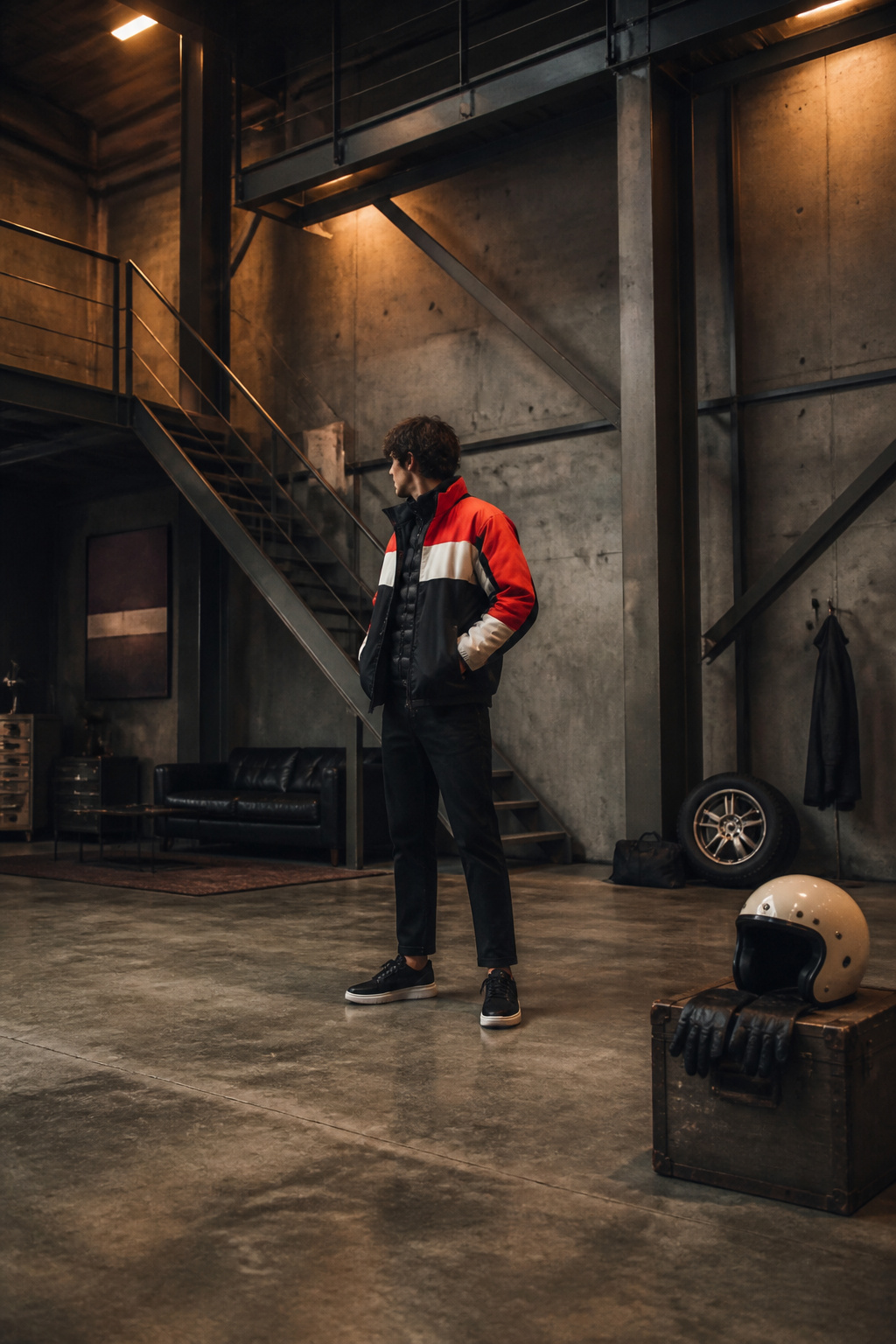
The F1 jacket borrows its silhouette from racing gear built for pit lanes and grandstands: sharp shoulders, bold color blocking, and logo-style details that read as deliberate rather than accidental. Zippers sit where function demanded them, not where a designer guessed they might look cool.
What survives from motorsport is structure. The jacket holds its shape against wind and movement, which means it does not sag or pool the way softer outer layers do. Cotton crewnecks and jeans underneath keep the look grounded; the jacket supplies the attitude, not the entire statement.
Where it risks going wrong is treating it as a default winter coat. The detailing that makes it interesting also limits it. Wear it daily and the effect dulls into costume. Pull it out for weekends, travel days, or any occasion where standing apart from a sea of puffers matters, and the choice registers as considered.
Overcoats
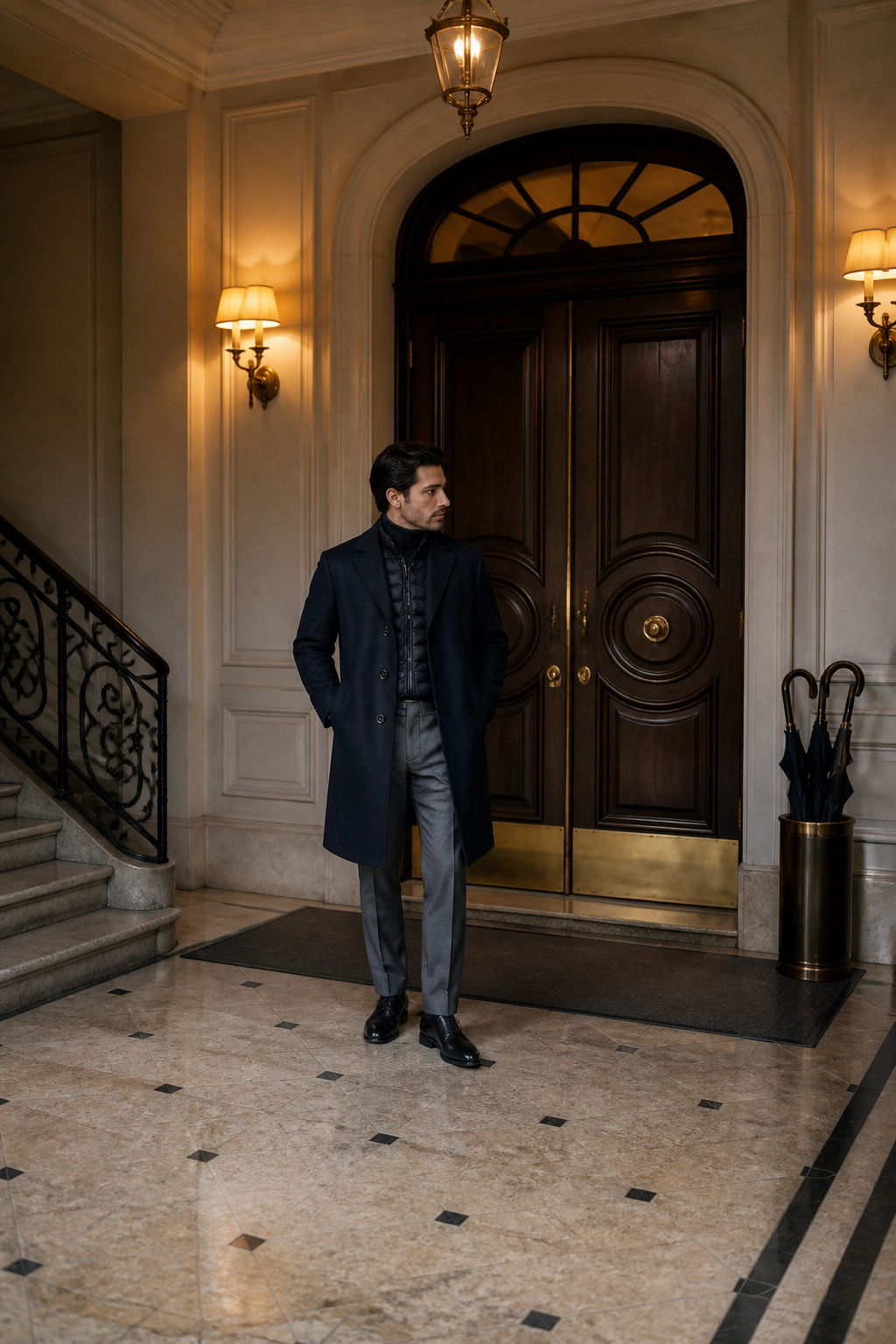
A navy overcoat turns the simplest combination underneath into something that looks considered. Wool construction is what makes this work in actual winter weather, not just for show, and the length matters more than most men realize. A coat that hits mid-thigh or lower protects the suit or sweater beneath from wind and melting snow in a way a hip-length jacket never will.
The same piece layers just as cleanly over a blue Oxford shirt with medium-wash jeans as it does over full tailoring. Leaving it unbuttoned creates that vertical line that lengthens the frame rather than adding bulk. For colder days, thermal denim underneath keeps the silhouette slim without sacrificing warmth.
What convinced me, reading through how stylists actually build these looks, is that the overcoat is not an afterthought. It is the piece that makes thermal layers and cashmere sweaters read as intentional rather than apologetic. In black, navy, or camel, it pulls together neutral tones across the rest of the outfit and handles everything from office celebrations to after-hours gatherings without a change underneath.
Relaxed-Fit Pants

Relaxed-fit pants sit in the useful middle ground that winter dressing actually needs. The cut gives a straight line from hip to ankle with enough room for long underwear or a thermal layer underneath, but the leg does not pool or wrinkle the way true baggy cuts do once you tuck them into a boot shaft. I have watched the same pair collapse into accordion folds above the ankle with a slim cut, then billow like sails with a wide leg; the relaxed taper avoids both.
The leg opening hits the boot without needing a roll or a tug on most standard shaft heights, which matters when you are putting them on with cold fingers. For fabrics, heavier cotton twill and brushed wool blends hold that shape without stiffening the way raw denim does in freezing air. A small amount of stretch woven in keeps the drape active instead of board-straight, which reads more deliberate and less like borrowed workwear.
Corduroy Pants
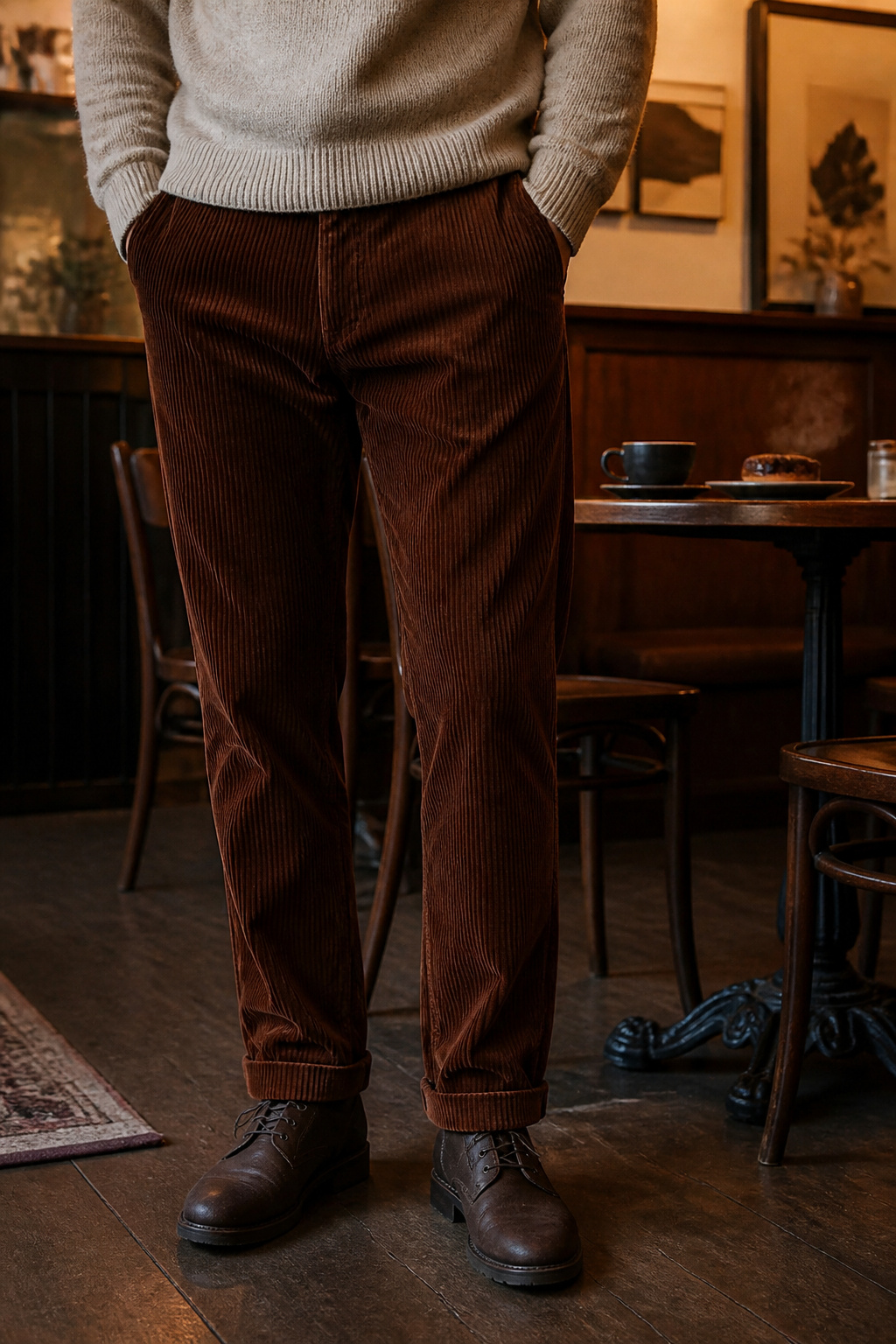
Corduroy carries texture without shouting for attention, which is exactly what winter outfits need when everything else already layers thick. The fabric gets its weight from wale count, the number of ridges per inch: lower counts like 8 wale feel heavier and hold a sharper line under an overcoat, while higher counts up near 14 wale sit lighter and read almost like velvet from a few feet away. Most pants land somewhere in the middle, around 11 wale, dense enough to keep their shape through a day of wear but not so stiff they fight your sweater.
That density matters because corduroy pairs best against smoother textures. A cable-knit or Fisherman sweater already brings its own ridges; put it against corduroy and both textures compete. Better to let the cords anchor the lower half while merino or a thin wool weave handles the top. The same logic holds for overcoats: thick wool or dense structured fabrics on top need something with body below, not thin cotton that absorbs sweat and goes limp by noon.
Color works the same way. Corduroy takes dark tones, olive and chocolate and deep navy, better than almost any trouser fabric because the wales catch light at angles and keep the shade from reading flat. In winter, when the sky does the flattening for you, that subtle dimension saves an outfit from looking like a uniform. Plusher than jeans, more comfortable than wool trousers, and a direct substitute for either when the temperature drops.
Chinos
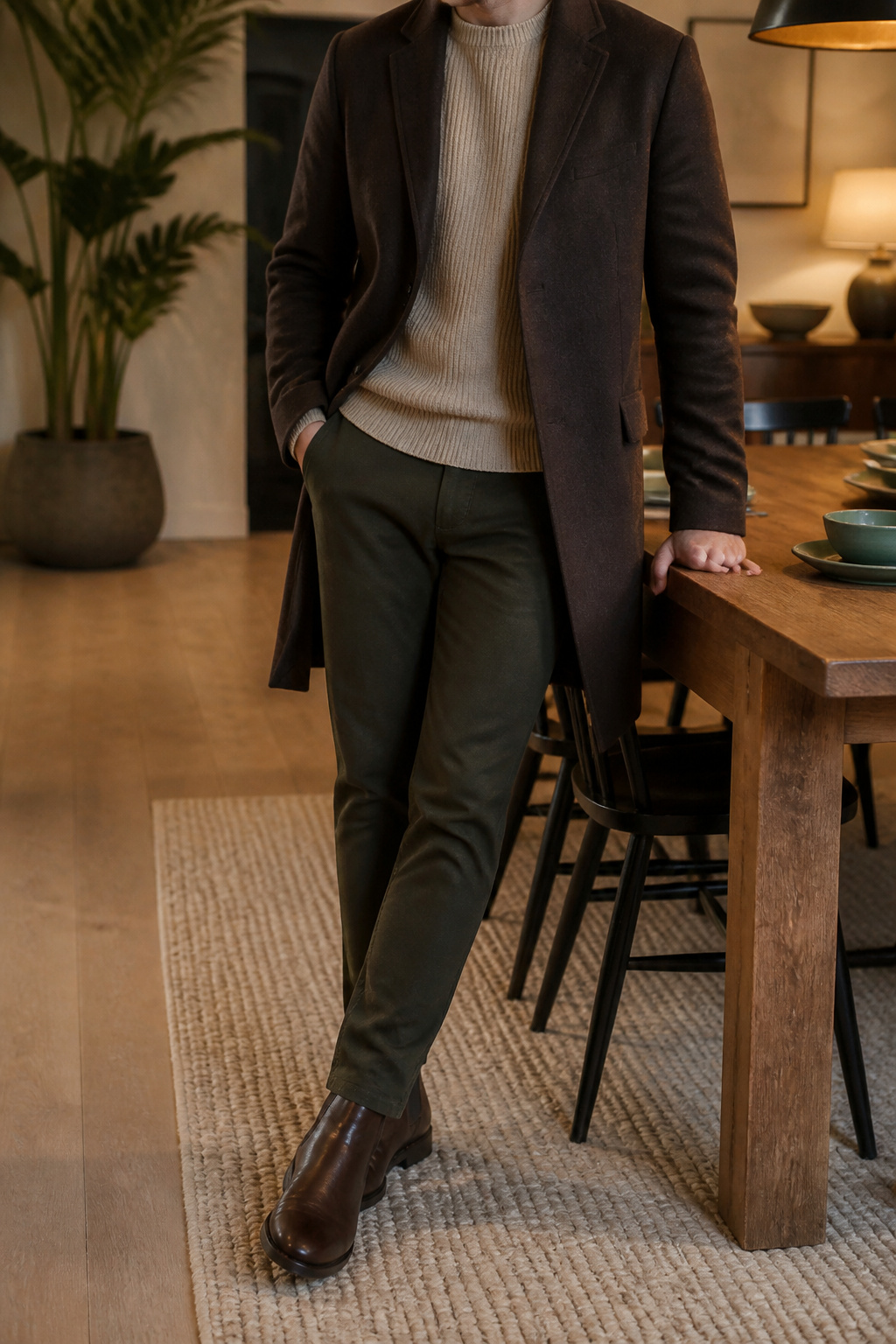
Winter-weight chinos sit right where you need them: sturdier than summer cotton but not as stiff as jeans. The difference is in the ounce count, and you can feel it the second you pull them on. A proper winter chino runs heavier on the fabric, usually brushed on the inside for that slight nap against the skin.
Color is where most men miss an easy win. Summer chinos in stone or khaki read as beach gear once the light goes flat in December. Darker tones, olive and charcoal especially, absorb what little warmth the sun offers and pair cleanly with navy overcoats or oatmeal knits. Brown works too, though it needs the right shoe to avoid looking like a uniform.
For daily wear, chinos occupy the useful middle ground dress trousers can’t manage. They take a scuff, they don’t require a crease, and a bar or a client lunch both feel right. Jeans lean too casual for some offices; chinos never do, yet they relax enough for Saturday errands without changing. That is the practical case for owning two pair in winter weights and rotating them hard.
Dark Denim

Dark indigo, charcoal, and black denim read as winter because they absorb light instead of reflecting it back, the same way a forest canopy closes in overhead. One dark indigo and one black pair will cover most men through February, pairing with the season’s muted palette without the visual chill of faded washes.
Raw and selvedge denim stiffens noticeably as temperatures drop. The same starch that keeps the legs sharp in September turns rigid enough to chafe by January if you size for summer comfort. The break-in period, already a commitment, extends by weeks in cold weather because the fibers move less and the cotton oils stay viscous.
Weight matters more than most shoppers notice. Dense structured denim, the kind that holds its line when layered over long johns, actually blocks wind. Thin cotton weaves, even in dark washes, conduct cold straight through and sag under a coat’s hem. The heavy stuff feels like armor the first hour outdoors, then you stop noticing because the wind stops mattering.
Weatherproof Boots

Salt-stained leather and wet socks have ended more winter days early than cold air ever did. Weatherproof boots are the one piece that lets you walk through slush and sit down at dinner without a shoe change, and the difference between marketing and real protection is worth knowing before you buy.
"Water-resistant" usually means a surface coating that will wear off by February. Full weatherproofing comes from a membrane layer built into the boot’s construction or from leather that has been drum-dyed with wax or oil all the way through, not just sprayed on top. You can tell the real thing by looking inside: a proper membrane boot has a separate fabric lining you can feel move independently from the outer shell, while treated leather will feel stiffer and show color variation when you flex it.
For anyone who walks outside in winter, this is the default footwear decision. A membrane boot breathes better on long walks, so your feet stay dry from the inside too. Treated leather looks less technical with dark denim or a wool coat, but it needs re-waxing once a season to keep the slush out. Either construction handles salt if you rinse it off that night; neither will if you let it sit.
Chelsea Boots

The elastic-sided construction on a Chelsea boot is what keeps it clean enough for a suit while still handling winter. No laces to collect slush, no eyelets to leak, just a snug gore panel that pulls on fast and sits invisible under trousers. That slim silhouette is the bridge between a casual boot and something office-appropriate: chunkier work boots read outdoorsy, but a Chelsea with a clean toe profile slips under tailored pants without the clash.
Leather versus suede is the real winter decision. Leather shrugs off wet and salt; suede soaks it in unless the event is strictly indoors. The passages back this plainly: save delicate suede for dry events, and choose leather for cold and wet. Tread matters too. A lugged sole grips ice, but a chunky lug under slim trousers throws the proportion. A clean toe with modest tread hits the balance: weather handling without looking like you hiked in.
For the commute-to-office handoff, this boot saves the extra pair in your bag. Pair it with structured trousers and a sweater in a different texture, and you have winter workwear that never stiffens into costume. The outfit formula is simple: sharp boot, tailored bottom, something with texture up top.
Casual Boots

Work-boot heritage styles have settled into everyday winter wear the same way denim did decades ago. The thick rubber lug soles that define them matter because those deep, widely spaced treads grip ice in a way smoother soles never will. Salt and packed snow on city sidewalks chew up lesser bottoms fast.
Pairing them with relaxed pants or dark denim keeps the look intentional rather than borrowed-from-the-job-site. A clean toe profile reads more polished than exaggerated moc toes, but the chunkier sole still anchors looser silhouettes that would swallow slimmer footwear.
The limit shows up fast once weather actually hits. Heritage leather work boots lack Gore-Tex or treated membranes, so wet slush soaks through eventually. They handle cold and dry fine, but true weatherproofing demands something built for it. Most of us end up carrying a backup pair or choosing our battles by forecast.
Leather Loafers
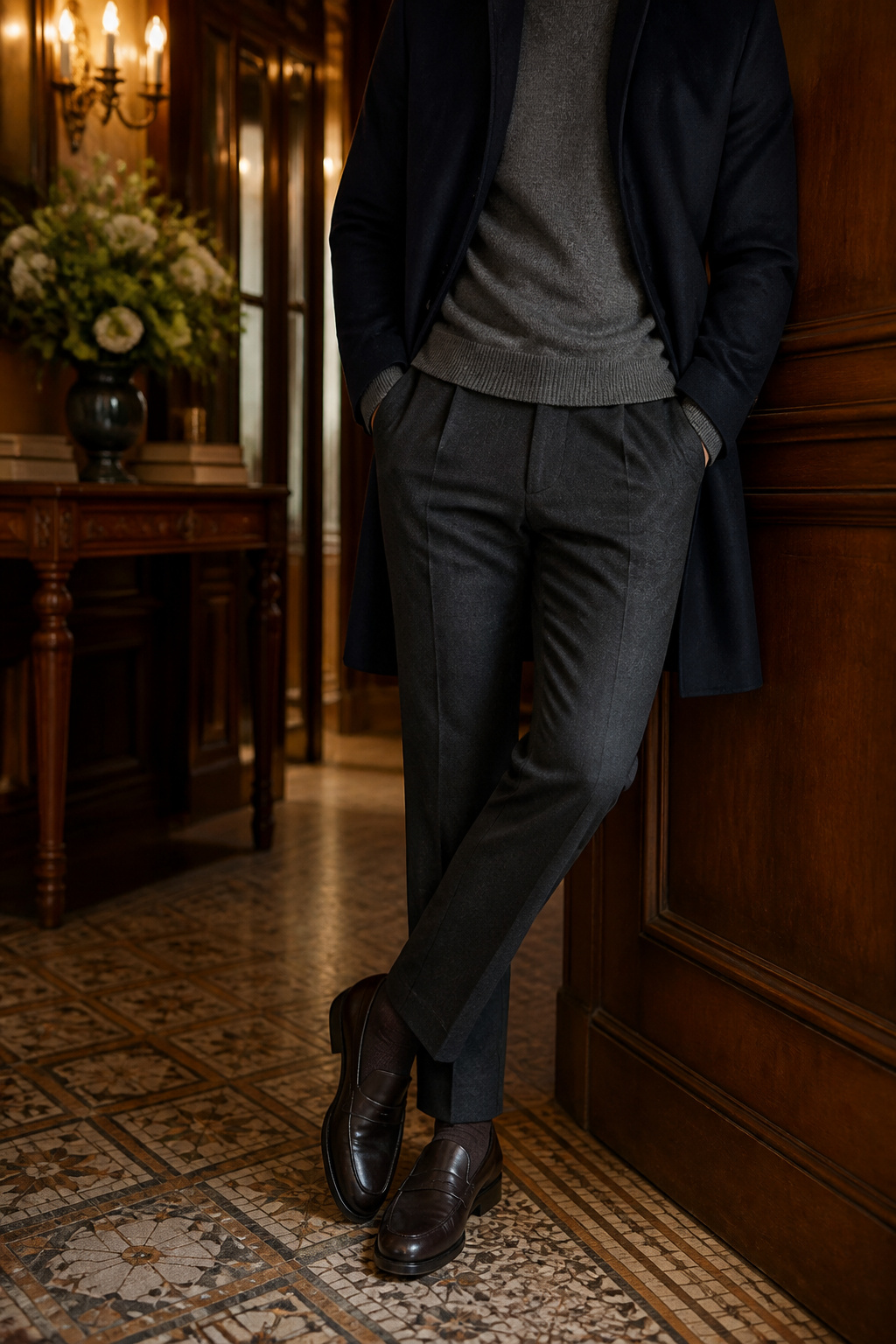
Leather loafers earn their place in a winter outfit men can wear from October through March without seasonal retirement. Black penny loafers anchor the smart-casual uniform that sources keep returning to: navy overcoat, Oxford shirt, and medium-wash or thermal denim. The shoe itself changes little; what makes it viable in cold weather is the sock.
Thick wool or cashmere crew socks fill the gap between ankle and hem, and the loafer’s low vamp shows just enough of them to read as intentional. Corduroys paired with loafers and wayfarers nod to heritage while keeping the look current, and the combination works for offices, dinners, or dry weekend afternoons.
The limit is terrain. Snow, slush, or salted sidewalks will ruin the leather and leave you cold. Treat loafers as indoor-to-dry-pavement shoes and keep weatherproof boots in rotation for everything else. A winter wardrobe built on quality over quantity needs both: the boot for function, the loafer for the days when the ground cooperates and you want to look like you planned for it.
Sneaker Loafers

A sneaker loafer looks like a slip-on dress shoe from above and feels like a cushioned trainer underneath. The upper keeps the loafer’s strap or tassel and cleaner toe line, while the midsole hides foam or an athletic sole unit. That combination matters most in winter, when pavement changes between dry concrete, wet slush, and salted stairs inside an hour.
Water is where these hybrids show their limits. Most use suede or thin leather uppers that soak through faster than a true boot, and the low collar leaves your ankle exposed to snow. They work best on days when you are walking from a car to heated buildings, not standing on an open platform. For those conditions, I would treat the leather and wear merino socks that still insulate when slightly damp.
The payoff is not carrying a second pair. One shoe handles a casual office, a lunch that runs long, and the walk home through a parking lot that has not been fully cleared. That versatility explains why this category keeps growing in winter outfit men searches. It is a compromise shoe, honest about what it gives up, and the trade is worth it if your day does not demand full weatherproofing.
Recovery Slides

Foam construction is what made recovery slides cross over from locker rooms to living rooms. A single molded midsole, usually EVA or a proprietary blend, absorbs impact without the weight of a traditional slipper. That matters in winter when hardwood floors feel colder and joints feel stiffer.
The reason they keep surfacing in "winter outfit men" discussions is layering logic. After a full kit of wool socks, boots, and thermal pants, the feet need something easy at the door that still reads as intentional. A matte black slide with a textured footbed looks like you chose it, not like you gave up.
Wearing them past the front door is where I draw the line. The same foam that cushions a post-gym foot compresses visibly after a few months of pavement wear, and the silhouette was never built for trousers with a proper break. Pair them with joggers or flannel-lined pants at home, or with thick socks and a chore coat for the coffee run if the run is truly the only stop. For anything involving a host, a seated meal, or public transit, leather loafers or weatherproof boots earn their place in the bag.
Beanies
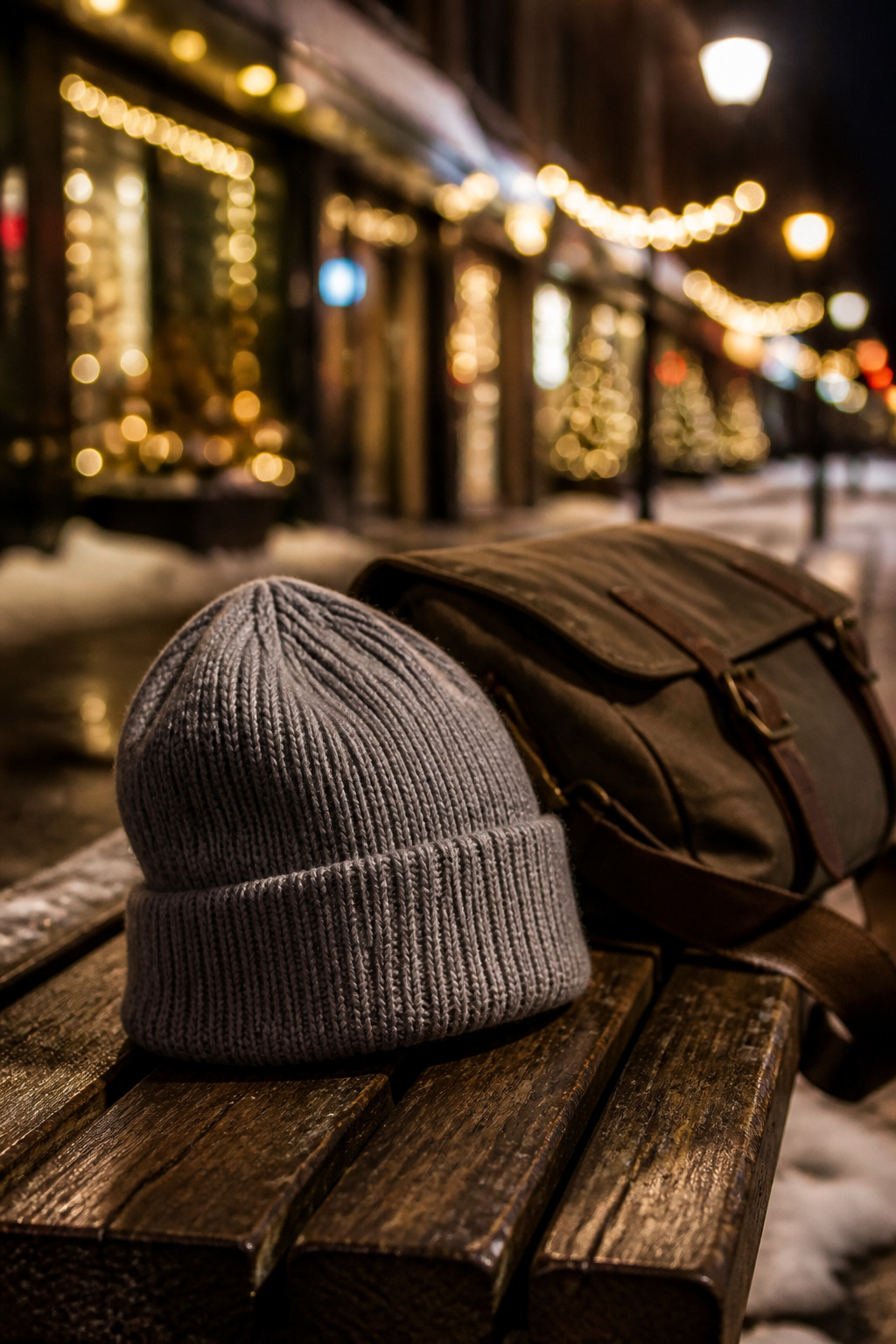
A beanie does the most work for the least fabric. Merino wool, wool blends, and thermal knits trap heat while moving moisture away from the scalp, which is why the beanie displaced flat caps, newsboy styles, and other structured winter hats for everyday wear. Cable-knit and Fisherman knits show texture and hold their shape better than thin wool weaves, and dense structured fabrics like thick wool maintain their line when layered under a hood or overcoat.
Cashmere runs softest against a buzzcut or short crop, but the $12 acrylic gas-station beanie still works if the fit is right. The critical detail is how it sits: too loose and the heat escapes, too tight and the silhouette turns egg-shaped where it meets the coat collar. The North Face and similar outdoor brands engineer ribbed brims that grip without squeezing, which matters more than fiber content if you are walking between subway stops or splitting firewood.
Thin cotton is the one to skip. It absorbs sweat and conducts cold, so the same beanie that felt fine on the porch turns miserable by mile two. Wool blends hit the practical middle for most winter outfits: warm enough, resilient enough, and replaceable without guilt when the brim finally relaxes into a permanent roll.
Baseball Caps

A baseball cap that held up through a drizzle in late November convinced me the brim is doing more work than we credit it for. The wool and corduroy versions built for winter keep the same shape as cotton but trap heat the way dense structured fabrics do, and that curved edge still cuts the low winter sun at a sharp enough angle to matter. Precipitation beads off corduroy’s thick ridges longer than you’d expect, though neither material forgives being soaked through.
Some men wear these year-round because the shape solves problems no beanie can: shielding eyes from glare, shedding light rain, and signaling casual intent in a way that reads the same in August as it does in February. The temperature threshold is personal, but the cap persists because it bridges outfits rather than anchors them.
Scarves

The neck gap where most coats fail to close is where the once-around loop earns its keep. A thin merino or cashmere blend scarf, looped once and left to drape, adds real warmth without the bulk of a thick wool wrap. Dense cotton works too, though it sits stiffer against the throat and takes longer to soften with wear. Width matters more than most men expect: too narrow and the scarf slips through the loop, too wide and the single wrap turns into a collar-sized puff that fights the coat lapel. Length is what lets the ends hang clean under an open coat or tuck neatly when buttoned. Neutral tones, charcoal, burgundy, navy, camel, do the heavy lifting here because the scarf sits right at eye level; it should read as texture, not announcement. I have watched smooth knits, a fine-gauge sweater under a wool topcoat, turn flat without that one textured layer at the throat. The loop itself is the practical move: one pass, quick to adjust when you step indoors, easy to loosen if the subway car overheats.
Gloves
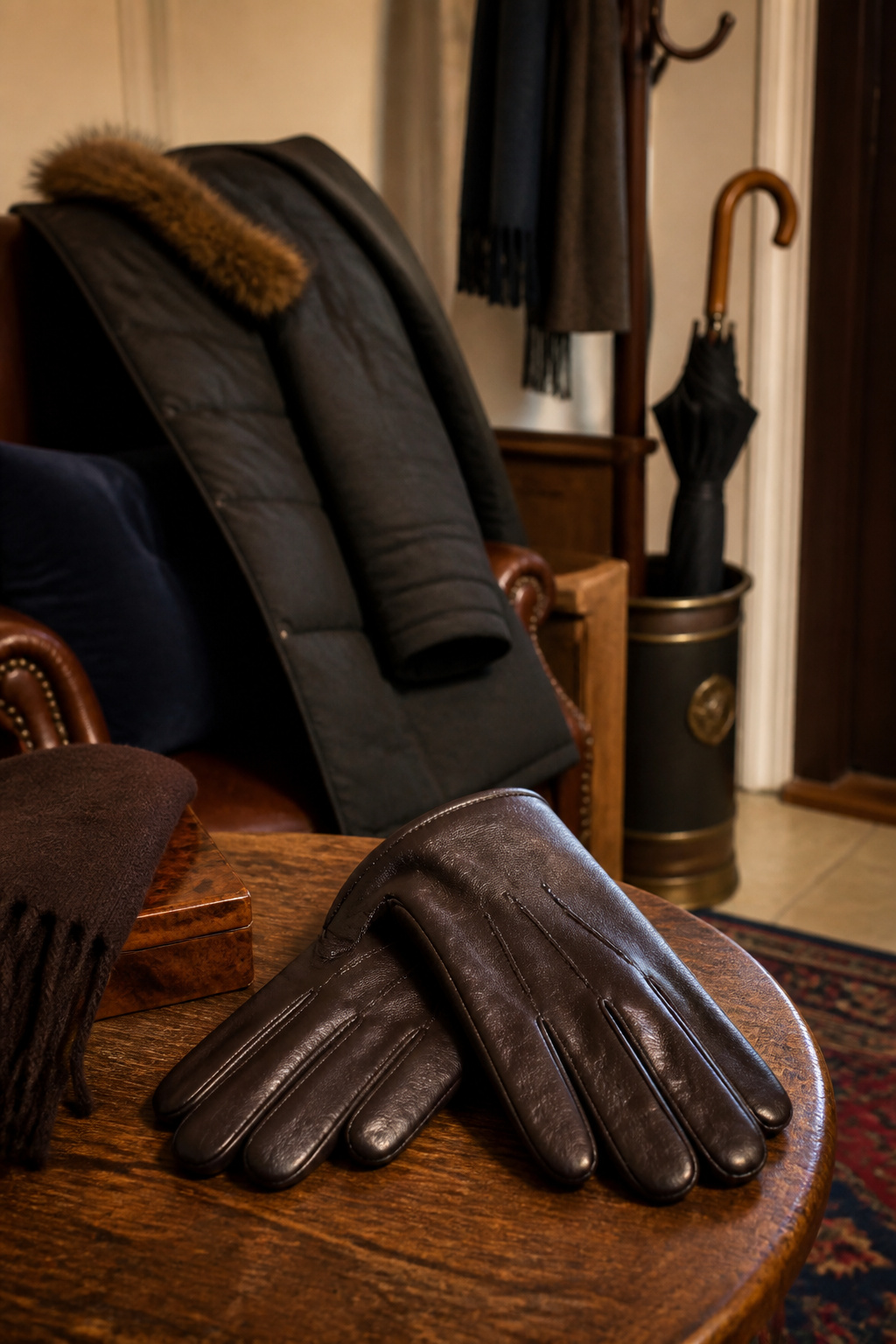
The right gloves finish an outfit the way a frame finishes a photograph: wrong ones throw off everything around them.
Leather gloves carry a polish that wool cannot match. They work with overcoats and blazers because the surface catches light the same way good shoes do. Wool absorbs it, which is why wool gloves look right with puffers and parkas but slightly apologetic with formal outerwear. Technical fabrics sit somewhere between, usually matte, often with visible seams that read sporty even in black.
Touchscreen compatibility has become non-negotiable. Most leather gloves now ship with conductive thread at the fingertips, though the cheaper versions work about sixty percent of the time and fail when your hands are cold. Testing this in a store means pulling out your actual phone, not the display model bolted to the counter.
Activity shapes the choice more than thermometer readings. Driving demands thin palms and grip. Walking in a city means wind resistance matters more than bulk. Skiing or shoveling is its own category entirely. I have watched men in beautiful cashmere topcoats ruin the effect by pulling on bulky Thinsulate mittens to hail a cab. Temperature did not force that choice; carrying two pairs would have solved it.
Shield Sunglasses
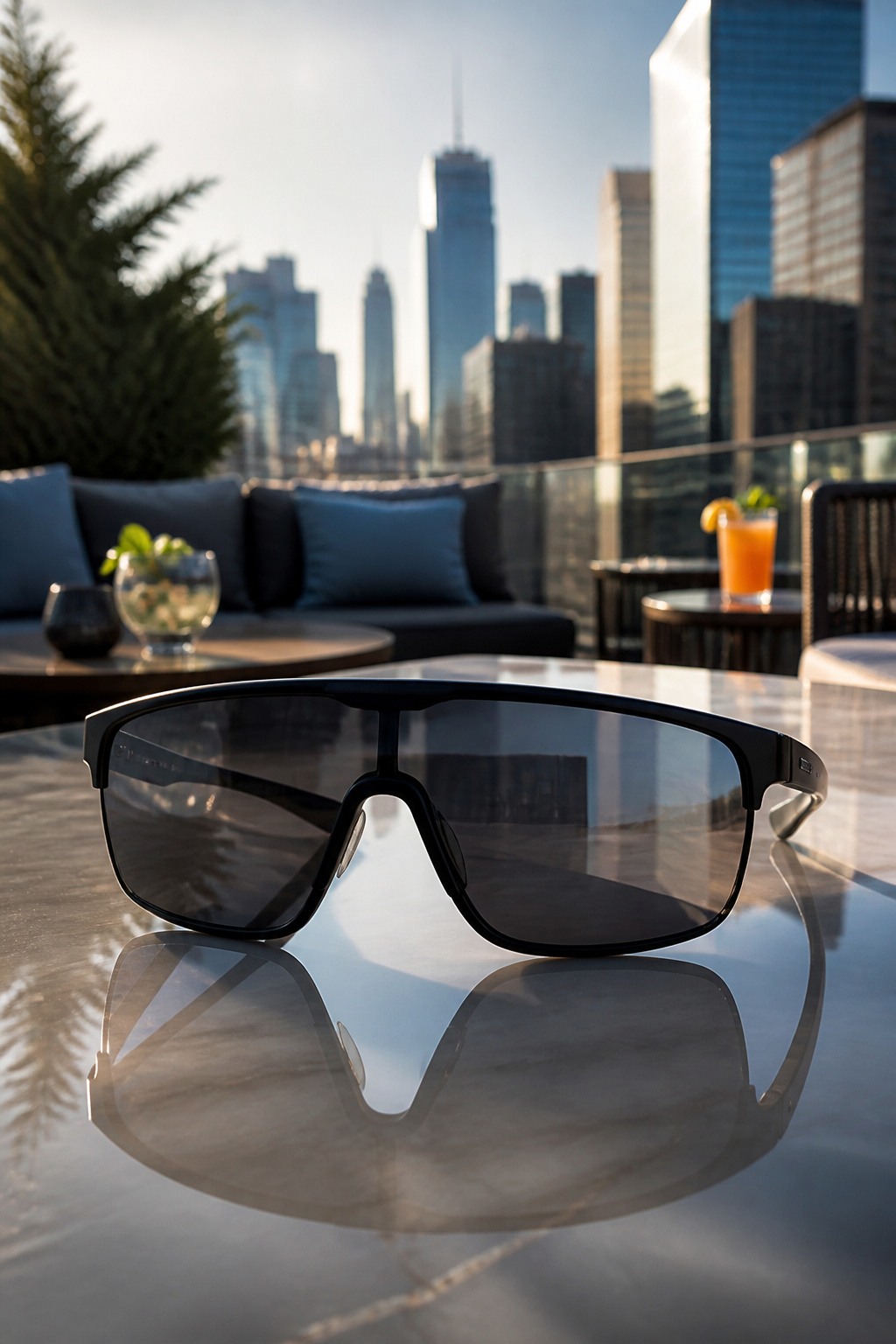
Winter glare off snow demands more than dark lenses. A light rose or amber tint cuts through flat, overcast light so you can actually read the terrain, while a deeper copper or gray handles those blinding low-sun afternoons when reflection off fresh powder feels almost violent. The real difference is frame coverage. A shield lens wraps past the temple line and seals against the brow, which matters the instant wind picks up and starts funneling grit around standard frames. Without that seal, you squint, you tear up, and the whole look collapses into something you keep touching and adjusting.
Style hinges on what else is happening in the outfit. Pair a shield with a puffer and snow boots and it reads technical, almost alpine rescue. Same glasses with a wool overcoat and leather gloves swing toward aggressive, like something off a 1980s trading floor. The trick is choosing a frame finish that matches your hardware: matte black with matte zippers, or polished acetate with polished buckles. Mix the two and the glasses start looking like an afterthought rather than a choice.
Layering Order
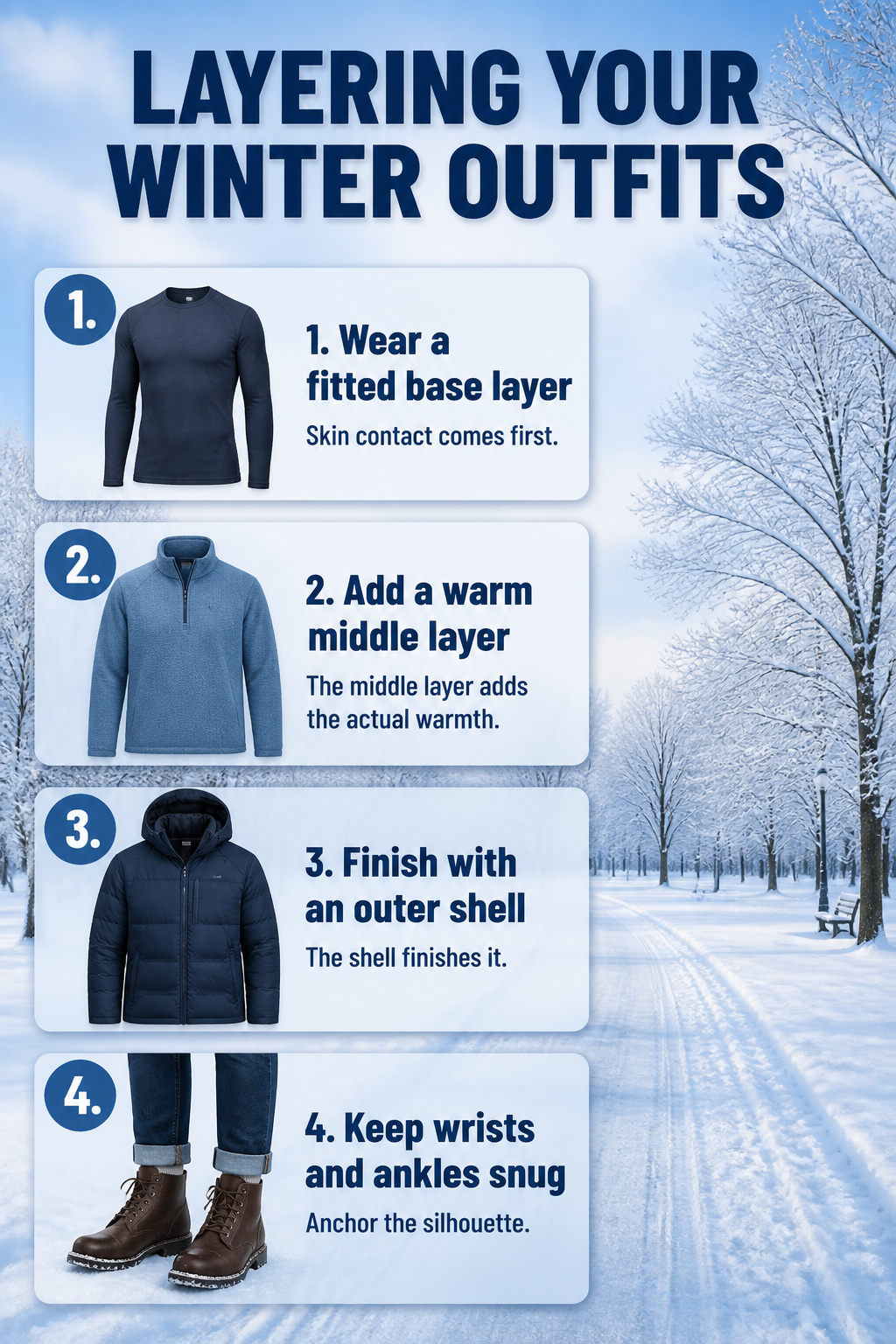
Skin contact comes first. A fitted base layer, whether a thermal tee or merino henley, needs to sit close enough to wick moisture or trap body heat without bunching under what comes next.
The middle layer adds the actual warmth: a sweater, fleece, or mid-weight knit with enough room to slide over the base but not so much that it balloons outward. This is where the shape of the outfit gets decided. Tight-tight-tight compresses into something stiff; loose-loose-loose collapses into a lump. Graduated looseness is the move.
The shell finishes it. An overcoat, puffer, or technical jacket blocks wind and water. Reversing the order fails fast: put the thick puffer against your skin and nothing underneath can do its job, while the outer layer loses its structure without the fitted anchor beneath it. Keep wrists and ankles visible or snug to anchor the silhouette, and the stack works.
Fabric Choices That Matter

Thin cotton kills warmth faster than most men expect. The fabric pulls sweat and snowmelt straight against the skin, and once that moisture sits, the body loses heat five times quicker than in dry air. Merino wool, cashmere, and thermal fabrics win winter because they move moisture outward before it can settle, letting the layer next to your skin stay dry enough to insulate.
Reading labels takes more than glancing at the front. A sweater marked "wool blend" might carry 5% merino and 95% acrylic, which traps odor and loses shape after a few washes. Look for the actual content breakdown on the sewn-in tag: merino wool percentages above 50% perform the work, cashmere content in the 20–100% range justifies the price with weightless warmth, and thermal cotton with a brushed interior weave beats flat-knit cotton by creating trapped air pockets. Cable-knit and Fisherman knits hold structure better than thin weaves when layered under a coat.
I learned the label habit after a cotton base layer left me shivering through a football game in what looked like a perfectly thick sweater. The outside read right; the inside betrayed me.
Color Palettes for Winter
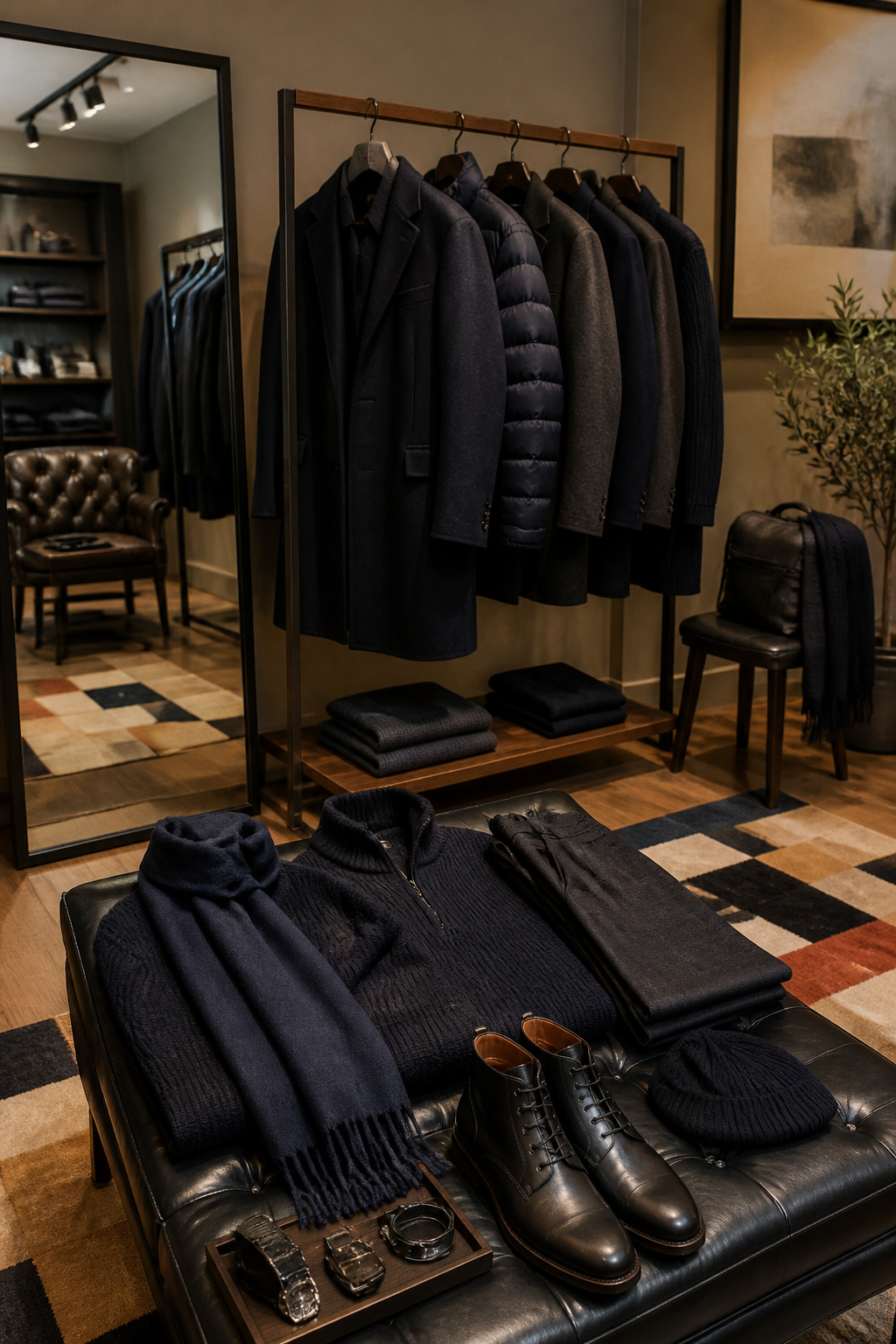
Navy, charcoal, and black form the practical backbone of a winter outfit for men because they hide salt stains and daily wear in a way lighter tones simply cannot. A coat in one of these three colors will look presentable for weeks without dry cleaning, which matters when slush and road salt are constants from December through February. Burgundy, forest green, or rust layered underneath add warmth and interest without reading as spring or summer trying to muscle in. A forest green sweater under a charcoal overcoat, or a burgundy scarf against a black puffer, keeps the palette seasonal. Reserve lighter colors for a single accent piece, and never as the dominant layer. Light blue jeans can work, but only when paired with those richer midtones to avoid looking washed out against winter’s muted backdrop. Most builds benefit from owning one dark indigo and one black pair of denim, rotated through the season.
Outfit Combinations by Occasion
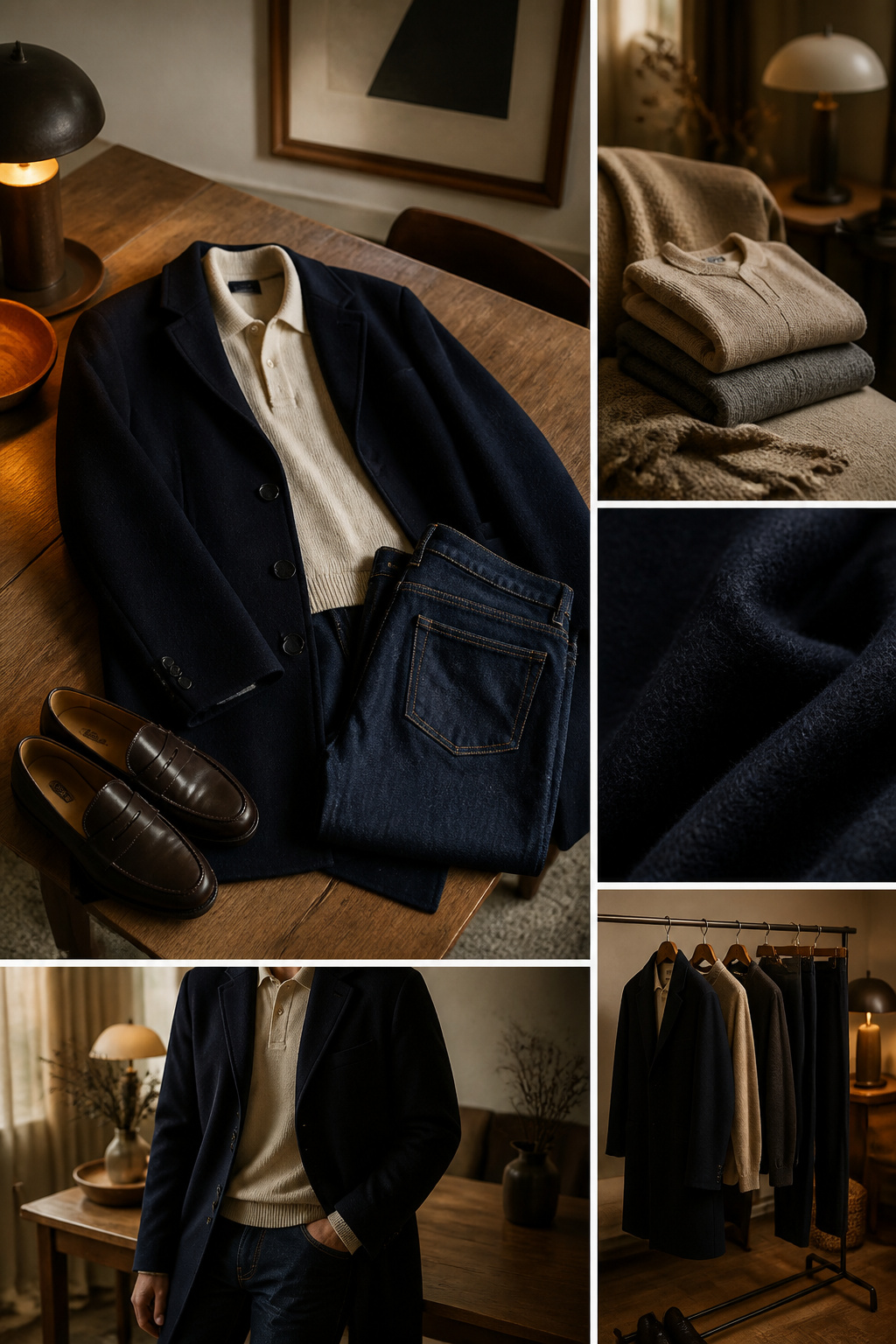
The same pieces move across your week if you pay attention to what adds or subtracts formality.
- Casual outings: A navy overcoat, blue Oxford shirt, and medium-wash jeans read sharp without trying. Black loafers keep it clean, or swap in thermal denim when the temperature drops too much.
- Office wear: That same Oxford and overcoat pair with the trousers from a winter-weight wool suit. The jacket sits this one out. A knit polo underneath would work too, but the Oxford lands you closer to standard business dress.
- Date nights: Start the casual outfit again, only add a navy cardigan between shirt and coat. The layering darkens the tone and the extra weight signals evening. If you own the wool suit pieces, the pants with a plush sweater and trench is another route, though I tend to reach for the cardigan version more often.
The overcoat is what carries all three looks. Without it, the shirt and jeans are Saturday afternoon. With it, the same combination passes at most offices and any restaurant that does not require a jacket. That is the piece worth spending on.
Care That Extends the Season
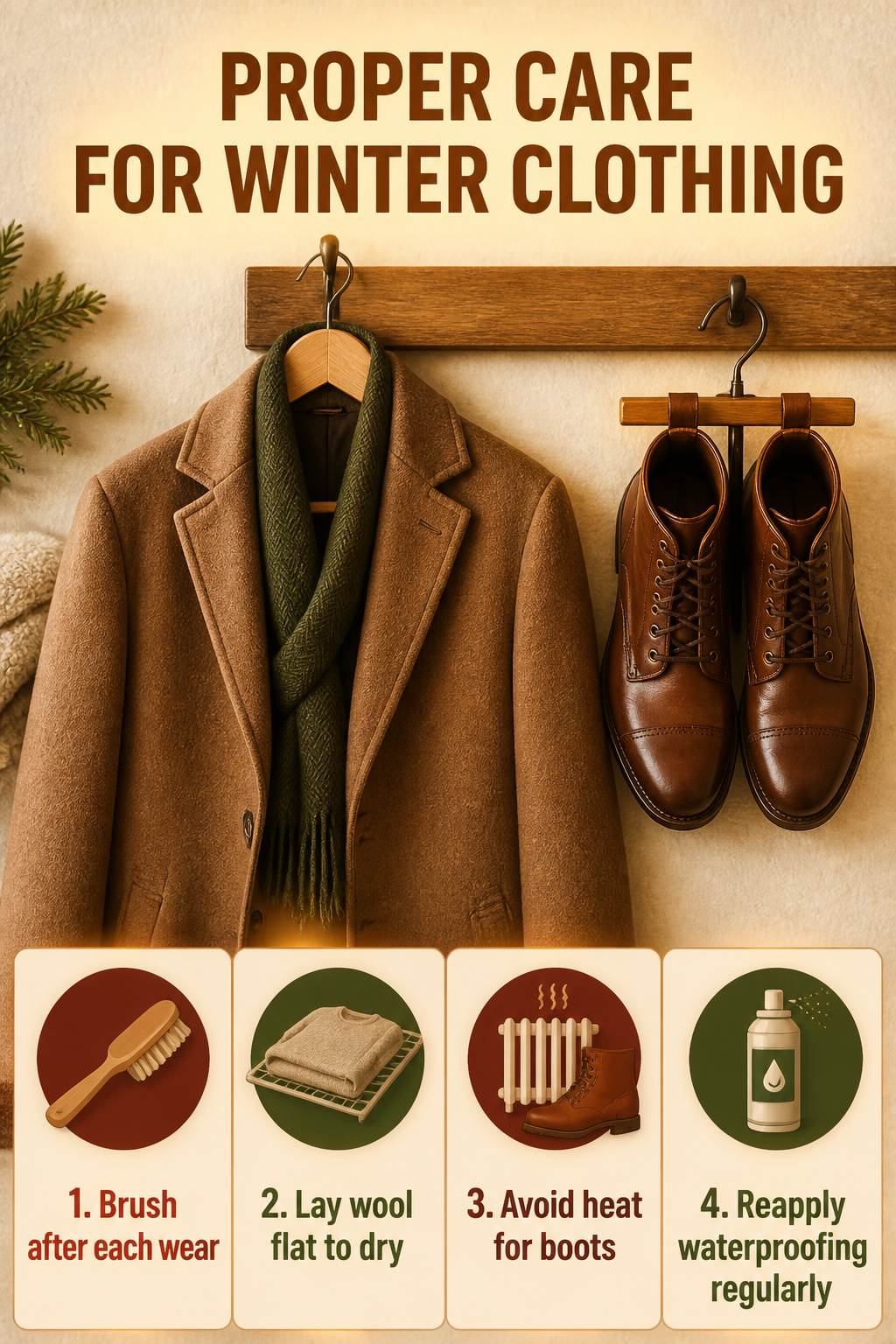
The coats that still look sharp in February need more than a trip to the dry cleaner every spring. Wool traps body oils and dust near the collar and underarms, which is why a quick brush-down after each wear buys you seasons before the fibers mat or pill. I learned this the expensive way: a camel overcoat I loved went fuzzy at the cuffs inside two winters because I hung it back up without ten seconds of attention.
Proper drying matters just as much as washing. Wool laid flat reshapes; wool tossed over a radiator shrinks and stiffens. Boots left near the heat vent crack at the creases instead of softening into your stride. Waterproofing on leather soles and uppers wears off unevenly, usually at the toe and heel where you strike pavement. Reapplying before you need it, not after you feel the leak, is the difference between boots that last six years and boots that last two. Quality-over-quantity dressing only works if the quantity you bought stays in rotation.
Frequently Asked Questions
What should men wear in winter?
A fitted merino wool base layer, a warmer middle layer like fleece or cashmere, and a weatherproof outer shell. Merino handles sweat and heat better than cotton, which absorbs moisture and conducts cold. The outer layer should block wind and water, whether that means a wool overcoat for the office or a puffer for the commute.
How should men layer for winter?
Start tight against the skin and get progressively looser. A fitted thermal base wicks moisture, a middle layer like a fleece sweatshirt or cotton crewneck traps heat, and a shell blocks wind and water. Keep wrists and ankles snug to anchor the silhouette; tight-tight-tight looks compressed, loose-loose-loose looks shapeless.
What are the best winter fabrics for men?
Merino wool, wool blends, and thermal fabrics trap heat while moving moisture outward. Dense structured fabrics like heavy denim, corduroy, and thick wool maintain their line when layered. Avoid thin cotton; it absorbs sweat and conducts cold, which is the opposite of what you want when temperatures drop.
What shoes are best for winter?
Chelsea boots in leather handle cold and wet while staying office-appropriate, and work-boot heritage styles with deep lug soles grip ice on city sidewalks. Weatherproof boots with a membrane layer or drum-dyed waxed leather let you walk through slush and sit down at dinner without changing. Keep leather loafers in rotation for dry days; they pair with wool socks and an overcoat but suffer in snow and salt.
How do men wear winter scarves without bulk?
Pick a thin merino, cashmere blend, or dense cotton scarf and loop it once. The thin profile keeps your neck warm without adding volume that fights your coat collar or overcoat lapel. A long scarf left hanging also breaks the horizontal swell of a puffer, which helps the whole outfit read leaner.