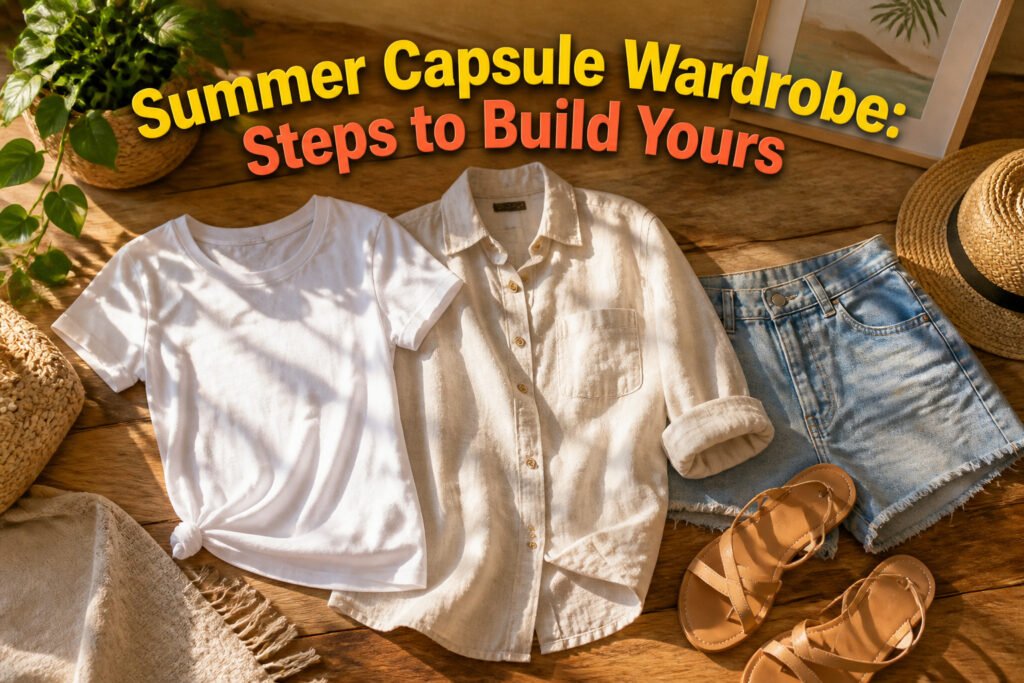
A capsule summer wardrobe is a small collection of pieces that mix and match through the whole season, but it only works if every item actually pairs with everything else. The white tee that is too sheer, the relaxed fit so oversized it works with one pair of shorts only: those are the orphans that break the system. Start with two shapes, fitted and relaxed, in cotton or linen that breathes past noon.
1. Start with T-Shirts and Tanks
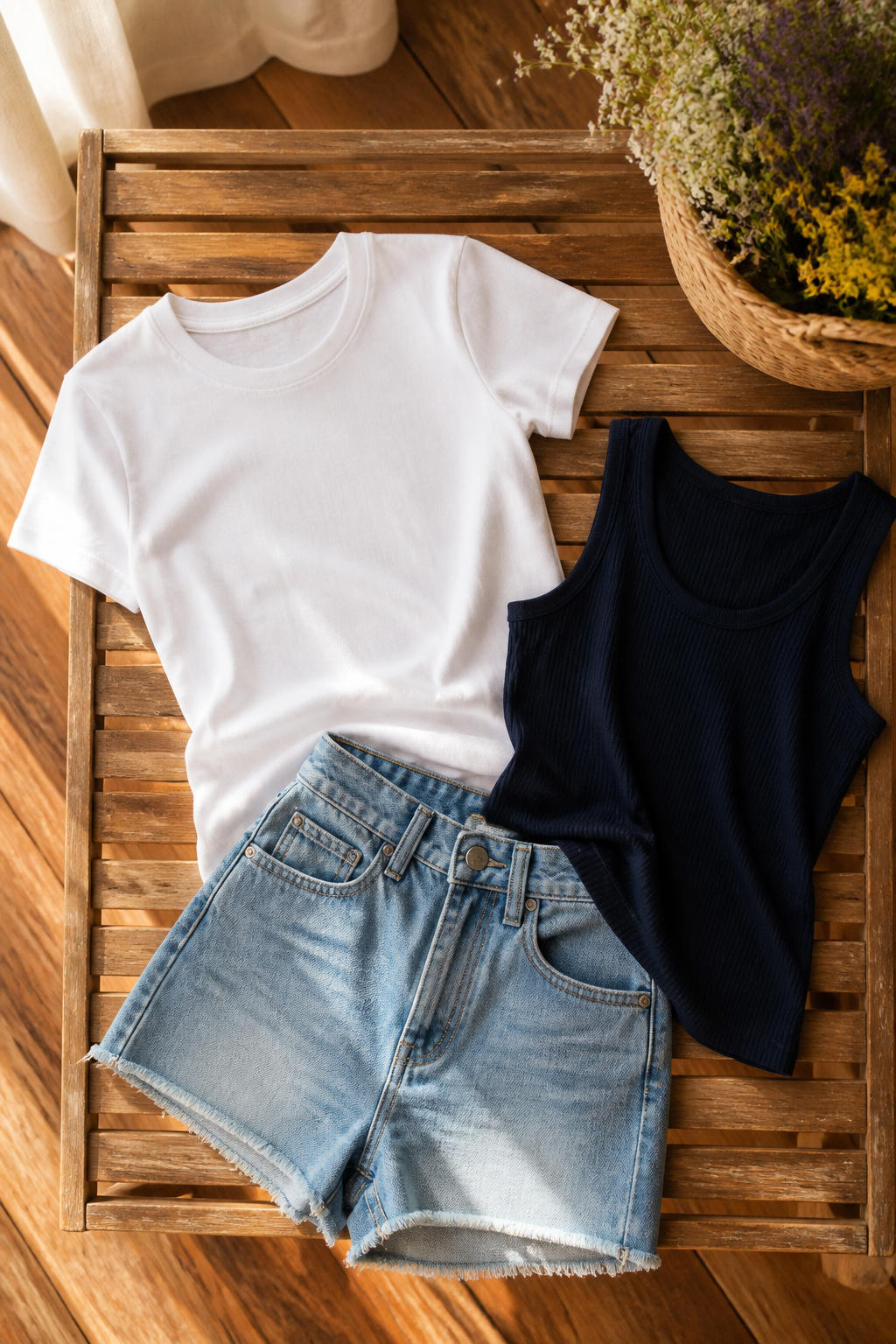
A white tee that actually fits is the first thing that earns its rack space in any capsule summer wardrobe. Two shapes matter here: the fitted cut that tucks cleanly into a slip dress or a high-rise skirt without bunching, and a relaxed fit with enough room to catch a breeze and layer over a tank when the evening cools. Breathable fabrics like cotton, linen, viscose, or Tencel keep the base from turning into a sweat trap by midday.
Tanks work harder than most people give them credit for. A stretchy ribbed tank with a finished neckline sits right on its own but also disappears under a button-down or a linen shirt left open. That looser tank in your drawer, the one with wider straps that actually cover your bra, is what you reach for when the humidity hits 85 before breakfast.
Stripes earn their place too, though navy and white will outlast whatever "fresh" color the season is pushing. The Breton shirt has survived this long for a reason: it reads as dressed-up without trying, and it pairs with denim shorts or ecru trousers without a second thought.
Here is where I used to get it wrong: buying the white tee too sheer, or the relaxed fit so oversized it only worked with one specific pair of shorts. A base layer has to pair with everything else you own, or it is not a base layer; it is a orphan.
2. Add Versatile Dresses
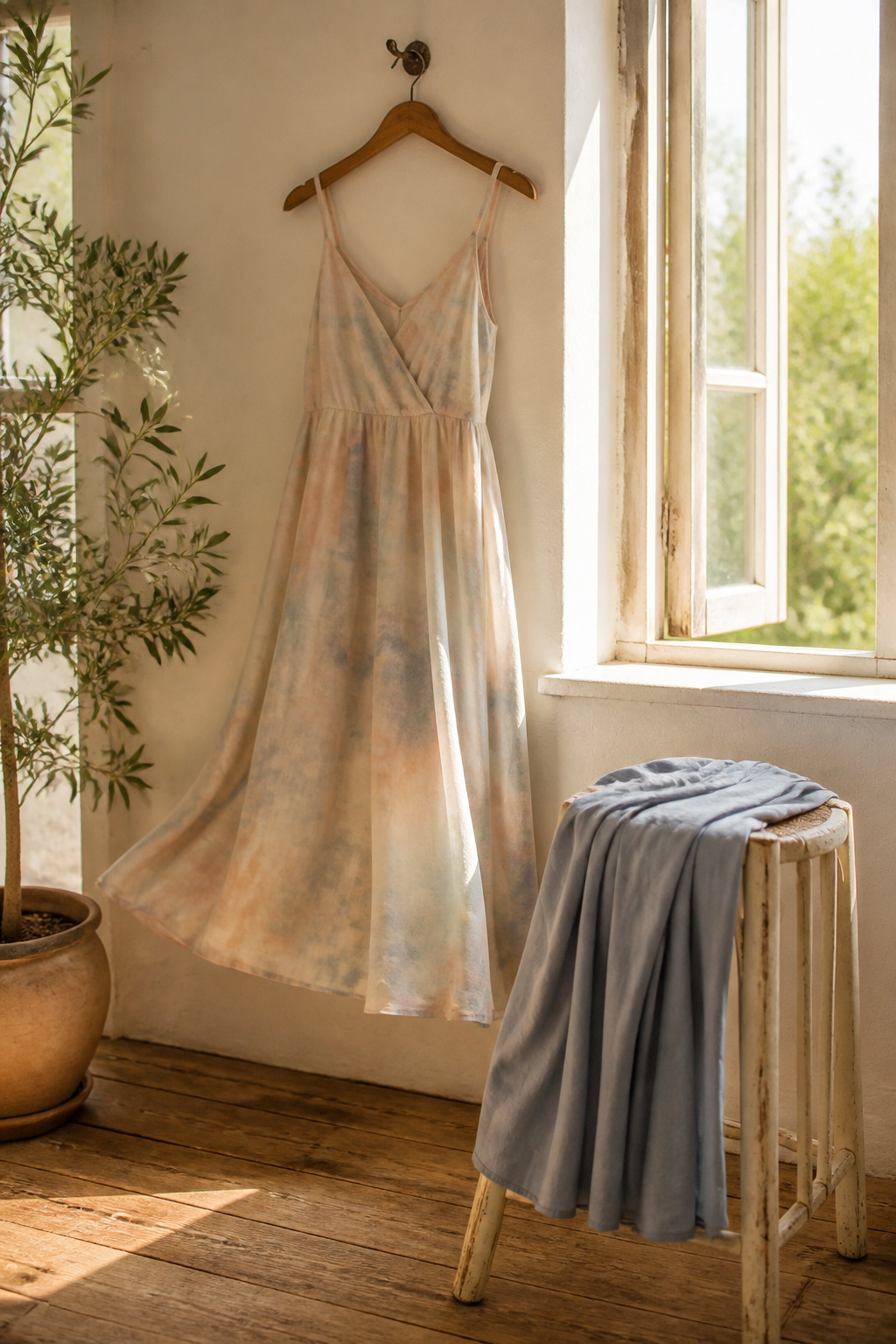
Dresses are the second layer that makes a capsule summer wardrobe actually work, once the tees and tanks are already in the drawer. I used to skip them entirely, reaching for separates out of habit, but a single piece that needs no matching saves more mental energy than I expected.
A sundress that can dress up or down is the hardest worker. The sources point to linen and cotton as the right fabrics here: they breathe, wash well, and don’t cling when the humidity spikes. A midi or maxi length in a simple cut skims the body without requiring shapewear or constant adjustment, which matters more on 90-degree days than I used to admit.
Two or three dresses cover most of the ground a summer demands. One casual everyday style, like a Quince Tencel Jersey Midi or an Everlane Knit Square Neck, handles errands and coffee runs. One that can step up, perhaps a Tuckernuck Maxi Shirtdress or something with a bit more structure, takes you to dinner without a separate top-and-bottom search. Because dresses don’t need mixing and matching the way separates do, this is where a bolder print or color from the 2026 palette makes sense, something the sources suggest as a low-risk way to add freshness.
The mistake I made early was treating dresses as occasion-only. A relaxed floaty midi thrown over a swimsuit, worn with trainers by day or jewelry and sandals after dark, earns its hanger space three times over.
3. Work in Shorts
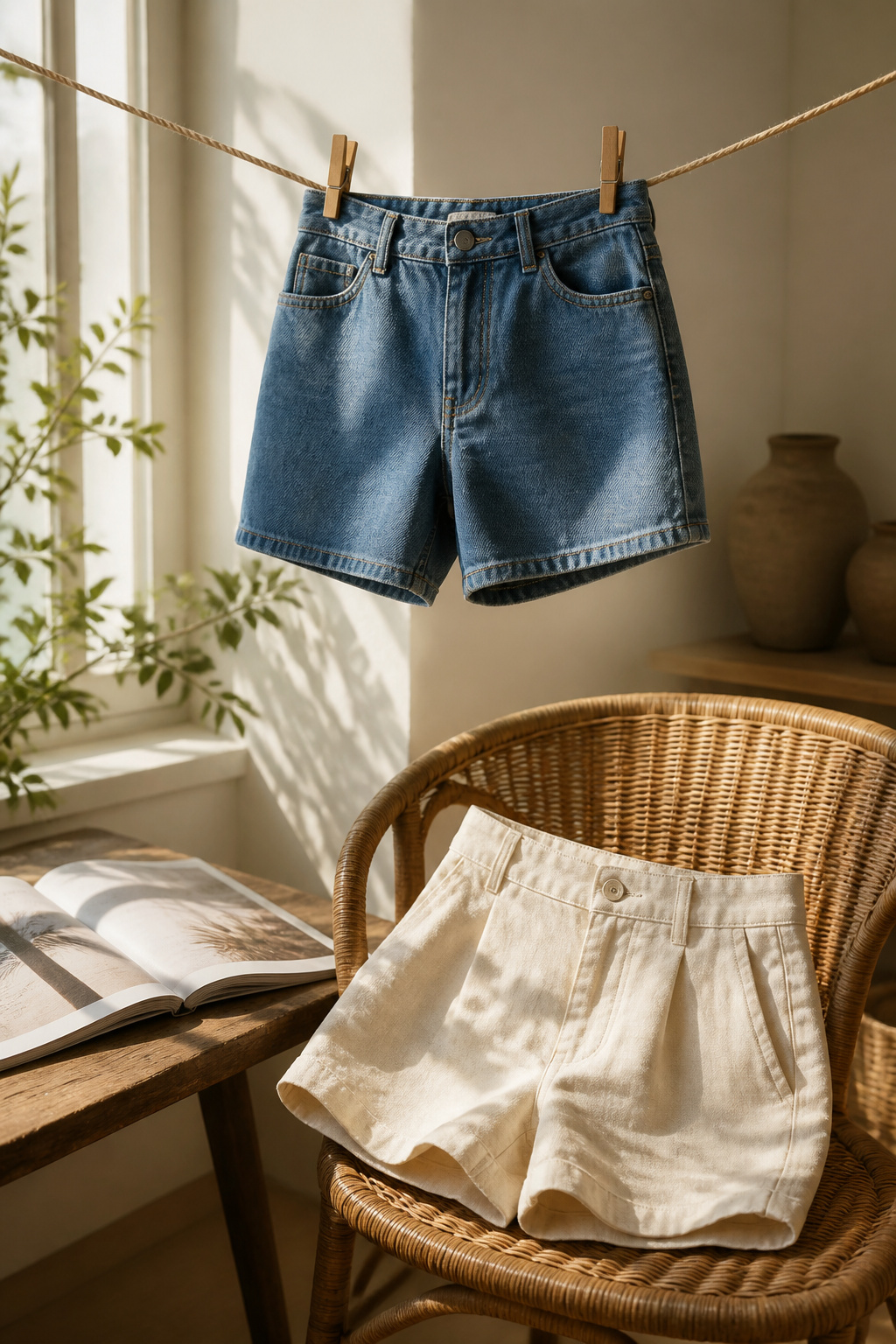
Shorts come after dresses in the build sequence for a reason. By this point, the capsule already handles evenings and meetings; now the wardrobe needs something for grocery runs, school pickup, and the lazy Saturday when a dress feels like too much effort.
Denim shorts earn their place as the workhorse. The Parker Long shorts sit at a length that still feels intentional on a forty-year-old frame, and that high-rise waist matters more than the wash. My own pair is from Levi’s, the 501 Straight Leg cut in a six-inch inseam, and the raw hem has softened over three summers without looking frayed. Sources disagree on whether distressed denim belongs in a capsule; the 2026 trend pushes cut-offs, but a clean edge pairs with more of what you already own.
Linen shorts fill the gap between denim and the linen trousers covered elsewhere. The elastic-back versions move like loungewear but read as pulled-together, especially in the knee-skimming lengths Everlane and Joseph favor for office alternatives on humid days. I keep one pair in sand and rotate them with the linen pants when I want coverage without fabric clinging to the back of my knees.
The build at this stage: one denim short, one linen short, both in neutrals that already match the tees and tanks from step one.
4. Include Linen Pants
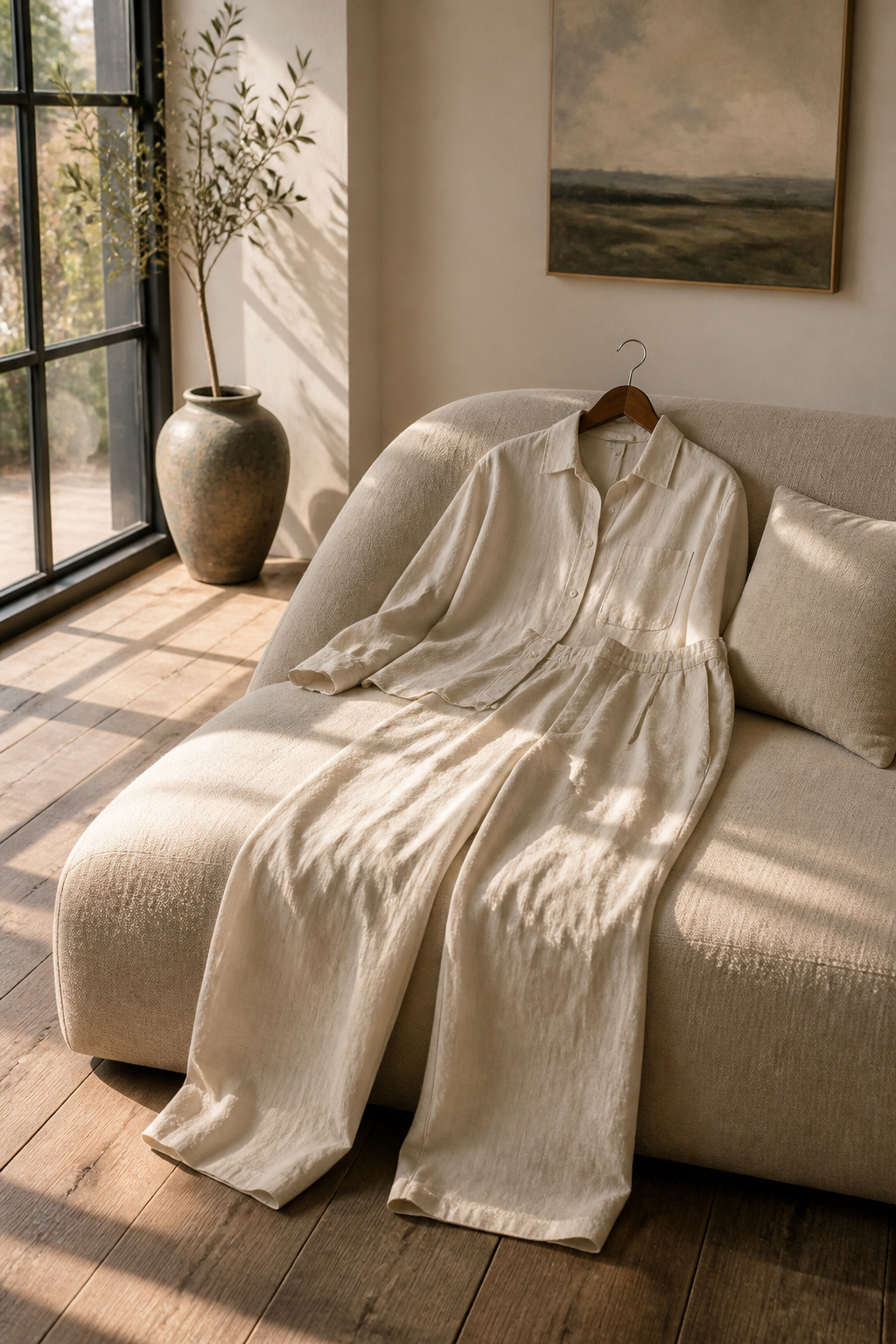
Linen trousers are where a capsule summer wardrobe earns its keep beyond the weekend. A crisp pair takes you into offices, dinner reservations, and anywhere shorts would feel underdressed. Wide-leg linen in oatmeal or a soft neutral pairs with a collared shirt for meetings, then with a ribbed tank for Saturday errands without looking like you changed plans.
The comfort gap between linen and cotton or synthetic trousers is immediate. Sources describe that shift from skinnies or leggings in hot weather as a relief, and I found the same once I stopped treating lightweight pants as a vacation-only item. Barrel-leg cuts from COS or the Whistles wide-leg style both hit that sweet spot of air flow without looking like sleepwear.
A coordinated linen shirt and trouser set, like the black Deiji Studios pairing, removes the decision fatigue entirely. Roll out, dress up or down. The fabric wrinkles, which is part of the look, but the silhouette matters more than the press. Choose one tailored pair you already trust in cooler months, and the baggier linen transition feels natural rather than foreign.
5. Choose Sandals
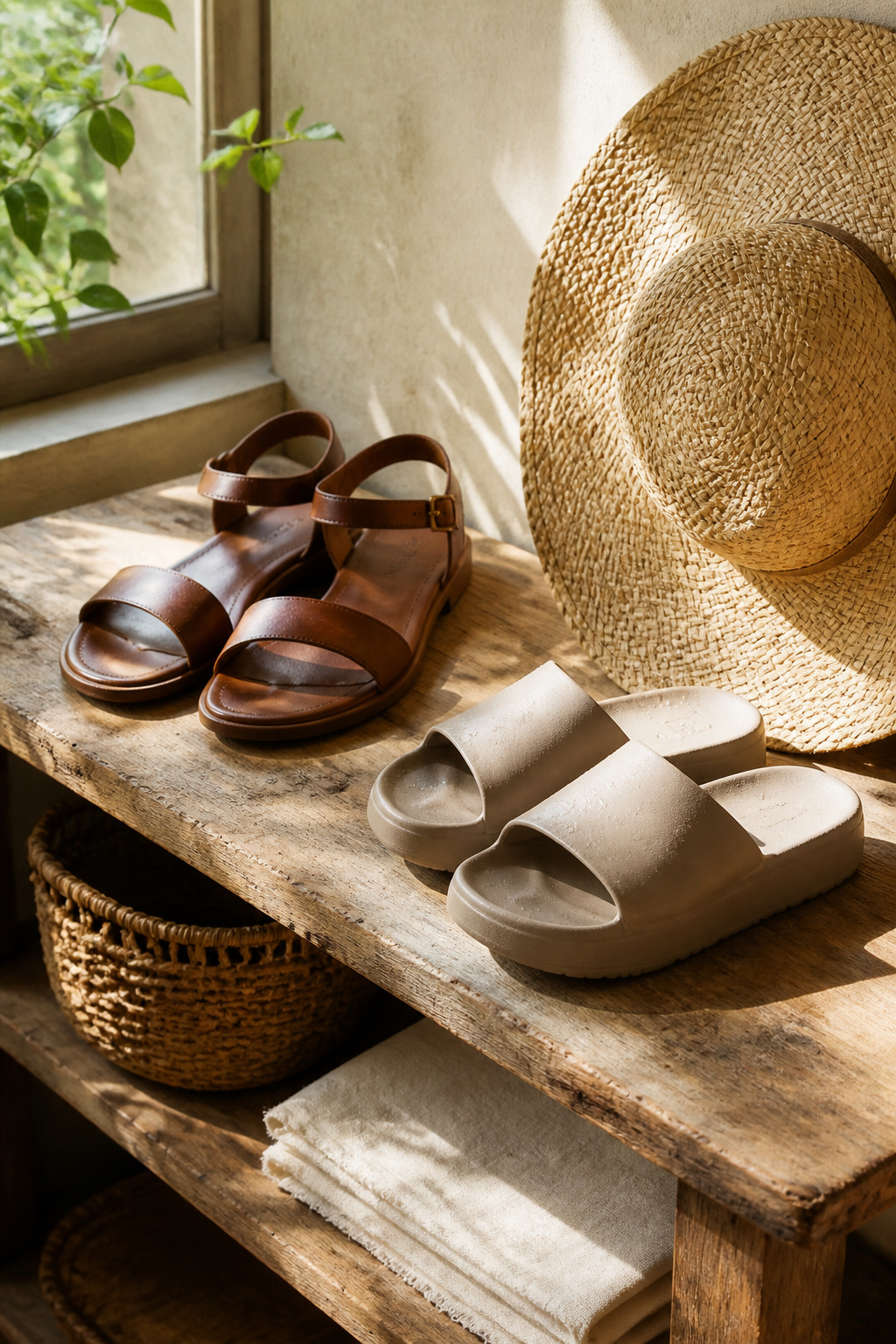
Sandals are the summer shoe, and flat leather pairs are the cornerstone your capsule summer wardrobe actually stands on. A polished leather or suede sandal works with loose trousers, airy skirts, shorts, and dresses alike, while rubber flip flops should stay strictly poolside. I have watched too many summer outfits fall apart at the foot because someone chose a shoe that fought the rest of the look.
Comfort matters more than height here. Birkenstocks are the practical choice I see women actually live in, and for evening, a neutral leather wedge swaps in easily. If open toes are not your preference, woven ballet pumps or clean white trainers like the Superga 2750 Cotu Classic serve the same versatile function without the sandal exposure. The block heel flip flop is having a moment for summer 2026, but I would skip it for a true capsule; it reads trend, not workhorse.
6. Layer with Button-Up Shirts
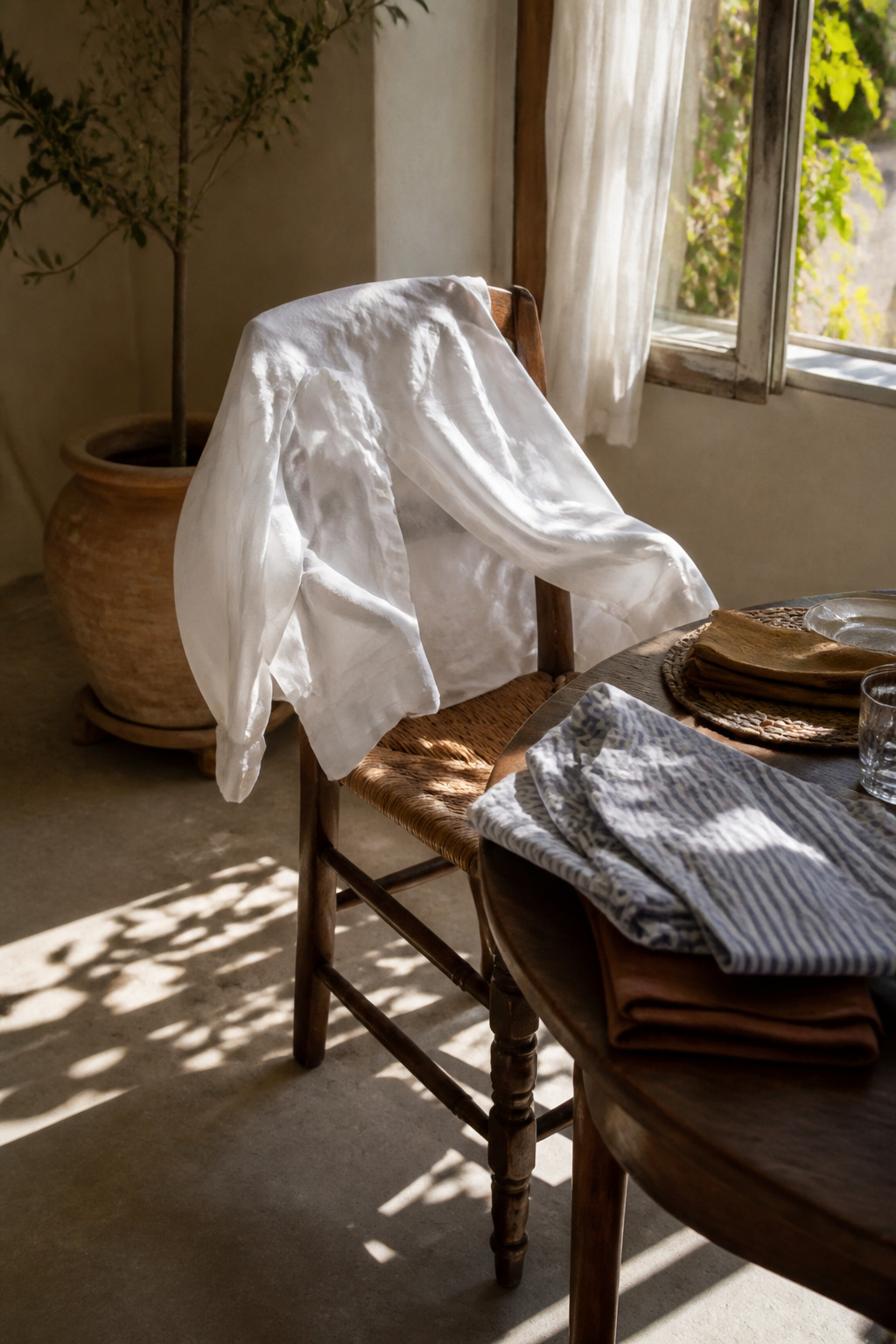
A button-up shirt thrown over a tank and shorts creates a longer vertical line that elongates the whole look. I reach for an oversized white poplin from June through September, partly for the coverage, partly because restaurants and offices still blast air conditioning like it’s February.
The real value is in the structure. A loose button-up gives shape to fitted tanks and tees without adding heat. Stripes work the same way, and a Breton shirt has the added benefit of reading as intentional rather than afterthought. Poplin, cotton, or linen are the fabrics that actually breathe when the temperature climbs.
One piece lives in my bag or my car all season. That single layer turns a basic tank-and-shorts combination into something that passes for dressed, and it keeps me from freezing through a grocery run. Classic white is the starting point, but a subtle stripe or solid color earns its place if it layers over everything else you’ve already chosen.
7. Add Skirts for Variety
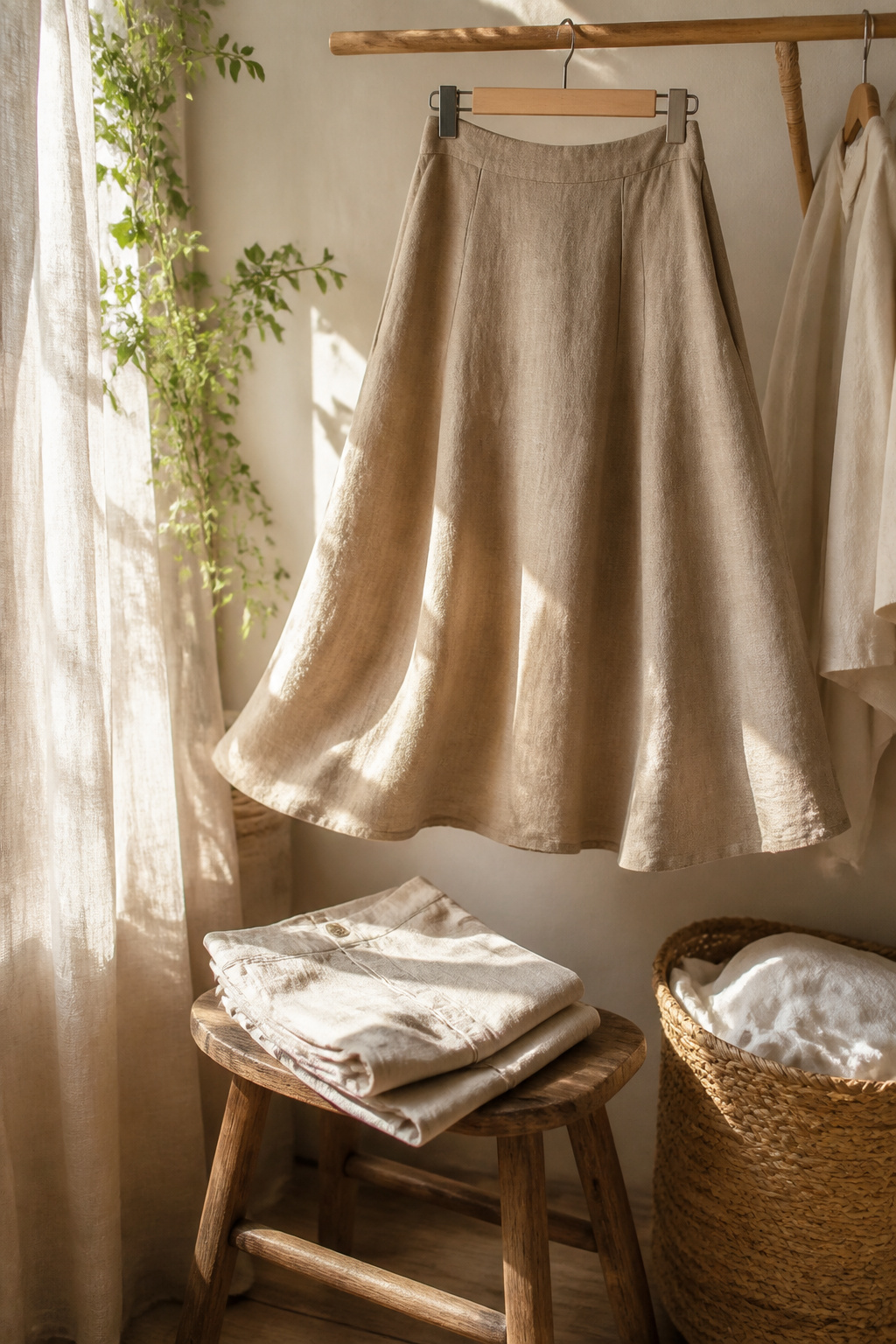
A midi skirt in linen or cotton fills the gap between shorts and full coverage without the weight of trousers. The Gap linen-blend midi skirt is the one that keeps coming up, and for good reason. It moves better than structured shorts, catches a breeze the way denim cutoffs never will, and pairs with the same tanks and Oxford shirts already hanging in your closet.
Two directions sit in front of you. A billowing maxi skirt, something close to what you’d wear with leather sandals and a basket bag, reads more dressed up with almost no effort. The shorter, knee-length route gives you the flexibility to swap in different tees and tanks without the commitment of a full dress. Either way, the skirt does what shorts cannot: it changes the silhouette of your capsule summer wardrobe without requiring a single new top.
The mistake most people make is defaulting to shorts because they assume skirts mean more planning. They do not. One skirt, three tops you already own, and the outfit problem is solved for half the week.
8. Pack Swimwear
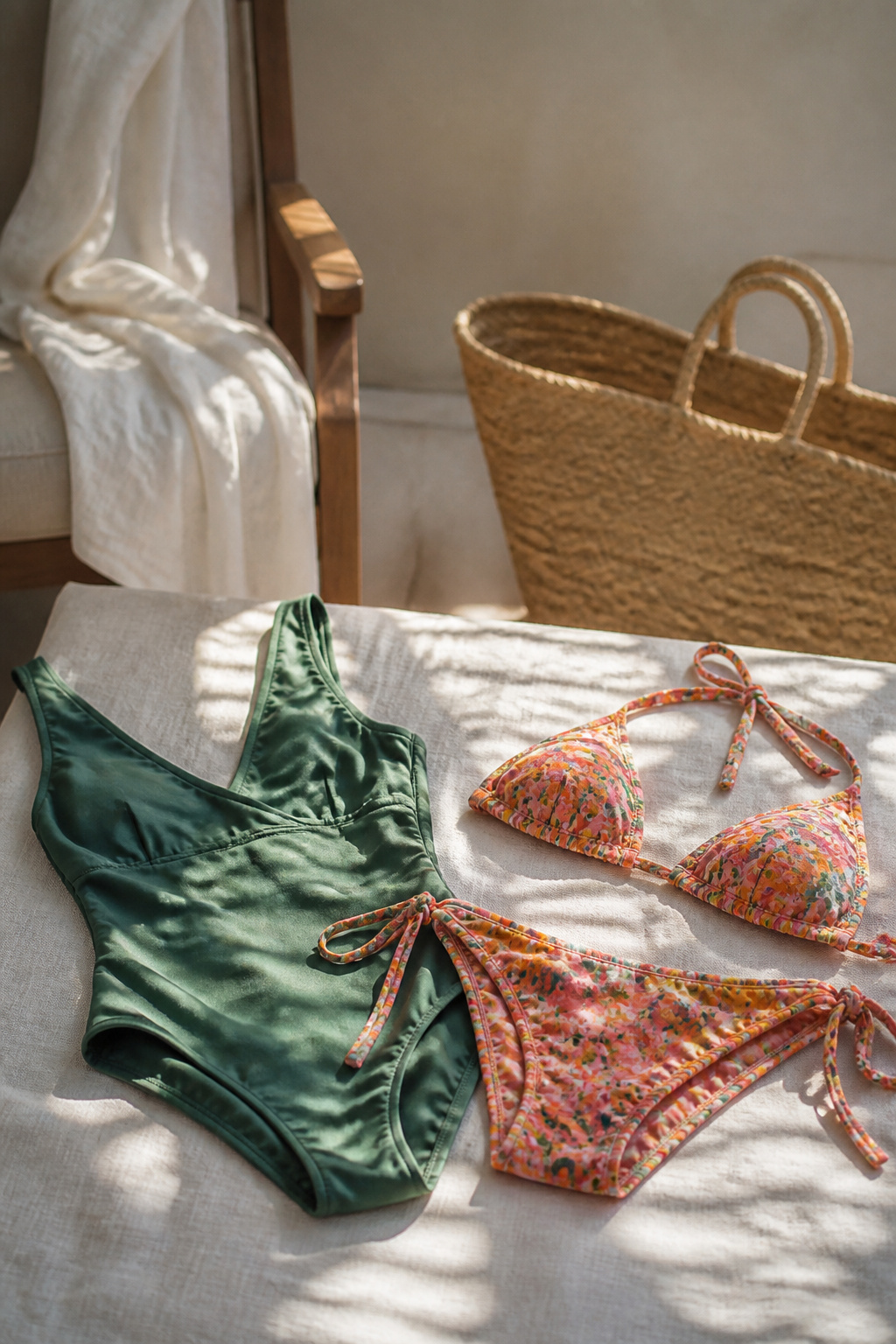
Swimwear closes out the core of a capsule summer wardrobe before anything else gets layered on top. I keep two suits: one one-piece and one bikini set, which covers the usual rotation between pool mornings and longer beach afternoons. A lightweight cover-up, something like a linen beach shirt, bridges the gap between water and wherever you’re heading next.
Unfussy silhouettes in flattering colors win over trend pieces that read dated by August. The simple triangle bikini and clean one-piece shapes from sources like Vitamin A or Quince are the kind you reach for season after season without thinking about it. Add waterproof slides or flip-flops and the set is complete.
9. Top with Lightweight Outerwear
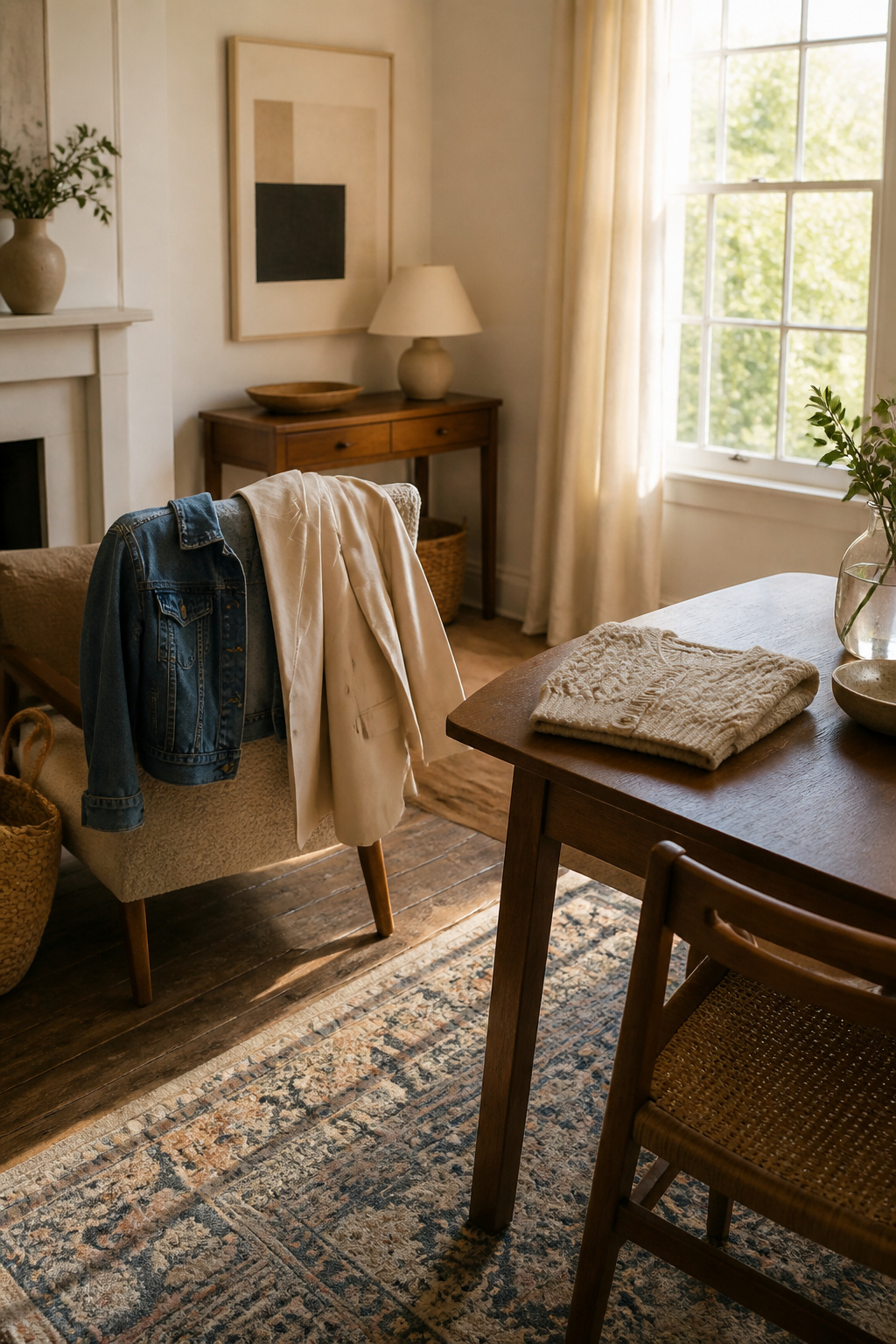
A lightweight jacket or cardigan belongs near the end of your capsule summer wardrobe, not because it is optional, but because it layers over everything you have already chosen. By this point you have your bases, your dresses, your trousers. The layering piece is what lets those same items survive a restaurant cranked to sixty degrees or a coastal evening that drops twenty degrees after sunset.
Three shapes cover most situations. A denim jacket with a boxy cut replaces the heavier knits you relied on in spring; it works over summer dresses, soft knits, or matching indigo for a polished double-denim look. A collarless linen blazer adds structure without weight, sitting as easily over a vest and trousers for day as it does a dress for evening. For actual rain or wind, a funnel-neck technical jacket in a lightweight, shower-resistant fabric gives you zipped pockets and elasticated cuffs without the bulk of a fall coat.
Cotton sweaters and lightweight cardigans fill the same role with less structure. A cropped fisherman cardigan or an alpaca short-sleeve version layers over slip dresses or shoulders when temperatures drop. The rule is simple: if it cannot sit comfortably over at least three pieces you already own, it does not make the capsule.
10. Finish with Accessories
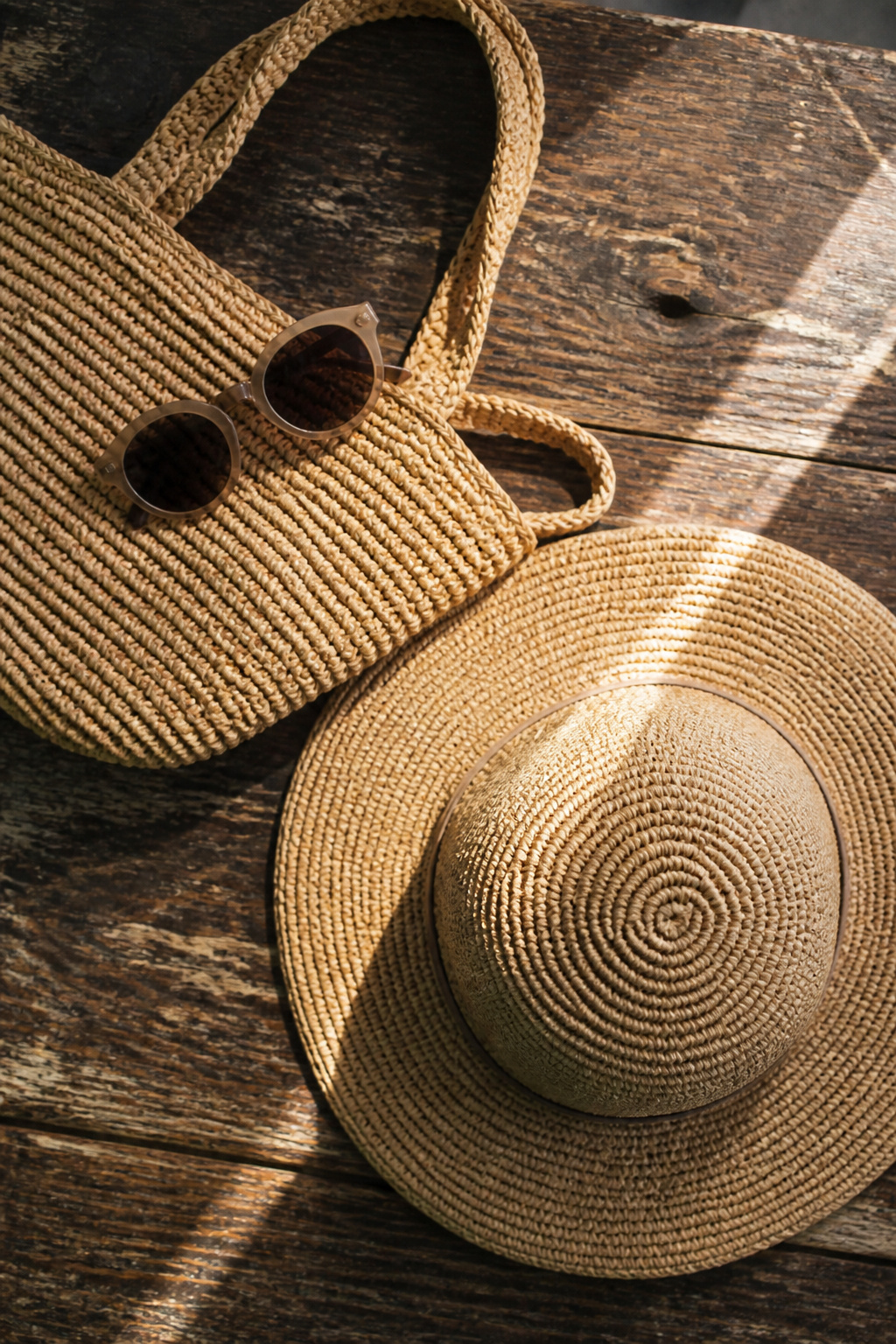
Sunglasses do the most work for the least space. I scaled down to two pairs after one too many mornings digging through a drawer of bent wire, and a brown oval and a black rectangular frame cover every outfit without shouting for attention. Cat-eye and tortoiseshell shapes add character if you want one statement piece, but simplicity wins for daily wear.
Straw bags give a simple dress or tank-and-shorts pairing a reason to look intentional. A woven raffia tote works from morning errands to poolside, and the Longchamp Pliage Filet or any open-knit style handles market runs without looking like you tried too hard. Mine stays packed with a small pouch inside for keys and cards so I am never fishing through weave.
A packable straw hat or visor finishes the look while doing actual work. Raffia toppers pair as naturally with neighborhood walks as with beach days, and the sun protection means I reach for mine even on overcast mornings. Bucket shapes in color, or a wider brim with breezy separates, both read pulled-together rather than costumed.
Mix and Match
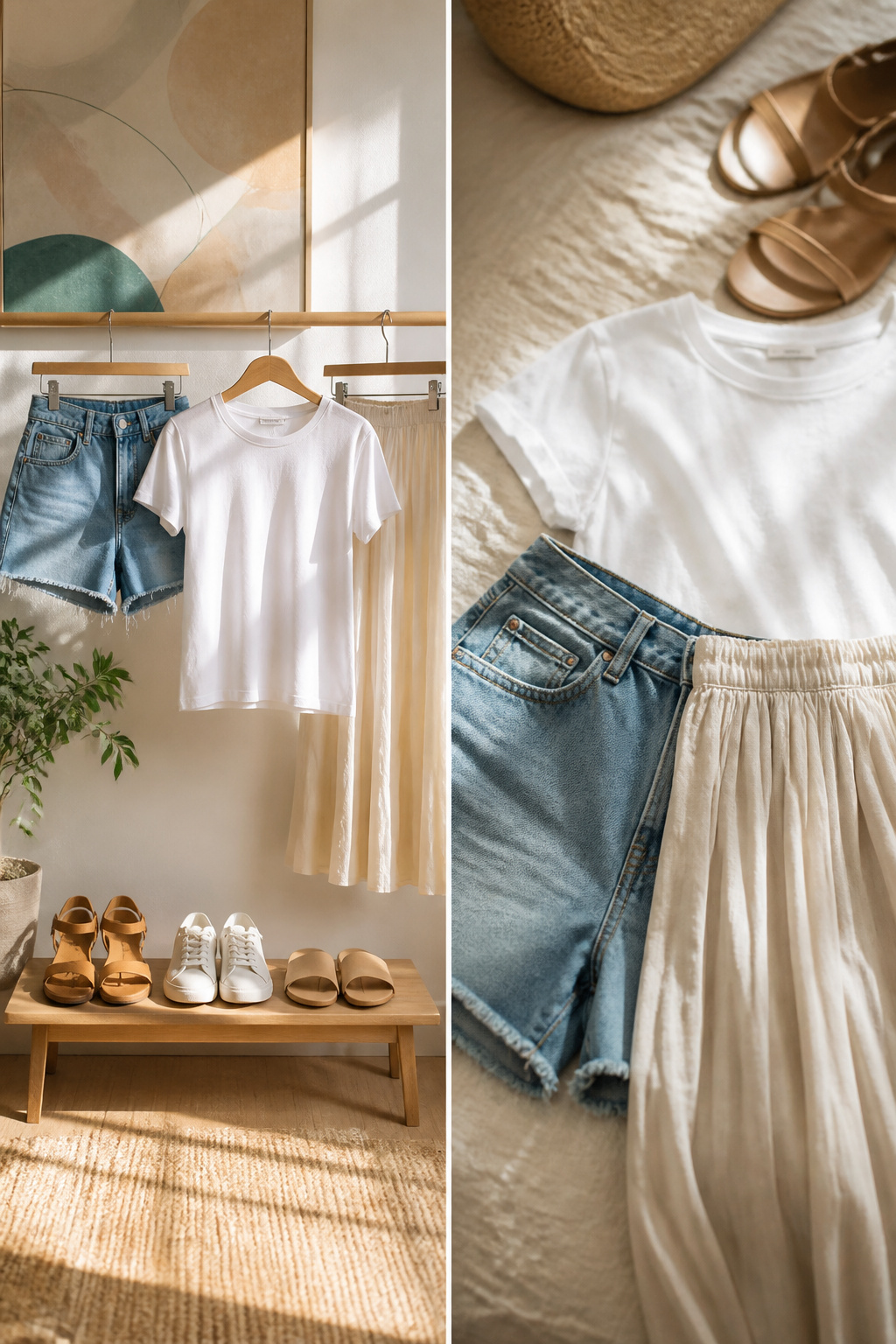
A white T-shirt paired with denim shorts reads casual; the same shirt tucked into a midi skirt with one piece of statement jewelry reads pulled-together. That single swap is the logic the whole capsule summer wardrobe runs on.
Shoes work the same way. A versatile sandal or polished flat should earn their keep across multiple outfits, not demand an entire look built around them. The same sneaker that works with shorts can anchor a casual dress. If a pair only functions once, it is not pulling its weight.
Layers are where this gets interesting. A lightweight linen shirt worn open over a tank adds structure without heat; buttoned and tucked, it turns the same tank intentional for dinner. That difference between an outfit and a great outfit is often one extra layer, and summer gives you blazers, denim jackets, and utility cuts light enough to keep on hand.
Jewelry finishes the math. Everyday hoops or a simple necklace do not change the clothes, but they punctuate them. One or two pieces that feel like you are enough; the goal is to make getting dressed easier, not to curate a museum.
Fabric Choices
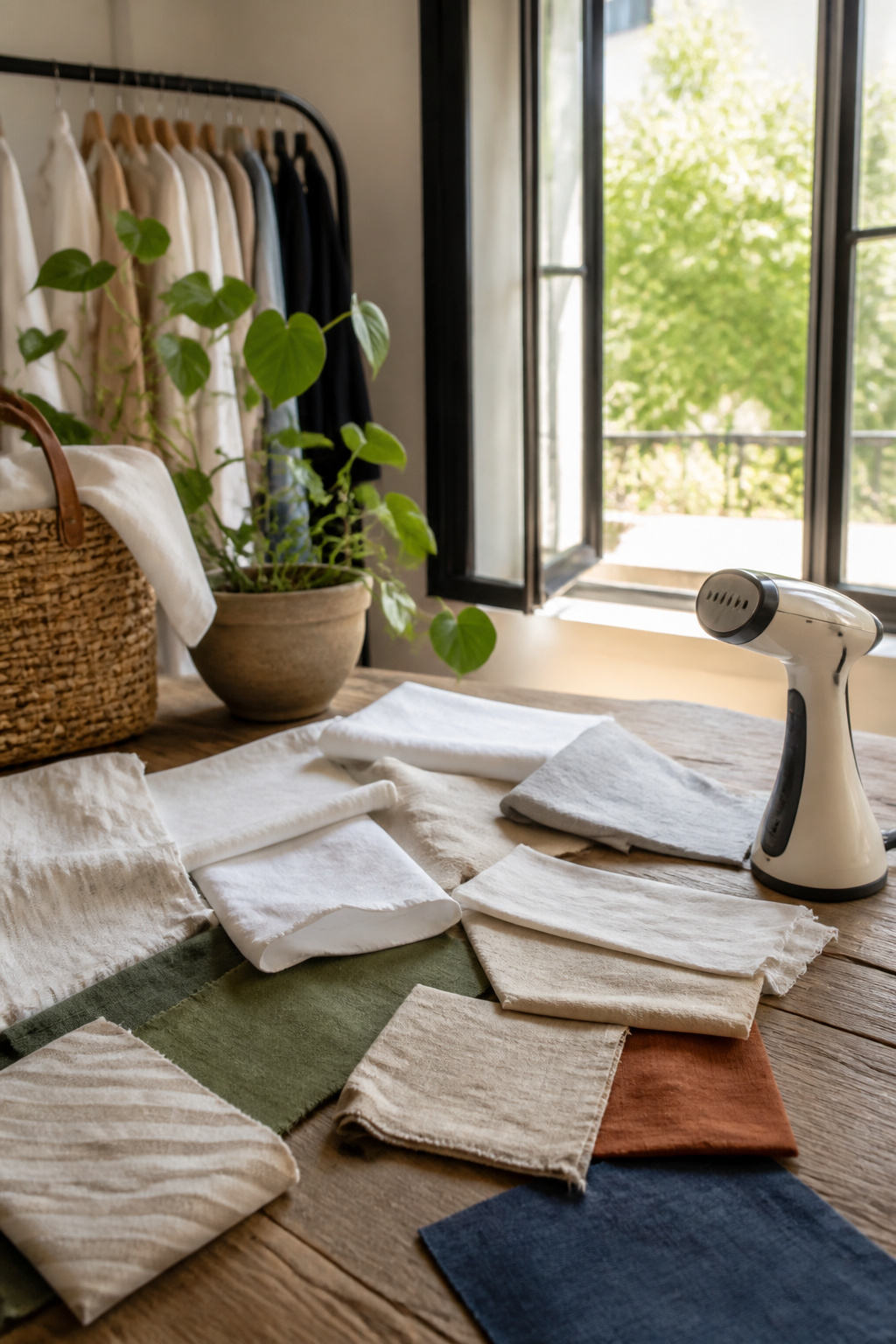
Cotton and linen are the two fabrics that actually earn their place in a capsule summer wardrobe built for heat. Breathability is the whole reason natural fibers win over synthetics here: cotton pulls moisture away from skin, and linen’s loose weave lets air move through. Stylist Sandy Lancaster puts viscose and Tencel in the same category, though cotton and linen are the pair I keep coming back to in my own closet.
White cotton tees reflect sunlight rather than absorbing it, which matters on ninety-degree days. A relaxed fit vents better than something skimming the body, but fitted styles layer cleanly under slip dresses or tuck into high-waisted skirts without bulk. Linen shirts are the more interesting workhorse. Worn open over a dress, buttoned and tucked into trousers, or thrown on with denim shorts, one shirt covers three silhouettes. The wrinkling is real, and I pack a dual voltage steamer for trips, but nothing else breathes quite like it.
Color Palette

A cohesive neutral base with two or three accent colors is what keeps a summer capsule from feeling like a uniform. Crisp white, soft beige, and classic black do the heavy lifting. White reflects sun and heat, which matters on ninety-degree commutes, and stone or beige reads as fresh without the upkeep of keeping white pristine.
Stripes in navy and white or a neutral with a thin lime stripe add pattern without demanding their own color story. Sandy Lancaster, a stylist and color analyst, recommends choosing stripes that already work with your palette so nothing becomes a one-off piece.
The accent colors are where I get tempted to overbuy. One season I added coral and mint and terracotta, and half the closet sat unworn because nothing talked to anything else. One true accent, maybe two, is the limit. A pop of color in a button-up or a single summer dress carries the whole season; the rest stays in those whites, beiges, and blacks that mix without thought.
Layering for Summer Weather
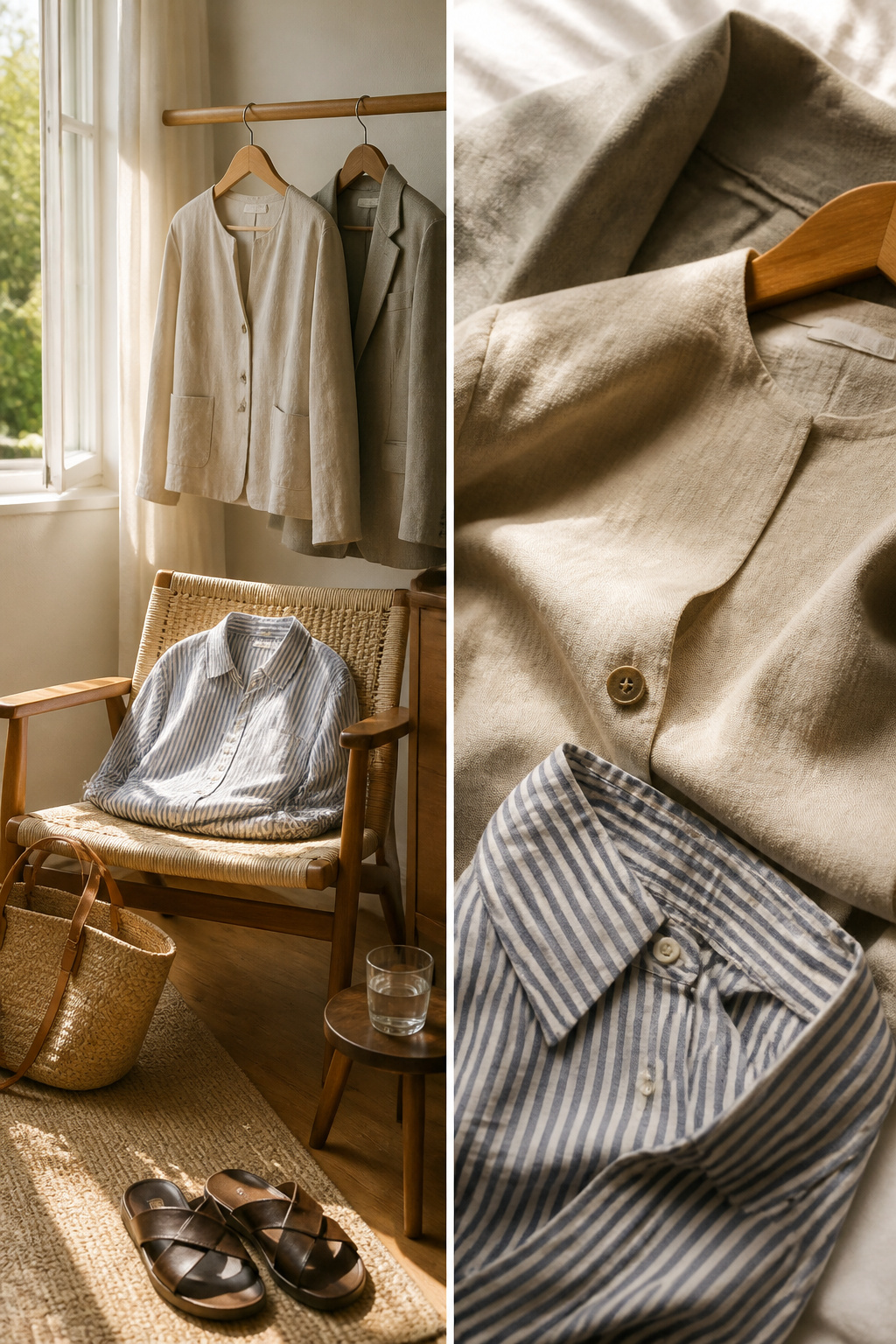
A linen blazer hits the sweet spot for summer evenings when the temperature drops ten degrees after sunset. The collarless ones feel less formal than traditional tailoring, so they work over a tank and trousers for dinner without looking like you came from the office. I keep one in the car from June through September, along with an oversized button-down thrown over my basics for air-conditioned restaurants that crank the cold.
A denim jacket replaces leather once the sun holds steady, and the boxier shapes with topstitching read current rather than leftover from 2014. For actual rain, a lightweight funnel-neck jacket with elasticated cuffs and zipped pockets keeps you dry without the bulk of a fall coat. The dropped shoulders give it a sportier feel than tailored outerwear, and it pairs with everything from slip skirts to jeans.
The real move is contrast in proportion: a fitted layer under something relaxed, or vice versa. That balance keeps a summer outfit from looking either too sloppy or too buttoned-up when the weather turns.
Lifestyle Fit

A capsule summer wardrobe only earns its keep if it matches the life you actually live, not the one you see in ads. Last year I laid out my calendar and realized most of my summer fell into three buckets: work days, time with my kids, and the occasional evening out. The poolside barbecue fantasy showed up exactly twice.
For the daily grind, plain tees became my solid base. Most mornings, those went on with shorts or linen pants because the combination stays easy when I am running after two little boys. Work obligations still need real clothes, not just weekend casual pulled forward. If your diary holds office days, select pieces that bridge that gap rather than treating work as an exception.
Shoe choice follows the same audit. Sandals seem obvious for summer, but the right pair depends on how much walking you actually do. I have watched friends buy beautiful wedges that sat in boxes because their commute involved half a mile of pavement. A neutral leather wedge works for day-to-night dressing if your evening starts by kicking off Birkenstocks. If sandals or exposed toes are not your thing, mesh ballet pumps or a clean white trainer like the Superga 2750 Cotu Classic fill the same slot without forcing a style that does not fit your day.
The mistake is building for the highlight reel and wearing the same three pieces all season.
Frequently Asked Questions
What should be included in a summer capsule wardrobe?
Build around white tees and tanks in breathable fabrics, two to three versatile dresses, one denim short and one linen short, wide-leg linen trousers, flat leather sandals, an oversized button-up shirt, a midi skirt, two swimsuits with a cover-up, lightweight outerwear like a denim jacket or linen blazer, and a small set of accessories including sunglasses and a straw bag. Each piece should pair with at least three others.
How do I choose the right fabrics for summer?
Stick to cotton and linen as your core fabrics. Cotton pulls moisture away from skin and reflects sunlight, while linen’s loose weave lets air move through. Viscose and Tencel also breathe well. Avoid synthetics that trap heat; a relaxed fit vents better than something skimming the body on ninety-degree days.
How many pieces should be in a summer capsule wardrobe?
The article does not prescribe a fixed number, but the build described lands between twenty and thirty core items including tops, bottoms, dresses, shoes, outerwear, swimwear, and accessories. Focus on whether each piece earns its keep across multiple outfits rather than hitting a specific count.
What are the best shoes for a summer capsule wardrobe?
Flat leather sandals are the workhorse, with Birkenstocks as the practical daily choice and a neutral leather wedge for evening. If open toes do not suit your day, woven ballet pumps or clean white trainers like the Superga 2750 Cotu Classic fill the same versatile slot. Skip rubber flip flops outside the pool.
How can I make my summer outfits more versatile?
Choose pieces that layer and swap easily: a white tee with denim shorts reads casual, tucked into a midi skirt with jewelry reads pulled-together. Keep shoes neutral enough to cross between shorts and dresses. Add one lightweight layer, like a linen shirt worn open or buttoned, to shift the same base from errands to dinner. Stick to a palette of white, beige, and black with one or two accent colors so everything mixes without thought.