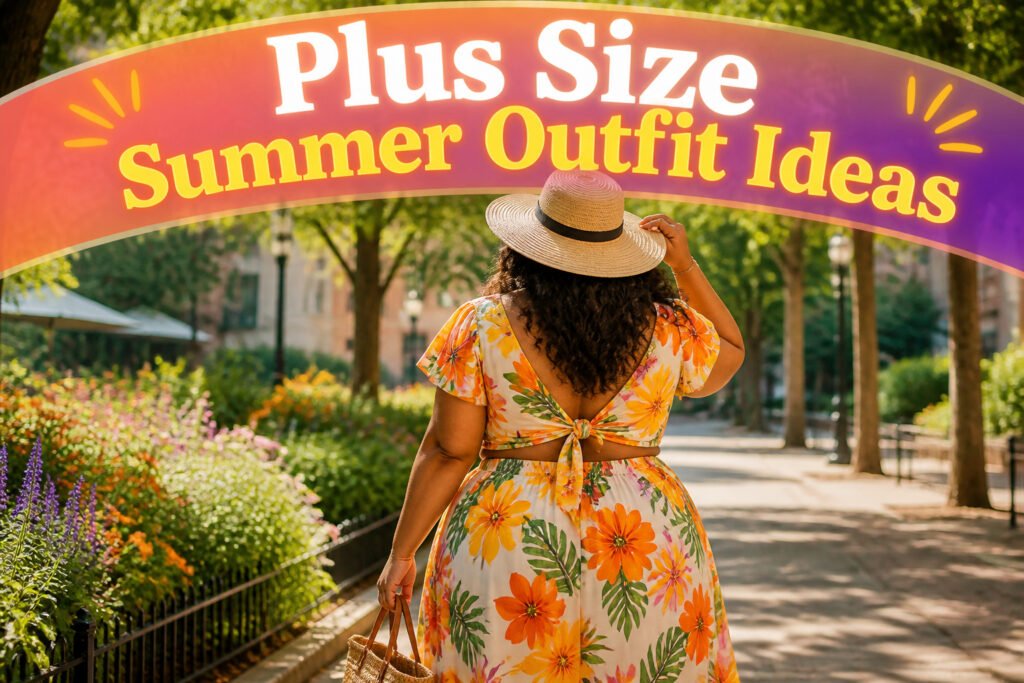
Summer outfits plus size range from a $40 ASOS floral top to a $695 Veronica Beard dress, and the single thing that decides which one works is whether the waist sits at your actual natural waist or drifts toward your hips. Get that placement wrong and even expensive linen collapses into a sack; get it right and a $55 Topshop ruched dress with adjustable front gathers fits where a flat panel would strain. The condition that changes everything is sitting down: a linen jumpsuit that looks perfect standing can ride up through the thigh and turn a highway rest stop into a problem you didn’t plan for.
1. Boat Sweater and White Jeans
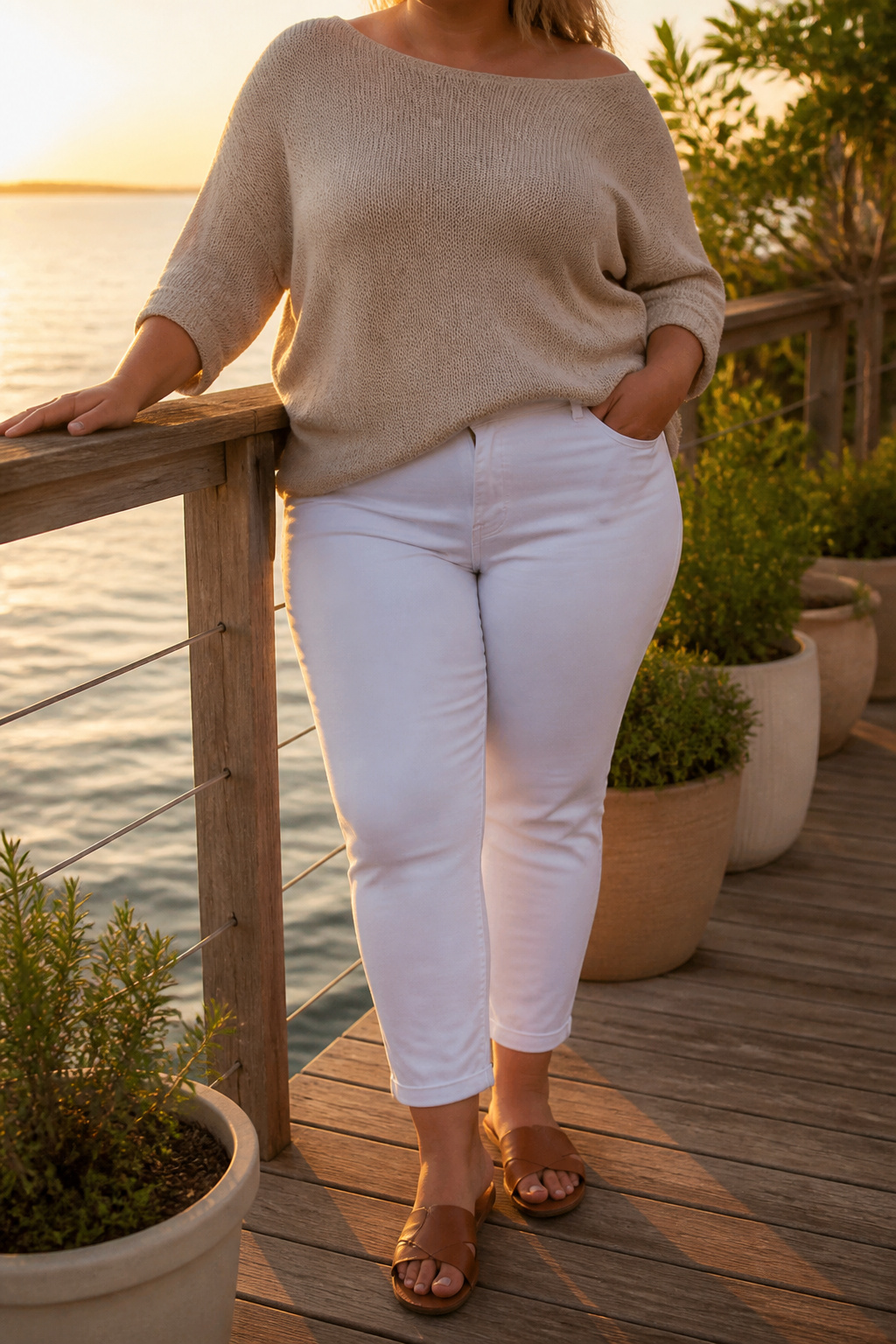
A lightweight boat-neck sweater and white jeans is the combination I reach for when a summer evening turns breezy on the water. The neckline matters more than most people think: a true boat neck, cut wide and straight, balances broader shoulders by drawing the eye horizontally instead of letting fabric pool at the collarbone. That horizontal line reads intentional, almost sailor-like, where a neckline that gaps or slips reads like you grabbed whatever was clean.
The sweater itself should be fine-gauge cotton or a thin linen blend, nothing heavier than a t-shirt’s weight. White jeans in summer need a straight or slim-straight leg, cropped an inch or two above the ankle, so the whole look stays crisp rather than drowning in fabric. With sandals or white sneakers, this is polished enough for dinner after a lake day without trying to be dressy.
If boat necks gape on you, the ASOS floral top at $40 swaps in a gentler scoop that still keeps the shoulder visible but sits closer to the body. Same clean feeling, no tugging required.
2. Linen Separates
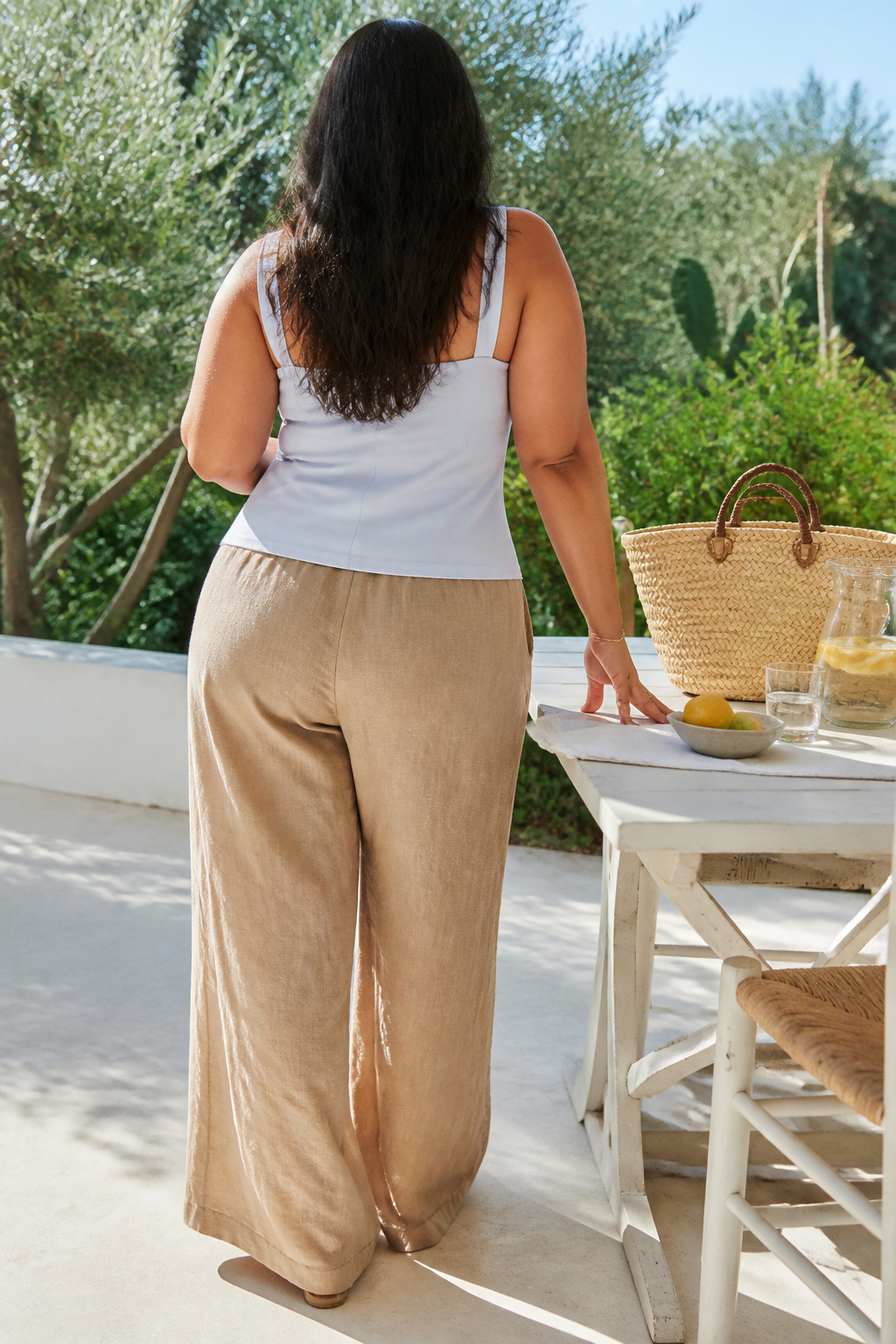
Linen breathes in a way synthetics never manage, and that matters when summer humidity turns a walk to the car into a sweat event. The fabric pulls moisture away from skin and lets air move through the weave, which keeps a plus-size body cooler than anything clingy could. Not all linen behaves the same, though. A mid-weight around 5–7 ounces per square yard holds its structure without collapsing against curves; the featherweight stuff meant for resort shirts will wrinkle into a napkin and stay there.
Wearing linen top and bottom together takes intention or you end up looking like unmade bedding. The fix is contrast: a fitted tank in linen tucked into a wider-leg linen trouser, or a cropped boxy shirt with a mid-rise short. Different textures within the fabric family help too, a slubbed weave against something smoother. The wrinkling is real and it is not defeat. I wash linen cold, pull it out damp, and smooth it flat to dry; the fibers relax into softness instead of crisp creases. A steamer works faster than an iron and does not press in shine.
3. Tee, Button-Down Shirt, and Denim Shorts
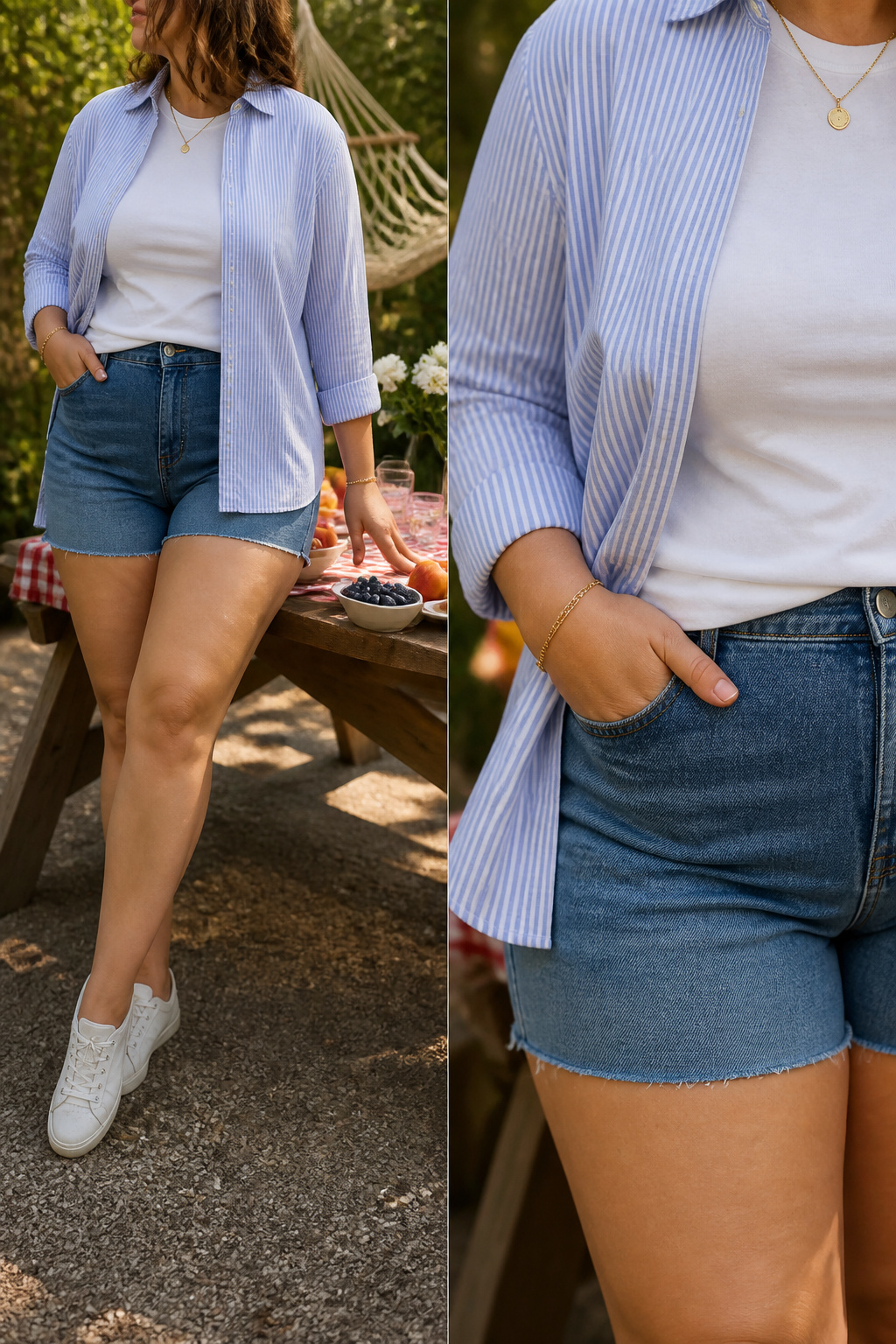
The first time I tried this outfit, I picked a button-down that hung almost to mid-thigh and denim shorts with a three-inch inseam. Within an hour, the shorts had ridden up to where I didn’t want them and the shirt made me look like I was wearing a dress over pants. Not the effortless summer layer I had imagined.
The shirt should hit right at the hip, not past it. That length gives you coverage through the torso without swallowing your legs. For the shorts, look for inseams long enough to stay put when you walk; a five- to seven-inch range is the sweet spot for most plus-size bodies, though what works depends on where you carry weight in your thigh.
A fitted tee underneath keeps the shape from going boxy. Stripes or solids on top both work; the source material notes a solid tee with a striped shirt, or you can flip it with a graphic tee and something plain over it. The open layer does the actual styling work here, turning a basic tee-and-shorts situation into something that looks intentional without trying hard.
This was the outfit that got me back into shorts after years of avoiding them. The coverage matters. The proportions matter more.
4. Fitted Tank and Fitted Skirt
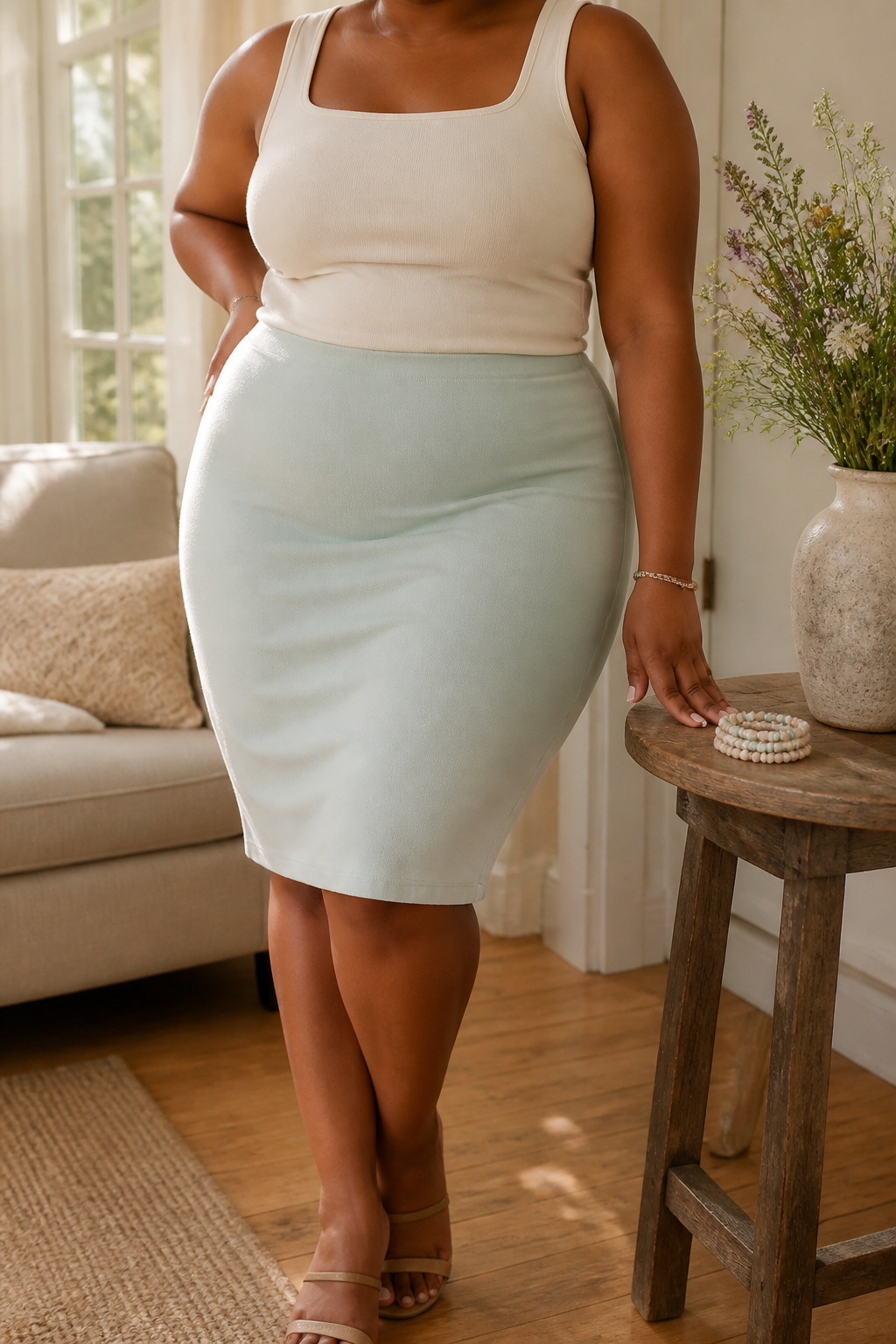
Two fitted pieces together scare most plus-size shoppers, and that fear usually comes from watching the wrong fabric collapse. A fitted tank and fitted skirt only works when both pieces have enough structure to hold their line against the body, not cling to every curve. Cotton ponte, heavier linen blends, or a knit with recovery all keep the silhouette clean instead of turning into a second skin.
The waistband should sit exactly at your natural waist, the narrowest point, not drifting up to the ribcage or sagging toward the hips where the two fitted pieces start fighting each other. That placement creates the single continuous line that makes this combination read as intentional rather than apologetic.
People call this pairing unforgiving because it shows the body as it is, but that honesty is what makes it sharp. A floaty layer might seem safer, yet all that extra fabric adds volume precisely where you do not want it. The fitted silhouette holds shape, keeps proportions legible, and moves through a hot day without billowing or riding up.
5. Graphic Tee and Linen Pants
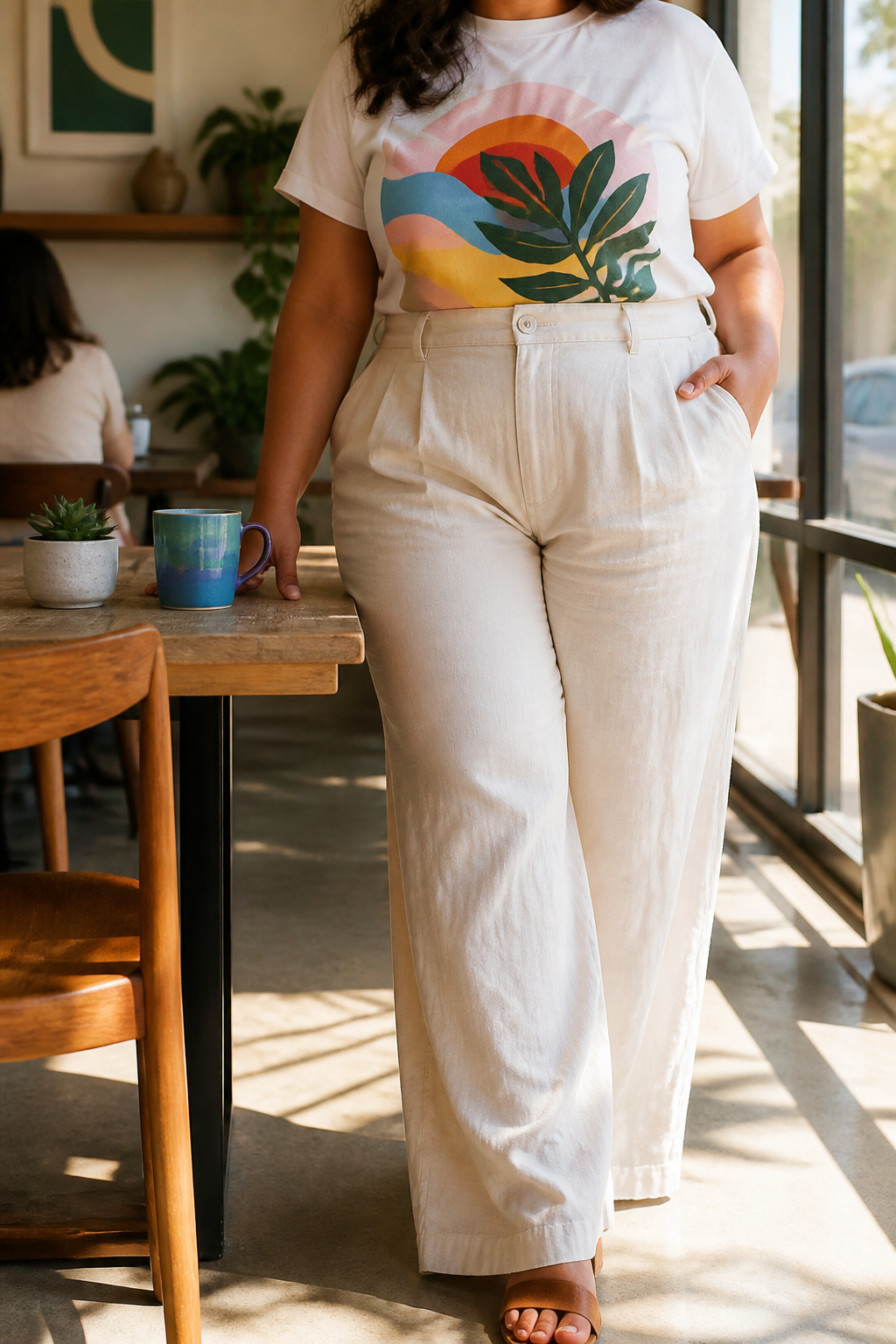
A graphic tee with linen pants is the kind of outfit that looks like you tried without actually trying hard. The trick is keeping the line clean at the waist, which means the tuck matters more than the print.
Wide or straight linen pants in a high rise sit right at the natural waist and stay put whether you’re standing or sitting down. A mid-rise pair tends to slide and fold the moment you sit, so the rise is worth checking before you buy. For the tee, a length that hits at mid-hip works best. Anything longer bunches when you tuck; anything shorter rides up.
The half-tuck works here because linen is stiff enough to hold the shape. Push just the front panel of the tee into the waistband, leave the sides and back loose, and smooth the fabric flat with your palm so there’s no roll underneath. A full tuck is fine too if the tee is thin cotton, but a bulky graphic print at the front adds volume you probably don’t want.
The sources mention styling this with Teva sandals, sunglasses, beaded earrings, and a crochet hobo bag for a beachy everyday look. That part is easy. The hard part is the waist, and once that’s solved the rest follows.
6. Boho Sundress
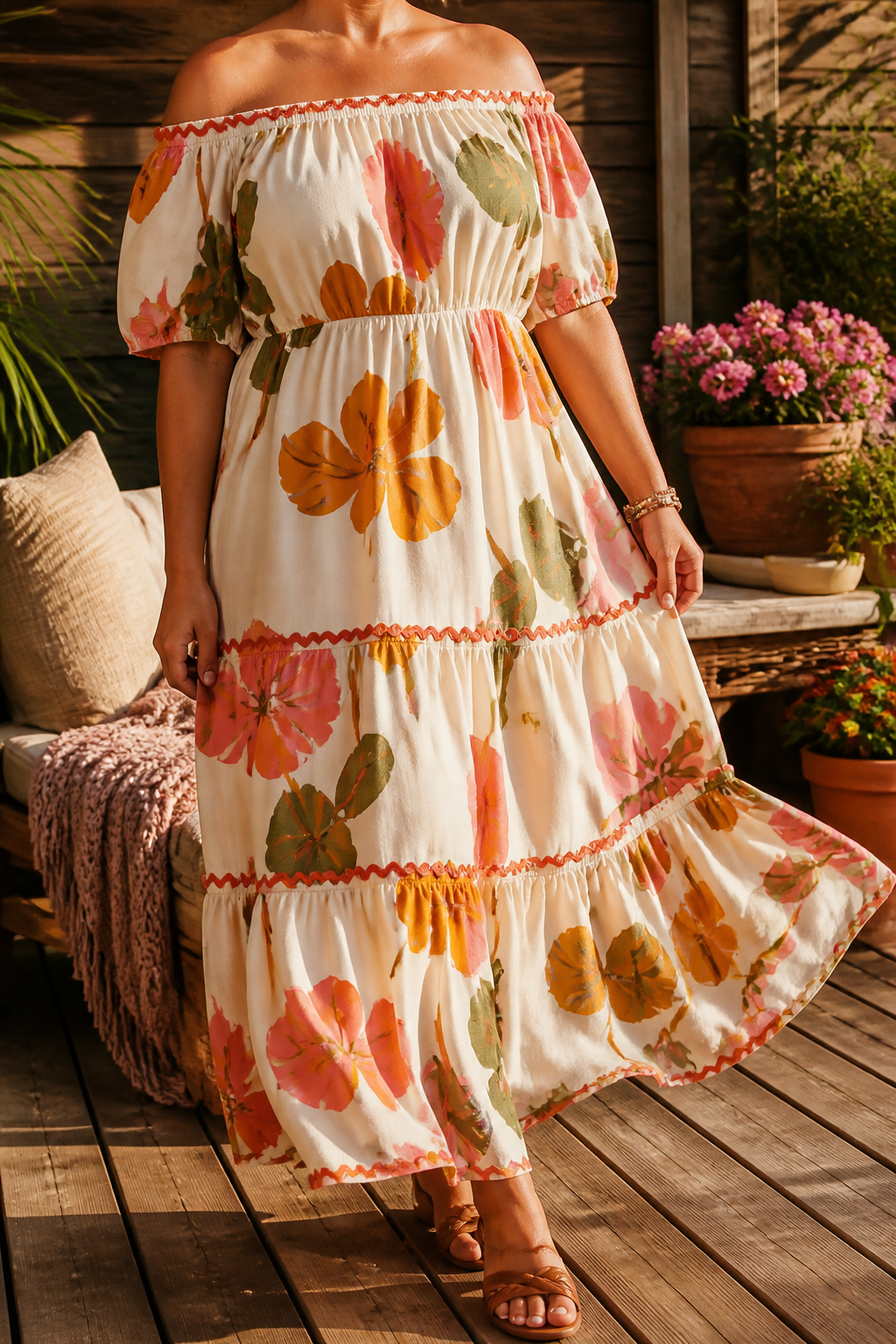
A boho sundress earns the label through print scale and detail, not just looseness. The difference between romantic and sloppy sits in the ric-rac trim, flutter sleeves, and tiered skirts that give the dress architecture without structure. A true boho piece moves air through the weave and the cut, not by hanging like a tent.
Faithfull the Brand makes the reference point at $190. That price buys a mid-weight cotton with a hand-blocked print scaled large enough to read from across a patio, not so small it turns to visual noise on a fuller frame. The fabric has enough body to skim rather than cling, and the tiered skirt creates its own breeze without adding bulk at the waist.
I look for off-shoulder necklines in particular because they bare the collarbone, the one area that stays defined regardless of size, and the elasticized edge keeps the dress from sliding into constant adjustment. A boho sundress done right works with sneakers for errands or sandals for dinner, no layer required. The ones that fail usually fail on print scale, too small and busy, or on fabric weight, too sheer to hold the shape that makes the cut forgiving.
7. Linen Jumpsuit
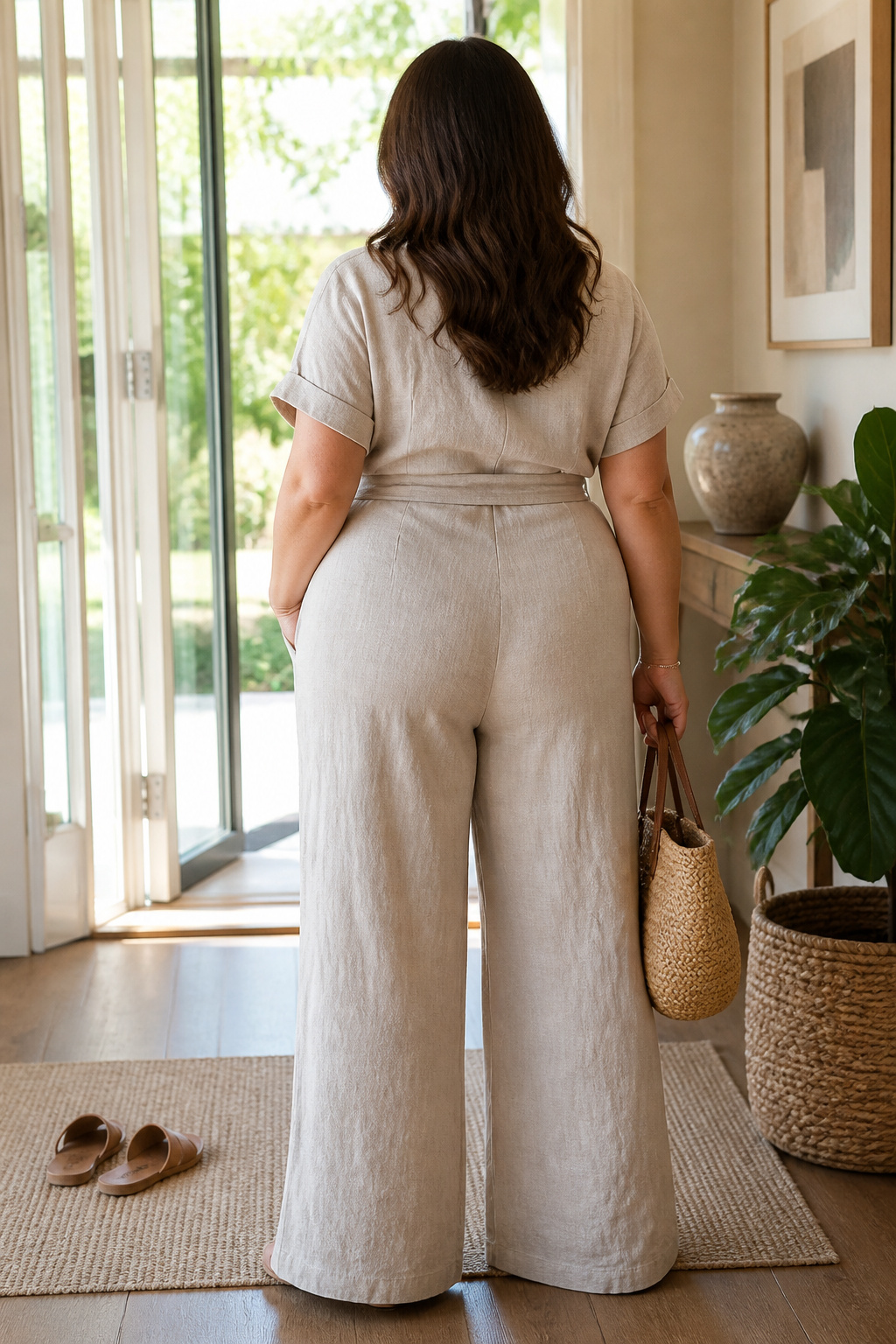
A linen jumpsuit looks like the easiest win in your summer wardrobe until you try to sit in the car for two hours. The one I bought last June had a beautiful wide leg and a waist that hit exactly at my natural waistline, which felt flattering in the fitting room mirror. The rise, though, was shorter than it looked standing up, and by the time I pulled into a highway rest stop, the fabric had ridden up in ways that made the bathroom visit genuinely comic. For a plus-size linen jumpsuit, you need at least an inch of extra room in the rise and through the thigh to account for how the fabric settles when you sit. The waist should hit at or just above your natural waist, never lower; anything else turns the torso into a shapeless sack the moment you bend forward. Bathroom reality matters more than runway photos admit. Look for a zip front, a wrap style, or wide straps with buttons rather than a back zipper that requires a contortionist routine. The linen itself should be mid-weight, around 5–7 oz, so it breathes without going sheer in sunlight. My rest-stop disaster taught me that the perfect summer jumpsuit is judged in a seated position first, standing second.
8. Tank Top and Tiered Skirt
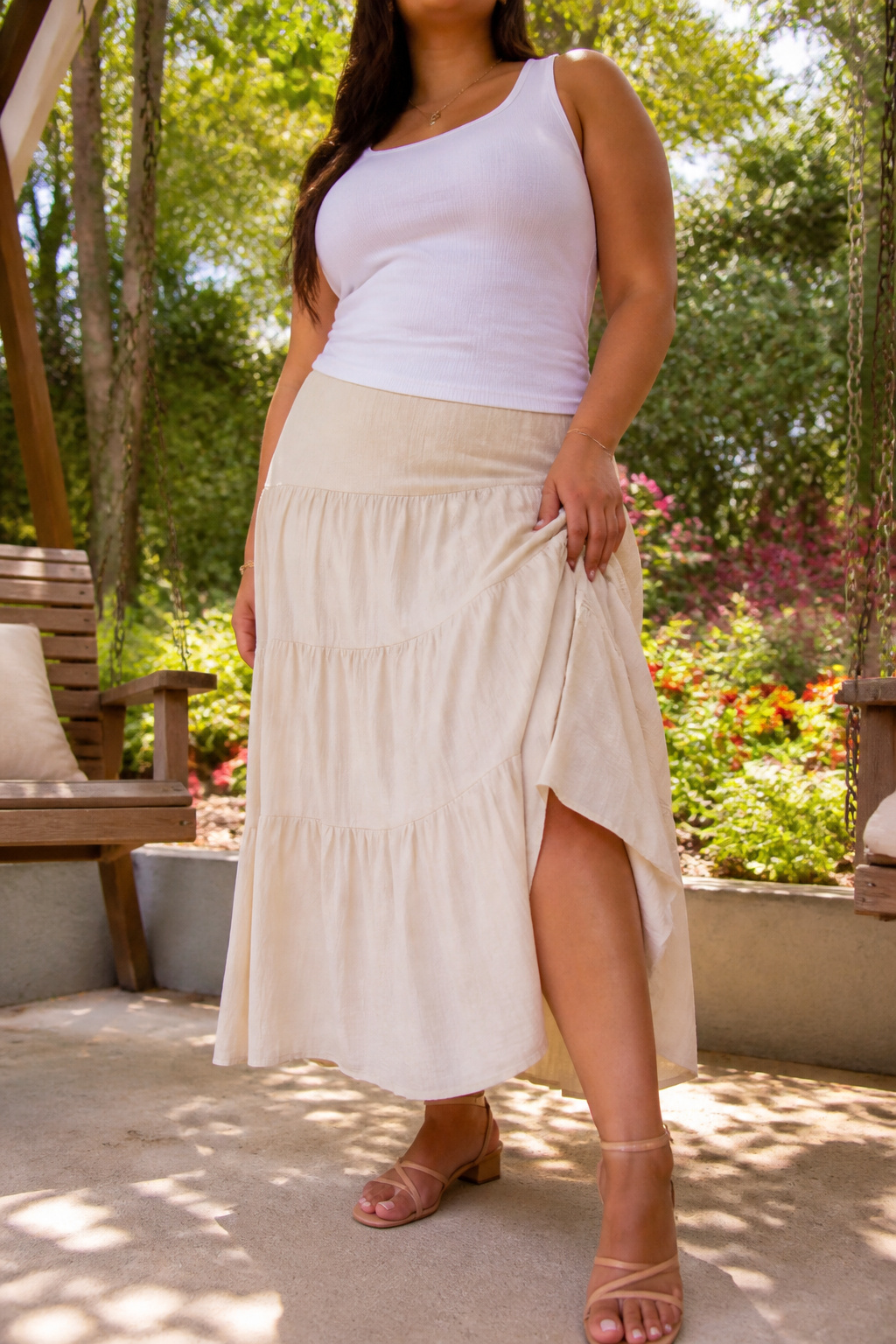
A tiered skirt builds volume on purpose, and the trick is deciding exactly where you want that volume to land. The tiers create horizontal lines that draw the eye outward, so a skirt that starts its tiers at the hip rather than the waist keeps the volume lower, where it balances rather than widens. I learned this the hard way with a skirt that tiered right from the waistband; it looked like a lampshade in photos.
The tank matters as much as the skirt. A tank with a narrower armhole, sitting closer to the shoulder, keeps the line clean up top so the skirt doesn’t compete. Too wide a strap and the whole silhouette goes boxy.
Skirt length should hit where the tiers have room to move but not pool. For me, that means right at or just below the knee; the lowest tier still shows shape, and the horizontal lines don’t flatten the leg. Midi lengths work if the fabric is light enough that the tiers don’t weight the hem down.
Color helps too. Matching the tank to the skirt’s base tone lets the tiers read as texture, not stripes.
9. Boho Blouse and Linen Pants
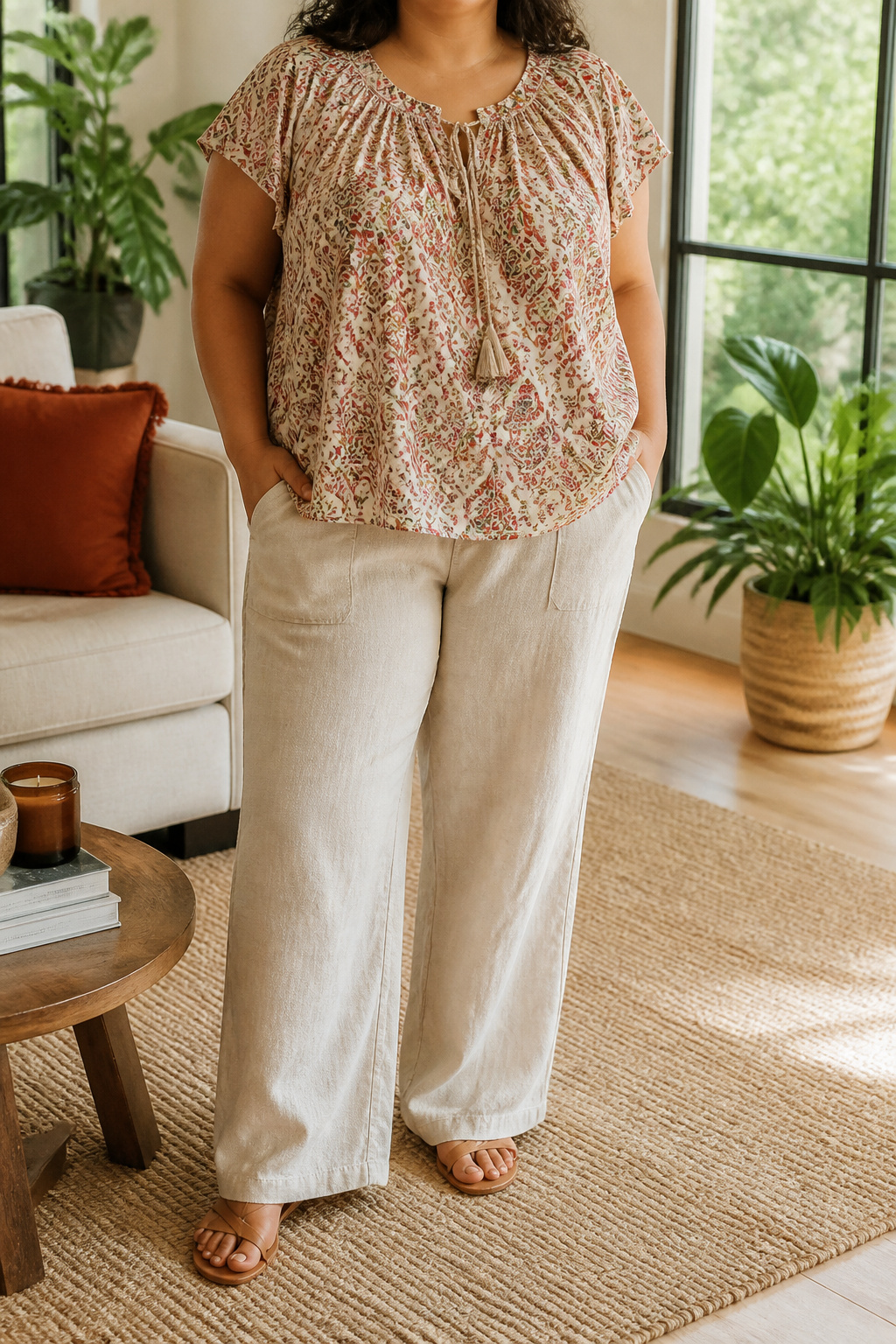
A printed boho blouse with plain linen pants hits that dressed-up casual note that works for lunch or a meeting you didn’t feel like dressing for. The sleeve volume is what makes it bohemian, but keep the fullness above the elbow so it doesn’t widen your silhouette at its widest point. Cap sleeves or a gentle balloon that gathers into a fitted cuff both do this; a full poet sleeve that releases at the wrist adds horizontal width you feel in photos.
Print size matters more than print style. A petite frame gets lost in an oversized motif, and a larger body needs a repeat pattern scaled up to match, or the effect reads like upholstery. I look for prints where the dominant element is roughly the size of my palm or slightly larger.
The tuck decision comes down to where the pants sit. A mid-rise linen trouser that hits at the natural waist looks cleaner with a half-tuck or a full front tuck with the back left loose. High-waisted styles with a paper-bag waist need no tuck at all; the blouse hem should skim the top of the waistband so the fabric doesn’t bunch. Linen softens through the day, so a belt or waist-defining seam keeps the shape from turning into a column.
10. Oversized Prints

A black ground makes a large print read as deliberate rather than accidental, which is why the Ganni mini dress at $250 works as a scale reference. The white animal motif sits on a dark field that visually anchors the pattern, so the eye registers shape first and size second. Jessica Torres of This Is Jessica Torres buys with that priority in mind: she reads material descriptions before ordering, then decides whether to size up or down based on how the fabric moves.
Ground color matters more than motif choice. A pale or busy background lets the print wander, while a dark or saturated base gives the pattern a border even where none exists. Garment shape follows the same rule. The Ganni dress is short and relatively simple in cut, which lets the print carry the statement without fighting seam lines or excess volume. A plus-size body in a large-scale print needs that negotiation between coverage and clarity; too much fabric and the print becomes the wearer, too little and the scale overwhelms the frame. Torres checks for movement before buying because a stiff large print reads costume, and a fluid one reads style.
11. Cute Jumpsuits

A shorter jumpsuit with some stretch in the fabric handles summer heat better than its linen counterpart, but the same fit issue trips people up. Torso length is the detail that makes or breaks it. Too short, and the pull across the shoulders gives you a permanent shrug; too long, and the waist sits at your hips, turning a defined silhouette into a sack.
Ruching solves a similar problem in dresses, which is why I keep going back to that Topshop ruched dress at $55. The gathered fabric forgives where the cut alone would not, letting the dress sit right even when your proportions fall outside the standard grade. A jumpsuit with ruching at the sides or a smocked bodice does the same, buying you room where a flat panel would strain.
Cotton-spandex blends work here, or a lightweight crepe with give. Skip anything labeled "structured" if it does not also stretch. The best ones I have found sit in the $40–$80 range, and above that you are paying for hardware or branding, not a better fit.
12. Floral Dress and Sneakers
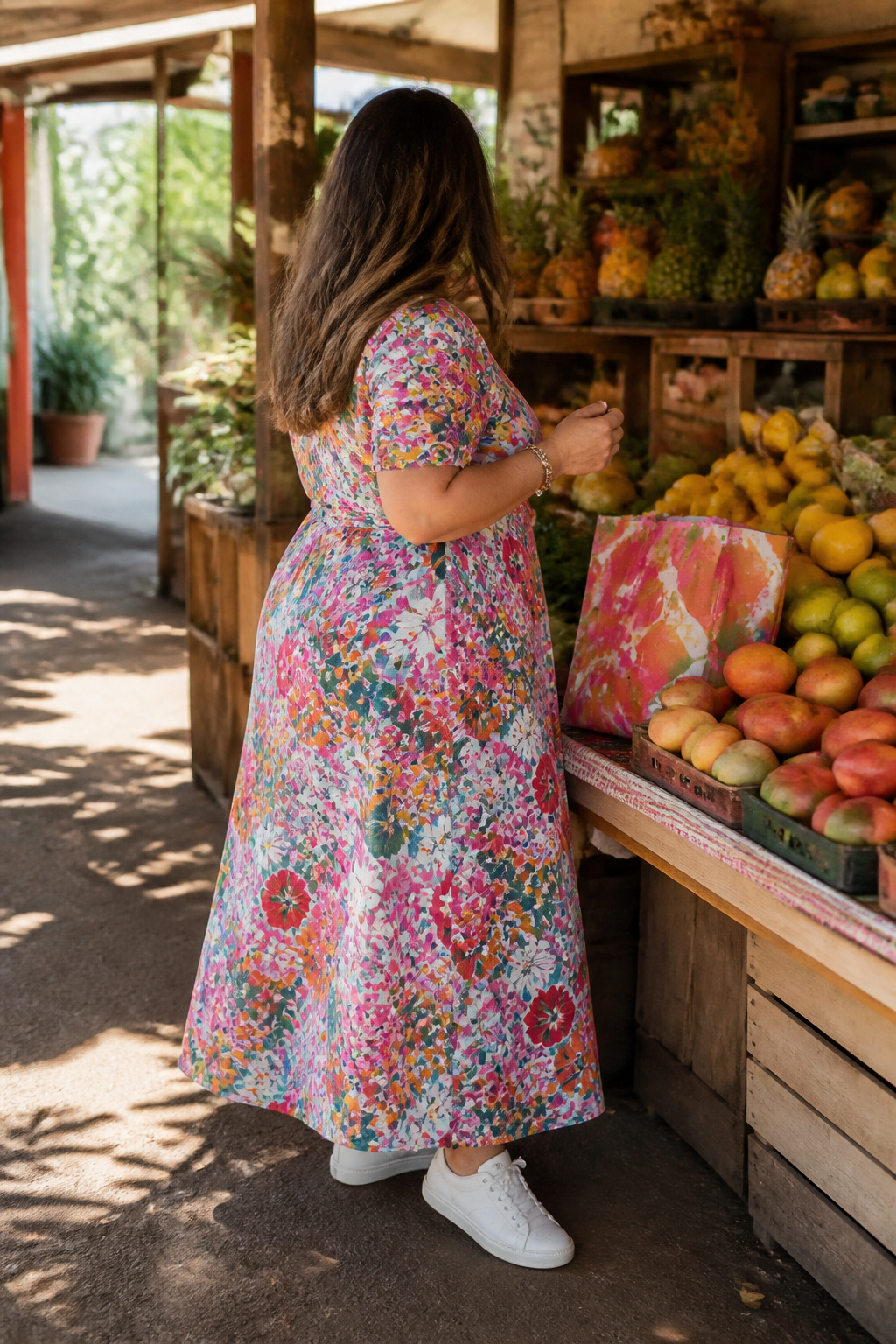
A midi-length floral dress lands right where low-top sneakers need it to: the hem skims the top of the ankle without swallowing the shoe or leaving an awkward gap. Maxi lengths can work, but only if the fabric is light enough that you can lift a few inches while walking; otherwise the hem drags and frays against the rubber.
White sneakers turn gray faster than you’d think, especially if you walk through grass in a floral print that already has green leaves. Mine went from crisp to sidewalk-colored in one weekend of errands. If the dress is busy with color, a solid neutral like tan or navy stays cleaner longer and doesn’t fight the print for attention. Sock visibility is the choice that changes the whole register: no-show keeps the line long and casual, a thin ankle sock reads deliberate and a little retro.
13. Silky Fabrics

Silky fabrics in summer sound wrong until you handle the right ones. Polyester satin traps heat and clings the second humidity rises, but silk crepe and viscose satin breathe and drape without sticking to the body the way cotton jersey does. Cotton holds sweat; these let it evaporate.
On a plus-size frame, the weight matters more than the fiber. Heavy silk charmeuse skims over the stomach and hips where thin cotton would bunch or pull. A midi dress in this material falls straight from the bust instead of grabbing at the waist, which is why the cut works across body shapes. The Reformation dress at $248 gets this right: the fabric has enough heft to keep its line, and the bias cut lets it move without clinging. That price is the benchmark for how silk should behave in a summer garment.
"The fit is spot on and the ruched detail on the front is totally adjustable, so the cut works for a variety of heights and body shapes."
Adjustable construction matters here because silk and its cousins rarely stretch. A wrap dress or a style with gathered panels gives you room to fit the fabric to your frame rather than the other way around. For tops, a viscose satin camp shirt worn open over a tank gives the coolness without the commitment of a full dress. Skirts need lining; otherwise the fabric crawls against itself with every step.
14. Printed Dresses
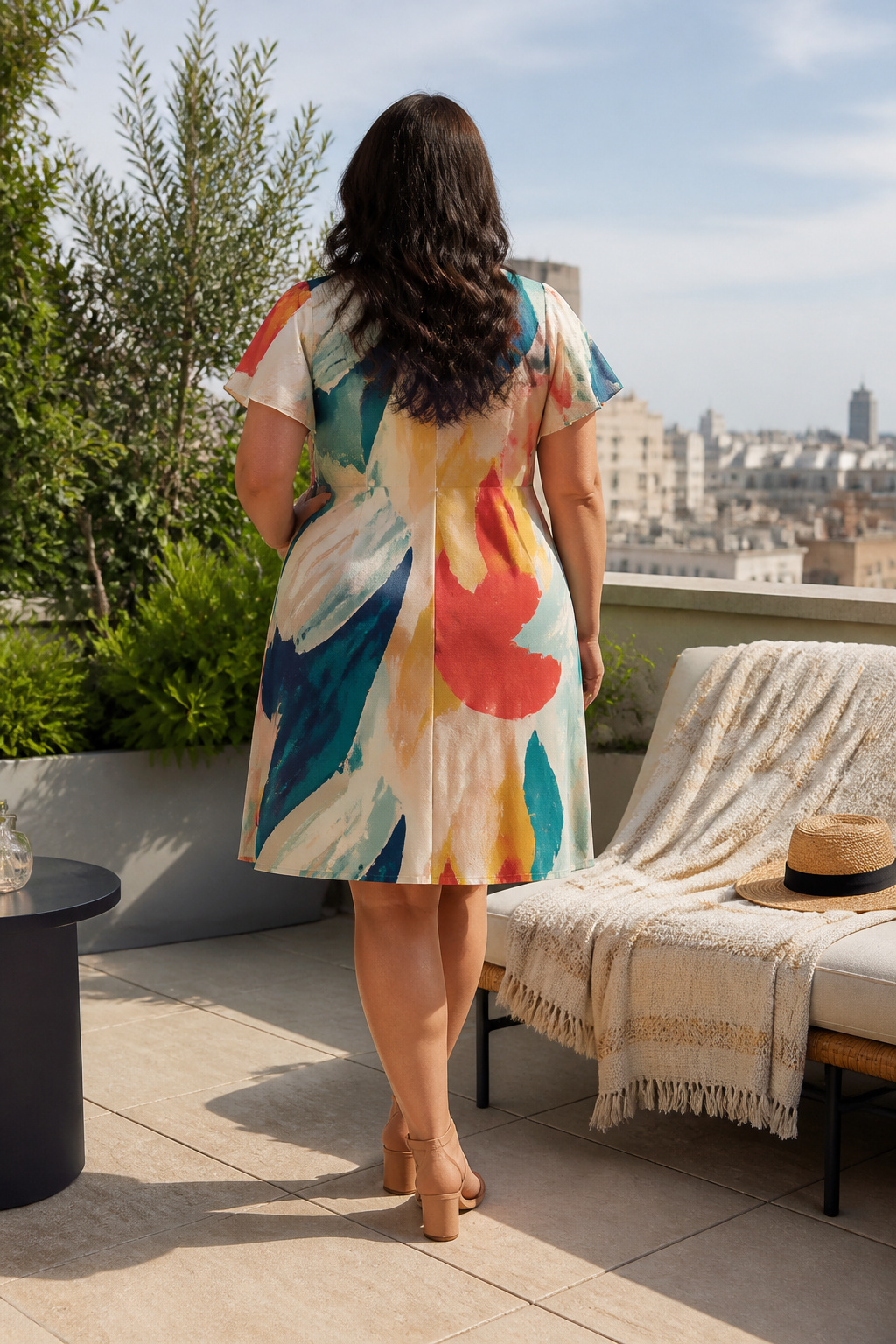
Printed dresses outside the floral category give summer outfits plus size wardrobe real range, but the scale of the print matters more than the motif itself. Geometric repeats, abstract brushstrokes, and animal patterns all behave differently on a body than tiny ditzy florals. The rule I follow: a print whose dominant element spans roughly 3–5 inches across flat fabric is large enough to read as intentional without fragmenting the silhouette. Smaller than that and the eye starts hunting for a focal point that isn’t there.
Placement is where a print becomes engineering. A well-placed chevron can draw the gaze vertically; a band of contrast at the waist can do the work tailoring would. The Veronica Beard dress at $695 gets this right, with the slit hitting at a point that elongates the leg and the print placement designed to accentuate rather than compete. Katie Sturino, who wears a 12/14, has called it one of her all-time favorites for exactly that reason.
Abstract prints forgive more than symmetrical ones. A geometric grid demands the pattern line up at seams; an abstract watercolor can shift slightly and still look intentional. Animal print sits somewhere between, its organic shapes more forgiving than stripes but still requiring enough scale that the spots don’t read as textural noise from three feet away.
15. Accentuate With a Belt
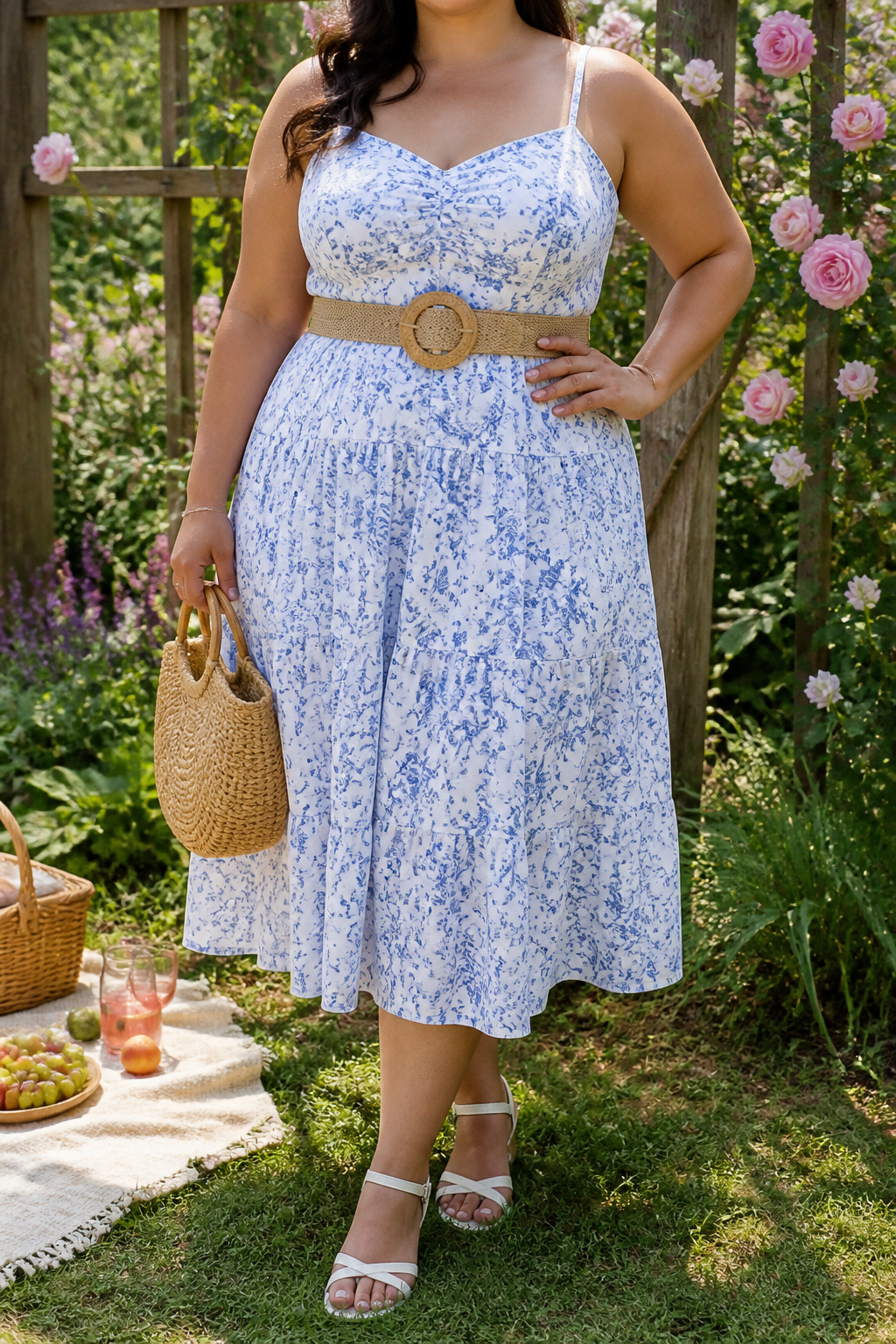
A belt can turn a shapeless summer dress into something that actually fits your waist, but the wrong width undoes the whole point. On a plus-size body, a band under two inches wide tends to disappear, while anything over three inches can read as a corset you didn’t mean to wear. Two and a half inches hits the sweet spot for most frames: enough visual weight to matter, not so much that it dominates the outfit.
Placement matters more than width. Your natural waist sits above the belly button, usually the narrowest part of the torso, and that’s where the belt should land. Too low, and you lengthen the upper body in a way that reads as sloppy; too high, and you create an empire waist that can throw proportions off on a curvier frame. Lightweight summer fabrics are the real enemy here. Linen and rayon slip under leather all day, so a belt with some texture or a fabric-covered buckle grips better than smooth patent.
A matching belt and shoe in summer tones keeps the eye moving vertically instead of cutting you in half at the widest point. Skip belting anything already gathered or ruched at the waist; the horizontal line competes with the fabric’s own seams and you end up with emphasis you didn’t plan for.
16. Classic With Confidence
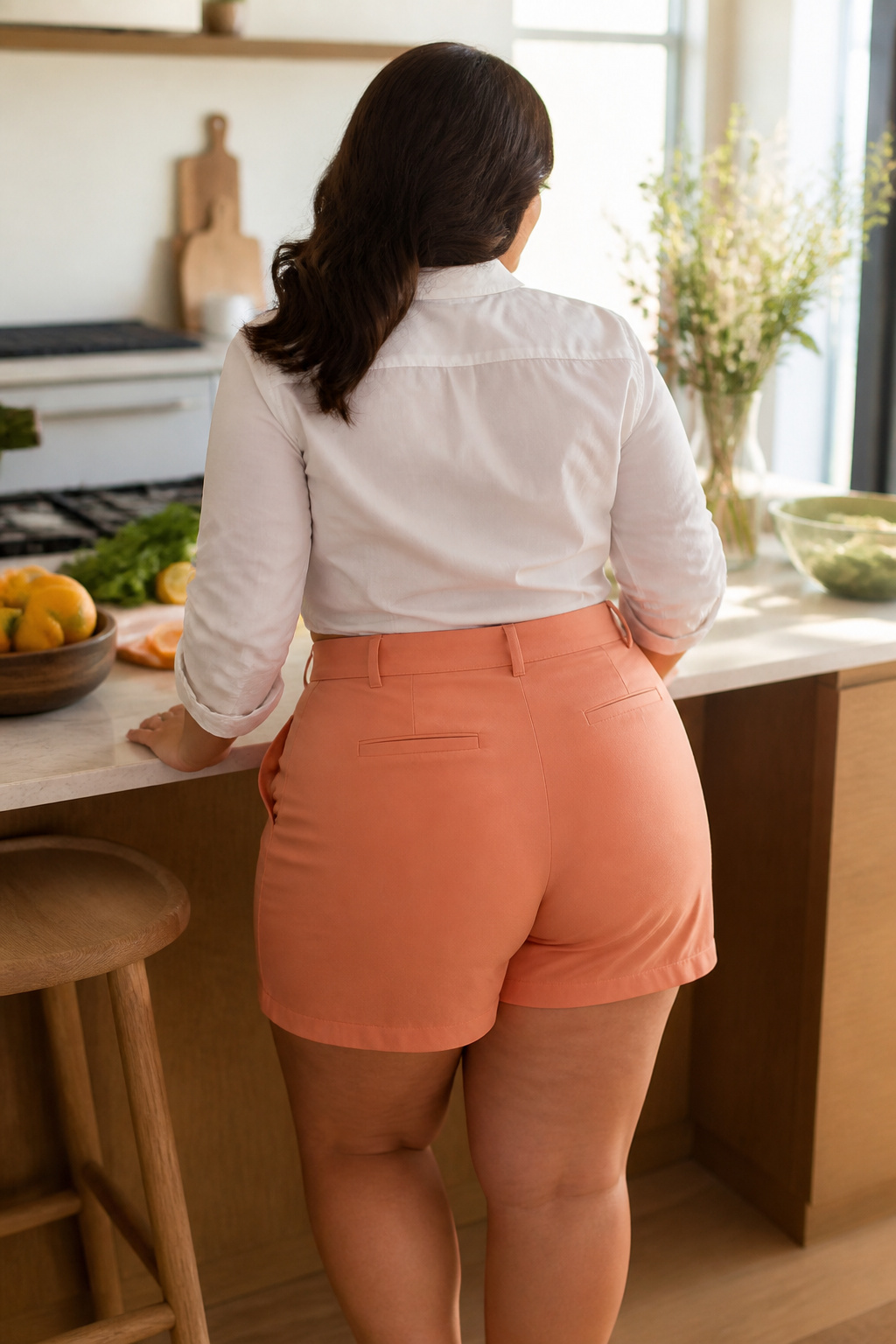
The white shirt never stopped working, but a classic piece only earns its name when the fit is precise enough to look chosen, not inherited. A cotton button-down that gaps at the bust or pulls across the shoulders reads as leftover, not intentional. Summer weight fabrics make this harder: the same drape that keeps you cool shows every compromise in the cut.
I learned this with a straight dress I bought two sizes up, thinking the room would skim my hips. It hung like a sack and aged me ten years. The replacement, taken in at the waist and with the hem raised to just below the knee, looked like a different garment entirely. The tailoring cost $35 and saved the dress.
Tailored shorts follow the same rule. A mid-thigh length with a clean leg opening, not too full and not too narrow, needs to sit at the natural waist to hold its structure through humidity. Without that waist definition, even expensive cotton reads as gym wear.
17. Floral Maxis
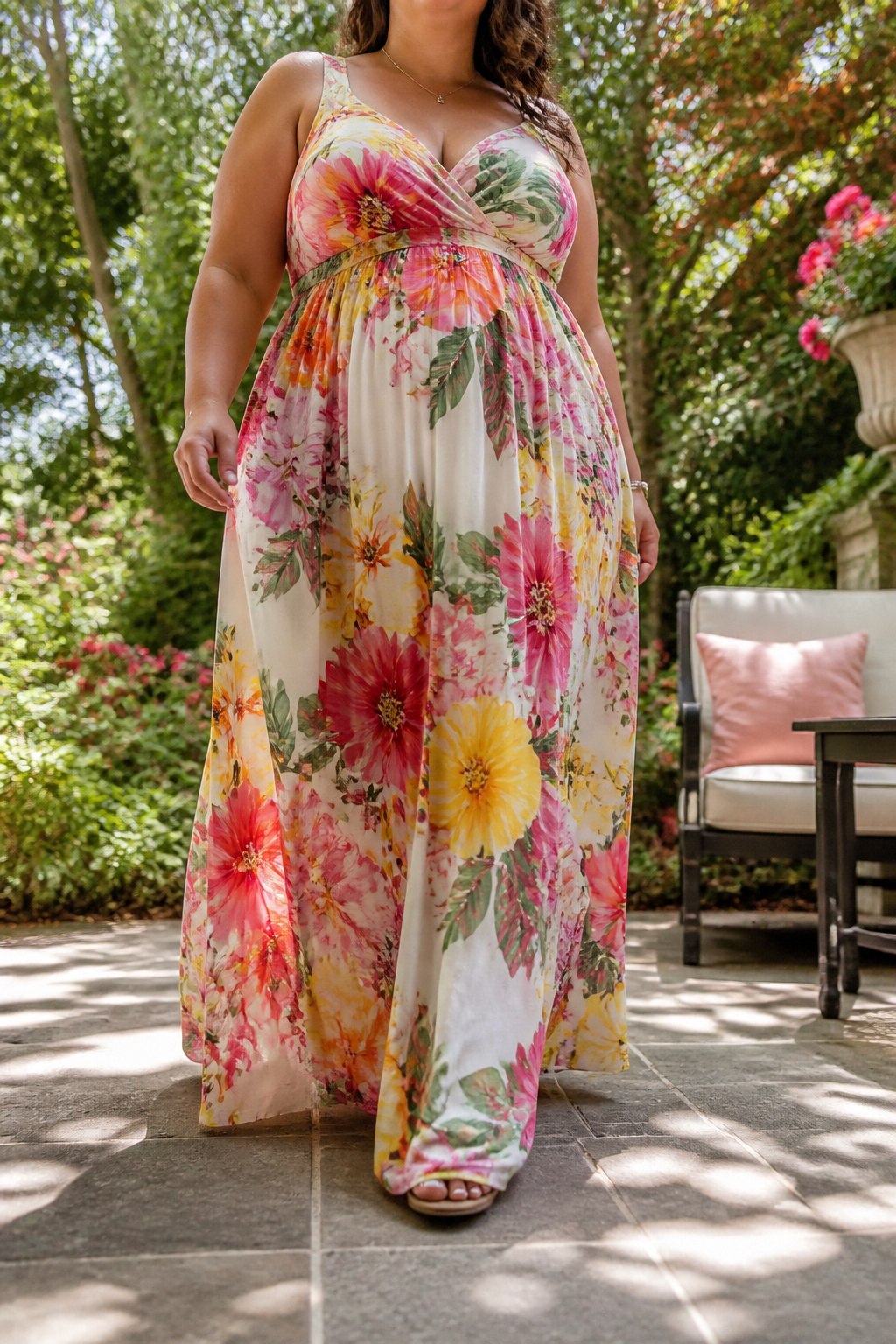
A long floral dress for summer lives or dies on three measurements you can’t guess from a product photo. The hem has to clear the ground by about an inch and a half in the shoes you’ll actually wear; any longer and you’re carrying three yards of wet fabric home from the mailbox. Width matters too, because a skirt that skims the calf at every step turns a casual walk into a hobble. Look for a hem sweep that lets you take a normal stride without the fabric locking around your ankles.
Print scale is where a maxi separates itself from the boho sundress you’ll find in its own section. That entry is built on loose structure and scattered, small-scale pattern. A maxi reads as intentional when the print is large enough to carry the full length, a single motif every eight to ten inches rather than a dense field of tiny blooms. Too small, and from a middle distance the dress becomes noise.
Neckline is the bra situation nobody warns you about. The typical maxi cut, a soft V or scoop, almost always shows strap unless you plan for it. A well-placed bra with convertible straps costs less than the dress and saves the whole look.
18. Style With White Accessories
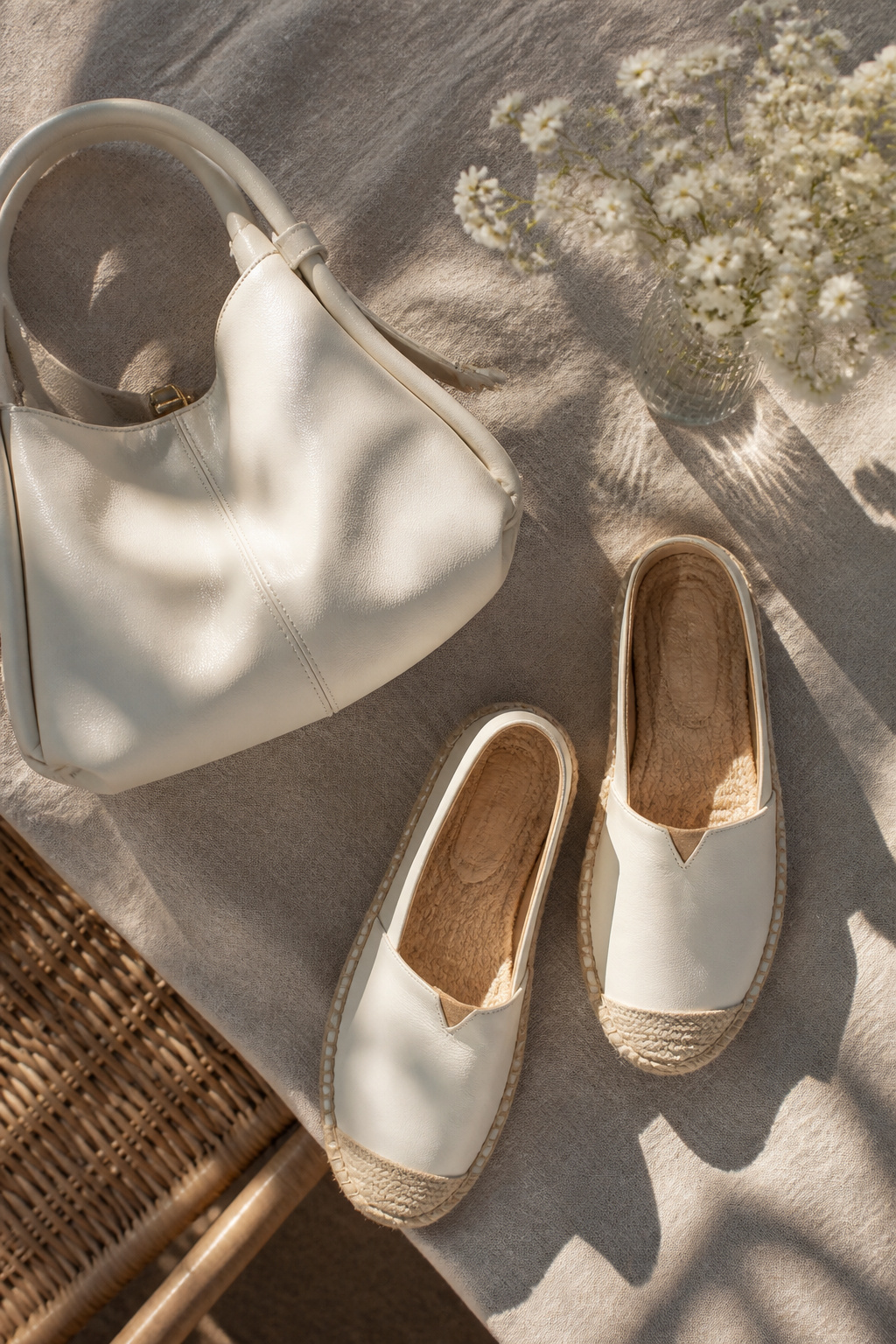
A white accessory in summer does the same work a stripe of molding does in a room: it defines the edge and makes the color next to it read cleaner. The bag is the obvious place to start. Smooth leather or a tight-weave canvas in white stays presentable through August; suede or anything loosely woven collects dust and sunscreen at the corners and looks tired by the second wear.
Shoes follow the same rule. A white leather sneaker or a clean espadrille sole can go out three times a week; white knits or mesh start graying at the toe box after one rainy sidewalk.
The belt is trickier. It sits at the waist, which is where bodies bend and fabric rubs, so a coated leather or resin finish wipes down where raw edge leather stains.
If you are going to spend on a white accessory, make it something that earns its place in rotation. The Prada headband at $235 and the Bottega Veneta sunglasses at $440 are not small numbers, but both are worn daily rather than competing with an outfit. The headband keeps hair off the neck in humidity; the sunglasses block actual sun while reading as jewelry. Cost per wear drops fast when the item never sits in the drawer.
19. Pops of Neon

Neon on a plus-size body in July is a high-wire act between electric and clownish. The difference is almost always placement. A full neon dress reads costume at a backyard cookout; a neon cami under a white button-down reads like someone who planned the whole thing. Prologue makes that cami for about $18, and the cut sits away from the body in a way that keeps the color from hugging every line.
Skin undertone matters more with neon than with most brights. Cool undertones carry lime green and electric blue without turning sallow. Warm undertones want the orange-red side of the spectrum, the shade that sits between tangerine and traffic cone. If you are neutral, you already know; you get away with both and the problem becomes volume, not hue.
The garment that carries the neon is the one that draws the eye. That is the entire point, so put it where you want the room to look. A neon sandal pulls attention down to the ankle; neon tights, the kind Kiah Torres wears, turn the leg into a single bright column. One neon piece per outfit is the useful limit; two starts a conversation you did not mean to start. Cotton breathes better than synthetic neon, which matters when the color is already doing this much work. ASOS has a cotton dress at $30 that handles the shade without the plastic sheen, and that matte finish is what keeps it wearable past noon.
20. Dress With a T-Shirt
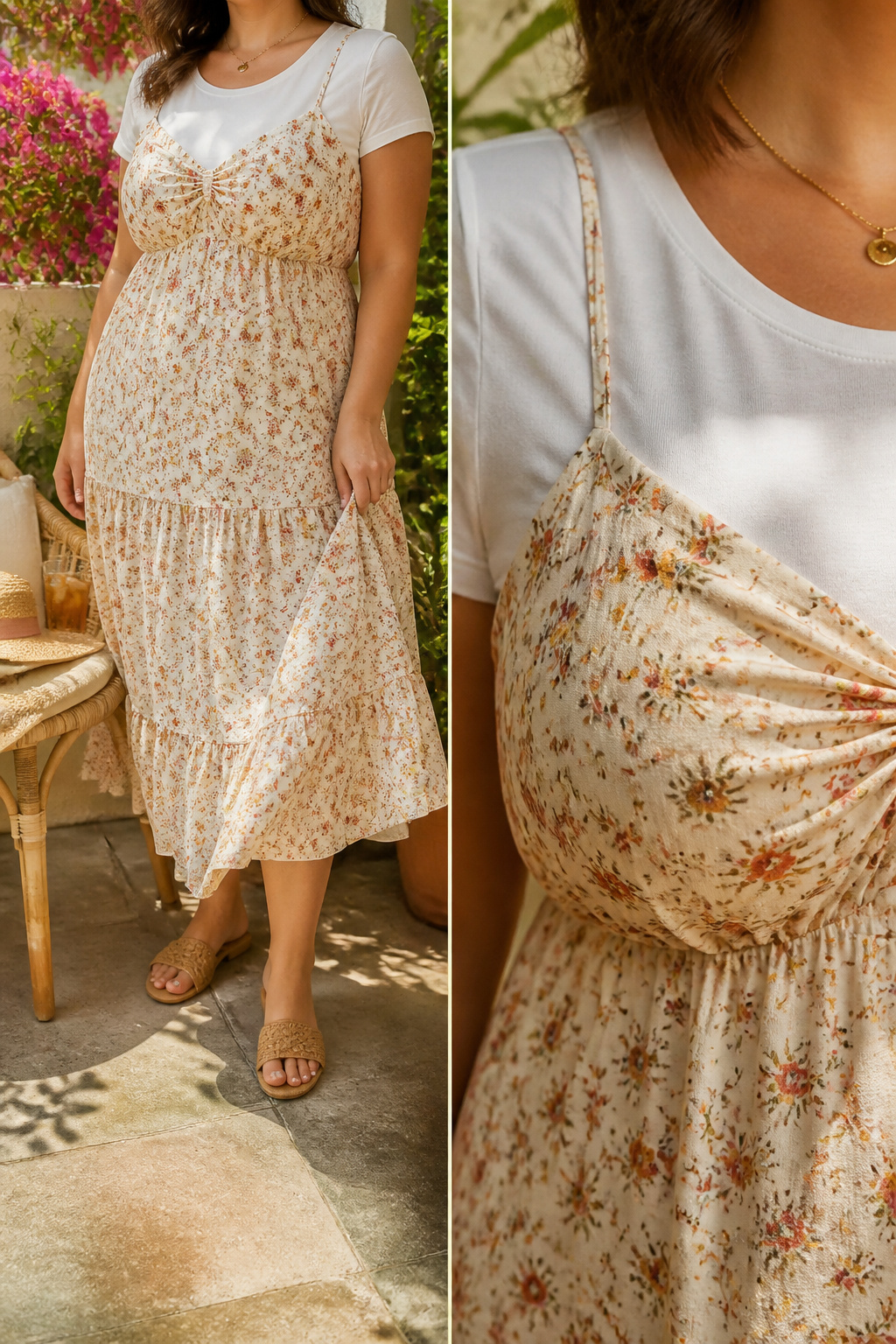
A lightweight cotton tee under a slip dress sounds like a layering trick for spring, but the wrong tee fabric turns it into a sauna by ten a.m. The jersey needs to be thin enough that you can see your hand faintly through it held to light; anything heavier traps heat between the two layers and the whole point collapses.
Necklines matter more than people admit. A crew neck under a scoop-neck sundress creates a tidy frame, but a V-neck tee under the same dress fights the line and looks accidental. I learned this the hard way at an outdoor brunch in July, adjusting the collar every five minutes while the humidity climbed. Match the tee neckline to the dress or go slightly higher; never lower.
Straps are the other half. Wide dress straps hide the tee shoulder cleanly, but spaghetti straps force the tee sleeves into a pinched sausage shape that reads sloppy. If the dress has thin straps, either pick a tee with cap sleeves that end exactly where the strap begins, or skip the layer entirely.
The temperature reality is that this works for mornings below eighty degrees or air-conditioned offices, not for walking three city blocks at noon. On truly hot days, the same slip dress over bare skin with a light cardigan in your bag is the smarter move.
21. Flattering Neutrals
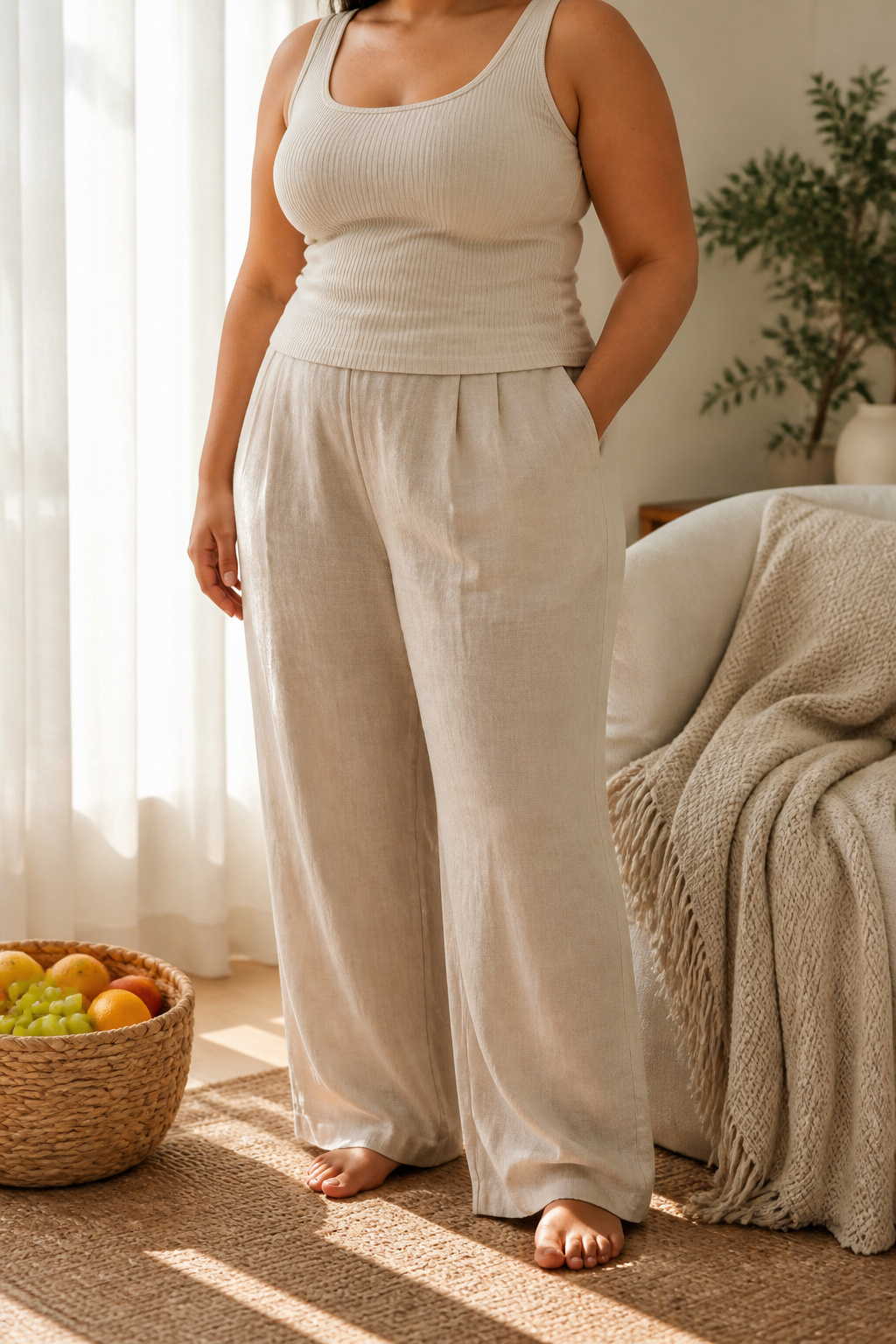
Olive and camel read richer on deeper complexions than they do on fair skin, where the same tones can look sallow. For lighter skin, a warm stone or a true oatmeal carries enough yellow to keep the face alive without drifting into khaki territory. The mistake most people make with head-to-toe neutral is relying on color alone to do the work, which is how you end up looking like a beige smear against a beige wall.
Texture is what saves you. A ribbed cotton tank against a slubbed linen pant, or a matte jersey skirt with a slightly shiny woven top, creates the separation that color normally would. Last June I wore a full beige outfit, headband to sandals, for an outdoor brunch. In person the fabrics looked fine, different enough to register. The photos were another story. Same tone, same flat light, and I dissolved into a shapeless blob with no waist and no shoulder line. The ribbing on the tank was too fine to read on camera, and the linen had softened into the exact value as my skin. If you are photographing a neutral look, the texture needs to be visible from ten feet away, not just up close.
Since then I add one piece with deliberate surface interest, a crochet detail or a seersucker weave, and I break the line at the waist with a belt in a slightly darker neutral. The eye reads the texture change before it notices the color match, and the silhouette holds its shape in any light.
22. All-Black Ensembles
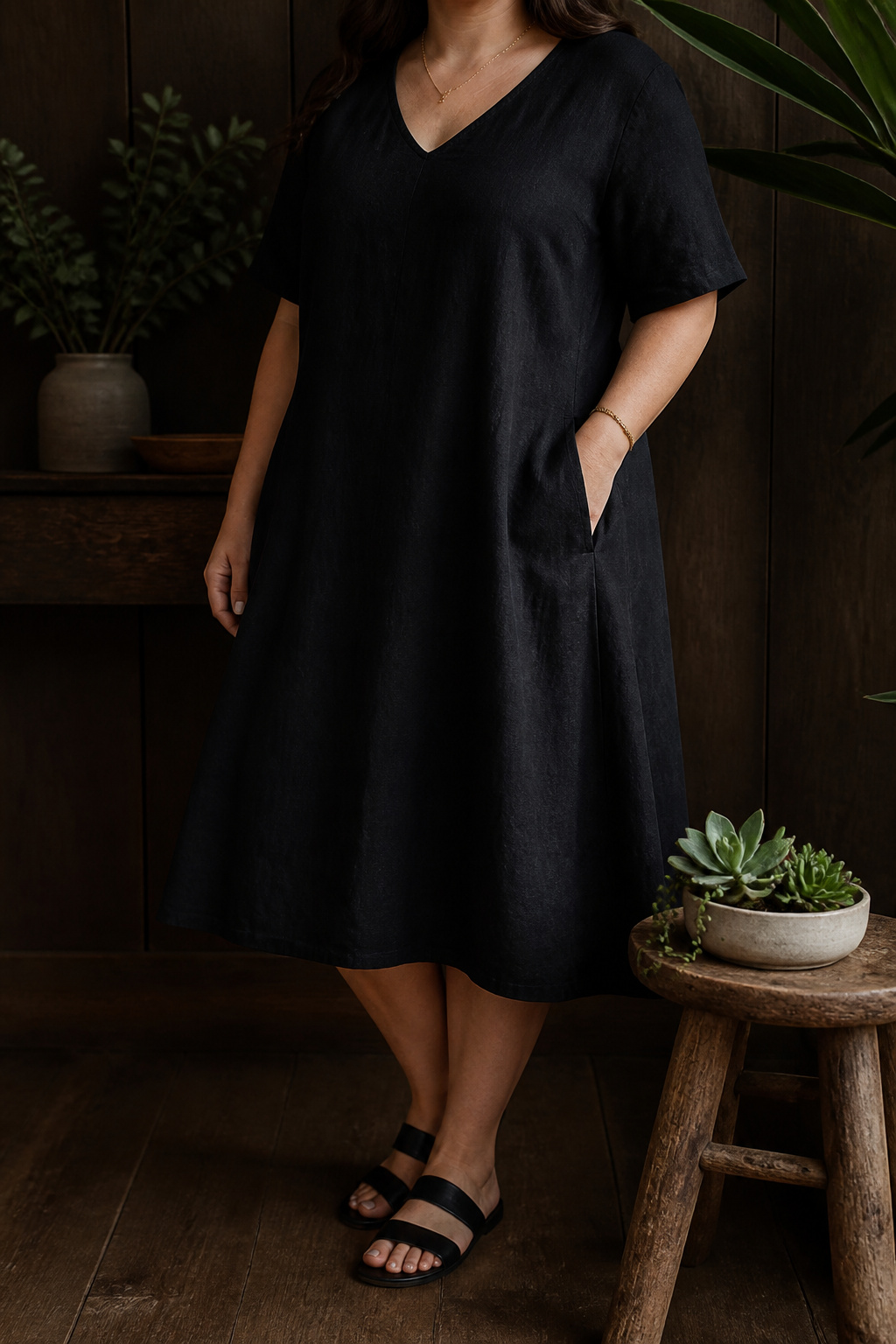
Black in July sounds like a mistake until you wear the right black. Linen or a featherweight cotton voile will carry heat outward instead of trapping it against your skin, and the difference between those and a standard polyester blend is the difference between wearable and miserable by noon.
Cut matters more than color for keeping the look airy. A sleeveless black linen shift in a size 20 reads lighter than a black jersey maxi with elbow sleeves because the proportions leave skin visible and the fabric stands away from the body. I learned this the hard way after buying a black midi dress with three-quarter sleeves for a June wedding; the photos look fine, but I spent the cocktail hour hunting for shade.
For daytime, a black tank with wide-leg black trousers in tencel or linen works for errands, lunch, even a casual office if the trousers have a pressed crease. The same black tank with a black satin midi skirt and sandals shifts to evening without changing the top. The fabric does the clock-switching: matte and breathable for sun, lustrous and fluid after dark. Skip anything lined in polyester for either slot; the lining defeats the purpose of a summer-weight shell.
23. Go Monochromatic
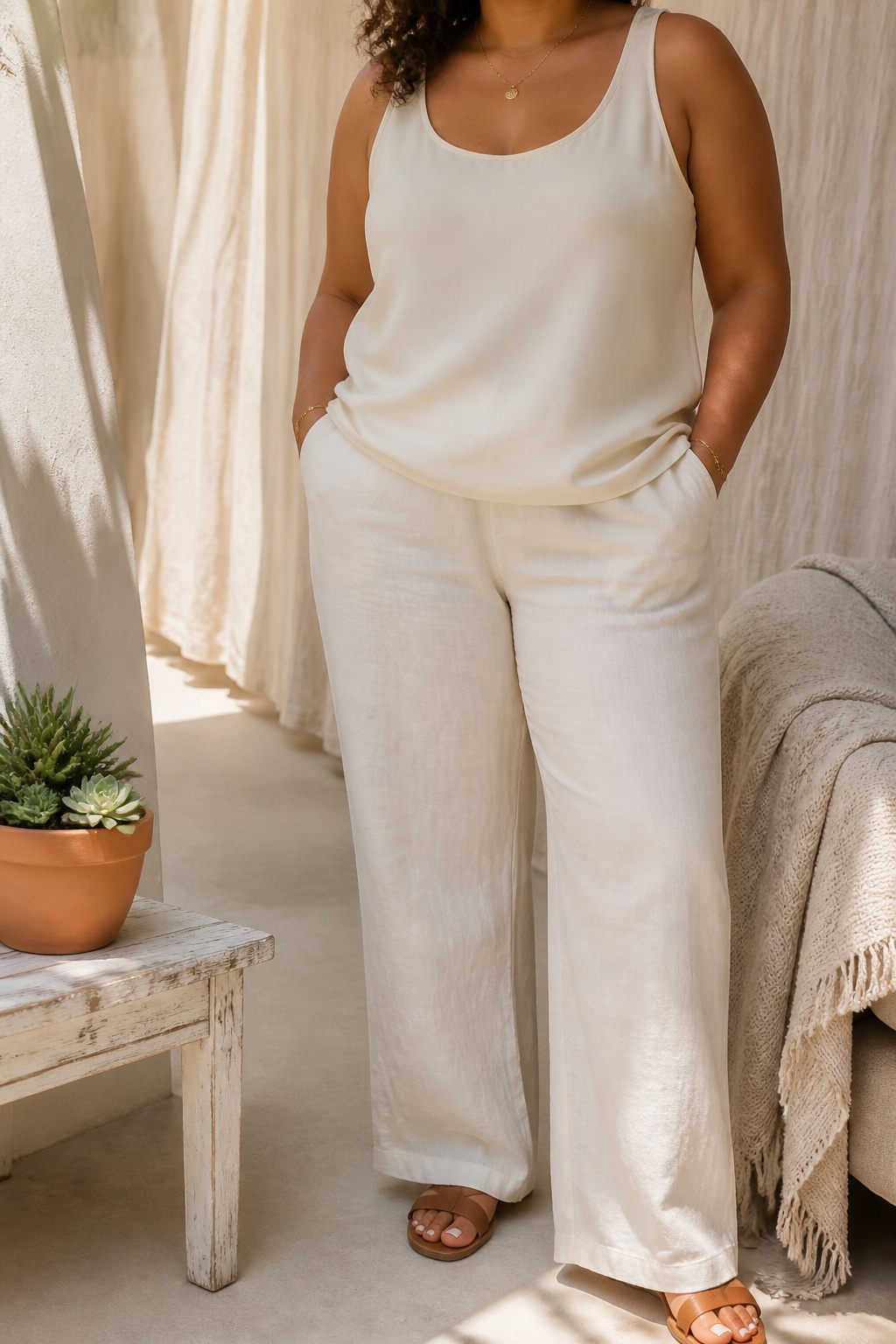
Wearing one color from collar to hem does something all-black rarely manages in July: it reads intentional, not like a heat-miser compromise. The trick is picking a hue with enough range to let you vary texture and shade without breaking the single-color rule. A cream silk tank against ivory linen pants, or a rust bodysuit tucked into cognac paper-bag trousers, keeps the eye moving upward so the body line lengthens. Structured pieces help here, a crisp shoulder or a defined waist, because one soft tone head to toe can flatten into uniform territory fast. I keep the boots or sandals in the same family too; the Marie Claire edit on this made me notice how leather against silk in the same value gives the outfit its architecture. White and cream work best if your summer involves actual sunlight, since they reflect heat and show texture differences clearly. For deeper skin tones, saturated terracotta or a clean cobalt does the same elongating job without washing out in noon glare.
24. Rock Band Tees
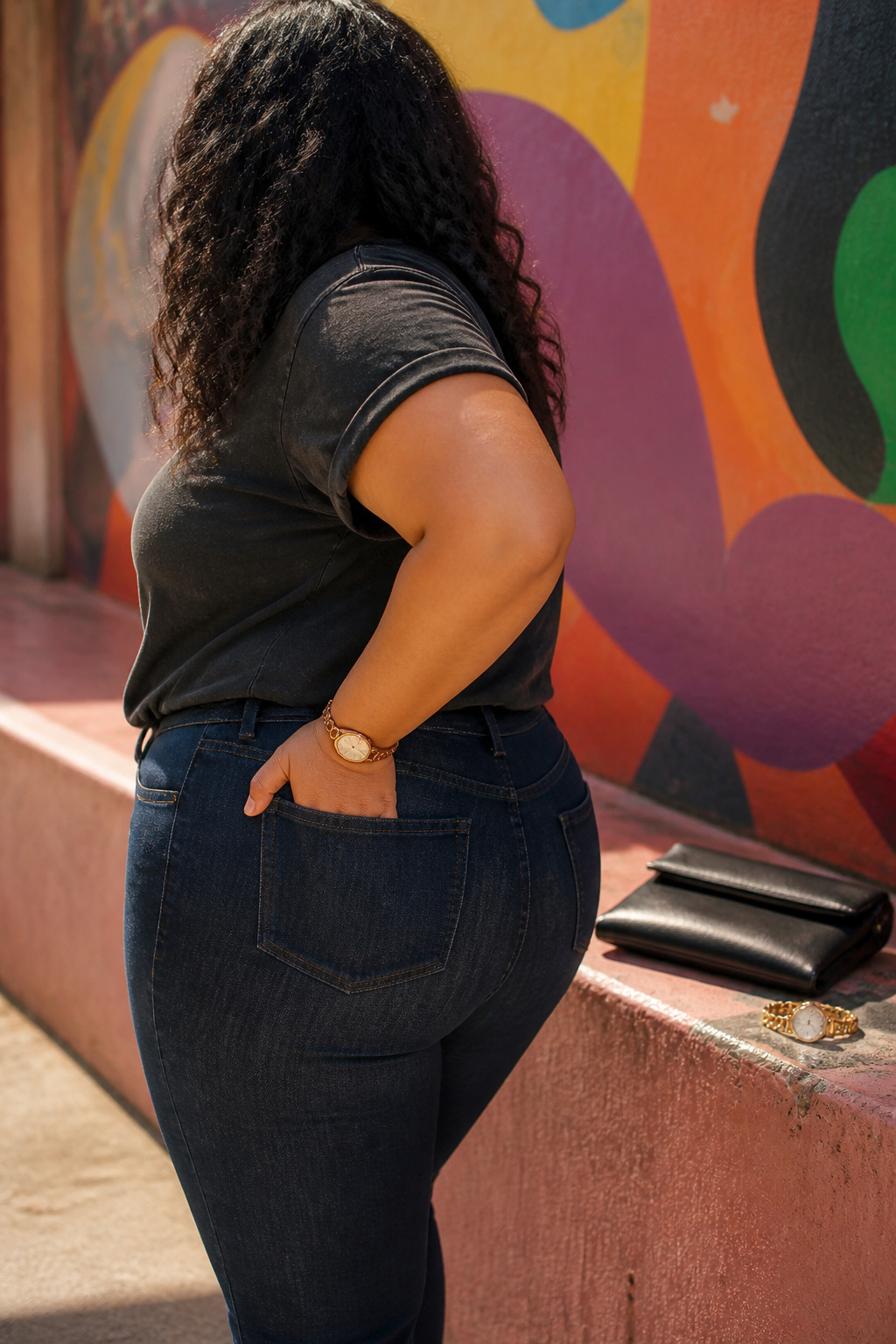
A vintage or reproduction band tee works as a plus-size summer staple only if the shoulder seam actually hits where it should. On most women, the "unisex" cut sits lower, closer to the upper arm, which turns the whole shirt into a droopy tent. The seam should land directly on top of the shoulder bone, not sliding off toward the bicep. Once the fit is right, the rest becomes a balancing act. The graphic itself carries visual weight, so the bottom half needs to calm down. A straight-leg or slightly wide trouser in a solid color keeps the eye moving rather than fighting the print. Cropping the tee to just above the natural waist works if you have a high-rise bottom to meet it; otherwise a full tuck into a mid-rise jean or skirt gives the same proportion without the bare-skin commitment. I tend to skip the half-tuck with band tees because the graphic breaks awkwardly and the leftover fabric poufs at the wrong spot. Dark denim, army green chinos, or a crisp white wide-leg pant all do the same job: let the tee be the statement without letting it wear you.
25. Leather Looks
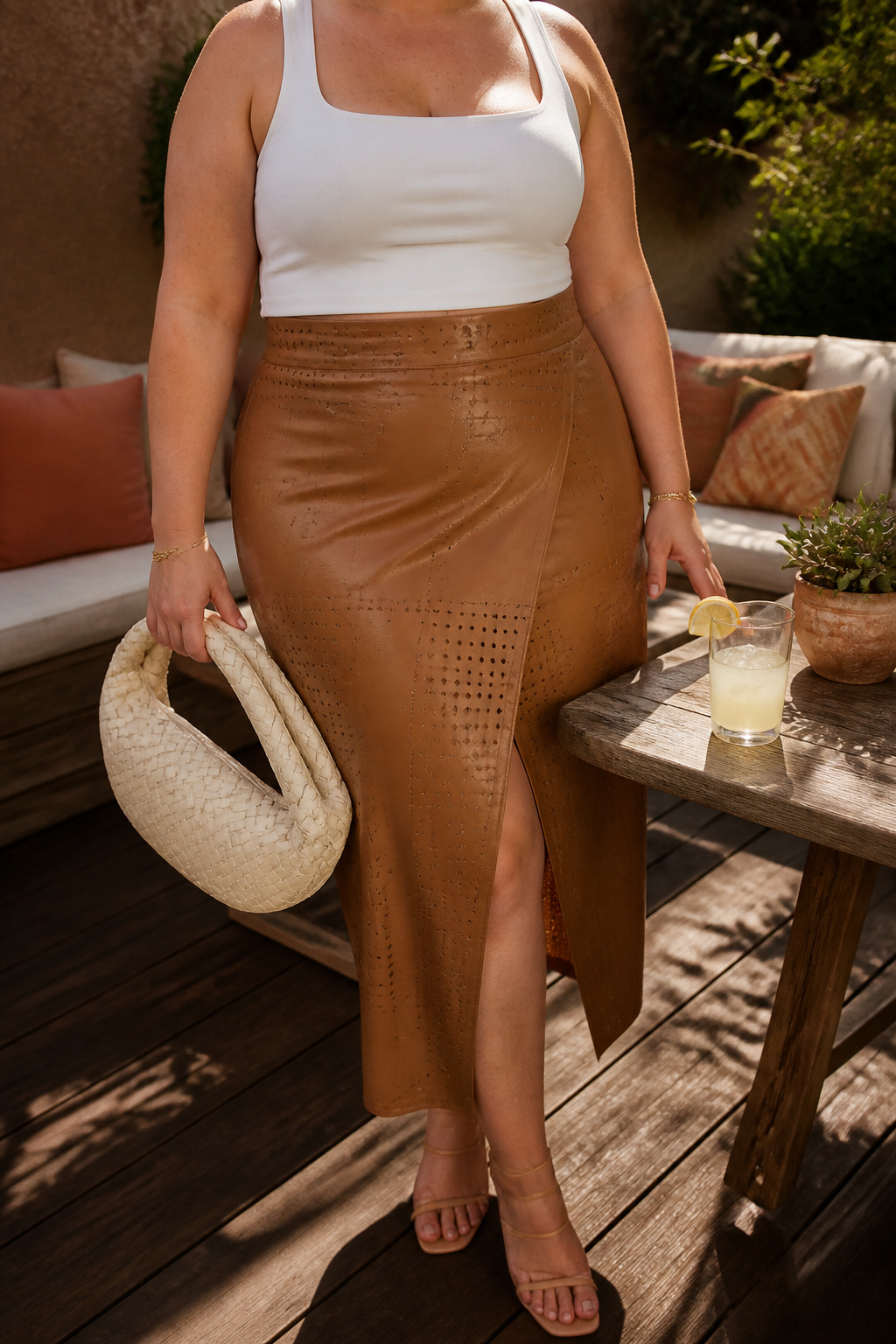
Real leather in July sounds like a mistake until you hold the right weight against your palm. A lambskin skirt or perforated shorts in a midi cut moves air better than coated vinyl ever will, and after five summers the cost per wear drops below what trend faux-leather pieces charge for a single season. I learned to look for unlined skirts and shorts with venting details; they work from late afternoon into evening without the clammy stick of cheaper alternatives. A cropped jacket in soft hide works the same way for nights when the temperature drops past ten. The initial price stings, but amortized across years of actual use, the math flips. Perforated leather and unlined lambskin are the only summer weights worth the investment. Coated fabrics trap sweat, crack at stress points, and land in landfill before you’ve worn them thirty times.
26. Classic Tee and Jeans
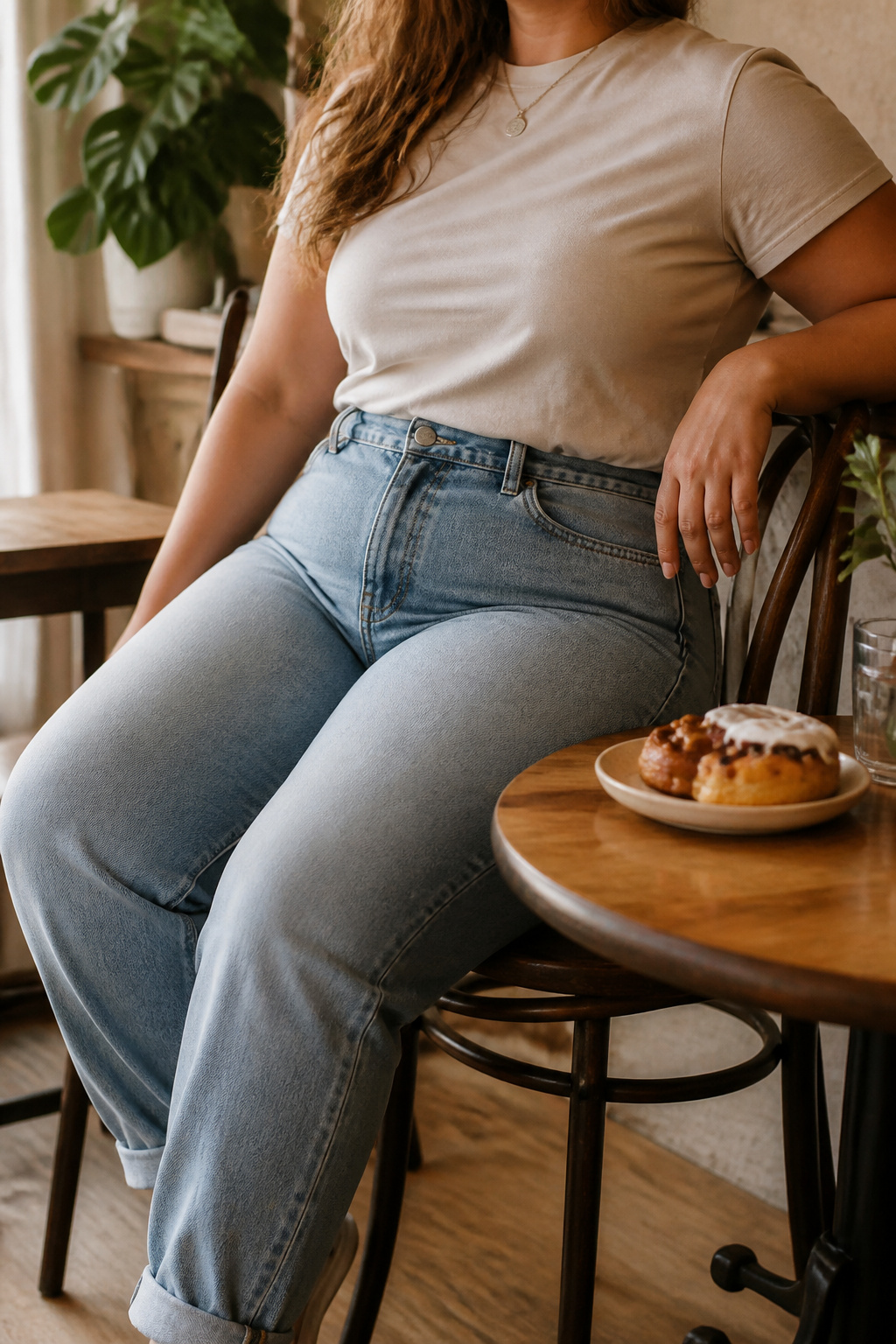
A summer tee needs to be lighter than the cotton jersey that works in October, or the whole outfit reads as accidental. I look for something between 4 and 5 ounces per square yard, thin enough to tuck without bulk but not so sheer that the bra line becomes the point of the look. The right weight drapes instead of clinging.
The jeans matter more. In heat, a mid-rise that hits just below the natural waistline will push flesh upward into a muffin effect the moment you sit, so a high rise that sits at or above the waistline keeps the line smooth without constant adjusting. For wash, pale to medium indigo reads intentional for summer; dark resin-coated denim looks like you grabbed your single pair of year-round jeans and hoped for the best. A straight or slight taper leg works better than a skinny cut, which throws proportions off when the top is relaxed.
This pairing fails fast when either piece is slightly off. A heavy tee with lightweight summer denim looks confused. A high-rise jean with a boxy cropped tee leaves an awkward strip of midriff that wasn’t the plan. The outfit only looks effortless when both items are making the same seasonal argument.
27. Puffed Sleeves
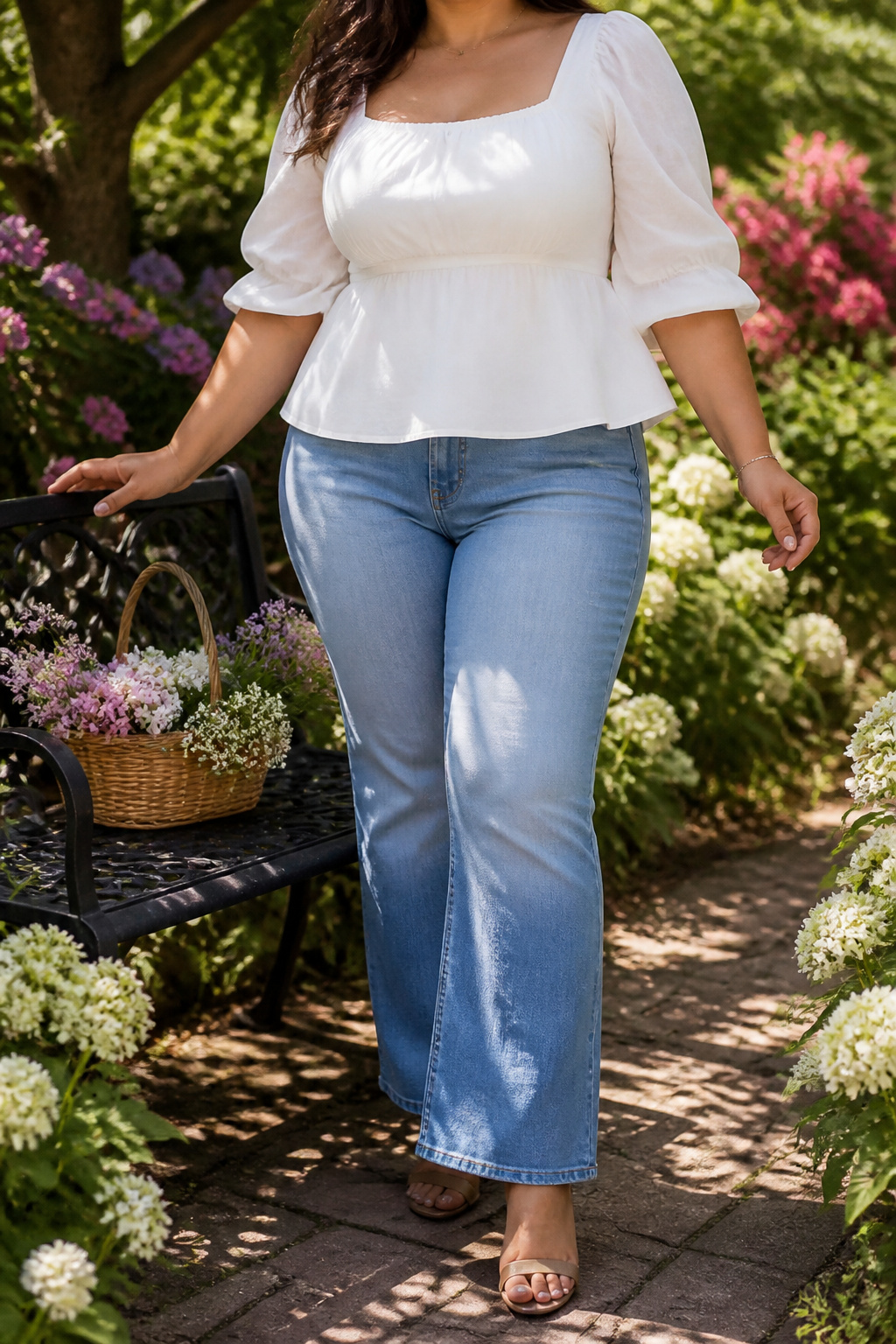
A puff sleeve that starts right at the shoulder peak and balloons outward from there added about six inches of visual width to my frame. I caught my reflection in a shop window last July and thought I was seeing a linebacker in a sundress. That sleeve had volume concentrated at the widest horizontal point of my body, which is exactly where plus-size arms and shoulders do not need extra.
The puff should begin lower, almost at the upper arm, where the bicep narrows before the elbow. That placement keeps the shoulder line intact and lets the volume read as a soft sleeve detail rather than a structural expansion of your torso. Sleeve length matters just as much: a cap sleeve or anything ending at the widest part of the upper arm will visually bisect it there. Three-quarter length or full long sleeves let the eye travel to a narrower point.
Volume needs restraint too. One gathered tier at the crown, not multiple layers that stack outward. Cotton poplin holds the shape without going costume; crinkled gauze collapses into something that reads like a mistake. I still wear puff sleeves, but only with that lower starting point and enough length to move the eye past the arm’s widest moment.
28. Bright Colors
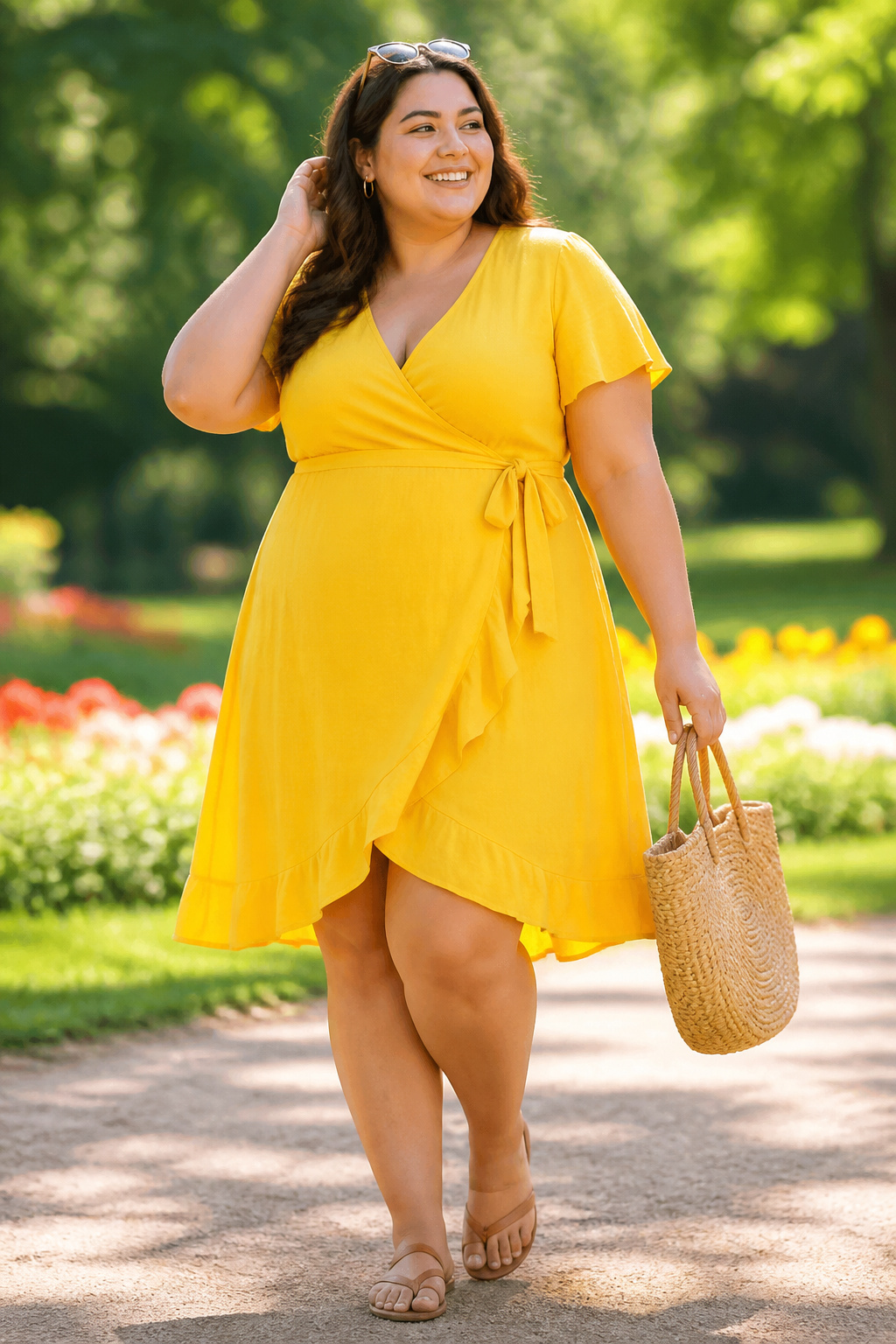
Saturated primaries like cobalt, tomato red, or sunflower yellow read very differently from neon once you see them side by side in daylight. Neons buzz; these colors hold. A warm skin tone carries orange and coral with an ease that makes the same shades look flat on cooler complexions, while olive and deeper complexions tend to swallow pure red unless there is enough blue in it. The mistake I made for years was treating bright color like a spotlight I had to stand under. One bright piece against something quiet, a bone linen or a washed chambray, lets the color do its work without asking you to perform. The first time I wore a real kelly green, a shade I had filed away as "not for me" since middle school, the mirror surprised me. The confidence is not in the color itself. It is in wearing something you had decided was off-limits and discovering the rule was wrong.
29. Off-the-Shoulder Top
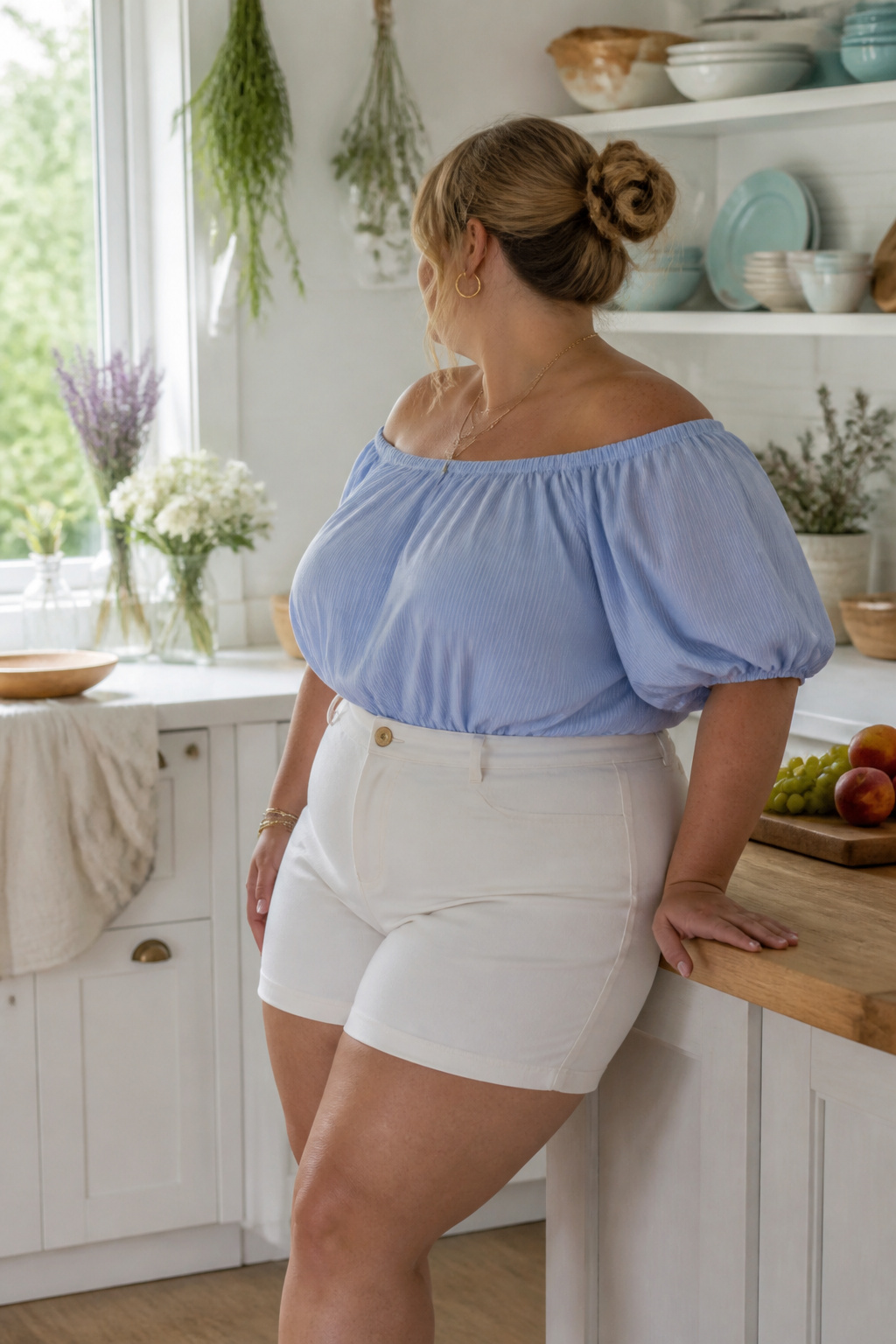
Off-the-shoulder tops live or die by where the elastic lands. In plus sizes, a too-narrow band rides up toward the collarbone within an hour; too loose and you spend the day tugging it back down over your bust. The elastic should sit flat and firm at the exact top of your shoulder, not above it, with enough tension that you can raise your arms without losing the neckline.
Width across the back matters more here than in straight sizes. A panel that gaps between your shoulder blades lets the whole bodice slump forward and destroys the line. Look for a back measurement that matches or barely exceeds your own, with a subtle curve built in so the fabric follows your spine rather than bridging it. Ruching or a smocked panel helps, but only if the gathers are dense enough to stay gathered under tension.
Length is the detail I learned to check the hard way. Anything that skims the natural waist will roll up with every bend and reach. A hem that hits mid-hip or lower stays put against your bottoms and gives you room to tuck or leave loose depending on the day.
Bra solutions under this neckline are limited but workable. A strapless with a wide, gripping band works if the cup shape truly suits you; otherwise, the silicone strips slide south in summer heat. Converting a regular bra to a low-back style with an extender strap keeps support intact while hiding everything the top reveals. The cleanest option, if your bust allows it, is a well-structured bandeau in a shade close to your skin tone; it disappears under white or pale fabrics without the architecture of a full bra showing through.
30. Dress With Sneakers
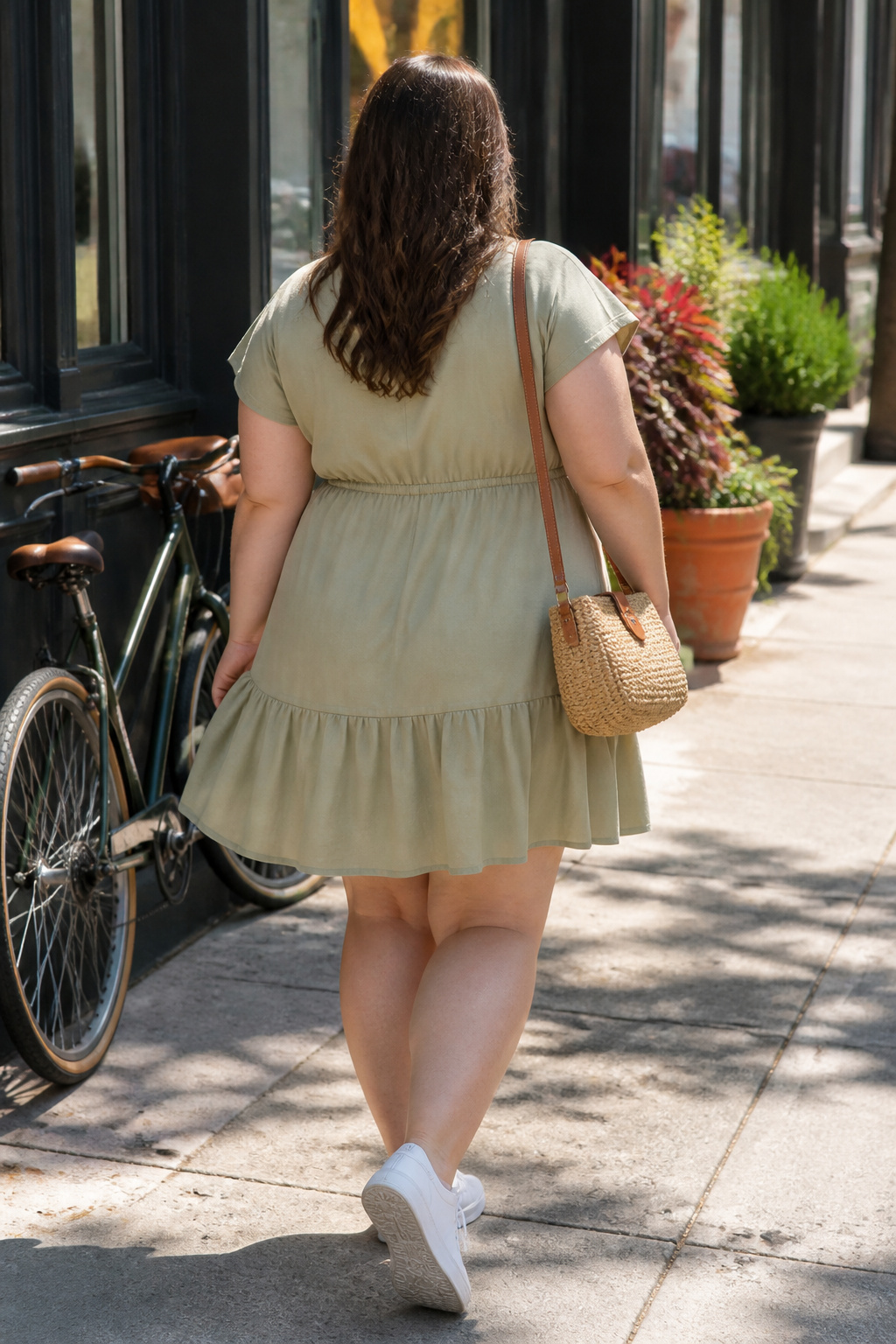
Solid dresses pair with sneakers on a different register than florals do. Where prints read picnic, a mid-weight cotton poplin or ponte dress in navy, olive, or rust keeps the look closer to streetwear and further from garden party. The shape matters more than the color: a straight shirtdress or A-line with a defined waist and hem that hits two inches above the knee gives the shoe room to register as deliberate, not a commute shortcut.
Hem length is where this pairing lives or dies. A maxi or midi that swallows the sneaker turns the shoe into a functional afterthought; the eye needs to see the whole shoe, not just the toe cap. I have watched this fail on myself in a tea-length cut that broke the leg at exactly the wrong spot and made both pieces look like compromises. Better to go short enough that the sneaker is visible, or long enough that a side slit lets it peek.
The casual-to-polished spectrum here runs from a washed jersey T-shirt dress with running shoes to that same poplin shirtdress in black with leather-trimmed white sneakers. The latter passes in most offices that allow denim; the former is strictly weekend. The difference is fabric weight and shoe finish, not dress cut. I default to the middle ground: a ponte sheath in charcoal with a gum-sole sneaker that is clean but not precious. It travels well, holds its shape through humidity, and does not require the bag change that heels demand.
31. Crop Top and Maxi Skirt
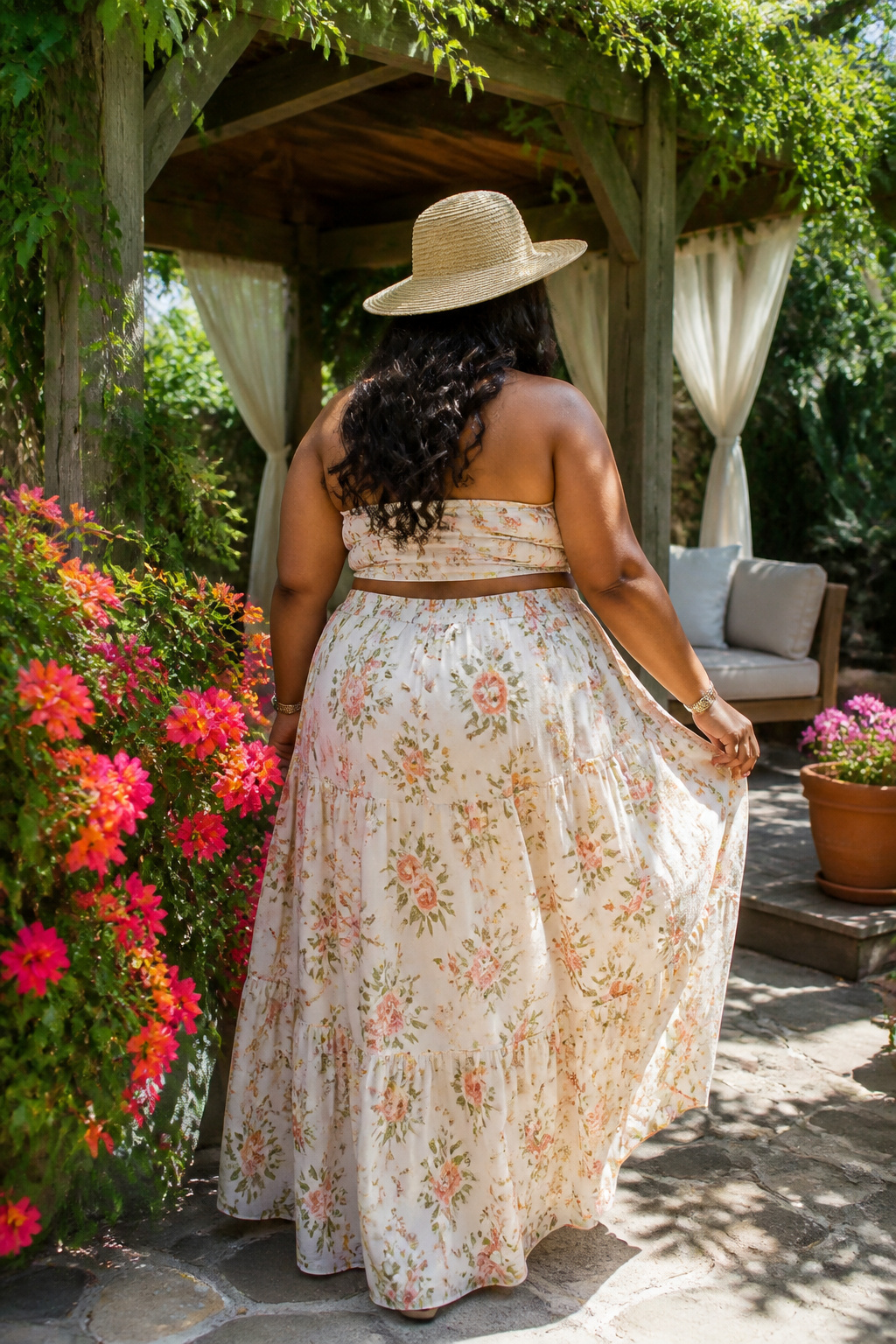
A crop top on a plus-size body works when the proportion reads as intentional, not accidental. The waistband of your maxi skirt should sit at the natural waist or higher, so only a slim band of midriff shows, if any. I land on about two fingers’ width of skin, which keeps the look breezy without making me feel exposed during a long day outside.
The top itself needs real length to stay put. Anything shorter than eight inches from shoulder to hem rolls up on me within minutes of walking. I look for crops that hit closer to nine or ten inches, hitting right at the skirt’s waistband with no gap when I raise my arms.
Fabric weight matters more than I expected. A thin jersey rides up; a mid-weight cotton or ribbed knit stays anchored against the skirt’s elastic or structured band. The skirt’s volume balances the cropped line. A slim maxi with a crop reads unfinished; a skirt with some sweep grounds the silhouette.
The deliberateness comes from the overlap, not the reveal. When the top ends exactly where the skirt begins, the eye reads a continuous shape rather than two separate pieces fighting each other.
32. One-Shoulder Top and Satin Skirt
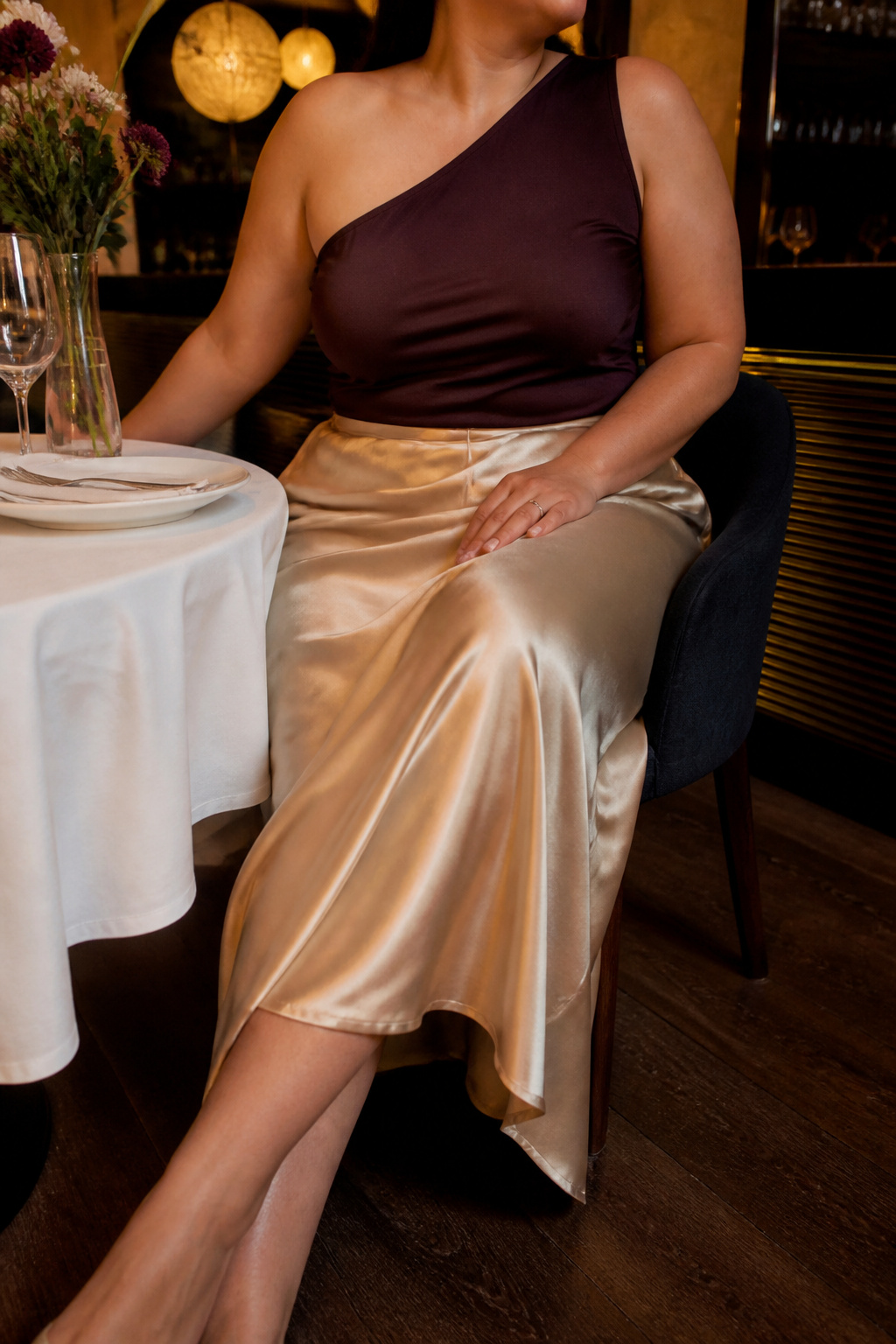
A one-shoulder top reads evening immediately, but the real work happens underneath. A strapless bra with a silicone grip band stays put better than convertible styles, in my experience; the single strap on your left shoulder means any visible hardware breaks the clean line that makes this silhouette work.
The skirt choice matters more than the top. Satin in July can cling to thighs the second humidity hits, so mid-weight satin with a matte back, or a satin-faced charmeuse with actual body, keeps the shape intentional rather than stuck. An A-line cut that skims rather than hugs gives you room to move at an outdoor dinner without the fabric grabbing.
Asymmetry needs balance, not more asymmetry. A one-shoulder top already draws the eye diagonally; pair it with a skirt that sits at the natural waist and falls straight or gently out. The look tips too costume when both pieces compete for attention. One bold element, clean below, and the outfit feels considered rather than dressed up.
33. A Matching Set
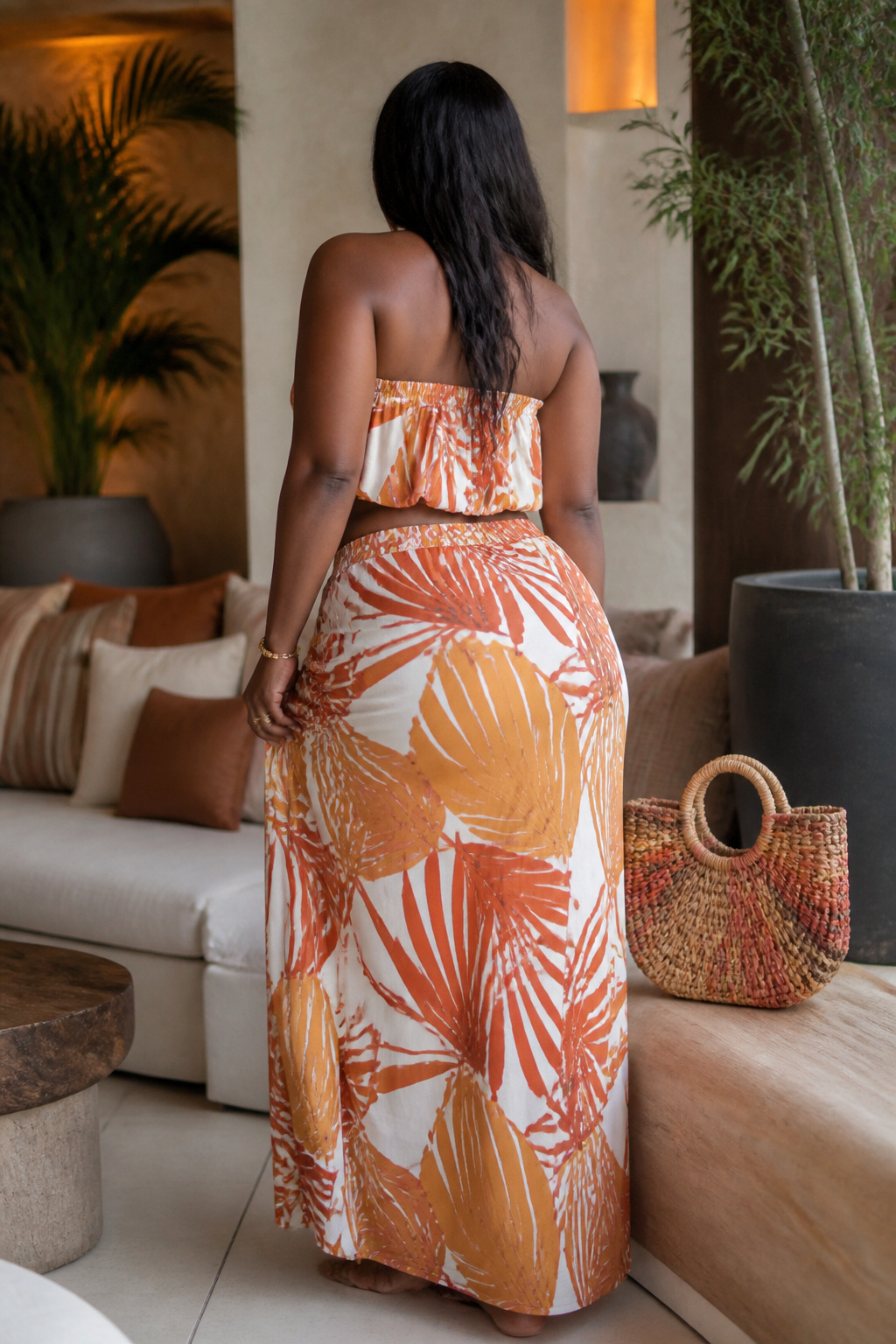
A matching set in summer lives or dies on whether the two pieces actually look like they belong together. Sarah Tripp’s Abercrombie smock set works because the elasticized top and skirt share the same navy or white fabric, so the eye reads them as one continuous column rather than a top stopping and a skirt starting. That uninterrupted line is the whole reason to bother; a dress does the same thing with no risk of mismatch.
Where sets fail is the proportion gap. One piece ordered in a 2X and another in an XL from the same brand can sit at slightly different waistlines, or the crop length shifts while the rise stays fixed. The smocking helps here, since it forgives a half-inch variance that a rigid waistband would turn into a visible break.
Linen separates run the same trade. Worn together, the matching color and weight give the clean shape of a jumpsuit without the bathroom hassle. Worn apart, the shirt covers a swimsuit or ties over a dress, and the pants pair with a ribbed tank. The mileage depends on buying both pieces in the same dye lot and weight; mismatched linen weights read as a mistake, not a choice.
34. A Dress and Booties

Closed-toe booties with a summer dress only look wrong until you try it in the actual weather. Most of June and September where I live hover in the low 70s with a breeze that makes bare sandals feel foolish by evening. A perforated suede bootie, the kind with tiny punched holes across the vamp, lets air move enough that your feet do not stew. The heel height matters more than the bootie itself. A one-to-two-inch stacked heel sits right with midi lengths, ending somewhere between mid-calf and ankle so the eye travels cleanly from fabric to foot. Anything taller starts to fight a maxi hemline, while a true flat can disappear under a longer skirt and look accidental.
The material weight is the other half. I reach for woven linen dresses or lightweight cotton voile here, never anything lined or structured. The bootie grounds the dress; the dress keeps the bootie from reading as winter stubbornness. Perforation or a open-weave knit upper is what makes this combination read as intentional rather than seasonal confusion. Leather that is unlined and flexible beats anything stiff. I have worn this pairing to outdoor dinners where the temperature dropped ten degrees after sunset and felt prepared rather than underdressed, which is the whole argument for it.
35. Trendy Animal Prints
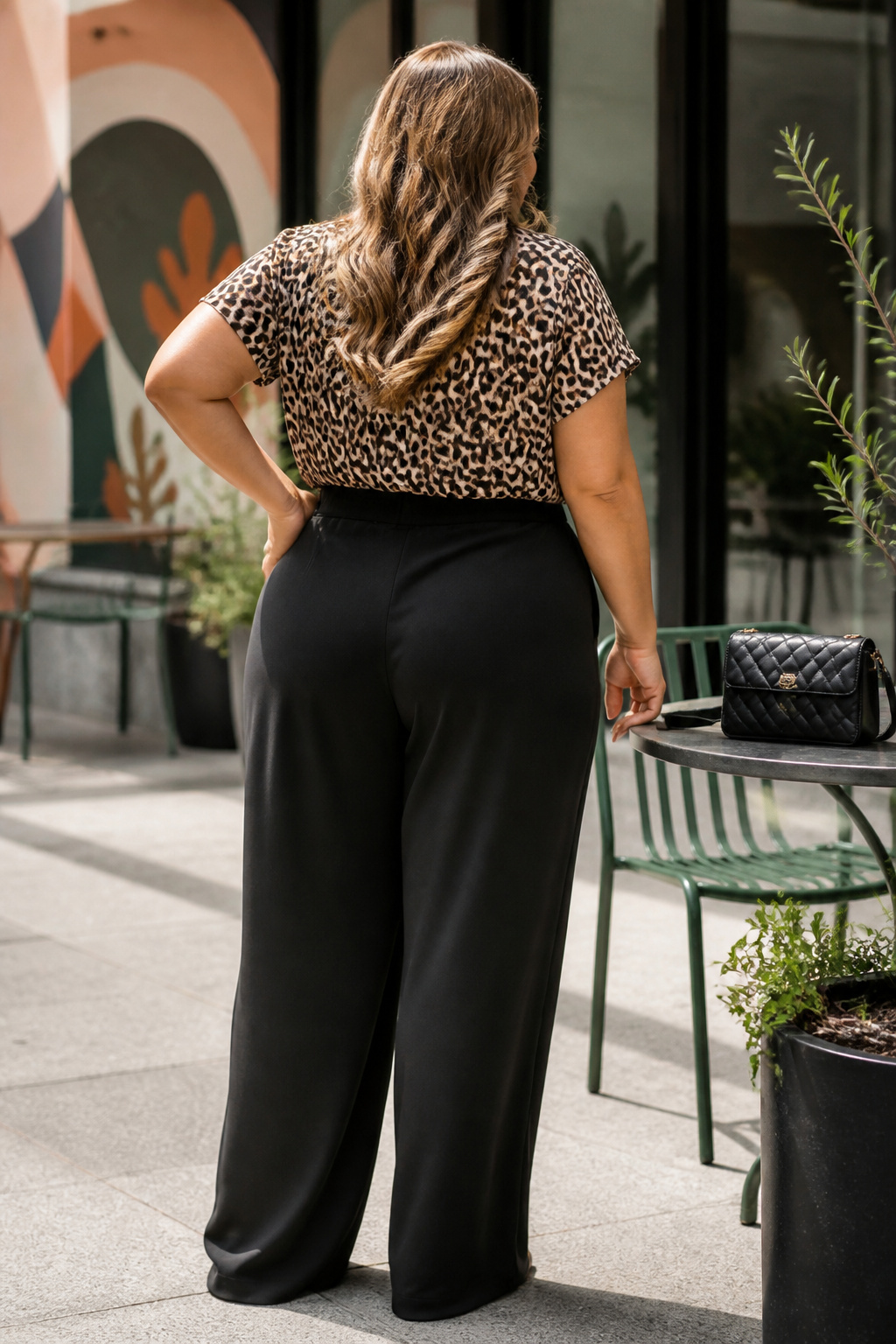
Leopard and snake prints have become my reliable summer workhorses in ways zebra and cheetah never quite managed. The difference sits in scale more than pattern: a mid-size leopard spot reads as a neutral you can pair with denim cutoffs or a linen blazer, while oversized zebra stripes fight harder for attention and date themselves faster. I learned this the hard way with a cheetah-print sundress that felt bold in 2023 and unwearable by the following June.
Colorway matters enormously. Natural browns and tans in leopard function almost as textured solids; they layer under cardigans without the visual noise of a floral. Snake in gray-green or blush, though, shifts the print into trend territory. It looks current for one season, then sits. I keep one snake blouse in that category and treat it like a statement piece with white jeans, not a building block.
The classic-versus-trend line maps cleanly to wear count. My natural-tone leopard wrap top has survived four summers because the palette doesn’t announce a year. A neon-accented zebra skirt I tried in 2024 lasted three outings before the colorway felt done. For a plus-size summer wardrobe built on repetition, the safer money stays on leopard and snake in subdued palettes, with scale small enough to read as texture from a few feet away.
How I Choose Fabrics
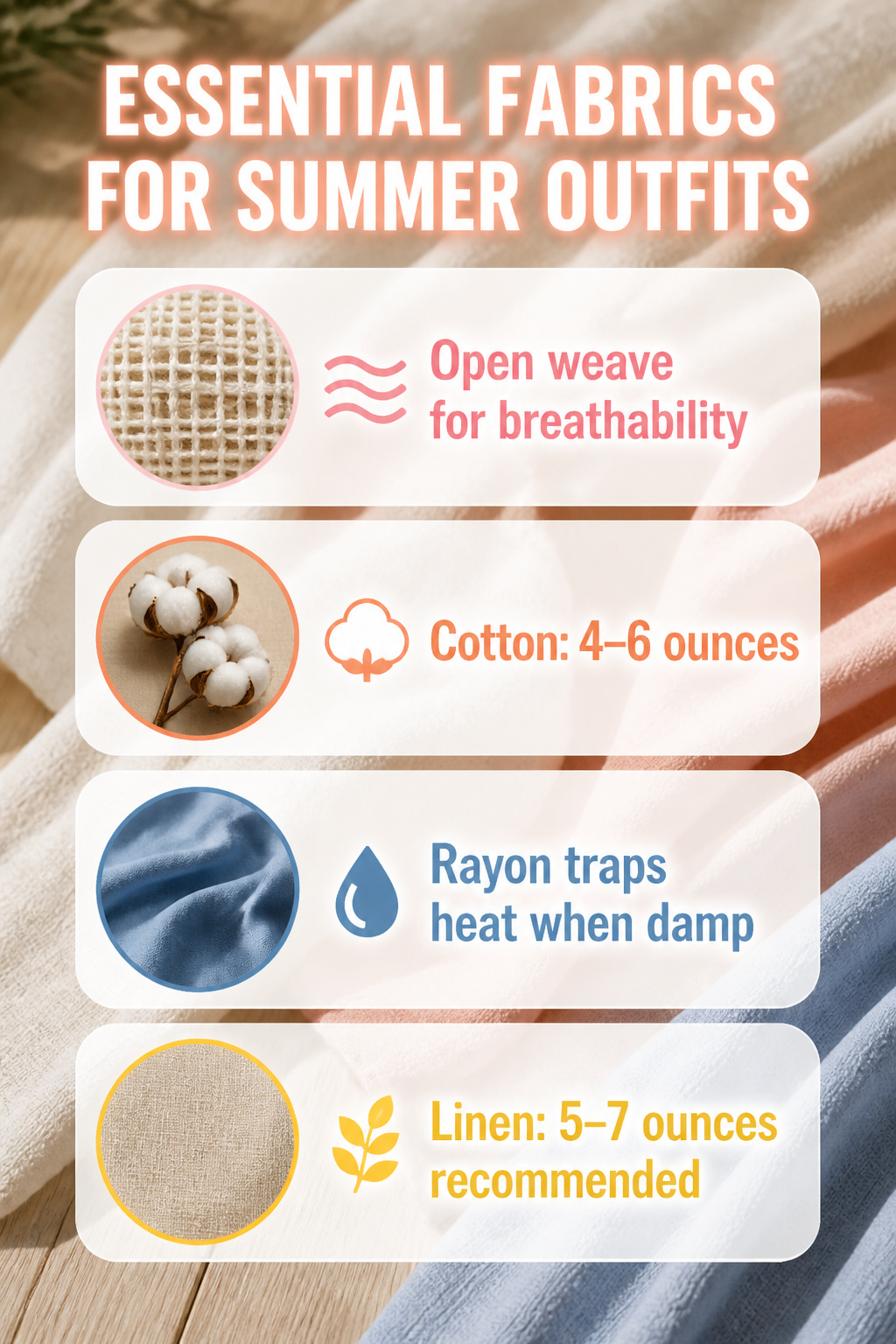
Lightweight fabrics only work if they actually breathe. The weave matters more than the fiber name. A loose, open weave lets air move through even a heavier cotton, while a dense, thin rayon can trap heat against the skin.
Cotton in the 4–6 ounce per yard range hits the sweet spot for summer tops and dresses. Linen around 5–7 ounces has enough body to keep its shape without turning into a crumpled mess by noon. The higher grades, like Belgian or Irish linen, soften faster but start out stiffer than standard linen.
Rayon and its cousins, viscose and modal, absorb moisture well and feel cool at first touch. The catch is how they behave when damp. They cling, they stretch, and they take longer to dry than cotton. I skip rayon for anything that needs to look crisp after a walk from the car.
Muslin, mentioned in the old summer formulas, is essentially a very lightweight plain-weave cotton. It works for loose cover-ups but tends to go sheer or lose shape after a few washes.
For long sleeves or full-coverage pieces in July heat, linen or cotton in an open plain weave or gauze construction gives coverage without the greenhouse effect. A long-sleeved linen top in a 5-ounce open weave stays cooler than a short-sleeved cotton jersey in a dense knit, even though the jersey shows more skin.
Why Dresses Carry Summer
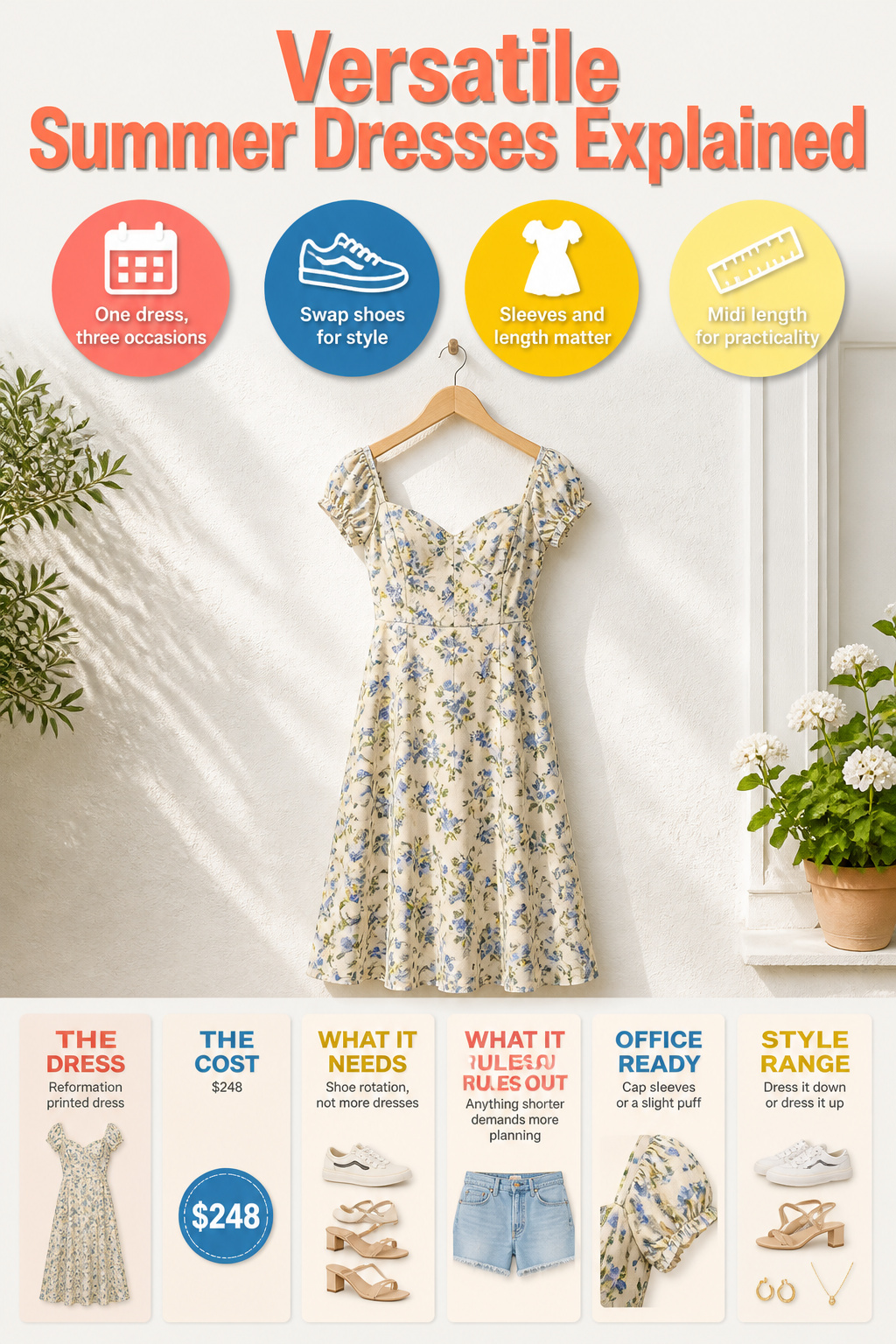
A single dress in your closet can hit three different registers before noon if you plan it right. The Reformation printed dress at $248 works for a morning appointment, a lunch, and a dinner date because the cut stays quiet while the shoes and jewelry do the talking. Swap in sneakers like Vans for errands, then switch to something strapped and minimal for evening. Tanesha Awasthi built a whole approach around this: the dress stays, the context changes.
The same holds for florals, which Hannah Godown styles down with white leather or up with nothing more than a heel swap. The dress itself does not read "casual" or "dressy" until you tell it which one to be. The money sits in shoe rotation, not in buying more dresses.
What separates a dress that multiplies from one that sits is sleeve and length. Cap sleeves or a slight puff carry you into offices; a tank cut needs a layer. Midi length is the practical compromise for summer heat and subway stairs. Anything shorter demands more planning than a single piece should require.
Color and Accessories I Actually Use
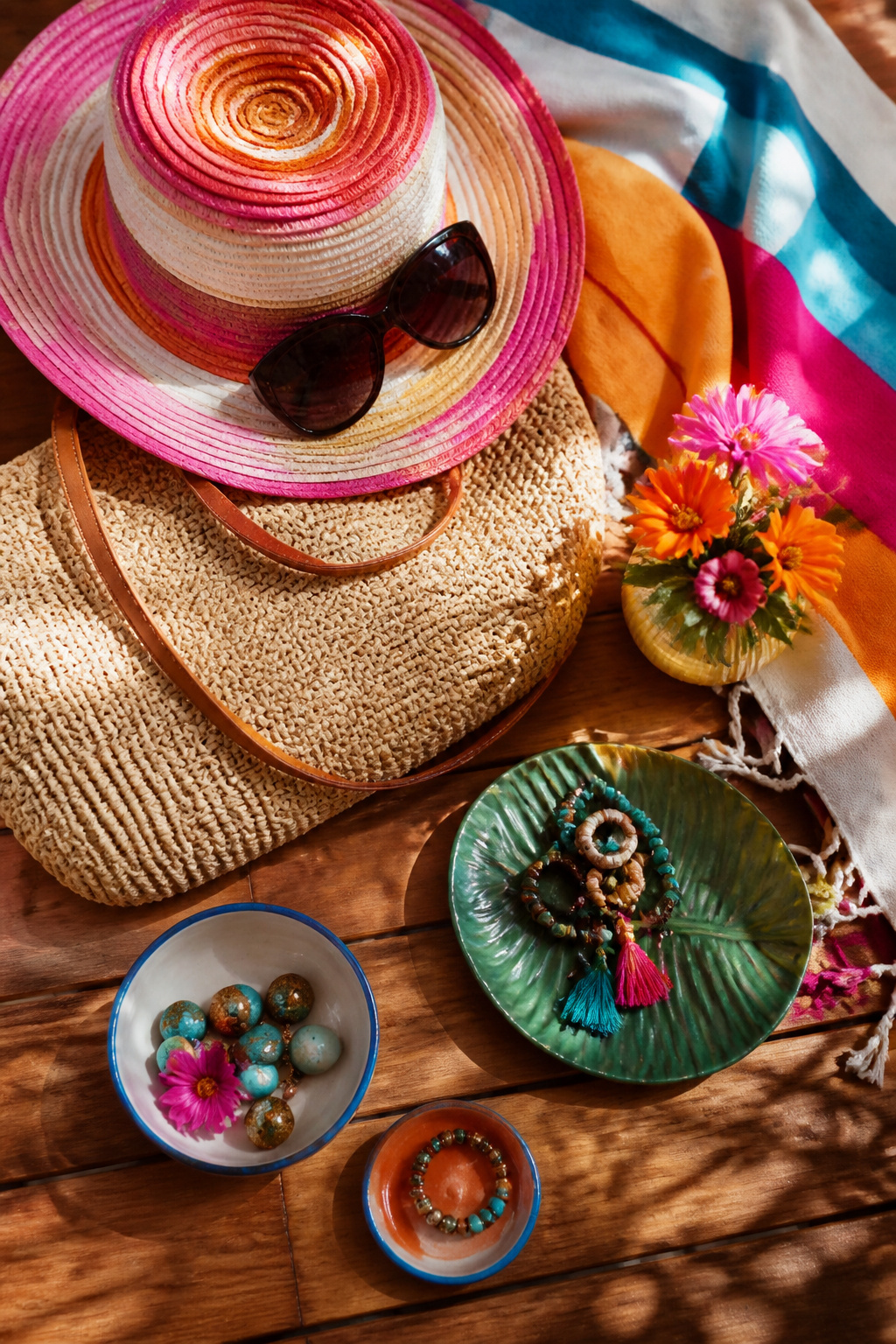
A pair of sunglasses that actually fits a wider face changes the whole look of a summer outfit without adding a single layer of fabric. I learned this the expensive way, after three pairs of standard-width frames that sat too tight and left marks on my temples. The temple arms need at least 145mm to clear a wider face comfortably; anything shorter and the frames ride up or pinch.
Scale matters with bags too. A tiny crossbody against a larger frame can look accidental, like you borrowed a child’s purse. I go for medium-structured totes or slouchy hobos that hit near the natural waist, because the proportion reads intentional.
For shoes, I treat color as the one place to experiment when the outfit itself is neutral. A coral slingback or mustard leather sandal adds personality without the risk of a full bright dress that might sit unworn. The shoe carries the color, then leaves with the shoe.
Bright color works best in summer when it is applied as a signature, not a costume. One saturated piece: a tangerine belt, a cobalt earring. Your eye goes there first, and the rest of the outfit supports it rather than competing. That is the difference between personal style and trend-following.
Frequently Asked Questions
What are some cute summer outfits for plus size?
A graphic tee tucked into wide linen pants with a clean waistline works for everyday, while a midi floral dress paired with low-top sneakers handles errands and lunch equally well. For evenings, a lightweight boat-neck sweater with cropped white jeans stays crisp when temperatures drop. A linen jumpsuit with extra room in the rise and a boho sundress with large-scale prints and off-shoulder necklines both rank among the strongest single-piece options.
How can I style a plus size outfit for summer?
Start with the waist: a half-tuck into high-rise pants or a belt placed exactly at your natural waist defines shape without adding volume. Match your belt and shoes in summer tones to keep the eye moving vertically rather than cutting across your widest point. For dresses, a 2.5-inch belt width hits the sweet spot on most plus-size frames, and lightweight fabrics like linen or silk crepe breathe better than cotton jersey or polyester satin. Accessories in white, whether a bag or shoes, make the colors next to them read cleaner.