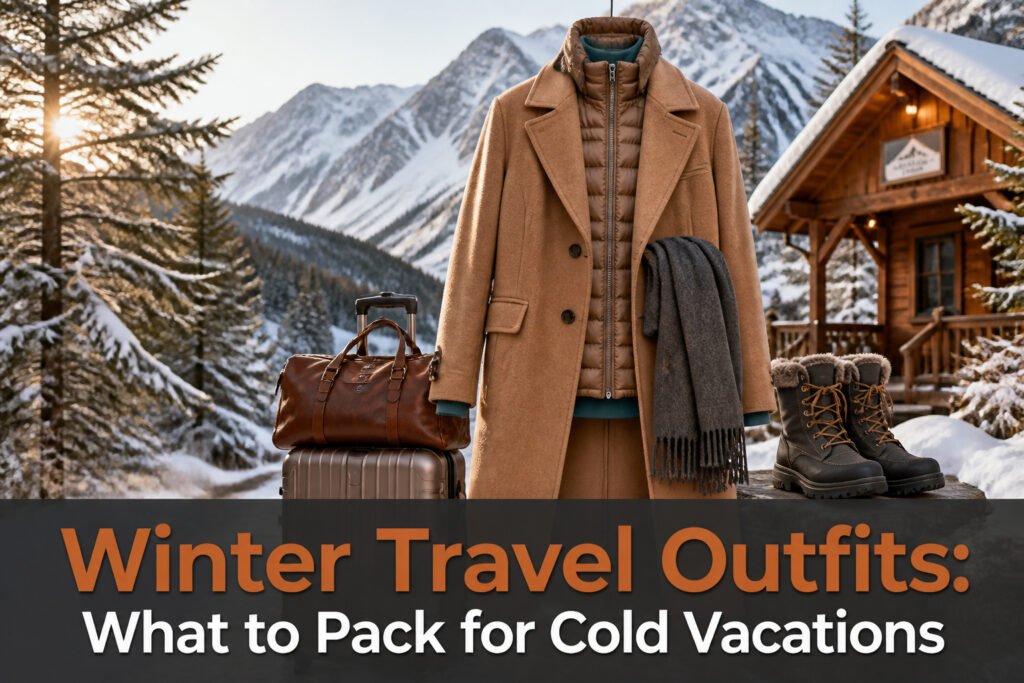
Winter travel outfits are systems of layered pieces that keep you warm without filling your suitcase. The mistake most people make is packing one bulky coat and calling it done, when a merino base layer, a packable puffer, and a tailored wool coat actually take up less room and handle more situations. I learned this after watching a $225 Sorel boot earn its keep from snowy sidewalks straight to dinner, while the equestrian pair I almost packed would have slowed me down at every TSA checkpoint.
Base Layers

Merino wool and thermal fabrics sit against your skin for a reason: they pull sweat outward so it can evaporate instead of chilling you from the inside out. That moisture-wicking property is what separates a base layer from any long-sleeve shirt you already own, and it is why I pack two base layers as a practical minimum for any winter trip.
Two gives you rotation while one dries. The pairing that works is one merino layer and one lighter synthetic or Heattech-style layer, so you can match the weight to the day rather than doubling up on bulk. Merino regulates temperature across a wider range than anything else I have found, which matters when you step from freezing streets into overheated cafes. The lighter layer serves the same purpose in milder conditions or washes faster in a hotel sink.
The mistake is assuming any tight-fitting top will do the job. Cotton holds moisture; it will leave you damp and cold within an hour of walking. Merino or a purpose-built thermal is the only fabric that earns space in your bag.
Sweaters

Cashmere and chunky knits are the mid-layer workhorses that let you dial warmth up or down without changing everything else. A lightweight cashmere cardigan layers neatly under a streamlined coat for dinner out, while a chunky knit over a simple tee handles snowy sidewalks without requiring a puffer.
The trick is choosing knits that are warm but not too bulky to restrict your arms or bunch under outerwear. Merino wool and cashmere blends breathe well and pack down small, so one or two pieces earn their carry-on space. I look for styles that can be tucked into trousers for a polished city look or thrown on with leggings for a long travel day.
If you’re spending real time outdoors, a fleece-lined jacket or merino sweater adds insulation that still slides off easily when you step into overheated shops or restaurants. The same piece that kept you warm at a Christmas market should look intentional at the hotel bar later.
Puffer Jackets
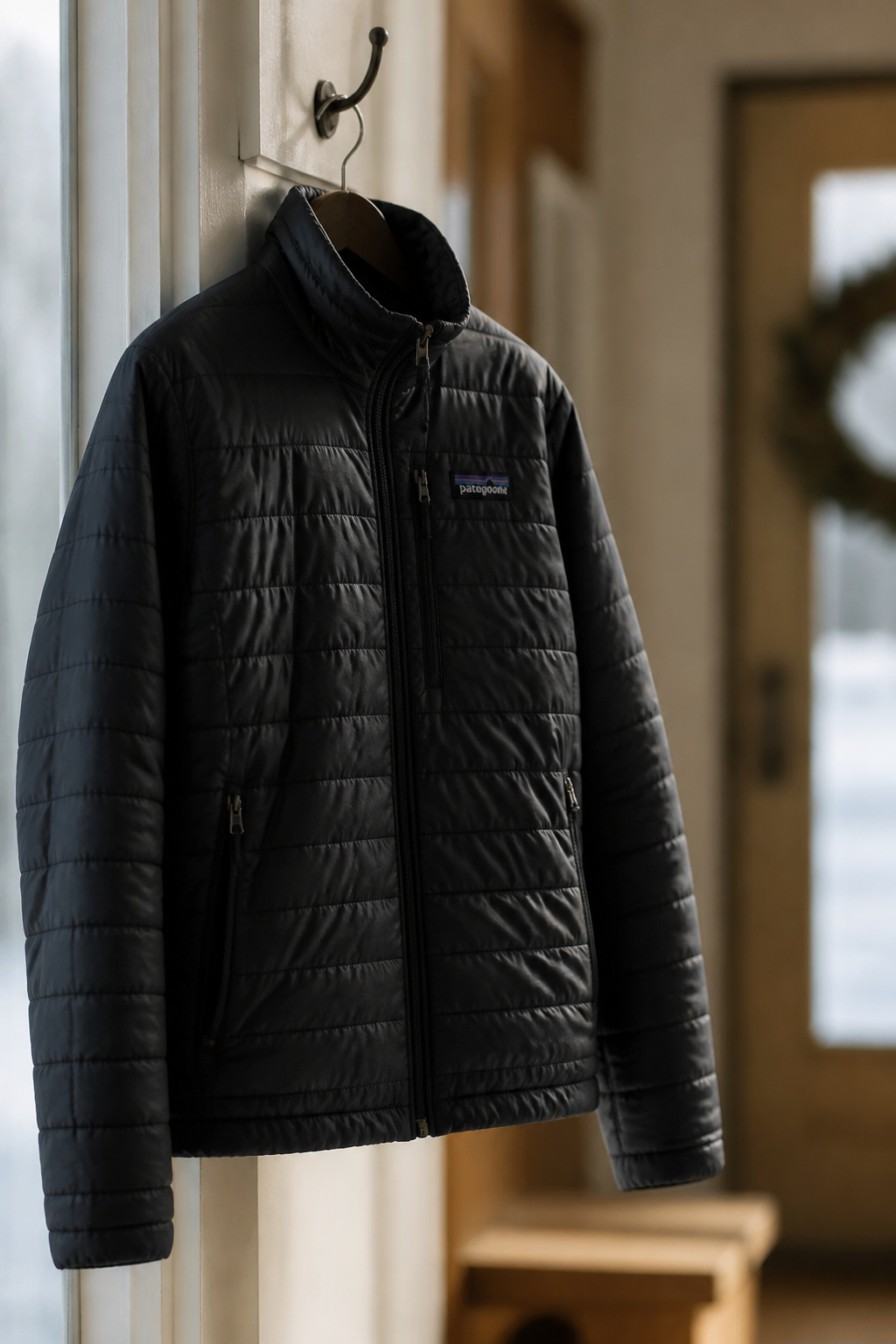
A packable puffer solves the winter travel coat problem in one move. The Patagonia Nano Puff compresses into a small bag, which matters when you’re flying from a warm-weather home and have no suitcase room to spare for a second coat. The warmth-to-weight ratio is the real surprise here: these jackets look thin but hold heat once you layer a fleece or sweatshirt underneath. I first noticed how much this mattered when I was reading through packing lists for cold trips and saw the same complaint over and over, bulky coats eating half a carry-on. The Nano Puff came up repeatedly as the fix.
A compressible jacket like the Nano Puff can be packed down into a small bag, making it a must-have for travelers with little suitcase room traveling from a warm-weather destination or bringing multiple coats along.
For your own trips, this means one coat handles airport climate changes, outdoor walking, and restaurant interiors without the weight penalty. Water-resistant fabric and a detachable hood extend it further: the hood comes off for city dinners, stays on for snowy trails. A waist-length cut works for active days; longer lines block wind better in open places. Black layers cleanly over jeans and a turtleneck, which is one less decision on vacation.
Wool Coats

A tailored wool coat is the piece that moves a winter travel outfit from practical to presentable. Puffers keep you warm; wool keeps you appropriate.
I learned this the hard way in Stockholm, where a camel wool overcoat carried me from morning coffee to late-night dinner without a change. The same merino turtleneck and dark jeans read casual under a puffer and polished under wool. A coat that fits over a blazer is the one worth packing for any trip mixing business with leisure.
Double-breasted styles from J.Crew give more structure if your itinerary includes meetings or reservations where appearance counts. For something simpler, the & Other Stories Voluminous Coat layers well over leather jackets and runs large, so sizing down keeps the line clean. Toteme and Nour Hammour sit at higher price points, but the fabric and cut justify the cost if you travel often enough to amortize it.
Neutrals maximize what you can repeat: camel, charcoal, black, or gray pair with everything you already own. A belted wrap coat doubles as evening outerwear, while plaid or check adds personality without drifting into trend territory. The right wool coat does not compete with your outfit; it completes it.
Jeans

Dark wash, straight-leg denim is the single pair worth making room for when your suitcase is already half boots and sweaters. The color reads intentional enough for a reservation dinner, and the cut leaves the ankle opening where it belongs: sitting cleanly above a snow boot shaft without bunching, or dropping over a heeled bootie without dragging.
A straight leg also solves the slush problem. Cuffed hems from Mother Denim stay clear of wet pavement in navy, brown, or merlot tones that play surprisingly well against gray winter palettes. The Paige dark wash I reach for most often does the same job if you prefer a cleaner hem.
What seals the versatility is the waist-to-ankle line. Straight denim doesn’t fight the volume of a puffer or a heavy wool coat the way skinnier cuts can, and it won’t swallow a fitted crewneck the way wide legs sometimes do. One pair, three shoe heights, and you’re covered from museum mornings to the kind of evening where you end up at a bar you didn’t plan on finding.
Durable Boots

Waterproofing, insulation, and traction are non-negotiable in winter travel boots, and the gap between "warm" and "travel-friendly" is where most packing mistakes happen. A boot that keeps feet toasty on a sledding hill can still fail at an airport security checkpoint or eat half your suitcase.
The Sorel Caribou Royal Boot at $225 is the piece that threads that needle. Seam-sealed waterproof leather blocks slush, 6mm felt liners hold warmth below freezing, and the outsole grips ice instead of sliding on it. The quilted padding and metal hardware read as deliberate design rather than pure utility, which matters when one pair has to carry you from a snowy sidewalk straight to dinner.
What makes boots genuinely travel-ready is shape. Equestrian boots photograph well but pack poorly and slow you down at TSA. The Caribou Royal’s slimmer lace-up silhouette still works with jeans or a midi skirt, and it comes in orange, beige, or black if you want to build around one neutral or add a single accent piece.
Before you pack any boot, wear it on wet pavement for ten minutes. If you’d hesitate to keep it on through a restaurant meal, it stays home.
Accessories

A scarf that doubles as a blanket on the plane has saved my neck on more than one freezing tarmac wait. That neutral base layer of winter travel outfits gets its real personality from what you wrap around it. One bright scarf turns the same coat and jeans into something photographable, which matters when you are wearing essentially the same five pieces for a week.
Merino wool gloves are the specific piece worth packing carefully. The Smartwool Merino 250 pair weighs 1.9 ounces, runs touchscreen-compatible fingertips that actually work, and tucks under sleeves with a longer cuff so wind stops at your wrist. Machine washable matters more than you would think when you are pulling them on daily.
A beanie that fits inside your coat pocket gives you options without bulk. Two scarves, one neutral and one with some color, let the same base outfit read as classic one day and playful the next. The accessories do the adapting so your luggage does not have to.
Athleisure
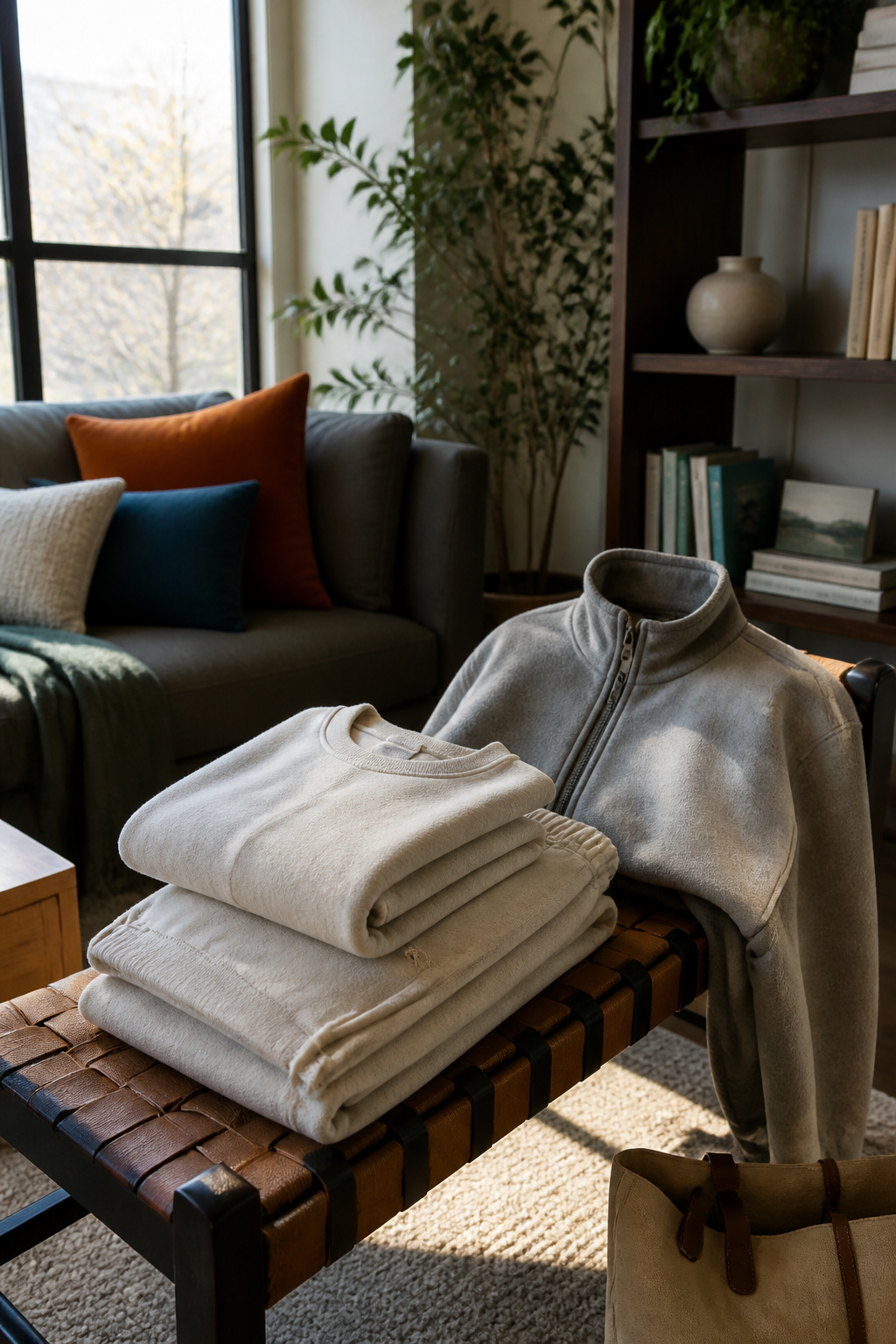
A matching loungewear set in soft French terry reads intentional where sweatpants read like you rolled out of bed. The difference is fabric weight and ankle taper. Joggers that narrow cleanly at the ankle, paired with a crewneck that hits at the hip rather than mid-thigh, keep the silhouette structured enough for a train platform or airport gate.
Neutral shades do the heavy lifting here. Charcoal, oatmeal, or winter white let the same set move from your seat to a coffee line without announcing itself as pajamas. I add a cropped jacket or longline cardigan on top; the layering breaks up the monotony and adds the polish that separates transit clothes from hotel room clothes.
Sneakers ground the look, but the real test is where you wear it after arrival. This works for sightseeing in a casual city or a low-key dinner if the fabric has recovery and the fit is roomy without being slouchy. It fails at anything requiring a reservation or a coat check. The jogger set is for the travel day, not the destination, and packing it means admitting you’ll change before the real plans start.
Winter Dresses

Sweater dresses and midi knits solve the winter travel dilemma almost everyone asks about: whether dresses even belong in cold-weather luggage at all. They do, with one condition. Thermal tights and tall boots are non-negotiable—without them, the look freezes; with them, a ribbed turtleneck dress becomes a polished dinner option even in snowy cities.
The Everlane cashmere-blend turtleneck dress, a 60% recycled cashmere and 40% extra-fine merino wool mix, is soft enough to wear against skin but keeps enough structure that you won’t look rumpled by hour three. It shakes out wrinkle-free, which matters more than it should after a cramped flight. Winter white, charcoal, camel, and chocolate brown hide travel stains better than black, a counterintuitive choice that actually works.
A midi wool dress layered under a long coat reads feminine without sacrificing function. One dress carried for variety balances a wardrobe otherwise heavy on pants and sweaters. The real advantage is decision fatigue: one piece that dresses up with boots and earrings or stays casual with sneakers for museum mornings. That flexibility is worth the space it takes.
Layering Without Bulk

Thin merino wool sits right against the skin and pulls sweat away before it turns cold. That base layer is doing two jobs at once: keeping you dry and giving the next piece something smooth to glide over. A mid layer of soft knit or fleece traps heat without the marshmallow silhouette of a single thick sweater. The outer shell handles wind and drizzle, and because each piece is slim, you can peel off layers in a heated café without changing your whole outfit. I used to pack one bulky cable-knit and call it done. Now I travel with Uniqlo Heattech or a fitted cashmere turtleneck underneath, a lightweight quarter-zip in the middle, and a water-resistant coat on top. The whole stack takes less room than that old sweater did, and the look stays clean from a morning market to a table at lunch.
Packing Heavy Items

Wearing my heaviest boots and coat onto the plane frees up the space those two items would have swallowed in my luggage. A long wool coat from Quince, for instance, is warm enough for city sightseeing but bulky enough that I’d rather carry it on my shoulders than squeeze it into a suitcase. The same goes for waterproof boots, which I need at the destination but don’t want to pack.
Compression packing cubes earn their place in winter specifically because cold-weather fabrics don’t compress themselves. Thick sweaters and thermal layers need that extra squeeze to stay manageable, unlike the thin cottons I’d pack for summer. The cubes keep the bulk from overwhelming my luggage space, which matters more when every item I’m bringing is inherently thicker and heavier.
Color Palettes That Work
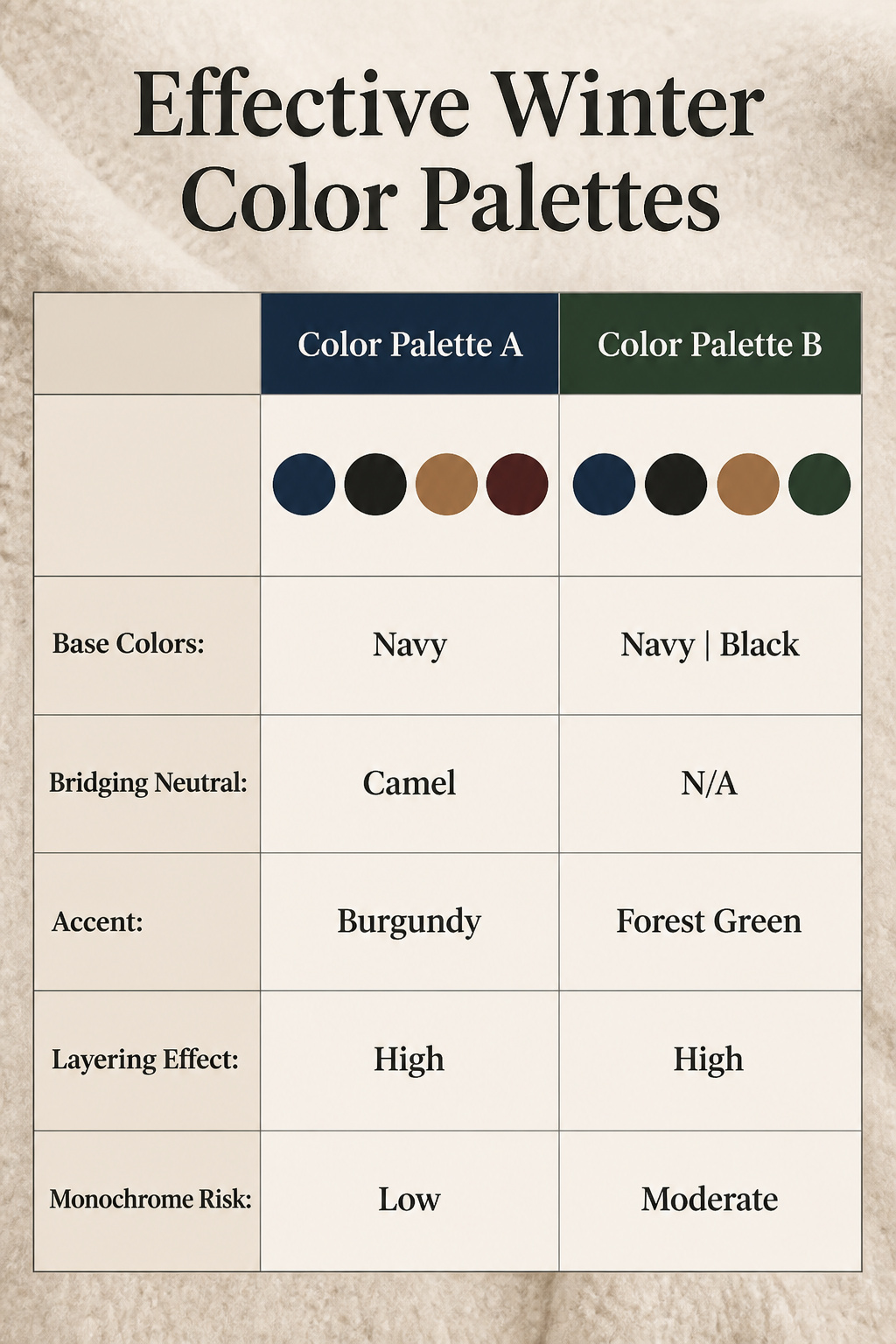
A tight color palette turns nine separate pieces into thirty-plus wearable combinations. The trick is choosing hues that layer without clashing and read as intentional rather than repetitive.
Stick to two neutrals, one near-neutral, and a single accent. For winter travel, navy and black pair as your anchors, camel steps in as the bridging tone, and burgundy or forest green handles the moments you want something less expected. This covers your puffer, your wool coat, your base layers, two sweaters, two bottoms, boots, and a scarf without any two items looking like duplicates. A quilted bomber in navy sits differently against black jeans than a black wool coat over navy cords, even though the colors repeat. The camel scarf and boots keep the palette from flattening into monochrome, and that single burgundy sweater becomes the piece that makes an outfit look considered rather than assembled from a checklist.
The green, navy blue, and black scheme works particularly well for shorter quilted jackets, where too many competing colors would make the silhouette feel busy. Keeping the palette this tight also means you can pack one pair of boots that works with every bottom and every outer layer, which matters when luggage space is already going to your coat.
Boots Versus Conditions

The trouble with boot advice for winter travel is that it treats every cold trip like the same cold trip. It is not.
City walking on cleared sidewalks asks for something different than snow that sits for days. Water-resistant Chelsea boots with rubber soles handle slush and light accumulation well enough, and they look polished enough for a restaurant reservation afterward. Blundstone makes the pair I see referenced most often for this exact split duty.
Real snow depth changes the math. Insulated knee-high boots or shearling-lined styles keep feet warm when you are standing in actual accumulation, not just crossing a salted street. The sources disagree on whether one pair can span both worlds: some palaces use heeled boots on cobblestone and regret it, while others report that a single lace-up waterproof boot carries them from snowy adventure to city walk.
Here is how the trade-offs break down.
| Condition | Chelsea/Ankle Boot | Insulated Knee-High |
|---|---|---|
| City walking on cleared paths | Good | n/a |
| Snow or slush | Fair | Good |
| Indoor time, dinners out | Good | Bulky |
| Traction on ice | Good | Good |
| Packing space needed | Less | More |
Two pairs earn their place if your trip mixes deep snow with restaurant evenings where a tall boot looks wrong. Otherwise, wearing your one substantial boot on the plane and tucking a sleek ankle style into your bag covers most winter travel without the luggage penalty.
Frequently Asked Questions
What clothes are essential for winter vacations?
Pack two moisture-wicking base layers, one or two warm but compact sweaters, a packable puffer and a tailored wool coat, one pair of dark straight-leg jeans, waterproof insulated boots, and a small rotation of scarves and gloves. Each piece should earn its place by working across multiple outfits and conditions.
How can I stay warm without compromising style?
Layer slim pieces instead of wearing one bulky item. Thin merino or Heattech against your skin, a soft knit or fleece mid layer, and a water-resistant shell on top trap heat without the marshmallow silhouette. A tailored wool coat over the same base layers instantly polishes the look for dinner or meetings.
What is the best footwear for winter travel?
Waterproof, insulated boots with rubber soles and real traction are the only choice for snow and slush. The Sorel Caribou Royal Boot at $225 blocks water, holds warmth below freezing, and grips ice while still looking deliberate enough for restaurants. Wear your heaviest pair onto the plane so they do not eat suitcase space.
Can I wear dresses on winter vacations?
Yes, if you pair them with thermal tights and tall boots. A ribbed turtleneck dress or midi wool knit works for dinner in snowy cities when layered this way. The Everlane cashmere-blend turtleneck dress shakes out wrinkle-free after a flight, and winter white or camel hide travel stains better than black.