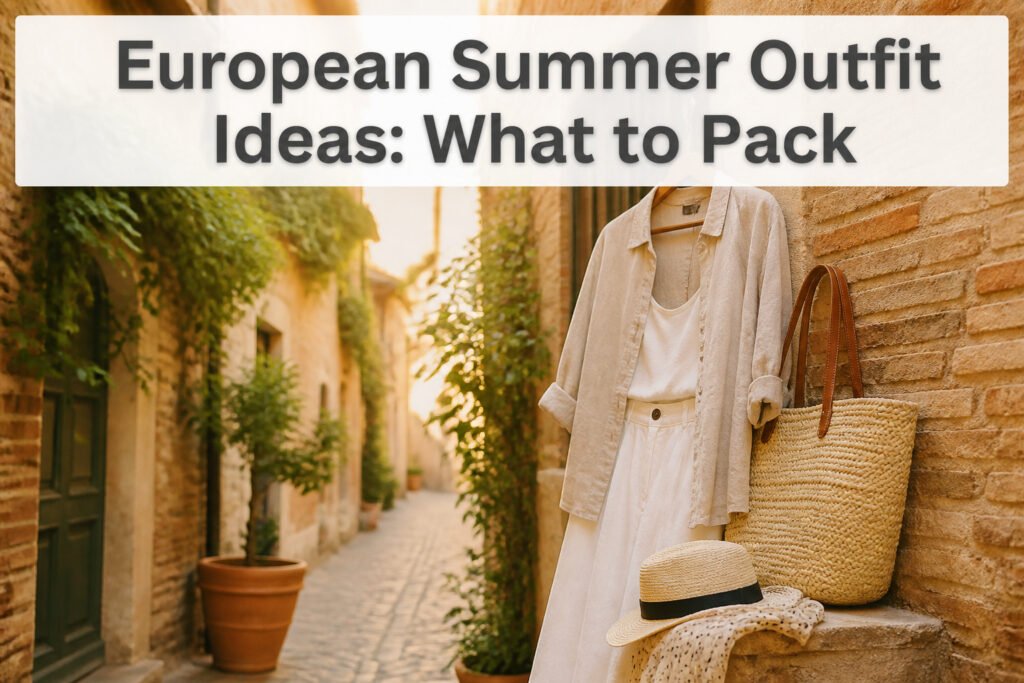
The ten-piece wardrobe is the ceiling that actually works for a European summer: four tops, three bottoms, two dresses, and one layer, with shoes kept outside the count entirely. That math only holds if you re-wear without announcing it, which means the striped linen top with white pants on Tuesday has to read completely different against a midi skirt Thursday evening when the shoes and earrings shift. I learned that the hard way in Rome, when a paper-thin white tee went see-through in afternoon light and I spent the walk back hugging my tote to my chest.
1. Linen Dress

A linen dress breathes in heat the way synthetics never will; the fiber pulls moisture off skin and dries fast, which matters when a museum morning turns into an unshaded queue at noon. The cut matters more than the color here. A mini with a defined waist suits narrower shoulders and shorter torsos, while a midi or maxi with a slightly dropped waist balances broader hips and adds length for taller frames. I pack both lengths so the same dress that looked right with flat sandals at ten works at eight with espadrilles and a thin gold chain swapped in.
The wrinkle reality is real. Linen arrives rumpled and stays rumpled; that is the look in Provence, but less so at a candlelit table in Milan. I handle it two ways. Downy Wrinkle Release in travel size works in a pinch, sprayed and tugged smooth. A travel steamer is better when the hotel outlet cooperates. Neither removes every crease, so I choose the rumple-friendly cut over the one that needs crisp lines to hold its shape.
2. Swimsuit

A black one-piece swimsuit goes into every European summer suitcase of mine, even when the itinerary looks like nothing but cities and museums. Hotels from Lisbon to Berlin keep their pools open through September, and a morning lap beats another crowded café queue. The one I reach for most is a sleek, sculpting cut that fits true to size in an 8. It reads like ready-to-wear under sheer or open-weave linen: throw on relaxed white pants or denim shorts and you are seated for lunch without a change. That swim-to-lunch trick only works with a suit styled like a bodysuit, so skip anything with hardware, loud prints, or ties that fight a waistband. For affordable backups, Old Navy and Abercrombie stock clean options that pass the same test.
3. Basic Tees
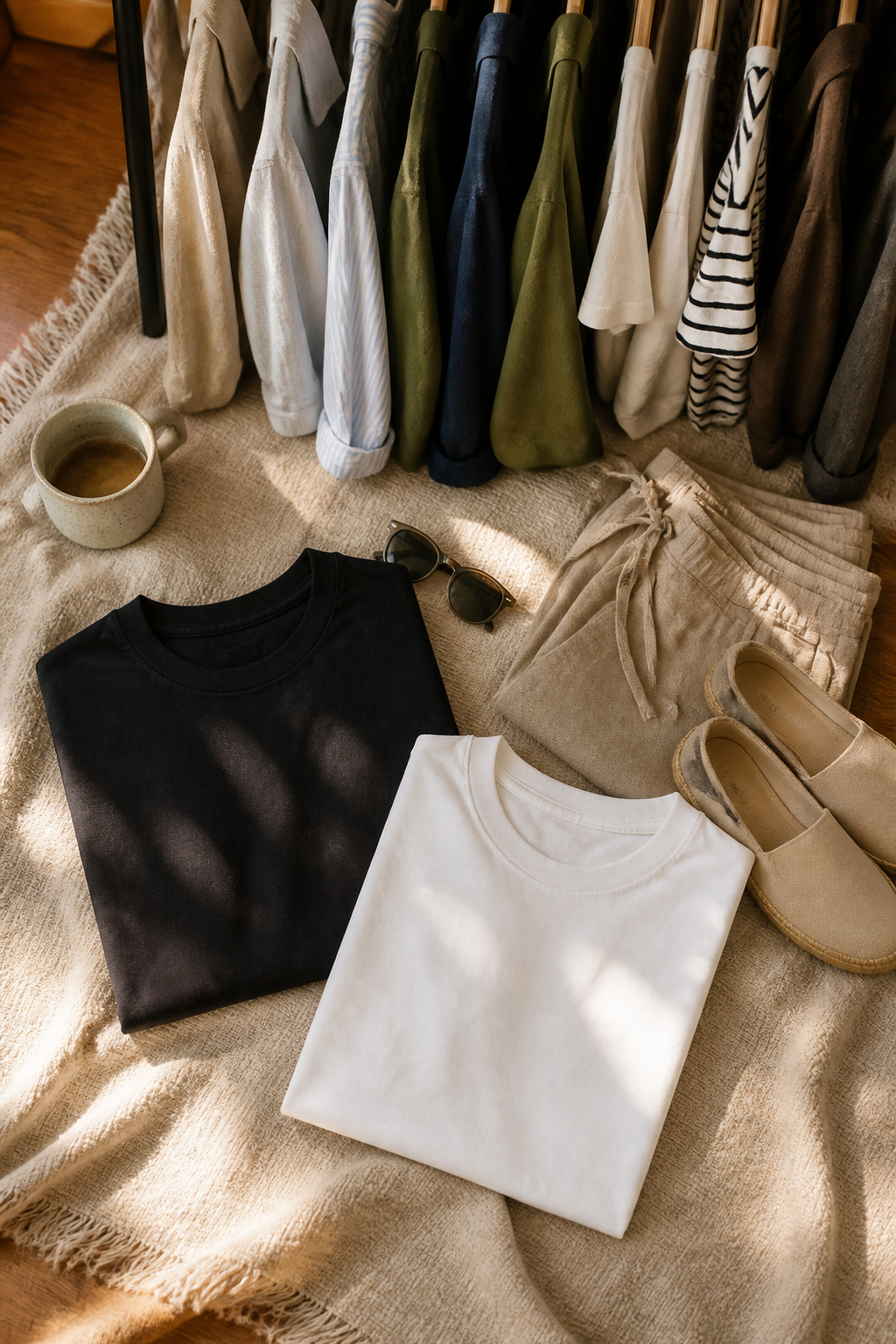
A black tee and a white tee, both in a mid-weight cotton that holds its shape through ten days of folding and re-wearing, are the first things into my bag. The fabric matters more than the label. I learned that the hard way in Rome, when a paper-thin white tee went completely see-through in afternoon light and I spent the walk back to the hotel hugging my tote to my chest. That one stayed in the hotel bin; the shirt I’d actually planned to re-wear three more times.
For a ten-day trip, two tees are enough if the cotton has real substance. The slightly longer sleeves on a well-cut version read polished enough for dinner when paired with linen trousers, and they layer cleanly under a lightweight jacket without bunching at the shoulder. Black handles the travel days and evenings; white does the daytime café stops. Neither should be the cheapest option on the rack, because thin cotton betrays you exactly when you need it most.
4. Linen Pants
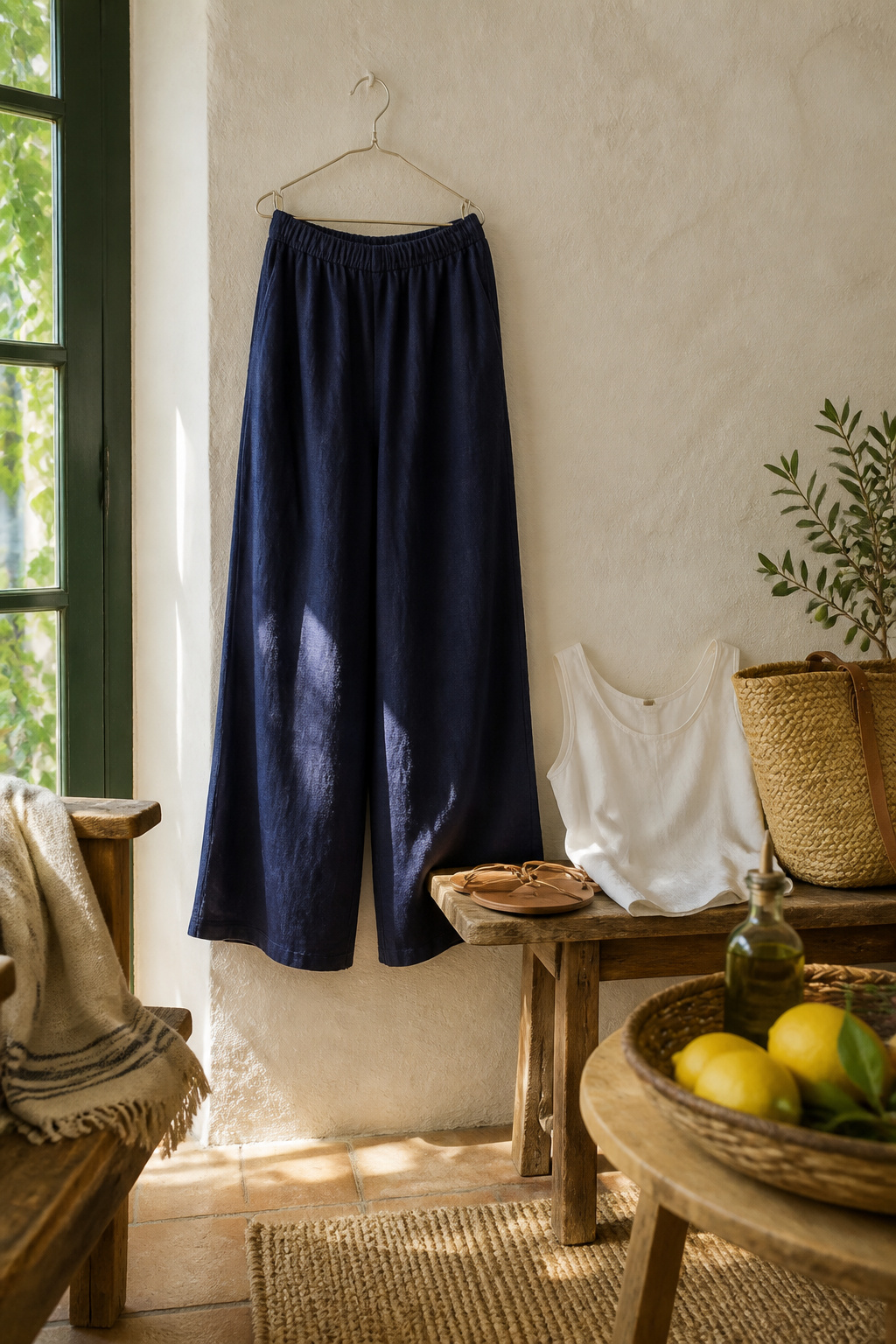
Linen pants are the piece I reach for first when European summer heat hits. Wide-leg or straight cuts drape better after a long train ride than anything fitted, and they pair with nearly anything already in the suitcase. A 27-inch inseam lands right at the ankle bone in flats, which is the length that keeps you from tripping on cobblestones while still looking intentional.
The color choice matters more than I expected. I bought a pair in pale oatmeal that seemed perfect for Rome, and every espresso drip, every metro handrail, every splash of olive oil showed up like a neon sign. Go darker than you think you need.
Wide-leg beats tapered for European summer for one practical reason: airflow. The same cut that looks dramatic at a seaside dinner keeps your legs from sticking together during twenty-thousand-step sightseeing days. Tapered linen traps heat against the calf; wide-leg lets it move through. Wear them over a bathing suit for lunch, tucked with a tank for museums, or with something sparkly after dark.
5. White Sneakers

A clean, minimal white sneaker handles cobblestones better than anything else in your bag. I walked eight miles daily through Lisbon and Porto in a pair of Common Projects, and by day twelve the leather had softened into the exact shape of my foot without looking beaten up. The creasing was there, but they still pulled together a linen dress for dinner and cropped trousers for museums.
What changed my packing strategy was the trip before, when I broke in a fresh pair of OCA Low White Premium Leather Sneakers on arrival. Blisters by day three, and I spent a week favoring one foot like a tourist who had not read the right advice. Now I travel only in sneakers I have already worn for at least a month, and I clean them the night before I fly. A pair that has already molded to you is the difference between ending the day ready for aperitivo and ending it in a pharmacy line.
6. Flat Sandals

Flat sandals are the second pair I would pack for a European summer, right after whatever sneaker is making the long-walk days possible. They bridge the gap between the dressy sandal you pull out for dinner and the shoe you actually want to wear for casual outings through warm afternoons.
The trouble is traction. Cobblestones are slick, uneven, and everywhere from Lisbon to Prague, and a smooth leather sole will send you sliding the second the stone is even slightly damp. I learned this in a pair that looked substantial enough in the hotel mirror but had me gripping my partner’s arm like a railing by the second block. The sole should flex when you bend the shoe, but the bottom surface needs ridges or a rubber composite that catches; in a store, run your thumbnail across the tread. If it skids smooth, your heel will do the same on wet granite.
Neutral shades or soft metallals stretch one pair across multiple outfits without demanding luggage space. That versatility matters when your total shoe count is two, maybe three if you are pushing it.
7. Sun Hat

A packable hat that folds into a tote without creasing is the only kind worth suitcase space. The Janessa Leone styles I keep seeing mentioned handle this well; they spring back after being stuffed beside sandals.
Brim width matters more than style. Three to four inches shades the neck and shoulders without turning every museum courtyard into a blind spot. Anything wider blocks sightlines when you’re already craning to read plaques or spot street names.
Boater shapes from Lack of Color or Brixton work for daytime city walking, but the beach is where I swap strategy entirely. Salt air stiffens straw over a week, so a scarf tied as a head wrap wins for coastal afternoons. Lightweight cotton or silk doubles as a sarong or church cover-up, and it dries flat in a hotel sink. The hat stays home for those days; the scarf covers the same ground with less bulk.
8. Hand Fan

A hand fan fits in the slimmest evening clutch and still moves more air than any pocket-sized battery fan I have carried. The cheap plastic ones from souvenir stalls break by day three, so I learned to look for painted wood and fabric that snaps open with real resistance.
The shop that changed how I use one was a tiny papel in Seville, run by a woman who fanned herself continuously while she talked. She showed me the flick of the wrist that pushes air toward your face without the elbow pumping that tires you out in ten minutes. The motion starts at the forearm, not the shoulder, and the fan closes in one sweep against the thigh when you enter a shop or church.
Battery fans whir and attract stares in a museum courtyard. A hand fan is silent, needs no charging, and doubles as a prop in photos besides. Mine has outlasted three phone batteries and two portable chargers.
9. SPF

Sunscreen is the step I used to skip until a burn ruined three days of a trip to the Amalfi Coast. Now SPF 50 mineral formula lives in every bag I pack. Mineral sits on the skin instead of sinking in, which means it will not stain the white linen I wear almost daily in Europe. Chemical formulas have left orange streaks on two dresses; mineral has not.
I reapply every two hours when I am actually outside, and after swimming. For body coverage, I keep one bottle in my toiletry case and a portable powder in my crossbody for midday touch-ups without washing my hands. The face gets its own layer every morning, and again before any outdoor lunch that stretches past noon.
10. Straw Tote

A straw tote in the right size carries the morning’s market haul and still has room for a camera slipped in sideways. Mine fits a baguette, two pints of cherries, and the mirrorless I refuse to leave at the rental, with enough structure that nothing gets crushed at the bottom.
The lining matters more than I expected. Last July in Provence, a bottle of rosé tipped in the back of a taxi and the sealed nylon interior kept my phone dry while red wine pooled around it. Leather would have stained through in minutes, and the smell never leaves. That was the trip I stopped carrying my good leather bag in summer heat; sweat and sunscreen turn the handles dark, and repair shops in small towns are either closed or booked two weeks out.
Look for a flat base and a closure of some kind, even a simple magnetic snap. Open buckets look romantic until you’re jostled on a tram and your wallet slides out onto cobblestones.
11. Sunglasses
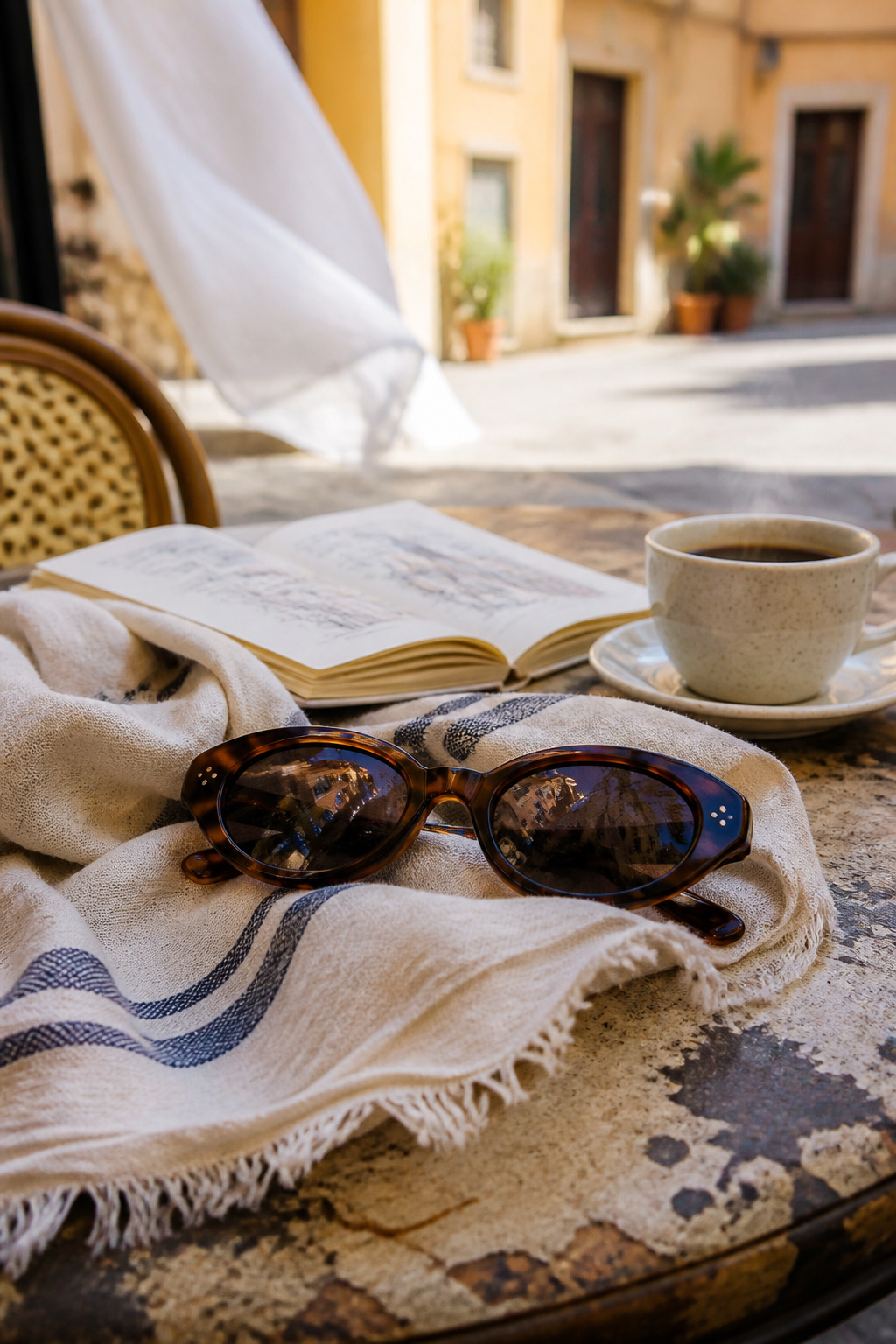
Oval frames suit my round face better than the oversized squares I used to grab off drugstore racks. The pair that died in Barcelona was wire-framed and lightweight, which meant I forgot they were on my head until I leaned back at a cafe table and heard the crack. UV 400 protection is the number that actually matters, not whether the lens looks amber or gray. A dark tint without that rating just dilates your pupil and lets more radiation in. My current pair is acetate, slightly heavier, and survives being tossed in a tote.
12. Reusable Water Bottle

A slim reusable bottle earns its spot in your bag for two reasons that matter on European streets: the heat and the price of still water. Most major cities now keep public fountains running, but the spouts are narrow. A bottle with a small mouth that actually fits under the stream keeps you from the awkward tilt-and-spill routine I watched a woman attempt outside the Pantheon.
The weight tradeoff is real. Stainless steel keeps water cold for hours, yet it adds noticeable heft when you are already carrying a straw tote and a hand fan through afternoon crowds. I have settled on a lightweight plastic bottle that disappears in my bag and costs nothing to refill.
At two euros per bottle, the math turns fast. Two refills a day over two weeks saves roughly fifty-six euros, enough for a linen dress or three proper meals. The savings are not theoretical; they are what is left in your pocket at the end of the trip.
13. Lightweight Sweater

A lightweight sweater in cotton, linen, or silk blend bridges the gap between a sunny piazza and a breezy seaside dinner without adding bulk to your bag. I learned the hard way in Sicily that the temperature drop after sunset is sharper than I expected, especially dining near the water. The fine-knit cardigan I packed stayed in my tote through the midday heat, then came out when the air conditioning kicked in at a museum or when evening arrived. Mornings that warmed quickly meant tying it at the waist rather than carrying it, which kept the look cohesive when I stuck to the same color family as my base outfit.
14. Packing Cubes

Compression packing cubes earned their spot in my suitcase after a trip where I unpacked an entire carry-on just to find one silk camisole. The set I use now has a second zipper that flattens the cube once it is filled, which matters more for European summer travel than I expected. Summer clothes are lightweight and compact already, so standard cubes work fine for structure, but the compression kind buys back space for whatever you pick up abroad. I label each cube on the outside with a washable fabric marker: tops, bottoms, underthings, evening. That way I can pull out a single cube at a hotel without disturbing the rest. The upfront planning, laying out outfits before I leave and photographing them in my phone’s notes app, is what makes the cubes actually function. Otherwise they become very tidy containers for very poor decisions.
Breathable Fabrics

Linen and cotton are the only fabrics that have ever made it through a full day of European summer without me regretting my choice. Linen in particular wrinkles the second you sit down, but that crumple reads as texture rather than mess once you are actually there; the same rumpled tee in a synthetic blend just looks slept in. Cotton poplin holds its shape better for dinners where you want to look deliberate, and lightweight denim works if the weave is open enough to let air through.
What leaves my suitcase now is anything that felt plausible under store lighting but betrays me by noon. Thick polyester traps heat and smells by afternoon. Heavy denim rubs at waistbands and inner thighs through ten thousand steps. Silk blends can work for evening, yet a humid 95°F day in Madrid turns them clammy against the skin. I learned to hold fabric up to the light in the fitting room: if I cannot see my hand through it, it stays on the rack.
Versatility

The 3-3-3 rule gets attention, but I have found ten pieces for ten days is the ceiling that actually works. Three tops, three bottoms, and three pairs of shoes leaves me one broken sandal away from a problem, and Europe in July does not forgive a single option.
My ten-piece count runs like this: four tops, three bottoms, two dresses, one layer. Shoes sit outside the number because they are the weight that tips the suitcase scale, not the math of the outfit. With those ten garments, the combinations stack fast. Each top hits each bottom for twelve pairings before the dresses add two more standalone looks. The layer multiplies the long-sleeve options by three or four depending on whether I count it over a dress. I stop counting around twenty-five usable combinations, which is more evenings than I will have in most ten-day stretches and enough that repetition becomes an active choice, not a confession.
The real discipline is re-wearing without announcing it. A striped linen top with white pants on Tuesday reads completely different against a midi skirt Thursday evening if the shoes and earrings shift. Sources that push packing light for Europe always mention the collapsible tote for shopping hauls, and they are right: the math only holds if I leave room to replace a piece that proves wrong in the mirror of a rental bathroom.
Comfortable Footwear

Cobblestones in Lisbon and the hills of inland Spain will eat delicate footwear alive. Temperatures climb past 95°F in Madrid, and your feet swell while you clock 10,000 to 20,000 steps a day. That math convinced me to stop treating shoes as an afterthought in my European summer outfit ideas.
My lesson came from a pair of ballet flats that looked perfect with linen dresses. By day three in Barcelona, I had a blister pattern that matched the shoe’s seam exactly, and I spent the rest of the trip hunting for bandages instead of tapas. Now I break in every pair before departure, wearing them on errands and neighborhood walks for at least two weeks. Leather softens; your gait reveals pressure points.
A clean sneaker with a wider front handles cobblestones and long days without apology. Flat leather sandals work for warm afternoons if the footbed has actual support, not just a decorative sole. For evenings, one dressy sandal or low heel upgrades the outfit, but I limit it to restaurants I can reach by taxi. Your feet carry every European summer outfit idea you packed. Protect them like the investment they are.
Layering for Evenings

Evenings in Paris and London drop far enough that a sundress alone stops working. A lightweight knit over your shoulders solves the temperature swing without the bulk of a jacket. A cropped cardigan drapes over a sundress or skirt and ties at the waist when the sun returns, something a blazer or denim jacket does awkwardly. Linen blazers dress up dinner, but they read as outerwear and eat suitcase space you could use elsewhere. Fine-knit cotton or silk blends layer in the same color family as your base outfit, so the look stays intentional rather than thrown-on. Skip anything that needs its own hanger.
Accessories That Work

A straw hat and a pair of sunglasses do more for a linen dress and sandals than any extra top ever could. The hat blocks sun during those midday walks across light-colored plazas where the glare off stone buildings can be blinding, and the sunglasses keep you from squinting through every outdoor lunch. Together they turn a basic outfit into something that looks intentional without adding any real weight to your bag.
The accessory rule that keeps my suitcase sane is simple: every piece has to earn its spot by doing at least two jobs, or it stays home. A lightweight scarf works as a sarong, a cover-up, or even a top in a pinch. Jewelry stays limited to simple gold layers I can wear daily plus one shell or stone piece that shifts the same dress from day to evening.
The one item that never gets packed is the pair I wear on the plane: my Celine sunglasses. They save space, survive the cabin dry eye, and mean I’m ready the moment I step off into actual sun.
Frequently Asked Questions
Can I wear sneakers in Europe?
Yes, and they are the best choice for cobblestones and long walking days. A clean, minimal white sneaker that you have already broken in for at least a month will handle eight miles daily without the blisters that fresh shoes guarantee. I travel only in pre-worn pairs now, cleaning them the night before I fly.
Do people wear shorts in Europe?
You will see shorts in warmer destinations like the South of France or Italy, though they tend to be tailored or polished rather than athletic styles. I personally reach for linen trousers or dresses more often; they feel more versatile and in line with the overall aesthetic in most European cities.
Do I need a jacket for Europe in the summer?
Yes, and most travelers underestimate this. Evenings in Paris and London drop far enough that a sundress alone stops working, especially near the water. I pack a lightweight sweater in cotton, linen, or silk blend that layers cleanly and ties at the waist when the sun returns.
How many outfits do I need for a summer trip to Europe?
Ten pieces for ten days is the ceiling that actually works for me. My count runs four tops, three bottoms, two dresses, and one layer, which stacks to around twenty-five usable combinations before you even count accessories shifting the look. The 3-3-3 rule leaves you one broken sandal away from a problem.
Is Europe dressy in the summer?
This depends on where you are, but Europeans generally look a bit more put together. The difference is in fabric and fit rather than formality; breathable linen that wrinkles deliberately reads as texture, while thin synthetic blends just look slept in. A polished sneaker with linen trousers passes in most cities where athletic shorts would not.
What is the 3-3-3 rule for clothes?
It is a packing formula calling for three tops, three bottoms, and three pairs of shoes that all mix and match. I find it too tight for a European summer; ten pieces gives me the buffer I need when one item fails or a temperature swing demands a different layer.
What shoes are best for a Euro summer trip?
A comfortable sneaker for sightseeing, a flat sandal with actual tread for warm afternoons, and one dressier pair for evenings. The sneaker must be broken in before departure; the sandal needs a rubber sole that catches on wet cobblestones. I limit dressy shoes to restaurants I can reach by taxi.
What is European chic style?
A polished, minimal approach that looks effortless yet intentional, built on well-fitting basics in neutral tones and quality fabrics like linen and cotton. The look relies on a few understated accessories, a packable hat, and the confidence to re-wear pieces without announcing it through repetition.
How do I pack light for Europe and still have cute outfits?
Build a small mix-and-match capsule in a neutral palette of whites, beiges, olives, and soft blacks, then add accessories that upgrade the look without adding weight. A straw hat and sunglasses turn a basic linen dress into something intentional; a lightweight scarf works as sarong, cover-up, or top in a pinch.