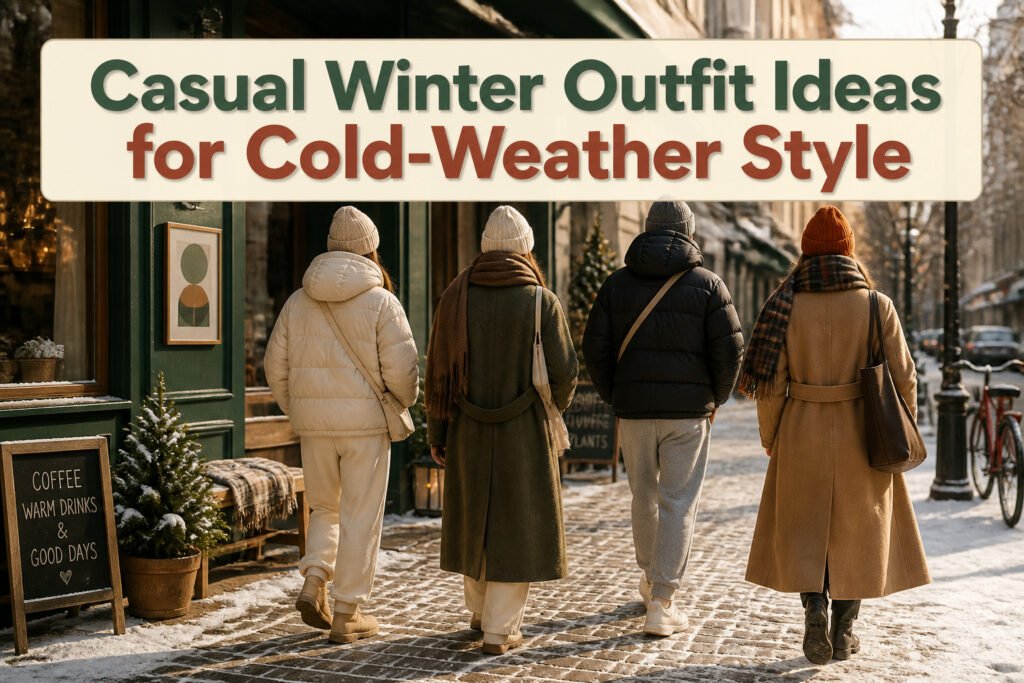
Casual winter outfits range from matching sweatsuits to wool trenches, and the deciding factor is how long you will be outside. A puffer with sweatpants works for a coffee run at 18°F; a merino base layer under a long coat is for standing at a bus stop while wind finds every gap. The Quince cashmere lounge set gets compliments because the color match is exact enough that people assume you planned it.
1. Puffer Jacket with Sweatpants and Sneakers

The Packable Puffer Jacket for Women earns its place in a weekend bag because it compresses small and still holds heat when you pull it out at a freezing airport gate. I pair mine with a matching sweatsuit, the kind in a heavier cotton blend that reads intentional rather than leftover from a workout. The sneakers make or break this: a leather or suede pair with some structure keeps the look from sliding into "forgot my real clothes at the gym." White leather trainers with a gum sole work; running shoes with neon accents do not. This combination lives in the space where warmth matters more than structure. Errands, travel days, a coffee run when the car thermometer reads 18°F. You are not dressing to impress. You are dressing so you do not have to think about being cold. The puffer’s cropped length keeps the proportions from drowning you in fabric, and the matching top and bottom give just enough cohesion that you look like you chose this on purpose.
2. Turtleneck with Blazer

A thin turtleneck under a blazer is the easiest way to make a piece work for both Saturday errands and a Monday meeting. The base layer sits close to the body, so the blazer on top keeps its shape without the bunching that ruins a silhouette. What convinced me, comparing dozens of these combinations, is that the blazer needs at least a half-inch of extra room through the shoulders to fit over even fine-gauge knitwear. Anything cut closer than that will pull at the seams the moment you reach for your coffee.
For the layering itself, a merino or silk-blend turtleneck in a neutral tone acts as the bridge. It adds warmth without the bulk of a cable knit, which means the blazer sleeves still slide on smoothly. I skip anything with a roll neck thicker than two fingers folded; it crowds the collar and the whole look collapses into discomfort. A cropped blazer works here if the turtleneck is tucked, but a standard hip-length cut is more forgiving of the slight bulk at the waistline. The outfit finishes with straight-leg denim for weekend wear or pressed trousers when the office calls; either way, the same two pieces carry it.
3. Pullover Sweater Outfit
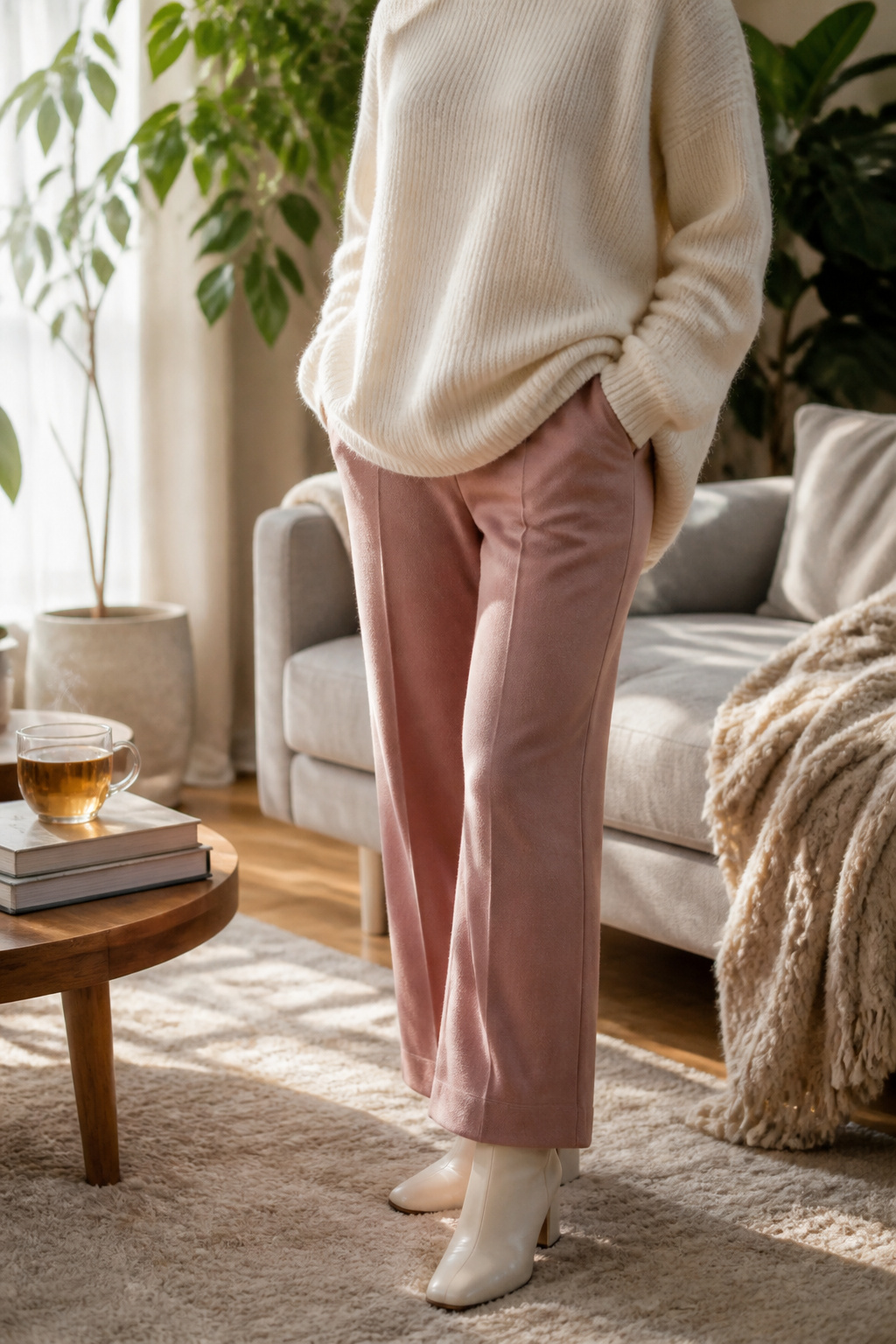
A pullover sweater with jeans is probably the outfit I reach for most mornings from December through March. The trick to keeping it from going flat is switching the shoe: chelsea boots one day, ankle boots the next, over-the-knee boots when I want to feel pulled together. Faux leather leggings swap in just as easily if I’m not in a denim mood, and the whole thing still reads as casual without looking like I gave up.
Trousers change the story completely. A louche pair of wool trousers with a sweater looks like I made an effort even though the comfort level is nearly identical to jeans. This is where where the hem hits becomes the decision that flatters or doesn’t: cropped wool pants with ankle boots can truncate a leg, while a full-length pair that breaks at the shoe elongates the same frame. For my shape, I need that continuous line; someone taller might have more room to play.
Over a dress, the pullover becomes a layering piece rather than the main event. Long-sleeved dresses in winter practically beg for this, and the sweater adds warmth without the bulk of a coat indoors. The cashmere lounge set direction is its own category, comfortable to the point of uniform status, but a regular pullover becomes an actual outfit when the pants and boots are doing their share of the work.
4. Woolen Trench Coat

A woolen trench reads dressier than it wears, which is exactly why it earns space in a casual winter lineup. The fabric gives structure that cotton gabardine never quite manages, yet the cut stays familiar enough to throw over weekend denim without looking like you got lost on the way to the office.
Length is where most people trip. Petite frames can disappear inside a full-length coat; the knee-length or mid-calf versions from lines like Bernardo or the Walker Coat at Macy’s keep proportions intact without sacrificing the lengthening effect trenches are famous for. Taller builds carry the longer hem more naturally, though even then a belt helps anchor the volume so the coat wears you less than you wear it.
What makes this piece practical is how it bridges contexts. The same coat layers over work dresses and high-waisted trousers on Monday, then opens over a striped sweater and cords by Saturday. Size down if you want a sharper shoulder line, or stay true and belt it for the borrowed-from-the-boys drape that works with knee-high boots underneath. This is the outer layer strategy in action: one coat, multiple interiors, no costume change required between the parking lot and wherever you’re actually going.
5. Sweater Vest with Trousers
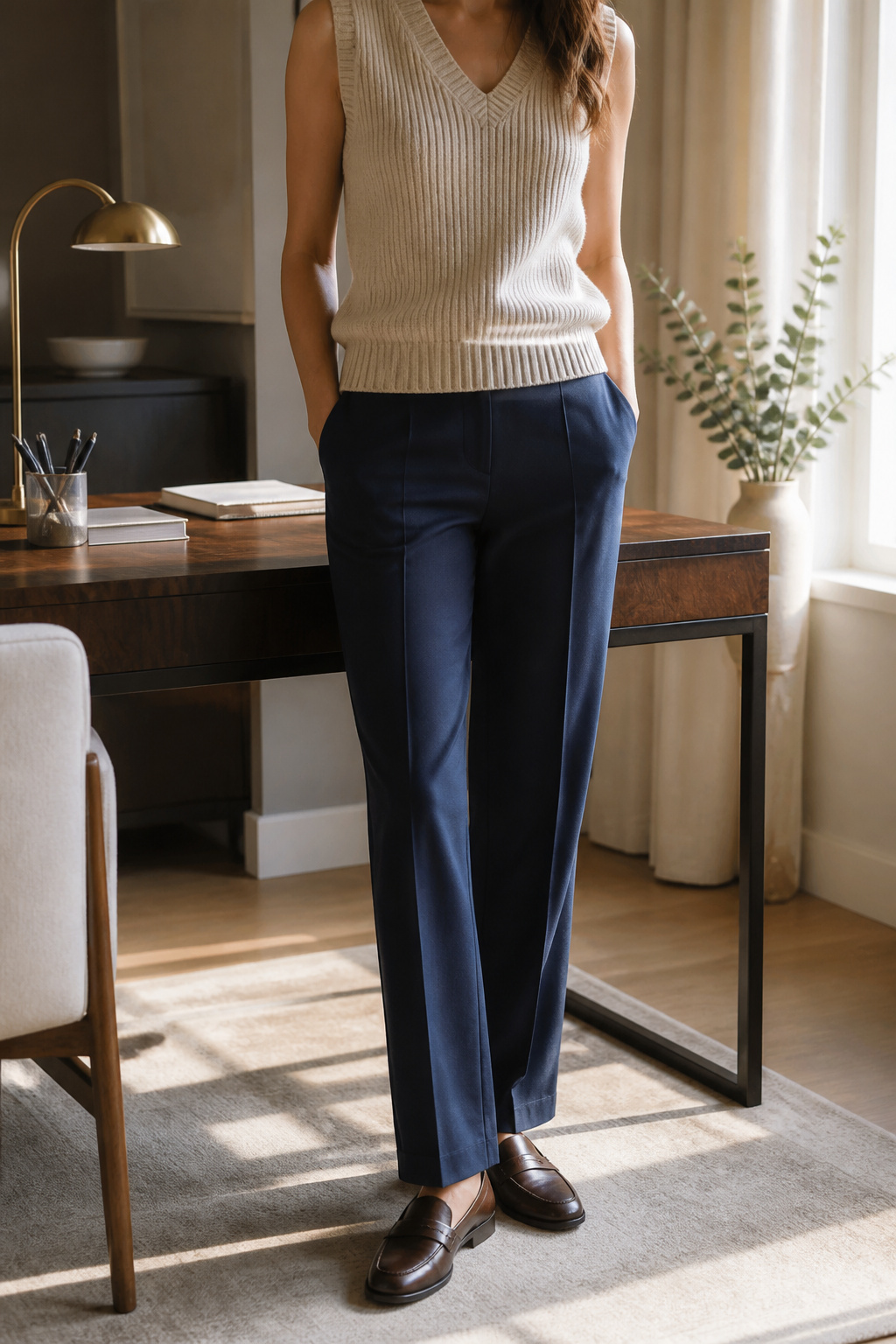
A sweater vest is the piece that finally made layering make sense to me. Arms stay free for typing or driving, but your core gets real warmth from the wool or knit body, which matters when your office cranks the heat to seventy-five by noon. I reach for one in a neutral oatmeal or charcoal, then pair it with trousers, never jeans, because the vest already reads academic and denim tips it into costume territory. Straight-leg wool trousers in navy or taupe keep the look current; a slim crease down the front helps the vest feel intentional rather than borrowed from a grandfather. For shoes, a leather loafer or simple ankle boot finishes without competing. The only mistake I have made here is buying the vest too long, which shortened my legs against the trouser line. Cropped or hitting right at the hip bone works best on most frames.
6. Matching Sweatsuit

A matching sweatsuit only reads as an outfit when the color and fabric do the work of intention. Single-color construction, head to toe, is what keeps it from looking like you grabbed whatever was clean. I learned this the hard way after wearing a heather-gray top with charcoal bottoms to the grocery store and realizing halfway through that I looked like I was escaping a fire drill.
The cashmere lounge set from Quince sits at the other end of this spectrum. Same tone, same weight, and the fabric has enough structure that it does not collapse into pajama territory. Sources describe this as a step up that still functions as loungewear, which is the point: you want the option of both.
Footwear changes the register completely. White sneakers keep the set in casual territory for errands or coffee. Boots, especially a slim ankle style, push it toward something you could wear to a casual office or dinner without feeling underdressed. The SPANX AirEssentials set works particularly well here because the fabric has a slight sheen that reads intentional under streetlights. One source mentioned getting compliments and questions while wearing a set out, which tracks: when the match is exact, people assume you planned it.
7. Oversized Coat with Sweater

Volume only works when the coat has bones. A dropped shoulder and no lining turns a thick sweater underneath into a shapeless pile, while a single hidden button and a defined shoulder seam keep the whole thing from collapsing outward. The sweater matters too. A chunky cable knit under an equally chunky cocoon coat is where most people lose their waist entirely. I learned to pair a heavier coat with a finer-gauge sweater, or reverse it: a thick, textured knit needs a coat with enough structure that it hangs rather than balloons.
The length changes the equation. A hip-length oversized coat with a big sweater can swallow a shorter torso, but the same coat over a mid-thigh hemline creates a column that reads intentional. Color helps. Matching the coat and sweater too closely erases whatever line you had; one step lighter or darker in tone keeps the eye moving vertically instead of pooling horizontally. This is about managing volume, not burying yourself in it.
8. Leggings and a Cute Top

Leggings work as pants only when the top is long enough to cover the seat and the fabric is thick enough to read as a garment, not a layer. The Zella leggings hold up here; they are the pair I have seen survive three winters without going sheer at the knee or losing the waistband, which is more than I can say for the Amazon pair I tried as a cheaper substitute. The length matters: a cropped sweatshirt or standard tee shifts the whole look toward gym wear, while a long sweater or tunic that hits mid-thigh keeps it in the realm of an actual outfit. Footwear is the other pivot. Sporty sneakers like the New Balance 327 push things toward athleisure; leather Vejas or Chelsea boots pull it back toward dressed. The line between casual and sloppy is usually at the hair and makeup, at least according to the women who make this uniform work. A beanie and puffer vest can look intentional if the rest of you looks like you tried; the same pieces read as giving up if you are also in yesterday’s ponytail and the shoes you wear to walk the dog.
9. Jeans, Booties, and Sweaters
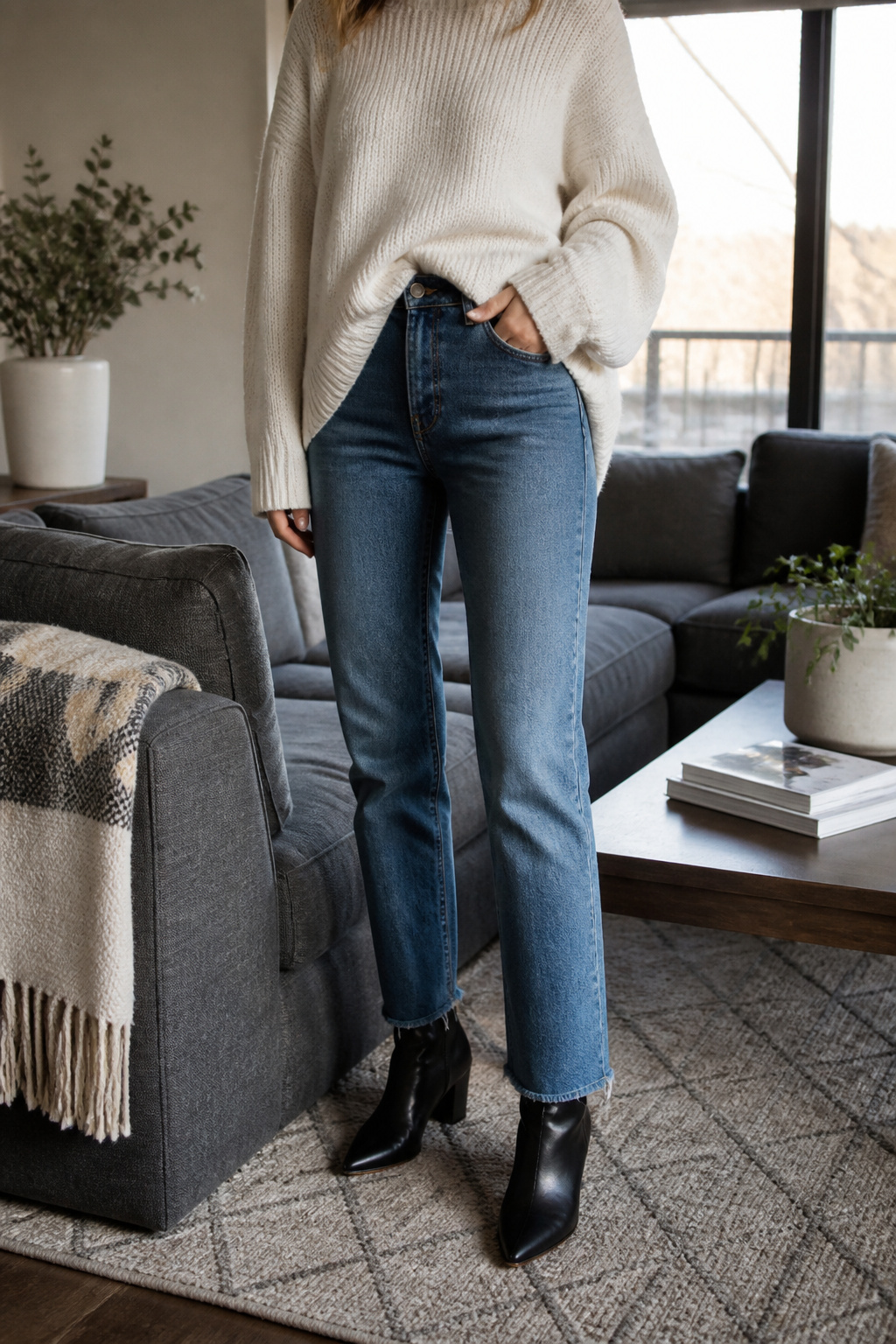
Jeans, booties, and sweaters make up the most repeated casual winter outfit across every wardrobe breakdown I read. The trick is in the ankle gap: straight-leg denim sits clean over a chelsea boot shaft, while skinnier cuts need a higher bootie to avoid that exposed strip of skin or bunched fabric pooling above. Mother Hustler Ankle jeans with Margaux booties hit this balance well for a mid-rise, slim cut.
Sweater weight decides the tuck. Fine-gauge cashmere, like Quince’s neutrals, can go in at the front without adding bulk to the waistband. Chunky cable knits or patterned Boden styles have to hang out; forcing them behind a button band ruins the line and the sweater both.
Add hoop earrings and a structured bag to this same base, and the look shifts to dressy casual without changing a single major piece. The puffer you threw on for warmth stays in the car. I have seen this formula dressed up with a headband and a fun purse too.
10. Long Coat for Warmth and Style

A long puffer or parka that hits mid-thigh or lower is what separates a coat you tolerate from one you actually wear through January. The extra length matters most when you are standing still, waiting for a bus or holding a leash while a dog sniffs every patch of frozen grass, because wind finds the gap between hem and knee faster than you would think.
The trade is mobility. Full-length coats can bunch in a car seat or tangle around your calves on stairs. I look for a side vent or a two-way zip so the skirt opens when I stride. The Kosha Alaskan parka with its detachable fur hood and fleece-lined pockets is built for exactly this, warmth without the arctic expedition bulk. An Amazon puffer hooded coat in an XS packs similar heat for less, though the fill compresses faster over seasons.
For daily dog walks or transit commutes, this is the coat category that wins. Pair it with slim jeans or leggings underneath so the silhouette stays intentional rather than swallowed.
Layering Without Bulk
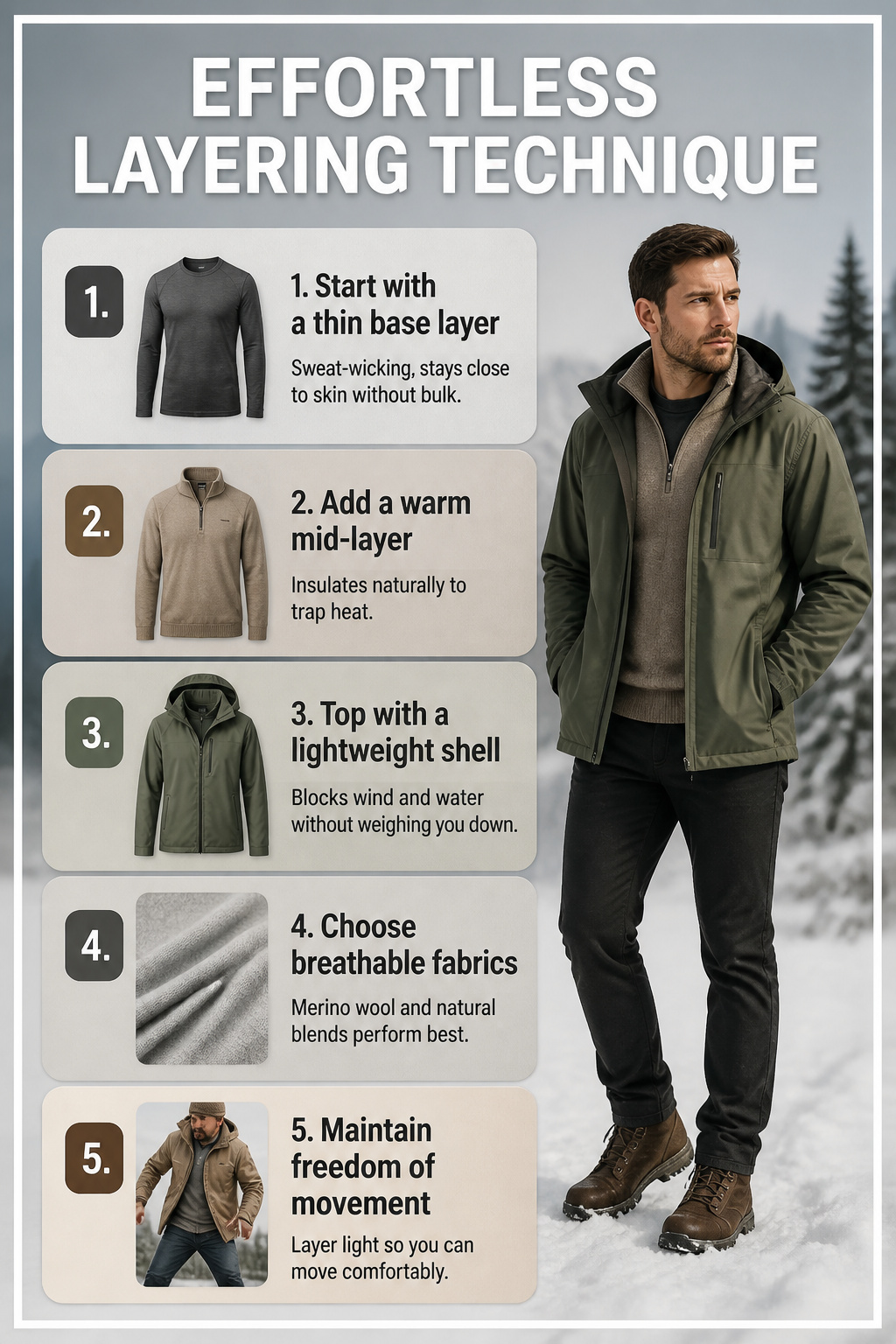
The base layer sits closest to skin and needs to pull sweat away without adding volume. A thin merino wool does this better than anything bulky; the thinner it is, the more room you leave for actual warmth above it. Mid-layer is where the insulation lives, and wool or a wool blend handles that job naturally. A light sweatshirt in that material traps heat without turning you into a statue. The outer shell then blocks wind and water, and the best ones are lighter than they look.
Each of these ten outfits stretches or breaks the rule in some way. The puffer-with-sweatpants look and the matching sweatsuit both bet everything on a single thick layer instead of three thin ones; they work only where you are not staying outside long. The woolen trench and the long coat outfits follow the formula straight down, with cashmere or a light sweater underneath and the coat doing the weather-blocking. The sweater-vest-with-trousers look skips the true base layer entirely, so a long-sleeve tee in merino saves it if the day turns sharp. The denim-jacket outfit and the coatigan looks from milder climates treat the outer layer as optional, which breaks the rule honestly: they are built for twenty degrees above what the full system handles. The oversized coat with sweater risks bulk in the middle by doubling two thick pieces, so the fix is keeping that sweater thin and letting the coat cut wide, not deep.
Boots and Sneakers That Work
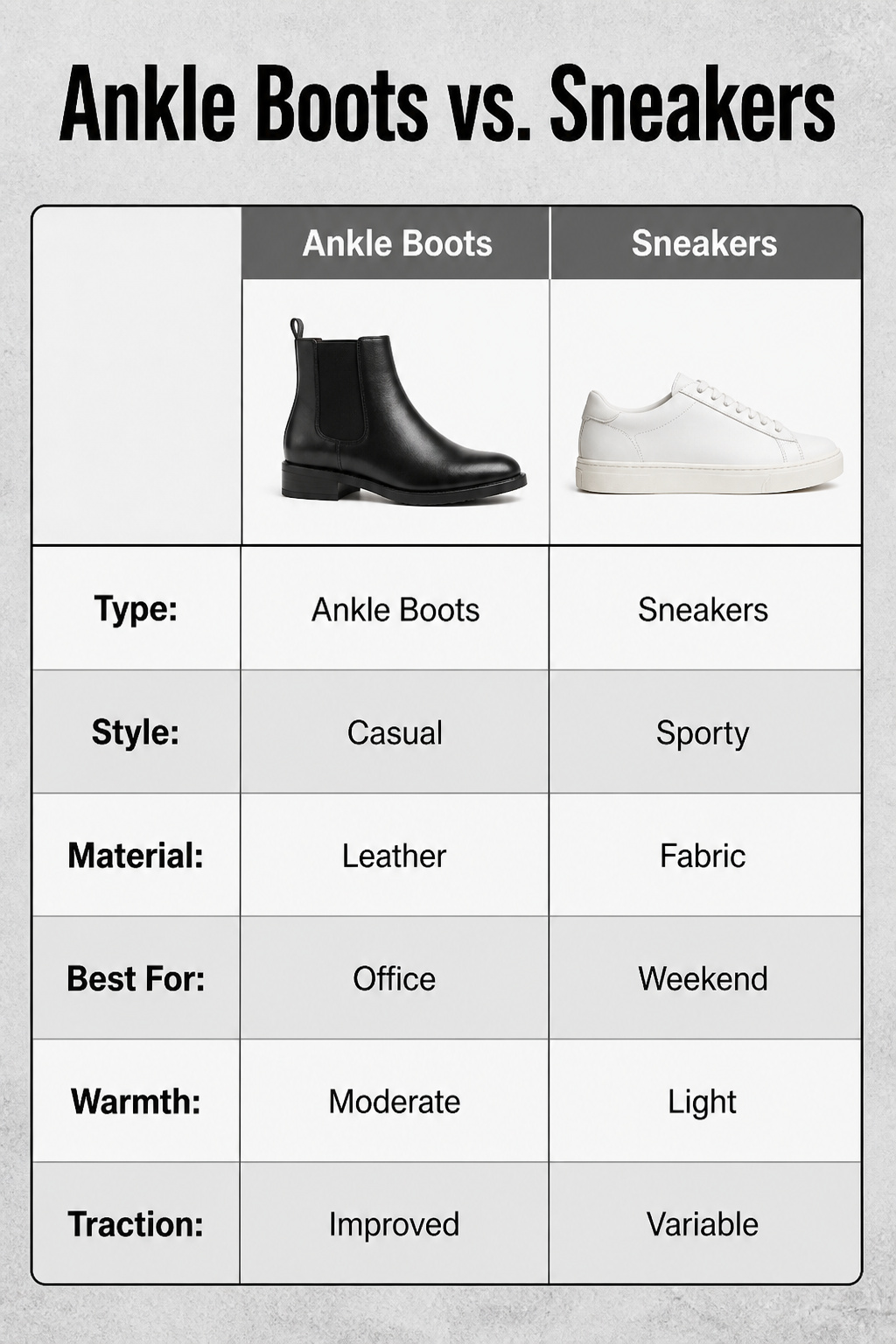
The right shoe changes what the same outfit says. Ankle boots keep a straight-leg jean and sweater combination casual but pulled-together, and the gap between boot top and jean hem matters more than people admit. Too wide and the leg line breaks; a slim ankle boot that tucks close reads intentional. Knee-high boots do something entirely different with the same pieces, especially if you swap the jean for a skirt and tights. The outfit tilts dressier without trying hard, which is why that pairing works for evenings when sneakers would feel underdressed.
Sneakers have their own logic. Streamlined white leather pairs, like the Cariuma or Veja Campo, keep a weekend outfit in casual territory without slipping into gym territory; athletic-looking running shoes belong with actual athleisure and nowhere else. Save the chunky soles for the workout clothes is a useful rule, because a clean sneaker with straight-leg denim and a barn coat reads chic where a technical trainer reads confused.
Warmth and traction pull in opposite directions. Rubber-soled Chelsea boots handle slick sidewalks better than leather-bottomed knee-highs, and sneakers with any tread pattern beat both on ice. For dry cold days, the Margaux Downtown boots I have worn most this winter justify their price per wear through sheer repetition, though they are not the shoe for a snowstorm. Birkenstock clogs and loafers with socks fill the gap when you want cozy over technical, though they are limited to dry pavement and short walks.
The choice usually comes down to what the day holds: ankle boots for the office and errands, sneakers for weekend walking, knee-highs when the outfit needs elevation.
Scarves, Beanies, Gloves

A beanie can save a bad-hair day while keeping your ears warm, and the cute factor is real, not an afterthought. I reach for one in Merino wool when the temperature drops, usually reversible so it works with more than one coat.
Scarves do the heavy lifting on texture. A long woolen scarf adds length and warmth without bulking the shoulders, and the extra fabric lets you knot it different ways for different days. That single piece reads as several accessories once you learn a couple of knots.
Gloves are where function gets specific. Leather in a neutral tone handles errands and commutes; rabbit fur or fingerless fur gloves lean dressier, and the line between the two is worth noticing. The wrong glove turns a casual winter outfit into something trying too hard.
The trick with all three is that they complete looks from outside the core ten outfits. You are not adding garments, just swapping in warmth and a little personality. Earmuffs work the same way, and they do not flatten hair like a hat can. Keep the colors in line with your coat, or pick one deliberate contrast and let it sit there.
Frequently Asked Questions
What are some casual winter outfit ideas?
Ten reliable combinations include a puffer jacket with sweatpants and sneakers, a turtleneck under a blazer, a pullover sweater with jeans or faux leather leggings, a woolen trench coat over weekend denim, a sweater vest with straight-leg wool trousers, a matching sweatsuit in a single color, an oversized coat with a fine-gauge sweater, leggings with a long tunic top, jeans with booties and sweaters, and a long puffer or parka for serious cold. Each one balances warmth with enough structure to look intentional rather than accidental.
How do I layer for winter without bulk?
Start with a thin merino wool base layer closest to skin, add a light wool or wool-blend mid-layer for insulation, and finish with a wind-blocking outer shell. The article’s outfits stretch this rule in different ways: the puffer-with-sweatpants and matching sweatsuit looks rely on one thick layer instead of three, while the woolen trench and long coat outfits follow the formula directly with cashmere underneath. When doubling thick pieces like an oversized coat with a sweater, keep the sweater thin and let the coat provide the volume.
What shoes should I wear in winter?
Ankle boots keep jeans-and-sweater combinations casual but pulled-together, with a slim shaft that sits close to the leg line. Knee-high boots tilt the same pieces dressier, especially with skirts and tights. Streamlined white leather sneakers like the Cariuma or Veja Campo work for weekends without slipping into gym territory; save running shoes for actual athleisure. For slick sidewalks, rubber-soled Chelsea boots outperform leather-bottomed styles, and anything with tread beats both on ice. The Margaux Downtown boots justify their cost through daily repetition on dry cold days, though they are not built for snowstorms.